
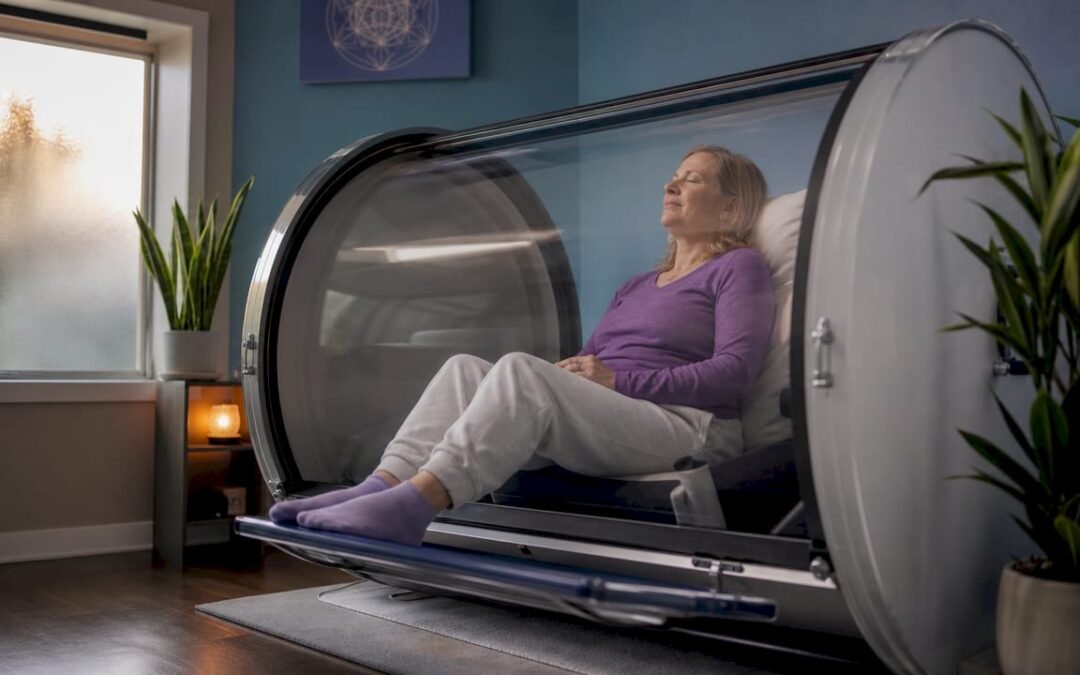
Hyperbaric oxygen therapy (HBOT) is a medical treatment that delivers 100% pure oxygen inside a pressurised chamber to support specific multiple sclerosis symptoms, including fatigue and bladder dysfunction. HBOT is not a cure for MS and does not stop disease progression, but it is recognised by organisations such as MS-UK and the NIH NCCIH as an investigational complementary therapy worth understanding. If you are living with MS and wondering whether HBOT could help you feel better day to day, this guide covers the evidence, the protocols, the realistic benefits, and the safety considerations you need to make an informed choice.
What is HBOT for MS and what does the evidence say?
HBOT for MS is defined as the use of pressurised oxygen therapy to address symptom burden in multiple sclerosis, rather than to alter the underlying disease course. The distinction matters enormously. You may feel better without your MRI scan changing, and that is a legitimate and meaningful outcome.
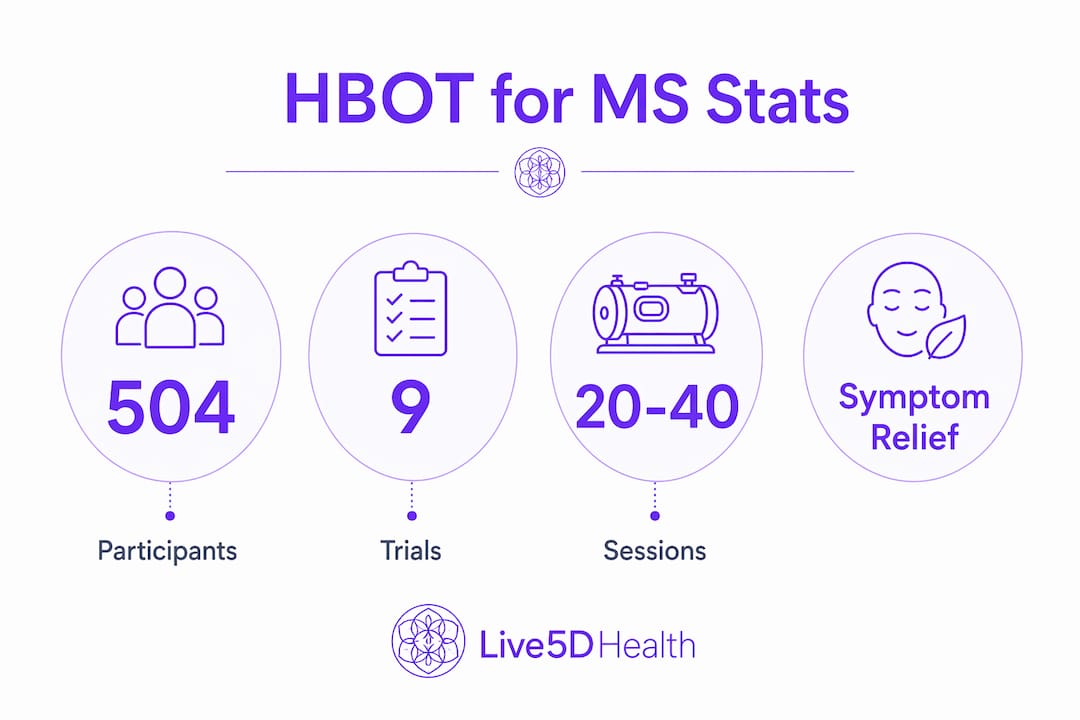
The most cited body of evidence comes from a 2004 Cochrane review of nine randomised trials involving 504 participants. The review found no consistent evidence that HBOT improves MS disability progression. Roughly 22% of trials reported possible symptom benefit, particularly for bladder function. That means the majority of trials found no measurable change in disease trajectory, which is the honest starting point for any conversation about this therapy.

The NIH NCCIH classifies HBOT as an investigational complementary therapy for MS, not a standard treatment. This does not mean it is without value. It means the evidence base has not yet reached the threshold required for mainstream clinical recommendation. Prof Gavin Giovannoni, a leading MS neurologist, supports further research and acknowledges HBOT may aid relapses and certain symptoms, but states there is no proof of neural repair at this stage.
More encouraging is emerging laboratory science. Studies show that oxygen levels are measurably low in some MS lesions, and animal models demonstrate that supplemental oxygen reduces demyelination and stimulates stem cell activity. This provides a plausible biological rationale for why some patients report genuine symptom relief, even if large-scale human trials have not yet confirmed it.
Pro Tip: When reading HBOT research, check whether the study measured symptom outcomes or disability progression scores. These are different endpoints, and conflating them leads to confusion about whether the therapy “works.”
How does HBOT work and what does a session involve?
Understanding the mechanics helps you decide whether the commitment is right for you. HBOT involves breathing 100% oxygen inside a sealed chamber pressurised to between 1.3 and 2.0 atmospheres absolute (ATA). At that pressure, oxygen dissolves directly into blood plasma rather than relying solely on haemoglobin to carry it. This means oxygen reaches tissues that normal circulation may not adequately supply, including areas of neurological inflammation.
For MS patients, a typical course looks like this:
- Initial assessment. A clinician reviews your MS history, current medications, and any contraindications before your first session.
- Chamber entry. You enter a monoplace (single-person) or multiplace chamber. Sessions last 60 to 90 minutes at the prescribed pressure.
- Early re-evaluation. Clinics typically reassess symptom response after approximately 10 sessions before committing to a full course.
- Full course completion. A standard course runs 20 to 40 sessions, often delivered five days per week.
- Progress review. Clinicians use symptom rating scales, such as fatigue inventories and bladder questionnaires, rather than EDSS progression scores to measure HBOT response in MS practice.
The re-evaluation at session 10 is particularly important. If you are not noticing any shift in fatigue, bladder control, or spasticity by that point, continuing the full course may not be the best use of your time or money. Good HBOT centres build this checkpoint into their protocol as standard practice.
Pro Tip: Ask any HBOT provider whether they use validated symptom rating tools to track your progress. A centre that cannot answer this question clearly is not applying clinical rigour to your care.
Which MS symptoms may benefit from HBOT?
MS community organisations including MS-UK describe HBOT as potentially helpful for a specific cluster of symptoms, while being clear that it does not reliably alter the course of the disease itself. The table below summarises the current evidence strength for individual symptoms.
| Symptom | Evidence strength |
|---|---|
| Bladder control | Moderate. Cochrane review noted possible improvement in some trials. |
| Fatigue | Low to moderate. Widely reported anecdotally; small studies show benefit. |
| Muscle spasticity | Low. Some patients report improvement; trial data is limited. |
| Cognitive clarity | Very low. Anecdotal reports only; no controlled trial confirmation. |
| Disease progression | No evidence. HBOT does not appear to alter long-term disability scores. |
Many MS patients report improved fatigue, reduced muscle spasticity, better bladder control, and sharper cognition after a course of HBOT. These reports are real and worth taking seriously. However, individual responses vary considerably, and what works well for one person may produce no noticeable change for another.
The critical insight here, supported by MS-UK research, is that symptom improvement and disease progression are distinct endpoints. HBOT may genuinely improve your quality of life without changing your MRI findings or EDSS score. That is not a failure of the therapy. It is a different kind of success, and one that deserves to be measured on its own terms.
Is HBOT safe for people with MS?
MS itself is not a contraindication for HBOT, but that does not mean the therapy is appropriate for everyone. Safety screening is non-negotiable, and any reputable centre will conduct a thorough medical assessment before your first session.
Key contraindications and risk factors include:
- Seizure history. High oxygen concentrations can lower the seizure threshold. Anyone with a history of seizures requires careful evaluation before proceeding.
- Lung conditions. Chronic obstructive pulmonary disease, untreated pneumothorax, and certain other respiratory conditions increase the risk of barotrauma.
- Certain medications. Some drugs interact with high-pressure oxygen. Your full medication list must be reviewed by a trained clinician.
- Claustrophobia. Monoplace chambers are enclosed spaces. This is manageable for many people but worth discussing in advance.
- Oxygen toxicity risk. Breathing pure oxygen at pressure carries a small risk of central nervous system toxicity if protocols are not followed correctly.
Treatment standardisation and patient selection are the two factors most strongly associated with observing benefit from HBOT in MS. A well-run centre with medically trained staff, proper equipment standards, and lung function testing before treatment is not a luxury. It is the minimum standard you should accept.
How to integrate HBOT into your MS management plan
HBOT works best as an adjunct to your existing MS management, not as a replacement for disease-modifying therapies (DMTs) such as interferon beta, natalizumab, or ocrelizumab. Think of it as a tool for symptom quality rather than disease control.
Practical steps for integrating HBOT effectively:
- Set clear symptom goals before you start. Decide which two or three symptoms you most want to address, whether that is fatigue, bladder urgency, or spasticity, and track them with a simple daily log.
- Inform your neurologist. Your MS team should know you are pursuing HBOT. It affects how they interpret any symptom changes during your treatment period.
- Combine with physical therapy where possible. Some patients find that HBOT-related reductions in spasticity make physiotherapy sessions more productive. The two therapies can complement each other well.
- Plan for the financial commitment. Most patients pay out of pocket for HBOT, as few insurance providers cover it for MS. A 20-session course represents a significant investment, so budgeting in advance is sensible.
- Review and decide after session 10. Use the mid-course checkpoint to make an evidence-based decision about continuing, rather than committing to the full course before you have any data on your own response.
You can also explore how to maximise your HBOT results with practical guidance on preparation, hydration, and post-session recovery to get the most from each session.
Key takeaways
HBOT for MS targets symptom relief rather than disease progression, making it a meaningful adjunct therapy when selected carefully and monitored with validated outcome measures.
| Point | Details |
|---|---|
| HBOT is not a cure for MS | It targets symptoms like fatigue and bladder control, not disease progression or lesion repair. |
| Cochrane evidence is mixed | Nine trials with 504 participants found no consistent progression benefit, though some symptom improvement was noted. |
| Treatment protocol matters | Sessions run 60 to 90 minutes at 1.3 to 2.0 ATA, with re-evaluation after the first 10 sessions. |
| Safety screening is mandatory | Seizure history, lung conditions, and medication interactions must be assessed before starting. |
| Symptom goals drive success | Setting measurable targets before treatment and tracking them with rating scales gives you real data on your response. |
Why I think the conversation about HBOT and MS needs more honesty
From my perspective at Live5dhealth, the most common mistake I see people with MS make when approaching HBOT is arriving with either unrealistic hope or unnecessary scepticism. Both positions get in the way of a genuinely useful therapy.
The science is neither damning nor triumphant. The Cochrane review is frequently cited as proof that HBOT “does not work” for MS, but that reading is too blunt. It found no consistent effect on disability progression. That is not the same as finding no benefit at all. For someone whose primary struggle is chronic fatigue or bladder urgency, a therapy that meaningfully improves those symptoms is worth serious consideration, even without an MRI change to show for it.
What I find most compelling is the emerging biological rationale. The finding that MS lesions are oxygen-depleted, combined with animal model data showing reduced demyelination under supplemental oxygen, suggests we are looking at a therapy whose mechanism makes sense even if the human trial data has not caught up yet. That is not a reason to abandon critical thinking. It is a reason to stay curious and to track your own response carefully.
My honest advice: approach HBOT as a time-limited, symptom-focused trial with clear goals and a good clinician in your corner. Read about common HBOT misconceptions before you start, so you are not swayed by either overclaiming providers or dismissive voices. Your experience is valid data. Use it.
— Mark
Explore supportive therapies at Live5dhealth
At Live5dhealth, we understand that managing MS is about more than any single therapy. Our wellness centre in Boyle, County Roscommon, offers a supportive environment where you can explore complementary approaches to symptom management alongside your medical care.

Whether you are looking to support recovery, reduce stress, or simply feel your best, our luxury spa facilities including sauna, steam room, and cold plunge offer therapeutic benefits that pair well with an active wellness plan. We also stock a carefully selected range of health supplements to support neurological health and energy levels. Our team is here to help you build a plan that fits your life and your goals.
FAQ
What is HBOT for MS in simple terms?
HBOT for MS is a therapy where you breathe pure oxygen inside a pressurised chamber to potentially reduce symptoms like fatigue and bladder problems. It is not a cure and does not stop disease progression, but it may improve quality of life for some patients.
How many HBOT sessions does MS treatment typically require?
A standard course involves 20 to 40 sessions, each lasting 60 to 90 minutes, usually delivered five days per week. Most clinics reassess symptom response after the first 10 sessions before recommending continuation.
Is HBOT safe for people with multiple sclerosis?
MS itself is not a contraindication for HBOT, but safety screening for seizure history, lung conditions, and medication interactions is mandatory before starting. Treatment should only be undertaken at a certified centre with medically trained staff.
Does HBOT slow MS progression?
The 2004 Cochrane review of nine trials found no consistent evidence that HBOT slows MS disability progression. Its potential value lies in symptom management, particularly for fatigue and bladder control, rather than altering the disease course.
Can HBOT be used alongside disease-modifying therapies?
Yes. HBOT is intended as an adjunct to existing MS treatments such as interferon beta or natalizumab, not a replacement. Always inform your neurologist before starting HBOT so your full treatment picture can be monitored accurately.