

Oxygen is the single most critical resource driving wound repair, directly enabling the immune response, collagen synthesis, and new blood vessel formation that every stage of healing depends upon. Without adequate oxygen delivery to damaged tissue, neutrophils cannot clear pathogens, fibroblasts cannot produce collagen, and angiogenesis stalls. The role of oxygen in wound healing spans all four biological phases: haemostasis, inflammation, proliferation, and remodelling. Technologies such as hyperbaric oxygen therapy (HBOT) and continuous diffusion oxygen (CDO) systems have been developed specifically to address oxygen deficits in wounds that refuse to close. Understanding how oxygen works at the cellular level gives you a real foundation for making informed decisions about your recovery.
How does oxygen support the biological stages of wound healing?
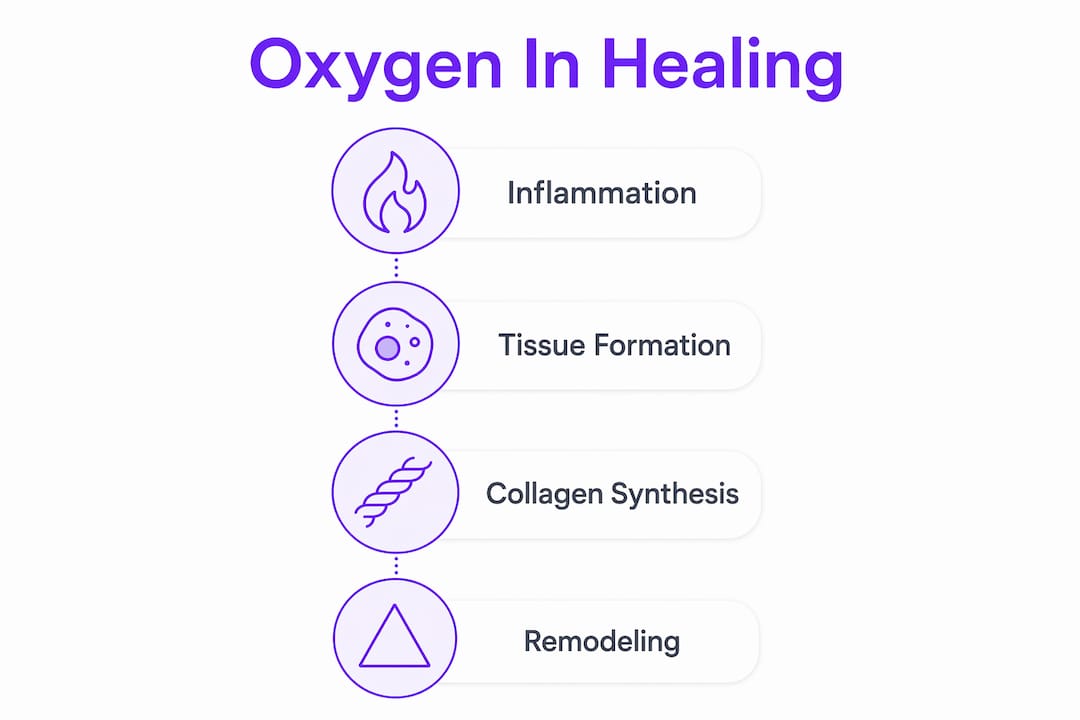
Oxygen strongly influences every phase of wound healing, from the first moments of injury through to final tissue remodelling. Each phase places distinct demands on your body’s oxygen supply, and a shortfall at any stage can derail the entire process.
Here is what happens at each phase and why oxygen matters:
- Haemostasis: Platelets aggregate and a clot forms to stop bleeding. Oxygen supports platelet function and the early signalling that triggers the repair cascade.
- Inflammation: Neutrophils and macrophages flood the wound site. These immune cells use oxygen to power the oxidative burst, a high-energy process that destroys bacteria and clears debris. Without sufficient oxygen, this defence mechanism is compromised.
- Proliferation: Fibroblasts migrate into the wound and synthesise collagen, the structural protein that rebuilds tissue. Oxygen is a direct co-factor in collagen cross-linking. New blood vessels (angiogenesis) also form during this phase, and that process itself requires oxygen to proceed.
- Remodelling: Collagen fibres reorganise and the wound contracts. Adequate oxygenation during this phase determines the strength and quality of the final scar tissue.
Tissue hypoxia, meaning oxygen levels that are too low to sustain normal cellular function, is one of the most common reasons wounds become chronic. Diabetic foot ulcers, pressure injuries, and ischaemic wounds are all characterised by poor oxygen delivery to the wound bed. Research confirms that hypoxia delays healing by suppressing fibroblast activity and reducing the effectiveness of immune cells.
Pro Tip: If you or someone you care for has a wound that has not progressed after four weeks of standard treatment, ask a clinician to assess tissue oxygenation levels. This single measurement can determine whether an oxygen-based therapy is likely to help.
What are the main oxygen-based therapies for wound care?
Oxygen therapy for wounds falls into two broad categories: systemic delivery through hyperbaric oxygen therapy and localised delivery through topical oxygen therapy (TOT). Each has distinct mechanisms, use cases, and evidence profiles.
Hyperbaric oxygen therapy (HBOT)
HBOT involves breathing 100% oxygen inside a pressurised chamber, typically at 2 to 3 atmospheres of pressure. This dramatically increases the amount of oxygen dissolved in the blood plasma, allowing it to reach tissues that normal red blood cell delivery cannot adequately supply. HBOT is used as an adjunct for chronic, ischaemic, and traumatic wounds, usually after standard care has failed to produce progress. Mechanistically, HBOT can reduce swelling, enhance immune response, promote angiogenesis, and accelerate collagen synthesis. Postoperative HBOT timing and session frequency are adjusted to reduce ischaemia and support tissue viability, often requiring multiple daily sessions in acute trauma cases.
Topical oxygen therapy (TOT)
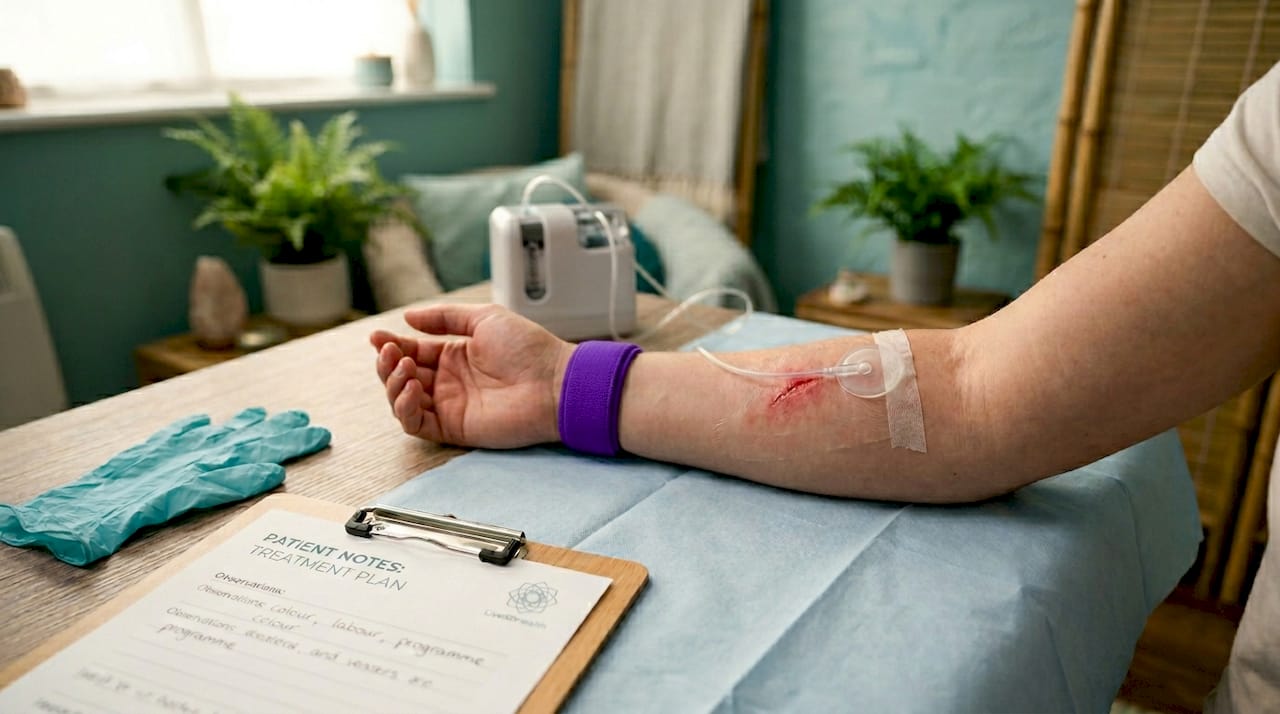
TOT delivers oxygen directly to the wound surface rather than through the bloodstream. The three main formats are:
- Continuous diffusion oxygen (CDO): Uses an electrochemical membrane to generate pure humidified oxygen at a low, steady flow rate. This maintains a moist wound environment and consistent oxygenation.
- Cyclical pressurised systems: Deliver oxygen in timed pulses at low pressure directly over the wound.
- Chamber-based topical systems: Enclose the limb or wound area in a sealed chamber filled with pressurised oxygen.
CDO versus NPWT: a direct comparison
| Feature | Continuous diffusion oxygen (CDO) | Negative-pressure wound therapy (NPWT) |
|---|---|---|
| Wound closure rate | 79.2% in 112 days | Lower in comparative studies |
| Mechanism | Delivers oxygen to wound bed | Removes exudate, promotes granulation |
| Mobility | Wearable, preserves daily activity | Bulkier, limits movement |
| Cost profile | Favourable in long-term analysis | Higher cost over extended treatment |
| Moist wound environment | Maintained continuously | Variable |
The 2023 IWGDF guidelines give a conditional positive recommendation for topical oxygen therapy in non-healing diabetic foot ulcers as an adjunct to standard care. This is a meaningful clinical endorsement, though it does come with the caveat that TOT is not a standalone treatment.
Pro Tip: Oxygen therapy is not a replacement for debridement, offloading, or infection control. It requires integration with a full wound management plan to deliver its benefits.
When is oxygen therapy most effective for wound management?
Oxygen therapy produces the best outcomes when the wound tissue is genuinely hypoxic and the vascular supply is sufficient to carry delivered oxygen to the wound bed. This distinction matters enormously. Vascular assessment is the first step any clinician should take before recommending an oxygen-based intervention.
The wounds most likely to respond well to oxygen therapy include:
- Diabetic foot ulcers with adequate perfusion but impaired local oxygenation
- Ischaemic wounds where HBOT can temporarily supersaturate plasma oxygen
- Post-surgical wounds with compromised tissue viability
- Radiation-damaged tissue where blood vessel density has been reduced
- Traumatic wounds involving crush injuries or compartment syndrome
Oxygen therapy is unlikely to help when the blood supply to the wound is completely occluded. In that situation, restoring perfusion through vascular surgery or angioplasty takes priority. Tissue oxygen measurements predict wound closure probability, with levels above 200 mmHg during HBOT associated with successful healing outcomes. This means measurement is not optional. It is the basis for deciding whether to proceed.
Timing also matters. Integrating oxygen therapy early in the treatment of a stalled wound, rather than as a last resort after months of failure, tends to produce better results. For patients managing diabetic foot conditions, a structured care plan that includes oxygenation assessment from the outset gives the wound its best chance of closing.
For caregivers supporting someone at home, the practical priority is monitoring wound progress weekly, maintaining good nutrition to support collagen production, and communicating any signs of stalled healing to a clinician promptly.
What practical advances are shaping oxygen delivery in wound care?
The most significant practical development in recent years is the move toward wearable CDO devices. These small, lightweight systems attach directly to the wound dressing and generate oxygen continuously through an electrochemical process, without requiring a pressurised chamber or clinical setting. CDO devices provide steady oxygen and maintain a moist wound environment, enabling better closure rates than intermittent oxygen delivery or NPWT in published comparisons. The wearable format means patients can continue normal daily activity during treatment, which directly improves adherence.
Pressure monitoring and offloading remain equally important for diabetic foot ulcers. Even the most effective oxygen delivery system cannot overcome the mechanical damage caused by continued pressure on a wound. Offloading devices, from total contact casts to removable walkers, work alongside oxygen therapy rather than in competition with it.
| Technology | Setting | Key benefit | Limitation |
|---|---|---|---|
| Wearable CDO | Home or clinic | Continuous oxygenation, mobility preserved | Requires dressing changes |
| HBOT chamber | Clinical only | High systemic oxygen saturation | Time-intensive, clinic-dependent |
| Cyclical TOT | Home or clinic | Non-invasive, easy to apply | Less evidence than CDO or HBOT |
Emerging molecular research is beginning to identify how individual patient factors, including mitochondrial function, inflammatory gene expression, and microbiome composition, influence how well a wound responds to oxygen therapy. This points toward more personalised wound care protocols in the near future, where oxygen dosing and delivery method are matched to the patient’s specific biology rather than wound type alone.
Pro Tip: When evaluating oxygen therapy options, ask specifically about wearable CDO systems if home-based treatment is a priority. They offer clinical-grade oxygenation without requiring repeated clinic visits.
Key takeaways
Oxygen is the limiting factor in wound repair, and addressing tissue hypoxia through targeted therapy is the most direct way to restart stalled healing.
| Point | Details |
|---|---|
| Oxygen drives all healing phases | From immune cell function in inflammation to collagen synthesis in proliferation, oxygen is required at every stage. |
| Hypoxia causes chronic wounds | Tissue oxygen deficits are a primary reason diabetic foot ulcers and ischaemic wounds fail to close. |
| HBOT and CDO are distinct tools | HBOT delivers systemic oxygen under pressure; CDO applies steady localised oxygen directly to the wound bed. |
| Vascular assessment comes first | Oxygen therapy only works if perfusion is adequate to deliver oxygen to the wound tissue. |
| Integration is non-negotiable | Oxygen therapy must be combined with debridement, offloading, and infection control to be effective. |
Why oxygen therapy deserves more attention than it typically receives
From where I stand, oxygen is consistently underestimated as a therapeutic target in wound care. Most conversations about wound healing focus on dressings, debridement, and antibiotics. These are all necessary, but they address the wound environment rather than the fundamental cellular fuel that drives repair.
What I find genuinely compelling about the current evidence is the CDO data. A wound closure rate of 79.2% in 112 days, with a favourable cost profile compared to NPWT, is not a marginal improvement. That is a clinically meaningful result that should be prompting far more widespread adoption than we currently see. The barrier is largely awareness, both among patients and among clinicians who trained before these technologies were widely available.
The HBOT picture is more nuanced. It works well for specific indications, particularly ischaemic and radiation-damaged tissue, but the requirement for daily clinic visits over several weeks is a real obstacle for many people. Wearable CDO devices address that gap directly, and I expect them to become the dominant modality for home-based oxygen wound care within the next few years.
My honest view is that anyone managing a wound that has not responded to four weeks of standard care should be asking specifically about tissue oxygenation measurement and oxygen therapy options. Not as a last resort, but as a logical next step grounded in the biology of how wounds actually heal. You can learn more about how hyperbaric chambers work and explore common HBOT misconceptions if you want to go deeper on the clinical side.
— Mark
Discover recovery and wellness support at Live5dhealth
At Live5dhealth, we believe that healing is most powerful when it combines scientific understanding with genuine care for your whole self. Our wellness centre in Boyle, County Roscommon, offers therapies and recovery environments designed to support your body’s natural repair processes, from our luxury spa facilities including sauna, steam, and cold plunge to our curated range of tissue repair supplements that support immune function and collagen production.

Whether you are recovering from surgery, managing a chronic condition, or simply looking to give your body the best possible environment for healing, Live5dhealth has the resources, expertise, and warmth to support your progress. Explore our online shop and retreat programmes to find the right next step for you.
FAQ
What is the role of oxygen in wound healing?
Oxygen drives every phase of wound repair, from powering the immune cell oxidative burst that clears bacteria during inflammation, to enabling collagen synthesis and angiogenesis during the proliferative phase. Without adequate oxygen, wounds stall and become chronic.
Is oxygen therapy effective for diabetic foot ulcers?
The 2023 IWGDF guidelines give a conditional positive recommendation for topical oxygen therapy in non-healing diabetic foot ulcers as an adjunct to standard care, which includes offloading, debridement, and infection control.
How does hyperbaric oxygen therapy differ from topical oxygen therapy?
HBOT delivers high-concentration oxygen systemically through a pressurised chamber, raising plasma oxygen levels throughout the body. Topical oxygen therapy applies oxygen directly to the wound surface, either continuously via CDO devices or in cycles via pressurised systems.
Can low oxygen levels prevent a wound from healing?
Tissue hypoxia is a primary cause of chronic wounds. When oxygen levels in wound tissue are insufficient, fibroblast activity slows, collagen production drops, and immune cells lose their ability to fight infection effectively.
Does oxygen therapy replace standard wound care?
Oxygen therapy does not replace debridement, offloading, or infection control. Clinical guidelines are clear that it functions as an adjunct, meaning it works alongside standard wound management rather than as a substitute for it.