

Hyperbaric oxygen therapy (HBOT) improves gut healing by flooding hypoxic intestinal mucosa with dissolved oxygen, which then triggers a cascade of anti-inflammatory, microbiome-correcting, and regenerative responses. The biology is specific and measurable: clinical studies record significant reductions in C-reactive protein (CRP) and the Crohn’s Disease Activity Index (CDAI), alongside early remission rates that outperform standard therapy alone when HBOT is used adjunctively.
Here is what the evidence shows is happening:
- Plasma oxygenation: Breathing 100% oxygen at 2.0–3.0 atmospheres absolute (ATA) dissolves oxygen directly into plasma, bypassing damaged blood vessels to reach starved mucosal tissue.
- Microbiome shifts: Increased luminal oxygen suppresses harmful facultative anaerobes such as Escherichia and favours beneficial taxa including Bifidobacterium and Clostridium XIVa, supporting short-chain fatty acid (SCFA) production and barrier integrity.
- Cytokine downregulation: HBOT reduces IL-1, IL-6, and TNF-α, inhibits neutrophil adhesion, and activates hypoxia-inducible factor (HIF) and heme oxygenase (HO) pathways that raise antioxidant defences.
- Regenerative signalling: VEGF-driven angiogenesis and bone-marrow stem-cell recruitment create the biological scaffolding for durable mucosal repair.
Clinical scorecard: In a 2024 study combining HBOT with ustekinumab in Crohn’s disease, CRP fell from 80.79 to 33.32 mg/L (P = 0.004) and CDAI dropped from 274.87 to 221.54 (P = 0.044), with clinical remission at week 4 higher compared to the control group. A systematic review reported clinical response rates around 78% in Crohn’s cohorts and approximately 86% overall across IBD phenotypes.
Table of Contents
- How HBOT changes oxygen delivery to the intestinal wall
- Why oxygenation alters your gut microbiome
- Anti-inflammatory and oxidative-stress effects in gut tissue
- Regenerative effects: how HBOT rebuilds damaged gut tissue
- What clinical research shows about HBOT and digestive health
- What to expect from a course of HBOT for gut conditions
- Safety, contraindications and HBOT access in the UK
- What 2024–2025 research adds to our understanding
- Key takeaways
- A measured perspective on HBOT for gut healing
- HBOT sessions at Live5dhealth: what to do next
- Useful sources and further reading
How HBOT changes oxygen delivery to the intestinal wall
The intestinal mucosa is one of the most metabolically demanding tissues in the body, yet in inflammatory bowel disease (IBD) and other gut conditions, the microvasculature that supplies it is often compromised. Inflamed tissue becomes hypoxic, and that hypoxia perpetuates the very damage you are trying to reverse.
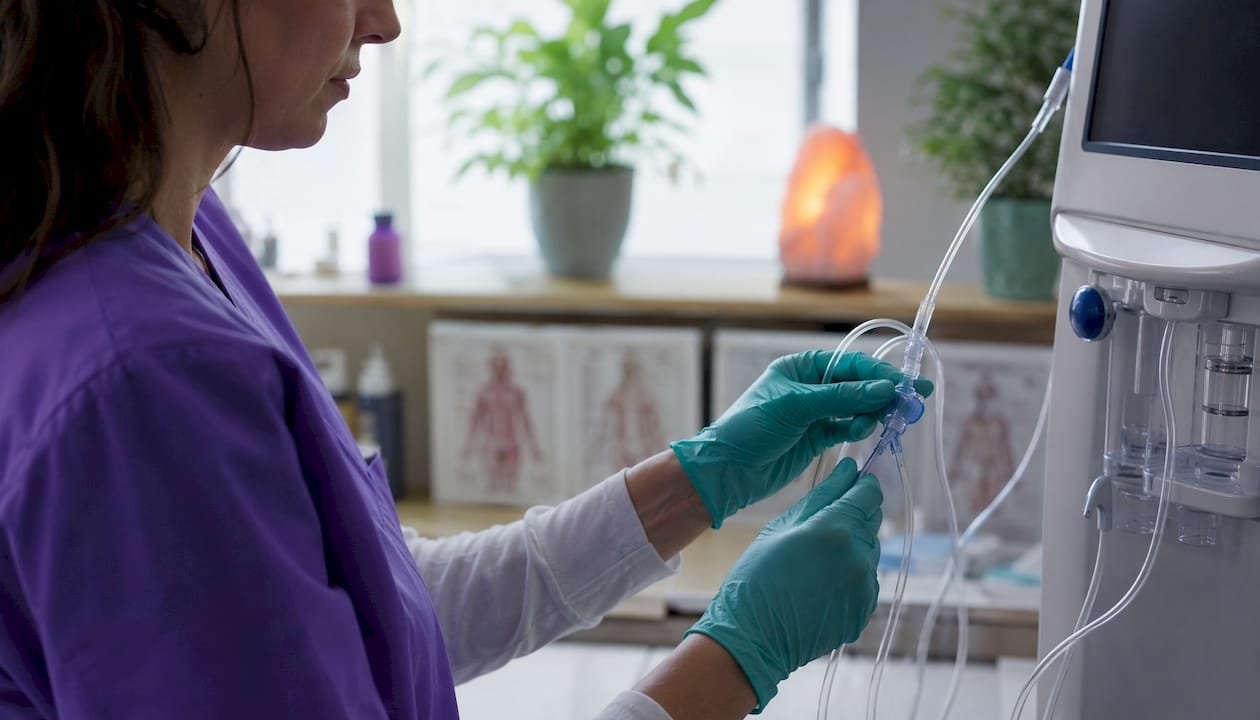
HBOT breaks this cycle at the physics level. Breathing 100% oxygen at 2.0–3.0 ATA raises arterial oxygen tension to above 2,000 mmHg and pushes tissue oxygen levels to approximately 400 mmHg. Crucially, this oxygen is dissolved directly in plasma rather than carried by haemoglobin, so it does not depend on red blood cells navigating inflamed, narrowed capillaries. It diffuses through tissue by concentration gradient alone.
The downstream effects are immediate. Mitochondria in mucosal cells receive the fuel they need to maintain tight-junction proteins and produce ATP for repair. Hypoxia-driven reactive oxygen species (ROS) production falls, reducing the oxidative stress that amplifies inflammation. You can think of HBOT as restoring the basic energy supply that the gut’s repair machinery requires before any of the more complex regenerative processes can begin. The science of how pure oxygen promotes healing at the cellular level underpins every mechanism discussed below.
Why oxygenation alters your gut microbiome
The gut microbiome is exquisitely sensitive to oxygen. Even small increases in luminal or mucosal oxygen tension can reshape which species thrive and which decline, and those shifts have direct consequences for inflammation and barrier function.
Key microbiome changes observed after HBOT include:
- Reduced Escherichia: Facultative anaerobes in the Enterobacteriaceae family, including pathobionts that drive mucosal inflammation, are suppressed by elevated oxygen. Animal and ex-vivo experiments confirmed lower Enterobacteriaceae counts after HBOT.
- Increased Bifidobacterium and Clostridium XIVa: These taxa produce SCFAs such as butyrate, which fuel colonocytes, reinforce tight junctions, and dampen immune activation. Their increase after HBOT directly supports mucosal barrier repair.
- FMT causality evidence: Mice receiving faecal microbiota transplants (FMT) from post-HBOT donors showed less intestinal inflammation and lower serum CRP than controls, confirming that the microbiome shift itself, not just the oxygen, drives part of the anti-inflammatory benefit.
- Variable Akkermansia responses: Oxygen-tolerant species such as Akkermansia muciniphila may persist or even increase after HBOT in some patients. This could blunt the overall microbiome rebalancing and partly explain why some individuals respond less strongly.
The picture is not uniform. Conflicting reports on Firmicutes and Akkermansiaceae changes across studies mean that microbiome outcomes need cautious interpretation. What the FMT data does establish is a causal pathway: HBOT resets the gut environment in a way that selects against injurious bacteria and supports SCFA-producing, barrier-supporting taxa, and that reset measurably reduces systemic inflammation.
Anti-inflammatory and oxidative-stress effects in gut tissue
HBOT’s anti-inflammatory action operates at the molecular level, and the effects are measurable in blood and tissue within weeks of starting treatment.
Cytokine and immune-cell effects
HBOT downregulates IL-1, IL-6, and TNF-α while inhibiting neutrophil adhesion to vascular endothelium. Neutrophil adhesion is a key early step in the inflammatory cascade that damages the intestinal wall during a flare; blocking it reduces the tissue destruction that makes mucosal healing so difficult. For a deeper look at these molecular pathways, the HBOT immune modulation guide covers the full immune-signalling picture.

HIF and heme oxygenase signalling
Beyond cytokine suppression, HBOT activates HIF and heme oxygenase (HO) pathways. HIF stabilisation increases the gut’s tolerance to oxygen fluctuations, while HO-1 induction generates carbon monoxide and biliverdin, both of which have antioxidant and cytoprotective properties. These pathways essentially train the tissue to handle oxidative stress more effectively between sessions.
Clinical biomarker data
| Biomarker | Before HBOT | After HBOT | P value |
|---|---|---|---|
| CRP (mg/L) | 80.79 | 33.32 | 0.004 |
| CDAI score | 274.87 | 221.54 | 0.044 |
| Clinical remission at week 4 | 20% (control) | 50% (HBOT + ustekinumab) | — |
Data from a 2024 Crohn’s disease study combining HBOT with ustekinumab.
One important caveat: short-term biochemical improvements do not automatically translate into long-term mucosal healing. CRP and CDAI can normalise while endoscopic inflammation persists. Follow-up endoscopy and sustained monitoring are necessary to confirm that biochemical gains reflect genuine tissue repair.
Regenerative effects: how HBOT rebuilds damaged gut tissue
Reducing inflammation clears the path for healing, but HBOT also actively stimulates the repair machinery itself. This is where the therapy’s potential for durable benefit becomes most compelling.
Key regenerative mechanisms include:
- Bone-marrow stem-cell mobilisation: HBOT prompts the release of vasculogenic stem and progenitor cells from bone marrow into circulation. These cells home to sites of tissue injury, including inflamed intestinal mucosa, where they contribute to vascular and epithelial repair.
- Local stem-cell activation: Pilot series in ulcerative colitis (UC) reported increased colonic mucosal stem cells associated with mucosal healing after HBOT, suggesting local as well as systemic progenitor recruitment.
- VEGF-driven angiogenesis: HBOT increases VEGF expression, stimulating the growth of new blood vessels in previously ischaemic tissue. New vasculature sustains the oxygen and nutrient supply that newly repaired mucosa needs to remain healthy.
Statistic callout: A narrative review of HBOT in IBD reported increased VEGF expression and mobilisation of vasculogenic stem cells after HBOT, with pilot UC series linking these changes to measurable mucosal healing outcomes.
The regenerative pathway is why HBOT shows particular promise in perianal fistulae and refractory ulcers, where the tissue damage is deep and conventional anti-inflammatory therapy alone cannot bridge the structural deficit. Angiogenesis and stem-cell recruitment provide a plausible route to durable healing beyond transient biochemical improvement.
What clinical research shows about HBOT and digestive health
The evidence base for HBOT in gastrointestinal conditions has grown meaningfully, though it remains at an early stage in terms of trial size and methodological rigour.
Evidence summary table
| Study type | Condition | Sample | Protocol | Primary endpoint | Outcome |
|---|---|---|---|---|---|
| RCT (2024) | Crohn’s disease | Small | 2.0–2.5 ATA, adjunctive | CRP, CDAI, remission | CRP fell significantly; CDAI fell significantly; remission higher vs control |
| Systematic review | IBD (mixed) | Multiple cohorts | Varied | Clinical response | ~78% response in Crohn’s; ~86% overall IBD response |
| Meta-analysis | IBD phenotypes | Multiple | Varied | Remission | clinical remission rates around 67% across IBD phenotypes |
| Prospective series | Perianal fistulae | Small | 2.0–2.5 ATA, 20–40 sessions | Fistula closure/response | Positive response in refractory cases |
| Case series | Radiation enteritis | Small | 2.0–2.5 ATA | Symptom reduction | Improvement in refractory cases |
Where the evidence is strongest
Perianal fistulae and refractory UC represent the most convincing clinical territory. The combination of anti-inflammatory and regenerative mechanisms aligns well with the pathophysiology of fistulising disease, and case series consistently report positive responses even in patients who have failed biologics.
Where the evidence is weaker
Data for small intestinal bacterial overgrowth (SIBO) is limited and largely anecdotal. Radiation enteritis has a reasonable case series literature but lacks controlled trials. For any condition outside IBD, the evidence base is thin enough that HBOT should be considered experimental.
Limitations you should know about
The heterogeneity across studies is the central problem. Protocols vary in pressure (2.0–3.0 ATA), session number (20–40 in most GI studies), and adjunctive treatments used. Sample sizes are small across the board, follow-up periods are often short, and there are no large phase-3 RCTs for any GI indication. The 78–86% response figures are encouraging, but they come from heterogeneous cohorts with variable study quality. Treat them as hypothesis-generating rather than definitive.
What to expect from a course of HBOT for gut conditions
Understanding the typical protocol helps you have a realistic, informed conversation with your clinician before committing to treatment.
Protocol parameters used in GI studies
- Pressure: 2.0–2.5 ATA is the most common range in published GI trials, with some studies extending to 3.0 ATA.
- Session length: Typically 60–90 minutes of oxygen breathing per session.
- Total sessions: Most GI studies use 20–40 sessions; fistula and severe-flare protocols tend toward the higher end.
- Adjunctive use: HBOT is almost always combined with standard medical therapy. The 2024 Crohn’s data showed that HBOT combined with ustekinumab produced significantly better early remission than ustekinumab alone, illustrating why combination is the standard approach.
Typical timeline for improvement
- Weeks 1–2: Early sessions focus on establishing the oxygenation effect. Some patients notice reduced bloating or discomfort, but objective biomarker changes are not yet reliable.
- Weeks 3–6: CRP and other inflammatory markers typically begin to fall. CDAI scores may improve. This is the window where the microbiome shifts are also taking hold.
- Months 2–3: Mucosal healing, if it occurs, becomes visible on endoscopy. Angiogenesis and stem-cell-mediated repair operate on a longer timescale than biochemical changes.
- Month 3 onwards: Sustained response requires monitoring. Some patients need maintenance sessions; others achieve durable remission. Discuss a follow-up endoscopy and biomarker panel with your gastroenterologist at this stage.
Precise protocol parameters matter. Insufficient pressure or too few sessions will not reliably trigger the HIF/HO and stem-cell recruitment pathways that underlie regeneration, which is why self-directed or under-supervised HBOT is unlikely to produce the outcomes seen in clinical studies.
Safety, contraindications and HBOT access in the UK
HBOT has a well-characterised safety profile when delivered by trained clinicians in a properly equipped chamber. Serious adverse events are uncommon, but there are specific risks you should understand before starting.
Common side effects
- Ear and sinus barotrauma: The most frequent complaint, caused by pressure changes during compression and decompression. Usually mild and manageable with equalisation techniques.
- Transient myopia: Temporary short-sightedness that typically resolves within weeks of completing treatment.
- Oxygen toxicity seizures: Rare but possible at higher pressures; proper screening and session management reduce this risk substantially.
- Mild fatigue or lightheadedness: Common after early sessions and usually self-limiting.
Contraindications and precautions
- Absolute: Untreated pneumothorax is the primary absolute contraindication.
- Relative: Certain chemotherapy agents (particularly bleomycin and doxorubicin) interact adversely with high-pressure oxygen; timing of HBOT relative to chemotherapy requires specialist input.
- GI-specific: Active upper GI bleeding and recent bowel surgery require careful assessment before HBOT is considered.
Multiple reviews of HBOT in IBD confirm low adverse-event rates and good overall tolerance when screening and monitoring protocols are followed.
How HBOT is positioned in the UK
For gastrointestinal indications, HBOT sits firmly in the adjunctive and largely private category in the UK. NHS provision is limited and primarily covers wound healing, decompression sickness, and carbon monoxide poisoning. Patients seeking HBOT for Crohn’s, UC, or radiation enteritis will typically access it through private wellness or medical centres, ideally with a referral letter or shared-care arrangement with their gastroenterologist. The HBOT 2026 guide covers chamber types, session logistics, and what to look for in a reputable provider.
Pro Tip: Before booking any HBOT course for a gut condition, ask the provider for their written clinical protocol, including the ATA used, session duration, and how they screen for contraindications. A reputable centre will share this without hesitation and will encourage you to discuss it with your gastroenterologist.
What 2024–2025 research adds to our understanding
The most significant recent contribution is the 2024 Journal of Translational Medicine Crohn’s data, which moved the field from observational case series toward a controlled clinical comparison. By pairing HBOT with ustekinumab and measuring CRP, CDAI, and remission rates against a control arm, the study provided the clearest mechanistic-to-clinical link yet published: oxygenation changes the microbiome, the microbiome change reduces systemic inflammation, and that reduction translates into measurable clinical remission.
Two additional studies strengthen the picture. The IBD systematic review and meta-analysis (PMC10287057) consolidated response and remission data across phenotypes, confirming that the 78–86% response figures are reproducible across independent cohorts, even if protocol heterogeneity limits direct comparison. The narrative review (PMC8130665) provided the mechanistic framework for angiogenesis and stem-cell recruitment that explains why some patients achieve durable rather than transient remission.
What remains unresolved is clinically important. Protocol heterogeneity means no consensus exists on optimal pressure, session number, or timing relative to biologic therapy. Responder subgroups are not yet well characterised: baseline microbiome composition, particularly the abundance of oxygen-tolerant species, likely predicts who benefits most. And the absence of large phase-2/3 RCTs means that the impressive response rates in current reviews should be read as strong signals, not confirmed standards of care. The next generation of trials needs to stratify by microbiome profile and use endoscopic mucosal healing as a primary endpoint, not just symptom scores.
Key takeaways
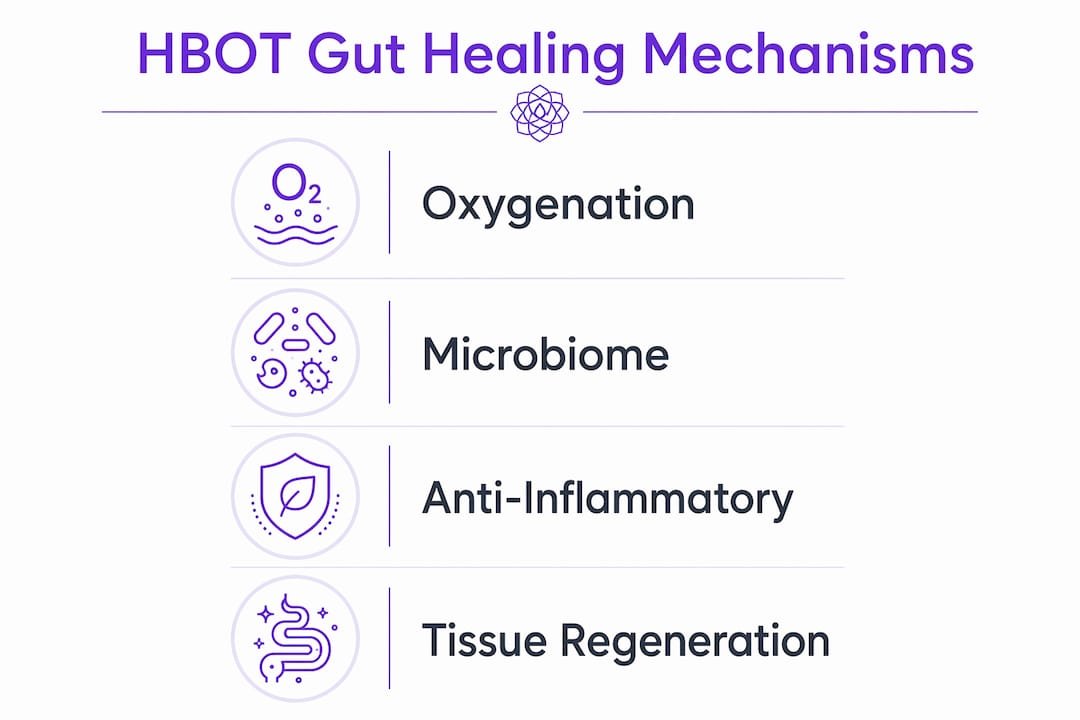
HBOT improves gut healing through four converging biological mechanisms: plasma oxygenation of hypoxic mucosa, microbiome rebalancing toward SCFA-producing taxa, cytokine downregulation, and regenerative angiogenesis with stem-cell recruitment.
| Point | Details |
|---|---|
| Core mechanism | HBOT dissolves oxygen in plasma at 2.0–3.0 ATA, bypassing damaged vessels to directly oxygenate starved intestinal mucosa. |
| Microbiome shift | Increased luminal oxygen suppresses Escherichia and raises Bifidobacterium and Clostridium XIVa, supporting SCFA production and barrier repair. |
| Clinical evidence | A 2024 Crohn’s study showed CRP fell from 80.79 to 33.32 mg/L and clinical remission reached 50% vs 20% when HBOT was combined with ustekinumab. |
| Evidence limitations | No large phase-3 RCTs exist; protocol heterogeneity and small samples mean response rates of ~78–86% are signals, not confirmed standards. |
| Live5dhealth | Live5dhealth offers HBOT sessions in Boyle, County Roscommon, as part of a supervised wellness programme designed to complement standard medical care. |
A measured perspective on HBOT for gut healing
The mechanistic case for HBOT in gut conditions is genuinely compelling, and the 2024 clinical data has moved it closer to evidence-based practice than many people realise. What I find most persuasive is not the headline response rates but the FMT causality data: when mice receiving gut bacteria from post-HBOT donors show reduced inflammation, that tells you the microbiome shift is doing real biological work, not just correlating with improvement.
That said, the gap between “promising adjunct” and “established therapy” is still wide for most GI indications. The protocols in published studies vary considerably, and the patients who respond best are not yet reliably identifiable in advance. Anyone approaching HBOT for a gut condition should do so with a gastroenterologist involved, a clear protocol agreed in advance, and realistic expectations about timelines. Biochemical markers can improve within weeks; endoscopic mucosal healing takes months and does not always follow.
The broader evidence on HBOT health benefits makes clear that this is a therapy with genuine multi-system reach. For gut conditions specifically, the strongest case is for perianal fistulae and refractory IBD as an adjunct to biologics. For conditions like SIBO, the data simply is not there yet. Honest enthusiasm, grounded in what the trials actually show, is the right posture.
HBOT sessions at Live5dhealth: what to do next
If you are considering HBOT as part of your gut health plan, Live5dhealth offers supervised HBOT sessions at its wellness centre in Boyle, County Roscommon, designed to work alongside your existing medical care rather than replace it.

Sessions are available as standalone bookings or as part of a luxury wellness retreat that combines HBOT with complementary therapies including red light therapy, PEMF, sauna, steam, and cold plunge. The centre’s approach is always adjunctive: you are encouraged to bring a referral letter or clinical summary from your gastroenterologist so that the team can align the protocol with your treatment history. Before your first session, prepare a brief summary of your current medications, any recent endoscopy results, and a list of questions for the clinical team. Readers interested in nutritional support alongside HBOT may also find the curcumin supplement guide useful, given curcumin’s complementary anti-inflammatory profile.
To enquire about availability or book an initial consultation, visit the Live5dhealth wellness centre page or contact the centre directly.
This article is general health information, not medical advice. Always discuss HBOT and any changes to your treatment plan with a qualified gastroenterologist or your GP.
Useful sources and further reading
The studies below form the primary evidence base for this article. Each is peer-reviewed and freely accessible via PubMed or PubMed Central.
- PMC11137966 — Gut microbiota and hyperbaric oxygen therapy (2024): The key 2024 Crohn’s clinical study reporting CRP and CDAI reductions and 50% remission at week 4 with HBOT plus ustekinumab. The strongest current controlled evidence for HBOT in Crohn’s disease.
- PMC11137967 — HBOT ameliorates intestinal inflammation by modulating gut microbiota dysbiosis in Crohn’s disease (2024): Provides the microbiome mechanism data, including FMT causality experiments showing that post-HBOT donor bacteria reduce inflammation in recipient mice.
- PMC10287057 — Role of HBOT in patients with IBD: Systematic review and meta-analysis reporting ~78% clinical response in Crohn’s cohorts and ~86% overall IBD response; also covers cytokine mechanisms and protocol heterogeneity.
- PMC8130665 — The role of HBOT in IBD: a narrative review: Mechanistic narrative review covering angiogenesis, VEGF signalling, and stem-cell recruitment; explains the regenerative pathway most relevant to fistulae and refractory ulcers.
- PMC12124697 — Gut microbiota and HBOT (physics and microbiome): Covers the physicochemical basis of plasma oxygenation at 2.0–3.0 ATA and the conflicting microbiome data on Firmicutes and Akkermansiaceae.
- PMC10858389 — New insights of hyperbaric oxygen therapy: Safety and adverse-event data across IBD studies; confirms low serious-event rates with appropriate screening.
- PubMed — Medical Gas Research: The primary journal for HBOT mechanistic and clinical research; a useful starting point for finding newer trials as the evidence base develops.
When reading any of these studies, note the sample sizes and protocol details before drawing conclusions. Small studies with heterogeneous protocols generate hypotheses; they do not yet set standards of care. Discuss any findings with your gastroenterologist, who can contextualise them against your specific clinical picture.