

Hyperbaric oxygen therapy (HBOT) is defined as a medical treatment in which you breathe pure oxygen inside a pressurised chamber, and its safety depends entirely on identifying contraindications and following a structured HBOT contraindications safety checklist before every session. The single absolute contraindication is an untreated pneumothorax, because pressure changes can convert a collapsed lung into a life-threatening tension pneumothorax. Beyond that, relative contraindications ranging from severe COPD and seizure disorders to drug interactions with bleomycin and cisplatin require careful physician assessment. Understanding these distinctions, alongside protocols such as air breaks for oxygen toxicity prevention and middle ear barotrauma screening, is what separates a safe, effective treatment from a preventable adverse event.
What are the absolute and relative contraindications for HBOT?
The absolute contraindication for hyperbaric therapy is an untreated pneumothorax. No other condition carries the same categorical prohibition, because every other risk factor falls into the relative category where physician judgement determines whether treatment proceeds.
Relative contraindications cover a broad range of conditions, and each requires individual assessment rather than automatic exclusion. The list includes:
- Severe COPD with bullae — enlarged air sacs that can rupture under pressure
- Active upper respiratory infection — impairs ear and sinus equalisation, raising barotrauma risk
- Recent ear, sinus, or thoracic surgery — healing tissue is vulnerable to pressure changes
- High fever — increases susceptibility to oxygen toxicity seizures
- Seizure disorder — elevated CNS oxygen exposure lowers the seizure threshold
- Claustrophobia — psychological distress inside the chamber can interrupt treatment
- Pregnancy — accepted for carbon monoxide poisoning but otherwise requires careful review
- Certain medications — particularly those with known drug-oxygen interactions
Drug interactions deserve particular attention because patients frequently overlook them. Bleomycin, doxorubicin, cisplatin, and disulfiram all carry documented interactions with high-pressure oxygen that can potentiate toxicity or cause pulmonary damage. Practitioners must ask explicitly about recent chemotherapy, because patients often omit this information unless directly prompted. Disulfiram, used in alcohol dependence treatment, is another commonly missed item on medication lists.
The practical implication is clear. A condition on the relative contraindications list does not automatically disqualify you from treatment. What it does mean is that your physician needs your complete medical picture before making that call. Incomplete disclosure is the most common reason a preventable complication occurs.

What safety protocols and checklist steps ensure safe HBOT treatment?
A well-run HBOT safety checklist covers five distinct areas: clinical screening, oxygen exposure management, fire risk prevention, barotrauma readiness, and emergency planning. Each one addresses a specific failure mode that has caused harm in poorly managed settings.
-
Clinical screening and informed consent. Proper clinical screening includes a full medical history review, medication reconciliation, and an explicit discussion of contraindications and side effects before the first session. Informed consent is not a formality. It is the mechanism by which you confirm you understand the risks and have disclosed everything relevant. Clinics using structured consent documentation processes are better positioned to capture this information consistently.
-
Oxygen exposure limits. Oxygen toxicity risk is directly controlled by pressure level, session duration, and the use of air breaks. Clinicians tailor these parameters to each patient’s risk profile, particularly for those with seizure history or high fever.
-
Air breaks protocol. Air breaks involve brief periods of breathing normal air during a session to reduce cumulative CNS oxygen exposure. Air breaks reduce seizure risk by a factor of 10. That is not a minor refinement. It is the single most impactful protocol element for preventing oxygen toxicity.
-
Pre-session prohibited items screening. Oxygen-enriched environments are highly flammable. Prohibited items include electronics, flammable materials, petroleum-based personal care products, and synthetic fabrics. Every patient should be screened before entering the chamber, without exception.
-
Ear and sinus equalisation readiness. Patients are assessed for their ability to equalise pressure in the ears and sinuses before treatment begins. Those with a history of ear problems or recent upper respiratory infections receive coaching on techniques such as the Valsalva manoeuvre before their first session.
-
Emergency action planning. Every accredited facility maintains documented emergency protocols, including procedures for oxygen toxicity events, fire, and psychological distress. Staff training on these protocols is a non-negotiable safety requirement.
Pro Tip: Ask your clinic directly whether they use air breaks during sessions and what their prohibited items policy is. A clinic that cannot answer these questions clearly is one you should think twice about using.
How can patients prepare for HBOT and what should they expect?
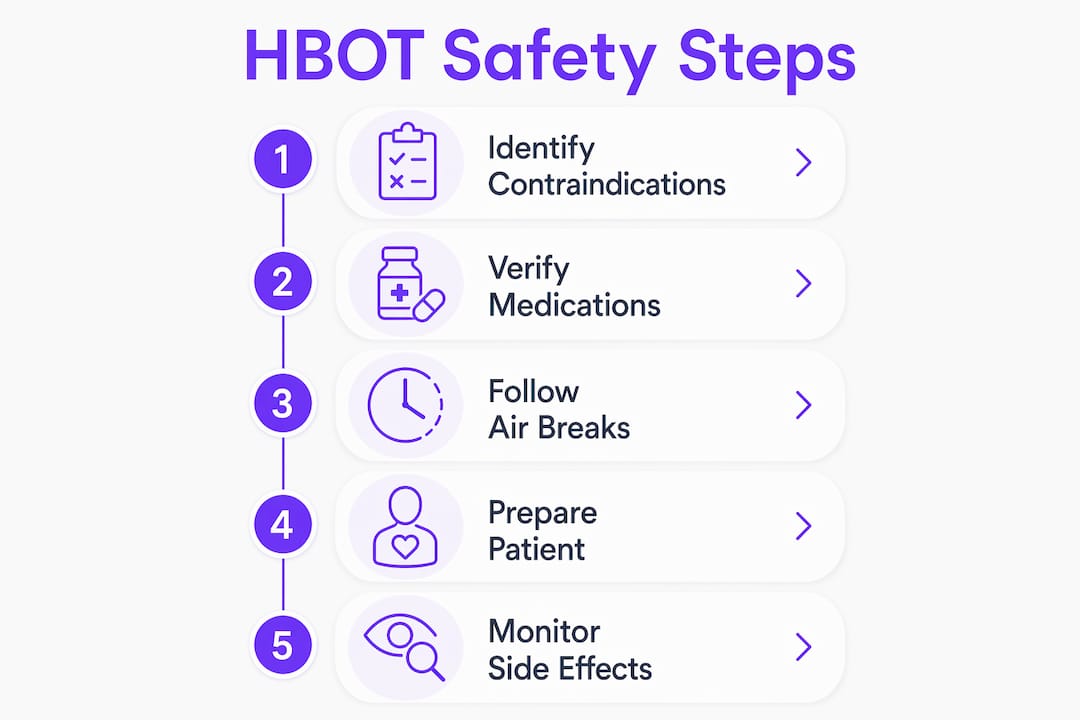
Your preparation before a session is as important as the clinic’s protocols. Arriving informed and ready reduces your personal risk and helps the treatment team do their job properly.
Before your first session, bring the following:
- A complete and current medication list, including supplements and any recent chemotherapy
- Details of any surgeries in the past three months, particularly ear, sinus, or chest procedures
- A record of any active infections, including sinus or respiratory conditions
- Information about any history of seizures, claustrophobia, or lung conditions
- Confirmation of your pregnancy status if applicable
Ear equalisation readiness significantly affects how well you tolerate treatment. If you have never equalised your ears before, practise the Valsalva manoeuvre at home: close your mouth, pinch your nose, and gently exhale. This is the same technique used by divers and aircraft passengers. Some clinics offer pre-session coaching, and you should take advantage of it if yours does.
During a session, you will typically experience a sensation of pressure in your ears during compression, similar to descending in an aeroplane. Sessions generally last 60 to 90 minutes at pressures between 1.5 and 3 atmospheres absolute, depending on the indication being treated. You will be monitored throughout, and you can communicate with staff at any time.
Pro Tip: Avoid alcohol and smoking for at least 24 hours before a session. Both affect vascular function and can reduce the therapeutic benefit of oxygen delivery at pressure.
Choosing an accredited clinic with established HBOT safety guidelines matters more than proximity or price. Look for facilities that conduct formal pre-treatment screening, have trained hyperbaric medicine staff, and can demonstrate their emergency protocols. Reading about common hyperbaric therapy misconceptions before your consultation will also help you ask better questions.
What are common HBOT side effects and how are they managed?
Most side effects from HBOT are mild, predictable, and manageable when protocols are followed correctly. Understanding them in advance removes the anxiety that can make treatment feel worse than it is.
Middle ear barotrauma affects roughly 2 to 5% of patients and is the most frequently reported complication. Symptoms include ear pain, a feeling of fullness, and occasionally mild hearing changes. The condition typically resolves with standard management, including decongestants and temporary treatment pauses. Pre-session equalisation training reduces its incidence substantially.
Temporary myopia occurs in approximately 20 to 30% of patients undergoing extended treatment courses. This is a reversible change in the lens of the eye caused by prolonged oxygen exposure, and it resolves within weeks of completing treatment. It is worth knowing about in advance so it does not alarm you if it occurs.
| Side effect | Incidence | Management |
|---|---|---|
| Middle ear barotrauma | 2 to 5% of patients | Equalisation technique, decongestants, temporary pause |
| Temporary myopia | 20 to 30% of extended courses | Resolves within weeks post-treatment |
| Oxygen toxicity seizure | Rare with air breaks protocol | Air breaks reduce risk by a factor of 10 |
| Claustrophobia or anxiety | Variable | Pre-session counselling, open communication with staff |
| Sinus squeeze | Less common than ear barotrauma | Decongestants, treatment pause if needed |
Oxygen toxicity seizures are rare when air breaks are used correctly and exposure parameters are properly controlled. They are generally self-limited, meaning they stop without lasting harm, but they require immediate clinical response. This is why emergency protocols and trained staff are non-negotiable features of any reputable facility. If you experience unusual symptoms such as visual disturbances, twitching, or nausea during a session, signal to staff immediately.
Key takeaways
Safe HBOT requires identifying contraindications before treatment, following air break protocols, completing pre-session screening, and choosing a clinic with trained staff and documented emergency procedures.
| Point | Details |
|---|---|
| Absolute contraindication | Untreated pneumothorax is the only absolute bar to HBOT; all other conditions are relative. |
| Drug interactions matter | Bleomycin, doxorubicin, cisplatin, and disulfiram require explicit disclosure before treatment. |
| Air breaks are critical | Air breaks reduce oxygen toxicity seizure risk by a factor of 10 and must be part of every protocol. |
| Ear preparation reduces risk | Practising equalisation techniques before sessions significantly lowers middle ear barotrauma incidence. |
| Clinic selection is a safety decision | Accredited facilities with formal screening, trained staff, and emergency protocols are the only appropriate choice. |
Why the safety conversation matters more than most patients realise
I have seen patients arrive at consultations having done extensive research on the benefits of HBOT and almost none on the safety side. That imbalance worries me. The therapy works, and the evidence for its approved indications is solid. But the gap between a well-run session and a poorly managed one is wider than most people appreciate.
The most common missed contraindication I encounter is medication-related. Patients who have completed chemotherapy sometimes do not mention it because they consider it finished. But residual bleomycin or doxorubicin exposure remains clinically relevant for HBOT risk assessment. The same applies to disulfiram, which patients may not think of as a drug that interacts with oxygen. Full disclosure is not optional. It is the foundation of your safety.
Protocol adherence is the other area where I see meaningful variation between facilities. Oxygen toxicity risk is not a fixed property of the therapy. It is a function of how the therapy is delivered. A clinic that skips air breaks or pushes pressure limits to shorten session times is not cutting corners on comfort. It is cutting corners on your safety. Ask directly about their protocols before you commit to treatment.
The good news is that when you choose the right facility, prepare properly, and disclose your full medical history, HBOT is a well-tolerated and genuinely effective therapy. Learning to maximise your results starts with getting the safety foundation right. Your best outcomes come from being an informed, prepared patient.
— Mark
Experience safe HBOT at Live5dhealth
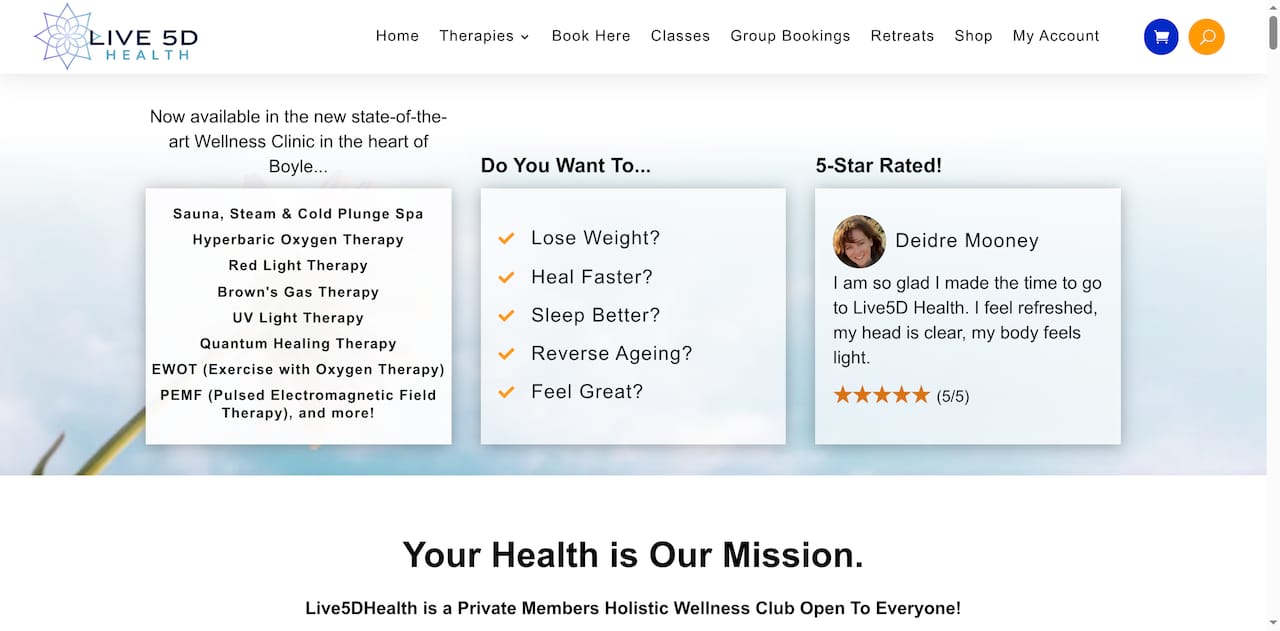
At Live5dhealth in Boyle, County Roscommon, patient safety is the starting point for every hyperbaric oxygen therapy session, not an afterthought. The team conducts thorough pre-treatment screening, follows established air break protocols, and ensures every client understands their personal risk profile before entering the chamber. The facility combines HBOT with a full suite of wellness services including luxury spa treatments, gym access, and recovery support, creating an environment where your health is supported at every stage. If you are exploring your options for safe, accredited hyperbaric therapy in Ireland, see how Live5dhealth compares to other leading wellness centres in the region.
FAQ
What is the only absolute contraindication for HBOT?
An untreated pneumothorax is the single absolute contraindication for hyperbaric oxygen therapy. Pressure changes during treatment can convert a collapsed lung into a life-threatening tension pneumothorax, making this the one condition that categorically prevents treatment.
Can I have HBOT if I take prescription medication?
Most medications are compatible with HBOT, but bleomycin, doxorubicin, cisplatin, and disulfiram require special caution or avoidance due to documented drug-oxygen interactions. Always bring a complete medication list to your pre-treatment screening appointment.
How common are side effects from hyperbaric oxygen therapy?
Middle ear barotrauma affects roughly 2 to 5% of patients and is the most common side effect, while temporary myopia occurs in approximately 20 to 30% of those undergoing extended treatment courses. Both conditions are manageable and typically resolve without lasting harm.
What are air breaks and why do they matter?
Air breaks are brief periods during a session when you breathe normal air instead of pure oxygen, reducing cumulative CNS oxygen exposure. They reduce the risk of oxygen toxicity seizures by a factor of 10 and are a standard feature of safe HBOT protocols.
How do I choose a safe HBOT clinic?
Look for clinics that conduct formal pre-treatment screening, use documented air break protocols, train staff in emergency procedures, and discuss contraindications and informed consent before your first session. Facilities that cannot clearly explain their safety protocols should be avoided.