

Hyperbaric oxygen therapy (HBOT) saturates your tissues with pressurised oxygen to drive cellular repair from the inside out. IV therapy delivers vitamins, minerals, amino acids and compounds such as NAD+ directly into your bloodstream, bypassing digestion entirely. The short rule of thumb: choose HBOT for chronic, hypoxic or tissue-repair goals; choose IV therapy for rapid nutrient repletion, hydration or short-term immune and performance support. Both therapies are available privately in the UK, and before booking either, it is worth checking NHS guidance and the standards set by the Undersea and Hyperbaric Medical Society. Live5dhealth, based in Boyle, County Roscommon, offers both modalities as part of integrated wellness protocols.
Table of Contents
- How hyperbaric oxygen therapy works
- What IV therapy is and how it works
- Side-by-side comparison: HBOT vs IV therapy
- How to decide: HBOT, IV therapy, or both?
- Safety, contraindications and UK regulatory checks
- What the evidence actually says
- Key takeaways
- A practitioner’s perspective on choosing wisely
- What Live5dhealth offers and how to book
- Further reading and sources
How hyperbaric oxygen therapy works
HBOT involves breathing 100% oxygen inside a pressurised chamber, either a monoplace unit (single person) or a multiplace chamber that accommodates several people at once. Under pressure of 1.5–3 times normal atmospheric levels, oxygen dissolves directly into the plasma rather than relying solely on haemoglobin, reaching tissues that poor circulation might otherwise leave starved.
According to the Mayo Clinic, course lengths vary enormously: a few sessions for some acute conditions, and many sessions for chronic non-healing wounds. Wellness protocols typically sit somewhere in between.
Common HBOT uses:
- Wound healing and post-surgical tissue repair
- Decompression illness and carbon monoxide poisoning (established clinical indications)
- Chronic inflammation and fatigue recovery
- Sports performance and post-exercise recovery
- Neurological support (emerging research area)
Typical sessions run about one to one and a half hours. Side effects are generally mild: ear pressure, sinus discomfort and, occasionally, claustrophobia. A suitability assessment before your first session is not optional — it is the standard of care.
“The goal is to fill the blood with enough oxygen to repair tissues and restore normal body function.” — Johns Hopkins Medicine
Pro Tip: Bring comfortable, loose cotton clothing to your session. Practice the Valsalva manoeuvre (gently pinching your nose and blowing) during pressurisation to equalise ear pressure and make the experience far more comfortable.
What IV therapy is and how it works
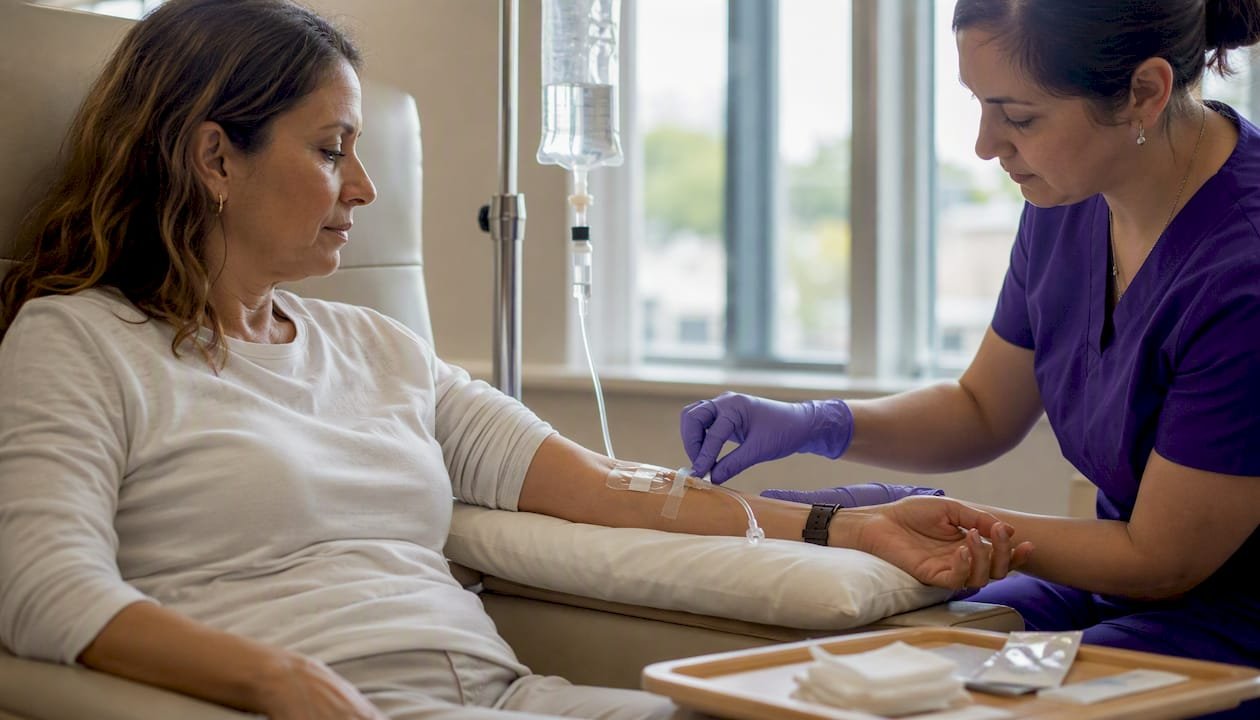
IV therapy delivers a personalised blend of nutrients directly into your bloodstream through a small cannula, typically placed in the forearm. Because the gut is bypassed entirely, absorption is immediate and complete — a meaningful pharmacokinetic advantage over oral supplements for people with compromised digestion or acute depletion.
Common IV menus include hydration drips, high-dose vitamin C, B-complex and glutathione blends, immune-support formulations, NAD+ infusions for cellular energy, and beauty or skin-brightening protocols. Clinical uses extend to post-illness recovery, pre- and post-operative nutritional support, and rehydration.
IV therapy’s core advantage is not just speed — it is certainty of delivery. A nutrient that sits in a compromised gut may never reach the cell. Intravenous administration removes that variable entirely.
Sessions typically run 30–60 minutes, with some clinics reporting 45–60 minutes as standard. Effects can be felt within hours for hydration and energy formulations, though longer courses are needed for sustained outcomes such as immune resilience.
Practical cautions matter here. Venous access carries a small risk of bruising, phlebitis or infection if sterile technique is not followed rigorously. Always confirm that IV therapy is administered by a registered nurse or doctor, and ask to see the clinic’s protocols for allergic reactions.
Side-by-side comparison: HBOT vs IV therapy
| Dimension | HBOT | IV Therapy |
|---|---|---|
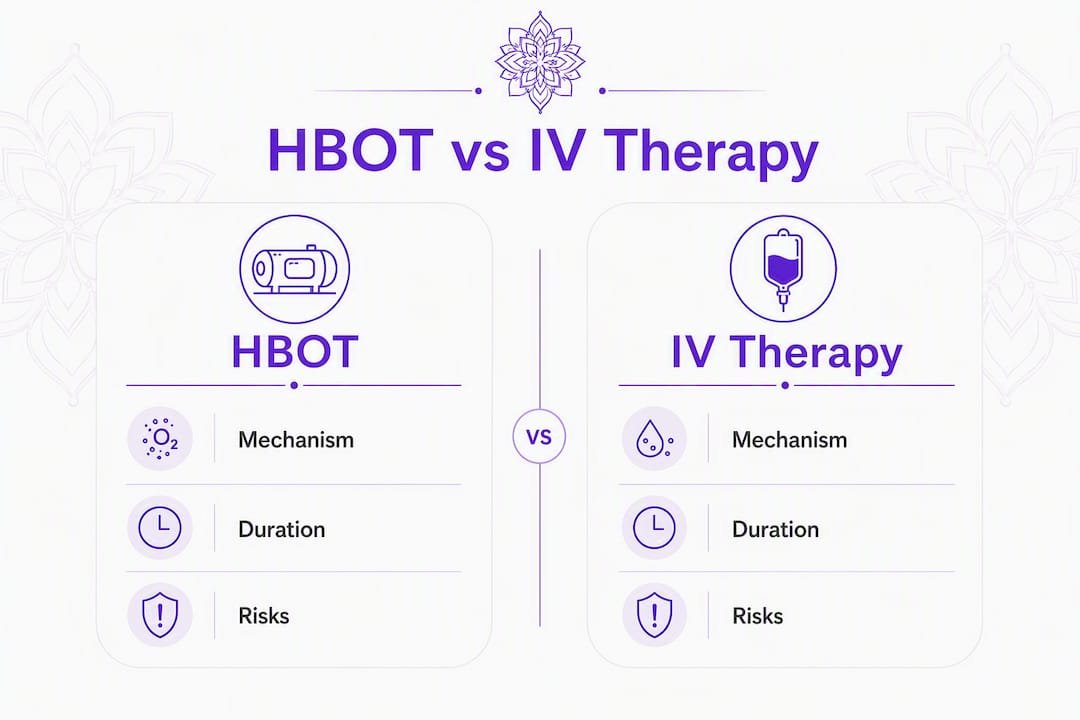
| Mechanism | Pressurised 100% oxygen dissolves into plasma; drives tissue oxygenation and repair | Nutrients, vitamins, minerals or compounds infused directly into the bloodstream |
| Primary uses | Wound healing, decompression illness, chronic hypoxia, neurological support, recovery | Hydration, nutrient repletion, immune support, energy, beauty, post-illness recovery |
| Evidence strength | Strong for established indications; mixed for broader wellness claims | Clear pharmacokinetic advantage; variable clinical evidence for wellness claims |
| Session length | 30–60 minutes | 30–60 minutes |
| Frequency | Often daily or 5×/week for clinical courses; less frequent for wellness | 1–3×/week depending on protocol |
| Risks | Ear barotrauma, claustrophobia, oxygen toxicity (rare) | Phlebitis, infection, allergic reaction |
| Best suited for | Chronic conditions, tissue repair, systemic hypoxia | Rapid repletion, acute fatigue, hydration, short-term performance |
Where the two therapies complement each other: clinics that offer both often design stacked protocols where IV nutrients supply the raw materials and HBOT improves tissue oxygenation so cells can actually use those materials. Research suggests this combination can be synergistic, with HBOT’s oxygen-driven metabolism helping tissues absorb and utilise the nutrients delivered by IV.
For a deeper look at combined wellness protocols, the Live5dhealth guide covers sequencing and integration in detail.
How to decide: HBOT, IV therapy, or both?
The decision comes down to your primary goal, your timeline and your clinical picture.
Choose HBOT when you have:
- Non-healing or slow-healing wounds
- Chronic fatigue linked to poor tissue oxygenation
- Post-surgical recovery needs
- Radiation injury or decompression illness
- A goal of neurological support or cognitive recovery
Choose IV therapy when you need:
- Rapid rehydration or electrolyte restoration
- Acute nutrient depletion (post-illness, post-travel, post-surgery)
- Short-term immune or energy support
- A targeted compound (NAD+, glutathione, high-dose vitamin C) that oral dosing cannot reliably deliver
Combining both: if you are running a stacked protocol, the sequencing question matters. IV first, then HBOT within a few hours, is a common approach: the IV loads the tissues with nutrients, and the subsequent HBOT session drives oxygen-enhanced metabolism to help cells use them. The reverse order also has rationale for some protocols. Ask your practitioner to explain the reasoning for whichever sequence they recommend.
Questions to ask any provider before booking:
- Is the chamber accredited and clinically supervised?
- What qualifications does the practitioner administering IV therapy hold?
- What is the monitoring protocol during and after sessions?
- What is the expected course length and how will progress be measured?
- How does this fit alongside any existing NHS care or medication?
Red flags that mean GP first, private therapy second:
- Untreated pneumothorax (collapsed lung) — an absolute contraindication for HBOT
- Uncontrolled hypertension or a recent cardiac event
- History of seizures
- Pregnancy (requires specialist medical clearance)
- Active infection or fever before an IV session
Safety, contraindications and UK regulatory checks
Both therapies carry real risks when delivered without proper oversight. Knowing what to screen for protects you.
| Risk category | HBOT | IV Therapy |
|---|---|---|
| Common side effects | Ear barotrauma, sinus discomfort, temporary vision changes | Bruising at cannula site, mild nausea, headache |
| Serious risks | Oxygen toxicity (seizures at very high pressures), fire risk in chamber | Phlebitis, systemic infection, anaphylaxis |
| Absolute contraindications | Untreated pneumothorax | Known allergy to infusion components |
| Relative contraindications | Uncontrolled hypertension, seizure history, certain ear conditions | Renal impairment, cardiac conditions, pregnancy |
| Practitioner requirement | Clinician-supervised; chamber should meet accreditation standards | Registered nurse or doctor; sterile technique mandatory |
“Patients should ask whether the chamber and staff meet national standards and whether treatments are clinician-supervised.” — Cleveland Clinic
In the UK, HBOT is regulated as a medical device and treatment. The MHRA oversees medical devices including hyperbaric chambers, and the British Hyperbaric Association sets accreditation standards for clinical facilities. For IV therapy, the Care Quality Commission (CQC) regulates clinics providing medical treatments in England. Always ask whether a provider is registered and whether their protocols follow current NHS or professional body guidance.
If you have an existing medical condition, speak to your GP before booking either therapy privately. Private treatment complements NHS care — it does not replace clinical assessment.
For a full contraindications list for HBOT, the Live5dhealth guide covers screening criteria in detail.
This article is general information, not medical advice. Confirm suitability with your GP or a qualified specialist before starting any new therapy.
What the evidence actually says
HBOT has a well-established evidence base for its approved indications. PubMed-indexed research confirms its clinical use for wound healing, decompression sickness and carbon monoxide poisoning. For broader wellness applications, the picture is more nuanced. Harvard Health notes that while HBOT is approved for a range of serious conditions, some claims made by private clinics lack robust scientific support.
Neurological applications are an active research area. A PMC review found improvements in cerebral blood flow, brain metabolism and cognitive function in selected studies, though trial sizes remain small and methodologies vary. This is promising territory, not settled science.
For IV therapy, the pharmacokinetic case is strong: intravenous delivery guarantees bioavailability in a way oral supplementation cannot. The clinical evidence for specific wellness formulations, however, is thinner. High-dose IV vitamin C has the most research behind it; many beauty and energy blends rely more on clinical rationale than large randomised trials.
The honest summary: both therapies have a legitimate place in a well-designed wellness protocol. The key is matching the therapy to a goal it is actually suited for, with realistic expectations about timescales and outcomes. Accredited providers who offer an initial assessment and measurable goals are the ones worth booking.
Key takeaways
HBOT and IV therapy work through entirely different mechanisms, and choosing between them depends on whether your primary need is systemic tissue oxygenation or targeted nutrient delivery.
| Point | Details |
|---|---|
| Core difference | HBOT raises tissue oxygen levels under pressure; IV therapy delivers nutrients directly into the bloodstream. |
| When to choose HBOT | Chronic hypoxia, wound healing, tissue repair and neurological support benefit most from HBOT. |
| When to choose IV therapy | Rapid rehydration, acute nutrient depletion and short-term immune or energy support suit IV therapy. |
| Safety red flags | Untreated pneumothorax (HBOT) and known allergies to infusion components (IV) are absolute contraindications. |
| Live5dhealth option | Live5dhealth offers both HBOT and IV therapy as part of integrated wellness protocols, with an initial assessment to match the right approach to your goals. |
A practitioner’s perspective on choosing wisely
The most common mistake people make with these two therapies is treating them as interchangeable alternatives rather than tools with distinct jobs. HBOT is not a faster IV drip, and IV therapy is not a substitute for the systemic tissue changes that pressurised oxygen drives. They solve different problems.
What concerns me more, though, is the growing number of people booking sessions based on social media claims rather than a proper assessment. The evidence for HBOT in wound healing and decompression illness is solid and decades deep. The evidence for some of the broader wellness claims, on both sides of this comparison, is thinner than the marketing suggests. That does not make these therapies ineffective — it means the goal has to be right for the tool.
The combination protocols are where things get genuinely interesting. When IV nutrients are followed by HBOT within a well-designed session plan, the synergy is real: oxygen-driven cellular metabolism can make better use of the nutrients already in circulation. But that only works when the sequencing is deliberate and the formulations are matched to the individual’s actual deficiencies, not a generic menu.
My advice: ask any provider for their assessment process before you ask about their price list. A clinic that starts with a health history, a clear goal and a measurable outcome is one worth trusting.
What Live5dhealth offers and how to book
Live5dhealth, at our centre in Boyle, County Roscommon, offers HBOT sessions, a range of IV therapy protocols and combined assessment packages designed to match the right therapy to your specific health goals. Whether you are managing a chronic condition, recovering from illness or simply looking to perform and feel your best, the team starts every new client with a thorough assessment before recommending a protocol.
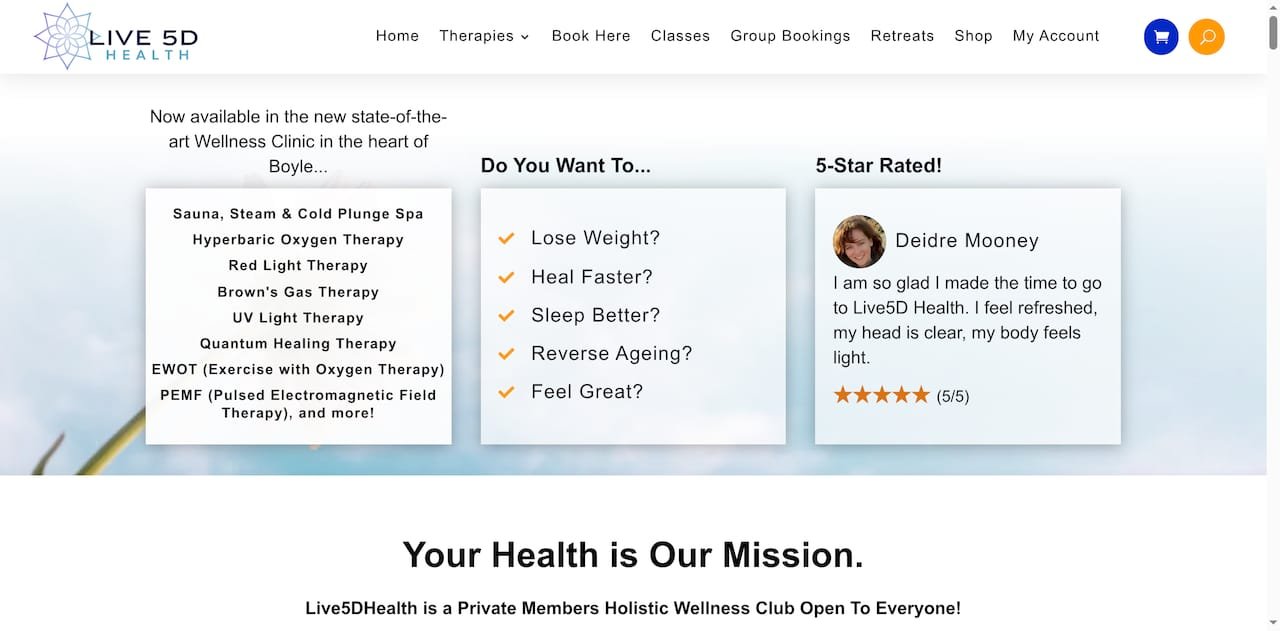
Our luxury spa and therapy centre integrates HBOT with complementary modalities including red light therapy, PEMF, sauna, cold plunge and holistic massage, so your protocol can be as targeted or as comprehensive as your goals require. For those wanting a deeper reset, our healing retreats in the west of Ireland offer multi-day immersive programmes where HBOT and IV therapy can be combined within a structured, supervised schedule.
To book an initial assessment or ask about current availability, visit live5dhealth.com or contact the centre directly. Your first conversation costs nothing — and it is the most important step before any session.
Further reading and sources
- Hyperbaric oxygen therapy: Evidence-based uses and unproven claims — Harvard Health
- Hyperbaric Oxygen Therapy — Johns Hopkins Medicine
- Hyperbaric Oxygen Therapy — Mayo Clinic
- Hyperbaric Oxygen Therapy: What It Is and Benefits — Cleveland Clinic
- PubMed overview of hyperbaric oxygen therapy
- Hyperbaric Oxygen Treatment: From Mechanisms to Cognitive Improvement — PMC
- Hyperbaric Patient Selection — StatPearls, NCBI Bookshelf
- Live5dhealth: HBOT health benefits guide
- Live5dhealth: What to expect from HBOT treatment
Before booking any private therapy, check your provider’s accreditation with the British Hyperbaric Association (for HBOT) or the Care Quality Commission (for IV clinics in England), and consult your GP if you have an existing medical condition.