

The single most reliable way to improve gut health over 40 combines plant-food diversity, steady fibre intake, 7–9 hours of sleep, stress management, and targeted probiotic use after antibiotics. That combination, supported by research from Johns Hopkins Medicine, Harvard Health, and UCLA Health, addresses the real physiological shifts that happen in your digestive system from midlife onwards.
Dr Gerard Mullin of Johns Hopkins Medicine highlights that the gut–brain connection makes sleep and stress management as important as diet for reducing symptoms like heartburn and managing IBS. These are not optional extras.
At least 40% of older adults report at least one digestive complaint, according to UCLA Health — making midlife gut changes one of the most common, and most manageable, health concerns women face.
Key points to hold in mind from the outset:
- Dietary diversity and fibre are the foundation; supplements come second.
- Sleep deprivation and chronic stress directly worsen reflux, bloating, and IBS symptoms.
- Probiotics are most useful after antibiotics, not as a daily default.
- Red flags (blood in stools, unexplained weight loss, severe pain) need prompt NHS/GP review.
Table of Contents
- Ten practical steps to improve your gut health this week
- What to eat (and avoid) after 40: fibre, fermented foods and smart choices
- Sleep, stress and movement: how the gut–brain axis affects you
- Probiotics, magnesium, curcumin and clinical therapies: what actually helps
- Which tests are useful, and when should you see your GP?
- A UK-friendly 3-day meal plan for gut health
- Key takeaways
- The Live5dhealth perspective on gut health for women over 40
- Live5dhealth: guided gut health support in person
- Useful sources and further reading
Ten practical steps to improve your gut health this week
Start here. These steps are ordered by ease and impact, so you can build momentum without overhauling everything at once.
- Increase fibre intake gradually towards a level that supports digestive health. Add one new fibre source every few days rather than all at once, per the evidence-based midlife protocol from Morlongevity.
- Prioritise sufficient sleep each night to support gut health — Sleep deprivation is linked to higher rates of digestive disorders; protecting sleep is a direct gut-health lever.
Pro Tip: Introduce new fibre sources with a large glass of water and spread them across meals rather than loading them at dinner. This reduces fermentation-driven bloating significantly in the first two weeks.
What to eat (and avoid) after 40: fibre, fermented foods and smart choices
Your microbiome thrives on variety. Harvard Health confirms that a diet rich in fruits, vegetables, legumes, and wholegrains is the primary driver of microbial diversity — more so than any single supplement.
Fibre: the non-negotiable foundation
Target a balanced fibre intake, including both soluble and insoluble types, to support gut bacteria and bowel regularity. Soluble fibre (oats, lentils, apples, flaxseed) feeds beneficial bacteria and softens stools. Insoluble fibre (wholegrain bread, bran, leafy greens) adds bulk and speeds transit. If bloating is a problem, prioritise soluble fibre first and increase insoluble sources slowly.
Prebiotic and fermented foods
Prebiotics feed your existing gut bacteria. Practical UK sources include onions, garlic, leeks, bananas (slightly underripe), oats, and chicory root. Fermented foods introduce live cultures: live yoghurt, kefir (widely available in UK supermarkets), sauerkraut, kimchi, and miso. A realistic starting point is one small serving of a fermented food daily.
Protein and portion size
Women over 40 need adequate protein to preserve muscle mass and support gut-lining integrity. Aim for adequate protein intake per main meal to support muscle and gut lining health from sources such as eggs, oily fish, chicken, legumes, or quality protein powders. Smaller, more frequent meals reduce pressure on a slower digestive system.
Alcohol and caffeine
Both increase gastric acid and can worsen reflux. Alcohol also disrupts the gut lining directly. Limiting alcohol intake to within recommended guidelines helps maintain gut health. Moderating coffee intake to a few cups daily helps prevent worsening reflux symptoms.
| Dimension | Target / Guidance |
|---|---|
| Daily hydration | 2–3 litres of water |
| Fermented foods | 1 serving daily (e.g., 150g live yoghurt or 200ml kefir) |
| Alcohol | No more than 14 units per week (NHS guideline) |
Sleep, stress and movement: how the gut–brain axis affects you
The gut and brain communicate constantly via the vagus nerve. Dr Gerard Mullin at Johns Hopkins explains that this bidirectional connection means stress and poor sleep directly worsen heartburn, bloating, and IBS symptoms. Managing your nervous system is, quite literally, managing your gut.
Sleep deprivation is linked to a higher prevalence of digestive disorders. The recommended window is 7–9 hours per night — not as a wellness aspiration, but as a clinical lever for gut function.
Sleep hygiene checklist
- Keep a consistent wake time, even at weekends.
- Avoid screens for 60 minutes before bed.
- Keep the bedroom cool (around 18°C).
- Avoid large meals within two hours of sleep.
Stress management
Two techniques with good evidence for gut symptoms: box breathing (inhale 4 counts, hold 4, exhale 4, hold 4) practised for five minutes daily, and a short body-scan mindfulness session before sleep. Both activate the parasympathetic nervous system, which governs digestion. If anxiety is a persistent driver of your gut symptoms, addressing it directly produces faster relief than dietary changes alone.
Movement
Daily movement supports microbial diversity and gut motility. Post-meal walks are the easiest entry point. Two to three sessions of gentle resistance work per week also supports the gut lining and reduces systemic inflammation. You do not need high-intensity exercise; consistency matters far more than intensity.
Probiotics, magnesium, curcumin and clinical therapies: what actually helps
Supplements are supportive, not foundational. Diet comes first.
Probiotics
Harvard Health is clear: probiotics are most useful after antibiotics to help re-establish microbial diversity. Adding a single-strain probiotic to an already diverse microbiome produces limited benefit. If you have recently taken antibiotics, a multi-strain probiotic for 4–8 weeks is a reasonable step. For IBS-D or post-antibiotic recovery, look for strains with clinical evidence such as Lactobacillus rhamnosus GG or Saccharomyces boulardii.
Magnesium
Magnesium glycinate is well-tolerated and supports bowel regularity. A moderate dose of magnesium glycinate daily, taken in the evening, can support bowel regularity. Check with your GP before starting if you have kidney disease. Full dosing and formulation guidance is available in the magnesium supplements guide.
Curcumin
Curcumin (the active compound in turmeric) has anti-inflammatory properties relevant to gut-lining health. Bioavailability is low without piperine (black pepper extract); look for formulations that include it. The curcumin guide for over-40s covers dosing and safety in detail. Avoid high-dose curcumin if you have active peptic ulcers or take blood thinners.
HBOT and clinic therapies
Hyperbaric Oxygen Therapy (HBOT) is an adjunctive therapy with emerging evidence for gut-lining integrity and inflammatory bowel conditions. The mechanisms behind HBOT for gut healing are well documented at a cellular level, though large-scale clinical trials in healthy midlife women remain limited. Red light therapy and PEMF therapy are similarly positioned: promising adjuncts, not replacements for dietary and lifestyle foundations.
Safety checklist
- Always consult your GP before starting supplements if you are on prescription medication.
- Betaine HCl is not appropriate if you have active ulcers or take NSAIDs.
- Menopause-related hormonal changes can alter how supplements are metabolised; discuss with your GP or a registered nutritionist.
- Review all supplements with your GP annually.
Pro Tip: Buy supplements from a reputable source that provides third-party testing certificates. Potency and purity vary widely between brands.
Which tests are useful, and when should you see your GP?
Tests worth considering
- Stool microbiology: useful if you have persistent diarrhoea, suspected infection, or post-travel symptoms.
- SIBO breath test: consider if you have chronic bloating, particularly after carbohydrate-rich meals, unresponsive to dietary changes.
- Coeliac serology (tTG-IgA): request this before trialling a gluten-free diet; the test requires gluten to be in your diet to be accurate.
- Full blood count and iron levels: anaemia can present with fatigue and altered bowel habit.
- Thyroid function (TSH): hypothyroidism causes constipation and is more common in women over 40.
Red flags: contact your GP promptly
- Blood in stools (red or dark/tarry).
- Unexplained weight loss of 5% or more over 3 months.
- Persistent change in bowel habit lasting more than 3 weeks.
- Severe or worsening abdominal pain.
- Difficulty swallowing.
- Anaemia symptoms (extreme fatigue, breathlessness) alongside gut symptoms.
Before your GP appointment
- Keep a bowel diary for 7–14 days (frequency, consistency, pain, food triggers).
- List all medications and supplements, including over-the-counter products.
- Note any recent antibiotic courses.
- Write down your top three symptoms and when they started.
A UK-friendly 3-day meal plan for gut health
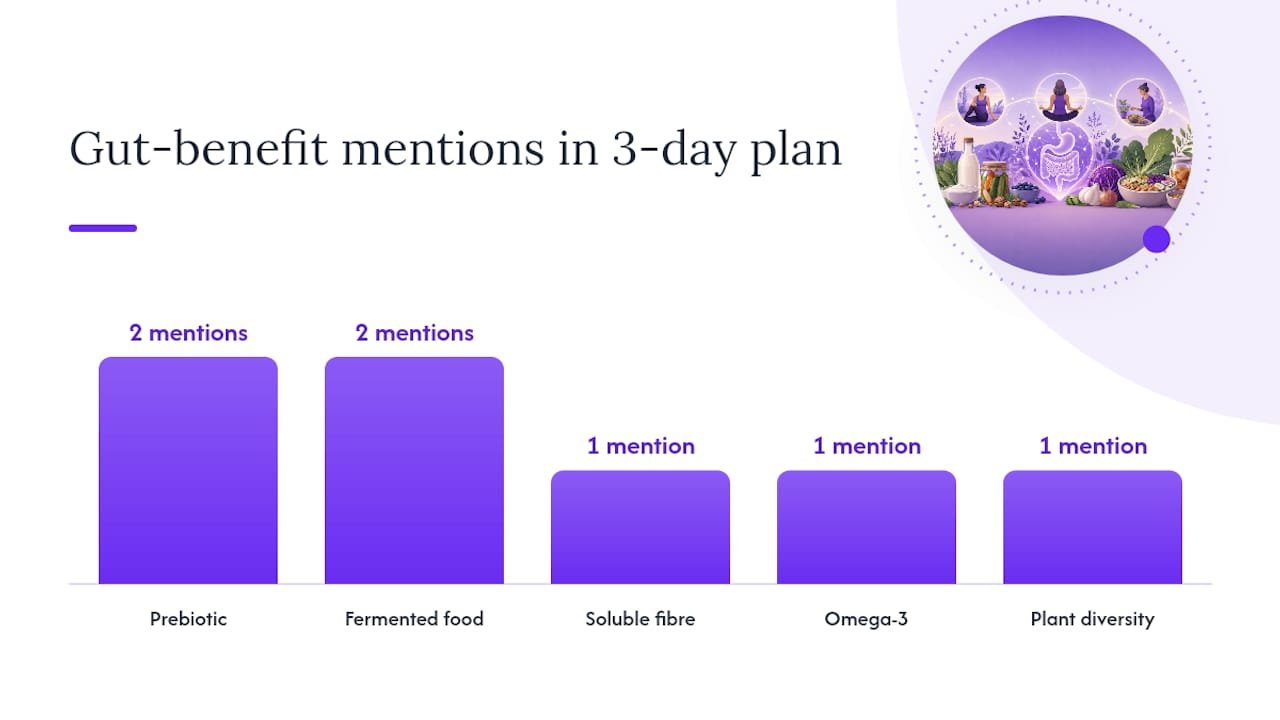
| Day | Breakfast | Lunch | Dinner | Gut benefit |
|---|---|---|---|---|
| Day 1 | Porridge with flaxseed, banana, and live yoghurt | Lentil soup with wholegrain bread | Baked salmon, roasted sweet potato, steamed broccoli | Soluble fibre, omega-3, prebiotic |
| Day 2 | Scrambled eggs on rye toast with sauerkraut | Chickpea and spinach salad with olive oil | Chicken stir-fry with garlic, leeks, brown rice | Prebiotic, fermented food, plant diversity |
| Day 3 | Kefir smoothie with oats, berries, and chia seeds | Mackerel on wholegrain toast with cucumber | Lentil dhal with brown rice and wilted greens | Fermented food, fibre, anti-inflammatory |
Quick recipe: overnight oat kefir pot
Combine 50g rolled oats, 150ml plain kefir, 1 tbsp chia seeds, and a handful of frozen berries. Refrigerate overnight. Ready in the morning with no cooking.
Quick recipe: one-pan lentil dhal
Sauté one onion, two garlic cloves, and a thumb of ginger in olive oil. Add 200g red lentils, one tin of chopped tomatoes, 500ml vegetable stock, and 1 tsp turmeric. Simmer 20 minutes. Serve with brown rice and wilted spinach.
Shopping tips
- Kefir and live yoghurt are stocked in most UK supermarkets (Tesco, Sainsbury’s, Waitrose, M&S).
- Batch-cook lentils and brown rice on Sundays to reduce weekday prep time.
- Frozen berries and spinach are nutritionally equivalent to fresh and significantly cheaper.
Key takeaways
Improving gut health after 40 comes down to one consistent principle: dietary diversity and fibre are the foundation, with sleep, stress management, and targeted supplements as powerful supporting layers.
| Point | Details |
|---|---|
| Fibre is the foundation | Aim for a balanced fibre intake, increased gradually to avoid bloating. |
| Sleep and stress matter as much as diet | The gut–brain axis means 7–9 hours of sleep and daily stress management directly reduce digestive symptoms. |
| Probiotics have a specific role | Most useful after antibiotics; diet drives long-term microbiome diversity, not daily probiotic supplements. |
| Know your red flags | Blood in stools, unexplained weight loss, or a persistent change in bowel habit require prompt GP review. |
| Live5dhealth supports the clinical layer | HBOT, red light therapy, magnesium, and curcumin supplements are available as evidence-aware adjuncts to lifestyle foundations. |
The Live5dhealth perspective on gut health for women over 40
The conventional gut-health conversation focuses almost entirely on what you eat. That is not wrong, but it is incomplete. What we see consistently at Live5dhealth is that women who have already cleaned up their diet and still struggle with bloating, reflux, or sluggish digestion are almost always under-sleeping, over-stressed, or dealing with the hormonal shifts of perimenopause that alter gut motility and microbial balance. The dietary work is necessary but rarely sufficient on its own.
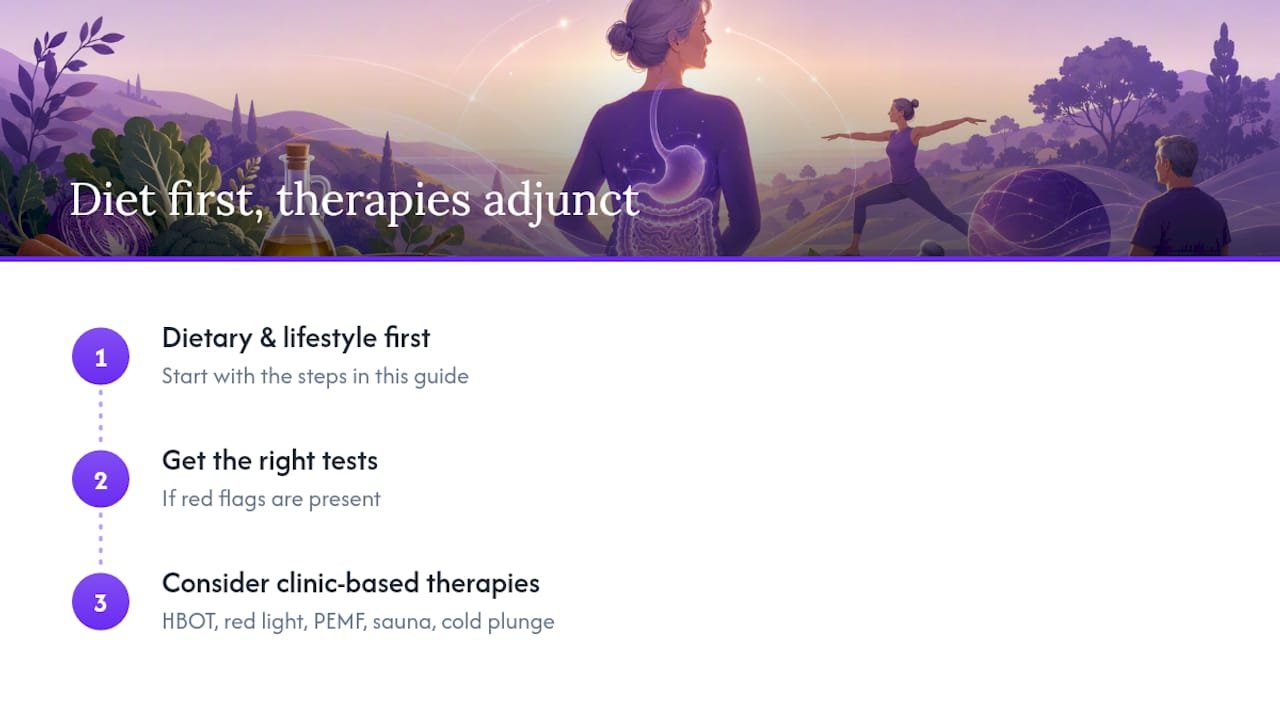
The therapies we offer at Live5dhealth — HBOT, red light therapy, PEMF, sauna, and cold plunge — are not alternatives to the dietary and lifestyle foundations described in this guide. They are adjuncts that support cellular repair, reduce systemic inflammation, and help the nervous system shift out of the chronic stress state that keeps gut symptoms locked in. The evidence for HBOT in gut-lining integrity is particularly compelling, even if large trials in healthy midlife women are still catching up with the clinical observations.
Our recommended pathway: start with the dietary and lifestyle steps in this guide, get the right tests if red flags are present, and then consider clinic-based therapies as a layer of support once the foundations are in place. That sequencing produces the best outcomes.
Live5dhealth: guided gut health support in person
If you have worked through the dietary and lifestyle steps and want structured, in-person support, Live5dhealth offers a full suite of therapies at our wellness centre in Boyle, County Roscommon, Ireland. Women over 40 dealing with persistent gut symptoms, post-antibiotic recovery, or the digestive effects of perimenopause are exactly who our clinic is built for.

Our luxury spa and therapy centre combines HBOT, red light therapy, sauna, steam room, and cold plunge with access to a curated range of gut-health supplements, including magnesium glycinate and curcumin. For women who want an immersive reset, our healing retreats in the west of Ireland provide a structured, supported environment to implement everything in this guide.
Practical next steps:
- Book an initial consultation at Live5dhealth to discuss your symptoms and test results
- Browse our supplements range online if you want to start with magnesium or curcumin before your visit.
Useful sources and further reading
- Your Digestive System: 5 Ways to Support Gut Health | Johns Hopkins Medicine
- Healthy gut, healthier aging — Harvard Health
- 5 Gut Health Mistakes People Make After 40 (And How to Fix Them) — Morlongevity
- How to keep your digestive system healthy as you age | UCLA Health
- Love your gut: Simple ways to support digestion as you grow older – University of Maryland Medical System Health Hub
This article provides general health information and is not a substitute for professional medical advice. Consult your GP or a qualified healthcare professional before making significant changes to your diet, supplement routine, or treatment plan.