
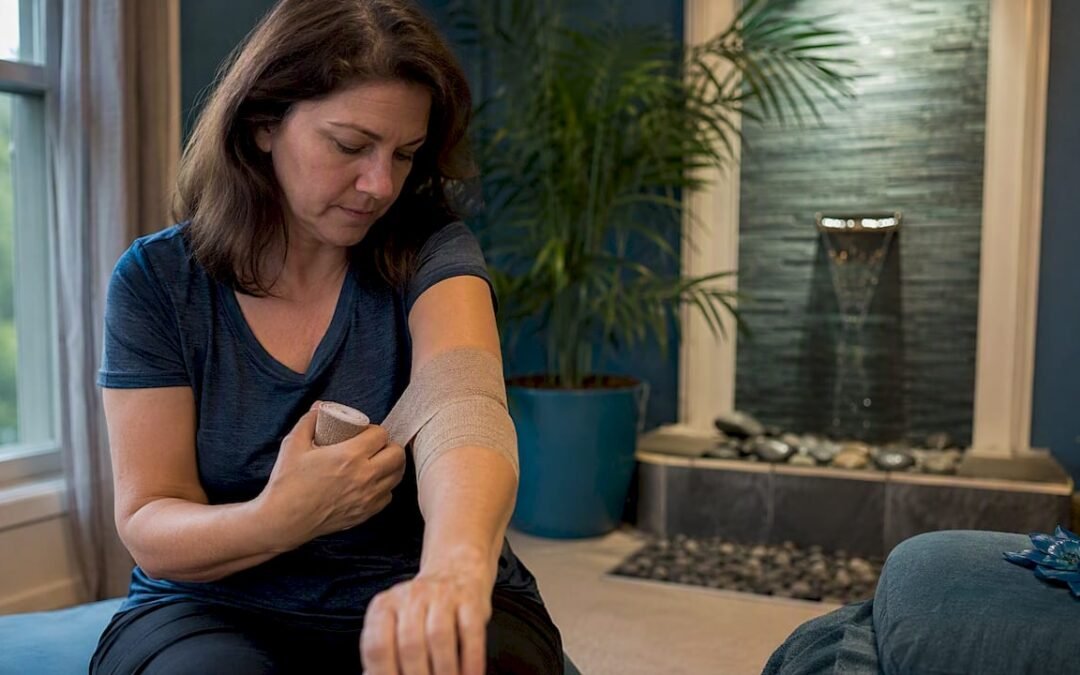
Lymphoedema after cancer is long-term swelling caused by a build-up of lymph fluid where cancer or its treatment has damaged the lymphatic drainage system. If you notice swelling, heaviness or tightness in a limb or near a surgical site, contact your GP or cancer team promptly. You do not need to wait for a formal diagnosis before asking for help.
Two immediate actions to take right now:
- Contact your GP or cancer team and describe when the swelling started, which area is affected, and whether anything makes it better or worse.
- Keep a simple record — note the date swelling began, take photographs, and track any changes in size, skin texture or sensation.
Urgent warning: If the swollen area becomes red, warm, or painful, or if you develop a fever, these are signs of cellulitis (a skin infection). Seek same-day medical attention — do not wait for a routine appointment.
Cancer Research UK, Macmillan Cancer Support, and the NHS all provide trusted, evidence-based guidance on lymphoedema after cancer. Among breast cancer survivors, reported rates range from approximately 10% to 40%, depending on the type of surgery and whether radiotherapy was used — so you are far from alone in facing this.
Key takeaways
Post-cancer lymphoedema is a chronic but manageable condition, and early recognition combined with consistent self-management gives you the best possible long-term outcome.
| Point | Details |
|---|---|
| What it is | A build-up of lymph fluid causing swelling where cancer or treatment has damaged lymph drainage. |
| Main risk triggers | Lymph node removal, radiotherapy, higher BMI and post-surgical infection all raise the risk significantly. |
| Three immediate actions | Contact your GP or cancer team, keep a symptom diary, and seek same-day care if redness or fever develops. |
| Core self-care | Daily skin care, prescribed compression garments, progressive exercise and weight management are the pillars of control. |
| Where to get help | NHS lymphoedema services, Cancer Research UK, Macmillan and the Lymphoedema Support Network all offer UK-specific guidance. |
Table of Contents
- How the lymphatic system works and what changes in lymphoedema
- How cancer and its treatment can lead to lymphoedema
- Who is most likely to develop lymphoedema after cancer?
- Symptoms to watch for and when to contact your healthcare team
- How lymphoedema is diagnosed in the UK and the referral pathway
- Evidence-backed treatments and daily self-management for post-cancer swelling
- Practical steps to lower your risk after cancer treatment
- What the evidence shows about long-term outlook and complications
- Living well with lymphoedema: UK support and daily life
- A perspective worth sharing
- Sources
How the lymphatic system works and what changes in lymphoedema
Your lymphatic system is a network of vessels, nodes and organs that drains excess fluid from your tissues, filters waste, and plays a central role in fighting infection. Lymph fluid moves through this network and is eventually returned to the bloodstream. When the system is working well, fluid does not accumulate.
In lymphoedema, that drainage is disrupted. Fluid collects in the spaces between skin and muscle, causing swelling that can feel tight, heavy or uncomfortable. Over time, if the fluid is not managed, the tissue can thicken and harden through a process called fibrosis, making the condition progressively harder to control.
Clinical reality: According to NCBI clinical data, lymphoedema is usually chronic — treatment controls symptoms effectively but does not cure the underlying drainage problem. Starting treatment early is the single most important factor in long-term control.
There are two types. Primary lymphoedema arises from a developmental problem with the lymphatic system itself. Secondary lymphoedema, which is what most cancer patients experience, develops when an otherwise healthy lymphatic system is damaged or blocked. Post-cancer lymphoedema is almost always secondary, and it is the most common form seen in NHS lymphoedema services across the UK.
How cancer and its treatment can lead to lymphoedema
Surgery and radiotherapy are the most common causes of post-cancer lymphatic damage, though the tumour itself can also obstruct lymph channels directly. Understanding which treatments carry the highest risk helps you know what to watch for.
Treatment-related causes include:
- Surgical removal of lymph nodes (lymph node dissection), particularly axillary dissection for breast cancer or pelvic node clearance for gynaecological and urological cancers
- Radiotherapy directed at nodal regions, which can scar and narrow lymphatic vessels
- Combined surgery and radiotherapy, which carries a higher cumulative risk than either alone
- Post-surgical complications such as seroma (fluid collection at the wound site) or wound infection, which can further disrupt drainage
- Some systemic therapies that contribute to tissue inflammation
Cancer Research UK guidance notes that wherever possible, treatment plans are designed to spare lymph nodes, because preventing lymphatic damage is the most effective way to reduce long-term risk.
One important development in surgical practice is the sentinel lymph node biopsy. Rather than removing all nodes in a region, surgeons identify and remove only the first one or two nodes most likely to contain cancer cells. If those nodes are clear, the remaining nodes are left intact. This approach substantially reduces the risk of lymphoedema compared with full node dissection, and Cancer Research UK describes it as a key prevention strategy where clinically appropriate.
Pro Tip: Ask your surgical team before your operation whether sentinel node biopsy or lymphatic-sparing techniques are suitable for your cancer type and stage. Not every patient is a candidate, but it is worth the conversation.
Who is most likely to develop lymphoedema after cancer?
Risk depends on several factors working together: the type of cancer, how many lymph nodes were removed, the dose and field of radiotherapy, and individual patient characteristics. No single factor tells the whole story.
Patient-level risk factors include:
- Higher body mass index (BMI) — elevated BMI is a reproducible risk amplifier for both the likelihood and severity of lymphoedema
- Reduced mobility or prolonged immobility after surgery
- Previous infections in the affected limb or region
- Older age and the presence of other health conditions affecting circulation
- Wound complications or repeated procedures in the same area
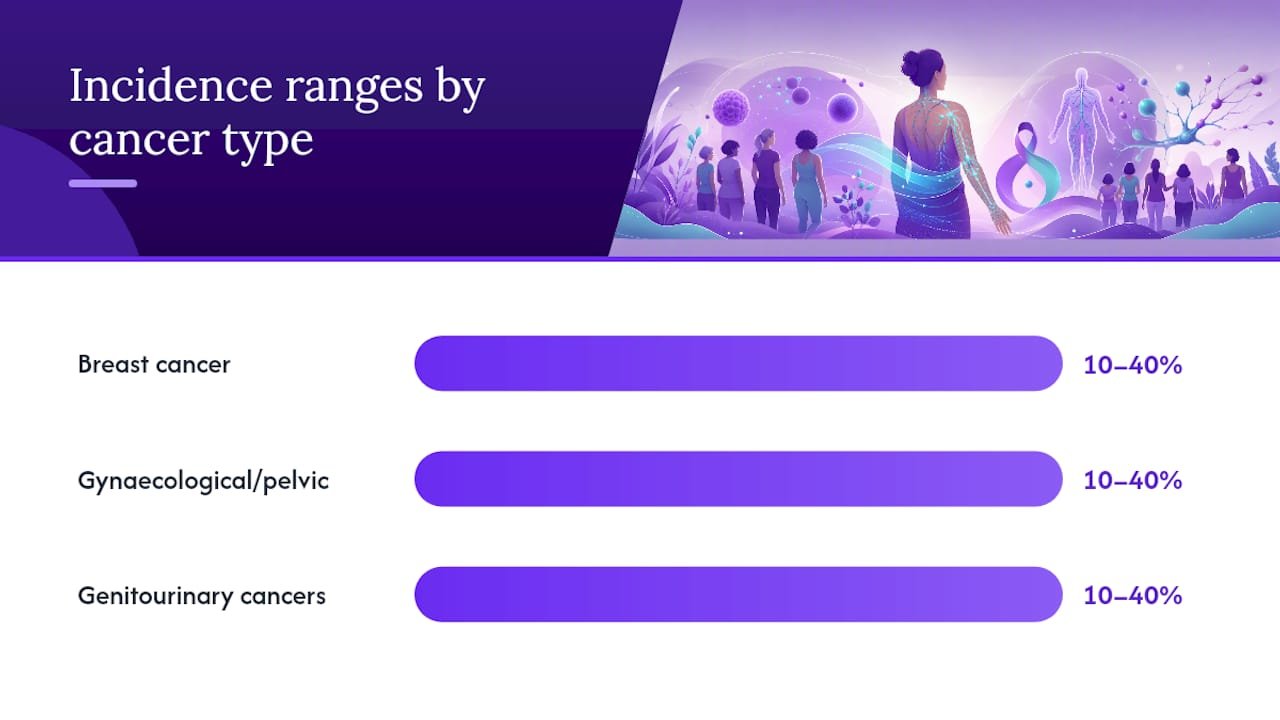
Incidence varies considerably by cancer type and treatment intensity. The figures below reflect ranges reported across clinical studies and settings, so your personal risk may sit anywhere within these bands depending on your specific treatment.
| Cancer type | Typical reported incidence range | Key risk drivers |
|---|---|---|
| Breast cancer | 10–40% | Axillary dissection, radiotherapy, higher BMI |
| Gynaecological / pelvic cancers | 10–40% | Pelvic node clearance, radiotherapy |
| Head and neck cancers | Variable; can be high with multimodality treatment | Combined surgery and radiotherapy, functional impact on swallowing |
| Genitourinary cancers | 10–40% | Pelvic node surgery, radiotherapy |
NCBI StatPearls data confirms that breast cancer survivors who undergo axillary lymph node dissection combined with radiotherapy face the highest risk within that group, compared with those who have sentinel node biopsy alone.
Head and neck cancer patients face a distinct pattern. Research published in PMC notes that multimodality treatment in this group can produce particularly high rates, with functional consequences for speech and swallowing that require specialist input from speech and language therapists alongside lymphoedema therapists.
Symptoms to watch for and when to contact your healthcare team
The most common early signs of post-cancer lymphoedema are swelling, a feeling of heaviness or fullness in a limb, tightness in the skin, and reduced range of movement. These can appear within weeks of treatment or emerge months or even years later.
Early signs:
- Mild swelling that comes and goes, often worse at the end of the day
- A sensation of tightness or fullness in the arm, leg, hand, foot or nearby area
- Jewellery, clothing or shoes feeling tighter than usual
- Skin that looks slightly puffy or feels firmer than the other side
As lymphoedema progresses:
- Persistent swelling that does not resolve overnight
- Pitting oedema (a dent remains when you press the skin) in earlier stages, transitioning to non-pitting as tissue thickens
- Skin changes including dryness, thickening or the development of skin folds
- Aching or discomfort in the affected area
When to seek urgent care:
- Redness, warmth, or streaking on the skin — these suggest cellulitis, a bacterial infection that requires same-day treatment
- Rapid increase in swelling over hours or days
- Fever or flu-like symptoms alongside swelling
- Any new or unexplained swelling in a previously unaffected area
The NHS advises contacting your GP or cancer team as soon as you notice any of these changes, rather than waiting to see if they resolve on their own. Early reporting leads to earlier treatment, and earlier treatment leads to better long-term control.
Pro Tip: Take a weekly photograph of the affected limb next to the unaffected one, and note any changes in a simple diary. This gives your clinician a clear picture of how quickly symptoms are progressing and helps avoid the diagnostic delays that a BMJ review identifies as a recurring problem in lymphoedema care.
How lymphoedema is diagnosed in the UK and the referral pathway
Diagnosis is principally clinical, meaning a trained clinician assesses your history and examines the affected area. Measurements and occasionally imaging support the assessment, but there is no single definitive test.
The typical NHS referral pathway:
- Contact your GP or cancer team and describe your symptoms, including when they started and how they have changed.
- Initial assessment — your GP or oncology nurse will examine the area, take a history and rule out other causes of swelling such as deep vein thrombosis or recurrence.
- Referral to a lymphoedema service — this may be a community-based service, a hospital outpatient clinic, or a specialist lymphoedema therapist within your cancer centre.
- Therapist-led assessment and management plan — the lymphoedema therapist will measure limb circumference, may use bioimpedance spectroscopy to detect fluid changes, and will stage the condition using clinical criteria.
- Ongoing management — treatment is adjusted over time based on your response and any changes in symptoms.
Assessment tools used:
- Limb circumference measurements at standardised points
- Bioimpedance spectroscopy, which detects subclinical fluid accumulation before visible swelling appears
- Clinical staging (typically using the International Society of Lymphology staging system)
- Lymphoscintigraphy or ultrasound when the diagnosis is uncertain or surgical planning is needed
A BMJ review highlights that diagnostic delays are common and that patients often need to be persistent in requesting referral. If your GP is unfamiliar with lymphoedema services in your area, ask your oncology team directly — they will usually have a direct referral route.
Evidence-backed treatments and daily self-management for post-cancer swelling
Lymphoedema cannot be cured in most cases, but it can be well controlled with a multimodal approach. The goal is to reduce swelling, prevent complications, and maintain function and quality of life.

| Treatment approach | Aim | Typical effect | When considered |
|---|---|---|---|
| Complete decongestive therapy (CDT) | Reduce swelling and maintain reduction | Significant volume reduction in intensive phase | First-line for moderate to severe lymphoedema |
| Compression garments | Maintain reduction and prevent progression | Prevents fluid re-accumulation | Daily use once swelling is controlled |
| Manual lymphatic drainage (MLD) | Stimulate lymph flow manually | Reduces swelling, improves comfort | As part of CDT or standalone maintenance |
| Therapeutic exercise | Promote lymph flow through muscle pump | Improves function and reduces swelling | Throughout all stages, guided by therapist |
| Skin care | Prevent infection and maintain skin integrity | Reduces cellulitis risk | Daily, lifelong |
| Physiotherapy-led programmes | Restore movement and strength | Improves function and reduces disability | Where movement is restricted |
| Surgical options (e.g. lymphovenous anastomosis, liposuction) | Reduce volume in refractory cases | Variable; best results in selected patients | Considered when conservative treatment is insufficient |
PMC clinical review data confirms that multimodal management with complete decongestive therapy, compression garments, physiotherapy and tailored activity remains first-line treatment, with surgical procedures reserved for persistent, refractory cases.
Daily self-management checklist:
- Moisturise the affected skin daily with a fragrance-free emollient to prevent dryness and cracking
- Wear your prescribed compression garment as directed — do not skip days
- Exercise progressively, starting gently and building up with your therapist’s guidance
- Maintain a healthy weight, as higher BMI worsens both severity and progression
- Protect the affected limb from cuts, insect bites, burns and sunburn
- Report any signs of infection immediately rather than waiting
For guidance on therapist-led manual lymphatic drainage techniques, the Live5dhealth lymphatic massage guide offers a practical overview of what to expect from this type of care.
Pro Tip: Compression garments must be professionally fitted — an ill-fitting garment can worsen swelling or cause pressure injuries. Ask your lymphoedema therapist to measure you and review the fit every six months, or sooner if your weight changes significantly.
Practical steps to lower your risk after cancer treatment
Many of the factors that trigger lymphoedema after cancer treatment are modifiable. Acting early, before swelling appears, gives you the best chance of keeping the condition at bay or catching it at its mildest.
Key principle from NHS guidance: Early activity, skin protection, weight management and infection prevention are the four pillars of post-treatment risk reduction. None of them require a prescription — but some, such as compression use, need clinical guidance before you start.
What you can do:
- Begin gentle movement and activity as soon as your clinical team approves it — immobility slows lymph flow
- Keep skin clean, moisturised and protected from injury, particularly in the area near your surgery or radiotherapy field
- Maintain a healthy weight; even modest weight loss in those with higher BMI reduces risk
- Keep wounds and any skin breaks clean to prevent infection
- Wear loose, comfortable clothing that does not constrict the affected area
- Stay well hydrated
What needs clinical approval first:
- Compression garments or sleeves — only use these if prescribed or recommended by your team
- Specific resistance exercises targeting the affected limb
- Massage techniques, which should be taught by a certified lymphoedema therapist
At the clinician level, sentinel node biopsy and lymphatic-sparing microsurgical techniques can substantially lower the chance of secondary lymphoedema when they are appropriate for your cancer type and stage. These are decisions made with your surgical team, not independently.
What the evidence shows about long-term outlook and complications
Lymphoedema carries a lifelong risk of recurrence and progression, and it can appear months or years after treatment ends. That said, early intervention consistently improves long-term control and reduces the rate of serious complications.
NCBI clinical data confirms that lymphoedema is usually chronic, but that treatment started early is significantly more effective at controlling symptoms than treatment begun after the condition has progressed. The window between first symptoms and established fibrotic change is the most important period for intervention.
The most serious complication is cellulitis, a bacterial skin infection that develops because damaged lymphatic tissue has reduced immune surveillance. Cellulitis requires prompt antibiotic treatment and, if recurrent, may need long-term low-dose prophylactic antibiotics under medical supervision. Each episode of cellulitis can worsen the underlying lymphoedema, creating a cycle that is difficult to break.
Psychosocial impact is also well documented. Living with visible swelling, restricted movement and the daily demands of compression garments and skin care affects body image, work capacity and emotional wellbeing. A BMJ review highlights that cancer-related lymphoedema requires multidisciplinary coordination and that proactive patient education improves both clinical outcomes and patient experience.
Among breast cancer survivors, rates of 10–40% are reported across studies, with the higher end of that range associated with axillary dissection plus radiotherapy. For gynaecological and pelvic cancers, reported rates sit in a broadly similar band, while head and neck cancers treated with combined modalities can produce rates at the higher end of published ranges.
Living well with lymphoedema: UK support and daily life
Managing lymphoedema day to day is about building sustainable habits rather than overhauling your life. Small, consistent adjustments make a significant difference over time.
Practical daily living tips:
- Choose loose, breathable clothing and avoid anything that cuts into the affected limb
- For lower-limb lymphoedema, wear well-fitted, supportive footwear and avoid standing for long periods without movement
- On long flights or car journeys, wear your compression garment and move regularly
- At work, discuss reasonable adjustments with your employer if lifting, standing or repetitive movements affect your symptoms
- Avoid extreme heat (hot baths, saunas without clinical guidance) in the affected area, as heat increases fluid accumulation
UK support resources:
- NHS lymphoedema services — ask your GP or cancer team for a referral to your local community or hospital-based service; the NHS lymphoedema page lists what to expect
- Cancer Research UK — detailed patient guidance on causes, prevention and self-care, written for people going through or beyond cancer treatment
- Macmillan Cancer Support — helpline, online community and local support groups for people living with cancer-related conditions including lymphoedema
- Lymphoedema Support Network (LSN) — a UK charity providing patient information, a therapist directory and peer support groups
Practical tip: When you attend your first lymphoedema appointment, bring a list of your cancer treatments (surgery dates, radiotherapy fields, chemotherapy agents), your current medications, and your symptom diary. This saves time and helps the therapist build an accurate picture from the outset.
For those exploring complementary approaches to support lymphatic health alongside NHS care, Live5dhealth offers holistic therapies including lymphatic massage and a range of supportive wellness treatments. These are not replacements for clinical lymphoedema management, but many people find them a valuable part of their broader recovery.
A perspective worth sharing
Lymphoedema after cancer is one of those conditions that gets underestimated — by healthcare systems, and sometimes by patients themselves who assume that swelling is just part of recovery and will pass. The evidence says otherwise. The BMJ is clear that diagnostic delays are common and that they worsen outcomes. That means the most useful thing you can do right now is not wait.
Three questions worth taking to your next clinical appointment:
- “Given my specific treatment, what is my personal risk of developing lymphoedema, and when should I expect it to appear if it is going to?”
- “How do I get referred to a lymphoedema therapist, and what is the waiting time in my area?”
- “What can I start doing today to reduce my risk or manage early symptoms?”
You deserve a clear answer to each of these. If you do not get one, ask again or ask a different member of your team. Early education, access to a certified therapist, and a self-management plan are not extras — they are the standard of care you are entitled to.
Sources
These are the primary UK and clinical resources to consult for accurate, up-to-date guidance on lymphoedema after cancer:
- Lymphoedema
- Lymphedema – StatPearls – NCBI Bookshelf
- Cancer related lymphedema
- Lymphoedema and cancer | Coping with cancer
Always follow the advice of your own clinical team and refer to NHS guidance for decisions about your care. These resources support informed conversations with your clinician — they do not replace them.
This article is general information, not a substitute for advice from a qualified doctor. Consult a qualified healthcare professional about your own circumstances before acting on anything here.