
For most people, the best cold plunge temperature is 10–15°C (50–59°F) for 10 to 15 minutes. That single range covers the bulk of what health-conscious plungers are chasing: less muscle soreness, a calmer nervous system, and a recovery boost you can sustain week after week.
If your goal is specifically reducing biochemical markers of muscle damage rather than general soreness, research points to 5–10°C (41–50°F) for the same 10 to 15 minute window. That band delivers a stronger biochemical response, but it also means more discomfort, more cold shock, and a narrower margin for error.
Beginners should start warmer still. If you are new to cold water immersion, begin around a moderately cool temperature and work down gradually over several weeks. Whatever your experience level, treat very cold water below freezing as an advanced, supervision-only zone. It is not where the evidence says you need to be for wellness or recovery goals, and it carries a disproportionate rise in risk.
- Most users: 10–15°C for 10 to 15 minutes
- Biochemical recovery focus: 5–10°C for 10 to 15 minutes
- Beginners: 15–20°C for 2 to 5 minutes, progressing slowly
- Hard limit: avoid prolonged exposure below 4°C without direct supervision
Safety comes first, always. Watch your breathing, keep a timer running, and get out immediately if you feel chest pain, confusion, or shivering you cannot control. A 2025 network meta-analysis of 55 randomised controlled trials found that 11–15°C for 10 to 15 minutes ranked best for cutting muscle soreness, while colder water in the 5–10°C range ranked highest for reducing biochemical markers like creatine kinase, with a SUCRA score of 75.7%. Two good options, two different goals. The rest of this guide shows you how to pick the right one for yours.
Key Takeaways
The best cold plunge temperature depends on your goal, but 10–15°C for 10 to 15 minutes is the safest, best-evidenced choice for most people seeking recovery and wellness benefits.
| Point | Details |
|---|---|
| Default temperature band | Use 10–15°C (50–59°F) for 10 to 15 minutes for general recovery and soreness reduction. |
| Colder band for biochemical markers | 5–10°C (41–50°F) reduces creatine kinase more but requires prior tolerance and caution. |
| Beginner starting point | Start at 15–20°C (59–68°F) for 2 minutes and reduce temperature by 1–2°C weekly. |
| Hard safety threshold | Avoid unsupervised exposure below 4°C and stop for chest pain, confusion, or uncontrolled shivering. |
| Try it supervised | Live5dhealth offers thermostatically controlled cold plunge sessions with sauna re-warming in Boyle. |
Table of Contents
- What does cold plunge temperature actually do to your body?
- How long should you stay in the water and how often?
- How do you build up to cold plunging safely?
- Who should avoid cold plunges, and what are the warning signs?
- How do you measure and set the right water temperature?
- What does the strongest evidence actually say?
- What is the right cold plunge protocol for your specific goal?
- Why does the industry get cold plunge temperature so wrong?
- How can you try a supervised cold plunge safely?
- Sources
What does cold plunge temperature actually do to your body?
Temperature is not a single lever, it is a dial with distinct effects at each setting. Move from 20°C down to 4°C and you pass through several different physiological zones, each one nudging your body towards a different outcome.
At 15–20°C (59–68°F), you get mild vasoconstriction and a noticeable alertness spike without the intense gasp reflex that colder water triggers. This band suits people building tolerance or chasing a mood and energy lift rather than an intense recovery effect.
Drop to 10–15°C (50–59°F) and you enter the zone where most of the recovery evidence actually sits. The 2025 network meta-analysis found this range, held for 10 to 15 minutes, ranked highest for reducing delayed-onset muscle soreness (DOMS). It is cold enough to constrict blood vessels and dull inflammatory signalling, but not so cold that most healthy adults struggle to hold still and breathe normally.
Push into 5–10°C (41–50°F) and something shifts. Soreness reduction does not improve much further, but biochemical markers of muscle damage, particularly creatine kinase, drop more sharply. This is the trade-off: better numbers on a blood panel, worse experience in the tub. Reviews going back to Machado’s 2016 work found similar patterns, with little extra soreness benefit once you go colder than about 10°C.
Below 5°C (41°F), the evidence for extra wellness benefit thins out fast, while cold shock risk, gasping, hyperventilation, and acute cardiac strain, climbs sharply. Clinical sources warn that this is where unsupervised use becomes genuinely dangerous, not just uncomfortable.
| Temperature band | Typical duration | Primary outcome | Comfort / risk trade-off |
|---|---|---|---|
| 15–20°C (59–68°F) | 2–10 min | Mood, alertness, tolerance building | Low risk, mild discomfort |
| 10–15°C (50–59°F) | 10–15 min | DOMS and soreness reduction | Moderate discomfort, best evidence base |
| 5–10°C (41–50°F) | 10–15 min | Biochemical muscle-damage markers (CK) | High discomfort, needs experience |
| Below 5°C (41°F) | Not recommended unsupervised | Minimal added benefit | Cold shock and hypothermia risk rise sharply |
Pro Tip: Temperature and time work together, not separately. If 10°C feels too harsh for 15 minutes, a milder 14°C held for the same duration often produces a comparable recovery response with far less white-knuckle discomfort.
How long should you stay in the water and how often?
Duration needs to match temperature, not fight against it. Colder water demands shorter exposure; milder water gives you more room to work with.
- 10–15°C: 10 to 15 minutes for muscle soreness and general recovery
- 5–10°C: 10 to 15 minutes if you are specifically chasing biochemical recovery markers, and only once tolerance is established
- 10–15°C for mood or alertness: 2 to 10 minutes is enough, no need to push longer
- Colder than 10°C: shorter sessions, closer to 2 to 5 minutes, especially early on
Frequency matters as much as any single session. Research on metabolic benefits has pointed to roughly 11 minutes per week as a minimum effective dose split across several short sessions, according to the Mayo Clinic Health System. For active recovery between training sessions, three to four short plunges a week tends to outperform one long, punishing one.
Timing relative to training matters too:
- If pure recovery is the goal, plunge within an hour of finishing your session.
- If muscle growth and strength adaptation are the priority, delay cold exposure by at least four to six hours, since immediate cold immersion can blunt some of the inflammatory signalling that drives hypertrophy.
- On rest days, use cold plunges for mood and circulation benefits rather than recovery specifically.
- Never plunge as your very first activity after an intense strength session if hypertrophy is your main goal for that block of training.
How do you build up to cold plunging safely?
Nobody needs to start at 5°C. The physiological dose that produces benefit is the interaction between time and temperature, which means you can get a genuine training effect from milder water held a little longer, and that is exactly how a sensible beginner protocol should be built.
- Week 1: Start at 15–16°C for 1 to 2 minutes. Focus entirely on breathing steadily rather than gasping.
- Week 2: Hold the same temperature but extend to 3 to 4 minutes if breathing stayed controlled.
- Week 3: Drop to around 13–14°C for 2 to 3 minutes.
- Week 4 onward: Reduce by 1 to 2°C each week only if the previous week felt manageable, working towards the 10–15°C range.
- Breathe out slowly and deliberately for the first 30 seconds; that first minute is where most people panic and climb straight back out.
- Enter feet first, pause, then submerge to shoulder height rather than jumping straight in.
- Exit slowly, towel off immediately, and move to warmth. A sauna, warm shower, or dry layers all work.
- Check your thermometer before every session. Do not trust how the water feels on your hand.
Pro Tip: If a colder session feels like too much on a given day, staying at a milder temperature for a few extra minutes is a perfectly legitimate substitute. Consistency at 14°C beats one brutal session at 6°C followed by three weeks off.
Who should avoid cold plunges, and what are the warning signs?
Cold water immersion is not risk-free, and pretending otherwise does nobody any favours. Certain groups need medical clearance before they get anywhere near a plunge pool, and everyone needs to know the signs that mean stop immediately.
- Anyone with cardiovascular disease or a history of arrhythmia
- Uncontrolled high blood pressure
- Certain neurological conditions, including some seizure disorders
- Pregnancy, without direct guidance from a doctor
- Raynaud’s phenomenon or other significant circulatory conditions
If you fall into any of these categories, a conversation with your GP first is not optional caution, it is the responsible starting point. Live5dhealth’s own hyperbaric therapy contraindications guide gives a useful sense of how seriously wellness therapies need to weigh existing health conditions before use.
Once you are in the water, certain reactions mean you get out, no debate:
Chest pain, fainting, uncontrolled or violent shivering, and confusion are not “pushing through it” moments. They are stop signals. Clinical sources are explicit that cold shock can trigger acute cardiac stress even in people with no known heart condition, and hypothermia risk climbs fast with prolonged exposure below 4°C.
This is general wellness information, not a substitute for professional medical advice. If you have any underlying health condition, talk to your doctor before starting cold water immersion.
How do you measure and set the right water temperature?
Guessing by feel is the single most common mistake in home cold plunging, and it is an easy one to fix. A digital waterproof thermometer costs very little and removes all the guesswork.
- Fill your tub or plunge with tap water first.
- Measure the starting temperature with your thermometer.
- Add ice gradually. As a rough rule, 5 to 10 kg of ice in a standard bathtub typically brings water into the 10–12°C range, depending on your starting tap temperature.
- Re-check with the thermometer after the ice has partly melted and mixed through.
- Fine-tune with small additions of ice or slightly warmer water until you hit your target band.
- If you have a chiller, use it to hold the temperature steady rather than relying on ice alone for a long session.
Pro Tip: If you plan to stay in for the full 10 to 15 minutes, check the temperature again halfway through. Water warms as your body heat transfers into it, and a session that started at 11°C can drift towards 14°C by the end without you noticing.
What does the strongest evidence actually say?
The clearest recent evidence comes from a 2025 network meta-analysis pooling 55 randomised controlled trials on cold water immersion.
SUCRA stands for Surface Under the Cumulative Ranking curve, a statistical method used in network meta-analyses to rank treatments against each other when they have not all been tested head-to-head.
| Evidence source | Key finding | Practical takeaway |
|---|---|---|
| 2025 network meta-analysis (55 RCTs) | 11–15°C best for soreness; 5–10°C best for CK markers (SUCRA 75.7%) | Choose your band by goal, not by how cold you can tolerate |
| Machado et al. and follow-up reviews | Little extra soreness benefit below 10°C | Colder is not automatically better |
| Practitioner and installation data | Extreme-cold starters abandon the practice more often | Gradual, sustainable protocols beat brutal ones |
The practical reading of this evidence is simple: 10–15°C is the pragmatic sweet spot for most people because it delivers the best-documented soreness reduction with a manageable risk profile. Colder protocols buy you a biochemical edge, but only if you already have the tolerance and supervision to use them safely.
For further clinical grounding, the Cleveland Clinic’s guidance on cold plunges and the Mayo Clinic Health System’s overview of cold water plunging both reinforce this same practical middle ground.
What is the right cold plunge protocol for your specific goal?
- DOMS and general soreness: 11–15°C (52–59°F), 10 to 15 minutes, three to four times a week. Stop if shivering becomes uncontrolled.
- Biochemical recovery (creatine kinase reduction): 5–10°C (41–50°F), 10 to 15 minutes, once tolerance is built. Never attempt this range unsupervised as a beginner.
- Mood, alertness, and mental clarity: 10–15°C (50–59°F), 2 to 10 minutes, any time of day. No need to chase extreme cold for this benefit.
- Rapid cooling after overheating or heat exposure: Cooler water, shorter exposure of a few minutes, with close monitoring for dizziness as your body temperature drops quickly.
Hydration status also affects how your body handles thermal stress in either direction. Getting your fluid and electrolyte balance right before and after a session, something covered well in this hydration guide for workouts, supports better thermoregulation during cold exposure too.
Why does the industry get cold plunge temperature so wrong?
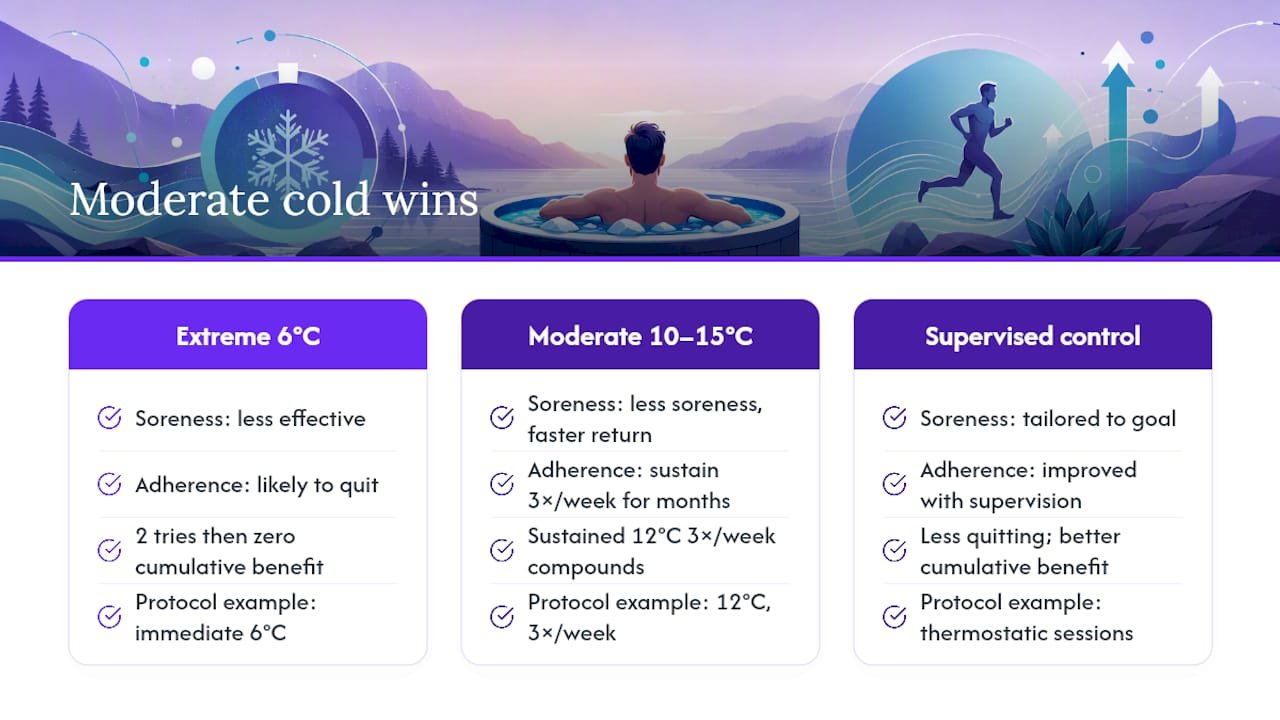
Most of the cold plunge content circulating online treats colder as inherently better, as if discomfort itself is the therapeutic ingredient. It is not. The evidence points in a different direction entirely: 10–15°C consistently outperforms extreme cold for the outcome most people actually want, which is less soreness and faster return to normal activity.
What gets underestimated is adherence. A protocol at 6°C that someone tries twice and then abandons delivers zero cumulative benefit. A protocol at 12°C that someone sustains three times a week for months compounds. Data on installation and usage patterns backs this up, showing that people who start too aggressively are more likely to quit altogether.
The other gap is nuance around goals. Soreness reduction and biochemical marker reduction are not the same outcome, and treating them as interchangeable leads people towards unnecessarily harsh protocols when a milder one would have served their actual goal just as well. Supervision changes this calculation. At Live5dhealth, thermostatically controlled cold plunge sessions let people work through a structured progression with a thermometer on hand and warm re-entry options nearby, rather than guessing alone with a bag of ice and a bathtub. It is a very different experience to know your exact water temperature and have a warm sauna waiting a few steps away when a session ends.
How can you try a supervised cold plunge safely?
Home ice baths mean guessing with ice bags and hoping the thermometer reading holds steady. Live5dhealth’s spa in Boyle, County Roscommon runs cold plunge sessions with thermostatically controlled water, so the temperature you are told is the temperature you actually get, every single time.
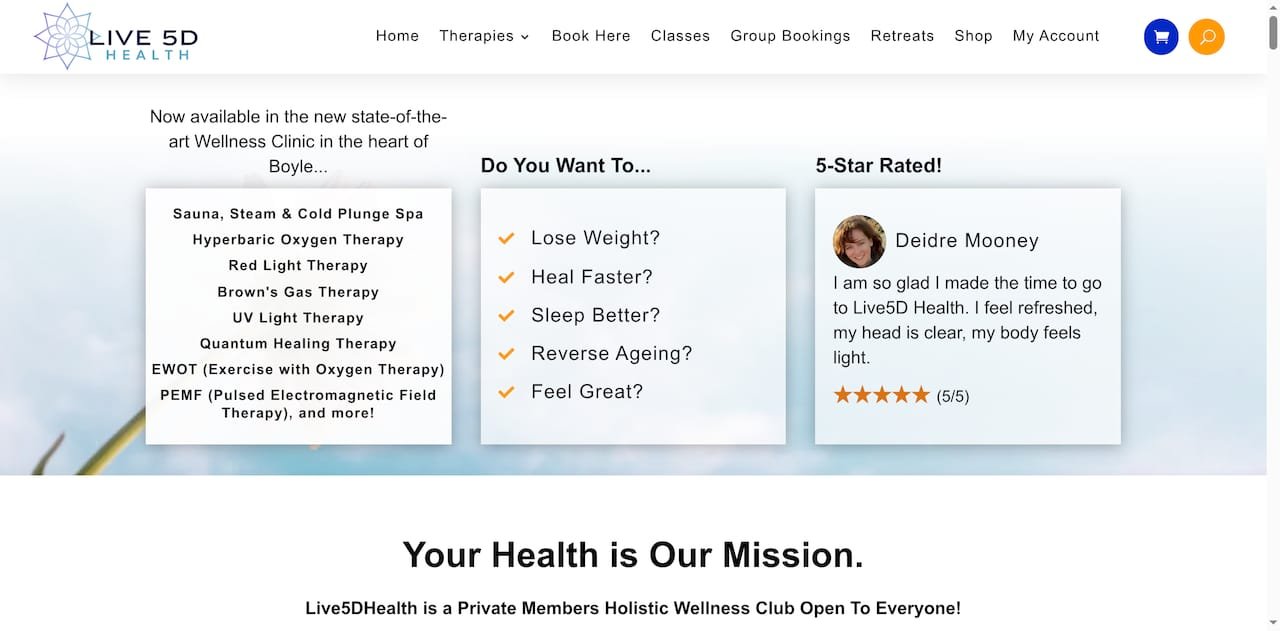
That precision matters most for beginners working through the gradual acclimation protocol described earlier, and for anyone who wants the 5–10°C biochemical-marker band without guessing whether their home setup has actually hit it. Sessions at Live5dhealth pair the plunge with a luxury sauna and steam room for proper re-warming immediately afterwards, addressing one of the most overlooked safety steps in home protocols. Anyone with an underlying health condition can also discuss screening with staff before booking, rather than working it out alone.
If you would rather explore cold plunging as part of a longer programme, the retreat packages combine it with other recovery therapies over several days. To try a single supervised session first, book directly through the cold plunge and spa page and arrive ready for a guided, thermometer-checked introduction to the temperature range that actually suits your goal.
Sources
- Frontiers in Physiology — network meta-analysis of cold water immersion (2025)
- Cleveland Clinic — What to know about cold plunges