

If you have an implanted electronic device, are pregnant, have active bleeding, a known cancer at the treatment site, an active severe infection, or have had major surgery in the past few weeks, PEMF therapy is not for you right now. Everyone else generally tolerates PEMF well, but several situations still call for a chat with your clinician before your first session.
Before booking any session, run through this checklist:
- Pacemakers, ICDs, insulin pumps, neurostimulators, or cochlear implants
- Pregnancy or breastfeeding (particularly abdominal or pelvic application)
- Active bleeding or an untreated haemorrhagic condition
- Known or suspected cancer at the treatment site
- Active sepsis, severe infection, or acute fever
- Major surgery, open wounds, or fresh fractures within the past few weeks
Systematic reviews of PEMF research consistently flag these same groups as needing caution, precisely because they are excluded from most clinical trials in the first place, which means the safety data for them simply doesn’t exist.
Pro Tip: Keep your implant card or device manual with you, and stop a session immediately if you notice unusual heat, tingling, or dizziness. Call your clinician rather than waiting it out.
Key Takeaways
PEMF therapy is safe for most adults, but implanted electronic devices, pregnancy, active bleeding, known cancer at the treatment site, severe infection, and recent major surgery are firm reasons to avoid it without clinician clearance.
| Point | Details |
|---|---|
| Absolute avoidance list | Pacemakers, ICDs, insulin pumps, active haemorrhage, and known cancer at the treatment site require avoidance without written clearance. |
| Grey-zone conditions need a call | Autoimmune disease, clotting disorders, and unmanaged heart conditions need a specialist conversation, not automatic avoidance. |
| Evidence is strongest for osteoarthritis | Meta-analysis data supports PEMF for knee and hand osteoarthritis, with sessions of thirty minutes or less performing better. |
| Bring your paperwork | Implant cards, medication lists, and device manuals speed up screening and reduce guesswork before your first session. |
| Live5dhealth screens before every session | Live5dhealth checks implant guidance and manufacturer instructions and recommends clinician sign off for higher-risk clients before booking. |
Table of Contents
- PEMF contraindications explained condition by condition
- When PEMF needs caution rather than outright avoidance
- What the research actually shows about PEMF safety
- What to tell your clinician before a PEMF session
- Autoimmune conditions and how your immune system responds
- Blood clotting disorders that go beyond blood thinners
- Heart conditions without a pacemaker or defibrillator
- Frequently asked questions
- Sources
PEMF contraindications explained condition by condition
Every reputable contraindications list starts with implanted electronics, and for good reason. Pacemakers, defibrillators, insulin pumps, neurostimulators, and cochlear implants all rely on their own electrical signalling, and a pulsed electromagnetic field can interfere with that signalling. Cleveland Clinic’s patient guidance lists these devices among the clearest reasons to avoid PEMF altogether unless your implant manufacturer or cardiologist has explicitly cleared it. This isn’t a case of “probably fine”. Avoid it unless you have written sign off.
- Pregnancy and breastfeeding. Evidence here is thin rather than alarming, but thin evidence means conservative practice. Avoid abdominal or pelvic application during pregnancy, and discuss any other body area with your midwife or GP first.
- Active haemorrhage, recent major surgery, open wounds, and fresh fractures. PEMF affects local circulation, which is exactly what you don’t want near unstable clotting or a healing surgical site. Wait for haemostasis and surgical clearance before applying it directly over the area.
- Known or suspected malignancy at the treatment site. Oncology literature hasn’t settled the question of how electromagnetic stimulation interacts with tumour tissue, so the sensible default is to avoid direct application over a known or suspected cancer site without oncology approval.
- External metal fixators and transcutaneous hardware. Fields can concentrate around metal that breaks the skin surface, unlike fully internal metal implants. Get clinical clearance if you have external fixators, pins, or wires.
- Severe systemic infection, sepsis, or acute febrile illness. Your body is already fighting hard. Adding a stimulatory therapy during active systemic infection isn’t appropriate until you’ve recovered.
- Seizure disorders and epilepsy. The theoretical risk of triggering neurological activity means neurologist clearance first, then low intensity settings under supervision if you proceed.
- Thrombosis, deep vein thrombosis, and anticoagulant therapy. There’s a theoretical concern about mobilising a clot with increased local circulation. Talk to whoever manages your anticoagulation before starting.
- Children and open growth plates. Paediatric data on PEMF is sparse, so caution applies by default. Get a paediatrician’s approval first.
- Severe cardiovascular disease without an implanted device. Significant arrhythmias or unstable cardiac conditions warrant a cardiology review, even without a pacemaker in the picture.
- Organ transplant recipients and immune suppressed patients. PEMF has immune modulating effects, which raises questions for anyone on immunosuppressants. Loop in your transplant team before starting.
Where evidence is genuinely limited, such as pregnancy and cancer, the responsible move is conservative practice paired with real communication between your GP, your specialist, and the device manufacturer, not a guess based on internet forums.
When PEMF needs caution rather than outright avoidance
Not every flagged condition means “never”. Manufacturer instructions for use vary considerably between devices, because output intensity, frequency, and waveform differ by model, so one company’s contraindication list can look stricter than another’s for the same underlying condition.
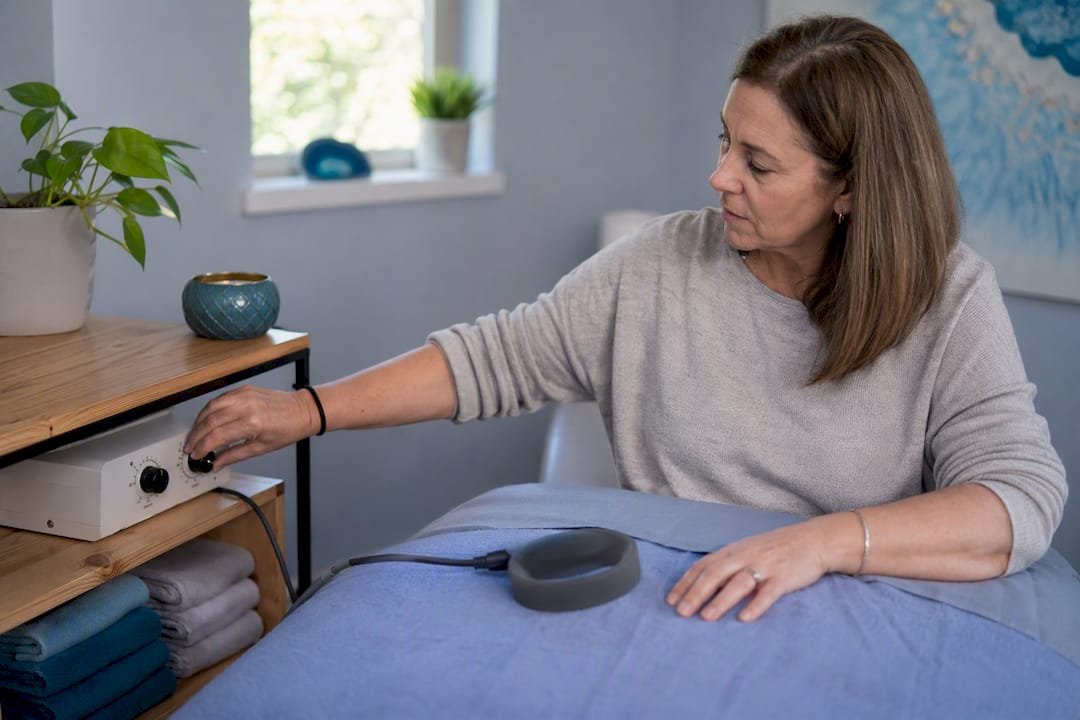
Practical mitigation matters more here than blanket rules. Many published trials used sessions of thirty minutes or less, and starting low and short while monitoring your response is generally safer than jumping to a long, high-intensity protocol. Avoid direct application over sensitive structures such as the thyroid or carotid artery regardless of your overall risk profile. Passive metal, such as a hip replacement or dental implant, is typically compatible with PEMF, but it’s still sensible to reduce intensity initially and watch for unexpected heat or tingling near the hardware.
Pro Tip: Bring your implant card and the PEMF device’s manual to your first appointment. A five-minute check beats a guess.
What the research actually shows about PEMF safety
The strongest safety data sits with musculoskeletal use. A meta-analysis of twelve randomised trials found PEMF meaningfully reduced pain and improved function in knee osteoarthritis (SMD −0.54) and hand osteoarthritis (SMD −2.85) compared with sham treatment, though it showed no benefit for cervical osteoarthritis, and sessions of thirty minutes or under performed better than longer ones.
That’s a solid signal for a specific use case, not a blanket safety certificate for every condition on this page.
The recurring problem across PEMF research isn’t that trials show harm. It’s that trials are small, protocols vary wildly in frequency and intensity, and nobody has run the large, long-term human studies needed to close the gap.
That gap explains why precautionary advice on pregnancy, tumours, and implants persists even without direct evidence of harm. Absence of proof isn’t proof of safety, and clinicians default to caution accordingly.
What to tell your clinician before a PEMF session
Bring this list to your consultation, or run through it yourself before using a home device:
- Any implanted electronic device, including make and model
- Recent surgery, open wounds, or fresh fractures
- Current anticoagulant or blood-thinning medication
- Pregnancy status or breastfeeding
- History of cancer, particularly near the intended treatment site
- Seizure history or epilepsy diagnosis
- Organ transplant or immunosuppressant use
- History of deep vein thrombosis or clotting disorders
Ask about session duration, intensity settings, and what a normal short-term reaction looks like versus one that means stop. Having your medication list and device paperwork ready saves time and gives your clinician the full picture.
Autoimmune conditions and how your immune system responds
Autoimmune disease sits in a genuine grey zone. Conditions like rheumatoid arthritis, lupus, and multiple sclerosis involve an immune system that’s already misfiring, and PEMF’s documented effects include some degree of immune modulation. That’s not automatically a reason to avoid it, but it is a reason to be specific with your rheumatologist or specialist about your diagnosis, current disease activity, and any immunosuppressive medication you’re taking.

The practical concern is timing rather than absolute avoidance. If your autoimmune condition is active and inflamed, adding a new stimulus before discussing it with your treating physician is unwise. If you’re in a stable, well-controlled phase, many people tolerate PEMF without issue, but “many people” isn’t the same as “you”, and your specific antibody profile or organ involvement matters.
Anyone on long-term immunosuppressants, whether for an autoimmune disease or after a transplant, should treat that medication as part of the contraindications conversation, not a separate issue. Immune modulating therapies stack, and your treating team is best placed to judge whether PEMF adds an unwanted variable to an already carefully balanced treatment plan. This is a case where a five-minute phone call before booking saves far more hassle than working it out afterwards.
Blood clotting disorders that go beyond blood thinners
Anticoagulant medication gets most of the attention in contraindications lists, but clotting risk exists independently of what you’re prescribed. Inherited thrombophilias, antiphospholipid syndrome, and a personal or strong family history of deep vein thrombosis all raise the same theoretical concern: PEMF’s effect on local circulation could, in theory, mobilise an existing clot.
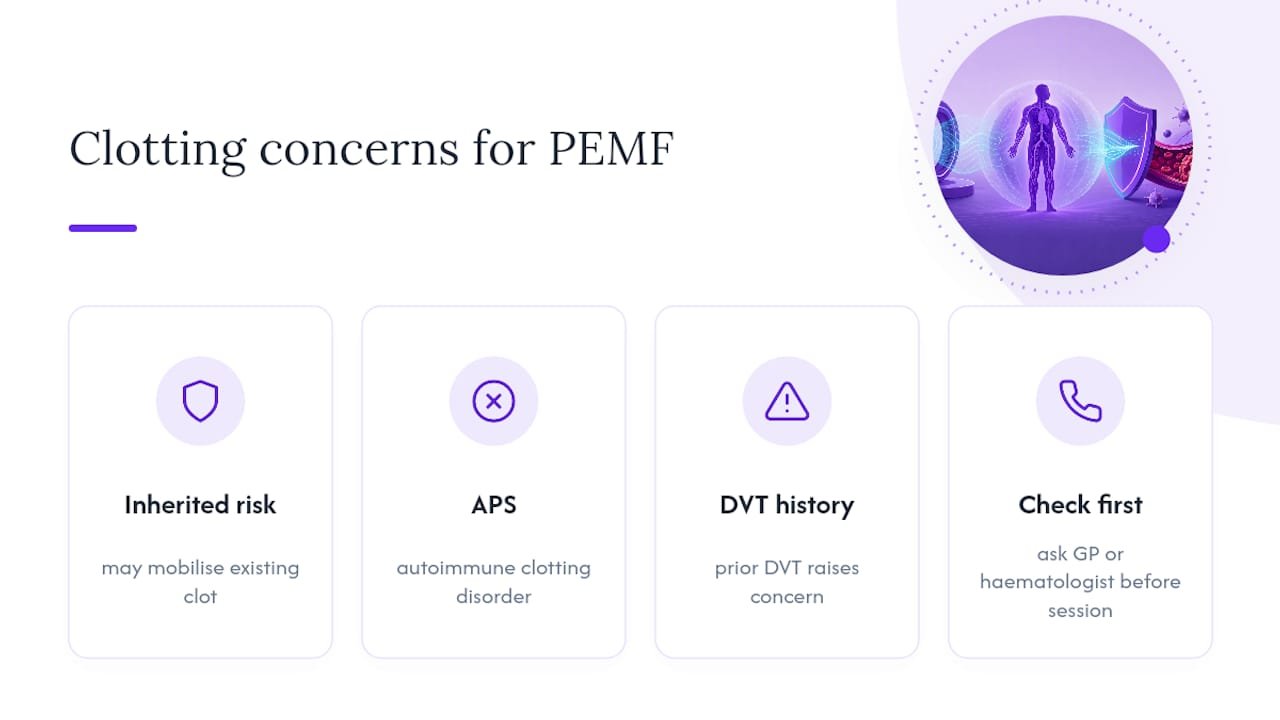
Nobody has generated hard clinical data proving this happens with therapeutic PEMF use, and the concern remains theoretical rather than demonstrated. But theoretical risk paired with a genuinely serious outcome, a pulmonary embolism, is exactly the combination that justifies caution rather than a shrug. If you’ve had a DVT before, have a known clotting disorder, or your family history includes unexplained clots at a young age, mention it before your first session even if you’re not currently on anticoagulants.
The practical answer here mirrors the anticoagulant advice earlier: this isn’t a hard no, it’s a “check first”. Your GP or haematologist can tell you whether your specific clotting profile changes the picture, and that conversation takes far less time than dealing with a complication would.
Heart conditions without a pacemaker or defibrillator
Pacemakers and ICDs get the headline warning, but a heart doesn’t need an implanted device to be a reason for caution. Significant arrhythmias, unstable angina, recent heart attack, or poorly controlled heart failure all warrant a cardiology conversation before PEMF, even when there’s no hardware involved.
The logic is similar to the infection and surgery contraindications: your body is already managing something serious, and adding a new physiological stimulus without your cardiologist’s input is an unnecessary gamble. Stable, well-managed cardiovascular disease is a different picture, and plenty of people with controlled hypertension or a history of a resolved cardiac event use PEMF without incident.
What matters is “stable and reviewed” versus “active and unmanaged”. If your cardiologist hasn’t seen you recently, or your condition has changed in the past few months, that’s worth mentioning before you book, not something to mention only if a session feels uncomfortable.
A note on safe screening from Live5dhealth
We take a conservative approach to screening every PEMF client, cross-checking implant guidance and manufacturer instructions rather than assuming a session is automatically appropriate. For anyone with a higher-risk profile, we recommend clinician sign off before your first visit rather than after. Getting this right matters more than getting you through the door quickly.
Booking a screened PEMF session at Live5dhealth
Most contraindications on this page aren’t about PEMF being unsafe. They’re about needing a proper screening conversation before your first session, which is exactly what we build into every new client visit at Live5dhealth. We check implant manuals, ask the right disclosure questions, and flag anything that needs a clinician’s sign off before you go anywhere near the device.

If you’ve read this far because you’re unsure whether PEMF suits your situation, that uncertainty is the whole reason a screening appointment exists. Rather than guessing from a checklist alone, book a screening call or in-person consultation with our team, and we’ll talk through your specific history, medications, and any implants before recommending a session plan. You can start that conversation through our PEMF therapy page, where you’ll find session details and next steps for booking your first visit.
Frequently asked questions
Is PEMF therapy safe if I have a metal hip replacement?
Passive metal implants like joint replacements are typically compatible with PEMF, though starting at a lower intensity and watching for unusual heat or sensation is a sensible precaution.
Can I use PEMF if I’m taking blood thinners?
Discuss it with whoever manages your anticoagulation first. The concern is theoretical, but the potential outcome is serious enough to warrant a quick conversation before starting.
Does PEMF interfere with a pacemaker?
Yes, this is one of the clearest and most consistently cited contraindications across clinical guidance, and PEMF should be avoided unless your device manufacturer or cardiologist explicitly clears it.
Is PEMF safe during pregnancy?
Evidence is limited rather than reassuring, so conservative practice means avoiding abdominal and pelvic application and discussing any other use with your midwife or GP.
What should I do if I feel unwell during a PEMF session?
Stop the session immediately, note what you felt, and contact your clinician before continuing. New or worsening symptoms after PEMF exposure warrant a proper medical review, not a wait and see approach.
This article is general information, not a substitute for advice from a qualified doctor. Consult a qualified healthcare professional about your own circumstances before acting on anything here.
Sources
- Efficacy and safety of the pulsed electromagnetic field in osteoarthritis: a meta-analysis | BMJ Open
- Comparison of PEMF and LIPUS: limitations, side effects and contraindications — PMC
- PEMF (Pulsed electromagnetic field) therapy: what it is — Cleveland Clinic
- Frontiers in Medicine review on PEMF, 2025