

Sauna can genuinely support women through menopause, and the evidence is strongest for sleep quality and cardiovascular health, with promising but still-developing signs for hot flushes and weight management. This isn’t a cure, and it won’t replace hormone replacement therapy if you need it. But used sensibly, heat therapy is a low-risk tool that belongs in your symptom-management toolkit.
Start gently: five to ten minutes at a lower temperature, always with water beside you. Skip your session if you’ve had a recent cardiac event or you’re managing a hormone-sensitive cancer without your oncologist’s sign-off. A 10-week randomised controlled trial using far-infrared thermal therapy found measurable symptom improvement, the British Sauna Society has commented supportively on the approach, and centres like Live5dhealth are building supervised protocols around exactly this kind of research.
- Begin low and slow; build tolerance over weeks, not days.
- Hydrate before and after every session, no exceptions.
- Get medical clearance first if you have heart disease, uncontrolled blood pressure, or a history of fainting.
Key Takeaways
Sauna therapy supports menopausal sleep and cardiovascular health most reliably, with weaker but promising evidence for hot flushes and metabolic outcomes.
| Point | Details |
|---|---|
| Sleep responds fastest | Passive heating shortens time to fall asleep within the first few sessions for most women. |
| Hot flush evidence is provisional | A 10-week RCT showed significant symptom improvement, but effects vary widely between women. |
| Weight claims outpace human data | Mouse studies show metabolic benefits; human trials haven’t confirmed the same effect yet. |
| Medical clearance matters | Get sign-off first for cardiac history, hormone-sensitive cancer, or uncontrolled blood pressure. |
| Live5dhealth offers a supervised path | Starter sauna sessions in Boyle follow a graduated, clinician-aware protocol for women in midlife. |
Table of Contents
- What the research on sauna for menopause symptoms actually shows
- How sauna may ease hot flushes, sleep problems, mood swings and weight gain
- A safe sauna protocol to start with this month
- When to check with a doctor before making sauna a habit
- Live5dhealth’s approach to supervised sauna sessions
- Sauna versus other non-drug options for menopause symptoms
- Can you keep sauna as a long-term menopause habit?
- Does sauna interact with HRT or other menopause medications?
- What the research gets right, and where the hype outruns it
- Book a starter sauna session at Live5dhealth
- Frequently asked questions
- Sources
What the research on sauna for menopause symptoms actually shows
The strongest human evidence comes from a 10-week trial using far-infrared local thermal therapy delivered for 20 minutes a day, twice weekly. Across 20 total sessions, women showed statistically significant improvement in vasomotor, musculoskeletal, urologic, and psychological symptom scores on a validated perimenopausal disturbance scale.
That’s one of the few controlled human studies to isolate heat therapy’s effect on menopause symptoms specifically, rather than lumping it in with general wellness interventions. It’s a modest sample and a specific delivery method (local far-infrared, not full-body traditional sauna), so treat it as a strong signal rather than definitive proof for every sauna format.
Animal research fills in some mechanistic gaps, though it comes with an important caveat. A mouse study found that daily 30-minute whole-body heat exposure at around 40°C for 12 weeks reduced weight gain and improved insulin sensitivity in older female mice and surgical menopause models. Encouraging, yes. Proof that the same happens in human bodies over a lunch break in a Finnish sauna? Not yet. Mice and women process heat stress differently enough that this evidence stays firmly in the “worth watching” category.
Cohort data adds a third strand. Large observational studies, including Finnish population research referenced by the Mayo Clinic, link regular sauna bathing with lower blood pressure and reduced cardiovascular mortality. These cohorts have historically skewed male, so the dose response seen in men doesn’t automatically transfer to women, though the biological mechanisms, better circulation and reduced arterial stiffness, plausibly apply to both sexes.
What ties all three evidence types together mechanistically:
- Thermoregulation: controlled heat exposure trains your body’s temperature response system over time.
- Heat shock proteins: repeated mild heat stress triggers cellular repair proteins linked to inflammation reduction and improved insulin signalling.
- Cardiovascular conditioning: heat exposure mimics some of the vascular benefits of moderate exercise.
Where does that leave you? Sleep and cardiovascular support sit on firmer ground than the weight-loss claims you’ll see plastered across sauna marketing.
How sauna may ease hot flushes, sleep problems, mood swings and weight gain
Each menopause symptom responds to heat therapy through a different pathway, and the timelines for feeling a difference vary considerably.
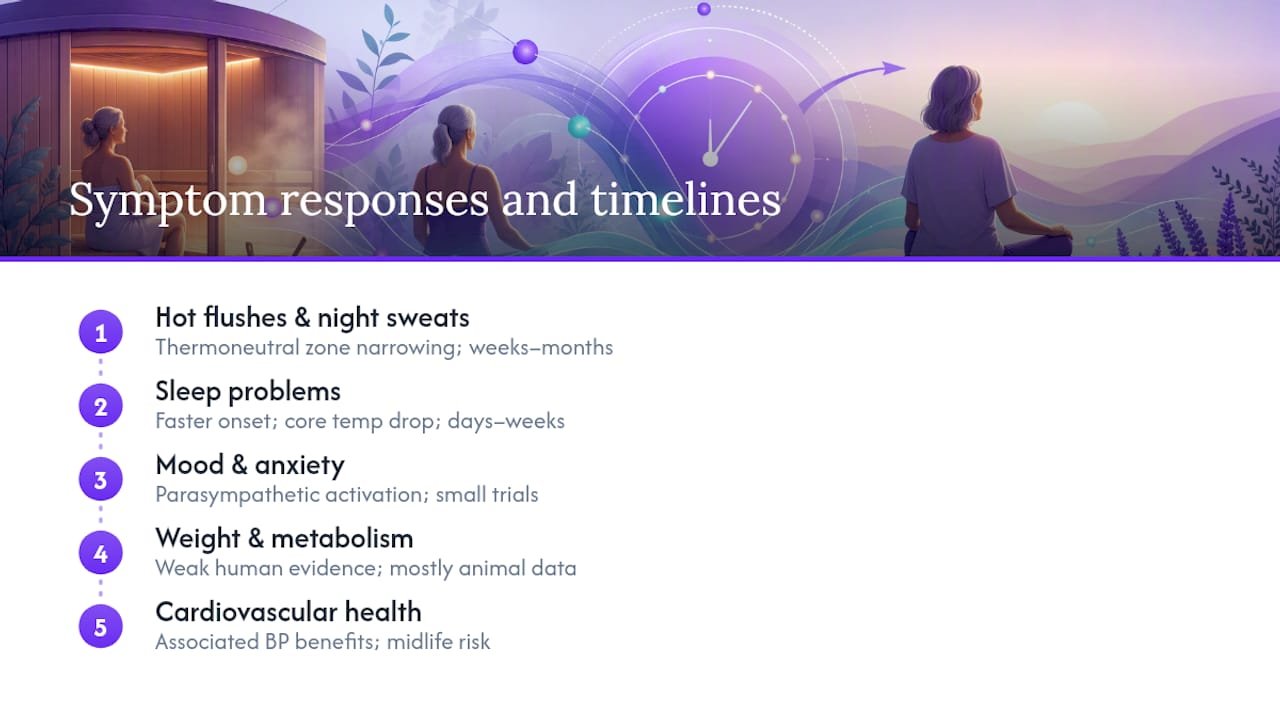
Hot flushes and night sweats relate to a narrowing “thermoneutral zone” in your brain’s hypothalamus as oestrogen declines. Small temperature shifts that your body once ignored now trigger a full vasomotor response. The theory behind infrared sauna use for this specific mechanism suggests repeated, controlled heat exposure may gradually widen that thermoneutral zone, teaching your nervous system to tolerate temperature swings without overreacting. Expect this to take weeks to months if it works for you at all, and expect a variable response. Some women report fewer flushes; others notice no change.
Sleep shows the fastest, most consistent payoff. Pooled trials of passive heating protocols, warm baths and sauna sessions alike, shorten the time it takes to fall asleep. The mechanism is straightforward: your core body temperature needs to drop for sleep onset, and a sauna session followed by cooling accelerates that drop dramatically. This is one you can genuinely expect to notice within the first week or two.

Mood and anxiety improve partly through parasympathetic nervous system activation, the “rest and digest” state that counters the stress response many women describe worsening during perimenopause. Harvard Medical School materials describe this nervous-system shift as a plausible route for heat therapy’s calming effect, and small trials and observational reports back it up.
Weight and metabolism carry the weakest human evidence despite generating the most excitement. The mouse data on insulin sensitivity is real, but it’s animal data. Treat sauna as a metabolic supporter alongside diet and movement, not a standalone weight-loss tool.
Cardiovascular health matters more during menopause because oestrogen decline itself raises cardiovascular risk. Regular sauna use associates with better blood pressure control in cohort studies, which is clinically relevant precisely because midlife is when that risk climbs.
A safe sauna protocol to start with this month
Build your tolerance in stages rather than diving in at maximum heat for maximum time.
- Weeks one and two: five to ten minutes, once or twice weekly, at a moderate temperature.
- Weeks three and four: extend to 12 to 15 minutes if you feel comfortable, still twice weekly.
- Month two onward: build toward 15 to 20 minutes, three times weekly, adjusting based on how your body responds each session.
- Timing for sleep: schedule your session roughly 90 minutes before bed, so your core temperature has time to drop and trigger drowsiness.
- Cool down properly: a lukewarm shower or a few minutes in cooler air helps that temperature drop happen faster.
Traditional Finnish saunas run hotter (typically 70 to 100°C) with dry heat, while infrared saunas operate at lower air temperatures (around 45 to 60°C) but heat your body directly, which many women with heat sensitivity find easier to tolerate for longer sessions. If flushes or dizziness are a concern, infrared is usually the gentler entry point. The rebire approach to infrared and thermotherapy for period-related pain uses a similar logic: lower, sustained heat rather than a short, intense blast.
Hydrate before you go in and again after. Stop immediately if you feel dizzy, notice chest pain, or feel close to fainting.
Pro Tip: Let your symptoms set the pace, not the clock. Practitioner guidance consistently favours shorter, gentler sessions of eight to twelve minutes on days when you’re feeling unusually sensitive to heat, rather than forcing a fixed duration regardless of how you feel.
Avoid alcohol before any session, and never sauna alone if you’re trying a longer duration for the first time.
When to check with a doctor before making sauna a habit
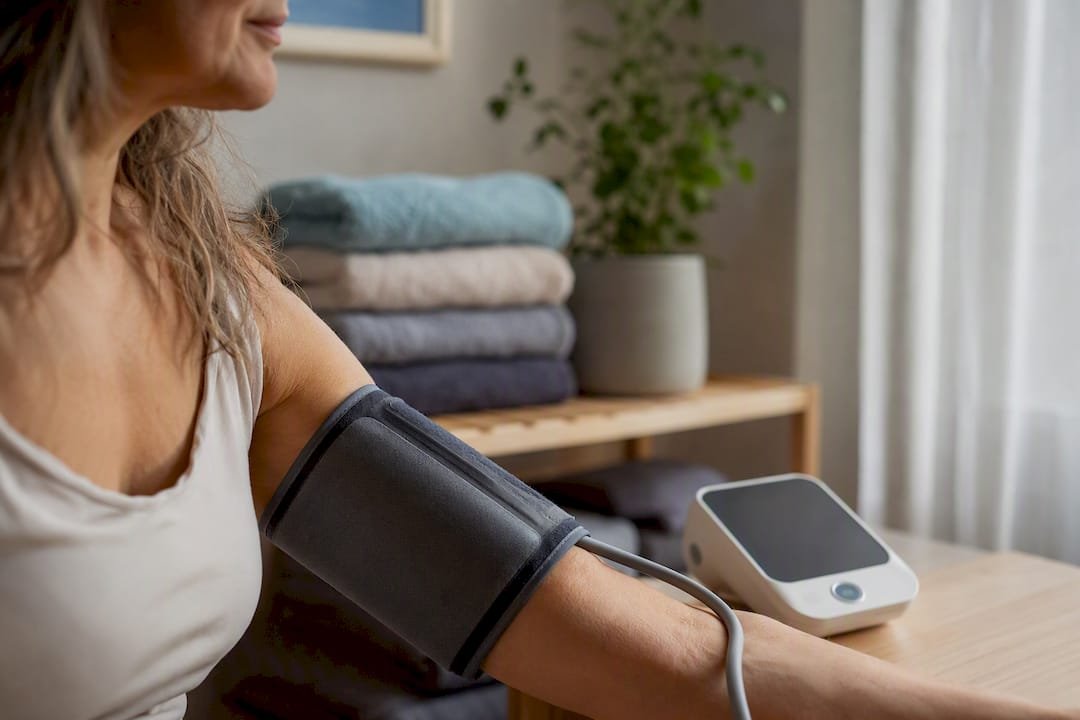
Sauna carries real cardiovascular demand, heat raises your heart rate similarly to moderate exercise, so certain conditions need clearance first.
- Recent heart attack, unstable angina, or any recent cardiac procedure.
- Uncontrolled high blood pressure or a history of fainting or syncope.
- An implanted cardiac device such as a pacemaker (check with your device manufacturer and cardiologist).
- A current or past hormone-sensitive cancer diagnosis, discuss regular heat therapy with your oncologist first.
- Pregnancy or active fertility treatment.
If you notice repeated dizziness, palpitations, or unusual breathlessness during sessions, stop and get assessed before trying again.
Live5dhealth’s approach to supervised sauna sessions
Live5dhealth runs a luxury sauna, steam room and cold plunge suite built around exactly the progression described above. Sessions start short and supervised, with proper cool-down space and staff trained to spot when someone needs to ease off.
- Starter sessions matched to individual heat tolerance, not a one-size protocol.
- Cool-down facilities to support the sleep and recovery benefits covered earlier.
- Referral conversations for women who mention cardiac history or cancer treatment before booking.
Sauna versus other non-drug options for menopause symptoms
Sauna sits alongside, not above, other non-pharmacological approaches. Cognitive behavioural therapy has solid trial evidence for hot flush distress and mood symptoms, working through a different mechanism entirely, changing how your brain interprets and reacts to a flush rather than altering your temperature tolerance. Regular aerobic exercise improves cardiovascular markers and mood with a broader evidence base than sauna currently has, though it demands more sustained effort and doesn’t offer the same rapid sleep benefit.
Acupuncture shows mixed results across trials for vasomotor symptoms, generally weaker and less consistent than the sauna and passive heating data. Dietary approaches, particularly reducing alcohol and caffeine, help some women reduce flush frequency, but the effect size varies enormously person to person.
Where sauna distinguishes itself is the sleep pathway. Few non-drug interventions offer as fast or reliable an improvement in sleep onset as a well-timed evening sauna session, backed by the passive heating trials cited earlier. It also requires far less ongoing behavioural discipline than CBT or dietary change, you show up, sit down, and let the heat do the physiological work.
None of this makes sauna a replacement for hormone replacement therapy when symptoms are severe. It works best as a complementary layer, one piece of a wider symptom-management approach rather than a single solution.
Can you keep sauna as a long-term menopause habit?
The honest answer is that sauna’s benefits depend on consistency, and consistency depends on the sessions staying genuinely enjoyable rather than becoming another item on a health chore list. Women who stick with sauna past the first few months tend to build it into an existing routine, after a gym session, alongside a weekly retreat visit, rather than treating it as a standalone appointment.
The cardiovascular associations seen in cohort studies come from populations using sauna regularly over years, not weeks. That’s the honest trade-off: the strongest long-term data reflects sustained habits, not short experiments. If sleep improvement is your main goal, you may notice benefits quickly. If you’re hoping for the cardiovascular and metabolic gains suggested by cohort and animal research, think in terms of months and years, not a single season.
Sustainability also means adjusting the protocol as your symptoms shift. What works during early perimenopause may need recalibrating once flushes intensify or ease off. Revisit your session length and frequency every few months rather than locking into a fixed routine and ignoring how your body responds.
Does sauna interact with HRT or other menopause medications?
There’s no strong evidence that sauna use interferes with hormone replacement therapy at a hormonal level, heat exposure doesn’t alter how oestrogen or progesterone is metabolised in any way current research has flagged. The more relevant interactions are physiological rather than pharmacological.
Some blood pressure medications, particularly diuretics and certain beta-blockers, affect how your body handles fluid loss and heart rate response to heat. Combined with sauna’s own cardiovascular demand, this can increase dizziness risk more than either factor alone. If you’re on blood pressure medication, mention your sauna habit to your GP so they can flag anything specific to your prescription.
Women using vaginal oestrogen or other localised HRT formulations generally face no additional sauna-related concern beyond the standard safety checklist. If you’re managing menopause symptoms with SSRIs or SNRIs for hot flush control, a common non-hormonal option, there’s no documented sauna interaction, though these medications can occasionally affect temperature regulation and sweating, worth a mention to your prescriber if you’re planning longer sessions.
The safest approach: if you take any regular medication for blood pressure, heart rhythm, or menopause symptom management, tell your GP you’re introducing sauna sessions before you commit to a regular schedule.
What the research gets right, and where the hype outruns it
The evidence-based case for sauna during menopause is genuinely stronger than most wellness content admits, and weaker than most sauna marketing claims. Sleep improvement and cardiovascular support have real trial and cohort backing. The vasomotor symptom story is more theory than proof right now, plausible mechanism, thin human data.
Where conventional advice falls short is treating sauna as either a miracle or a gimmick, when it’s neither. The mouse metabolic data gets stretched into weight-loss promises no human trial has confirmed. Meanwhile, the genuinely solid sleep and mood benefits get buried under those bigger, shakier claims.
If you’re starting out, prioritise consistency over intensity. A modest, twice-weekly habit sustained for months will teach you more about your own response than one dramatic 25-minute session followed by giving up. And if you have any cardiac history or you’re managing a hormone-sensitive condition, get clearance before you start, not after you’ve already built the habit. That’s not caution for caution’s sake. It’s simply matching the intervention to what the evidence, and your own body, can actually support.
Book a starter sauna session at Live5dhealth
Trying a graduated sauna protocol on your own can mean guessing at temperatures, timing, and cool-down routines. Live5dhealth removes that guesswork with a luxury spa suite featuring sauna, steam room and cold plunge in Boyle, County Roscommon, where starter sessions follow the same gentle progression outlined in this article.

Staff can talk through your medical history before you book if you have a cardiac condition or hormone-sensitive diagnosis, and sessions can be paired with a broader wellness retreat if you’d rather build the habit over a few supervised days than piece it together alone. For extra support alongside your sauna routine, browse the magnesium range in the online shop, often used to support sleep and muscle recovery during menopause.
Check current availability and book a starter session through the Live5dhealth spa page today.
Frequently asked questions
Can saunas ease menopause symptoms without hormone therapy?
Sauna can meaningfully ease sleep problems and support cardiovascular health without hormones, and it may help some women with mood and hot flushes. It works best alongside, not instead of, medical treatment for severe symptoms.
How often should I use a sauna for perimenopause symptoms?
Start with one or two sessions weekly at five to ten minutes, building toward three sessions of 15 to 20 minutes as your tolerance improves over several weeks.
Is infrared sauna better than traditional sauna for menopause relief?
Infrared saunas run at lower air temperatures while still warming your body directly, which many women with heat sensitivity find more tolerable for longer sessions than traditional Finnish sauna’s higher, drier heat.
Does using a sauna for menopause relief interact with HRT?
There’s no evidence sauna interferes with hormone replacement therapy itself, but blood pressure medications can increase dizziness risk when combined with heat exposure, so mention your sauna routine to your GP.
How long before I notice sauna’s effects on hot flashes?
Sleep benefits often appear within one to two weeks. Hot flush improvement, where it happens at all, tends to take several weeks to months of consistent use.
This article is general information, not a substitute for advice from a qualified doctor. Consult a qualified healthcare professional about your own circumstances before acting on anything here.
Sources
- Local thermal therapy (far‑infrared) RCT — PubMed
- Daily sauna time might help prevent menopause‑related weight gain — Medical News Today
- Embracing the heat: the science of sauna and menopause — British Sauna Society
- Meta‑analysis and review on passive heating and sleep — PubMed Central
- Menopause: symptoms and causes — Mayo Clinic