
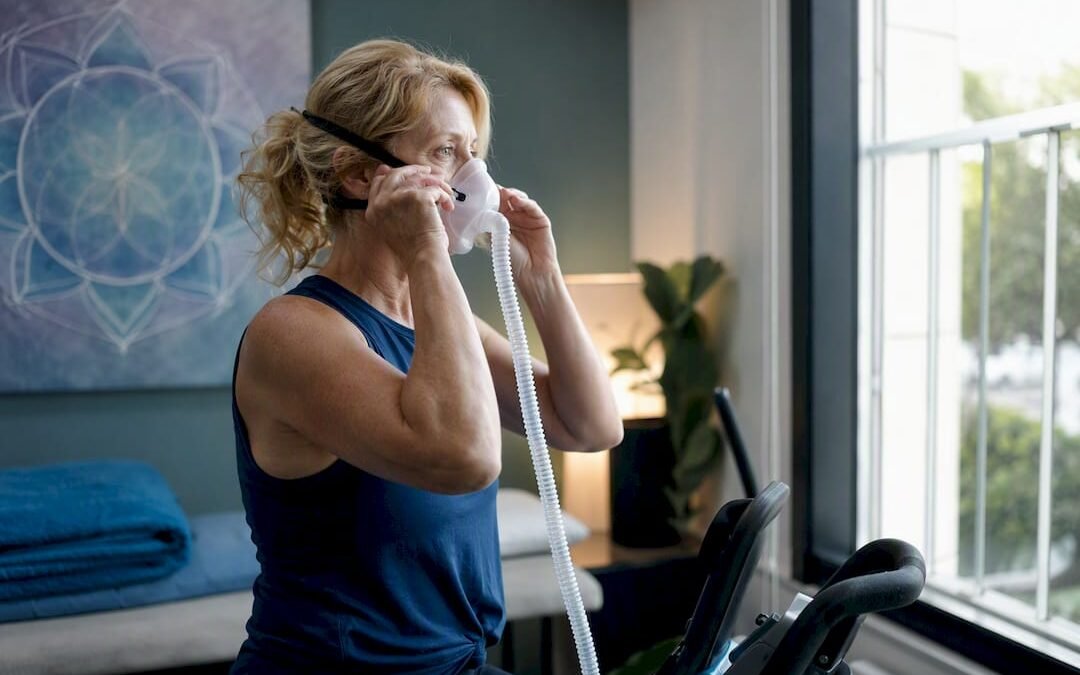
Exercise With Oxygen Therapy is low risk for most healthy adults when sessions stay short and supervised, but it becomes genuinely dangerous for specific groups. Anyone with COPD and CO2 retention, unstable cardiovascular disease, uncontrolled hypertension or seizures, a recent stroke, recent bleomycin chemotherapy, or a current pregnancy needs medical clearance first. The biggest everyday hazard isn’t oxygen toxicity, it’s fire, since concentrated oxygen near a flame or spark turns a wellness session into an emergency fast.
TL;DR:
- Patients with COPD and CO2 retention or uncontrolled cardiovascular, neurological, and respiratory conditions must obtain medical clearance before performing EWOT.
- Typical sessions lasting 5 to 15 minutes at normal pressure do not pose a significant risk of oxygen toxicity, but supplemental oxygen can increase CO2 retention in some COPD patients.
- Fire safety is the main hazard, requiring strict no-open-flame policies, use of oxygen-rated materials, ventilation, and careful equipment checks in any EWOT setting.
- Individuals currently infected with respiratory illnesses or with significant nasal congestion should postpone sessions until fully recovered to avoid strain and hygiene risks.
- Supervised clinics provide essential screening, proper equipment, and immediate intervention, which are unavailable in most home setups.
Table of Contents
- What are the medical contraindications for EWOT?
- Does EWOT cause oxygen toxicity or CO2 retention?
- How do you keep EWOT equipment and rooms fire safe?
- Can you use EWOT during or after cancer treatment?
- What screening and starter protocol should you follow?
- When should you stop an EWOT session immediately?
- How does Live5D Health screen and supervise EWOT sessions?
- What if you have a cold, flu or contagious illness?
- Is EWOT safe if you’re claustrophobic or anxious about masks?
- What about nasal congestion or sinus problems?
- Why safety screening matters more than the marketing suggests
- How Live5D Health supports safe, supervised EWOT
- Sources
What are the medical contraindications for EWOT?
Contraindications split into two camps: absolute (don’t proceed without specialist clearance) and relative (proceed cautiously, usually with monitoring and a lower starting intensity). Getting this distinction right matters more than memorising a list, because the same condition can sit in either camp depending on how well controlled it is.
Conditions that call for a doctor’s sign-off before any EWOT session include:
- COPD with CO2 retention — supplemental oxygen can blunt the drive to breathe in a subset of these patients, worsening hypercapnia rather than helping.
- Uncontrolled cardiovascular disease — unstable angina, recent cardiac events or arrhythmias make exercise-induced blood pressure swings risky.
- Uncontrolled hypertension — combining exertion with concentrated oxygen can push blood pressure higher than a supervised gym session would.
- Uncontrolled seizures — hyperventilation and exertion are recognised seizure triggers in susceptible individuals.
- Recent stroke or unstable neurological status — any new deficit needs full medical review before adding exercise plus oxygen to the mix.
- Recent thoracic surgery — healing lung or chest tissue may not tolerate increased ventilatory demand yet.
Pregnancy and paediatric use fall into a genuine evidence gap rather than a proven danger. There simply isn’t robust research on EWOT in pregnant women or children, so caution defaults to “ask your obstetrician or paediatrician first” rather than a blanket yes or no. Active infection with a fever, and anyone already on domiciliary oxygen, also warrant a call to their GP or respiratory physician before starting. If your case sits anywhere near these lines, the right move is a conversation with the specialist who already manages that condition, whether that’s a cardiologist, oncologist, or respiratory consultant.
Does EWOT cause oxygen toxicity or CO2 retention?
Short answer: rarely, and mostly not at the doses used in standard sessions. Oxygen toxicity comes in two forms. Central nervous system toxicity, which causes symptoms like visual disturbance or seizures, is almost exclusively a hyperbaric and diving phenomenon linked to prolonged exposure at elevated pressure. Pulmonary toxicity develops from sustained high concentrations over many hours, again far beyond what a typical EWOT session delivers.
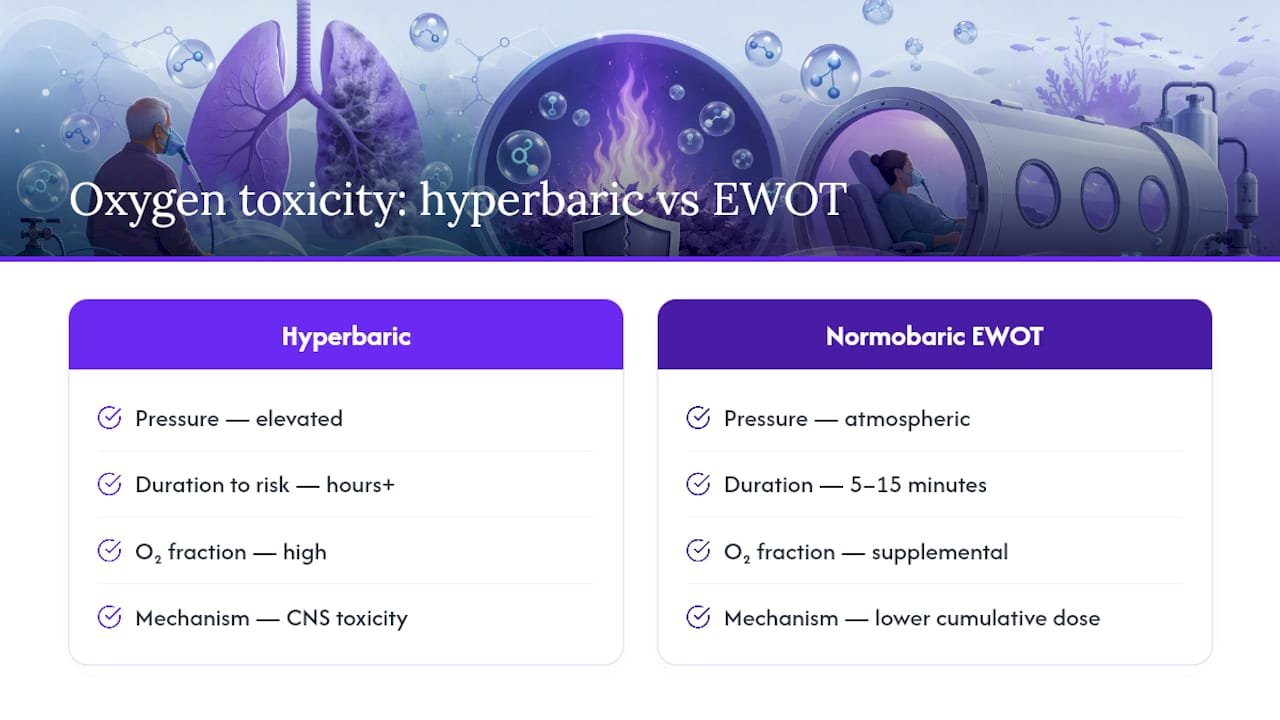
The numbers that matter: typical EWOT sessions run 5 to 15 minutes at normal atmospheric pressure, sitting well below the exposure thresholds documented in the physiology literature on oxygen toxicity. Because EWOT is normobaric rather than pressurised, it doesn’t trigger the same CNS toxicity mechanism seen in hyperbaric exposures.
The real physiological concern sits elsewhere: a subset of COPD patients rely on relatively low oxygen levels to keep their breathing drive active, and supplemental oxygen can raise CO2 retention in that group specifically. It isn’t the oxygen itself that’s the enemy, it’s how it interacts with an already compromised respiratory drive. Separately, exercising with a mask on can trigger hyperventilation in anyone, producing tingling fingers, lightheadedness or dizziness. Controlled breathing pacing and a supervising staff member usually resolve this within a minute or two.
How do you keep EWOT equipment and rooms fire safe?
Oxygen-enriched air lowers the temperature needed to ignite nearby materials and makes anything that does catch fire burn faster and hotter. This is the single most practical safety issue in any oxygen-based therapy setting, more relevant day to day than any of the physiological risks above.
Clinics and home users should follow these controls without exception:
- No open flames or sparks nearby — no smoking, candles, gas cookers, or spark-producing tools anywhere near oxygen equipment or the therapy room.
- Medical-grade materials only — reservoirs and masks should use components rated for oxygen contact; ordinary consumer plastics can off-gas harmful compounds under concentrated oxygen exposure.
- Regular equipment checks — inspect tubing for cracks, confirm mask fit, and check humidification systems before each use.
- Ventilate the room — good airflow stops oxygen concentration building up in enclosed spaces.
- Use oxygen-safe cleaning products — many standard disinfectants aren’t rated for oxygen-rich environments.
Pro Tip: Treat your EWOT room the way a hospital treats an oxygen ward, not the way you’d treat a home gym. If you wouldn’t light a candle in an operating theatre, don’t light one near your oxygen concentrator either.
Can you use EWOT during or after cancer treatment?
Only with your oncologist’s explicit sign-off, and the reason is specific rather than general caution. Bleomycin, a chemotherapy drug used for several cancers, is repeatedly flagged in clinical guidance because it can sensitise lung tissue to oxygen, raising the risk of pulmonary toxicity when patients are later exposed to concentrated oxygen. Anyone who has had bleomycin, even months earlier, should have this discussed explicitly before starting EWOT.

Other pulmonary-toxic drugs and treatments carry a similar logic, so a full medication review with your treating team is worth doing rather than assuming clearance.
Beyond the chemotherapy interaction, be wary of any claim that EWOT treats or slows cancer directly. Tumour metabolism, including the well-studied Warburg effect, is genuinely complex, and no simple “more oxygen kills cancer cells” claim holds up as an established treatment. Cardiovascular medications also deserve a look: beta-blockers and blood pressure drugs both alter how your heart responds to exertion, so anyone on these should get a cardiology opinion if there’s any doubt about exercise tolerance.
- Bleomycin history: oncologist clearance required, no exceptions.
- Other pulmonary-toxic cancer drugs: ask your oncology team directly.
- Cardiovascular medication: cardiology review if exercise tolerance is uncertain.
What screening and starter protocol should you follow?
A sensible pre-session screening covers medical history (particularly lung, heart, and neurological conditions), a current medication list, and a baseline pulse oximetry reading. For anyone with known respiratory disease, recent spirometry or imaging gives the supervising practitioner something concrete to work from rather than guesswork.
- Screen first — history, medications, baseline oxygen saturation, and specialist test results where relevant.
- Start small — 5 to 10 minutes at low intensity for the first sessions.
- Progress gradually — build up over one to two weeks rather than jumping straight to longer durations.
- Cap routine sessions around 15 minutes — go beyond that only on a clinician’s specific advice.
- Monitor throughout — a pulse oximeter and a simple perceived-exertion scale like Borg RPE give staff an objective read on how someone is coping, alongside direct supervision for higher-risk clients.
Mild, transient effects such as lightheadedness, a mild headache, or a dry throat are common early on and usually settle once sessions are shorter and progression is more gradual.
When should you stop an EWOT session immediately?
Certain symptoms mean stop now, not “monitor and see.” Severe chest pain, severe shortness of breath, fainting or near-fainting, any seizure activity, or a sudden neurological change (slurred speech, facial droop, one-sided weakness) all require stopping the session and calling emergency services without delay.
After a session, watch for red flags that need a follow-up call to your clinician rather than an ambulance: persistent cough, coughing up blood, worsening breathlessness that doesn’t settle, or dizziness and confusion that lingers well past the session’s end.
- During session: chest pain, severe breathlessness, fainting, seizure, sudden neurological deficit → stop and call emergency services.
- After session: persistent cough, haemoptysis, ongoing dyspnoea, prolonged confusion → contact your prescribing clinician.
- General rule: remove the mask in a controlled way if it’s safe to do so, and never push through a symptom you don’t understand.
How does Live5D Health screen and supervise EWOT sessions?
Live5D Health runs supervised EWOT within its wellness centre in County Roscommon, using screening protocols designed to catch the conditions covered above before anyone starts a session. For readers wanting more detail, the EWOT benefits guide sets out what the therapy can realistically offer, while the oxygen therapy differences guide explains how EWOT compares with other oxygen modalities.
[Author’s formal wellness or health qualifications to be added here.] [Case studies or client testimonials specific to this article to be added here.]
What if you have a cold, flu or contagious illness?
Skip EWOT while you’re actively unwell with a respiratory infection, and wait until symptoms have fully cleared. Exercising with a fever raises your heart rate and oxygen demand beyond what’s already elevated from fighting infection, and pairing that with mask-based oxygen delivery adds strain your body doesn’t need mid-illness.
There’s a practical hygiene dimension too, particularly in a shared clinic setting. Masks, tubing, and reservoirs sit close to the airway and can harbour droplets or aerosols from a contagious respiratory illness, whether that’s a common cold, flu, or something more serious. Shared equipment needs thorough cleaning between users regardless, but anyone with an active infection should simply reschedule rather than attend. This protects staff, other clients, and, frankly, gives your own recovery a better chance without the added exertion.
A reasonable rule of thumb: if you wouldn’t go to the gym with your current symptoms, don’t book an EWOT session either. Once you’re fever-free and breathing comfortably at rest for at least 24 to 48 hours, easing back in at a shorter, lower-intensity session is the sensible restart point rather than resuming at your previous level.
Is EWOT safe if you’re claustrophobic or anxious about masks?
Mask-related anxiety is common, and it’s entirely manageable with the right approach rather than a reason to avoid EWOT altogether. The mask sits over the nose and mouth for the duration of the session, and for someone with genuine claustrophobia, that alone can trigger a panic response before the exercise even begins.
A few practical adjustments make a real difference. Trying the mask on first without exercising, in a calm setting with no time pressure, lets the nervous system get used to the sensation before oxygen or exertion enter the picture. Starting with genuinely short sessions, sometimes just a minute or two at first, and building tolerance gradually works far better than pushing through a full session and reinforcing the anxiety. Supervising staff should also know in advance if a client has claustrophobia, so they can talk them through it and stop immediately if panic escalates rather than encouraging them to push on.
If anxiety persists despite gradual exposure, that’s worth mentioning to whoever is running the session rather than quietly struggling through it. Some people do better with a nasal cannula setup instead of a full mask where the equipment allows for it, since it feels less enclosing. There’s no prize for toughing it out through genuine panic, and stopping calmly is always the right call over pushing past a threshold that isn’t budging.
What about nasal congestion or sinus problems?
Blocked sinuses or a congested nose reduce how effectively oxygen actually reaches your lungs during a session, which matters more for EWOT than for passive oxygen use because you’re relying on steady airflow while exercising. A stuffy nose forces mouth breathing, which most EWOT masks are designed to accommodate, but it can still reduce comfort and make the session feel harder than it should.
Chronic sinus issues, recent sinus surgery, or a significantly deviated septum are worth flagging to whoever screens you before your first session, since equipment fit and breathing technique may need adjusting. Acute congestion from a cold overlaps with the infection guidance above and is reason enough to postpone rather than push through.
For milder, everyday congestion, simple steps often help: a saline rinse before the session, or allowing extra time to settle breathing before ramping up intensity. If nasal obstruction is a persistent issue rather than an occasional one, an ENT assessment can rule out structural causes and means your EWOT protocol can be built around accurate information rather than guesswork every time you show up.
Why safety screening matters more than the marketing suggests
The gap between how EWOT gets marketed and what the physiology actually supports is real, and it’s worth naming directly. Plenty of wellness content leans into oxygen as some kind of universal performance or healing lever, when the honest picture is narrower and more useful: EWOT is a genuinely low-risk intervention for the right person, and a real one to screen carefully for the wrong one.
What gets underweighted in most consumer-facing content is fire safety. Readers fixate on oxygen toxicity because it sounds dramatic, but the combustion risk from oxygen-enriched air is the hazard most likely to cause real harm in a poorly run setting, and it’s entirely preventable with basic equipment discipline. Meanwhile the physiological nuance, that oxygen itself isn’t dangerous but how it interacts with an already compromised respiratory drive can be, gets flattened into vague “ask your doctor” language that doesn’t tell anyone what to actually ask about.
If you take one thing from this guide, make it screening before enthusiasm. A five-minute conversation about your cardiovascular, respiratory, and medication history does more for your safety than any claim about oxygen’s healing properties ever will.
— Mark
How Live5D Health supports safe, supervised EWOT
Booking supervised EWOT with a wellness centre gives you something a home setup simply can’t: proper medical screening before you start, equipment maintained to clinical standards, and trained staff watching for the warning signs covered throughout this guide. At Live5D Health in Boyle, County Roscommon, that supervision isn’t an add-on, it’s built into every session.

A first visit typically includes an initial assessment covering your medical history and any relevant conditions, a short starter session at low intensity so staff can see how you respond, and a written safety plan tailored to what came up during screening. This matters most if you fall into any of the higher-risk categories covered above, since a clinic-based setting means a qualified person is right there if something needs adjusting mid-session. Explore the EWOT therapy service in Boyle to see what a session involves, or browse the wider luxury spa and wellness facilities if you’d like to combine EWOT with sauna, steam, or cold plunge recovery during your visit. Get in touch to book an assessment and find out whether EWOT fits your situation.
Sources
Further background on oxygen physiology, COPD risk, and combustion safety includes the PEMF therapy side effects overview for comparable wellness-modality precautions, alongside the peer-reviewed citations linked throughout this guide.
This article is general information, not a substitute for advice from a qualified doctor. Consult a qualified healthcare professional about your own circumstances before acting on anything here.
- Oxygen toxicity: mechanisms, manifestations, and management (PMC8465921)
- Oxygen therapy and carbon dioxide retention in COPD (PMC3493170)
- Oxygen safety and combustion risks (PMC5045092)
- Cancer