
Massage will not switch off hot flushes, but it can ease the low mood, anxiety, tiredness and muscle tension that come with menopause, and it feels good while it does. A 2026 systematic review and meta-analysis found the clearest benefits in psychological symptoms, with less consistent results for sleep and urogenital symptoms. So think of massage as a support alongside medical care, not a replacement for it. This guide explains which styles suit which symptoms, what the evidence says, when to speak to your GP first, and how to get the most from a session.
TL;DR
- Massage has the strongest evidence for low mood, anxiety and fatigue in menopausal women, and weaker, less consistent evidence for sleep and vaginal or bladder symptoms.
- Gentle, slow styles such as Swedish, aromatherapy and connective tissue massage are the best studied. Deep work is for sore muscles and joints, not for every day.
- Massage sits alongside HRT and your GP’s advice, never instead of it. Report any unexpected vaginal bleeding to your GP.
- If you have or have had cancer, book with a therapist trained in oncology massage and tell your medical team first.
- A short course of regular sessions tends to be more useful than a single treat.
Table of Contents
- Why menopause makes massage worth considering
- What the research actually shows
- Which type of massage suits which symptom
- Massage and your GP: how they fit together
- If you have, or have had, cancer
- How to get the most from a session
- Our perspective: massage as one part of a bigger picture
- Beyond massage: building a calmer routine
- Book a massage and spa day in Boyle
- FAQ
- Sources
Why menopause makes massage worth considering
Menopause is not one experience. The HSE explains that symptoms can begin 7 to 10 years before your periods stop, which is perimenopause, and that most last around 4 years from your last period, though about 1 in 10 women have them for up to 12 years. That is a long time to feel tired, tense or on edge.
Many of the symptoms women describe are ones touch and relaxation can reach:
- Muscle and joint aches, often worse after a poor night’s sleep.
- Tension in the neck, shoulders and jaw from stress and disturbed sleep.
- Anxiety and low mood, which can arrive in perimenopause even if you have never been anxious before. We explore this in why anxiety increases in menopause.
- Fatigue and the feeling of running on empty.
Massage does not change your hormone levels. What it can do is calm the nervous system, ease tight muscle and give you an hour in which nothing is asked of you. For many women that last part matters as much as the technique.
What the research actually shows
It is worth being precise here, because a lot of the online claims for menopause massage go well beyond the evidence.
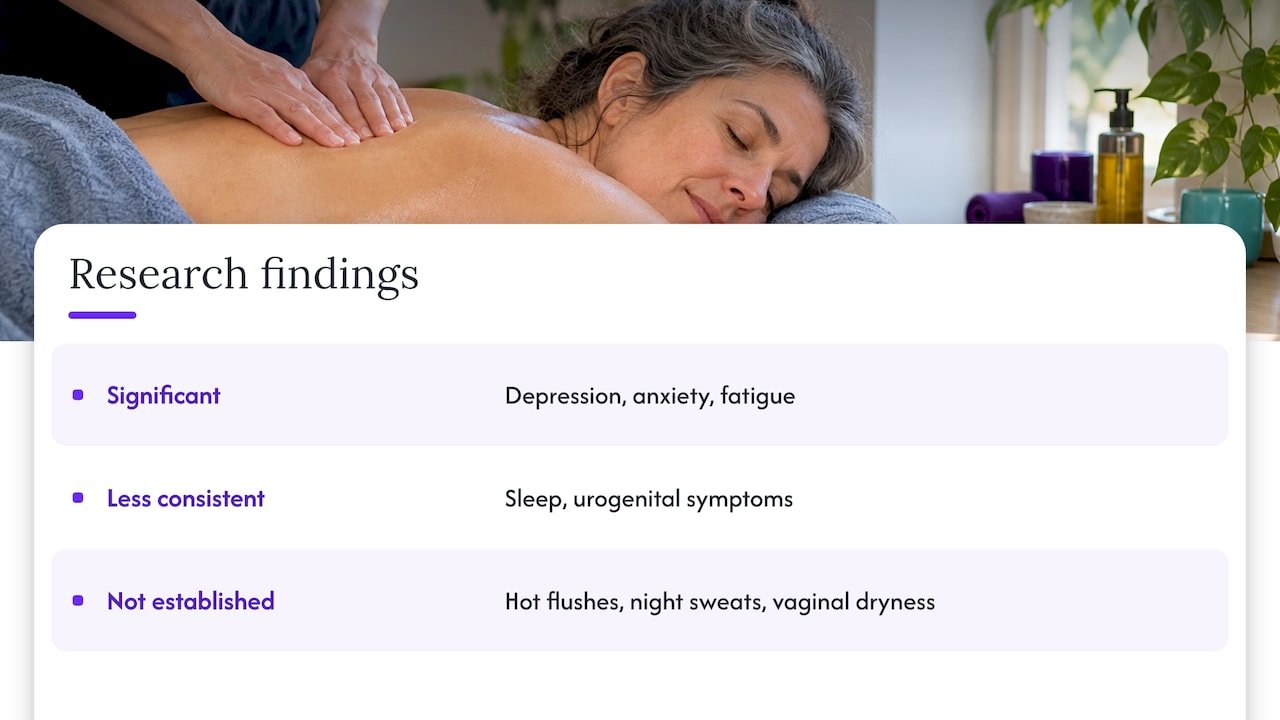
Psychological symptoms. The 2026 meta-analysis in Complementary Therapies in Medicine looked at massage across vasomotor, physical, psychological, sexual, sleep, anxiety, depression and fatigue outcomes. It found significant improvements in depression, anxiety and fatigue, while effects on urogenital and sleep-related symptoms were less consistent.
Connective tissue massage. A 2024 randomised, sham-controlled trial in Maturitas found that connective tissue massage relieved postmenopausal symptoms in the short term. The authors suggest it may be a good option for women who cannot use medication for their symptoms.
Aromatherapy massage. A randomised placebo-controlled trial of aromatherapy massage also looked at menopausal symptoms. Aromatherapy is among the most studied approaches, and it is a natural fit for women who find scent calming.
What the evidence does not show. None of this proves that massage treats hot flushes, night sweats or vaginal dryness. Claims that a particular massage “balances hormones” or clears fibroids and cysts are not supported by the research above. If a practitioner promises that, be cautious.
The effects reported are short term. That is a good reason to treat massage as part of a routine, not a one-off fix.
Which type of massage suits which symptom
| Style | Pressure | Best for | Worth knowing |
|---|---|---|---|
| Swedish | Light to medium | General relaxation, tension, winding down before sleep | Among the most popular choices with menopausal women |
| Aromatherapy | Light | Anxiety, low mood, a sense of calm | Tell your therapist about skin sensitivities and allergies |
| Connective tissue | Specific, light to firm | Physical and emotional symptoms in postmenopause | The trial protocol was 3 sessions a week for 4 weeks, which is intensive |
| Holistic massage | Light to firm, tailored | Stress, whole-body tension, feeling unsupported | Our holistic massage benefits guide covers the cortisol research |
| Deep tissue | Firm | Stubborn knots in neck, back and hips | Can leave you sore, so go lighter if you are already fatigued |
| Oncology massage | Adapted to your treatment | Women with a cancer history | Needs a specially trained therapist |
If you are unsure, start with something gentle. You can always ask for more pressure. It is harder to undo a session that was too much for a body already under strain.
Massage and your GP: how they fit together
Massage is comfort and support. Medical treatment is something else, and the two work well side by side.
The HSE says HRT can be taken during perimenopause and after your periods stop, and that it can take up to 3 months for symptoms to improve. Treatment is usually reviewed every year. The HSE also notes that HRT is free on prescription if you have a medical card or a Drugs Payment Scheme card. If hot flushes, night sweats or poor sleep are wrecking your days, speak to your GP about whether HRT is right for you before you rely on massage.
A few situations where you should check in with your doctor first:
- Unexpected vaginal bleeding. The HSE guidance says to report any unexpected or persistent bleeding to your GP, even though spotting can be normal when adjusting to HRT or during perimenopause. Do not treat this with massage.
- Vaginal, vulval or bladder symptoms. These are common and often overlooked. Massage can help you relax, but it does not treat them. Prescribed topical vaginal oestrogen relieves genitourinary symptoms caused by local oestrogen deficiency, though improvement often takes several months. Ask your GP.
- Periods stopping before 40. The HSE advises that premature menopause needs medical management for bone health. Please see your GP rather than relying on wellness approaches.
- A history of blood clots, or a current clot or swelling in a leg. Tell your therapist and your GP before any massage.
Lifestyle changes matter too. The HSE notes that cutting down on caffeine and alcohol can help with flushes and sleep. Regular exercise helps as well: Cambridge University Hospitals lists lower hot flushes, better sleep and better mood among the benefits. If you are new to lifting, our 8 to 12 week strength plan for menopause is a good place to start.
If you have, or have had, cancer
Many women reach menopause through cancer treatment, or have a cancer history as they go through it. Massage can still be a source of real comfort, but it needs more care.
A review of the safety and efficacy of massage for patients with cancer frames massage as support alongside conventional care, not a standalone treatment, and stresses the value of practitioners with specific oncology training. The Royal Marsden’s complementary therapy service offers massage and aromatherapy within a hospital setting for the same reason: they help with the emotional and physical side effects of treatment and give people a sense of calm.
In practice:
- Ask your oncologist or specialist nurse whether massage is suitable now, and for any areas to avoid.
- Book with a therapist trained in oncology massage and tell them your diagnosis, treatment dates and medications.
- Expect lighter pressure, and possibly shorter sessions.
- Read our guide to oncology massage benefits in Ireland and our overview of alternative cancer therapies for more detail.
If you are also considering heat therapies, please read why to ask your oncologist first about sauna during chemotherapy.
How to get the most from a session
A little preparation makes a big difference.
- Say what is going on. Flushes, joint pain, a tender chest, a low mood day: tell your therapist. Good massage is shaped around you.
- Dress for temperature swings. Ask for a cooler room or a lighter layer if you run hot. Many women find warm oils and heavy blankets uncomfortable.
- Choose your timing. Late afternoon or evening sessions can help you wind down before sleep.
- Go gently with oils. Skin can become more sensitive in menopause. Mention allergies and ask for a patch test if you are unsure.
- Drink water and rest afterwards. Avoid alcohol and a hard workout straight after.
- Think in courses. The studies reporting benefits used repeated sessions, with changes in the Menopause Rating Scale seen after roughly 4 to 8 sessions in the research summarised above. A fortnightly or monthly rhythm you can keep up is more realistic than the trial schedule for most people.
Arrive a little early so you are not rushing. Our spa etiquette guide explains why 15 to 30 minutes helps you settle in.
Our perspective: massage as one part of a bigger picture
We work with a lot of women in their forties, fifties and beyond, and what we hear is consistent. They do not only want symptom relief. They want to feel in charge of their bodies again, at a time when it can feel as though the body has changed the rules.
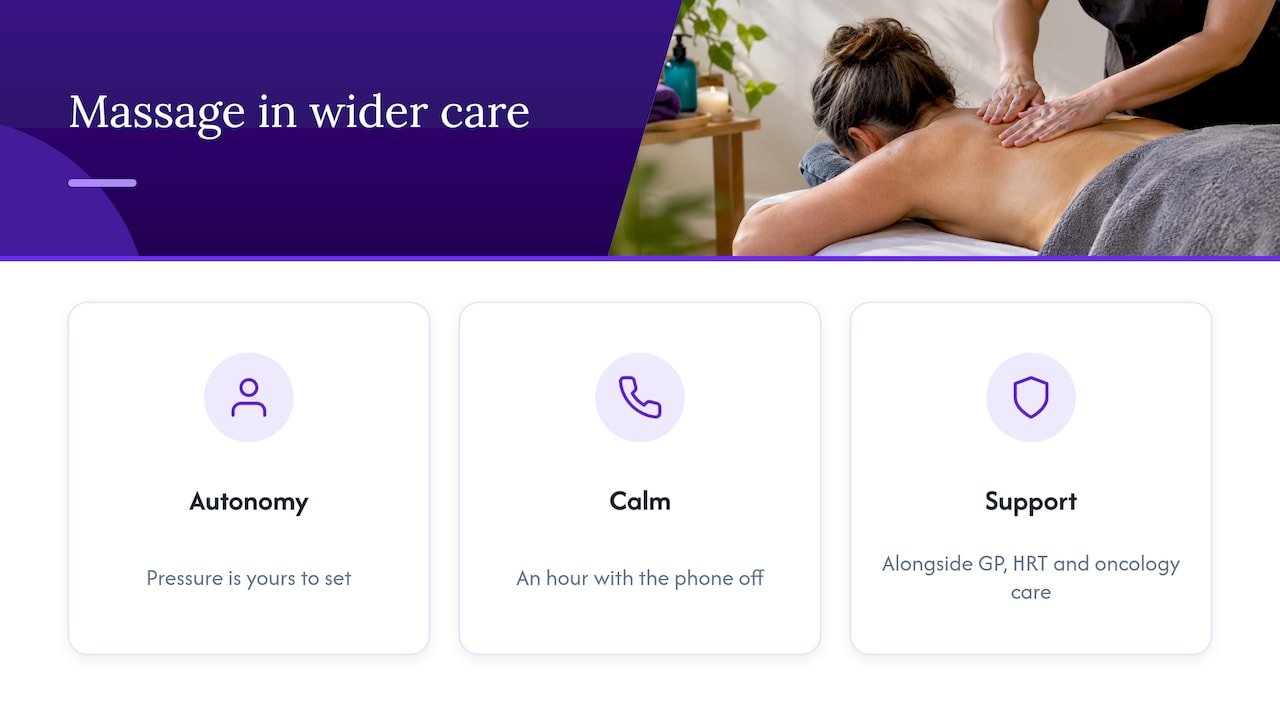
That is why we see massage as more than muscle work. An hour where you are listened to, where the pressure is yours to set and where the phone is off can lower the stress load that makes every other symptom louder. Clinical teams working in integrative care describe the same thing: the value is often the sense of autonomy and calm as much as the touch itself.
At Live5dhealth in Boyle, County Roscommon, we offer holistic massage alongside a sauna, steam room and cold plunge spa, a gym, and a range of therapies such as red light therapy. Some women pair a massage with the spa. Others prefer to keep it simple, and that is fine. We would never suggest any of it replaces your GP, your HRT conversation or your oncology team. We want it to make the rest of your care easier to live with.
If you are curious about heat or light, we have written up what the evidence says on sauna for menopause symptoms and red light therapy for menopause. Read them with a critical eye, as we try to, and decide what suits you.
— Mark
Beyond massage: building a calmer routine
Massage works best when it is one of several small habits. Some that pair well:
- Movement you enjoy. Walking, swimming, yoga, dancing and weights all help mood and sleep.
- Heat and cool. Some women find a sauna, steam room and cold plunge helpful for relaxation. If you have a heart condition, are on certain medications or are undergoing cancer treatment, check with your doctor first. Our post on cardiovascular risk at menopause explains why that matters in midlife.
- Stress support. Breathing practice, time outdoors and good sleep habits all count. If you are curious about herbal options, see our guide to adaptogens for women in midlife, and speak to a pharmacist or GP before combining supplements with prescribed medication.
- Food and drink. Less caffeine and alcohol can ease flushes and help sleep, according to the HSE.
Book a massage and spa day in Boyle
If you would like to try holistic massage in a calm setting, you can find our treatments and booking options on the Live5dhealth website. Our Sauna, Steam & Cold Plunge Spa session is priced at €30, and many guests add it to a massage for a full afternoon of rest. If you would like something longer, our 3, 5 and 10-day wellness retreats give you more time to reset. Tell us about your menopause stage, your medication and any cancer history when you book, and we will help you choose what suits you.
Your best self is not a different person. It is you, with more support and a little more ease.
FAQ
Does massage help with hot flushes and night sweats?
The evidence is not strong here. The 2026 meta-analysis found its clearest benefits in depression, anxiety and fatigue, and less consistent effects on sleep and some physical symptoms. Massage may help you cope with the stress that makes flushes feel worse, but your GP can talk through treatments that act on them directly, including HRT.
What is the best type of massage for menopause?
There is no single best type. Swedish, aromatherapy and connective tissue massage have the most research behind them, and gentle, slow work suits most women when they are tired or tense. Choose deep tissue only if your muscles and joints need it, and always tell the therapist how you are feeling that day.
Is it safe to have a massage with vaginal bleeding or spotting?
Unexpected or persistent vaginal bleeding should be reported to your GP, whatever else you are doing. Spotting can be normal when you start HRT or during perimenopause, but it needs a medical opinion if it is new, persistent or unexpected. Get that checked first, then book your massage.
Can I have a massage if I have had cancer?
Often yes, but with precautions. Ask your oncologist or specialist nurse first, and book a therapist who has oncology massage training so pressure and areas are adapted to your treatment. Massage supports your wellbeing alongside your medical care and does not replace it.
How often should I have a massage for menopause symptoms?
There is no fixed rule. Studies reporting benefits used repeated sessions over several weeks, but weekly or even fortnightly visits are not realistic for everyone. A regular rhythm you can sustain, such as every two to four weeks, is a sensible start. Notice how you feel afterwards and adjust.
Sources
- Can massage ameliorate menopausal and postmenopausal symptoms in women? Systematic review and meta-analysis (2026)
- Connective tissue massage in postmenopausal women: randomised, sham-controlled trial, Maturitas (2024)
- Effect of aromatherapy massage on menopausal symptoms: randomised placebo-controlled trial
- HSE: Menopause symptoms
- HSE: When to take HRT
- HSE: About HRT
- HSE: Sequential combined HRT, how and when to take or use it
- Tayside Area Formulary: topical oestrogen
- Safety and efficacy of massage therapy for patients with cancer
- The Royal Marsden: …and relax
- Cambridge University Hospitals: how to manage menopause symptoms