
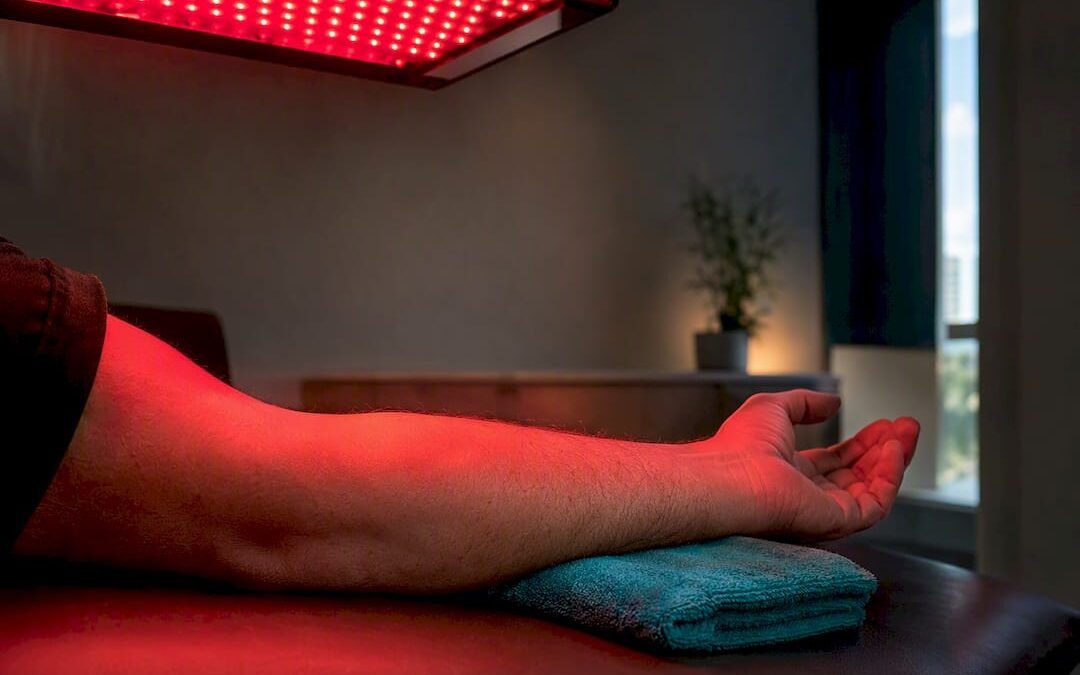
The wavelengths with the strongest research behind them sit in two narrow bands: roughly 630–660 nm for visible red light and 830–850 nm for near‑infrared. Red light works its magic closer to the skin’s surface, while near‑infrared reaches deeper into muscle and joint tissue, and many protocols combine both. Wavelength alone will not get you results, though. Irradiance and total dose decide whether a session does anything at all, and how strong the evidence is depends heavily on what you are trying to treat.
TL;DR:
- Wavelengths used in therapy are narrowly focused around 630–660 nm for red light and 830–850 nm for near-infrared, matching mitochondrial absorption peaks.
- Penetration depth varies with wavelength, with red light affecting surface tissues and near-infrared reaching deeper into muscles and joints.
- Evidence supports red light therapy for hair growth and skin rejuvenation, while deeper tissue applications like pain relief have more variable results.
- Proper dosing depends on irradiance and session duration, with a biphasic dose response where too much light can reduce effectiveness.
- Always verify device specifications for wavelength, irradiance, and clinical trial backing to ensure safety and efficacy.
Table of Contents
- Understanding red light wavelengths and how photobiomodulation works
- Red light versus near‑infrared: matching wavelength to outcome
- What the research actually shows, condition by condition
- Getting the dose right: irradiance, energy density, and session time
- How to evaluate a red light device without getting misled
- Safety, contraindications, and what to watch for
- Live5dhealth’s practical approach to wavelength and safety
- How wavelength choices shape practice on the ground
- Book a red light therapy assessment with Live5dhealth
- Sources
Understanding red light wavelengths and how photobiomodulation works
Light is measured in nanometres (nm), and that number tells you exactly where a colour sits on the visible and infrared spectrum. Visible red light runs from around 620 nm to 700 nm. Beyond that, near‑infrared light stretches from roughly 700 nm up to 1,000 nm or more, invisible to the human eye but still capable of interacting with living tissue. Within those broad ranges, therapeutic devices cluster around two much narrower bands: approximately 630–660 nm for red and 830–850 nm for near‑infrared. This is not arbitrary. Those specific slices of the infrared light spectrum correspond almost exactly to the wavelengths that mitochondria absorb most efficiently, which is the entire point of photobiomodulation therapy.
Here is the mechanism in plain terms. Inside nearly every cell in your body, mitochondria act as the powerhouse of the cell, converting oxygen and nutrients into ATP, the energy currency your cells run on. Sitting inside the mitochondrial membrane is an enzyme called cytochrome c oxidase, and it happens to absorb red and near‑infrared light particularly well. When photons at the right wavelength hit this enzyme, it appears to boost ATP output and trigger a cascade of downstream effects: increased collagen synthesis, modulated inflammatory signalling, and improved circulation in the treated area. That is the biological basis behind claims about the benefits of red light therapy for skin and tissue repair.
Penetration depth is where wavelength choice really earns its keep. Shorter red wavelengths, absorbed and scattered more readily by skin and blood, tend to concentrate their effect in the epidermis and upper dermis, typically working at a millimetre scale. Longer near‑infrared wavelengths scatter less and penetrate on more of a centimetre scale, allowing them to reach deeper into subcutaneous fat, muscle, and even joint structures. This is a direct consequence of how longer wavelengths penetrate more deeply into biological tissue, and it explains why a device built for facial skincare looks very different, on paper, from one designed for a knee or a shoulder.
One term worth knowing before you start comparing devices: bandwidth, or spectral width. No LED produces a single perfect wavelength. Instead, it emits a narrow spread of wavelengths centred on a target figure, say 630 nm, with most of the output falling within a few nanometres either side. Manufacturers who publish a clear centre wavelength and a tight bandwidth are generally being more precise, and more honest, about what their device actually emits than those who simply advertise “red light” with no numbers attached.
Red light versus near‑infrared: matching wavelength to outcome
Choosing between red and near‑infrared light, or combining them, comes down to how deep the target tissue sits and what result you are after. Visible red light concentrates its energy in the epidermis and dermis, making it a natural fit for anything happening at or near the skin’s surface. Near‑infrared light, thanks to its longer wavelength, extends into the dermis, subcutaneous fat, and underlying muscle, which is why it turns up more often in protocols aimed at deeper structures.
That distinction plays out clearly in how each is actually used:
- Red light alone (630–660 nm): favoured for skin rejuvenation, fine‑line reduction, and stimulating collagen production near the surface, where the evidence for cosmetic improvement is comparatively solid.
- Near‑infrared alone (830–850 nm): more commonly chosen for deeper pain relief, joint stiffness, and wound healing in tissue that sits below the skin’s visible layers.
- Combined red and NIR protocols: used when a treatment goal spans both layers, such as post‑exercise recovery or certain wound‑healing applications, where surface and deeper effects both matter.
Clinical reviews suggest combination red and near‑infrared regimens can produce better outcomes for collagen density and inflammation than either wavelength used in isolation, at least in some trials. That is not a universal finding, and the size of the benefit varies considerably depending on the condition and the study design. Still, it is one reason many clinic‑grade panels, and increasingly home devices, ship with both wavelengths built in rather than forcing a choice.
Worth flagging: evidence strength is not uniform across these use cases. Skin‑focused red light applications have a reasonably consistent trial record for surface‑level cosmetic change. Deeper NIR applications for chronic pain show promising but more variable results, partly because pain itself is harder to measure objectively than wrinkles. If you are chasing a specific outcome, working out which tissue layer that outcome depends on is the more useful first step, ahead of picking a wavelength number in isolation.
What the research actually shows, condition by condition
Evidence quality for red light therapy is not consistent across every claim you will see attached to it, and it pays to know where the science is solid and where it is thin.
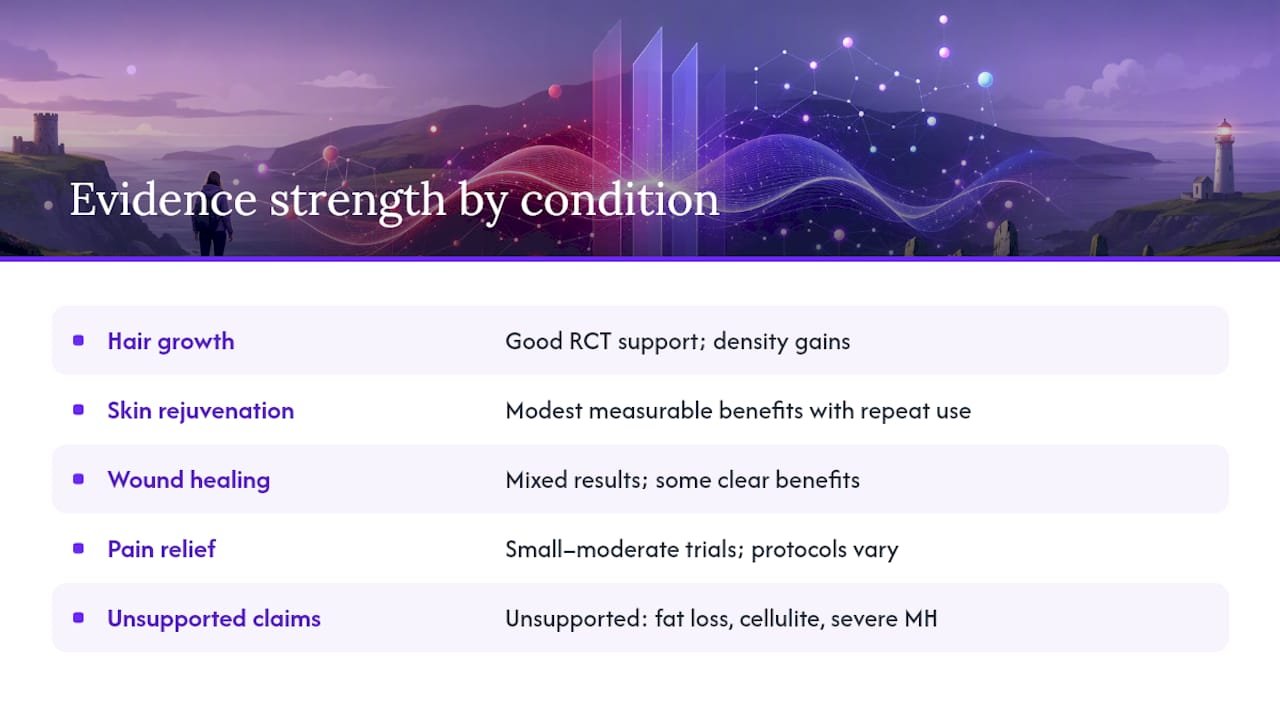
Hair growth has some of the better controlled‑trial support among cosmetic applications. Studies on androgenetic alopecia have shown clinically meaningful improvements in hair density with regular red or near‑infrared exposure, which is why this remains one of the more evidence‑backed uses of the effects of red light exposure on the body.
Skin rejuvenation sits in a similar position. Trials looking at fine lines, texture, and collagen density after red light exposure generally report modest but measurable improvement, particularly with consistent, repeated sessions rather than one‑off treatments.
Wound healing shows a mixed picture. Some controlled studies, including work on oral mucositis in cancer treatment patients, demonstrate real clinical benefit from red and near‑infrared exposure. Other wound categories have thinner or more inconsistent trial data, often because wound types, depths, and causes vary so much between studies that direct comparison is difficult.
Pain relief, especially for joint and muscle discomfort, has plenty of small‑to‑moderate trials behind it, and clinical practice increasingly reflects that. But sample sizes tend to be modest, and dosing protocols differ enough between studies that pooling results into one clean verdict is not really possible yet.
Then there are the claims that get repeated constantly online but rest on far weaker ground: weight loss, cellulite reduction, and major psychiatric or mood disorders. Current evidence does not support red light therapy as an effective treatment for red light skin treatment marketed for fat loss or cellulite, and claims around serious mental health conditions go well beyond what any controlled trial has actually demonstrated.
Why does the picture stay this patchy? Three recurring problems show up across the trial literature. Sample sizes are frequently small, sometimes a few dozen participants. Devices used from one study to the next differ wildly in wavelength, irradiance, and treatment schedule, making direct comparison awkward at best. And follow‑up periods are often short, leaving open questions about how long benefits actually last once sessions stop. None of that means red light therapy does not work. It means the confidence you can place in any specific claim should track how strong, and how consistent, the underlying trials actually are for that particular condition.
Getting the dose right: irradiance, energy density, and session time
Wavelength gets most of the attention, but dose is what actually determines whether a session does anything. Two figures matter here, and both are worth understanding before you sit in front of any device.
Irradiance, measured in milliwatts per square centimetre (mW/cm²), tells you how much light power is landing on your skin at a given distance from the device. Energy density, or dose, measured in joules per square centimetre (J/cm²), tells you the total amount of light energy delivered over the full session. The relationship between the two is straightforward: energy density equals irradiance multiplied by time in seconds, then divided by 1,000 to convert to joules.
Clinical trials for surface‑level skin work often use energy densities within a low to moderate range per session, while deeper tissue targets, treated with near‑infrared, generally call for higher doses, reflecting the greater distance the light must travel before reaching its target. These are broad ranges rather than fixed prescriptions, because study protocols vary enough that no single number applies universally.
More light is not automatically better. Photobiomodulation follows what researchers call a biphasic dose response: too little light produces no measurable effect, an effective range produces the desired biological response, and pushing well beyond that range can actually blunt or reverse the benefit. This is one of the more counter‑intuitive aspects of red light frequency and dosing, and it is why longer is not always the smarter choice when you are tempted to double a session out of impatience.
If you want to work out a sensible session time from a device’s own specifications, follow these steps:
- Find the device’s stated irradiance in mW/cm² at your intended treatment distance, not at the LED surface.
- Decide on a target energy density based on your goal, using the ranges above as a rough guide for surface versus deeper tissue.
- Convert your target J/cm² into mW·seconds by multiplying by 1,000.
- Divide that figure by the device’s irradiance in mW/cm² to get your session time in seconds.
- Convert to minutes and round to a practical, repeatable session length.
- Start at the lower end of the range and increase gradually only if you are not seeing results after several consistent sessions.
If you are working on pain management specifically, a short initial trial period before judging results is sensible: our own guidance on structuring an initial course of sessions reflects that same principle of building up gradually rather than front‑loading a single long, high‑dose session.
How to evaluate a red light device without getting misled
Not every LED red light therapy device sold online is built or specified to a standard that will actually deliver a therapeutic dose, and the marketing copy rarely tells you that outright. A few checks separate a properly specified device from a glorified nightlight.
Reputable manufacturers publish, without you having to ask:
- The exact centre wavelength (or wavelengths) in nanometres, not a vague description like “red” or “infrared.”
- The spectral bandwidth around that centre wavelength.
- Measured irradiance in mW/cm² at a stated working distance, not just the LED’s nominal wattage.
- Beam uniformity information, so you know the light is not concentrated in a hot spot with weak coverage elsewhere.
- Links to peer‑reviewed clinical trials that used comparable wavelengths and doses.
Regulatory markings add another layer of confidence, though they are not a guarantee of clinical efficacy on their own. CE marking within the EU, and FDA clearance for over‑the‑counter devices sold in the US, indicate a baseline of manufacturing and safety compliance. Combine that with genuine trial citations, ideally something you can look up on Clinicaltrials, rather than a single testimonial‑style page.
Watch for the red flags too. Vague marketing language with no numbers attached, sweeping health claims covering everything from weight loss to anxiety, and an absence of any published wavelength or irradiance figure are all signs the product has not been built or tested against the standards that actually matter. As journalists covering this space have pointed out, device heterogeneity across the market is a genuine reason so many consumer trials produce inconsistent results, and a poorly specified device is often the hidden variable behind a disappointing outcome.
Pro Tip: When comparing two devices’ irradiance claims, always ask for the figure measured at your intended treatment distance, not the number measured directly against the LED panel. A device that reads 100 mW/cm² pressed flat against the diode can drop dramatically by the time you are sitting a comfortable distance away, and that difference alone can make or break whether you are hitting a therapeutic dose.
Safety, contraindications, and what to watch for
Red light therapy has a strong safety profile overall, and most people tolerate sessions with nothing more than mild, short‑lived reactions. Temporary redness, a warming sensation at the treatment site, and occasional eye discomfort if protection is skipped are the most commonly reported effects, and they typically settle quickly.
Certain groups should have a conversation with a doctor before starting. That includes anyone taking photosensitising medication, anyone with an active cancerous skin lesion in the treatment area, and anyone who is pregnant, since research on light exposure during pregnancy remains limited. Our detailed breakdown of who should avoid red light therapy covers these categories in more depth if any apply to you.
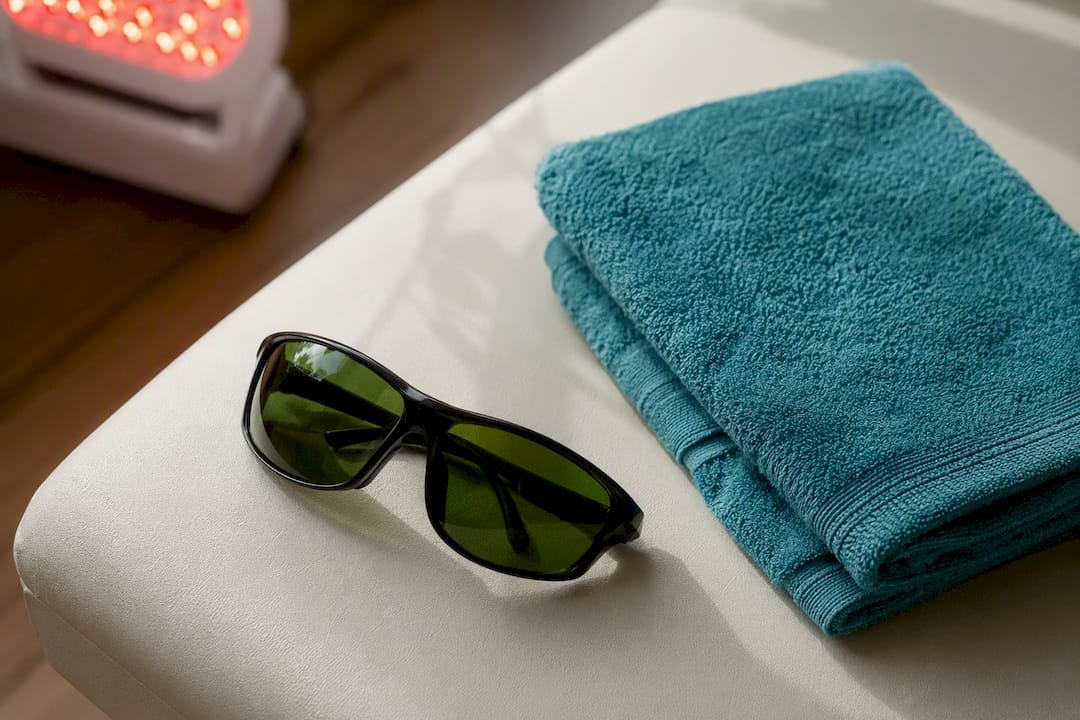
A few practical habits reduce risk further: always use proper eye protection where a device recommends it, follow the manufacturer’s guidance on distance and session length rather than improvising, and stop immediately if you notice unexpected pain, blistering, or a worsening skin reaction. For a fuller rundown of what to expect, see our guide on red light therapy side effects.
Live5dhealth’s practical approach to wavelength and safety
At Live5dhealth, every red light therapy session begins with a proper screening conversation, not a straight walk to the panel. We ask about medications, skin conditions, and any relevant medical history before recommending a wavelength combination or session length. If you are shopping for a device or comparing clinics elsewhere, ask the same questions we ask: what is the exact centre wavelength, what is the measured irradiance at your treatment distance, and what trials support the specific protocol on offer. Evidence for red and near‑infrared therapy is genuinely encouraging for several conditions, but it is not a substitute for clinical oversight where a medical issue is involved. Our full guide to red light therapy in Ireland covers what supervised sessions typically involve.
How wavelength choices shape practice on the ground
Working through the evidence on red and near‑infrared bands repeatedly comes back to the same lesson: the number on the spec sheet only matters alongside how it is delivered. In practice, combination protocols tend to get chosen over single‑wavelength ones when a client’s concern spans more than one tissue layer, skin texture alongside underlying joint stiffness, for instance, rather than because combining automatically doubles the benefit.
The clearest practical takeaway is this: a professionally supervised session lets someone adjust wavelength, distance, and duration to your specific goal in real time, something a fixed home device simply cannot replicate, however well it is specified. That does not make home devices worthless. It makes them a different tool with a narrower job.
— Mark
Book a red light therapy assessment with Live5dhealth
You can choose a service that provides proper wavelength and dose assessment, monitored sessions using clinically referenced red and near‑infrared protocols, and the option to combine treatment with other therapies, including PEMF and sauna or cold plunge facilities, if your goals call for it.

This is not the only route available to you, and we would rather you compared device specs and asked a clinician about any medical condition than take our word alone. But if you want expert eyes on which wavelength combination actually fits your goal, rather than a one‑size‑fits‑all panel bought online, book an assessment through our luxury spa and wellness facilities in Boyle and we will build a session plan around what the evidence, and your own skin or tissue, actually needs.
Sources
- What to Look for in Red Light Therapy: A Product Guide Backed by Science
- Red light therapy: Benefits, side effects & uses
- Does red‑light therapy work? What the research says | Scientific American
- Red‑light therapy does have health benefits but not the ones you think | New Scientist