

Regular sauna bathing is linked to a meaningfully lower risk of fatal cardiovascular disease, with Finnish cohort data showing frequent users (4 to 7 sessions weekly) facing roughly 40 to 60% lower cardiovascular mortality than occasional users. Sessions of 15 to 20 minutes at 80 to 100°C, taken several times a week, appear to support healthy blood pressure and vascular function. None of this replaces exercise or medical treatment. It works alongside them.
TL;DR:
- Using a sauna four to seven times weekly can reduce cardiovascular mortality by approximately 40 to 60 percent, with benefits increasing alongside frequency and session length.
- Regular sauna sessions cause temporary vasodilation and increased heart rate, which over time improve blood vessel flexibility and lower arterial stiffness.
- Controlled trials suggest sauna use enhances blood pressure and cardiovascular fitness when combined with exercise, though long-term proof of prevention remains limited.
- People with unstable angina, severe valve conditions, or unmanaged blood pressure should consult a doctor before regular sauna use, especially if on medications like diuretics or antihypertensives.
- For maximum safety, hydrate before sessions, cool down gradually, and start with shorter, lower-temperature sessions while building tolerance gradually.
Table of Contents
- Does sauna bathing help heart health? Here’s the epidemiological evidence
- How sauna improves heart function: the physiology behind the benefit
- What controlled trials show about sauna and heart disease risk
- How often should you use a sauna for cardiovascular benefit?
- Who should be cautious with sauna use, and when to see a doctor first
- Getting the most from sauna safely: hydration, cooling and timing
- Live5dhealth’s approach to safe, supervised sauna use
- A grounded view on where sauna fits in heart health
- Ready to build sauna into your routine, safely and consistently
- Sources
Does sauna bathing help heart health? Here’s the epidemiological evidence
The strongest evidence for sauna and cardiovascular health comes from Finland, where sauna bathing is woven into daily life rather than treated as a wellness trend. That cultural habit gave researchers something rare: decades of follow-up data on thousands of people whose sauna use varied naturally, from once a week to almost daily.
The landmark prospective cohort study tracked participants over a median follow-up of 15 to 20 years and sorted them by frequency. The pattern that emerged was consistent and striking:
- People using a sauna 4 to 7 times per week showed roughly 40 to 60% lower risk of fatal cardiovascular disease compared with those using one just once weekly.
- The benefit scaled with frequency. Twice or three times weekly sat between the two extremes, suggesting a genuine dose-response relationship rather than a simple yes/no effect.
- Longer individual sessions correlated with additional risk reduction, independent of how often people went.
Sauna frequency and cardiovascular mortality: the cohort data found that moving from once-weekly to 4 to 7 sessions per week was associated with a 40 to 60% reduction in fatal cardiovascular events, one of the clearest dose-response signals in lifestyle medicine research.
Researchers adjusted for the obvious confounders: age, blood pressure, cholesterol, smoking status, socioeconomic factors, and existing cardiovascular disease. The association held even after controlling for these variables, which strengthens the case that sauna use itself contributes something, not merely that healthier people happen to sauna more often.
That caveat matters, though. This is observational data. Nobody randomly assigned thousands of Finns to sauna four times a week for two decades. People who bathe frequently may also sleep better, eat differently, or manage stress more effectively, factors the statistical adjustments cannot fully strip out. Harvard Health’s commentary on this research is candid about that limitation: the link between sauna habits and lower heart disease rates is consistent and repeated across studies, but causality has not been definitively proven the way a drug trial would establish it.
What we can say with more confidence is that the association is not a one-off finding. Multiple reviews replicate the pattern across different Finnish cohorts, and the size of the effect scales in a biologically plausible way with dose. That combination, consistency plus a dose-response curve, is exactly what epidemiologists look for when trying to distinguish a real signal from statistical noise.
How sauna improves heart function: the physiology behind the benefit
Sit in a sauna at 80°C and your body reacts as though you have started a light jog. Your heart rate climbs, often into the 120 to 150 beats per minute range, well above resting levels for most adults. That is not incidental. It is the mechanism that plausibly links sauna and cardiovascular health.
Heat exposure triggers a cascade of acute responses:
- Vasodilation. Blood vessels near the skin widen to dump heat, which drops peripheral resistance and increases blood flow to the surface.
- Cardiac output rises. The heart pumps harder and faster to maintain blood pressure as vessels dilate, similar to the demand placed on it during moderate aerobic activity.
- Blood flow redistribution. More blood moves to the skin, less to internal organs, a shift the cardiovascular system has to manage in real time.
- Sweating and fluid shifts. Significant fluid loss through sweat changes blood volume and viscosity temporarily, part of why hydration matters so much (more on that later).
These acute effects are transient. What happens with repeated exposure over weeks and months is more interesting, because that is where lasting cardiovascular health benefits appear to build.
Regular sauna use is associated with improved endothelial function, meaning the thin layer of cells lining your blood vessels responds better to signals that tell them to relax and widen. Reviews synthesising this mechanistic evidence also report reduced arterial stiffness and lower markers of systemic inflammation among frequent bathers, changes that track closely with the cardiovascular protection seen in cohort studies.
Put simply: sauna bathing repeatedly exercises the same vascular systems that aerobic exercise trains, just through heat rather than movement. Your blood vessels get practice dilating and constricting efficiently, your heart gets practice adapting to changing demand, and inflammatory markers that contribute to atherosclerosis over time appear to trend downward with consistent use. None of these pathways proves causation on their own, but together they offer a coherent biological explanation for why the epidemiological signal exists in the first place.
What controlled trials show about sauna and heart disease risk
Cohort studies show association. Trials get closer to cause and effect, and the sauna research in this space, while smaller in scale, has produced some genuinely useful findings.
The most notable is a multi-arm randomised controlled trial that split 47 participants into groups: exercise alone, exercise followed by a 15-minute sauna session, and a control group. Over eight weeks, the exercise-plus-sauna group showed measurably larger drops in systolic blood pressure and greater gains in cardiorespiratory fitness than the exercise-only group.
Post-exercise sauna trial results: in this randomised controlled trial, adding a 15-minute sauna session after regular exercise produced significantly greater improvements in both systolic blood pressure and cardiorespiratory fitness compared with exercise alone over the eight-week study period.
That finding matters for anyone wondering whether sauna and exercise compete for the same physiological territory or complement each other. The evidence points to complementary. Heat stress appears to add a training stimulus that exercise alone does not fully replicate, likely through the same vasodilation and cardiac output pathways described above, sustained a little longer post-workout.
Smaller short-term trials add supporting detail. Several have measured arterial compliance and stiffness before and after sauna protocols lasting just a few weeks, finding improvements in how well arteries expand and contract with each heartbeat. These studies are useful but limited:
- Sample sizes tend to be small, often fewer than 50 participants, which limits statistical power.
- Trial durations are short, typically weeks rather than years, so we cannot say whether the same benefits persist or compound over decades.
- Populations studied are often relatively healthy adults, which limits how confidently the findings generalise to people with existing heart disease.
None of this amounts to proof that sauna prevents heart attacks. It is a reasonably consistent signal, drawn from both large observational cohorts and smaller controlled trials, that regular heat exposure nudges several cardiovascular markers in a favourable direction. Reasonable people, including the researchers themselves, still describe this as an area needing more randomised, longer-term work.
How often should you use a sauna for cardiovascular benefit?
If you take one practical instruction from the research, it is this: frequency drives the benefit more than any other single variable. The Finnish cohort data consistently shows the biggest cardiovascular gains clustering around 4 to 7 sessions per week, though reviews suggest a realistic minimum threshold of about 3 to 4 sessions weekly for measurable benefit.
That is a higher bar than most people expect. A single Sunday sauna session, however relaxing, sits at the lower end of what the evidence associates with reduced cardiovascular risk.
Session length matters too. Reviews of passive heat therapy point to a minimum of roughly 15 minutes per session for meaningful physiological effect, with many of the strongest cohort results coming from bathers who routinely stayed in for 15 to 20 minutes at a time.
Here is what a practical weekly target looks like, based on the current evidence:
- Minimum effective frequency: 3 to 4 sessions per week.
- Frequency associated with the largest risk reduction: 4 to 7 sessions per week.
- Session length: 15 to 20 minutes, adjusted for individual tolerance and heat acclimatisation.
- Temperature: traditional Finnish saunas run at 80 to 100°C, the range most of the underlying research is based on.
That last point is worth dwelling on. Almost all of the strongest cardiovascular evidence comes specifically from traditional Finnish-style dry heat saunas, not infrared cabins or steam rooms. Infrared saunas operate at much lower air temperatures (often 45 to 60°C) and heat the body through radiant energy rather than hot air, while steam rooms add humidity into the mix. Both may offer relaxation and some circulatory benefit, but the evidence base behind them is thinner and less consistent than for Finnish sauna bathing. If cardiovascular health for its own sake is your goal rather than a nice-to-have side effect, the traditional dry-heat format is where the data actually lives.
Pro Tip: Build up gradually if you are new to sauna bathing. Start with two or three shorter sessions a week at a lower temperature, then increase frequency and duration over several weeks as your body adapts to consistent heat exposure.
Who should be cautious with sauna use, and when to see a doctor first
Sauna bathing is not risk-free for everyone, and the same evidence that supports cardiovascular benefit for most people also flags specific conditions where caution, or outright avoidance, is warranted.
Clinical guidance identifies several groups who should speak with a doctor before starting or continuing regular sauna use:
- Unstable angina or recent heart attack. Anyone with recent or ongoing chest pain that has not been medically stabilised should avoid sauna use until cleared by a cardiologist.
- Severe aortic stenosis. This valve condition limits how well the heart can respond to the increased cardiac demand that heat exposure creates, raising the risk of dangerous drops in blood pressure.
- Decompensated heart failure. If your heart is already struggling to keep up with normal demand, adding the extra workload of thermal stress is not advisable without medical clearance.
- Uncontrolled hypertension. Very high, poorly managed blood pressure needs to be brought under control first, since sauna-induced vasodilation interacts unpredictably with unmanaged hypertension.
- Recent cardiac procedures. Anyone recovering from surgery, stenting, or other interventions should follow their cardiologist’s specific timeline before resuming sauna sessions.
Medication is the other major variable people underestimate. Diuretics and antihypertensive drugs both increase the risk of fainting in a hot sauna, because they already lower blood pressure or fluid volume before you add heat-induced vasodilation on top. That combination can produce orthostatic hypotension, the sudden blood pressure drop that happens when you stand up too quickly and everything goes light and grey for a moment.
Pro Tip: If you take blood pressure medication or diuretics, stand up slowly after your session and sit for a minute before walking anywhere. Most sauna-related fainting happens in the transition out, not during the session itself.
The sensible default for anyone with a diagnosed heart condition, or any uncertainty about one, is medical clearance first. For everyone else, “start low, go slow” remains the safest approach: shorter sessions, lower temperatures, and paying close attention to how your body responds before increasing either variable.
Getting the most from sauna safely: hydration, cooling and timing
Three practical habits separate a safe, cardiovascular-friendly sauna routine from one that carries unnecessary risk.
- Hydrate before you go in, not after you come out. Sauna sessions can cause significant fluid loss through sweating, which shifts blood volume and viscosity while your cardiovascular system is already working harder. Pre-loading with fluids, and electrolytes where appropriate, helps offset the orthostatic hypotension risk that catches people off guard when they stand up too fast. Live5dhealth’s electrolyte protocol for sauna sessions outlines a practical sodium range to consider before and after bathing, and the broader principle is well established in general hydration guidance as well.
- Cool down gradually, not abruptly. A dramatic plunge into cold water straight after a hot sauna session triggers a sharp vasoconstrictive response that spikes blood pressure suddenly. For anyone with cardiovascular risk factors, a gradual cool-down (room temperature air, then progressively cooler water) is the safer route. Live5dhealth’s guidance on cold plunge safety and timing covers this transition in more depth.
- Time your sauna session after exercise, not instead of it. The trial evidence showing the biggest blood pressure and fitness gains used sauna as a 15-minute add-on immediately following a workout, not as a replacement for it. If you already exercise regularly, tacking a sauna session onto the end may extract more benefit than either practice alone.
Live5dhealth’s approach to safe, supervised sauna use
Sauna bathing works best as part of a structured routine, not a one-off treat, and that is exactly how Live5dhealth’s wellness centre in Boyle, County Roscommon approaches it. The 30 to 60 minute electrolyte protocol gives members a concrete framework for hydration around sessions, rather than leaving fluid replacement to guesswork.
For women navigating menopause, where hot flushes and cardiovascular risk both shift, the centre’s page on sauna therapy for menopause symptoms walks through what the evidence actually supports for that specific stage of life.
Readers based near Boyle who want supervised, guided sauna sessions rather than going it alone can explore the centre’s local sauna options as a practical next step. Supervised settings matter particularly for anyone easing into a new routine after a cardiac event or diagnosis, where having staff on hand adds a layer of reassurance that home sauna use cannot offer.
A grounded view on where sauna fits in heart health
The evidence for sauna and cardiovascular health is genuinely good, better than most wellness claims that get thrown around, but it gets oversold constantly. People read “40 to 60% lower cardiovascular mortality” and hear a guarantee. It is not one. It is a strong, repeated association from observational data, backed by plausible mechanisms and a handful of smaller trials that point the same direction.
What frustrates me about how this topic gets discussed is the false choice it creates: sauna versus exercise, sauna versus medication, sauna as some superior alternative to the boring cardiovascular basics. The actual trial evidence shows the opposite. Sauna added benefit on top of exercise, not instead of it. That is the honest framing, and it is a better one anyway, because it means you do not have to choose.
If you have any diagnosed heart condition or take blood pressure medication, talk to your doctor before making sauna a regular habit. For everyone else, three to four sessions a week at a sensible temperature, done consistently over months rather than treated as an occasional indulgence, is where the evidence says the real benefit lives. If you want guided support building that habit safely, supervised sessions are worth exploring.
— Mark
Ready to build sauna into your routine, safely and consistently
Some wellness centres give you what a home sauna cannot: supervised sessions, a structured hydration protocol, and a cold plunge transition designed around gradual cooling rather than shock. That combination matters most for people managing blood pressure, recovering from a cardiac event, or simply wanting expert guidance before committing to several sessions a week.
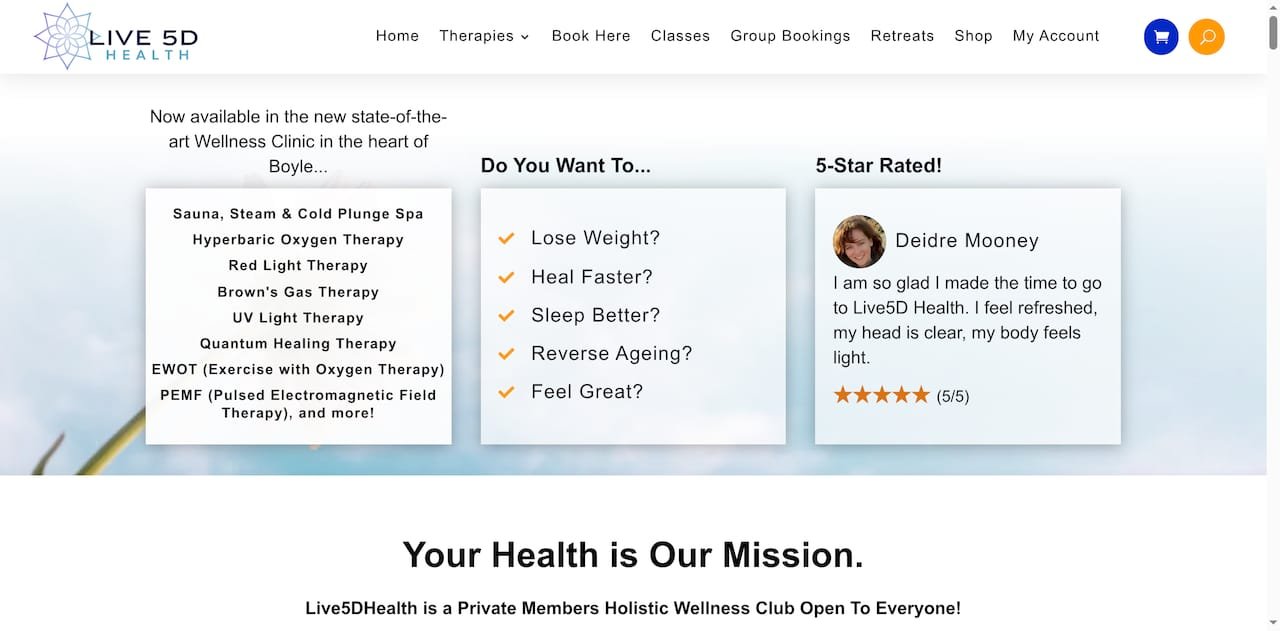
The centre’s luxury spa with sauna, steam and cold plunge facilities in Boyle is set up specifically for this kind of supervised, evidence-informed use. You get:
- Traditional Finnish-style sauna heat, the format the strongest cardiovascular evidence is actually based on.
- A structured cooling sequence rather than an abrupt cold plunge.
- Staff on hand who understand hydration timing and can talk through session frequency that suits your starting point.
If you would rather build a longer-term habit away from daily life, the centre’s luxury healing retreats offer multi-day supervised exposure, useful if you want to establish a sauna routine properly before continuing it at home. Book a session or check retreat availability to get started.
This article is general information, not a substitute for advice from a qualified doctor. Consult a qualified healthcare professional about your own circumstances before acting on anything here.
Sources
- Sauna bathing is associated with reduced cardiovascular mortality and improves risk prediction in men and women: a prospective cohort study
- Sauna use linked to longer life, fewer fatal heart problems
- Can saunas improve heart health? (Henry Ford Health blog)