
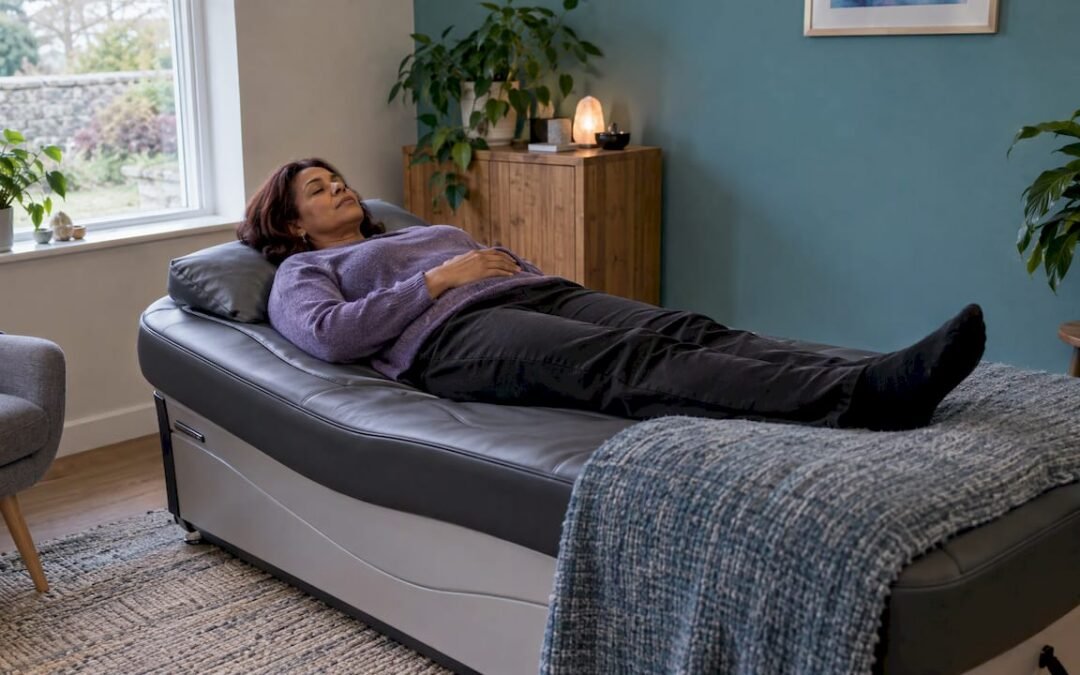
Vibroacoustic therapy (VAT) uses low-frequency sound, felt as gentle vibration through a bed, chair or mat, to help the body settle. The most consistent benefits reported are deeper relaxation, a calmer nervous system and a better sense of wellbeing. Evidence for pain relief is more mixed, and the research is still early. If you are over 40, living with cancer or exploring options such as hyperbaric oxygen therapy, this guide explains what the studies found, what to ask your doctor first, and how VAT sits beside other therapies.
TL;DR
- Vibroacoustic therapy delivers audible low-frequency sound as vibration you feel in the body, usually while lying on a sound bed or mat.
- Small studies report increased relaxation, parasympathetic (“rest and digest”) activity and better momentary wellbeing, including in people with cancer.
- Results for pain are mixed, and the research base is made of small studies that call for larger controlled trials.
- If you have cancer, are in treatment, or are sensitive to loud sound, speak to your oncology team or GP before a session.
- VAT works through sound and vibration. It is a different therapy from hyperbaric oxygen, which works through pressurised oxygen, so one does not replace the other.
Table of Contents
- What vibroacoustic therapy is
- The benefits reported so far
- How strong is the evidence?
- If you have cancer
- If you are a woman over 40
- Who should take care or speak to a doctor first
- Vibroacoustic therapy and hyperbaric oxygen: different tools
- Getting the most from a session
- Sound and light therapy at Live5DHealth
- Our perspective
- FAQ
- Sources
What vibroacoustic therapy is
You may know sound baths, where instruments such as gongs and bowls are played around you. Vibroacoustic therapy is different in one important way: the sound is not only heard, it is felt. Speakers or transducers built into a bed, chair or mat send low-frequency tones and music through your body.
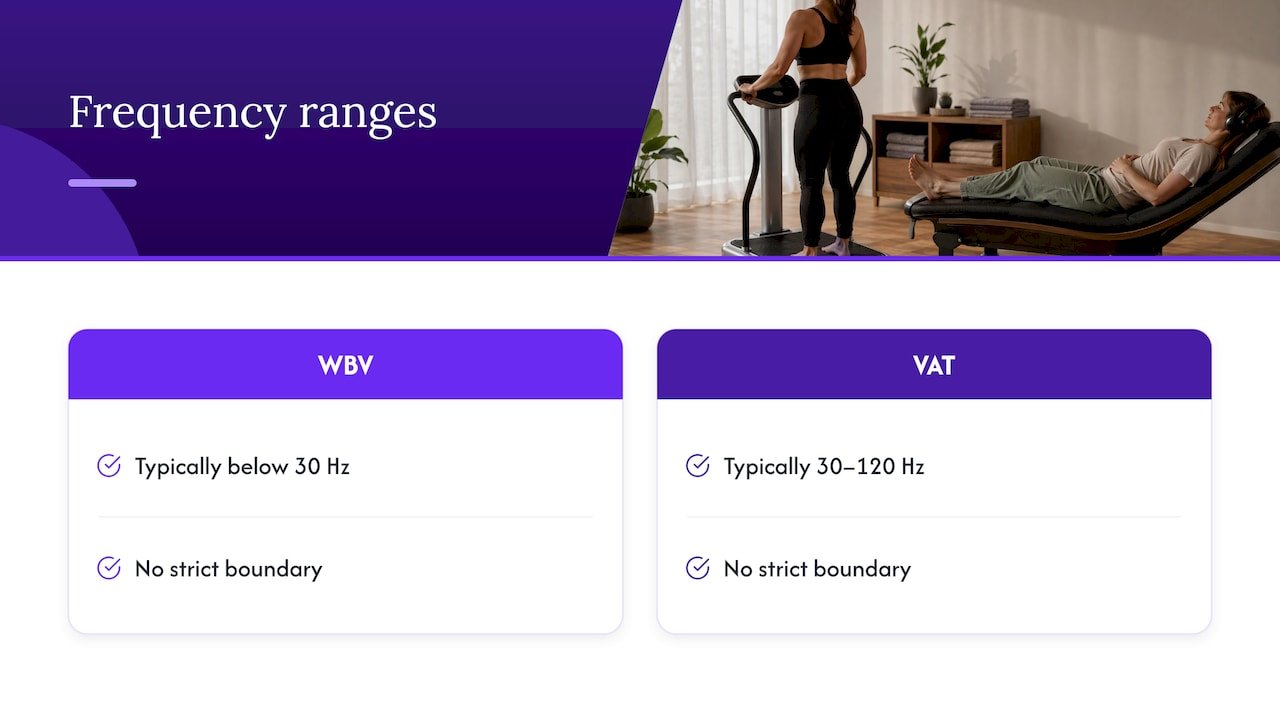
Researchers often compare VAT with whole-body vibration (WBV), the kind of vibrating platform used in some gyms. In a 2021 academic review, WBV typically uses frequencies below 30 Hz, while VAT uses 30 to 120 Hz, although the authors point out that there is no strict frequency-based line between the two. In plain terms, VAT sits in the range of a deep bass note, and a session is usually quiet, restful and passive: you lie back and let the sound do its work.
Two other terms you may see are “sound healing bed” and “acoustic resonance therapy”. They describe similar set-ups with different branding. What matters for you is what the research says about the experience, not the label on the equipment.
The benefits reported so far
The studies below are small, but they tell a consistent story about what many people notice: a calmer body and a clearer, lighter mood.
A calmer nervous system and deeper relaxation
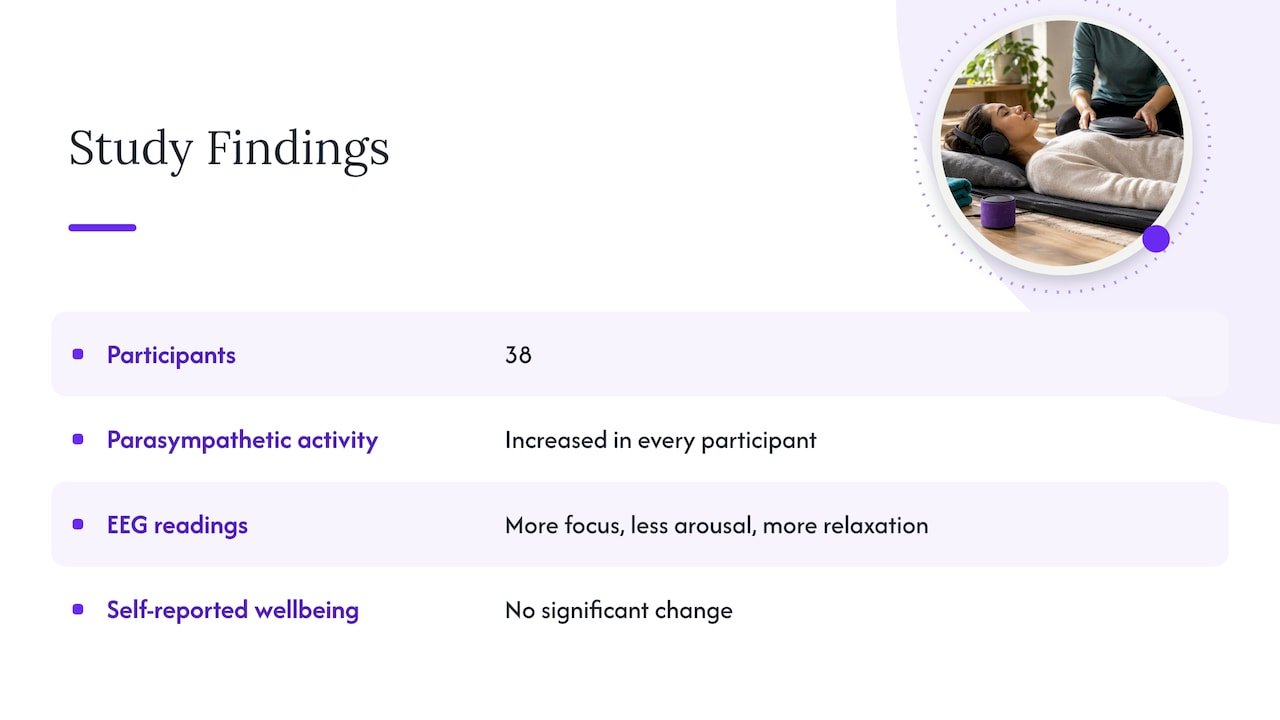
A 2024 Danish study of 38 participants looked at vibroacoustic sound massage. It found that parasympathetic activity increased in every participant, and EEG readings pointed to more concentration, lower arousal and more relaxation. The parasympathetic system is the part of your nervous system that slows your heart rate and helps your body rest and recover. The same study did not find a significant change in self-reported wellbeing, so the physical calming effect was clearer than the change in how people said they felt.
This matches what many people describe after a session: a slower pulse, softer breathing and a mind that stops racing. If you would like to understand how sound relates to the vagus nerve, the main nerve of the parasympathetic system, our guide to vagus nerve sound therapy separates what works from what is hype.
Wellbeing, mood and vitality
A 2018 study in 48 cancer patients tested a short sound-bed session of just 10 minutes. Compared with a control condition, momentary wellbeing, inner balance, vitality, vigilance, mood, satisfaction and self-perceived warmth all improved. That is a short-term effect after a short session, not a treatment outcome, but it shows how quickly many people notice a shift in how they feel.
Stress and anxiety
Stress and anxiety are the most common reasons people try sound-based therapies. The vibroacoustic studies above point to a calming effect on the body, and the wider sound therapy field reports similar patterns. If anxiety is your main reason for looking, read sound therapy for anxiety, which looks at which formats have been studied and how they compare.
Sleep
Relaxation is the doorway to sleep, which is why many people try VAT in the evening. Research that measures sleep directly is thinner for vibroacoustic beds than for audio-only methods. For practical routines you can use at home, see these sound therapy protocols for sleep and our page on binaural beats for sleep, focus and calm.
Pain
This is where honesty helps you most. Online articles often list pain relief first, but the evidence is more mixed than the headlines. In the 2018 study of cancer patients, pain levels did not change significantly after a 10-minute session, even though other measures improved. A 2026 paper in Frontiers in Neuroscience on acoustic stimulation in pain management notes that VAT is multisensory, which makes strict blinding hard and makes it difficult to separate the effect of vibration from the music and from expectation.
A sensible way to think about it: VAT may help you relax into a body that is holding tension, and relaxation can make discomfort feel easier to live with. It is best treated as a supportive therapy, not a pain treatment in its own right.
How strong is the evidence?
A fair summary is “promising and early”. A 2021 academic critique describes the research as limited, with small samples and a lack of control groups, and calls for larger, randomised, longitudinal and controlled studies. The 2021 mechanisms paper adds that researchers still need comparative work on how vibration is delivered, which area of the body is stimulated, and the effects of particular frequencies and intensities.
What does that mean for you?
- The immediate, short-term effects (relaxation, calm, a lift in mood) are the best supported.
- Claims about long-term healing, “cellular regeneration” or curing a condition are not backed by this research. Treat them with care wherever you see them.
- Individual experience varies, so a gentle first session tells you more than any list of benefits.
The same pattern is true of the wider sound field. Our review of 19 studies on sound bath benefits found modest but real effects on mood and tension, which is the realistic expectation to bring to any sound-based session.
If you have cancer
The cancer-specific evidence is small but encouraging for wellbeing: the 2018 sound-bed study above was carried out in cancer patients and found improvements in mood, vitality, inner balance and warmth after a single short session. That is a measure of how people felt in the moment, not an effect on the cancer or its treatment.
Please keep these points in mind:
- Vibroacoustic therapy is a comfort and relaxation approach. It does not replace any treatment your oncology team has planned.
- In Ireland, cancer drug treatment follows national regimens developed by the HSE National Cancer Control Programme. Your consultant and oncology nurse know where you are in that plan.
- Before you book any new therapy during or after treatment, tell your oncology team or GP what you are planning. They can tell you whether anything in your situation, such as a port, recent surgery, bone involvement or low blood counts, means you should wait or adapt the session.
- Gentle, supportive touch-based therapy is also well studied in this group. Our guide to oncology massage benefits covers 13 trials and what makes sessions safer.
If you are comparing several supportive therapies, start with the one that feels most comfortable to you. Tell the therapist about your diagnosis and treatment dates at booking, so the session can be shaped around you.
If you are a woman over 40
For many women over 40, the draw of VAT is practical: a way to switch off during a demanding stage of life, whether that means work, caring responsibilities, disrupted sleep or the changes of perimenopause and menopause. The research does not single out this age group, so no study tells us VAT works better or worse at 45 or 55. What the studies do show is a general calming effect in adult participants, which may be welcome whatever your age.
If your main goals are better rest and less tension, you may find it helps to combine a quiet sound session with other gentle practices, such as a warm sauna or steam, a holistic massage or a regular sleep routine. Our summary of holistic massage benefits shows what the evidence says about stress hormones and massage.
Who should take care or speak to a doctor first
VAT is generally a gentle, passive therapy, but a few situations call for a conversation before you book:
- You are sensitive to sound. The 2026 Frontiers paper explains that for people with sensory hyperacusis, meaning heightened sensitivity to sound, standard VAT intensity may cause sensory overload and can worsen pain or trigger tension instead of relaxation. The authors stress that sensitivity should be assessed before trying VAT, because the wrong intensity can make symptoms worse. If loud noise or vibration bothers you, say so at the start and ask for the lowest intensity.
- You are in cancer treatment or recovering from surgery. Speak to your oncology team or GP first, as described above.
- You are pregnant, have an implanted device or have a heart condition. Ask your GP or specialist whether vibration is suitable for you. Do this before your first session.
A good session should always let you stop, change the intensity or sit up whenever you want. Your comfort is the measure, not the length of the session.
Vibroacoustic therapy and hyperbaric oxygen: different tools
Many people searching for hyperbaric oxygen therapy (HBOT) also come across sound and vibration therapies, and ask whether one can stand in for the other. They cannot, because they work in different ways.
| Vibroacoustic therapy | Hyperbaric oxygen therapy | |
|---|---|---|
| What you receive | Low-frequency sound felt as vibration | Oxygen breathed in a pressurised environment |
| How it feels | Passive, restful, like a gentle hum through the body | Calm and quiet, with pressure changes in the ears at the start |
| What it is used for | Relaxation, calm, a sense of wellbeing | A different set of goals based on oxygen delivery |
| Who to check with first | GP or oncology team if you have a health condition | GP or specialist, especially with lung, ear or chest conditions |
The two do not compete. One calms the nervous system through vibration; the other delivers oxygen under pressure. If you are curious about the oxygen side, see our guides on what hyperbaric oxygen therapy is and what pressurised oxygen does to your body. Some people also like to pair a vibration-based practice with oxygen sessions, as described in Vibro Plate and HBOT: the dynamic duo.
Getting the most from a session
Whichever sound-based therapy you choose, a few habits make the experience better:
- Arrive unhurried. A few slow breaths before you lie down help your body meet the sound halfway.
- Wear comfortable, loose clothing and remove anything that digs in, such as a belt or stiff jewellery.
- Say what you need. Mention sound sensitivity, pain areas, diagnoses and medicines when you book.
- Start gently. A shorter first session at lower intensity is a sensible way to learn how your body responds.
- Notice, then decide. Afterwards, take a note of your sleep, tension and mood over the next day or two. That is more useful than judging the session in the moment.
- Drink water and rest. Allow yourself a quiet few minutes before driving or returning to a busy day.
Sound and light therapy at Live5DHealth
At our wellness centre in Boyle, County Roscommon, our therapy list includes Roxiva Sound and Light Brain Entrainment Therapy, along with a sauna, steam room and cold plunge spa, red light therapy, PEMF, EWOT and holistic massage. You can see the full list and book on our booking page.
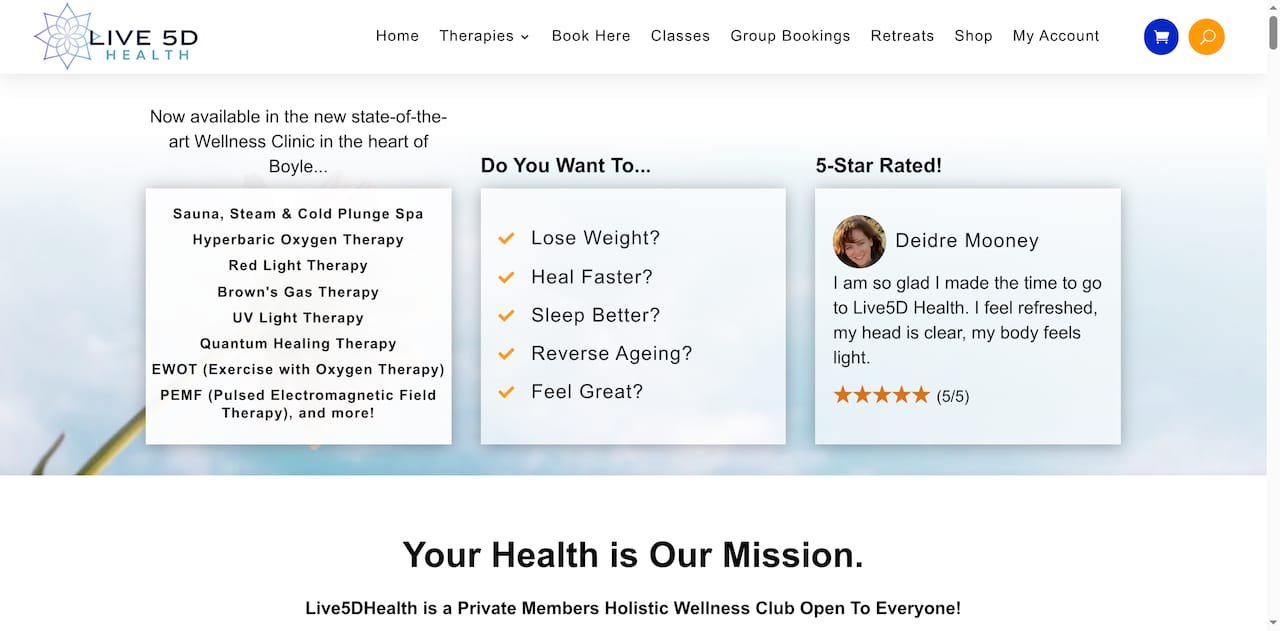
If you came here for hyperbaric oxygen therapy, our hyperbaric oxygen therapy page lists sessions at €80 to €120. For a gentle first visit, the sauna, steam and cold plunge spa is €30 for a session. If you want to understand how light and sound work together, read about what 40 Hz research shows. For a longer reset, our 3, 5 and 10-day retreats bring several therapies into one stay.
Our perspective
Many of the people who come to us have been through a lot: treatment, long stretches of poor sleep, or years of putting everyone else first. They do not want hype. They want to feel calmer, lighter and more in charge of their own recovery.
That is why we think about sound and vibration as part of a wider picture. The research on vibroacoustic therapy is early, and the benefit that stands out is relaxation: a nervous system that finally gets a chance to slow down. We believe that is valuable in its own right, and it is the foundation on which other therapies can work.
Our approach combines modern technology with older, gentler wisdom. In Boyle, you can move between sound and light brain entrainment, red light, PEMF, oxygen-based therapies, a luxury sauna, steam room and cold plunge, all with energised water throughout the facility. Our hyperbaric oxygen sessions, Roxiva sound and light sessions and holistic massage can be combined in whatever order feels right for you.
Start with what you are drawn to, tell us about your health and your goals, and take it at your own pace.
Mark
FAQ
What are the benefits of vibroacoustic therapy?
The benefits with the most support are short-term relaxation, increased parasympathetic activity and a lift in momentary wellbeing, mood and vitality. Studies are small, and results for pain are mixed. It is best seen as a calming, supportive therapy.
Who should not do sound therapy?
People with sensitivity to sound, known as hyperacusis, should be assessed first, because standard intensities can overwhelm them. If you have cancer, are pregnant, have an implanted device or have a heart condition, ask your doctor or oncology team before booking.
What is the difference between vibroacoustic therapy and vibration therapy?
Whole-body vibration typically uses frequencies below 30 Hz, while vibroacoustic therapy uses 30 to 120 Hz and pairs the vibration with music or tones. Researchers note that the line between them is not strict, so the experience can overlap.
Can vibroacoustic therapy replace hyperbaric oxygen therapy?
No. Vibroacoustic therapy works through sound and vibration, while hyperbaric oxygen therapy delivers oxygen in a pressurised chamber. They are different therapies with different aims, and some people choose to use both. Talk to your GP or specialist about which suits your situation.
Sources
- Possible Mechanisms for the Effects of Sound Vibration on Human Health (PMC, 2021)
- Feeling the sound: short-term effect of a vibroacoustic music intervention (PubMed, 2018)
- Effects of Vibroacoustic Stimulation on Psychological and Physiological Measures (PMC, 2024)
- A Comprehensive Critique of Vibroacoustic Therapy (2021)
- Acoustic stimulation in pain management (Frontiers in Neuroscience, 2026)
- National SACT Regimens (HSE National Cancer Control Programme)