

Most PEMF sessions in Ireland generally range from lower-cost wellness-centre or introductory sessions to higher-cost clinic-based clinical protocols. Multi-packs typically bring the per-session price down, and home devices span a much wider band from low hundreds to several thousand euros. The sensible next step, whichever route appeals to you, is a short trial with a clear protocol and measurable outcomes before you commit to a bigger spend.
TL;DR:
- Most PEMF sessions in Ireland vary significantly in price depending on the setting, device type, and protocol, with multi-packs often lowering the per-session cost.
- Device class, protocol specifics, practitioner experience, and pack terms directly influence the quote differences; always compare like for like.
- Research shows PEMF can reduce pain and improve function in some orthopaedic conditions with minimal adverse events, but effectiveness varies by protocol and condition.
- A short, monitored trial focusing on measurable outcomes is essential before committing to long-term or high-cost PEMF treatment or equipment.
- Additional costs may include follow-up sessions, device accessories, and reassessments, making itemized quotes and clear policies crucial for accurate budgeting.
Table of Contents
- What you’ll pay in Ireland: single sessions, multi-packs and subscriptions
- Why quotes differ: device type, protocol, practitioner and pack terms
- Evidence snapshot: what recent reviews show about effectiveness and safety
- Checklist and questions to ask when comparing clinics or considering a purchase
- If you’re buying: retail price bands for home PEMF devices and when it makes sense
- What a clinic session feels like and how results are assessed
- Potential insurance coverage or reimbursement options in Ireland
- Comparing PEMF costs with alternative therapies for similar conditions
- Additional costs that may arise beyond the initial price
- Author perspective: a measured, practical recommendation for Irish readers
- Live5DHealth: how to trial PEMF in Boyle and where to book
- Sources
- FAQ
What you’ll pay in Ireland: single sessions, multi-packs and subscriptions
Irish PEMF pricing varies more than most wellness treatments because the sessions themselves vary so much. Introductory or wellness-centre sessions often sit at the lower end of the price range, while specialist clinical settings using higher-intensity protocols typically charge more per session. The gap comes down to equipment, practitioner input and whether the session includes any assessment.
Multi-packs are common and usually the better value if you know you’ll return.
- Single sessions typically vary in price depending on the setting and device used.
- Multi-packs of five, ten or twenty sessions generally lower the effective per-session price, often by a meaningful margin compared with paying as you go.
- Membership or subscription models appear at some wellness centres, giving ongoing access to PEMF alongside other therapies rather than charging per visit.
- Session length is usually around 20 to 30 minutes, which shapes what a fair price looks like: a 20-minute session with no assessment should cost less than a 45-minute one with a practitioner review.
When you’re comparing quotes, always ask what’s included. A €20 session with no consultation is a different product to a €70 session with an initial assessment and a written plan, even though they’re both called “PEMF therapy.”
Why quotes differ: device type, protocol, practitioner and pack terms
Price differences aren’t random. They usually trace back to a handful of concrete factors, and knowing them helps you judge whether a quote is fair.
- Device class: consumer wellness mats are gentler and cheaper to run than higher-intensity clinical stimulators, and the two are not interchangeable in terms of expected effect.
- Protocol detail: intensity, frequency, session length and the total number of sessions recommended all affect cost and outcome.
- Provider factors: whether an assessment is included, how experienced the practitioner is, and whether you’re in a spa setting or a medical clinic with higher overheads.
- Pack terms: expiry dates, whether sessions are transferable, and cancellation rules can quietly change your effective cost per session.
Pro Tip: Ask for the exact device model and the planned protocol (intensity, frequency, duration) before comparing prices, so you’re comparing like for like rather than two unrelated products with the same name.
Evidence snapshot: what recent reviews show about effectiveness and safety
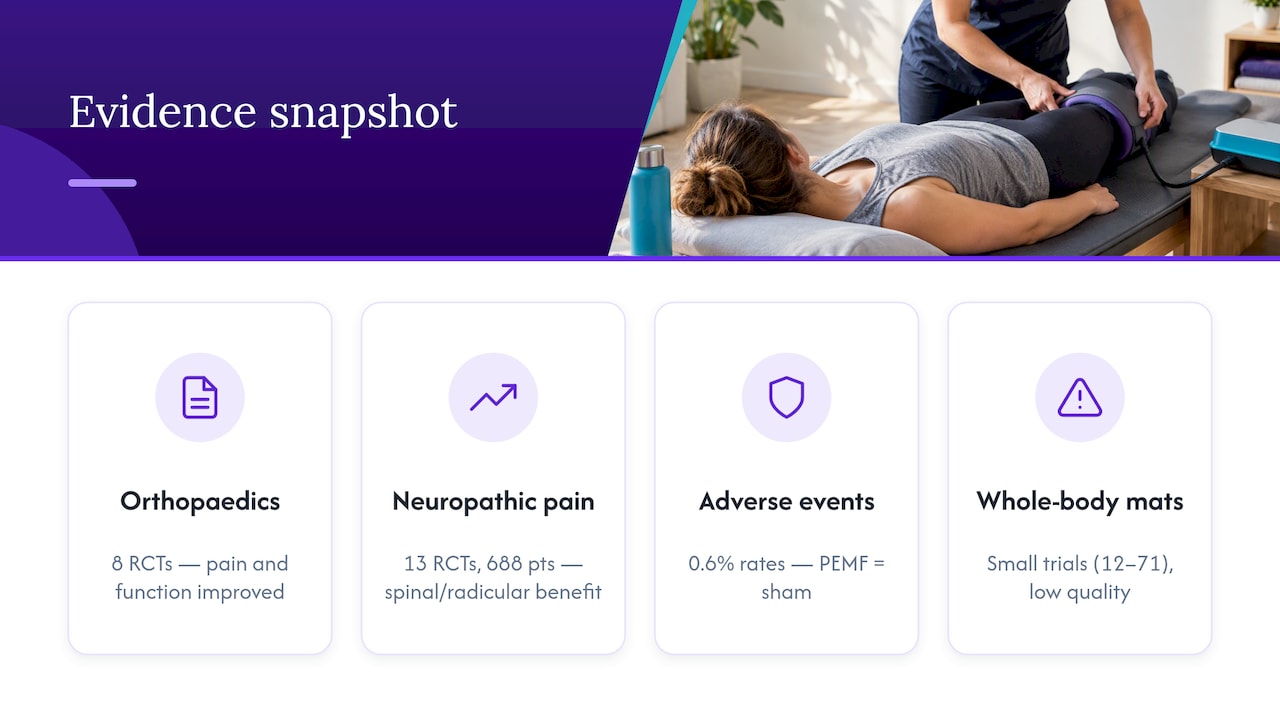
The research on PEMF is encouraging in places and genuinely mixed in others, which matters when you’re deciding what to pay for. A 2026 systematic review of eight randomised trials found reductions in pain and functional improvements across several orthopaedic conditions, with no serious adverse events reported, though effects varied by therapy type, intensity and the condition being treated. That review also notes that protocol and intensity differences mean a low-intensity wellness mat and a high-intensity clinical stimulator shouldn’t be judged by the same standard.
Neuropathic pain tells a more nuanced story. A 2026 meta-analysis of 13 randomised trials involving 688 participants found clinically meaningful benefits for people with spinal or radicular neuropathic pain, but the same benefit didn’t show up consistently across peripheral neuropathy, and heterogeneity between trials was very high.
Device-related adverse events were negligible and occurred at similar rates for PEMF and sham treatment.
A 2026 meta-analysis found adverse event rates of just 0.6% for both PEMF and sham groups, suggesting the therapy is generally well tolerated even where efficacy evidence is mixed.
Older evidence adds a caution of its own: a review of whole-body PEMF mats found the underlying trials were small, with sample sizes between 12 and 71 people and short follow-up, and concluded the evidence wasn’t strong enough to recommend therapeutic use without better-quality trials. If you’re weighing this against contraindications relevant to your own health, it’s worth reading through who should avoid PEMF and why before booking. The practical takeaway across all of this: match the device and protocol to your specific condition, and use a short, measured trial before spending heavily.
Checklist and questions to ask when comparing clinics or considering a purchase
Before you book or buy, a short list of direct questions will tell you more than any brochure.
- What device make and model does the clinic use, and what intensity does it run at?
- How long is each session, and how many sessions are recommended for your condition?
- Is an initial assessment included in the price, or charged separately?
- What’s the refund, cancellation or trial policy if the pack doesn’t suit you?
- How will outcomes be measured, and will you get a written record of progress?
Ask for these costs to be itemised on any quote: the assessment fee, the per-session cost, and the expiry date on any pack you buy. Be wary of providers who can’t describe a protocol, who lean on vague promises rather than specifics, or who push you toward a large pack before you’ve tried a single session. If you have a diagnosed condition, it’s worth checking with your GP or specialist before paying for a course, particularly if you’re also managing other treatments. Our guide on what to know before booking PEMF in Ireland covers this in more depth.
If you’re buying: retail price bands for home PEMF devices and when it makes sense
Home devices span a wide range, and the price usually reflects intensity and build quality rather than marketing claims.
- Entry-level consumer mats generally sit in the low hundreds of euros and suit occasional, general wellness use.
- Mid-range targeted units with more focused output typically cost from the mid-hundreds up to low thousands of euros.
- Professional-grade systems used in clinics can run into several thousands of euros and are built for frequent, higher-intensity use.
Before buying, check the warranty terms, whether there’s an Irish dealer or support contact, and what safety information comes with the device. Buying only makes sense if you expect to use it often enough that the packs or subscriptions at a clinic would cost more over time, and even then, a short clinic trial first gives you a realistic sense of what to expect from the technology.
What a clinic session feels like and how results are assessed
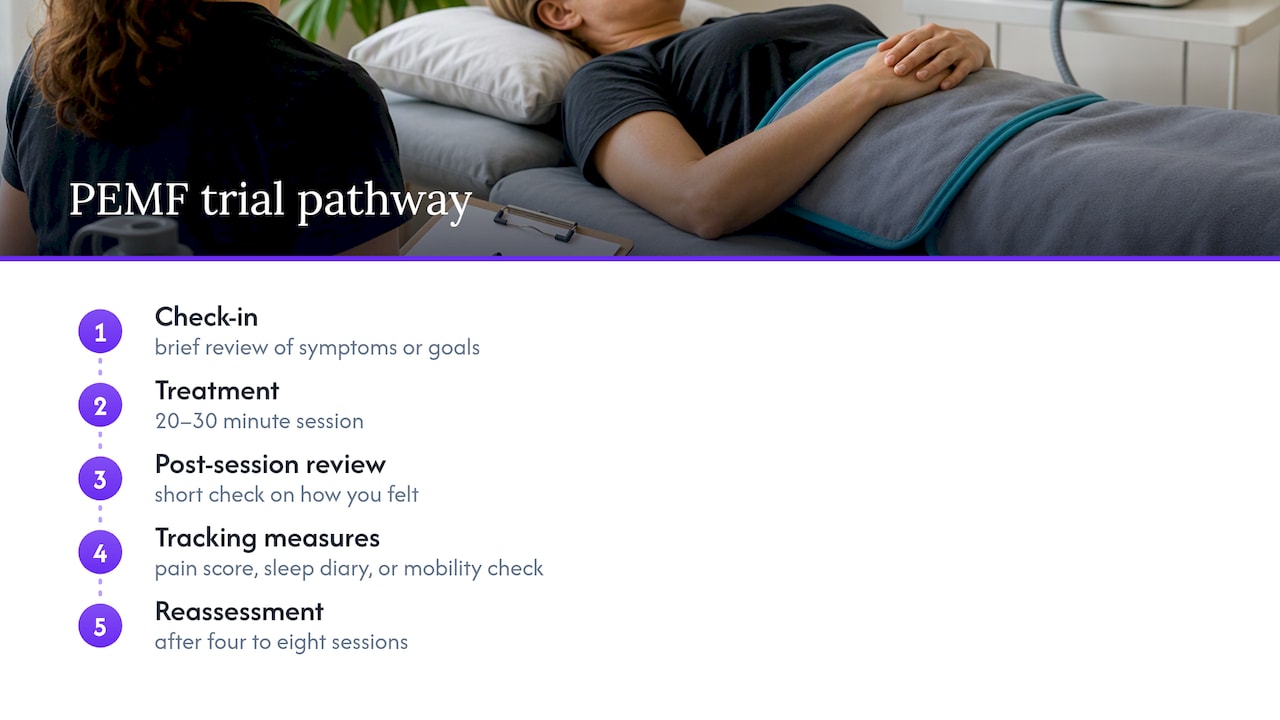
A typical visit starts with a brief check-in, covering how you’ve been feeling since your last session or, on a first visit, what you’re hoping to address. The treatment itself usually runs 20 to 30 minutes, followed by a short review of how you felt.
Most people notice only mild, temporary sensations during a session, such as light warmth or tingling, and these usually settle quickly afterwards. Providers commonly suggest a trial of four to eight sessions with some form of documented measure, whether that’s a pain score, a sleep diary or a mobility check, before deciding whether to invest in a longer course.
Potential insurance coverage or reimbursement options in Ireland
PEMF therapy isn’t routinely covered by private health insurers in Ireland in the way that, say, a hospital consultant visit might be, and there’s no state scheme that reimburses it as a standalone wellness treatment. Some private health insurance plans include allowances for complementary therapies or a general wellness fund, and it’s worth checking your own policy documents or asking your insurer directly whether PEMF sessions qualify under any such allowance.
If a GP or specialist has referred you for PEMF as part of a documented treatment plan for a diagnosed condition, it’s worth asking your provider whether that referral changes anything for reimbursement purposes, though this varies by insurer and policy. Revenue’s tax relief on health expenses may also apply to some qualifying treatments, so keeping receipts and asking your provider for a proper invoice is sensible regardless of whether you claim anything back. Don’t assume coverage exists: confirm it in writing before you commit to a longer, more expensive pack on the basis that “it should be covered.”
Comparing PEMF costs with alternative therapies for similar conditions
For pain and recovery support, PEMF sits in a similar price bracket to several other therapies you’ll find at Irish wellness centres. Red light therapy in Ireland typically costs somewhere in the region of €14 to €40 per session, generally cheaper than the higher end of clinical PEMF pricing, though the two treat different mechanisms and aren’t direct substitutes. Hyperbaric oxygen therapy tends to sit higher again, reflecting the more involved equipment and supervision it requires.
The right comparison depends on what you’re treating. For general recovery and wellness support, a lower-cost therapy might suit you fine. For a specific orthopaedic or neuropathic condition where PEMF has shown a clearer signal in the evidence, paying more for a properly protocolled clinical session may be better value than a cheaper alternative that isn’t matched to your condition. If bone healing is your specific concern, our piece on PEMF for bone healing looks at condition-specific outcomes in more detail. As with any comparison, the honest answer is that cost alone tells you little: match the therapy to the condition first, then compare price within that category.
Additional costs that may arise beyond the initial price
The quoted per-session or pack price is rarely the full picture. Follow-up sessions beyond an initial pack are a common extra cost, particularly if your provider recommends a maintenance schedule to sustain results rather than a one-off course. Ask upfront whether ongoing sessions are priced the same as your initial pack or at a different rate.
If you buy a home device, factor in potential costs for accessories, replacement parts, or servicing over time, along with the possibility of needing professional guidance to get the protocol right for your condition. Clinics sometimes also charge separately for a reassessment if your treatment plan changes partway through a course. None of this should come as a surprise if you ask the right questions before you start, which is exactly why itemising a quote in advance matters more with PEMF than with a simple, single-visit treatment.
Author perspective: a measured, practical recommendation for Irish readers
Set a defined trial budget, track something objective like pain scores or sleep, and treat spa-style sessions and clinical protocols as different products. Choose providers who give you a written plan, not just reassurance.
— Mark
Live5DHealth: how to trial PEMF in Boyle and where to book
There are wellness centres in Ireland offering in-person PEMF therapy alongside other recovery therapies, sometimes with access to energised water. If you’d rather trial the treatment locally than commit to a home device sight unseen, that’s a straightforward way to see how your body responds before spending more.

When you call or book, it’s worth asking the same questions you’d ask any provider:
- What device and protocol will be used for your session?
- How many sessions are typically recommended for your goals.
- How progress will be reviewed once you’ve completed your trial.
You can find full details and book directly through the PEMF therapy page at Live5DHealth, or browse the full range of therapies and book a session to start with a short, monitored course.
Sources
- Frontiers in Pain Research — 2026 systematic review on PEMF
- Meta-analysis on PEMF for neuropathic pain (2026)
This article is general information, not a substitute for advice from a qualified doctor. Consult a qualified healthcare professional about your own circumstances before acting on anything here.
FAQ
How much does PEMF cost per session?
Single sessions in Ireland typically fall somewhere between €15 and €90, depending on the setting and protocol used. Wellness-centre and introductory sessions tend to sit at the lower end, while specialist clinical sessions with higher-intensity equipment sit closer to the higher end.
Is PEMF worth the money?
That depends on your condition and expectations: research shows PEMF can support pain reduction and function in some orthopaedic and spinal or radicular neuropathic pain cases, but effects vary by protocol and aren’t consistent across all conditions such as peripheral neuropathy. A short trial with measurable outcomes is a sensible way to judge value for your own situation before committing to a longer course.
How much does a PEMF device cost?
Home PEMF devices range widely, from entry-level consumer mats in the low hundreds of euros to professional-grade systems reaching several thousand euros. The right choice depends on how often you’d use it and whether your intended protocol needs the higher intensity that professional systems offer.
How often do you need PEMF therapy?
Providers commonly suggest a trial of around four to eight sessions with documented outcome measures before deciding whether ongoing treatment is worthwhile. Beyond that, some people continue with periodic maintenance sessions, though the right frequency depends on your condition and how you respond during the initial trial.