
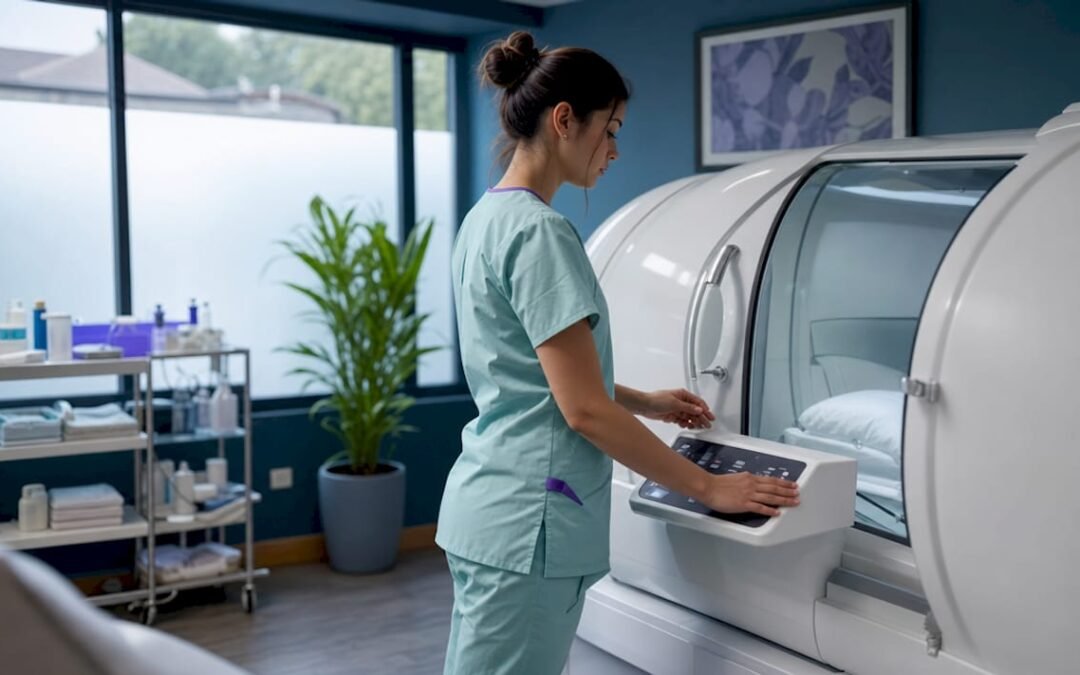
Hyperbaric oxygen therapy (HBOT) is defined as a medical treatment in which a patient breathes pure oxygen inside a pressurised chamber at levels above normal atmospheric pressure. Several hyperbaric therapy neurological conditions examples are already well-established in clinical practice, with the FDA clearing HBOT for 14 distinct indications that include neurological emergencies such as sudden sensorineural hearing loss and central retinal artery occlusion. Beyond these approved uses, 2026 trial data now supports HBOT’s role in post-stroke depression and traumatic brain injury recovery. This article breaks down eight neurological conditions with clear evidence tiers, so you can approach any conversation with your clinician from a position of knowledge.
1. Hyperbaric therapy neurological conditions examples: FDA-cleared emergencies
The clearest examples of HBOT in neurology are those carrying full regulatory clearance. These conditions share a common thread: tissue is oxygen-deprived, time is critical, and pressurised oxygen can restore function before permanent damage sets in.
The 14 FDA-cleared indications for HBOT include several neurologically relevant emergencies. The most prominent are:
- Idiopathic sudden sensorineural hearing loss (ISSNHL): Sudden, unexplained hearing loss affecting the inner ear’s neural pathways
- Central retinal artery occlusion (CRAO): Blockage of the artery supplying the retina, causing acute vision loss
- Intracranial abscess: Bacterial infection within the brain requiring adjunctive oxygen therapy alongside antibiotics
- Arterial gas embolism: Gas bubbles entering the arterial circulation and causing neurological deficits
These four conditions represent the strongest evidence base for HBOT in neurological practice. Regulatory clearance means clinicians can prescribe HBOT with confidence, and insurance or health service coverage is more likely to apply. For patients facing any of these emergencies, asking about HBOT access at the earliest opportunity is not just reasonable. It is clinically supported.
| Condition | HBOT status | Primary benefit |
|---|---|---|
| Idiopathic ISSNHL | FDA-cleared | Hearing recovery when started early |
| Central retinal artery occlusion | FDA-cleared | Visual improvement in up to 45.8% of patients |
| Intracranial abscess | FDA-cleared | Adjunctive antimicrobial support |
| Arterial gas embolism | FDA-cleared | Bubble reabsorption and neurological rescue |
2. Sudden sensorineural hearing loss
ISSNHL is one of the most time-sensitive neurological applications of HBOT. The European consensus recommends initiating treatment within two weeks of onset, with significantly reduced benefit if HBOT begins after one month and no recommendation for treatment beyond six months. This tight window reflects how quickly cochlear hair cells deteriorate without adequate oxygen supply.
Severity at presentation also guides clinical decisions. Patients with profound loss or those who have not responded to corticosteroids are prioritised for HBOT. The mechanism is straightforward: the cochlea is highly metabolically active and poorly vascularised, making it acutely vulnerable to hypoxia. Pressurised oxygen saturates plasma and reaches tissues that red blood cells cannot easily access.
Pro Tip: If you or someone you know experiences sudden unexplained hearing loss, seek specialist assessment within 24 to 48 hours. The treatment window for HBOT in ISSNHL is narrow, and early action directly improves outcomes.
3. Central retinal artery occlusion
CRAO is effectively a stroke of the eye, and HBOT is one of the few treatments with meaningful evidence behind it. A meta-analysis of 25 observational studies covering 781 patients found that 45.8% achieved meaningful visual improvement after HBOT. That figure is comparable to the effectiveness of intravenous thrombolysis, which is the standard pharmacological alternative.
The comparison between HBOT and IV thrombolysis is clinically important. Both treatments target the same time window, but they carry different risk profiles. HBOT’s adverse event rate sits at approximately 11.3%, with ear barotrauma as the most common issue. IV thrombolysis carries the risk of haemorrhagic complications, which can be severe. For patients who are not candidates for thrombolysis, HBOT offers a genuinely viable alternative rather than a last resort.
4. Traumatic brain injury
Traumatic brain injury (TBI) is one of the most studied emerging applications of HBOT. A systematic review and meta-analysis of four studies involving 250 patients found significant improvements in memory, attention, and executive function following HBOT. These are the cognitive domains most commonly disrupted after TBI, and the finding that HBOT can meaningfully restore them is genuinely encouraging.

The picture is not entirely straightforward, however. A 2026 randomised controlled trial examining mild HBOT at 1.5 atmospheres absolute (ATA) found no significant biomarker improvement in patients with persistent post-concussive symptoms at 13 weeks. This contrast between the meta-analysis results and the mild HBOT trial points directly to the importance of treatment pressure. Protocols at or above 2.0 ATA appear to produce the neurobiological effects that drive cognitive recovery. Mild protocols may simply not deliver enough oxygen to trigger the same response.
5. Post-stroke depression
Post-stroke depression affects a significant proportion of stroke survivors and is often undertreated. A 2026 randomised sham-controlled trial found that HBOT significantly reduced Hamilton Depression Rating Scale (HAMD) scores at both week two and week four of treatment. Crucially, these improvements correlated with measurable increases in serum BDNF (brain-derived neurotrophic factor) and β-NGF (beta nerve growth factor).
This neurotrophic factor correlation is significant. It suggests HBOT is not simply creating a placebo effect or a general sense of wellbeing. The therapy appears to activate specific neurobiological pathways involved in mood regulation and neural repair. For stroke survivors who have not responded adequately to antidepressants, this opens a genuinely different treatment avenue worth discussing with a neurologist or rehabilitation specialist.
Pro Tip: Post-stroke depression is frequently under-recognised in rehabilitation settings. If you are supporting a stroke survivor, asking specifically about mood assessment and HBOT eligibility can open conversations that standard follow-up appointments may not raise.
6. Autism spectrum disorder
Autism spectrum disorder (ASD) is one of the more contested areas of HBOT research. Some early studies reported improvements in social responsiveness and communication, leading to widespread interest in HBOT as a complementary approach. The evidence base, however, remains mixed. Randomised controlled trials have produced inconsistent results, and no regulatory body has cleared HBOT specifically for ASD.
The theoretical rationale centres on neuroinflammation and cerebral hypoperfusion, both of which have been observed in some individuals with ASD. HBOT’s anti-inflammatory and pro-oxygenation effects could theoretically address these mechanisms. Until larger, well-controlled trials produce consistent findings, ASD sits firmly in the category of emerging and unproven applications. Families considering HBOT for ASD should seek guidance from a clinician experienced in both the condition and hyperbaric medicine, and should be aware of the distinction between common misconceptions and evidence-supported uses.
7. Lyme disease neurological complications
Neurological Lyme disease, sometimes called Lyme neuroborreliosis, can cause cognitive impairment, peripheral neuropathy, and encephalopathy. Some patients who complete standard antibiotic courses continue to experience persistent neurological symptoms, a condition often referred to as post-treatment Lyme disease syndrome (PTLDS). HBOT has been proposed as an adjunctive treatment for this group.
The evidence here is limited. There are no large randomised controlled trials specifically examining HBOT for Lyme neuroborreliosis, and the existing case series and small studies do not provide sufficient data to draw firm conclusions. The theoretical basis involves HBOT’s ability to enhance antibiotic penetration into poorly perfused tissues and its anti-inflammatory effects. This remains a speculative but scientifically plausible application. Patients should approach it as an adjunct to, not a replacement for, established antibiotic treatment.
8. How treatment parameters shape neurological outcomes
Protocol design is arguably the most underappreciated factor in HBOT for neurological conditions. Pressure, oxygen concentration, and session count all interact to determine whether a treatment achieves its biological targets. Understanding these variables helps explain why some trials show strong results and others do not.
The key distinctions are:
- Mild HBOT (1.5 ATA): Lower pressure, often used in wellness or non-clinical settings; the 2026 RCT found this insufficient to improve neuronal injury biomarkers in post-concussive patients
- Therapeutic HBOT (≥2.0 ATA): Standard clinical pressure for FDA-cleared indications; produces measurable increases in plasma oxygen and drives neuroplasticity-related changes
- Session count: Most neurological protocols involve 20 to 40 sessions; fewer sessions may not produce durable effects
- Timing: Early treatment in ISSNHL and CRAO is non-negotiable; for chronic conditions like TBI, the optimal treatment window is less defined but earlier intervention generally produces better results
For anyone exploring how to maximise results from HBOT, working with a facility that uses medically supervised, therapeutic-grade protocols is the single most important factor. Wellness-grade mild HBOT and clinical HBOT are not interchangeable, particularly for neurological applications.
| Protocol type | Pressure | Typical use case | Evidence strength |
|---|---|---|---|
| Mild HBOT | 1.5 ATA | General wellness, some chronic conditions | Limited for neurological use |
| Therapeutic HBOT | 2.0 to 2.4 ATA | FDA-cleared neurological emergencies, TBI, post-stroke | Strong to moderate |
| High-pressure HBOT | 2.5 to 3.0 ATA | Decompression sickness, gas embolism | Strong for emergency use |
Key takeaways
HBOT produces its strongest neurological results in time-sensitive emergencies at therapeutic pressures of 2.0 ATA or above, with emerging evidence supporting its use in TBI recovery and post-stroke depression.
| Point | Details |
|---|---|
| FDA-cleared emergencies lead the evidence | ISSNHL, CRAO, intracranial abscess, and arterial gas embolism have the strongest regulatory and clinical backing. |
| Timing determines outcomes | Starting HBOT within two weeks of ISSNHL onset and as early as possible in CRAO maximises recovery potential. |
| Pressure matters significantly | Mild HBOT at 1.5 ATA does not replicate the neurobiological effects of therapeutic HBOT at 2.0 ATA or above. |
| Emerging conditions show real promise | Post-stroke depression and TBI neurocognitive deficits have 2026 trial data supporting HBOT’s role in recovery. |
| Safety profile is distinct | HBOT’s 11.3% adverse event rate, dominated by ear barotrauma, compares favourably to haemorrhagic risks from IV thrombolysis. |
My perspective on HBOT and neurological recovery
The single biggest mistake I see people make when researching HBOT for neurological conditions is treating all hyperbaric therapy as equivalent. A session in a soft-shell mild HBOT chamber at 1.5 ATA is a fundamentally different intervention from a medically supervised protocol at 2.0 ATA or above. The 2026 RCT on post-concussive symptoms made this painfully clear: even a well-designed 40-session protocol at mild pressure produced no meaningful biomarker change. That is not a failure of HBOT as a concept. It is a failure of protocol selection.
What I find genuinely exciting about the 2026 post-stroke depression trial is the neurotrophic factor data. When you see BDNF and β-NGF rising in correlation with symptom improvement, you are looking at a mechanistic signal, not a placebo response. That kind of biological evidence changes the conversation from “does this work?” to “how do we optimise it?” That is the right question to be asking.
For chronic neurological conditions like TBI and Lyme neuroborreliosis, I would encourage you to hold realistic expectations. The evidence is promising but not yet definitive. What is definitive is that protocol quality, facility expertise, and early intervention all matter enormously. Choosing a centre with medically trained staff and therapeutic-grade equipment is not a luxury. It is a clinical necessity.
The neurological applications of HBOT are bifurcating clearly into two categories: emergencies with strong regulatory backing, and chronic conditions with growing but still maturing evidence. Understanding which category your condition falls into will help you have a far more productive conversation with your clinician.
— Mark
Explore hyperbaric therapy at Live5dhealth
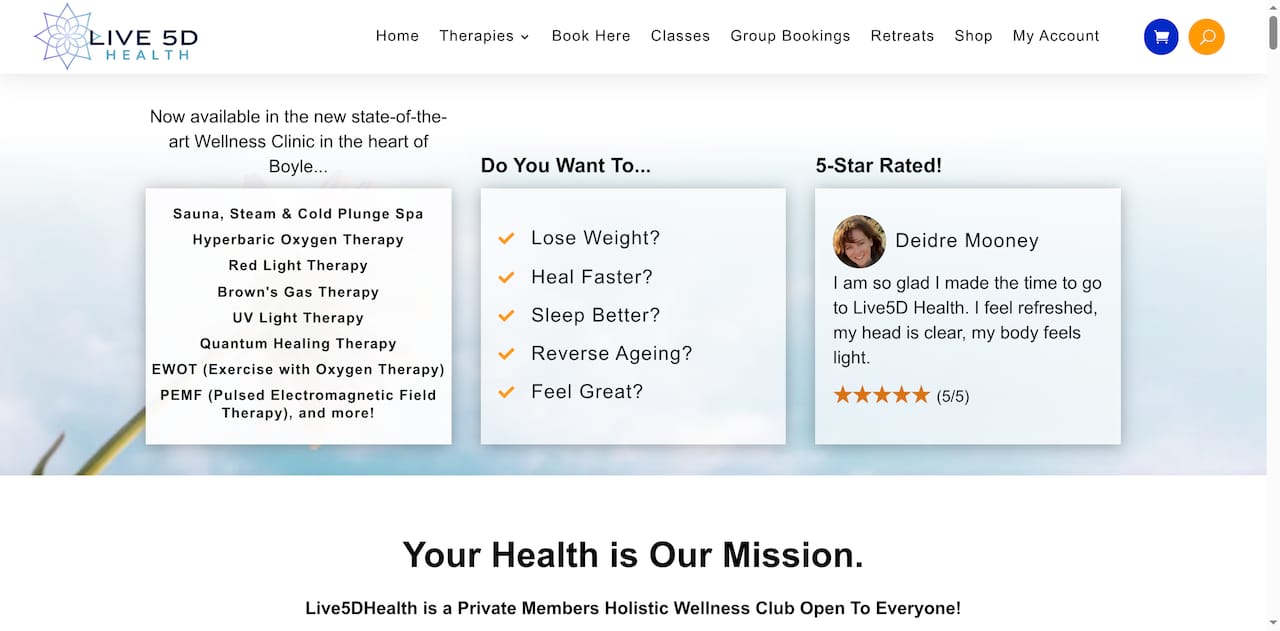
Live5dhealth, based in Boyle, County Roscommon, offers hyperbaric oxygen therapy in Ireland alongside a full suite of wellness services including a luxury spa, gym, and retreat facilities. Whether you are researching HBOT for a specific neurological condition or exploring it as part of a broader recovery programme, the team at Live5dhealth can guide you through the options available. The centre combines medically informed therapies with a genuinely restorative environment, making it one of the most complete wellness destinations in Ireland. Visit the Live5dhealth wellness centre to explore how hyperbaric therapy fits within a holistic approach to neurological health and overall vitality.
FAQ
What neurological conditions is HBOT FDA-cleared for?
HBOT is FDA-cleared for neurologically relevant conditions including idiopathic sudden sensorineural hearing loss, central retinal artery occlusion, intracranial abscess, and arterial gas embolism. These indications carry the strongest clinical evidence and regulatory backing.
Does HBOT help with traumatic brain injury?
A systematic review of four studies involving 250 patients found significant improvements in memory, attention, and executive function after HBOT for TBI. Results are most consistent with therapeutic protocols at 2.0 ATA or above rather than mild HBOT at 1.5 ATA.
How soon must HBOT start for hearing loss to be effective?
The European consensus recommends starting HBOT within two weeks of sudden sensorineural hearing loss onset. Treatment initiated after one month shows reduced benefit, and treatment beyond six months is not recommended.
Is HBOT safe compared to other neurological treatments?
HBOT carries an adverse event rate of approximately 11.3%, with ear barotrauma as the most common issue. This compares favourably to intravenous thrombolysis, which carries risks of haemorrhagic complications, making HBOT a viable alternative for patients who cannot tolerate thrombolytic drugs.
Can HBOT help with post-stroke depression?
A 2026 randomised sham-controlled trial found HBOT significantly reduced depression scores in post-stroke patients at weeks two and four, with corresponding increases in BDNF and β-NGF. This neurotrophic factor response suggests a genuine neurobiological mechanism rather than a placebo effect.