
For most women over 40, a grass-fed whey isolate delivering a moderate to high amount of protein and sufficient leucine per serving is the strongest all-round choice for muscle maintenance and weight management. If you avoid dairy, a pea + brown rice plant blend is the closest complete-protein alternative. For overnight recovery, micellar casein wins on sustained amino acid release.
Quick shortlist:
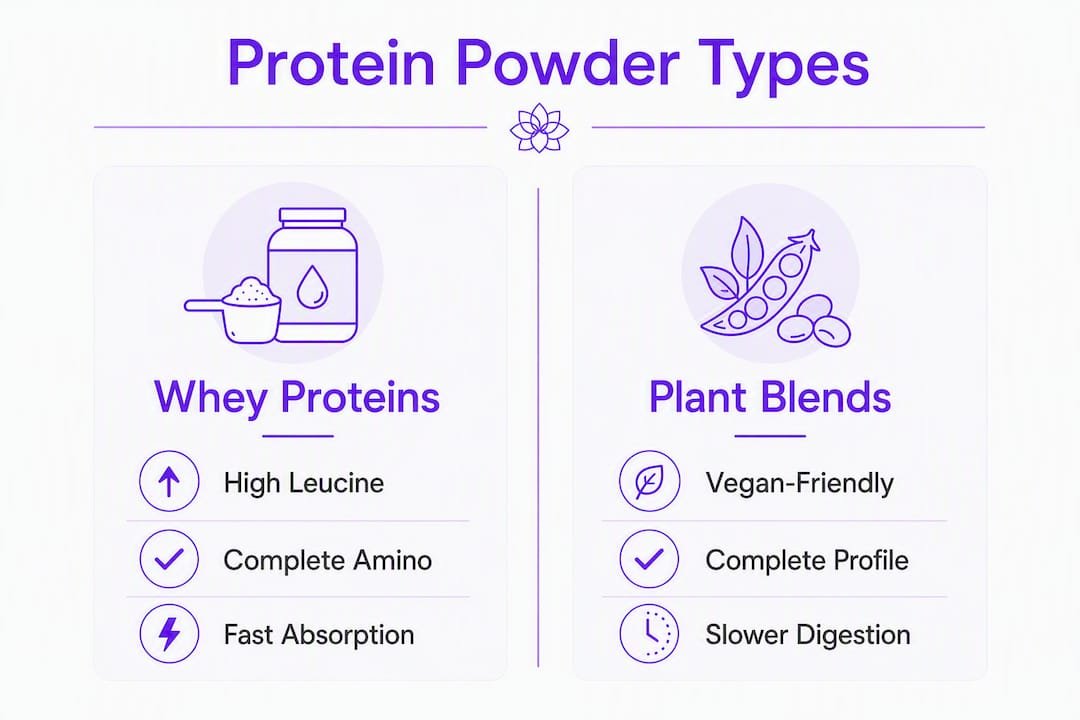
- Best for muscle maintenance: Grass-fed whey isolate (Hermosa, Momentous, Organic Protein Company, Paleovalley) — high leucine, fast absorption, clean labels
- Best plant-based: Pea + brown rice blend (Free Soul, Form Performance Protein, Transparent Labs Organic Rice & Pea Protein, Sprout Living Organic Pea Protein) — complete amino acid profile without dairy
- Best budget: MyProtein Impact Whey Protein or Bulk pure whey isolate — solid protein per serving at low cost per 100 g
- Best slow-release / overnight: Bulk Micellar Casein or Optimum Nutrition Gold Standard Whey (casein blend) — sustained amino acid supply
- Best for weight management: PhD Diet Whey, Protein Works Vanilla Crème Diet Whey Isolate 90, or Eve Biology Protein Shakes — higher fibre, lower sugar, 25 g+ protein per serving for satiety
If you are managing menopause symptoms, prioritise a leucine-rich whey or a complete plant blend over a single-source hemp or rice protein. Lactose-intolerant? A whey isolate (most lactose is removed during processing) or a pea + rice blend both work well.
Table of Contents
- How do the top protein powders for women over 40 compare?
- Why does protein matter so much after 40?
- How we tested and what to check on product pages
- Short reviews: the best protein powders to buy in the UK for women over 40
- How to choose the right protein powder for your goals
- Dosage, timing and simple serving ideas for women over 40
- Safety, allergies and when to see a clinician
- Key takeaways
- The protein powder market deserves more scepticism than it gets
- Live5dhealth supplement guidance for women over 40
How do the top protein powders for women over 40 compare?
The table below covers the main product types rather than every brand variant, since the formulation category determines nutritional performance far more than the label.
| Product type | Best for | Protein per serving (g) | Protein source | Price band (per serving) | Suitability | Notable added ingredients | Third-party testing | UK availability |
|---|---|---|---|---|---|---|---|---|
| Live5dhealth curated supplements | Personalised guidance + vetted quality | Varies by product | Varies | Varies | Varies | Varies | Curated for quality | Online shop, Ireland/UK |
| Grass-fed whey isolate | Muscle maintenance, post-workout | 25–30 | Whey isolate | — | Not vegan; low lactose | Minimal additives | Often Informed-Sport | Amazon, brand sites |
| Clear whey isolate | Low-calorie post-workout, refreshing | 20–25 | Whey isolate | — | Not vegan; low lactose | Low sugar, flavourings | Some brands | Amazon, brand sites |
| Pea + brown rice blend | Vegan, dairy-free, complete protein | 20–25 | Pea + rice | — | Vegan; soy-free | Often added vitamins | Some brands | Amazon, Holland & Barrett |
| Micellar casein | Overnight recovery, satiety | 20–25 | Casein | under £1 per serving | Not vegan | Minimal | Some brands | Bulk, Amazon |
| Meal-replacement shake | Weight management, controlled calories | 25–30 | Whey or plant blend | — | Varies | Fibre, vitamins, healthy fats | Varies | Boots, Amazon, brand sites |
| Hemp / single-source plant | Minimally processed, allergen-avoidance | 10–15 | Hemp, rice, or pea | under £1 per serving | Vegan; soy-free | Simple ingredients | Rarely | Holland & Barrett, Amazon |
| Collagen-boosted blend | Joint/skin support alongside protein | 20–25 | Whey + collagen | — | Not vegan | Collagen peptides | Varies | Amazon, brand sites |
| Ready-to-drink (RTD) shake | Convenience, travel, reduced appetite | 20–25 | Whey or plant | — | Varies | Low sugar, leucine | Varies | Boots, supermarkets |
Reading the price band column: figures are approximate per-serving costs based on typical UK retail pricing. Buying in larger bags (500 g+) typically reduces cost per serving significantly. “Informed-Sport” means the batch has been tested for banned substances, which also signals manufacturing quality.
Why does protein matter so much after 40?
Women over 40 typically need more protein than the general adult minimum to protect muscle and bone. The recommended practical target is 1.2–1.6 g of protein per kilogram of body weight per day, well above the standard 0.8 g/kg guideline. For a 70 kg woman, that means roughly 84–112 g of protein daily, spread across meals.
Stat to know: Research identifies a leucine threshold of approximately 2.5 g per serving as the point at which muscle protein synthesis (MPS) is reliably triggered in older adults. Total protein per serving matters, but leucine content is the better predictor of the anabolic response.
Several midlife factors push protein needs higher than the standard adult recommendation:
- Perimenopause and menopause: falling oestrogen accelerates lean mass loss and can suppress appetite, making it harder to hit targets through food alone
- Sarcopenia risk: muscle loss accelerates from the mid-40s onwards without adequate protein and resistance training
- Reduced appetite: common in midlife, especially for women on GLP-1 therapy, making protein-dense shakes a practical solution
- Bone health: higher protein intake supports bone mineral density alongside calcium and vitamin D
- Strength training: active women training 3+ times per week sit at the upper end of the 1.2–1.6 g/kg range
Per meal, dietitians commonly recommend 20–30 g of high-quality protein as a practical benchmark for muscle stimulus and recovery.
How we tested and what to check on product pages

Every product type in this shortlist was assessed on seven criteria: protein per serving, leucine or essential amino acid (EAA) content, protein source quality, additives (sugar, fibre, sweeteners), mixability and taste, third-party testing, and UK availability. The review was conducted by the Live5dhealth supplement team, drawing on published dietitian guidance and third-party testing standards as the primary trust signals.
Pro Tip: Always check protein per 100 g, not just per scoop. A large scoop of 50 g delivering 25 g protein is only 50% protein by weight. A 30 g scoop delivering 24 g protein is 80% protein by weight — far more efficient. Some brands inflate serving sizes to make protein numbers look impressive.
When you land on a product page, look for:
- Protein per serving (g): aim for 20–30 g per shake
- Leucine content: listed separately or calculable from the EAA profile; target ≥2.5 g
- Protein source: whey isolate, casein, pea, rice, hemp, or a blend
- Added sugars: under 5 g per serving is a reasonable benchmark
- Sweeteners: sucralose and acesulfame-K are common; some women prefer stevia or no sweetener
- Fibre: useful for satiety in weight-management shakes
- Allergens: dairy, soy, egg, gluten — check the label and cross-contamination warnings
- Third-party testing: Informed-Sport or Informed-Choice certification is the gold standard in the UK
Short reviews: the best protein powders to buy in the UK for women over 40
Grass-fed whey isolate
Brands to consider: Hermosa Grass-Fed Whey Protein Powder, Momentous Grass-Fed Whey Protein Isolate Powder, Paleovalley Grass Fed Whey Protein With Colostrum, The Organic Protein Company Madagascan Vanilla Organic Whey, Organic Protein Company Pure Unflavoured Organic Whey Protein Powder, The Organic Protein Co Organic Whey (Banana and Lucama), Promix Whey Protein Isolate.
Grass-fed whey isolate sits at the top of this list for a reason. Animal proteins are complete proteins with a full essential amino acid profile, and whey isolate specifically delivers a high leucine concentration per gram of protein. Hermosa and Momentous both position on clean, minimal-additive formulas with transparent labelling. Paleovalley adds colostrum, which may offer additional gut and immune support. The Organic Protein Company’s Madagascan Vanilla and Banana and Lucama variants appeal to women who want certified organic sourcing without artificial sweeteners.
| Spec | Typical value |
|---|---|
| Protein per serving | typically 20–30 g |
| Leucine (approx.) | a sufficient leucine content |
| Sugar per serving | low sugar |
| Price band | a reasonable per-serving price |
Pros: Complete amino acid profile, high leucine, clean labels, low lactose.
Con: Not suitable for vegans or those with a dairy allergy.
Clear whey isolate
Brands to consider: MyProtein Clear Whey: Cranberry & Raspberry, ESN Isoclear Whey Protein Isolate, More Protein Iced Matcha Latte, More Protein Iced Coffee, ESN Designer Whey Powder.
Clear whey is a filtered whey isolate that mixes into a light, juice-like drink rather than a thick shake. It suits women who find traditional creamy shakes heavy or who want a refreshing post-workout option. MyProtein’s Cranberry & Raspberry and the More Protein iced variants (matcha latte, iced coffee) have built a following among women who find standard shakes unpalatable. Protein per serving typically sits at 20–25 g, with very low sugar and fat. The trade-off is that leucine content is rarely listed separately, so check the EAA profile if muscle synthesis is your primary goal.
Pros: Light texture, low calorie, good flavour variety.
Con: Leucine rarely disclosed; not suitable for dairy-free diets.
Pea + brown rice plant blend
Brands to consider: Free Soul Vegan Protein Blend, Form Performance Protein, Form Superblend Protein, Transparent Labs Organic Rice & Pea Protein, Sprout Living Organic Pea Protein, Truvani Unflavoured Plant Protein, PhD Smart Plant Protein, Huel Complete Protein, Innermost The Fit Protein, Wild Nutrition Superfood Protein Powder.
Pea protein alone is low in methionine; rice protein alone is low in lysine. Blended together in roughly a 70:30 ratio, they cover the full essential amino acid profile. Free Soul and Form Performance Protein are among the better-formulated UK options, with added vitamins and clean sweetener choices. Huel Complete Protein takes a broader approach, adding fibre and micronutrients for a near meal-replacement profile. Wild Nutrition Superfood Protein Powder adds botanical blends aimed at hormonal support, which may appeal to women managing perimenopause symptoms. Truvani and Sprout Living both keep ingredient lists short, which suits women prioritising minimal processing.
Pros: Vegan, dairy-free, soy-free, complete amino acid profile when blended.
Con: Leucine density slightly lower than whey; some brands have a chalky texture.
Micellar casein and slow-digesting blends
Brands to consider: Bulk Micellar Casein, Optimum Nutrition Gold Standard Whey (contains a casein fraction), Bulk pure whey isolate / micellar casein, 33Fuel Premium Protein, Ancient + Brave Ancestral Protein.
Casein digests slowly, releasing amino acids over 5–7 hours rather than the 1–2 hours typical of whey isolate. That makes it the logical choice before a long overnight fast or between meals when appetite is low. Bulk Micellar Casein is one of the most cost-effective options in the UK. Ancient + Brave Ancestral Protein blends collagen and casein fractions with adaptogens, positioning it as a functional midlife formula. 33Fuel Premium Protein uses a whey-casein blend with added oat fibre, which supports satiety.
Pros: Sustained amino acid release, high satiety, good for overnight use.
Con: Thicker texture; not suitable for vegans or dairy-free diets.
Budget whey and mainstream options
Brands to consider: MyProtein Impact Whey Protein, Bulk pure whey isolate, Holland & Barrett Performance Whey, MaxiNutrition Max Whey, Maxi Nutrition Cyclone Strength, Optimum Nutrition Gold Standard Whey, Protein Works Whey 360 Extreme, Protein Works Vanilla Crème Diet Whey Isolate 90, PhD Nutrition Synergy All-in-One Protein Powder, Innermost The Strong Protein, ESN Designer Whey Powder.
MyProtein Impact Whey and Bulk pure whey isolate are the UK’s go-to budget options, consistently delivering 20–25 g protein per serving at under £1 per serving when bought in bulk. Optimum Nutrition Gold Standard Whey remains a benchmark product: well-studied, widely available in Boots and Amazon, and Informed-Sport certified. PhD Nutrition Synergy All-in-One and Maxi Nutrition Cyclone Strength add creatine and vitamins, making them closer to all-in-one training supplements. Protein Works Whey 360 Extreme and Vanilla Crème Diet Whey Isolate 90 are popular with women who want higher protein density (the Isolate 90 lives up to its name with approximately 90% protein by weight). Innermost The Strong Protein adds functional adaptogens alongside a solid whey base.
Weight-management and meal-replacement shakes
Brands to consider: PhD Diet Whey, Eve Biology Protein Shakes, Protein Works Loaded Protein Pancakes Gold Innovation, Huel Complete Protein, Meal-replacement shake formulas.
For weight management, the target is 25 g+ protein plus fibre per serving to support satiety while preserving lean mass. PhD Diet Whey is one of the longest-standing UK options in this category, combining whey protein with CLA, flaxseed and green tea extract. Eve Biology Protein Shakes are formulated specifically for women in midlife, with a macronutrient profile designed around menopause and perimenopause needs. Protein Works Loaded Protein Pancakes Gold Innovation is a creative format: a high-protein pancake mix that functions as a high-protein snack or breakfast rather than a shake.
Hemp and single-source plant proteins
Brands to consider: KIKI Health Organic Hemp Protein, Sprout Living Organic Pea Protein (single-source option).
Hemp protein offers a favourable omega-3 to omega-6 ratio and a simple ingredient list, but protein density is lower (typically 10–15 g per serving) and the amino acid profile is incomplete without combining sources. KIKI Health Organic Hemp Protein is a well-regarded UK option for women who want a whole-food, minimally processed powder. Use it as a supplement to a varied diet rather than a primary protein source.
How to choose the right protein powder for your goals
The right powder is the one that meets your per-meal protein and leucine targets, fits your dietary restrictions, and has transparent labelling you can trust. Here is a practical decision framework:
- Set your daily protein target first. Use 1.2–1.6 g/kg of body weight as your daily goal, then divide across 3–4 meals. A 65 kg woman targeting 1.4 g/kg needs roughly 91 g daily, or about 23–30 g per meal.
- Check leucine content. Look for ≥2.5 g leucine per serving, or a listed EAA profile. Whey isolate and casein naturally deliver this; plant blends need to be formulated to hit it.
- Match the protein source to your diet. Dairy allergy or vegan? Go pea + rice. Lactose-intolerant but not dairy-allergic? Whey isolate is usually fine. Want joint or skin support? Consider a collagen-boosted blend.
- Check for third-party testing. Informed-Sport or Informed-Choice certification means the batch has been independently tested. This matters for quality assurance, not just for athletes.
- Read the full ingredient list. Avoid products with vague “proprietary blends” that hide individual ingredient doses, high added sugar (over 5 g per serving), or no clear protein source declaration.
- Factor in taste and mixability. A powder you dislike will sit unused. Read verified reviews on mixability before committing to a large bag.
Red flags to walk away from:
- “Proprietary blend” with no individual doses listed
- Serving size inflated to make protein numbers look higher
- No country of manufacture or third-party testing information
- Missing allergen declarations
- UK availability unclear or shipping from outside the EU/UK with no import duty clarity
For women managing thyroid conditions, note that soy-based proteins can interfere with thyroid hormone absorption. Opt for a soy-free whey isolate or a pea + rice blend instead. Women with fertility considerations may also find it useful to review health guidance for women over 40 alongside their supplement choices.
Dosage, timing and simple serving ideas for women over 40
Aim for protein distributed across the day, targeting 20–35 g per meal depending on body size and activity level, with each serving containing enough leucine to stimulate muscle protein synthesis. Timing matters less than total daily intake, but post-workout and morning servings are the two highest-value windows.
Practical timing guide:
- Post-workout (within 1–2 hours): a whey isolate or clear whey shake with water or milk. Fast absorption supports recovery. Add electrolytes if the session was intense — electrolyte balance matters as much as protein for recovery.
- Morning or mid-morning: mix a scoop of protein powder into porridge, Greek yoghurt, or a smoothie with a handful of berries and a tablespoon of ground flaxseed for fibre.
- Before bed: a casein shake or a casein-blended powder mixed with milk. The slow digestion rate supports overnight muscle repair during the longest daily fast.
- Meal replacement (weight management): a higher-protein shake (25–30 g) with added fibre (psyllium husk, oat fibre, or a fibre-rich powder) and a healthy fat source (nut butter, avocado) to replace a meal without spiking hunger an hour later.
Simple serving swaps:
- Stir unflavoured whey or pea protein into soup or mashed vegetables for a savoury protein boost
- Use a vanilla protein powder in place of some flour in pancake or muffin recipes (Protein Works Loaded Protein Pancakes Gold Innovation is a ready-made version of this idea)
- Blend a scoop of casein with frozen banana and almond milk for a thick, dessert-like evening shake that supports satiety overnight
Safety, allergies and when to see a clinician
Protein powders are safe for most healthy women when used as directed. Consult a clinician before starting if you have kidney disease, are pregnant, or take medicines that interact with high-protein diets.
Allergy and intolerance checklist:
- Dairy/lactose: whey and casein are dairy-derived. Whey isolate is very low in lactose; casein contains more. If you have a confirmed dairy allergy (not just intolerance), choose a plant-based blend.
- Soy: many plant blends and some whey products contain soy lecithin. Check the allergen declaration, especially if you have thyroid concerns.
- Egg: some all-in-one formulas include egg white protein. Read the full ingredient list.
- Gluten: most protein powders are gluten-free, but cross-contamination in shared facilities is possible. Look for a certified gluten-free label if you have coeliac disease.
- Added botanicals: products like Ancient + Brave Ancestral Protein and Wild Nutrition Superfood Protein Powder include herbal extracts. Check for interactions with any prescription medicines, particularly anticoagulants or thyroid medication.
When to seek medical advice:
- Kidney disease or reduced kidney function: high protein intake can increase the filtration burden. A clinician or registered dietitian should set your protein ceiling.
- Uncontrolled diabetes: some protein powders contain significant carbohydrate or added sugars. Check the full nutrition panel.
- Prescription medicines: some supplements interact with statins, blood thinners, and thyroid medications. A pharmacist can advise on specific interactions.
- Pregnancy: protein needs increase, but some added ingredients (high-dose vitamins, herbal extracts) are not recommended during pregnancy.
For broader supplement safety guidance tailored to women over 40, the detox supplements guide on the Live5dhealth site covers interaction risks in more detail.
This article is general information, not medical or nutritional advice. Confirm any supplement choices with a qualified clinician or registered dietitian for your specific situation.
Key takeaways
The single most important step is matching your protein powder to a per-meal leucine target of at least 2.5 g, within a daily intake of 1.2–1.6 g of protein per kilogram of body weight.
| Point | Details |
|---|---|
| Daily protein target | Aim for 1.2–1.6 g/kg body weight per day, spread across 3–4 meals. |
| Leucine threshold | Each serving should deliver approximately 2.5 g leucine to trigger muscle protein synthesis. |
| Top buying checks | Verify protein per 100 g (not just per scoop), third-party testing, and full allergen declarations. |
| Weight management | Choose shakes with 25 g+ protein and added fibre for satiety; keep added sugar under 5 g per serving. |
| Live5dhealth shop | The Live5dhealth curated supplement shop stocks vetted options for women over 40. |
Try your chosen powder consistently for 8–12 weeks alongside strength training before reassessing results.
The protein powder market deserves more scepticism than it gets
The supplement industry has a long history of impressive-sounding labels that fall apart on closer reading. Serving sizes are the most common sleight of hand: a 50 g scoop delivering 25 g protein sounds reasonable until you realise you are paying for 50% filler. The second issue is leucine transparency. Most brands list total protein per serving but hide the amino acid breakdown. For women over 40, that breakdown is the number that actually matters for muscle maintenance, yet it appears on perhaps one in five labels.
There is also a tendency in women’s supplement marketing to load products with botanical extracts and “hormone-balancing” herbs at doses too low to have any measurable effect, while charging a premium for the association. Wild Nutrition Superfood Protein Powder and Ancient + Brave Ancestral Protein are genuinely interesting products, but the botanical additions are the secondary story. The protein profile is still the primary one.
The most honest advice is also the least exciting: a clean whey isolate or a well-formulated pea + rice blend, bought in a 1 kg bag, consumed consistently, and paired with three strength sessions per week will outperform any premium “women’s formula” that skimps on leucine. Adherence is the variable that most roundups underweight. Taste, mixability, and a price point you can sustain for months matter as much as the amino acid profile.
Live5dhealth supplement guidance for women over 40
If you want vetted protein options without spending hours comparing labels, the Live5dhealth shop stocks a curated range of health supplements chosen specifically for adults over 40. Rather than sifting through hundreds of products, you get a shortlist that has already been assessed for ingredient quality, third-party testing, and suitability for midlife health goals including muscle maintenance, weight management, and hormonal support.

For women managing complex health conditions or taking prescription medicines, personalised supplement advice is the safer route. Live5dhealth’s wellness team at the retreat centre in Boyle can discuss your specific needs in person or point you to the right products online. Browse the supplement range or book a consultation at live5dhealth.com/shop.
Further reading and sources
Use these sources for deeper reading or to share with a clinician when discussing protein targets and supplement safety.
| Source | What it covers |
|---|---|
| PMC: protein requirements for older adults | Evidence base for the 1.2–1.6 g/kg daily protein target in midlife women |
| PMC: leucine and muscle protein synthesis | Research on the 2.5 g leucine threshold for triggering MPS in older adults |
| Everyday Health: protein for perimenopause | Practical guidance on protein and hormonal changes in midlife |
| Women’s Health Mag: dietitian-reviewed protein powders | Consumer roundup with dietitian commentary on buying criteria |
| Eve Biology: protein shakes for women over 40 | Formulation guidance for weight-management shakes in midlife |
| Harvard Health: high-protein foods | Overview of complete vs. incomplete protein sources |