

A sauna will make the scale drop, but most of that drop is water, and it returns once you rehydrate. The real value of a sauna in a weight routine is different. It can help you recover, relax and stay consistent with the habits that do change body composition: movement, good food, sleep and lower stress. This guide shows you the numbers, what they mean, and how to use heat well.
We run a wellness centre in Boyle, County Roscommon, and people ask us about this every week. We would rather give you the honest picture and a plan you can follow than a promise that melts away with your next glass of water.
TL;DR
- A sauna session mainly removes body water. In a 2019 study, 45 men lost an average of 0.65 kg of fluid over 60 minutes, and that is temporary.
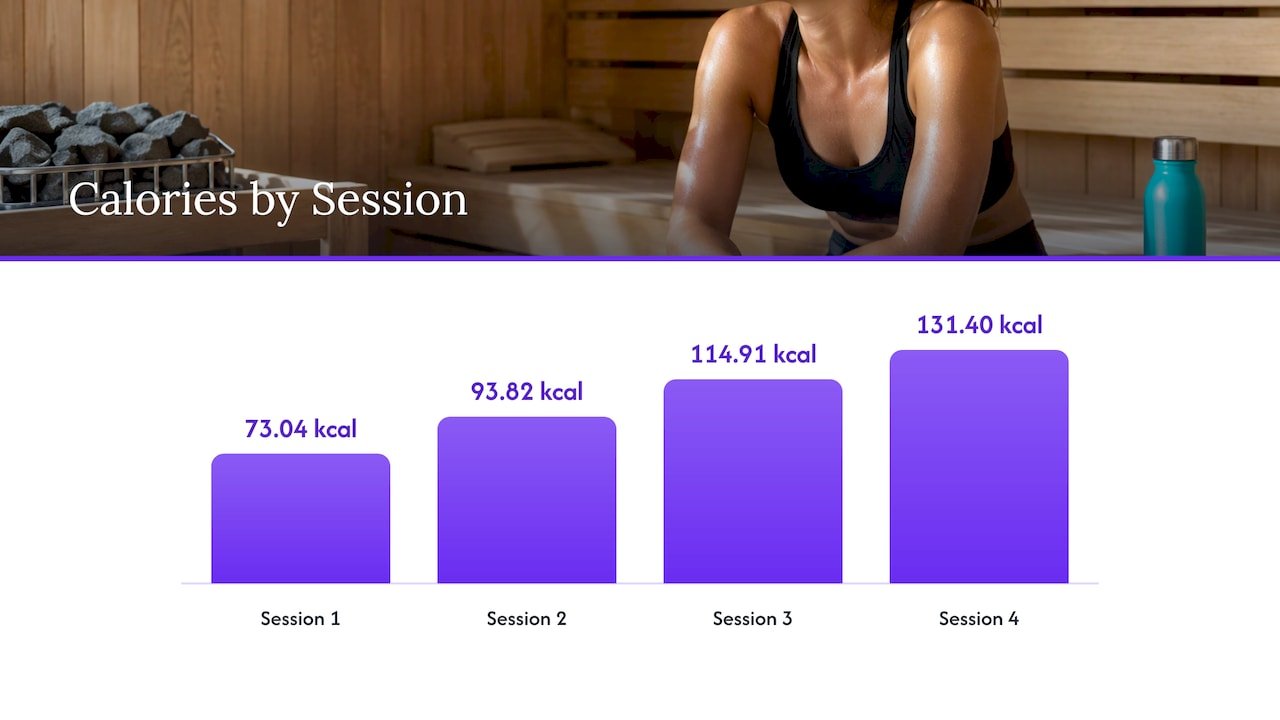
- Calorie burn is modest: about 73 to 131 kcal per 10-minute session in one study of sedentary, overweight young men.
- There is no rigorous evidence linking long-term sauna use to long-term weight loss, so treat heat as a support for your routine, not a replacement for it.
- Rehydrate, ease in gently and speak to your doctor first if you have heart conditions, low blood pressure, are pregnant or are in cancer treatment.
Table of Contents
- Does a sauna burn fat?
- Why the scale drops after a sauna
- How many calories does a sauna burn?
- Does sauna raise your metabolism?
- How a sauna can support a weight routine
- A sensible sauna routine if weight is your goal
- Who should speak to a doctor first
- Our perspective
- Make heat part of your routine in Boyle
- Common myths, answered
- FAQ
- Sources
Does a sauna burn fat?
Not in any meaningful way on its own. Cleveland Clinic’s expert says there isn’t any clear evidence that a sauna helps you burn fat and lose weight, and that sweating produces water loss that does not last once you rehydrate. A specialist quoted by WebMD adds that jockeys, wrestlers and boxers have used saunas to manipulate their weight for decades, but there is no rigorous evidence linking long-term sauna use to long-term weight loss.
That is useful to know. If you step on the scales after a sauna and see a lower number, you are looking at fluid, not fat. If you set your expectations there, you can enjoy the real benefits without disappointment.
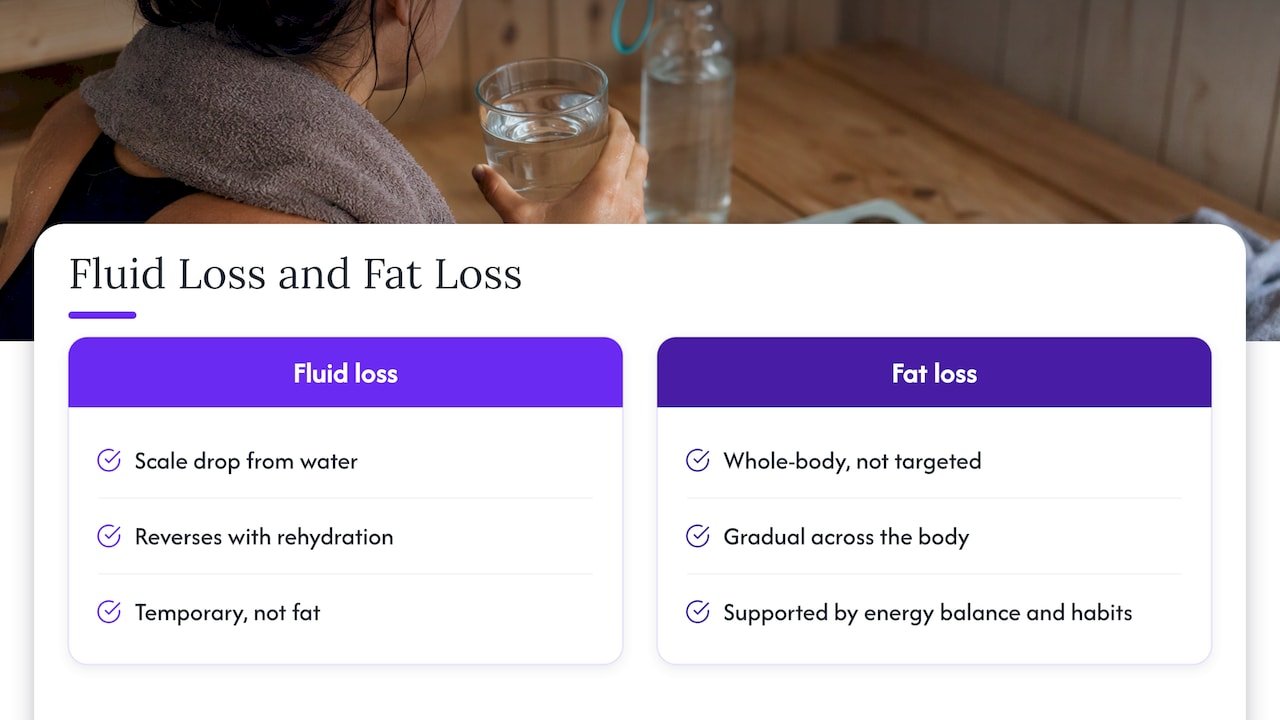
Fat loss is also systemic. Heat cannot target your belly, hips or thighs, whatever a marketing line might suggest. Fat comes down gradually across the whole body when your overall energy balance and habits support it.
Why the scale drops after a sauna
Heat raises your skin temperature to around 40°C and your body temperature to around 39°C, according to Medical News Today. You sweat to cool down, and the body mass you lose afterwards is mainly body water, which typically returns when you drink again.
The numbers from research are consistent:
- A 2019 Polish study of 45 sedentary, overweight men aged 19 to 24 used four 10-minute dry sauna sessions at 90°C with 14 to 16% humidity, separated by 5-minute cooling breaks. The men lost an average of 0.65 kg of fluid, and the authors attribute the body-mass loss mainly to water.
- WebMD reports a study of nearly 700 people who lost about 1% of their water weight after a 30-minute dry sauna session.
- Poison Control notes that sweating peaks after about fifteen minutes and averages about a pound of fluid loss.
So a sauna can move the scale by roughly a pound or so, depending on the person and the session. That is a reason to rehydrate properly, not a measure of progress. If you want a practical way to replace what you sweat out, our guide to electrolytes for sauna use explains sodium amounts and timing, and there is a sugar-free version too.
How many calories does a sauna burn?
You will see wide claims online, from 100 to 600 calories an hour. The research we could verify is more modest. In the 2019 study above, young sedentary overweight men recorded energy expenditure of 73.04, 93.82, 114.91 and 131.40 kcal across four successive 10-minute sessions, a statistically significant rise. Added together, that is roughly 413 kcal across the 40 minutes of heat, with the burn rising as the sessions went on.
Here is how that looks in context:
| Measure | What the research reports |
|---|---|
| First 10-minute session | About 73 kcal |
| Fourth 10-minute session | About 131 kcal in the study, about 134 on average in a later report |
| Four sessions combined | Roughly 413 kcal (our sum of the study’s figures) |
| Fluid lost over 60 minutes | 0.65 kg on average |
| 20-minute sessions to match one pound of body fat (3,500 kcal) | Nearly 24, according to USA Today |
Verywell Health reports that men with a higher BMI burned about 20 calories more than average in the last session. These are small studies of young, sedentary men, so your own number will differ with body size, fitness and the temperature of the room.
The takeaway: heat adds a little energy expenditure, because your heart rate rises as your body works to cool itself. Think of it as a small bonus, never as the main engine of weight loss.
Does sauna raise your metabolism?
The fair answer is that your body works harder in the heat, and the study data show energy expenditure climbing across repeated sessions. That is a short-term effect during and shortly after the session. We have not found a reliable source showing that regular sauna use permanently raises your resting metabolic rate enough to change your weight, so we do not claim it.
What the longer-term evidence does point to is cardiovascular benefit when heat is combined with exercise. The Irish Times reported a 2019 study in which 48 people were split into three groups over eight weeks. Those who exercised and then spent 15 minutes in the sauna saw bigger gains in cardiovascular fitness and lower blood pressure and cholesterol than those who only worked out. The same report is clear that saunas will not magically shed pounds.
A broad 2018 systematic review of 40 clinical studies with 3,855 participants concluded that regular dry sauna bathing has potential health benefits, while noting that better-quality data are still needed on the best frequency and duration. For heart-related goals, see our research-led sauna protocols for heart health.
How a sauna can support a weight routine
This is where heat earns its place. Weight change comes from what you repeat week after week, and a sauna can make those habits easier to keep.
- It rewards your workout. A short sauna after training gives you a reason to show up and a calm way to finish. Our page on a 15 to 20 minute sauna after a workout covers the recovery side.
- It supports sleep. Poor sleep makes healthy choices harder. If evenings are your window, read about sauna before bed and when it helps.
- It lowers the barrier to moving. If you feel stiff or sore, warming up and recovering well can mean you train more often and more sustainably.
- It builds a stress-down ritual. Many people find that a regular, unhurried routine replaces the stress snacking that derails a plan.
- It fits the over-40 body. Recovery matters more as we age. Our recovery workouts after 40 plan sets out a 3 to 4 day structure with protein and sauna included.
If you are going through menopause, you may also be interested in what the evidence says about sauna and menopause symptoms, since changes in sleep, mood and body composition often arrive together.
A sensible sauna routine if weight is your goal
There is no proven dose for weight loss, so aim for comfort and consistency. Here is a practical structure.
- Check with your doctor first if any caution below applies to you.
- Drink water before you go in. Have a glass beforehand and keep a bottle ready.
- Start with 10 to 15 minutes. Poison Control notes that sweating peaks around fifteen minutes, so there is little reason to push far beyond it. Build up gradually as you feel comfortable.
- Take cooling breaks. The study protocol used 5-minute breaks between 10-minute rounds. Step out, cool down, sip water.
- Rehydrate fully afterwards, with water and, after longer or hotter sessions, electrolytes.
- Pair it with the basics. Strength training, walking, protein at each meal and steady sleep do the heavy lifting. The sauna supports them.
- Track more than the scale. Notice energy, sleep, how clothes fit and how you recover. Weigh yourself at the same time of day, and never straight after a sauna.
Dry or wet?
Most of the weight-related data above come from dry saunas. A steam room feels different, with high humidity and lower temperature, and we have not found weight-loss figures for it that we would trust. Choose the heat you enjoy and will return to, because consistency is what counts.
Who should speak to a doctor first
Heat is a real physical stress, so a few groups need advice before they start.
- Heart conditions or high blood pressure. Northwell Health says to clear heat exposure with your physician first if you have cardiovascular issues, coronary disease or high blood pressure. The Irish Times quotes a US integrative medicine director advising that people with angina or congestive heart failure should speak to a doctor before using a sauna.
- Low blood pressure. Poison Control advises caution, and says people who use transdermal medication patches should avoid saunas.
- Pregnancy. Northwell Health says pregnant women should not spend time in these environments, and Poison Control says children and pregnant women are generally advised to avoid them.
- Alcohol. The 2018 review found that half or more of the sauna-related deaths in Swedish and Finnish population studies involved alcohol. Keep alcohol well away from your sauna time.
- Cancer treatment. If you are in treatment or recovering, ask your oncologist before using heat. We explain the questions to bring in our guide, ask your oncologist first about sauna safety during chemotherapy.
If you feel dizzy, faint, nauseous or unwell at any point, leave the heat, cool down and drink water.
Our perspective
We see the same pattern with many of the women over 40 who come to us. They arrive hoping for a shortcut, and what they leave with is a routine that makes them feel better, so they keep going.
The science on sauna and weight is clear on one point: the drop on the scale after a session is mostly fluid. We say so plainly, because you deserve to plan around the truth. What we also see is that a calm, warm, well-run space changes how people treat their bodies. They sleep better, they train more often, they stop dreading recovery.
That is why we built our spa around sauna, steam room and cold plunge, with energised water available throughout the facility. Moving between heat and cold, drinking well and taking time for yourself is a habit worth building, and our team is here to help you build it at a pace that suits you.
Your best self is built by the small things you repeat. Heat can be one of the most enjoyable of them.
Mark
Make heat part of your routine in Boyle
Our Sauna, Steam and Cold Plunge Spa session is priced at €30. It gives you a full contrast routine in one visit: warm up in the sauna, ease into the steam room, then refresh in the cold plunge.

If you want to go further than a single visit, you can explore our other therapies, including red light therapy at €20 to €40 and hyperbaric oxygen therapy at €80 to €120. For a deeper reset, our 3, 5 and 10-day wellness retreats bring movement, therapies and rest together. Visit Live5DHealth to see everything we offer.
Common myths, answered
“Sweating more means burning more fat.” Sweat is your body cooling itself. Fluid leaves, fat stays until your overall energy balance changes.
“I can sweat off a spot.” Spot reduction is not supported. Fat comes down across the body.
“A sauna replaces a workout.” The calorie figures above are small next to exercise. Sauna works best after or alongside movement, as in the eight-week study where it followed a workout.
“More time is better.” Sweat rates peak around fifteen minutes by Poison Control’s account, and longer stays raise the risk of dehydration and dizziness without a proven extra benefit for weight.
FAQ
How often should I use a sauna to lose weight?
There is no proven frequency for weight loss, and a 2018 review says the best frequency and duration still need better data. A comfortable pattern is a few sessions a week of 10 to 15 minutes, ideally after exercise. Check with your doctor first if you have a heart condition, low blood pressure or are pregnant.
Does a sauna burn belly fat?
No. A sauna cannot target belly fat or any other area, and the weight you lose in a session is mostly fluid. Reducing belly fat takes sustained changes to movement, food, sleep and stress, and a sauna can support those habits through recovery and relaxation.
How many calories do you burn in a sauna?
In one study of sedentary, overweight young men, energy expenditure ranged from about 73 kcal in the first 10-minute session to about 131 kcal in the fourth. That is a modest amount, and individual results vary with body size and fitness.
Is a sauna safe during cancer treatment?
That depends on your treatment and your medical team, so ask your oncologist before using one. Heat can affect how you feel during treatment. Bring your questions to your appointment, and read our oncology-focused sauna safety guide to prepare.
Sources
- Sauna Benefits, Cleveland Clinic
- Saunas and Your Health: Benefits, Risks, and Safety, WebMD
- Saunas and weight loss: Possible links and more, Medical News Today
- Correlations between Repeated Use of Dry Sauna for 4 x 10 minutes, PMC
- Are saunas good for you? Poison Control
- Do saunas help you lose weight? USA Today
- How Many Calories Can You Burn Sitting in a Sauna? Verywell Health
- How healthy are saunas? The Irish Times
- Clinical Effects of Regular Dry Sauna Bathing: A Systematic Review, PMC
- Do Saunas Burn Calories? The Well by Northwell