
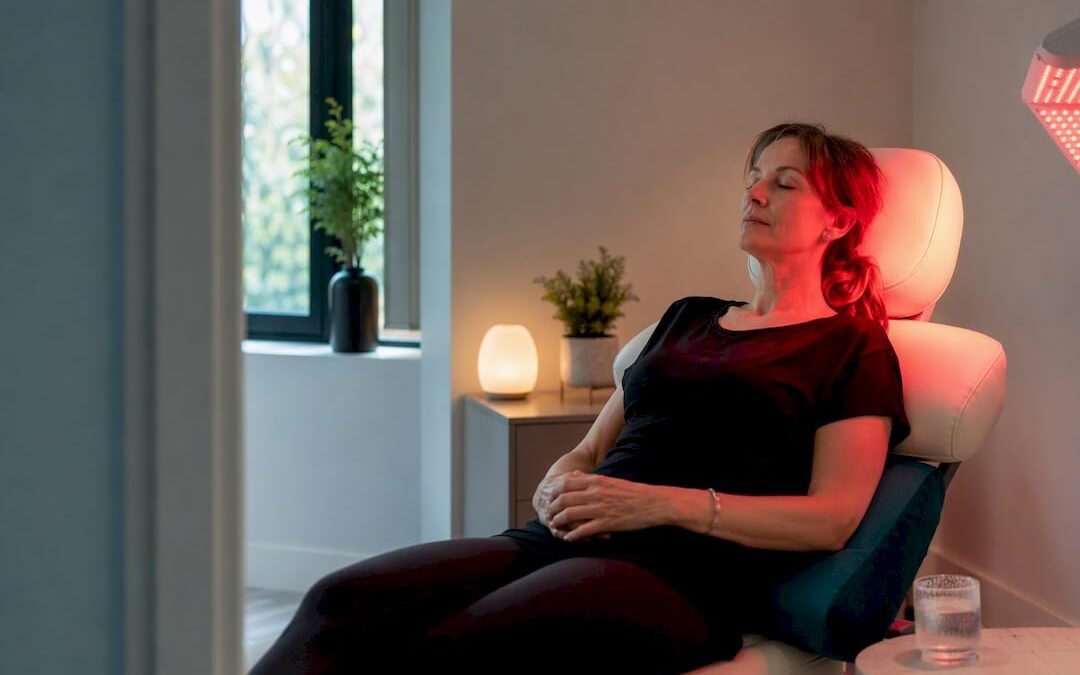
A single red light therapy session in Ireland typically costs between €20 and €40, while pre-paid packages bring the per-session price down to roughly €14 to €25. Sessions usually run for a moderate length of time, often around 10 to 20 minutes. Some clinics offer both single visits and structured packages, so the right choice depends on how often you plan to go.
TL;DR:
- Package discounts often reduce session costs to around €14 to €20, but expiry periods and unused sessions may affect overall value.
- Full-body beds cost more to operate and tend to be pricier than targeted panel treatments, which focus on specific areas or problems.
- Devices with dual-wavelength red and near-infrared light generally command higher prices but deliver deeper tissue repair.
- Comparing per-minute costs and device specs is essential to accurately evaluate the true value and dosage of offers.
- Home devices can be cheaper long-term, but only if they deliver comparable irradiance and you use them consistently with proper guidance.
Table of Contents
- How much does red light therapy cost across Ireland?
- What affects the price you’re quoted?
- How do you compare offers before booking?
- What you actually get for your money
- How can you cut the cost without cutting corners?
- Who should check with a doctor first?
- Clinic sessions versus buying a home device: which costs less overall?
- Are prices different in Dublin, Cork and rural counties like Roscommon?
- Author perspective and local context
- Book red light therapy at Live5dhealth in Boyle
- Sources
How much does red light therapy cost across Ireland?
Pricing follows a fairly consistent pattern across the country, whether you’re looking at a Dublin tanning salon or a wellness centre in the west. Single, walk-in sessions sit at the higher end because you’re paying for convenience rather than commitment.
Dublin’s Recovery at the Hub lists full-body sessions from €20 for around 20 minutes, which sits close to the market average for a standalone visit. At the other end, aggregator listings such as WhatClinic show LED and red light treatments starting from around €15, though that figure usually reflects a package rate rather than a single drop-in price.
Here’s what the maths actually looks like once you commit to a package:
- Single session: €20 to €40, depending on clinic type and location
- 5-session package: often works out to €18 to €28 per session
- 10-session package: can bring the per-session cost down to €14 to €20
The Tanning Shop Ireland advertises new-customer pricing as low as €14 per session when booked as part of a 10-session block, and Pulse Health publishes tiered pricing across 1, 5 and 10 session packages that follows the same downward curve. Before you buy in bulk, check the expiry window on any package. Many clinics set a use-by period for package sessions, often within a few months, and unused sessions rarely carry over or get refunded after this period.
What affects the price you’re quoted?
Not every “red light therapy” session delivers the same dose, and that’s where price differences start to make sense. A full-body bed, which surrounds you with light panels, costs more to run than a single handheld or wall-mounted panel treating one area.
Wavelength matters too. Devices combining red light around 660nm with near-infrared around 850nm target both skin-level and deeper tissue repair, and clinics with this dual-wavelength equipment tend to price sessions higher than those using red-only panels. Irradiance, or how much light energy actually reaches your skin per minute, is the real driver of results, though most clinics quote session length rather than dosage figures.
- Full-body beds cost more to operate than small panels, and that shows in the price
- Medical-grade clinics offering supervised or combined therapies (alongside physiotherapy or aesthetics) charge above tanning-salon-style setups
- Luxury spa settings often bundle red light therapy with sauna, cold plunge or massage access, which raises the headline price but adds value elsewhere
Pro Tip: Ask what wavelength the device uses before booking. A clinic charging premium prices for red-only light at a low irradiance isn’t necessarily giving you a better session than a cheaper dual-wavelength setup.
How do you compare offers before booking?
Advertised prices rarely tell the full story, so run through these checks before handing over your card details.
- Work out the per-minute cost. Divide the price by session length so you’re comparing like with like, not just headline numbers.
- Ask for the device specs. A clinic that can tell you the wavelengths and irradiance of its equipment is usually more transparent about what you’re paying for.
- Confirm the format. Full-body beds and small panels produce different results, and you should know which one you’re booking before you arrive.
- Read the package terms. Expiry dates, cancellation notice and whether sessions transfer between locations all affect real value.
- Check staff training. Ask who’s supervising sessions and what safety guidance they give, particularly around skin sensitivity or medication.
What you actually get for your money
Full-body bed sessions typically run 10 to 20 minutes and expose your entire body to red and near-infrared light at once, which suits people targeting broad recovery or skin goals. Targeted panel sessions run for similar lengths but focus on one area, such as a joint or a patch of skin, and tend to be the cheaper option per visit.
Clinics commonly promise benefits around skin tone, muscle recovery and general relaxation. Realistic results build over weeks rather than days.
- Many providers recommend multiple sessions per week over several weeks before assessing progress.
- Dosage, meaning session time multiplied by the light’s irradiance, matters more to outcomes than price alone
- A cheaper, well-dosed session can outperform an expensive one run on underpowered equipment
How can you cut the cost without cutting corners?
Packages remain the most reliable way to lower your per-session spend, provided you’ll genuinely use all the sessions within the expiry window.
- Ten-session packages usually offer the steepest discount, sometimes bringing costs to around €14 to €20 per visit
- Watch for introductory or off-peak pricing, which some clinics use to fill quiet weekday slots
- Home devices look cheaper long-term but rarely match clinic-grade irradiance, so factor in correct dosing and safety before buying one to replace supervised sessions
Who should check with a doctor first?
Red light therapy suits most healthy adults, but a handful of situations call for medical advice before booking.
People taking photosensitising medication, those who are pregnant, and anyone undergoing active cancer treatment should speak with a GP before starting sessions. Mild redness or temporary eye strain can occur and usually settles quickly, but sessions should stop if discomfort persists.
Live5dhealth’s contraindications guidance sets out who should exercise caution in more detail, and a similar overview from Sacramento’s bone health clinic covers comparable ground for readers wanting a second reference point. If you’re managing a chronic condition, checking with your GP first costs nothing and avoids any guesswork later.
Clinic sessions versus buying a home device: which costs less overall?
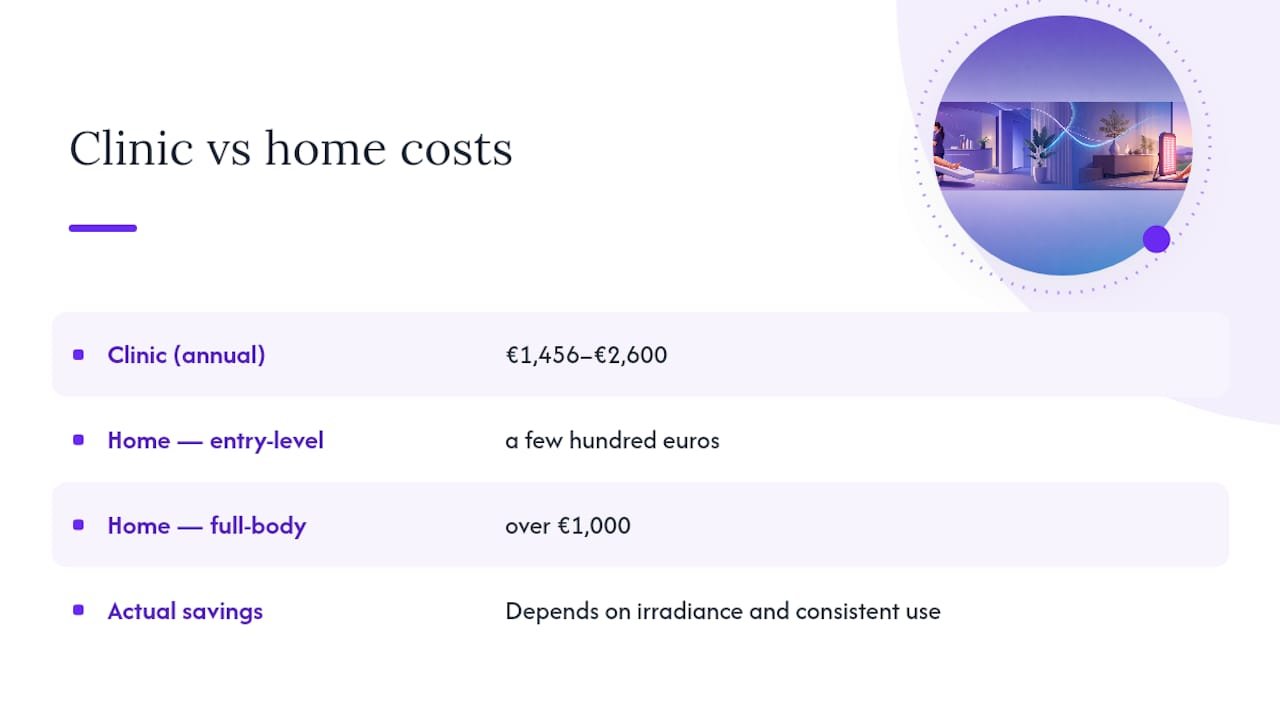
A home red light panel typically costs anywhere from a few hundred euros for an entry-level unit to over a thousand for a full-body setup with genuine clinic-grade irradiance. Compare that against a clinic package running €14 to €25 per session, and the maths shifts depending on how long you plan to use the device.
If you attend a clinic twice weekly for a year, your total spending would depend on the per-session rates of package deals purchased. A mid-range home device bought outright might cost less over that same year, but only if it delivers comparable irradiance and you actually use it consistently. Many cheaper home units run at lower power output than clinic equipment, meaning you’d need longer sessions to match the dose, which eats into any savings.
There’s also the supervision factor. Clinics provide guidance on positioning, session length and contraindications, whereas a home device leaves that entirely up to you. For anyone managing a health condition or wanting a stronger dose without guesswork, a clinic session often justifies its higher per-visit price. For general maintenance once you understand your own tolerance and routine, a home device can work out cheaper across multiple years, provided you’ve checked the equipment’s specifications match what a clinic would use.
Are prices different in Dublin, Cork and rural counties like Roscommon?
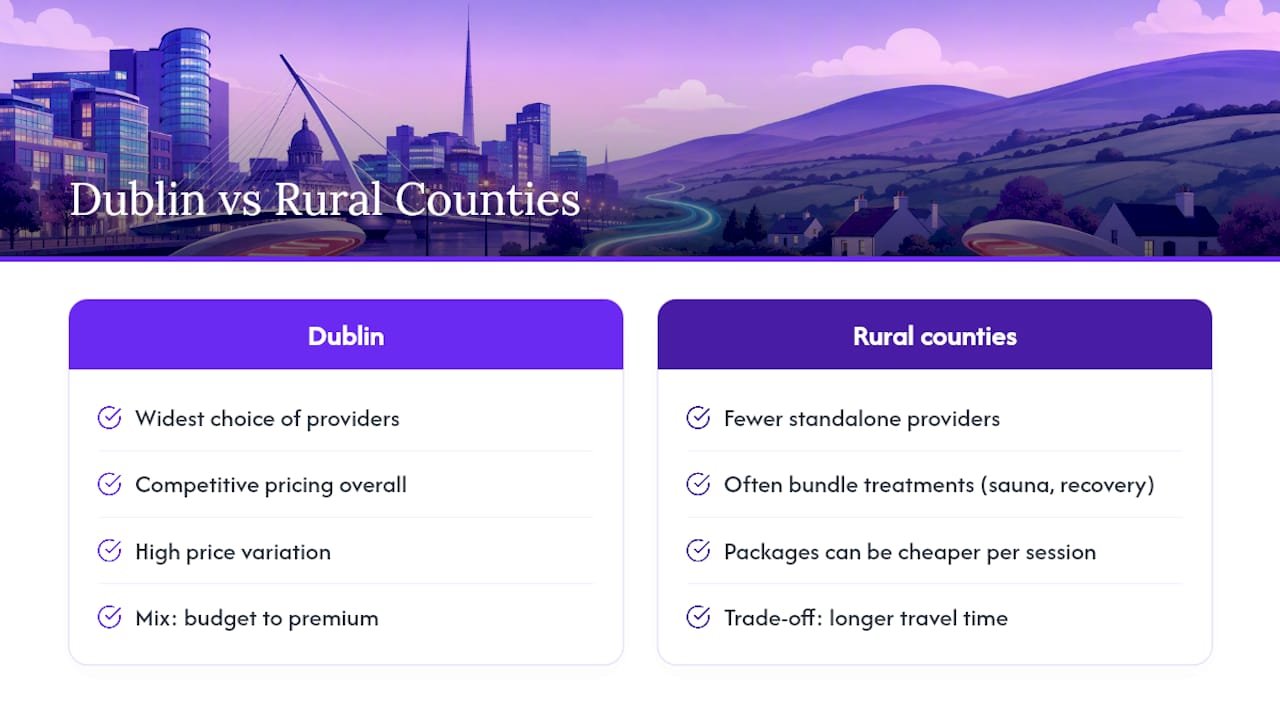
Availability skews heavily toward larger cities, with Dublin offering the widest choice of clinics, tanning salons and wellness centres providing red light therapy. That density brings competitive pricing but also more variation, since you’re comparing everything from budget tanning salons to premium medical aesthetics clinics under one search.
Rural counties have fewer standalone providers, but that doesn’t automatically mean higher prices. Wellness centres in areas like County Roscommon often bundle red light therapy alongside other treatments such as sauna access or recovery therapies, which can make a rural package more competitive per session than a one-off city visit. The trade-off tends to be travel time rather than cost, particularly for readers outside commuter-belt counties.
If you’re weighing up options outside a major city, it’s worth checking whether a rural centre offers combined packages. Paying for one membership that includes red light therapy plus other recovery treatments frequently beats piecing together several separate city bookings, especially once you factor in fuel or parking costs for repeat visits.
Author perspective and local context
Responsible Irish clinics build packages around consistent dosing, not just discounting. Live5dhealth structures its red light therapy sessions in Boyle with clear session lengths so clients know exactly what they’re paying for each visit. Booking tip: arrive a few minutes early, wear light clothing, and ask about cancellation notice before committing to a package.
— Mark
Book red light therapy at Live5dhealth in Boyle
Some local centres offer an all-in-one alternative to piecing together separate clinic visits across Dublin or Cork. Rather than travelling for a single-purpose session, you can combine your red light therapy visit with sauna, cold plunge or recovery treatments, cutting down on both cost and travel time for readers based in the west and midlands.
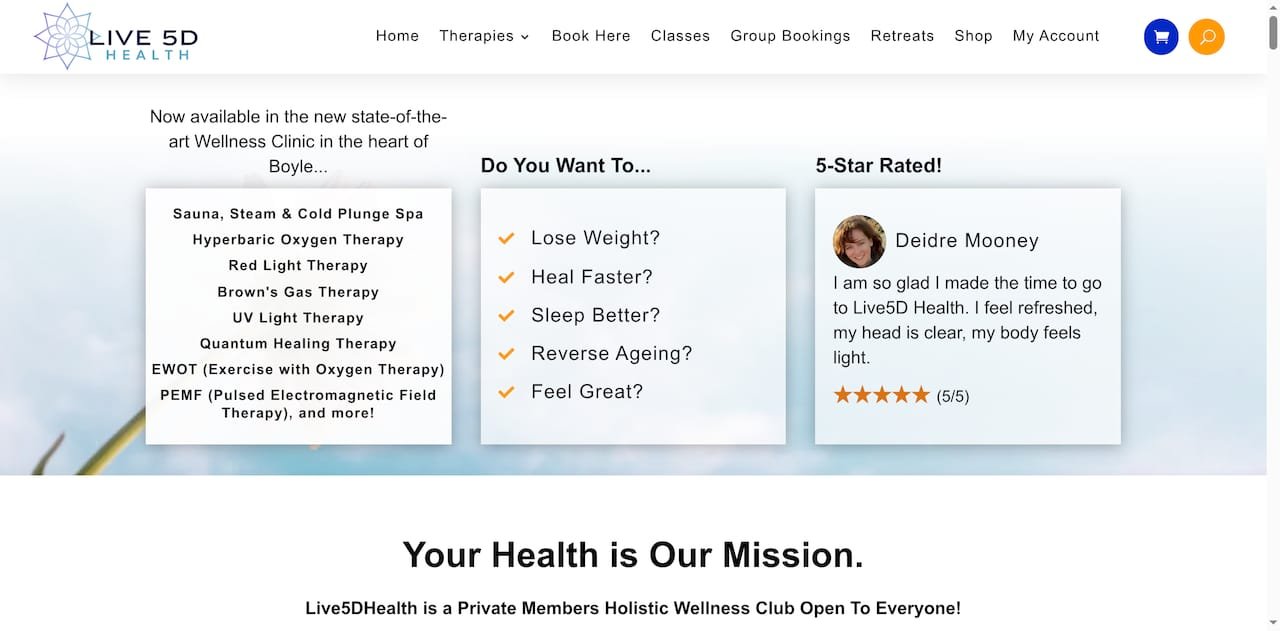
Full session details, including the red light therapy bed experience, are available on the Live5dhealth site. If you’re also managing recovery or general wellness goals, browse the supplements range to support your sessions between visits. To check current package availability or make an enquiry, visit Live5dhealth and get in touch directly with the Boyle centre.
Sources
Prices and package examples in this guide were drawn from Live5dhealth’s own red light therapy overview for Ireland, alongside its contraindications page for safety context. Clinic pricing benchmarks came from The Tanning Shop Ireland, Recovery at the Hub in Santry, and Pulse Health’s package pricing tables. Broader market comparisons came from WhatClinic’s Irish LED treatment listings. Readers wanting the full picture on suitability and expectations can also see Live5dhealth’s complete guide to red light therapy in Ireland.
This article is general information, not a substitute for advice from a qualified doctor. Consult a qualified healthcare professional about your own circumstances before acting on anything here.
- Full Body Red Light Therapy Dublin – The Tanning Shop Ireland
- LED Light Treatment in Ireland • Check Prices & Reviews
- Red Light Therapy – Pulse Health