
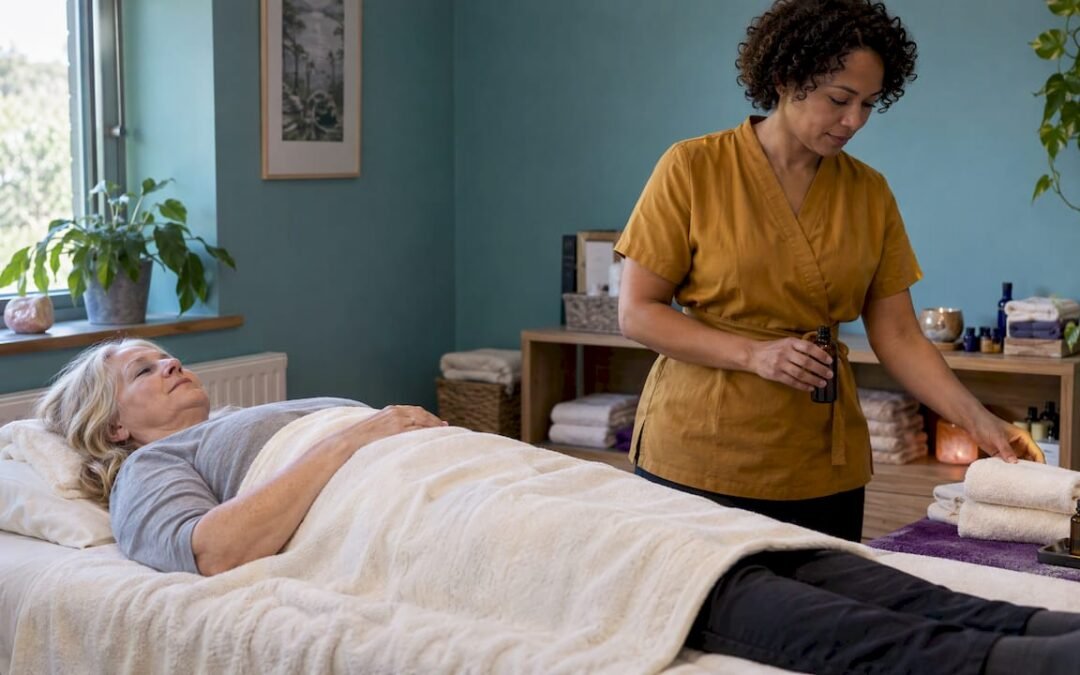
Aromatherapy massage combines the touch of a massage with essential oils diluted in a carrier oil. Most people book it for deep relaxation, relief from everyday stress and a calmer mood, and many describe feeling lighter and more rested afterwards. The research is more modest than the marketing: some studies show small gains in anxiety and comfort, and the evidence is weaker for specific health claims. This guide explains what to expect, which oils are common, how strong the evidence is, and how to stay safe, especially if you are over 40, going through menopause or living with cancer.
TL;DR
- Aromatherapy massage uses essential oils, diluted in a carrier oil, during a massage. The oils can also be breathed in as you lie there.
- The most realistic benefits are relaxation, feeling less tense and a lift in wellbeing. Evidence for pain and anxiety relief exists but is often small or of low quality.
- Concentrated essential oils can damage skin, so a trained therapist dilutes them. Tell your therapist about allergies, skin conditions, pregnancy and any medical treatment.
- If you have cancer, speak to your oncology team first. Some oils need care with oestrogen-dependent cancers, and aromatherapy never replaces medical treatment.
- A session usually runs 60 to 90 minutes, and you can ask for a shorter one.
Table of Contents
- What aromatherapy massage is
- The benefits people look for
- What the evidence really says
- Essential oils commonly used
- Safety: who needs to take care
- What a session looks like and how long it lasts
- How often should you have one?
- Getting the most from your session
- Make time for yourself at Live5DHealth
- FAQ
- Sources
What aromatherapy massage is
In an aromatherapy massage, a therapist uses diluted essential oils massaged into the skin, and the scent can also be inhaled. That double route is the main difference from a plain massage. You get the pressure, warmth and rhythm of the strokes, plus a scent chosen to suit how you feel that day.
The oils are blended into a carrier oil such as a light vegetable oil before they touch your skin. Many therapists will offer you a choice of two or three scents at the start, or build a blend after asking a few questions about your sleep, stress and any aches.
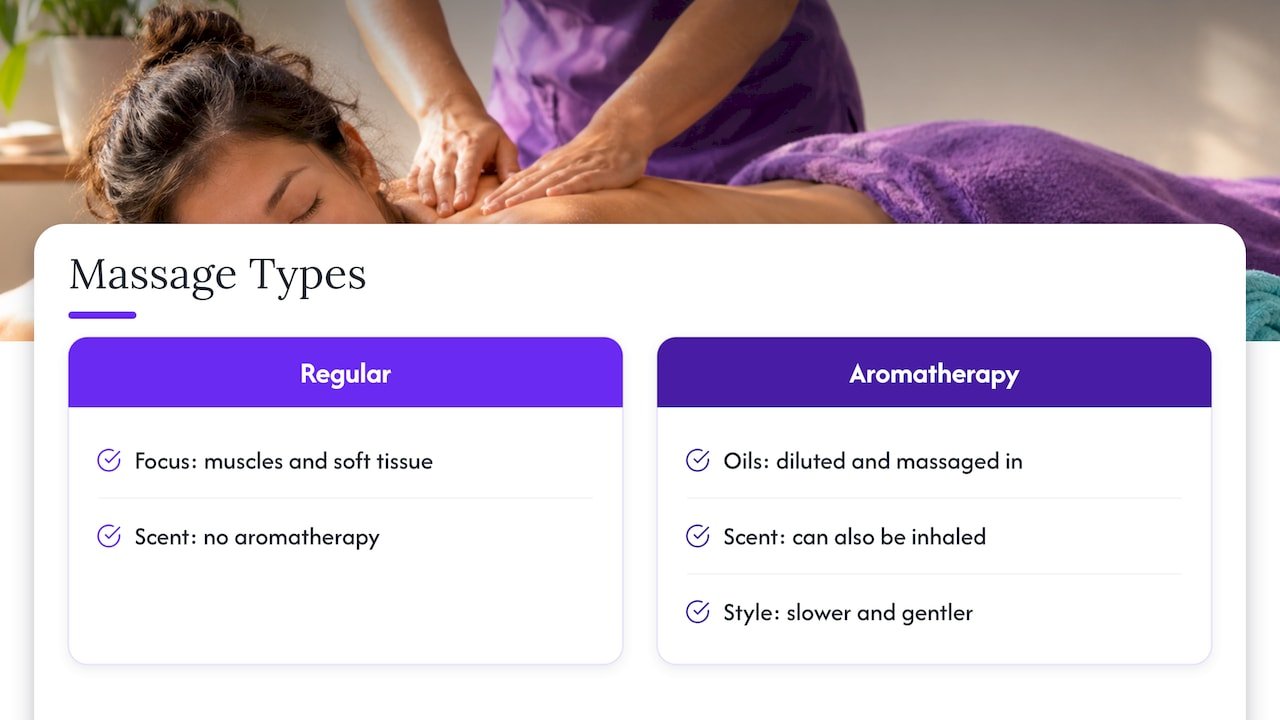
A regular massage focuses on the muscles and soft tissue. Aromatherapy massage tends to be slower and gentler, with the atmosphere and scent as part of the treatment. If your goal is a deep sports-style release of a stiff shoulder, you may prefer firmer work. If your goal is to switch off, aromatherapy suits that well.
The benefits people look for
It helps to separate what the massage does from what the oils might add. Touch, quiet time and being looked after are powerful on their own. The oils are intended to deepen that experience.
Relaxation and stress relief
This is the benefit most people notice first. A warm room, slow strokes and a familiar calming scent give your nervous system a cue to slow down. Many clients describe softer shoulders, a looser jaw and a quieter mind within the first twenty minutes.
If stress or anxiety is your main reason for booking, our guide to massage for anxiety goes through what helps and what the evidence shows.
Mood and emotional balance
Scent is closely tied to memory and emotion, which is why a smell can change how you feel in seconds. Aromatherapy massage is often used to encourage a more settled, positive mood. In people living with advanced cancer, a systematic review found that aromatherapy, reflexology and massage could bring enhanced wellbeing, respite and a sense of escape from the illness. That matters. Feeling cared for and given a break is a real benefit, even where the clinical measures are hard to pin down.
Sleep
People often book an evening session to help them wind down before bed. Calming oils, a relaxed body and a lower level of tension can make it easier to drop off. Sleep problems have many causes, though, so if yours are persistent, see your GP rather than relying on massage alone.
Aches, tension and comfort
Massage itself eases muscle tension, and the added scent can make the session more soothing. In cancer care, a Cochrane review found that aromatherapy massage may give some relief from pain and anxiety, although the evidence was very low quality and the benefits may not be clinically significant. Treat it as a comfort measure, and expect a gentle effect rather than a dramatic one.
Midlife and menopause
Many women over 40 look for a massage that supports sleep, tension and mood during perimenopause and menopause. Aromatherapy massage fits that goal as a calming ritual. Our article on massage for menopause explains what to expect and what helps.
What the evidence really says
Honest expectations make for a better experience. This is how the picture looks.
| Area | What the research suggests | How to read it |
|---|---|---|
| Anxiety | One study found a greater drop in anxiety after chamomile massage than after massage without aromatherapy | Encouraging, but research on aromatherapy’s health effects is mixed or lacking |
| Pain and anxiety in cancer | Possible short-term relief, but studies were small and often at unclear or high risk of bias | Worth considering for comfort, not as a treatment |
| Wellbeing in advanced illness | Reported respite and enhanced wellbeing | Meaningful to the person, even if hard to measure |
| Curing or preventing disease | No scientific evidence that aromatherapy cures or prevents cancer | Never a substitute for medical care |
The takeaway: aromatherapy massage is a supportive, pleasant therapy that many people find helpful for how they feel. It is not a medical treatment, and a good therapist will say so.
If you want a broader view of how massage affects the body, our article on holistic massage benefits looks at the research on stress hormones.
Essential oils commonly used
Therapists draw on a long list of oils. Popular choices include lavender, rosemary, eucalyptus, camomile, peppermint, ylang ylang, marjoram, jasmine, lemon and geranium. The way they are commonly used:
- Lavender: the classic choice for unwinding and settling before sleep.
- Camomile: soft and soothing, often chosen when you feel anxious or tense.
- Eucalyptus and peppermint: fresh, clearing scents, often used when you feel heavy or sluggish.
- Rosemary: a brighter, more stimulating scent for low energy days.
- Ylang ylang, jasmine and geranium: floral scents chosen for mood and a sense of comfort.
- Lemon, marjoram: lifting citrus and warm herbal notes, used in blends.
The best oil is the one you like. If a scent bothers you, say so straight away. A scent you dislike works against the whole point of the session.
Safety: who needs to take care
Aromatherapy massage is generally gentle, and serious adverse events from appropriately used, diluted aromatherapy are rare. Most reported side effects are mild and short-lived, such as headaches or a rash. Still, a few points are worth knowing.
Dilution matters
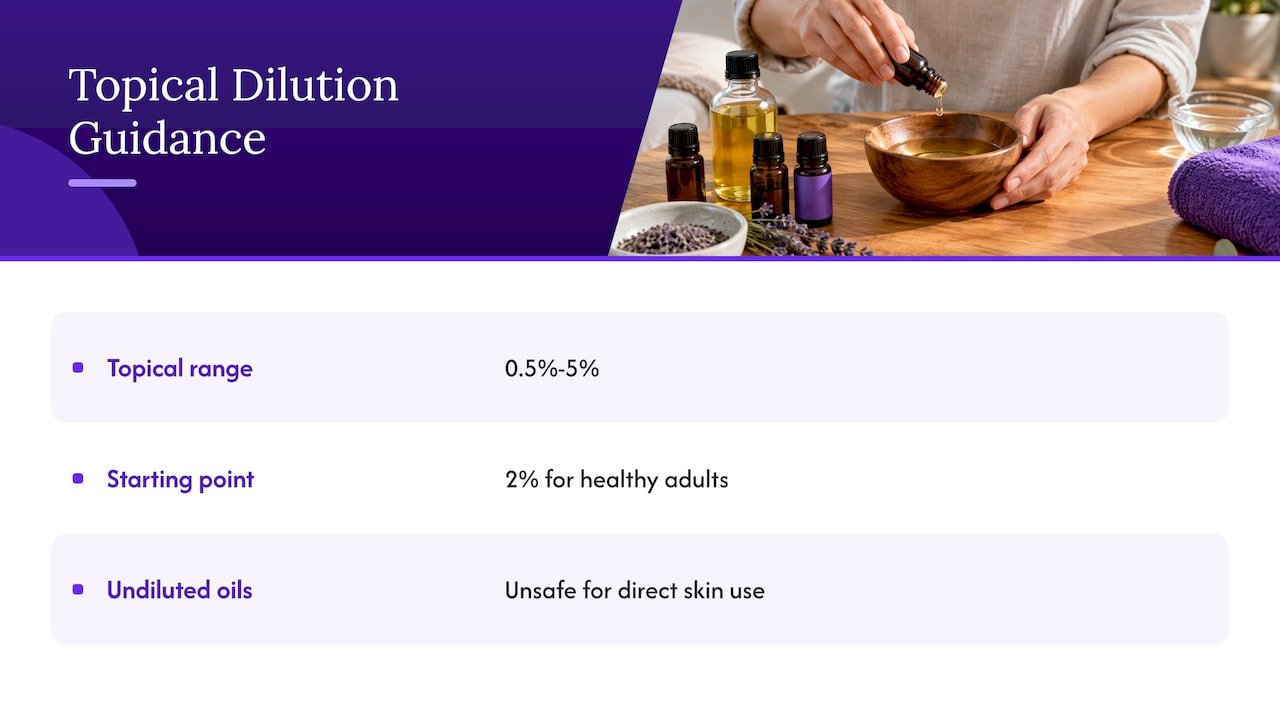
Concentrated essential oils can cause severe skin damage when used on their own, which is why therapists dilute them in another oil before a massage. Guidance for topical use typically ranges from 0.5% to 5%, with 2% often suggested as a safe starting point for healthy adults. You do not need to work that out yourself. Choose a trained therapist and never apply undiluted oils to your skin.
Skin reactions and sun
The risks include skin or allergic reactions and increased sensitivity to sunlight. Tell your therapist about allergies, eczema or sensitive skin before the session. If you notice redness, itching or a rash afterwards, wash the area and speak to your pharmacist or GP. Be careful about booking a sunbed or strong sun exposure straight after an oil massage.
If you have cancer or are in treatment
This is where care matters most, and where aromatherapy can be most comforting when done properly.
- Talk to your doctor first. Tell your oncology team or GP before you start any aromatherapy.
- Choose a qualified practitioner. People with oestrogen-dependent cancers should take care with lavender and tea tree oils and get advice from a qualified aromatherapist.
- Ask about oncology-trained therapists. Therapists trained in oncology massage adjust pressure, position and duration to suit your health, treatment history and preferences.
- Never use it instead of treatment. Essential oils should not replace a visit to your GP or prescribed medicines.
For more on this, read our guide to oncology massage benefits in Ireland. If swelling in an arm or leg is a concern after cancer treatment, our article on lymphoedema after cancer explains what it is and what to do. For a wider view of complementary options, see alternative cancer therapies: what you need to know.
What a session looks like and how long it lasts
A typical aromatherapy massage lasts 60 to 90 minutes, and you can ask for a shorter session if that feels too long. This is useful if you are tired, recovering from treatment or new to massage.
A good session usually runs like this:
- A short chat. Your therapist asks about your health, medication, skin, allergies and what you want from the session.
- Choosing the scent. You smell a couple of oils and pick what appeals. The therapist blends and dilutes them.
- The massage. You lie under a towel or sheet, and only the area being worked on is uncovered. Pressure is set to your comfort.
- Time to settle. You rest for a few minutes afterwards and drink water.
Speak up whenever you need to. Too much pressure, too strong a scent or a room that is too cool are all easy to fix mid-session.
How often should you have one?
There is no set rule, and we found no authoritative guidance giving one ideal frequency. What works depends on why you are booking and what your body allows.
- For stress and a general sense of wellbeing: many people book when they feel tension building and treat it as regular self-care.
- For a specific period, such as a hard few weeks or recovery: a short run of sessions can feel more supportive than a single visit.
- If you are in medical treatment: your oncology team and an oncology-trained therapist should help decide timing, since how you feel can change from week to week.
A good test: if you leave feeling calmer and sleep a little better for a couple of days, the rhythm is probably right. If you feel drained or your skin reacts, step back and talk to your therapist.
Getting the most from your session
- Share your health history. Mention medication, allergies, pregnancy, skin conditions and recent surgery.
- Say what you want. Relaxation, help with sleep or a lift in energy lead to different oil choices.
- Arrive unhurried. Ten calm minutes before you begin lets you settle faster.
- Drink water afterwards and give yourself a gentle evening if you can.
- Pair it with other restorative time. A sauna or steam room before or after a massage is a favourite combination for many people. If you are having cancer treatment, read our sauna safety guide for chemotherapy and ask your oncologist first.
Our perspective
At Live5DHealth, we see massage as one part of a wider approach to feeling well. People come to us wanting to recover their energy, ease tension and feel like themselves again, and the women over 40 and the people living with serious illness who visit us have taught us a lot about what really matters. It is rarely a single treatment. It is time, calm, care and a plan that respects your health.
That is why we focus on holistic massage therapy within a centre built around recovery. You can follow a massage with a luxury sauna, a steam room or a cold plunge, and spend the day in a place with clean, energised water throughout. Our approach combines state-of-the-art technology with ancient wisdom, and gentle, hands-on care is a natural part of that.
Our advice if you are drawn to aromatherapy: go for a trained therapist, tell them everything about your health, and keep your doctor in the loop if you are in treatment. Used that way, it can be a lovely, uplifting part of looking after yourself. Your best self awaits.
Mark
Make time for yourself at Live5DHealth
If you are ready for a restorative day in Boyle, County Roscommon, our holistic massage therapy and wellness treatments are there to help you unwind. Our sauna, steam room and cold plunge spa is €30 and pairs well with a massage. If you would like a longer break, our 3, 5 and 10-day wellness retreats give you space to reset. If you are living with a health condition, talk to your doctor first and tell us about your needs when you book.

We also welcome friends and families through our group bookings, for a shared day of relaxation.
FAQ
Is aromatherapy massage better than a regular massage?
Not necessarily better, but different. Both relax the body, and the aromatherapy version adds scent chosen for how you want to feel. One study found a bigger drop in anxiety after chamomile massage than after massage without aromatherapy, but research overall is mixed. Choose it if you enjoy scent and a slower, calming session.
Can I have aromatherapy massage if I have cancer?
Many people do, but speak to your doctor or oncology team first. Some oils need care with oestrogen-dependent cancers, so use a qualified aromatherapist and ask for oncology-trained massage. Cancer Research UK advises telling your doctor before you begin. Aromatherapy supports comfort and is never a cure.
How long does an aromatherapy massage take?
Usually 60 to 90 minutes. If that feels like too much, you can ask for a shorter session when you book. Allow a little extra time to talk through your health and settle afterwards.
Which essential oils are used most often?
Lavender, camomile, eucalyptus and peppermint are very common, along with rosemary, ylang ylang, marjoram, jasmine, lemon and geranium. Your therapist will dilute whichever you choose in a carrier oil. If you have sensitive skin or a medical condition, ask which oils suit you.
Are there side effects?
Mild ones can happen, such as a headache or a skin rash, and serious events are rare with properly diluted oils. Tell your therapist about allergies before you start. If a reaction appears afterwards, wash the area and speak to your pharmacist or GP.
Sources
- Aromatherapy, Cancer Research UK
- Aromatherapy and massage for symptom relief in people with cancer, Cochrane
- Aromatherapy, massage and reflexology: a systematic review
- What is aromatherapy massage? Oils, benefits and risks, Healthline
- Aromatherapy, CAM Cancer
- Massage and aromatherapy, Dana-Farber Young and Strong