
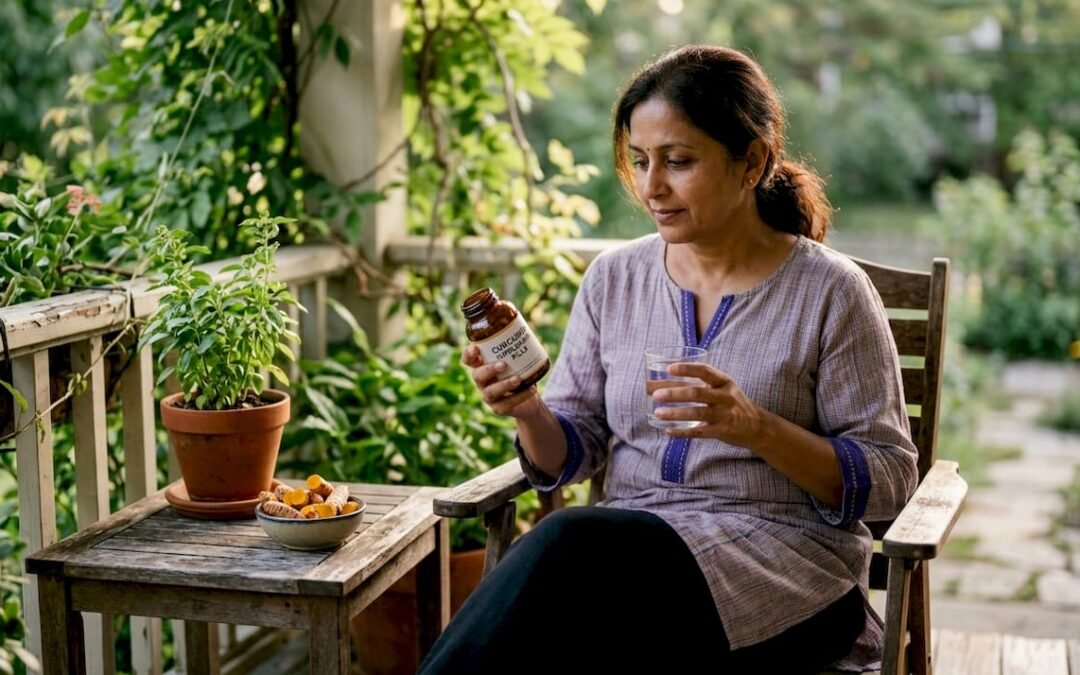
Curcumin supplements are concentrated extracts of curcumin, the primary bioactive compound in turmeric (Curcuma longa), and they deliver anti-inflammatory and metabolic benefits that dietary turmeric alone cannot match. For adults over 40, where chronic low-grade inflammation underpins conditions from joint pain to cardiovascular disease, these supplements have moved from niche interest to serious clinical consideration. Systematic reviews published in 2026 confirm reductions in key inflammatory biomarkers including C-reactive protein (CRP) and interleukin-6 (IL-6) when curcumin is combined with piperine, a black pepper extract that dramatically improves absorption. This guide covers what the evidence actually shows, how to take curcumin safely, and what to realistically expect.
1. How do curcumin supplements reduce inflammation?
Curcumin reduces inflammation by suppressing the production of pro-inflammatory cytokines, including CRP, hs-CRP, and IL-6. A 2026 systematic review of randomised controlled trials found that 15 out of 20 RCTs showed significant reductions in these inflammatory markers with curcumin-piperine supplementation. That result is clinically meaningful because CRP and IL-6 are the same markers elevated in arthritis, metabolic syndrome, and cardiovascular disease.
The trials used curcumin doses ranging from 500–1,500 mg daily, combined with 5–15 mg of piperine, over periods of 1–12 weeks. Metabolic improvements were equally notable. The same review found that 14 out of 18 trials reported improvements in lipid profiles, blood glucose, and HbA1c. For adults managing pre-diabetes or elevated cholesterol, this dual action on inflammation and metabolism is a significant advantage.
Curcumin also acts as a pleiotropic molecule, meaning it affects multiple biological systems simultaneously, including mitochondrial function, gut integrity, and immune signalling. This explains why its benefits extend well beyond simple inflammation suppression.
Pro Tip: Pair your curcumin supplement with a meal containing healthy fats such as olive oil or avocado. Curcumin is fat-soluble, so dietary fat significantly improves how much your body absorbs.
| Marker | Effect observed |
|---|---|
| CRP and hs-CRP | Reduced in 15 of 20 RCTs |
| IL-6 | Significantly decreased |
| Blood glucose and HbA1c | Improved in majority of trials |
| Lipid profiles | Improved in 14 of 18 trials |
2. What are the best types of curcumin supplement formulations?
The most effective curcumin supplements contain standardised curcuminoid content of approximately 95%. This matters because raw turmeric root contains only 2–5% curcumin by weight, making food sources inadequate for therapeutic doses. A standardised extract removes this variability.
Piperine is the single most important absorption enhancer available. Research shows it can increase curcumin bioavailability by up to 2,000%. Without it, most curcumin passes through the digestive tract without being absorbed. This is why the best curcumin capsules consistently include black pepper extract alongside the curcuminoid content.
Common supplement forms each carry distinct advantages and limitations:
- Capsules and softgels: The most widely available format. Capsules with 95% standardised extract and piperine are the gold standard for most adults. Softgels often include fat-based carriers that further aid absorption.
- Tablets: Convenient and shelf-stable, but may contain binders that slow dissolution. Check for third-party testing to confirm actual curcuminoid content.
- Powders: Flexible dosing but require mixing with fat-containing foods or drinks. Absorption is inconsistent without a carrier.
- Gummies: Lower curcuminoid concentrations and often contain added sugars. Not recommended for therapeutic use.
- Liquid extracts: Fast absorption but variable potency. Useful for those who cannot swallow capsules.
Third-party certification from bodies such as NSF International or USP confirms that what is on the label matches what is in the product. For adults over 40 taking multiple supplements or medications, this quality assurance step is not optional.
Pro Tip: Look for products that list “95% curcuminoids” on the label alongside a specific piperine or BioPerine® content. Vague terms like “turmeric extract” without a standardisation percentage are a warning sign.
3. How should adults over 40 take curcumin safely?
Clinical studies support a daily curcumin dose of 500–2,000 mg, with most trials using 1,000 mg as the effective midpoint. Starting at the lower end of this range and increasing gradually gives your body time to adjust and helps identify any sensitivity early.
Timing matters. Take curcumin with meals rather than on an empty stomach. This reduces the risk of gastrointestinal discomfort and improves absorption when combined with dietary fats. Splitting the dose across two meals, for example 500 mg at breakfast and 500 mg at dinner, maintains more consistent blood levels throughout the day.
Safety considerations for adults over 40 include the following:
- Blood-thinning interactions: Curcumin acts as a blood thinner and can interact with anticoagulants such as warfarin. If you take any blood-thinning medication, consult your GP before starting curcumin.
- Immunosuppressant interactions: Curcumin may alter the metabolism of drugs like tacrolimus. Anyone on immunosuppressant therapy should seek medical advice first.
- Kidney stone risk: Curcumin contains oxalates, which may increase kidney stone risk in susceptible individuals. Those with a history of calcium oxalate stones should use caution.
- Gastrointestinal effects: High doses occasionally cause nausea, bloating, or loose stools. These effects are generally mild and transient, with no significant adverse effects reported across multiple RCTs.
- Piperine and drug metabolism: Piperine modifies drug metabolism enzymes and can alter pharmaceutical drug levels. This is particularly relevant for adults managing chronic conditions with multiple medications.
- Chemotherapy interactions: Curcumin may interfere with certain chemotherapy agents. Always disclose supplement use to your oncologist before and during cancer treatment.
4. What does the evidence say about curcumin and cancer support?
Curcumin modulates cancer-related signalling pathways including NF-κB and mTOR, both of which regulate cell survival, proliferation, and resistance to treatment. Research shows that curcumin combined with chemotherapy may help overcome drug resistance and reduce cancer-related biomarkers in early-phase trials. This positions curcumin as a potential adjunct to conventional treatment, not a replacement for it.
The distinction matters enormously. Curcumin is best understood as a supportive adjuvant for inflammatory and oncological conditions, not a primary therapy. Early-phase trials are promising, but larger, standardised clinical trials are still needed before definitive therapeutic claims can be made.
Key points on curcumin and cancer support:
- Curcumin suppresses NF-κB, a pathway that promotes tumour growth and chemotherapy resistance.
- It modulates mTOR signalling, which controls cell growth and is overactive in many cancers.
- Curcumin’s pleiotropic pharmacology includes regulation of apoptosis (programmed cell death) in cancer cells.
- Low bioavailability remains the primary barrier to clinical utility. Innovations such as nanocarriers and solid dispersions are being developed to address this.
- Symptom management, including reduction of treatment-related inflammation, is an area where curcumin shows practical near-term value.
For anyone considering curcumin alongside cancer treatment, reading about adjunctive cancer therapies provides useful context. Always discuss supplement use with your oncologist before making any changes to your treatment plan.
5. Curcumin vs turmeric supplements: what is the difference?
Curcumin is the active compound within turmeric responsible for its documented health benefits. Turmeric root contains only 2–5% curcumin by weight, which means you would need to consume very large quantities of turmeric daily to approach the doses used in clinical trials. Concentrated curcumin supplements close this gap by delivering standardised, high-potency extracts in a single capsule.
Dietary turmeric still has value for everyday wellness. It contributes antioxidants, supports gut health through its interaction with the gut microbiome, and adds anti-inflammatory compounds to your diet in a gentle, cumulative way. However, for targeted therapy, such as managing elevated CRP or supporting cancer treatment, dietary turmeric is insufficient on its own.
| Feature | Dietary turmeric | Curcumin supplement |
|---|---|---|
| Curcumin content | 2–5% by weight | Up to 95% standardised extract |
| Absorption | Low without enhancers | Significantly improved with piperine |
| Therapeutic dose achievable | No | Yes |
| Best use | Everyday dietary support | Targeted inflammation or metabolic support |
| Convenience | Requires cooking or mixing | Single capsule with meal |
The practical conclusion is straightforward. Use turmeric in cooking as a dietary habit. Use a standardised curcumin supplement when you need a measurable therapeutic effect. The two approaches complement each other rather than compete.
6. Curcumin and metabolic health: the diabetes prevention evidence
One of the most striking findings in curcumin research involves diabetes prevention. In a 9-month study of prediabetic individuals, none in the curcumin group developed Type 2 diabetes, compared to 16.4% in the placebo group. That is a dramatic difference, and it reflects curcumin’s ability to improve insulin sensitivity and reduce the low-grade inflammation that drives metabolic deterioration.
For adults over 40, where prediabetes and metabolic syndrome are increasingly common, this evidence is particularly relevant. Curcumin’s effects on blood glucose and HbA1c, confirmed across multiple randomised controlled trials, suggest it can play a meaningful role in a broader metabolic health strategy. It works best alongside dietary changes and physical activity, not as a substitute for them.
Curcumin’s interaction with the gut microbiota adds another layer to its metabolic benefits. Clinical trials show that curcumin supplementation changes microbiota profiles in ways that correlate with metabolic improvements. This gut-metabolism connection is an emerging area of research that reinforces the value of curcumin beyond its direct anti-inflammatory effects. For a broader view of how reducing inflammation supports overall health, the HBOT inflammation guide offers useful complementary reading.
Key takeaways
Curcumin supplements deliver clinically supported anti-inflammatory and metabolic benefits for adults over 40, but their effectiveness depends entirely on formulation quality, bioavailability enhancement, and appropriate dosing.
| Point | Details |
|---|---|
| Bioavailability is the priority | Choose supplements with 95% curcuminoids and piperine to ensure meaningful absorption. |
| Clinical doses are specific | Effective trials use 500–1,500 mg curcumin daily; dietary turmeric cannot match this. |
| Safety requires medical review | Curcumin interacts with blood thinners, immunosuppressants, and chemotherapy drugs. |
| Cancer support is adjunctive | Curcumin shows promise alongside chemotherapy but is not a standalone cancer treatment. |
| Metabolic benefits are real | Evidence shows curcumin reduces blood glucose, HbA1c, and lipid markers across multiple trials. |
What I have learned from watching people use curcumin over 40
Most people over 40 who come to Live5dhealth asking about curcumin have already bought a product that did not work. When I ask what they took, the answer is almost always the same: a generic turmeric capsule with no piperine, no standardised extract percentage on the label, and a dose far below what clinical trials use. They concluded curcumin does not work. The real problem was the product.
The second misconception I encounter regularly is the idea that more is always better. Doubling the dose does not double the benefit. At very high doses, curcumin can cause gastrointestinal discomfort and, more seriously, interact with medications in ways that are genuinely dangerous for people managing chronic conditions. The therapeutic window is real, and it matters.
What I find genuinely exciting about the 2026 research is the gut microbiome connection. The idea that curcumin’s benefits are partly mediated by changes in your gut bacteria explains why two people on identical doses can have very different responses. It also suggests that combining curcumin with a diet that supports microbial diversity, such as one rich in fibre and fermented foods, may amplify results in ways we are only beginning to understand.
My honest advice: treat curcumin as a serious supplement, not a food. Buy a product with third-party certification, take it with a fat-containing meal, and give it at least eight weeks before judging the results. If you are on any medication, speak to your GP first. The science is genuinely promising, but it only delivers when you use the right product at the right dose.
— Mark
Natural supplements at Live5dhealth, curated for adult wellness
Live5dhealth stocks a carefully selected range of natural supplements chosen for quality, bioavailability, and relevance to adult health goals. Every product in the collection meets third-party testing standards, so you know exactly what you are getting.

Whether you are managing inflammation, supporting metabolic health, or looking for adjunctive wellness support, the Live5dhealth supplement range includes formulations designed to work. The team at Live5dhealth, based at the wellness centre in Boyle, County Roscommon, brings the same standard of care to its online shop as it does to its in-person therapies. Browse the full wellness supplement collection and find the right fit for where you are in your health journey.
FAQ
What is the recommended curcumin supplement dosage for adults?
Clinical trials support a daily dose of 500–2,000 mg of curcumin, with 1,000 mg being the most commonly effective midpoint. Always start at the lower end and consult your GP if you take any regular medications.
How does piperine improve curcumin absorption?
Piperine, derived from black pepper, inhibits enzymes that break down curcumin in the gut and liver, increasing bioavailability by up to 2,000%. Without it, most curcumin is poorly absorbed and excreted before it reaches the bloodstream.
Can curcumin supplements replace turmeric in cooking?
No. Dietary turmeric supports general wellness but contains only 2–5% curcumin by weight, which is insufficient for therapeutic effects. Supplements and dietary turmeric serve different purposes and work well together.
Are curcumin supplements safe to take long-term?
Multiple randomised controlled trials report no significant adverse effects from curcumin supplementation. Minor gastrointestinal effects occur rarely and are mild. However, long-term use alongside blood thinners or immunosuppressants requires medical supervision.
Does curcumin help with cancer treatment?
Curcumin shows promise as an adjunct to chemotherapy by modulating NF-κB and mTOR pathways, but it is not a standalone cancer treatment. Early-phase trials are encouraging, and larger studies are ongoing. Always consult your oncologist before adding curcumin to a cancer treatment plan.