

Sleep problems are defined as persistent difficulties falling asleep, staying asleep, or waking too early, resulting in daytime impairment that affects mood, memory, and physical health. The clinical term is insomnia disorder when these difficulties occur at least three nights per week for three or more months. Millions of people across the UK experience disrupted nights regularly, yet many never seek help or receive an accurate diagnosis. Cognitive Behavioural Therapy for Insomnia, known as CBT-I, is the gold-standard first-line treatment recommended by sleep medicine specialists worldwide. Understanding what drives poor sleep is the first step toward doing something meaningful about it.
What causes sleep problems and how do they develop?
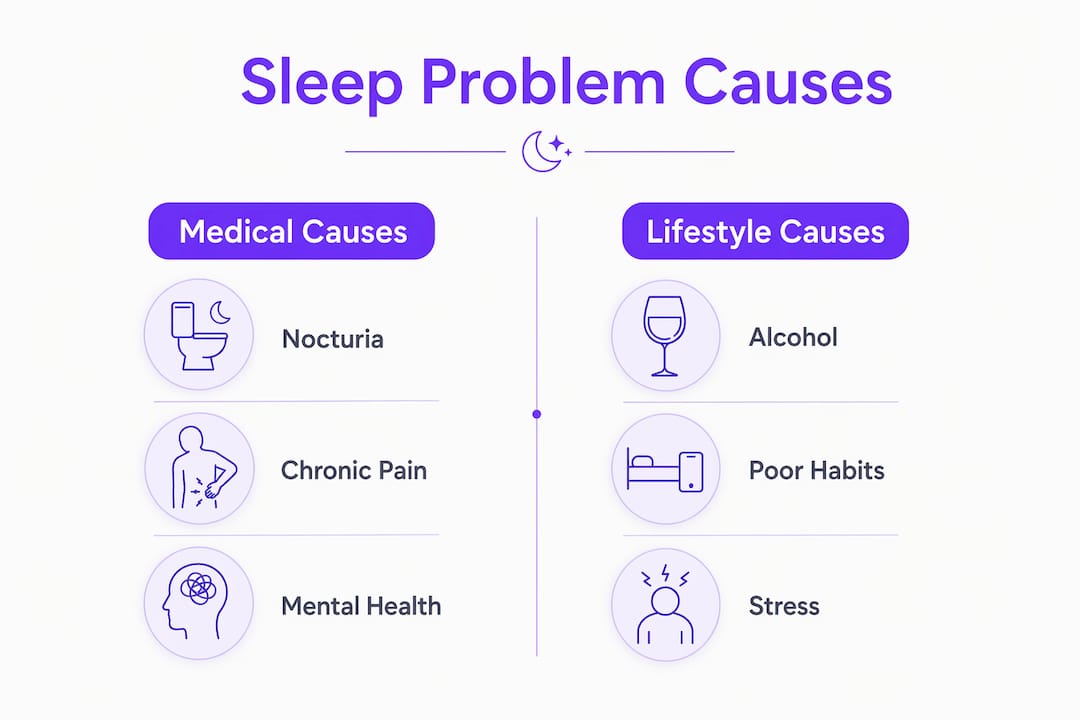
Sleep problems rarely have a single cause. They typically arise from a combination of medical conditions, lifestyle habits, and psychological factors that interact and reinforce each other over time.
Medical conditions are a major driver. Nocturia causes 2–6 night-time awakenings in older adults, making it one of the most disruptive physical causes of broken sleep. That level of fragmentation prevents the deep, restorative sleep stages the body needs. Arthritis pain, asthma, thyroid disorders, and acid reflux all interfere with sleep architecture in different ways. Each condition demands its own management strategy before sleep quality can meaningfully improve.

Lifestyle choices carry equal weight. Alcohol fragments REM sleep and causes awakenings in the latter half of the night, despite its initial sedative effect. Many people drink to wind down, not realising they are worsening the very problem they are trying to solve. Caffeine consumed after midday delays sleep onset by blocking adenosine receptors in the brain. Chronic stress and unresolved anxiety keep the nervous system in a state of alertness that is incompatible with sleep.
Mental health conditions sit at the centre of many cases. Anxiety and depression both disrupt sleep architecture directly, and poor sleep worsens both conditions in return. This bidirectional relationship creates a cycle that is difficult to break without addressing both sides simultaneously. Certain medications, including some antidepressants, beta-blockers, and corticosteroids, also interfere with sleep as a side effect.
The table below summarises the most common causes and how each typically disrupts sleep.
| Cause | Typical sleep disruption |
|---|---|
| Nocturia | Frequent awakenings, 2–6 times per night |
| Alcohol | Fragmented REM sleep, early morning waking |
| Anxiety and depression | Difficulty falling asleep, early waking, light sleep |
| Caffeine | Delayed sleep onset, reduced total sleep time |
| Chronic pain (arthritis, etc.) | Frequent awakenings, inability to return to sleep |
| Thyroid disorders | Hyperarousal or excessive fatigue disrupting rhythm |
| Medications | Variable: stimulation or excessive sedation |
What treatments actually work for insomnia and poor sleep?
CBT-I achieves a 70–80% improvement rate in sleep quality, making it the most effective treatment available for chronic insomnia. That figure outperforms sleeping tablets in both short-term and long-term outcomes. The therapy typically runs for 4–8 weekly sessions and targets the thoughts, habits, and associations that perpetuate poor sleep rather than just the symptoms.
CBT-I uses several specific techniques:
- Stimulus control: Reserving the bed only for sleep and sex, so the brain re-learns to associate the bedroom with rest rather than wakefulness or worry.
- Sleep restriction therapy: Temporarily limiting time in bed to match actual sleep time, building a stronger sleep drive that makes falling asleep easier and faster.
- Cognitive restructuring: Identifying and challenging unhelpful beliefs about sleep, such as “I must get eight hours or tomorrow will be ruined.”
- Relaxation techniques: Progressive muscle relaxation, controlled breathing, and mindfulness to reduce physiological arousal before bed.
The 20-minute rule is one of the most practical tools within CBT-I. If you cannot fall asleep within 20 minutes, get out of bed, go to a dimly lit room, and do something calm until you feel sleepy. Lying in bed awake trains the brain to associate the bed with frustration, which deepens insomnia over time.
Sleep hygiene forms the foundation beneath all other treatments. Avoiding caffeine after midday, limiting alcohol to at least 4 hours before bed, and keeping a consistent wake time each day strengthen the body’s natural sleep drive. These are not optional extras. They are prerequisites for any other treatment to work properly.
Medications provide short-term relief but lack long-term efficacy and can mask underlying conditions such as sleep apnoea. Behavioural treatments address root causes rather than symptoms, which is why sleep specialists consistently recommend CBT-I as the primary approach.
Pro Tip: Never try to force sleep. The harder you try, the more alert your brain becomes. Instead, focus on creating the right conditions and let sleep arrive naturally.
How do you manage insomnia, restless sleep, and night waking?
Insomnia, restless sleep, and frequent night waking are distinct problems, though they often overlap. Insomnia is defined by difficulty initiating or maintaining sleep with significant daytime consequences. Restless sleep refers to physically disturbed sleep, often linked to conditions such as Restless Legs Syndrome or periodic limb movement disorder. Frequent night waking can stem from medical causes, environmental factors, or conditioned arousal.
Chasing sleep by spending extra time in bed or napping during the day worsens insomnia by weakening the sleep drive and reinforcing the association between bed and wakefulness. The counterintuitive solution is to spend less time in bed initially, not more. Sleep restriction therapy works precisely because it builds the biological pressure to sleep that makes falling and staying asleep easier.
Your bedroom environment matters more than most people realise. A cool, dark, and quiet room signals to the brain that it is time to sleep. Blackout curtains, a room temperature around 18°C, and removing screens from the bedroom are all evidence-supported adjustments. Light exposure in the morning, particularly natural daylight within an hour of waking, anchors your circadian rhythm and makes it easier to feel sleepy at the right time each night.
The table below outlines common sleep disturbances and the most effective responses.
| Disturbance | Key symptom | Recommended response |
|---|---|---|
| Insomnia | Difficulty falling or staying asleep | CBT-I, stimulus control, consistent wake time |
| Restless sleep | Physical movement, discomfort during sleep | Medical review, sleep study if indicated |
| Frequent night waking | Waking 2+ times, difficulty returning to sleep | 20-minute rule, address medical causes |
| Early morning waking | Waking 2+ hours before intended time | Cognitive restructuring, light therapy |
| Nighttime anxiety | Racing thoughts, inability to switch off | Relaxation techniques, CBT-I cognitive component |
Pro Tip: Set a fixed wake time and keep it every day, including weekends. This single habit does more to stabilise sleep than almost any other change you can make.
When should you seek professional help for sleep issues?
Not every bad night requires a doctor’s appointment. Persistent problems do. Daytime cognitive impairment such as difficulty concentrating, irritability, and mood disturbances that extend beyond simply feeling tired are key indicators that a sleep disorder requires clinical assessment. These symptoms signal that the body is not recovering adequately, regardless of how many hours you spend in bed.
Seek professional assessment if you experience any of the following:
- Loud snoring, gasping, or witnessed pauses in breathing during sleep, which may indicate obstructive sleep apnoea.
- Persistent insomnia lasting more than three months despite consistent self-help efforts.
- Reliance on alcohol, over-the-counter sleep aids, or prescription medication to fall asleep regularly.
- Significant daytime impairment affecting work, relationships, or safety, such as drowsy driving.
- Unusual physical symptoms during sleep, including leg discomfort, limb movements, or sleepwalking.
A GP assessment typically begins with a sleep diary, which you complete over two weeks to track sleep patterns, habits, and daytime function. Questionnaires such as the Epworth Sleepiness Scale and the Insomnia Severity Index help clinicians quantify the problem. A referral to a sleep specialist or behavioural sleep medicine practitioner may follow, and in some cases a formal sleep study, called polysomnography, is arranged.
Over-the-counter sleep aids lack robust safety and efficacy data for long-term use. Self-medicating delays proper diagnosis and can compound the original problem. If you are caring for an ageing parent and losing sleep through caregiving stress, that context is clinically relevant and worth raising with your GP directly.
Key takeaways
Effective management of sleep problems requires identifying the underlying cause and applying evidence-based behavioural treatments, with CBT-I delivering the strongest and most durable results.
| Point | Details |
|---|---|
| CBT-I is the gold standard | CBT-I improves sleep quality in 70–80% of people and outperforms medication long-term. |
| Alcohol worsens sleep | Despite its sedative effect, alcohol fragments REM sleep and increases night waking. |
| Consistent wake time is critical | Keeping the same wake time daily stabilises the circadian rhythm faster than any other single habit. |
| Seek help for daytime impairment | Difficulty concentrating, irritability, and mood changes signal a clinically significant sleep disorder. |
| OTC aids are not a solution | Over-the-counter sleep products lack long-term evidence and can mask serious underlying conditions. |
What I have learned about sleep that most advice gets wrong
Working in wellness for many years, I have seen one pattern repeat itself constantly. People arrive having tried everything: herbal teas, white noise machines, melatonin supplements, and blackout blinds. None of it worked, and they cannot understand why. The answer is almost always the same. They are treating the symptoms without addressing the thought patterns and behaviours that are actively maintaining the problem.
The most counterintuitive truth about insomnia is that the effort to sleep is itself the problem. The moment you start monitoring how long it takes to fall asleep, calculating how many hours you have left, or catastrophising about tomorrow, you have activated the very arousal system that prevents sleep. CBT-I works because it dismantles that cycle directly, not by relaxing you into sleep, but by removing the mental obstacles that block it.
Quick fixes are seductive because they offer the illusion of control. A sleeping tablet feels like a solution because it produces sleep tonight. But it does nothing for the conditioned anxiety, the hyperarousal, or the dysfunctional beliefs that will still be there tomorrow night. The people I have seen make the most lasting progress are those who commit to the behavioural plan even when it feels worse before it feels better, because sleep restriction genuinely does feel harder in week one.
My honest advice is to treat sleep like a skill you are relearning, not a problem you are fighting. Patience and consistency with a structured approach will get you further than any supplement or gadget. And if the problem is persistent, please see a professional rather than spending another year experimenting alone.
— Mark
How Live5dhealth supports better sleep and wellbeing
If you are ready to support your sleep from a whole-body perspective, Live5dhealth offers a range of therapies and products designed to reduce stress, ease physical tension, and promote genuine relaxation.

The luxury spa at Live5dhealth in Boyle, County Roscommon, combines sauna, steam, and cold plunge therapies that support nervous system recovery and prepare the body for deeper rest. The online shop stocks a carefully selected range of natural supplements chosen to support relaxation and overall wellbeing. For those seeking a more immersive reset, the retreat programmes in the west of Ireland offer structured time away from the pressures that so often sit at the root of chronic sleep difficulties.
FAQ
What are the most common causes of sleep problems?
The most common causes include anxiety, depression, chronic pain, nocturia, alcohol use, and poor sleep habits such as irregular wake times and caffeine consumed late in the day. Medical conditions and certain medications also frequently disrupt sleep architecture.
Is CBT-I better than sleeping tablets for insomnia?
CBT-I produces durable improvements in 70–80% of people and addresses root causes rather than symptoms, making it more effective than medication over the long term. Sleeping tablets provide short-term relief but lack evidence for sustained efficacy and can mask conditions like sleep apnoea.
What is the 20-minute rule for sleep?
If you cannot fall asleep within 20 minutes, leave the bed and do something calm in dim light until you feel sleepy again. This prevents the brain from associating the bed with wakefulness and frustration.
When should I see a doctor about my sleep?
See a GP if you experience persistent insomnia lasting more than three months, significant daytime cognitive impairment, loud snoring with breathing pauses, or if you are regularly relying on alcohol or sleep aids to fall asleep.
Does alcohol help or hurt sleep?
Alcohol hurts sleep. Its sedative effect is deceptive: it fragments REM sleep and causes awakenings in the second half of the night, leaving you less rested than if you had not drunk at all.