
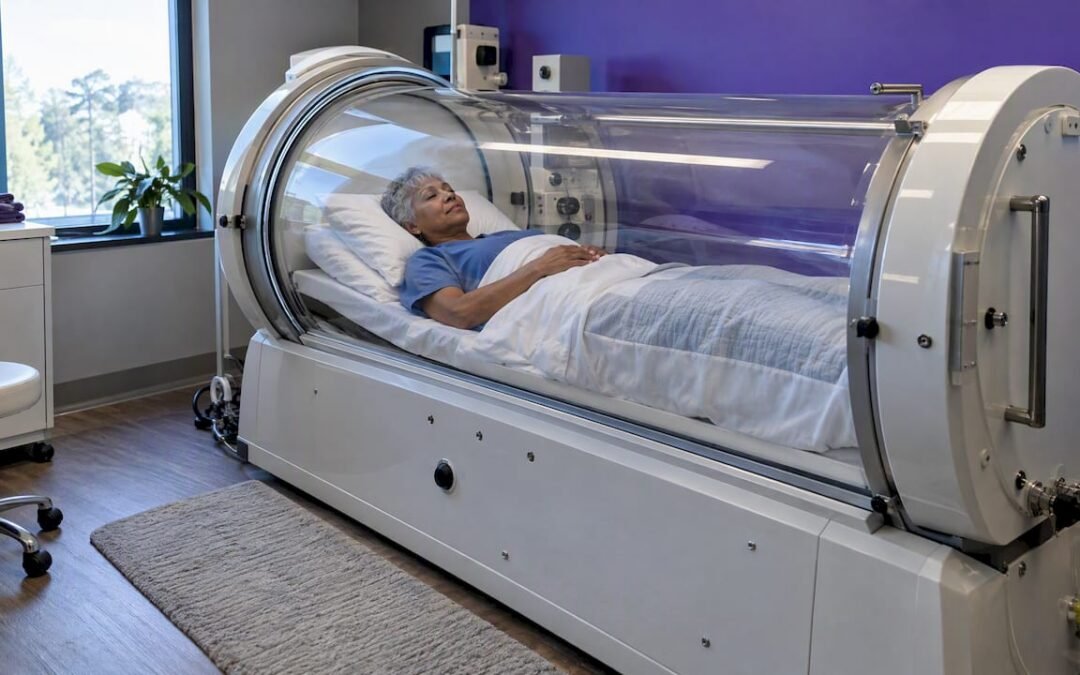
Hyperbaric oxygen therapy (HBOT) is being studied as an add-on for neuropathy, especially diabetic neuropathy, and a 2024 meta-analysis found encouraging results. It is not an established stand-alone treatment for every kind of nerve damage, and it works best as part of a plan agreed with your GP or specialist. This guide explains how HBOT is thought to work on nerves, what the research shows, who should be cautious, and what a session at our centre in Boyle, County Roscommon involves.
TL;DR
- HBOT means breathing 100% oxygen in a pressurised chamber. Researchers think it may help nerves by improving tissue oxygenation, reducing swelling and calming inflammation.
- A 2024 review found HBOT added to standard care improved nerve conduction and treatment effectiveness in diabetic peripheral neuropathy. Evidence for other causes, including chemotherapy-related neuropathy, is less clear.
- Safety comes first: a medical screen, a properly certified chamber and trained staff matter. Untreated pneumothorax is the one absolute contraindication named in the review we cite.
- Keep your GP or oncology team in the loop. HBOT sits alongside medication, foot care and exercise, not in place of them.
- Our HBOT sessions are priced at €80 to €120, and you can book from our hyperbaric oxygen therapy page.
Table of Contents
- What neuropathy feels like and when to see your GP
- How HBOT is thought to affect damaged nerves
- What the research shows
- Where HBOT fits alongside standard neuropathy care
- Is HBOT safe for you? Screening and side effects
- What a course of HBOT looks like
- Our perspective
- Making the most of HBOT alongside other supports
- Book HBOT at Live5DHealth
- FAQ
- Sources
What neuropathy feels like and when to see your GP
Peripheral neuropathy is damage to the nerves outside the brain and spinal cord. The most common type, polyneuropathy, affects the longest nerves first, so symptoms usually begin in the feet, according to the NHS.
Common signs in the feet include:
- pins and needles, tingling or prickling
- burning or sharp pain
- numbness, or being less able to feel pain or temperature changes
- loss of balance or co-ordination
- muscle weakness, cramps or foot drop, which makes you trip
These are the symptoms NHS Inform lists for sensory and motor neuropathy. The NHS advises seeing a GP early if you notice pain, tingling or loss of sensation in your feet, loss of balance or weakness, or a cut or ulcer on your foot that is not healing. Do not wait for HBOT to “test” whether it helps. A GP can look for the cause, such as diabetes, vitamin deficiency or a medicine side effect, and treating the cause matters most.
How HBOT is thought to affect damaged nerves
In HBOT you breathe 100% oxygen at two to three times normal atmospheric pressure. A review of the mechanisms and clinical evidence describes several proposed effects on neuropathy: increased tissue oxygenation, edema resolution and effects on pain signalling and inflammatory mediators.
In plain terms, nerves are fussy about their supply. When small blood vessels are damaged, nerves get less oxygen and heal poorly. Pressurised oxygen dissolves more deeply into your plasma, so it can reach tissue that circulation reaches poorly. If you would like the basics first, our guides on what hyperbaric oxygen therapy is and what pressurised oxygen does to your body walk through it step by step.
Some of the pain-related evidence comes from animal models. That review notes that HBOT may reduce neuropathic pain by regulating inflammatory and pain-signalling pathways, including TNF-α and nitric oxide production. Animal findings point to a promising direction, but they are not proof of the same result in people.
What the research shows
Diabetic peripheral neuropathy
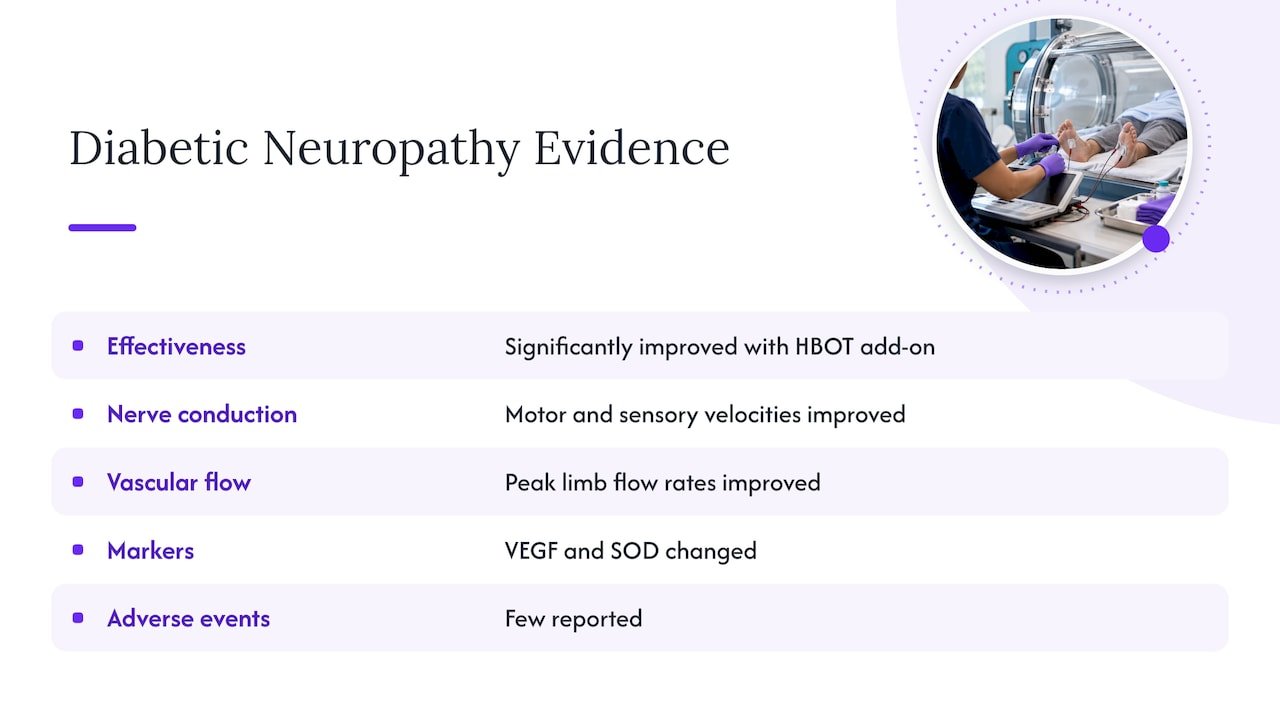
This is where the evidence is strongest. A 2024 systematic review and meta-analysis found that HBOT added to standard therapy significantly improved treatment effectiveness and motor and sensory nerve conduction velocities in diabetic peripheral neuropathy, with few adverse events reported.
A separate clinical study from a hospital in China found that people with diabetic neuropathy who received HBOT showed improvements in peak vascular flow rates in the affected limbs and changes in markers linked to vascular growth and oxidative stress, such as VEGF and SOD. Better blood flow to the legs and feet is exactly what a damaged nerve needs.
Note the phrase “added to standard therapy”. In these studies HBOT was an extra, alongside blood sugar control, medication and foot care.
Neuropathy after nerve injury or surgery
Several of the studies that appear in search results look at nerve repair after injury. They suggest oxygen may support regeneration, but they involve specific injuries and surgical settings, so they do not translate directly to long-standing neuropathy in the feet.
Chemotherapy-induced and other neuropathy
If you are living with cancer or recovering from treatment, you may be searching for options for chemotherapy-induced peripheral neuropathy (CIPN). Here the honest picture is that research is still developing. The review we cite notes that HBOT is used for indications such as radiation injury, while its role in chronic peripheral neuropathic pain remains unclear and needs systematic methodology to confirm safety and efficacy.
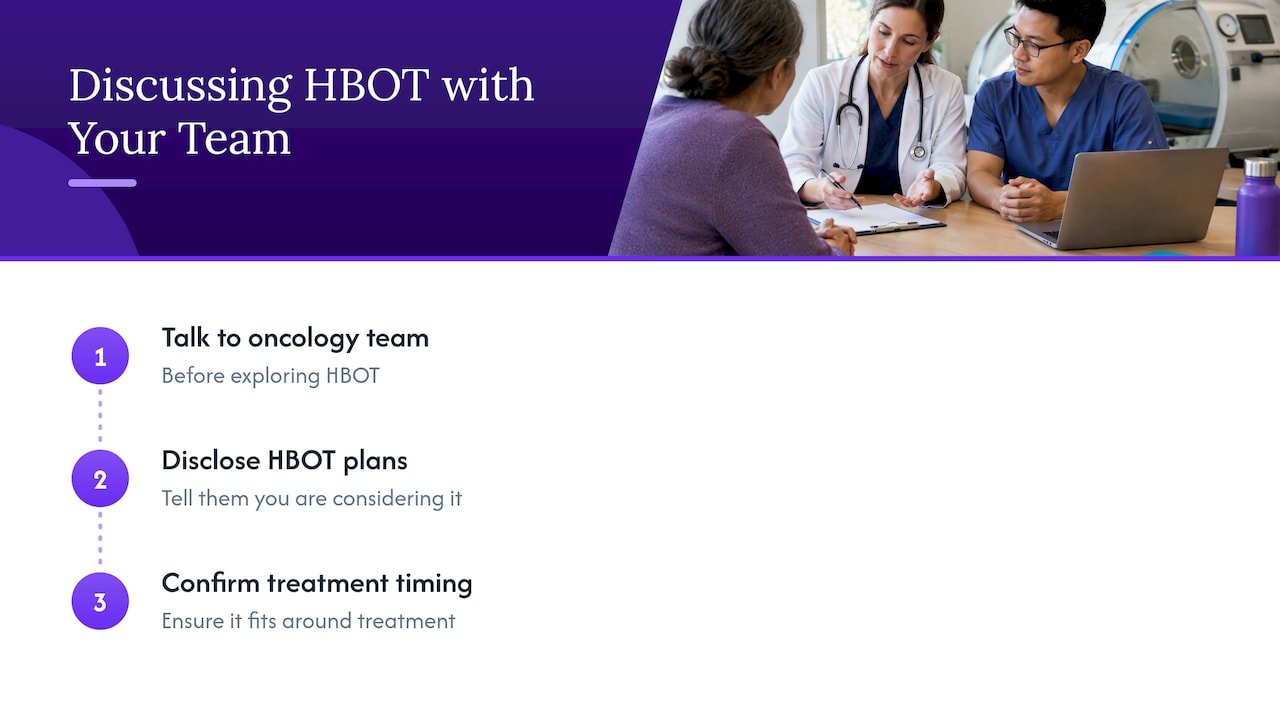
What that means for you: HBOT is an area of active interest, and many people explore it as a supportive therapy. Talk to your oncology team first, tell them you are considering it, and let them confirm the timing fits around your treatment. Our article on hyperbaric therapy for neurological conditions gives wider context on how nerves and oxygen interact.
Where HBOT fits alongside standard neuropathy care
Good neuropathy care is built in layers, and HBOT can be one of them.
- Treating the cause. For small fibre neuropathy with no clear cause, Irish clinicians note that evidence for specific pain medicines is very limited and that treatment is tailored to the underlying cause when possible. Doctors choose case by case, weighing safety, tolerability, interactions and other conditions.
- Medication. For CIPN, ASCO guidance as summarised by a UK cancer network gives duloxetine a moderate-strength recommendation, while recommendations for other agents are inconclusive. Only your prescriber can advise on this.
- Protection and movement. CIPN management includes protecting hands and feet from cold and burns, and exercise programmes to improve balance, strength and walking.
- Wound care. For diabetic foot wounds, HBOT is part of ulcer management and may be continued only when wound-care criteria are met, according to a US insurer’s clinical policy. If you have a foot ulcer, see your GP or diabetes team promptly.
The 2016 European consensus conference on hyperbaric medicine set out recommendations on accepted and non-accepted indications. It is a useful reminder that HBOT has a defined medical role, and that a good provider is open about which uses are well supported and which are still being explored.
Is HBOT safe for you? Screening and side effects
HBOT is generally well tolerated when delivered properly, but it is a pressure treatment and needs a proper check beforehand. The review we cite lists possible side effects: middle-ear barotrauma, sinus squeeze, claustrophobia, progressive myopia, pulmonary barotrauma and seizures. It identifies untreated pneumothorax (a collapsed lung) as the only absolute contraindication.
Some practical points:
- Ears and sinuses. If you have a cold, blocked sinuses or ear problems, tell the operator before the session. Learning to equalise pressure is part of every first visit.
- Eyesight. Tell the team if you notice changes in your vision during a course.
- Medical history. Mention any lung condition, epilepsy, ongoing cancer treatment, pregnancy or medication. Our contraindications guide and safety checklist cover these in detail.
- Equipment and staff. European medical bodies emphasise that chambers must meet specific European safety standards and staff should be trained to ECHM standards. They also say any HBOT use should follow an evidence-based indication, with monitoring for side effects and systematic evaluation of results. Ask any provider about this before you book.
What a course of HBOT looks like
There is no single schedule. The number and length of sessions vary by condition, severity and the procedures of individual hospitals and clinics. Anyone promising a fixed number of sessions for a guaranteed result is going beyond what the evidence supports.
At our centre a visit typically runs like this:
- Conversation and screening. You tell us about your symptoms, diagnosis, medication and any treatment you are having.
- Preparation. You change into suitable clothing and we explain how to equalise pressure in your ears.
- The session. You relax in the chamber while pressure rises gently, breathing oxygen in comfort.
- Afterwards. You return to normal activity. Many people simply feel calm, a little tired or pleasantly clear-headed.
It helps to keep a short diary: note your tingling, pain, sleep and balance before you start and weekly afterwards. It gives you and your doctor something concrete to review, rather than relying on memory. Our guide to what to expect from HBOT treatment has a fuller walkthrough.
Our perspective
We meet many women over 40 and many people living with or recovering from cancer who come to us because numb, burning or tingling feet have started to limit their lives. They are not looking for a miracle. They want to feel hopeful and to do something positive for their bodies.
Our view is that nerves heal best when the whole body is supported. Oxygen is one part of that. HBOT gives your tissues a richer oxygen supply, and the research on diabetic neuropathy shows why it deserves serious attention. We offer it in a calm, carefully supervised setting, with a proper screening conversation first.
What makes our centre different is that HBOT is one of the most advanced collections of healing technologies in Ireland. Many guests pair oxygen sessions with red light therapy, gentle movement, our sauna and steam room, and clean energised water throughout the facility. We never ask you to drop your medical care. We ask you to bring your doctor along on the journey, and to come with realistic hope.
Your best self awaits, and we would be glad to help you take the next step.
Mark
Making the most of HBOT alongside other supports
People often ask what else they can do. The answers below reflect general wellness approaches, not treatment claims. Check each with your doctor, especially during cancer treatment.
- Movement. Gentle strength and balance work helps, as exercise programmes are part of CIPN care. Our gym is available to members.
- Foot protection. Check your feet daily, wear well-fitting shoes and protect them from heat and cold. With reduced sensation it is easy to miss a burn or blister.
- Warmth and relaxation. Many people find the sauna and steam room soothing. If you have reduced sensation in your feet, take extra care with temperature, and ask us for guidance first.
- Combined sessions. Some guests combine therapies in one visit. Our article on combined wellness treatments with hyperbaric therapy explains how to sequence them sensibly.
- Time to recover. If you want a longer, more immersive reset, our 3, 5 and 10-day wellness retreats bring several therapies together under one roof.
Book HBOT at Live5DHealth
If you would like to try hyperbaric oxygen therapy as part of your own neuropathy plan, we are based in Boyle, County Roscommon. A session is priced at €80 to €120 on our hyperbaric oxygen therapy page, where you can also book. Bring a list of your medication and diagnoses, and tell us about any treatment you are currently having. We will take you through the screening together.

Coming with a friend or a small group? Our group booking option makes that simple. You can also browse our other therapies on the Live5DHealth homepage.
FAQ
Can hyperbaric oxygen cure neuropathy?
No therapy can promise a cure, and we would not claim one. Research on diabetic neuropathy shows HBOT added to standard care improved nerve conduction and treatment effectiveness, but results vary between people and causes. The best outcomes come from treating the underlying cause and using HBOT as a supportive step.
How many HBOT sessions are needed for neuropathy?
There is no fixed number. Session numbers and length vary with the condition, its severity and the provider’s protocols. We discuss a realistic plan with you after screening and suggest reviewing your symptoms diary with your doctor as you go.
Is HBOT safe if I have had chemotherapy?
Many people explore HBOT after or around cancer treatment, but the evidence for chemotherapy-related neuropathy is still developing. Speak to your oncology team before booking, so they can confirm the timing suits your treatment. We will also ask about your history during screening.
Who should not have HBOT?
The review we cite names untreated pneumothorax as the only absolute contraindication, and lists ear and sinus problems, claustrophobia and seizures among possible side effects. Tell us about any lung condition, epilepsy, pregnancy or recent illness. Our contraindications list gives more detail.
Sources
- NHS: Peripheral neuropathy
- NHS Inform: Peripheral neuropathy
- Mechanistic rationale and clinical efficacy of hyperbaric oxygen therapy in neuropathic pain
- Efficacy and safety of hyperbaric oxygen therapy for diabetic peripheral neuropathy (2024 meta-analysis)
- The efficacy of hyperbaric oxygen therapy in patients with diabetic peripheral neuropathy
- Tenth European Consensus Conference on Hyperbaric Medicine
- ECHM and EUBS position statement on mild hyperbaric therapies
- Hyperbaric Oxygen Therapy clinical policy (CG-MED-73)
- Diagnosing and managing painful small fibre neuropathy
- Chemotherapy-induced peripheral neuropathy treatment guidelines
- How to manage chemotherapy-induced peripheral neuropathy