

Wellness HBOT can be a reasonable complementary option for recovery and vitality after pelvic radiotherapy, but only once your oncologist or GP has cleared you. Trial evidence shows measurable, if modest, physiological gains from repeated sessions, while safety guidance flags real risks tied to past cancer treatment. Book a medical clearance conversation before you book a session.
TL;DR:
- A medical clearance from an oncologist or GP is essential before considering wellness HBOT after pelvic radiotherapy due to potential lung and treatment-related risks.
- Wellness HBOT is marketed for overall recovery and vitality, and is not intended to diagnose, treat, or cure radiation cystitis or other medical conditions.
- Evidence suggests modest physiological benefits, such as improved cardiovascular health and tissue repair mechanisms, but results vary widely among individuals.
- Safety standards differ across centres, and verifying proper certification, trained staff, and emergency protocols is crucial before booking a session.
- Typical wellness HBOT sessions are shorter and at lower pressure than clinical protocols, with common mild side effects including ear discomfort and temporary vision changes.
Table of Contents
- What “hbot for radiation cystitis” means at a wellness centre
- Safety checklist: getting medical clearance right
- What the evidence says about recovery benefits
- How to evaluate a wellness HBOT centre before booking
- What a typical wellness session involves
- Why Live5dhealth treats screening as the first therapy, not a formality
- Booking HBOT at Live5dhealth once you’re cleared
- Sources
- FAQ
What “hbot for radiation cystitis” means at a wellness centre
When you see the phrase “hbot for radiation cystitis” attached to a spa or wellness setting, it is not describing the hospital‑based hyperbaric protocols used to treat radiation‑induced bladder injury. That clinical pathway is delivered in medical facilities under a specialist’s prescription. Wellness hyperbaric oxygen therapy, the kind you’ll find at a health retreat or recovery centre, is a non‑prescription session aimed at general recovery, energy and vitality, not a treatment for bladder inflammation.
Marketing language sometimes blurs that line, so it helps to separate what wellness HBOT realistically offers from what it does not:
- Does offer: oxygen‑rich sessions marketed for recovery, fatigue support and general wellbeing alongside other therapies.
- Does not offer: a diagnosis, treatment, or cure for radiation‑induced bladder inflammation or any other medical condition.
- Does require: clearance from the clinician who managed your radiotherapy before you consider it.
Anyone still managing symptoms from pelvic radiotherapy should treat wellness sessions as a supplement to, never a substitute for, ongoing medical care.
Safety checklist: getting medical clearance right
The single most important step before booking a wellness HBOT session with a history of pelvic radiotherapy is a clinician conversation, not a chamber booking. StatPearls lists an untreated pneumothorax as the only absolute contraindication to hyperbaric oxygen, but the list of important relative contraindications is long, and several sit directly in the path of anyone who has had cancer treatment.
Flag these to your GP or oncologist before you go anywhere near a chamber:
- Previous bleomycin chemotherapy. Bleomycin exposure raises the risk of pulmonary complications with hyperbaric oxygen, sometimes years after treatment ends, which is why clinics often ask for explicit sign‑off even long after chemotherapy finished.
- Recent thoracic or eye surgery, particularly where intraocular gas was used.
- Active lung disease, including COPD, asthma flare‑ups or any history of collapsed lung.
- Seizure disorders or uncontrolled diabetes, both of which need individualised risk assessment.
- Any unresolved question about your radiotherapy field or dose, since your clinician is best placed to judge how it interacts with pressurised oxygen.
Bring your treatment summary, chemotherapy drug list and the dates of any thoracic or eye procedures to the appointment. Useful questions to ask your clinician include: “Is there anything in my treatment history that makes hyperbaric oxygen unsuitable?” and “Should I wait a set period after my last radiotherapy session?”
Pro Tip: Ask your oncology team to write their clearance in a short note you can hand to the wellness centre. It saves time at intake and gives staff something concrete to work from.
What the evidence says about recovery benefits
The strongest recent data point for general recovery comes from a 2024 randomised controlled trial in sedentary adults over 64, who completed A course of multiple sessions over several weeks at 2 ATA showed an average increase in VO2Max per kilogram and improved cardiac perfusion, with a notable effect on myocardial blood flow.
That is a meaningful signal for fitness and circulation in older adults, though the wide variation around the average (±3.29) shows results differed considerably from person to person.
A 2024 Frontiers review explains the plausible biology behind these effects: repeated pressurised oxygen exposure can stimulate angiogenesis, support collagen synthesis and trigger epigenetic changes linked to tissue repair. Separate cohort research on immune ageing found shifts in telomere length and senescence markers after 30 sessions, though the authors note responses varied by age, sex and BMI, and how long the changes last is still unclear.
Taken together, this points to:
- Genuine, trial‑backed physiological effects on fitness and circulation.
- A credible mechanistic story for tissue repair and recovery.
- Wide individual variation, meaning wellness users should expect modest, not guaranteed, benefits.
None of this evidence relates to treating bladder inflammation. It supports general recovery framing only.
How to evaluate a wellness HBOT centre before booking
Not every chamber marketed for wellness is run to the same standard. ECHM and EUBS have jointly warned that so‑called “mild” hyperbaric devices are still medical devices, typically Class IIT under the EU Medical Device Regulation, and marketing language does not remove the underlying medical risk.
Before you book, ask the centre directly:
- Whether the chamber is monoplace or multiplace, and what pressure range sessions run at.
- Whether the facility states compliance with MDR and recognised EN safety standards.
- What training staff hold, and whether someone is present and monitoring throughout every session.
- What the pre‑screening form covers, and whether staff coach you on ear equalisation before you start.
- What the emergency protocol looks like if something goes wrong mid‑session.
Watch for red flags too: vague answers about safety standards, no written pre‑screening form, no stated emergency procedure, or staff who wave you in without asking about your medical history. The FDA has previously warned about fire risk in oxygen‑rich chambers, so a centre that lets you bring phones, lighters or synthetic fabrics into the chamber is not following basic protocol.
Pro Tip: A well‑run centre will ask more questions than you do at intake. If they don’t ask about your medical history at all, that’s a bigger warning sign than any answer they could give you.
What a typical wellness session involves
A standard wellness session follows a fairly predictable sequence, and knowing it in advance takes most of the anxiety out of a first visit.
- Pre‑screening. Staff review your health questionnaire and any clearance note from your GP or oncologist.
- Compression. Pressure rises gradually over several minutes while you breathe normally and equalise your ears, similar to the sensation of descending in an aircraft.
- The session itself. Wellness sessions commonly run shorter and at lower pressure than the 90 minute, 2 ATA clinical protocols used in trials, though exact figures vary by centre.
- Decompression back to normal atmospheric pressure, again gradual.
Mayo Clinic lists ear or sinus discomfort and temporary vision changes as the most common mild side effects, alongside occasional claustrophobia. Slow swallowing or yawning usually clears ear pressure. Tell staff immediately if you feel sharp ear pain, chest tightness or unusual breathlessness. Any of those signs should stop the session, and a properly trained team will already have an escalation plan ready.
Why Live5dhealth treats screening as the first therapy, not a formality
Working alongside clients recovering from cancer treatment has shaped how Live5dhealth approaches hyperbaric oxygen therapy. Every enquiry starts with a conversation about medical history, not a booking form, because a chamber session is only as safe as the screening that precedes it.
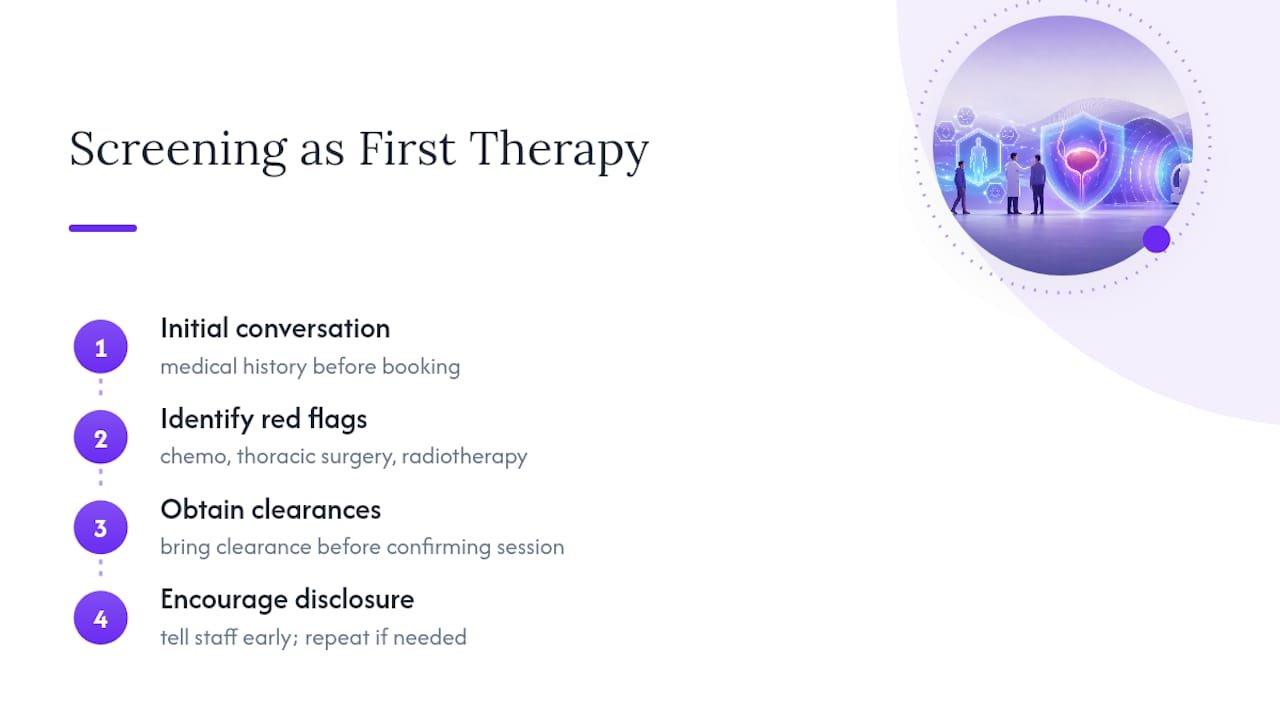
Clients with a history of chemotherapy, thoracic surgery or radiotherapy are asked to bring clearance details before a session is confirmed. That is not bureaucracy for its own sake. It reflects the same relative contraindications StatPearls sets out, applied by people who have sat across the table from clients navigating complex medical histories.
If your history is complicated, say so early. Staff would rather have that conversation twice than skip it once.
— Mark
Booking HBOT at Live5dhealth once you’re cleared
Once your oncologist or GP has given the go‑ahead, the next step is straightforward. Live5dhealth’s Hyperbaric Oxygen Therapy sessions run from €80 to €120 per visit, with pre‑screening built into every first booking so staff can talk through your history before you step into the chamber.
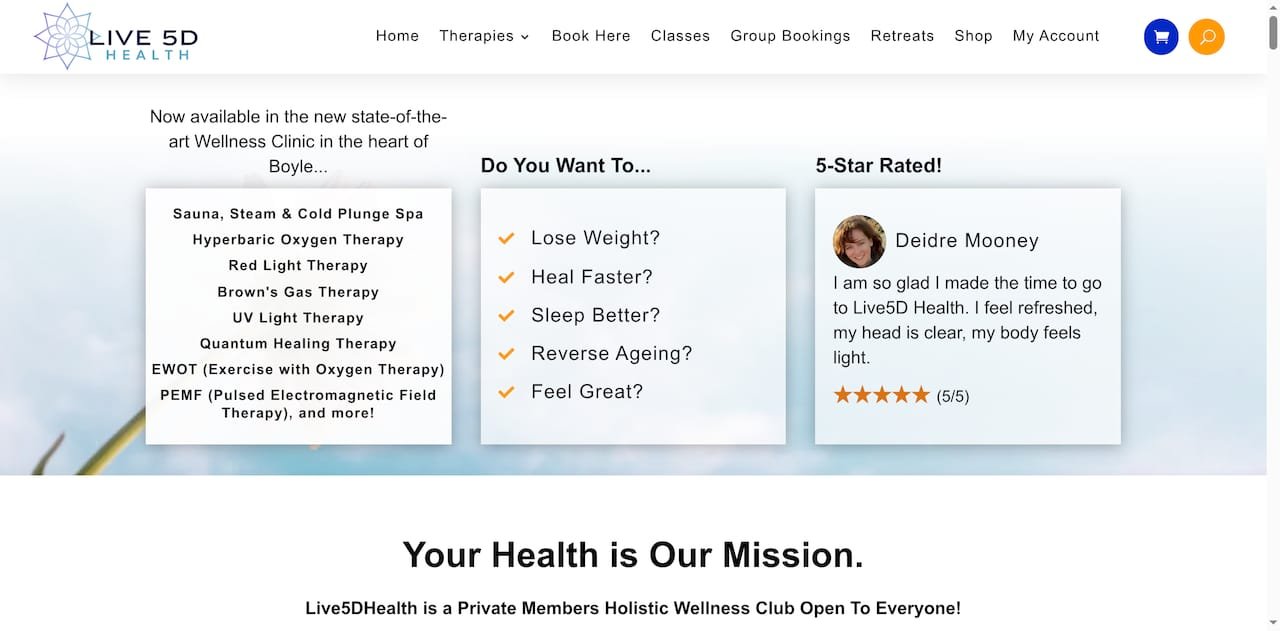
Unlike a standalone consumer chamber bought online with no oversight, a wellness centre gives you trained staff, a documented safety protocol, and someone monitoring the session in real time, which matters far more than the marketing copy on any device. Bring your clearance note, then head to the booking page to find a slot. Many clients pair a session with the Sauna, Steam & Cold Plunge Spa for a fuller recovery day. If you’re unsure where to start, call ahead and ask for the pre‑screening form before you commit to a date.
This article is general information, not a substitute for advice from a qualified doctor. Consult a qualified healthcare professional about your own circumstances before acting on anything here.
Sources
- Randomised trial — HBOT improves VO2Max and cardiac perfusion (2024)
- Hyperbaric oxygen therapy contraindications – StatPearls (NCBI Bookshelf)
- Mayo Clinic — about hyperbaric oxygen therapy
- Hyperbaric oxygen therapy: future prospects in regenerative therapy and anti‑aging (Frontiers, 2024)
FAQ
Do I need medical clearance before wellness HBOT after pelvic radiotherapy?
Yes. Speak to your oncologist or GP before booking, since factors like past bleomycin exposure or ongoing lung issues need clinician assessment first.
Can wellness HBOT treat radiation cystitis symptoms?
No. Wellness HBOT sessions are marketed for general recovery and vitality, not as a treatment for radiation‑induced bladder inflammation, which falls under specialist medical care.
What benefits can I realistically expect from wellness HBOT?
Trial data shows modest, variable gains in fitness measures like VO2Max and circulation after dozens of sessions, though individual results differ considerably.
How much does HBOT cost at Live5dhealth?
Sessions at Live5dhealth’s Hyperbaric Oxygen Therapy service cost between €80 and €120 per one‑off visit.
What are the warning signs to stop a session?
Sharp ear pain, chest tightness, unusual breathlessness or vision disturbance all mean the session should stop immediately and staff should be alerted.