
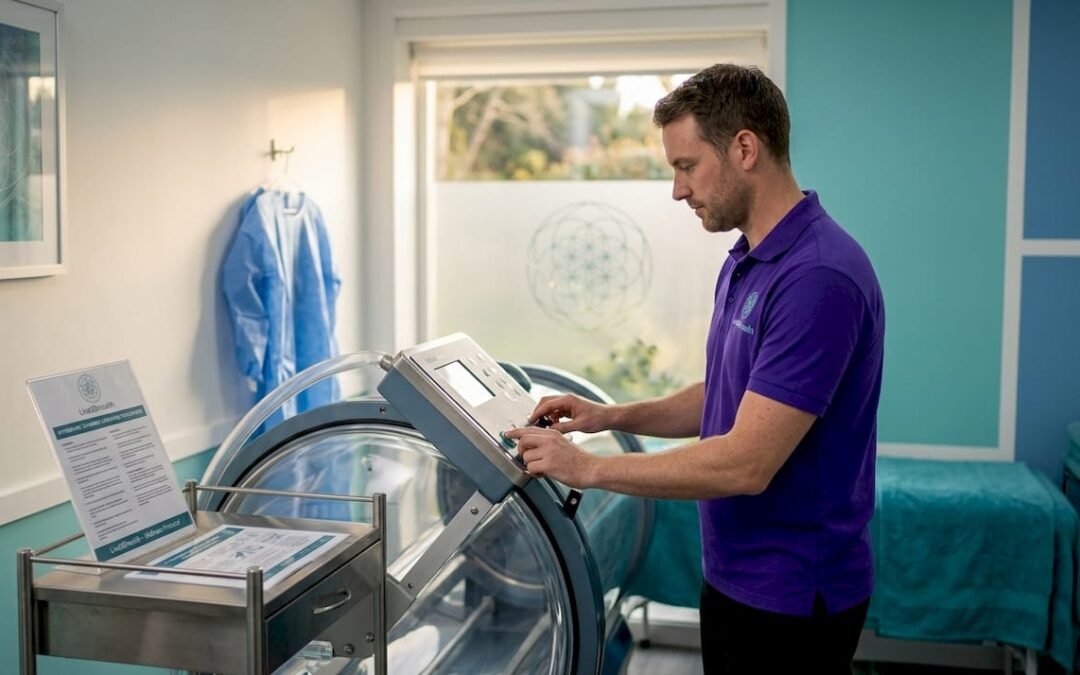
Hyperbaric oxygen therapy, or HBOT, is one of the most misunderstood treatments in modern wellness and medicine. Many people assume that simply breathing more oxygen is enough to produce therapeutic results. In reality, understanding how hyperbaric chambers work requires grasping a specific set of physical principles that make ordinary oxygen therapy look quite limited by comparison. This guide covers the science, the different chamber types, what a real session feels like, the safety picture, and the clinical conditions where HBOT genuinely delivers.
Table of Contents
- Key takeaways
- How hyperbaric chambers work: the physics behind it
- Types of hyperbaric chambers compared
- What to expect during a hyperbaric session
- Safety considerations in HBOT
- Clinical applications and hyperbaric chamber benefits
- My honest take on HBOT after years working with it
- Experience HBOT at Live5dhealth
- FAQ
Key takeaways
| Point | Details |
|---|---|
| Pressure drives oxygen delivery | Dissolved plasma oxygen rises dramatically under pressure, reaching tissues that haemoglobin-bound oxygen cannot. |
| Chamber type changes the dose | Medical chambers reach 2.0–3.0 ATA with 100% oxygen; mild chambers operate at 1.2–1.5 ATA with enriched air. |
| Sessions follow three phases | Pressurisation, treatment, and depressurisation each require specific patient awareness and technique. |
| Safety needs supervision | Trained oversight and air break protocols reduce oxygen toxicity and barotrauma risks significantly. |
| Frequency matters as much as pressure | Treatment courses vary widely by condition; individual sessions without a proper protocol produce limited benefit. |
How hyperbaric chambers work: the physics behind it
At sea level, your lungs breathe air containing roughly 21% oxygen. Most of that oxygen binds to haemoglobin in your red blood cells, which then carries it to tissues. Only a tiny fraction dissolves directly into your blood plasma. That dissolved fraction is where hyperbaric therapy makes its most powerful intervention.
Inside a hyperbaric chamber, air pressure is raised above normal atmospheric levels, measured in Atmospheres Absolute (ATA). This higher pressure forces far more oxygen to dissolve directly into the plasma, lymph, and cerebrospinal fluid, a process governed by Henry’s Law. Henry’s Law states that the amount of gas dissolved in a liquid is proportional to the partial pressure of that gas above the liquid. When you breathe pure oxygen at 3 ATA, alveolar oxygen pressure reaches approximately 2,280 mmHg, compared to just 100 mmHg at sea level. That is not a modest increase. It is a complete transformation in how much oxygen your body can absorb.
Why does this matter for healing? Consider a wound where blood flow is compromised. Haemoglobin-bound oxygen depends on functioning circulation to reach damaged tissue. Dissolved oxygen in plasma does not face the same restriction. It travels through plasma directly, reaching hypoxic cells through routes that red blood cells cannot access. During a session, dissolved plasma oxygen can exceed 20 times that of room air at normal pressure, creating a therapeutic environment where oxygen-starved tissue suddenly receives an abundant supply.
The key mechanisms that explain hyperbaric chamber benefits include:
- Increased dissolved oxygen: Oxygen saturates plasma, lymph, and cerebrospinal fluid, not just red blood cells.
- Angiogenesis stimulation: Repeated sessions stimulate the formation of new blood vessels in previously hypoxic tissue.
- Antimicrobial action: High tissue oxygen levels are toxic to many anaerobic bacteria, supporting infection control.
- Reduced oedema: Vasoconstriction from elevated oxygen can decrease swelling without compromising oxygen delivery.
- Collagen synthesis: Fibroblasts require oxygen to produce collagen, making HBOT a strong support for wound healing.
Pro Tip: Think of dissolved plasma oxygen as your body’s bypass route. When normal delivery roads (blood vessels) are blocked or damaged, dissolved oxygen travels through the plasma itself to reach cells that would otherwise starve.
Types of hyperbaric chambers compared
Not all chambers are created equal, and the differences go well beyond size. Understanding the distinctions between chamber types helps you set realistic expectations before you ever step inside one.
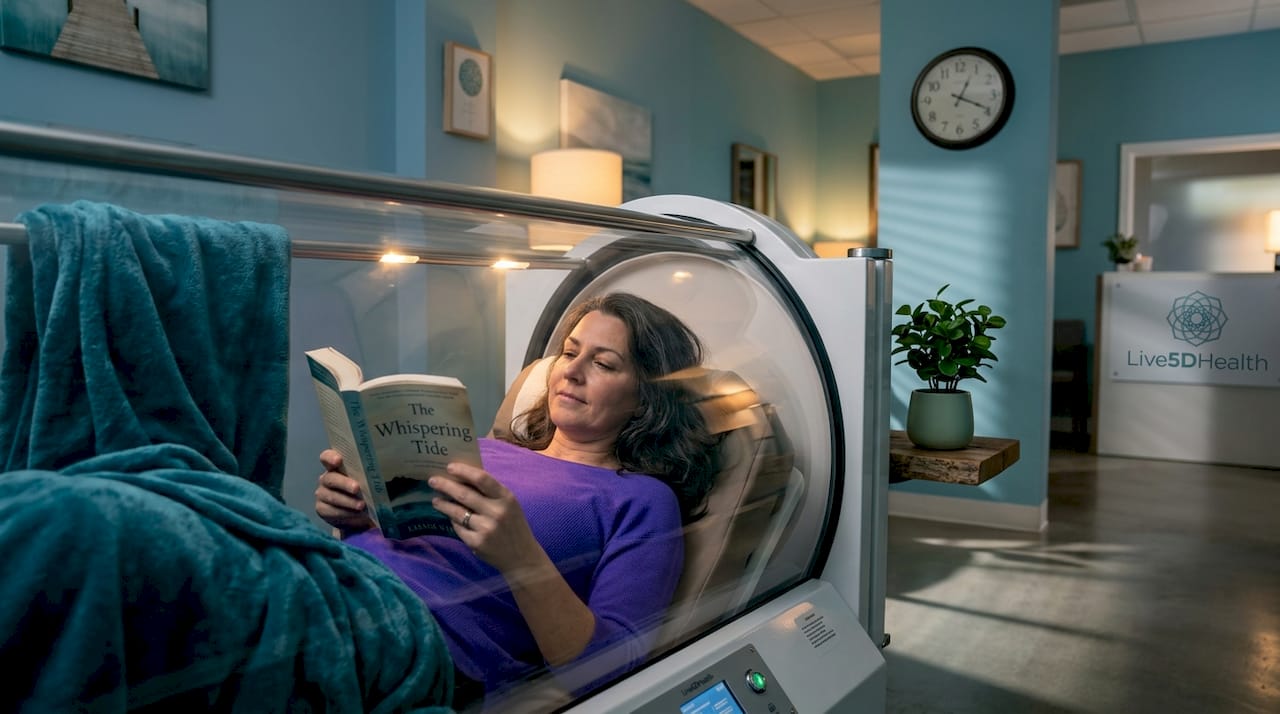
Monoplace chambers are transparent acrylic tubes designed for a single patient. You lie inside while the chamber pressurises with 100% oxygen. You breathe that oxygen directly from the chamber environment without needing a mask. This design gives clinicians a clear view of the patient at all times, which supports monitoring and builds confidence in anxious first-timers.
Multiplace chambers resemble a small room or submarine compartment, accommodating several patients and medical personnel simultaneously. The chamber itself is pressurised with air, and patients receive 100% oxygen via a close-fitting mask or hood. This allows a technician to be present inside the chamber, which is particularly valuable for critically ill patients who need direct observation during treatment.
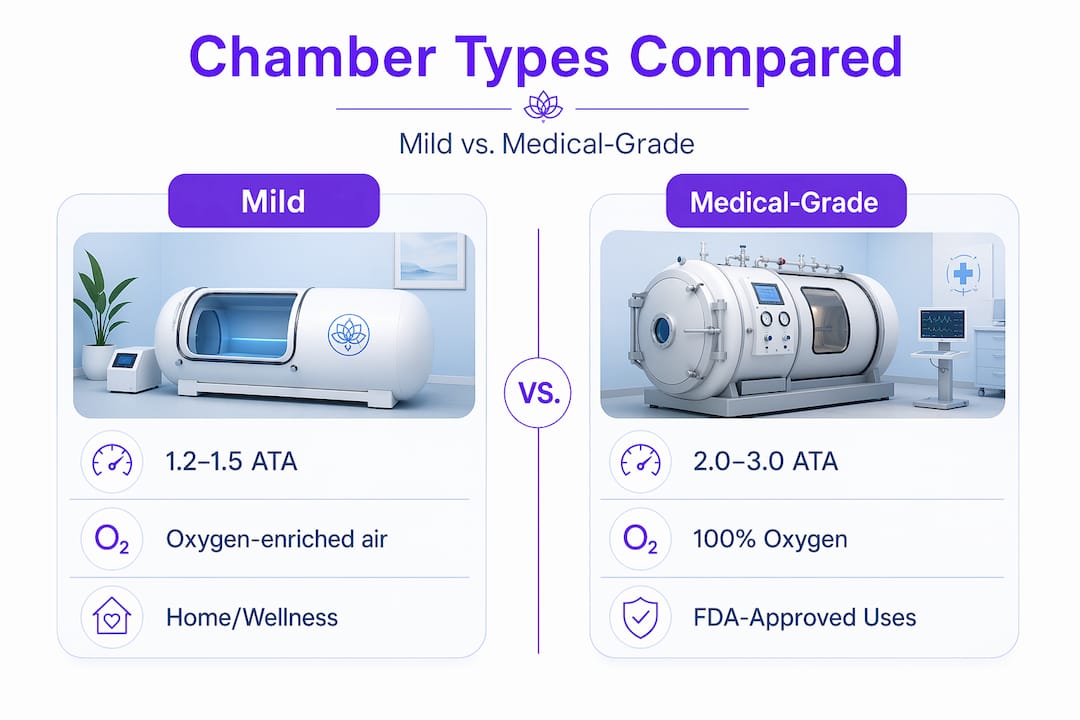
The distinction between mild and medical-grade chambers is where patient expectations most often go wrong.
| Feature | Mild hyperbaric chamber | Medical-grade HBOT |
|---|---|---|
| Pressure range | 1.2–1.5 ATA | 2.0–3.0 ATA |
| Oxygen concentration | Enriched air (~30–40%) | 100% medical oxygen |
| Setting | Wellness, home, clinic | Hospital, specialist clinic |
| Clinical evidence | Limited, emerging | FDA-approved for 14 conditions |
| Session cost | Generally lower | Generally higher |
Medical HBOT uses pressures of 2.0–3.0 ATA with 100% oxygen, while mild chambers operate at 1.2–1.5 ATA with oxygen-enriched air. That gap in pressure and oxygen concentration translates directly into a gap in dissolved oxygen delivery. Mild chambers offer a gentler experience and have a role in wellness settings, but they do not replicate the dissolved oxygen doses achieved in clinical trials that underpin FDA-approved indications. Knowing which type you are using is not a trivial detail. It shapes what you can reasonably expect from your sessions.
What to expect during a hyperbaric session
A typical HBOT session lasts around 90 minutes in total, broken into three distinct phases. Your first appointment will take longer because it includes a safety briefing and health screening, but subsequent sessions follow a predictable rhythm.
-
Pressurisation (10–15 minutes): The chamber pressure rises gradually to the prescribed treatment level. During this phase, you will feel fullness in your ears, very similar to the sensation during an aeroplane descent. Equalisation techniques such as swallowing, yawning, or the Valsalva manoeuvre (gently pinching your nose and blowing against closed nostrils) keep pressure balanced across the eardrum. This is the phase that new patients find most challenging, and it rewards preparation and patience.
-
Treatment phase (approximately 60 minutes): Once at treatment pressure, you breathe 100% oxygen for the prescribed duration. In a monoplace chamber you simply breathe normally. In a multiplace chamber, you keep your mask or hood in place. Many patients read, watch a film, or rest. The chamber remains at constant pressure, and the feeling quickly becomes ordinary.
-
Depressurisation (10–15 minutes): Pressure releases slowly back to normal. Your ears may pop again, and some patients notice a mild feeling of lightness. This phase requires the same calm approach as pressurisation. Moving too quickly through depressurisation is the primary cause of barotrauma.
A few practical notes on comfort. Monoplace acrylic chambers are enclosed but well-lit, and the transparent walls reduce feelings of confinement significantly. You can communicate with staff throughout the session via an intercom. If you experience anxiety about enclosed spaces, discuss this with your practitioner beforehand. Mild anti-anxiety support or simply talking through the process in advance resolves this concern for the vast majority of patients.
Pro Tip: Practise the Valsalva manoeuvre at home before your first session. Doing it smoothly under pressure is much easier when it is already a familiar movement, and it makes the entire pressurisation phase far more comfortable.
Safety considerations in HBOT
Hyperbaric oxygen therapy is a safe, well-regulated treatment when delivered by trained professionals. That said, treating oxygen as a drug rather than a harmless gas is exactly the right framework for understanding its risk profile.
The most common risks associated with HBOT include:
- Ear and sinus barotrauma: The most frequent complication, with an incidence of up to 2%. Proper equalisation technique and a gradual pressurisation rate reduce this substantially.
- Pulmonary barotrauma: Rare but possible if a patient holds their breath during depressurisation. Breathing naturally throughout the session eliminates most of this risk.
- Oxygen toxicity: At high pressures with prolonged exposure, oxygen can cause oxidative injury to the central nervous system or lungs. Air breaks scheduled during long sessions reduce seizure risk by a factor of 10, making this a manageable concern under proper protocols.
- Fire hazard in oxygen-rich environments: Medical chambers follow strict protocols regarding clothing, electronics, and materials. This risk is primarily relevant to poorly supervised home or wellness chamber use.
Hyperbaric oxygen therapy works best and most safely when treated as a precisely dosed medical therapy. The pressure, oxygen concentration, duration, and frequency of sessions are not arbitrary choices. They are the dose. A clinical setting with trained supervision is not a luxury; for medical indications, it is a prerequisite.
Wellness-grade chambers at lower pressures carry a reduced risk profile, partly because they operate at lower pressures and with less concentrated oxygen. However, untrained use of any pressurised oxygen environment still carries risks, including fire hazard and inadequate patient monitoring. Professional oversight matters regardless of the chamber type.
Clinical applications and hyperbaric chamber benefits
HBOT is FDA-approved for 14 conditions, including diabetic foot ulcers, carbon monoxide poisoning, decompression sickness, radiation-induced tissue injury, severe anaemia, and certain refractory infections. These are not marginal approvals. They reflect decades of controlled trials showing that flooding tissue with dissolved oxygen produces measurable, reproducible outcomes.
| Condition | Typical sessions | Evidence level |
|---|---|---|
| Diabetic foot ulcers | 30–40 sessions | FDA-approved |
| Decompression sickness | Variable, often acute | FDA-approved |
| Carbon monoxide poisoning | 3–5 sessions | FDA-approved |
| Radiation tissue injury | 20–40 sessions | FDA-approved |
| Long-COVID recovery | 40 sessions (emerging) | Growing clinical evidence |
| General wellness | Variable | Limited, condition-specific |
The frequency of hyperbaric sessions and the number of sessions per course depend entirely on the condition being treated. Diabetic foot ulcer protocols typically involve 30 to 40 sessions, five days a week. Decompression sickness may resolve in a single extended session. Exploring HBOT before surgery is an emerging application with promising early data on tissue resilience and recovery speed.
For wellness users, mild chambers offer genuine relaxation and may support recovery from exercise, fatigue, or minor inflammatory conditions. They are not the same as medical HBOT, but dismissing them entirely ignores the real, if more modest, benefits that increased ambient oxygen can offer at lower pressures.
My honest take on HBOT after years working with it
I have spoken with dozens of patients preparing for their first hyperbaric session, and the pattern is almost always the same. They are focused on what the oxygen will do. They barely think about the pressure transitions.
In my experience, the pressurisation phase is where therapy succeeds or fails for new patients. Not because it is dangerous, but because the ear fullness catches people off guard. They tense up, resist equalisation, and sometimes ask to stop the session before reaching treatment pressure. The solution is straightforward: practice the Valsalva manoeuvre, inform patients clearly in advance, and take the pressurisation phase slowly. Successful equalisation correlates directly with better treatment adherence, and adherence is what produces outcomes.
I have also seen patients disappointed after a course of mild wellness chamber sessions, having expected the same results as medical HBOT. The honest truth is that mild chambers are physiologically distinct and do not replicate the dissolved oxygen doses demonstrated in clinical trials. If you are treating a serious medical condition, a medical-grade chamber with proper supervision is not negotiable. For recovery support and wellness, a mild chamber has a genuine place in a broader health programme.
What I find most encouraging is how reliably patients respond when the protocol is right. The right pressure, the right oxygen concentration, the right number of sessions, and calm, trained support. That combination is where hyperbaric therapy truly delivers on its considerable promise.
— Mark
Experience HBOT at Live5dhealth
At Live5dhealth in Boyle, County Roscommon, we offer professionally supervised hyperbaric oxygen therapy sessions in a luxury wellness setting designed to make your experience both effective and genuinely comfortable. Our team guides you through every phase of treatment, from your initial health assessment to post-session recovery.

If you want to deepen the benefits further, explore our Vibro Plate and HBOT combination programme, which pairs hyperbaric sessions with whole-body vibration therapy for a more complete recovery and wellness outcome. For those ready to commit to a full restorative experience, our luxury healing retreats in the west of Ireland combine HBOT with spa therapies, nutrition, and guided wellness in one transformative setting. Get in touch with our team to discuss which programme fits your health goals.
FAQ
How does hyperbaric oxygen therapy work?
HBOT raises air pressure inside a sealed chamber, forcing oxygen to dissolve directly into blood plasma at levels up to 20 times greater than at normal atmospheric pressure. This delivers oxygen to tissues that haemoglobin-bound oxygen cannot reach, supporting healing and infection control.
What is the difference between mild and medical hyperbaric chambers?
Medical chambers operate at 2.0–3.0 ATA with 100% oxygen and carry FDA-approved indications. Mild chambers operate at 1.2–1.5 ATA with enriched air and do not produce the same dissolved oxygen levels shown in clinical trials.
How long does a hyperbaric session last?
A typical session lasts approximately 90 minutes, covering 10–15 minutes of pressurisation, around 60 minutes at treatment pressure, and 10–15 minutes of gradual depressurisation.
Is hyperbaric oxygen therapy safe?
Yes, when conducted by trained professionals following established protocols. The most common side effect is temporary ear discomfort during pressurisation. Oxygen toxicity risks are managed through air breaks and controlled pressure limits.
How many hyperbaric sessions do you need?
The number of sessions depends on your condition. Diabetic foot ulcers typically require 30–40 sessions, while carbon monoxide poisoning may need just 3–5. Wellness applications vary, and a practitioner assessment is the best starting point.
Recommended
- Hyperbaric Oxygen Therapy Ireland? Live5DHealth Boyle
- Exploring the Remarkable Benefits of Hyperbaric Oxygen Therapy (HBOT) for Multiple Sclerosis (MS) – Live 5D Health
- The Beneficial Effects of Hyperbaric Oxygen Therapy (HBOT) Prior to Surgery – Live 5D Health
- Is Hyperbaric Oxygen worth it? – Live 5D Health