
Arrive 15 to 30 minutes early, disclose your full health history on the intake form, silence your phone and let the therapist know how you’re feeling throughout the treatment. Skip alcohol beforehand, keep your voice down in shared spaces, and check the tipping and cancellation policy before you book. Follow those five habits and you’ll have done more to guarantee a genuinely restorative visit than most guests ever manage.
TL;DR:
- Arrive 15 to 30 minutes early to complete health forms, change, and unwind before your treatment starts, ensuring a smoother experience.
- Silence your phone completely and avoid taking photos or making calls in shared spaces to maintain privacy and a calming atmosphere.
- Disclose medications, allergies, and recent procedures honestly on your intake form, as some conditions or treatments can be unsafe if overlooked.
- Keep sessions within the recommended 10 to 20 minutes in thermal areas, and avoid alcohol or heavy exercise before and immediately after treatments.
- Confirm the spa’s cancellation, tipping, and parking policies beforehand to prevent misunderstandings and ensure proper gratuity.
Table of Contents
- Quick luxury spa etiquette checklist
- Before you go: booking, arrival and preparation
- What to wear and bring to a luxury spa
- Behaviour in communal areas: phones, noise and lockers
- During treatments: communication, modesty and aftercare
- Sauna, steam and pool etiquette and safety
- Tipping, cancellations and common house policies
- Privacy expectations and photography policies
- Spa etiquette for group visits or couples
- Appropriate behaviour in shared facilities
- How to handle unexpected issues or dissatisfaction
- Publisher perspective: how Live5dhealth approaches luxury spa etiquette
- Sources
- FAQ
Quick luxury spa etiquette checklist
Save this before your next visit. It covers the habits that separate a smooth, indulgent afternoon from an awkward one.
- Arrive 15 to 30 minutes before your appointment to check in and change.
- Switch your phone to silent, or better, leave it in your locker.
- Wear closed, easy-to-slip-off footwear rather than complicated laced shoes.
- Shower before entering any pool, sauna or steam room.
- Disclose medications, allergies, pregnancy and recent procedures on your intake form.
- Follow the draping and modesty instructions your therapist gives you.
- Avoid heavy perfume or aftershave, which lingers in shared thermal spaces.
- Confirm the tipping policy and cancellation window at the time of booking.
Print it, screenshot it, whatever works. The point is having it in your head before reception even says hello.
Before you go: booking, arrival and preparation
Good spa etiquette starts long before you walk through the door. A short phone call at booking stage saves you awkward surprises later.
- Ask about the details when you book. Confirm whether a service charge is already included, whether you can request a therapist of a particular gender, and what the cancellation policy actually says.
- Build in arrival time. Most luxury spas recommend arriving 15 to 30 minutes before your appointment to complete health forms, change and start winding down. Turn up late and many venues will simply shorten your treatment while charging the full price, because your therapist’s next guest still needs their allotted slot.
- Be honest on the intake form. List recent surgeries, current medications, pregnancy, implants, recent laser or peel treatments, and any allergies. Spas ask because certain conditions, including recent use of medications like Roaccutane or recent laser procedures, can make specific treatments unsafe.
- Mind what you do beforehand. Skip the heavy lunch, the glass of wine and the intense gym session in the hours before your appointment. Your body works better on a treatment table when it isn’t busy digesting or dehydrated.
That short buffer of unhurried time before treatment isn’t wasted, either. Spa directors and travel writers alike point to it as the transition that genuinely improves the experience, giving your nervous system a chance to downshift before anyone touches a muscle.
What to wear and bring to a luxury spa
Most high-end venues supply robes, slippers and towels, so you rarely need to bring your own loungewear. Swimwear matters most if you plan to use a pool, hot tub or mixed-sex sauna. For massages and body treatments, disposable undergarments are usually offered if you’d prefer not to go without.
- Wear loose, easy-to-remove layers rather than anything with buttons, zips or tight sleeves.
- Choose trousers you can roll up easily if you’re booked in for a pedicure.
- Leave fine jewellery and watches at home, or use the locker provided rather than carrying valuables around.
- Remove heavy make-up before a facial. Cleansing it off eats into treatment time and can affect how well products absorb.
- Pack a change of comfortable clothes for afterwards, since many people prefer to linger rather than rush back into work wear.
A wellness retreat packing list is worth reviewing if your visit is part of a longer stay rather than a single afternoon appointment.
Behaviour in communal areas: phones, noise and lockers
Shared spaces are where spa etiquette either holds together or quietly falls apart. A single ringing phone in a relaxation lounge does more damage to the atmosphere than almost anything else that can happen during a visit.
Keep your phone silenced or, ideally, stowed in your locker entirely. Filming or photographing other guests, even accidentally, is almost universally prohibited in changing rooms, pools and treatment corridors, and staff will ask you to stop if they spot it. Voices carry further than you expect in tiled, echoey wet areas, so save the catch-up conversation for the café rather than the steam room.
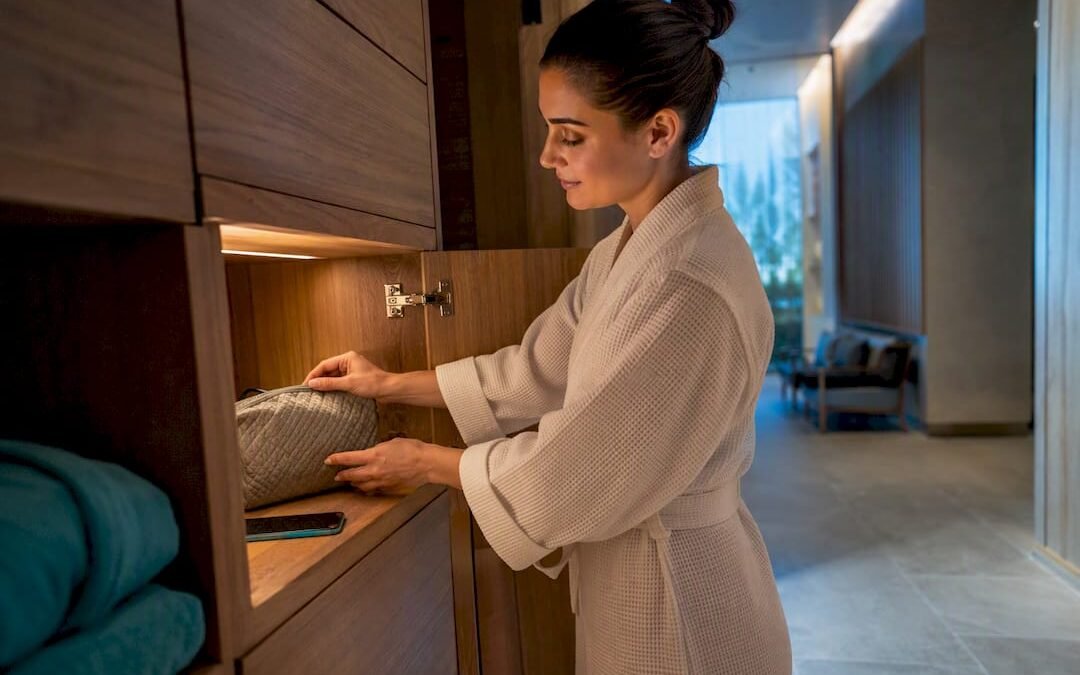
Lockers work on a simple principle: what you bring in, you’re responsible for. Most spas will state clearly that they aren’t liable for lost or damaged valuables left outside a locker, so use the one you’re given rather than leaving bags on benches. If you need help working the lock, ask reception before your treatment rather than fumbling with it afterwards while you’re trying to relax.
Privacy extends to how you move through the building, too. Follow the signage for single-sex versus mixed areas, knock before opening a treatment room door, and take your cue from staff if you’re unsure whether a space is currently in use.
During treatments: communication, modesty and aftercare
Draping is a professional skill, not an afterthought. Therapists are trained to keep everything covered except the area being worked on, and they’ll respect any modesty preference you state at intake, including a request for disposable undergarments.
Communication is where most guests underperform. Spa directors consistently name clear, proactive feedback about pressure, temperature and discomfort as the single biggest factor separating a good treatment from a forgettable one. If the pressure is too firm, say so in the first five minutes, not in the car park afterwards. Therapists genuinely prefer feedback mid-session; adjusting on the fly is part of the job, and silence is read as consent to continue exactly as you are.
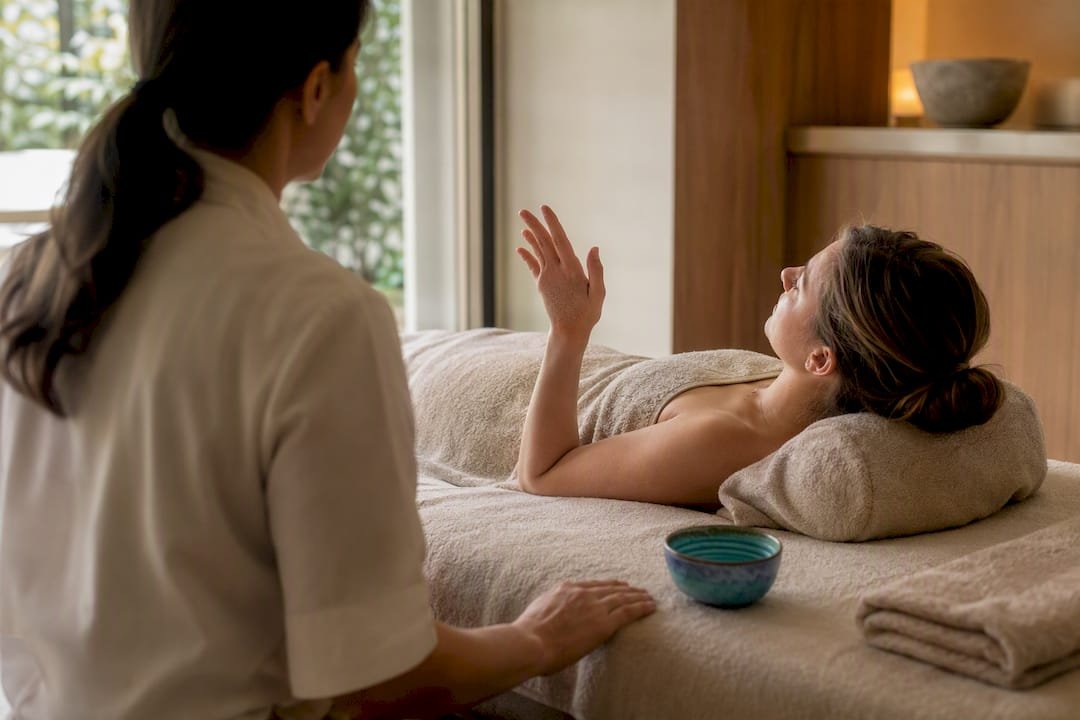
Pro Tip: Don’t wait until the massage feels painful to speak up. A quiet “a little lighter, please” at the start saves the whole session, whereas the same request at minute forty just means you’ve endured thirty-nine minutes you didn’t need to.
Aftercare deserves the same attention as the treatment itself. Some oils and body treatments continue working on your skin for hours after application, so rinsing straight off can undo part of what you paid for. If your therapist advises waiting three to four hours before showering, treat that instruction as seriously as the treatment itself, and avoid vigorous exercise or alcohol immediately afterwards.
Sauna, steam and pool etiquette and safety
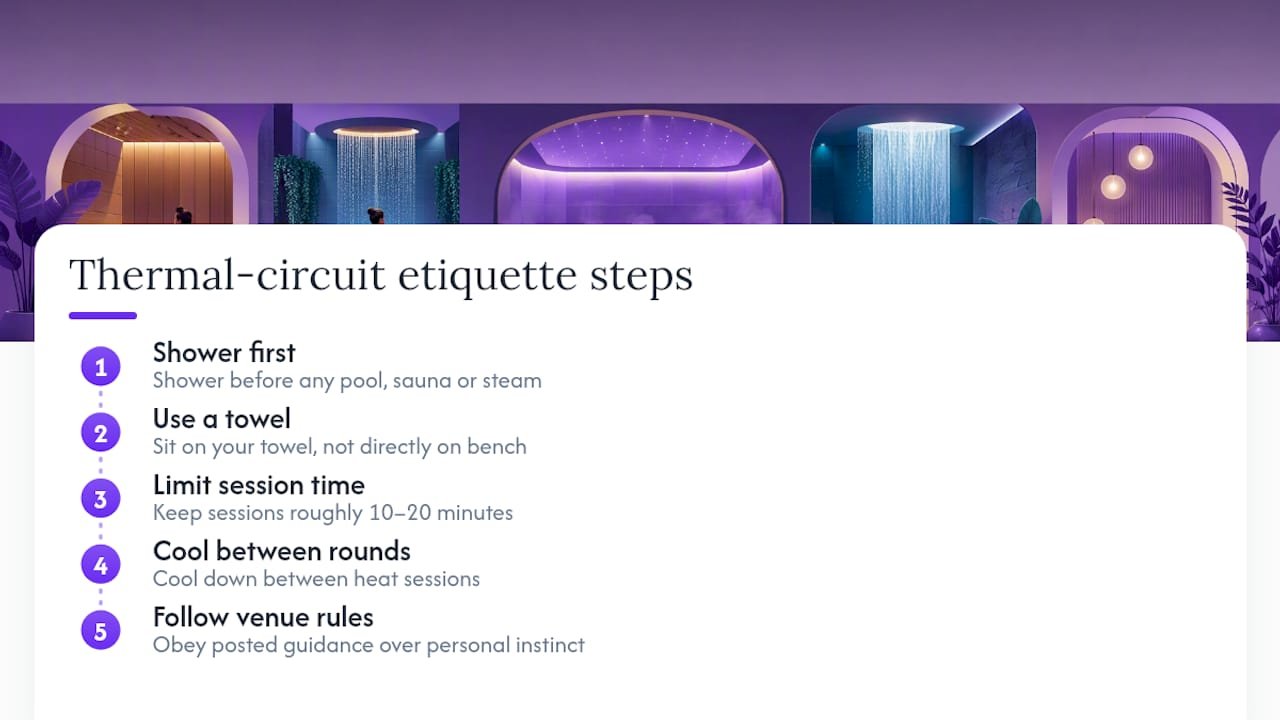
Thermal circuits run on hygiene rules that exist for everyone’s benefit, not just yours. Shower before entering any pool, sauna or steam room, full stop, no exceptions for “just a quick dip.” Chlorine and heat don’t neutralise body oils, lotions or sweat as fast as you’d think.
Bring or use the sauna towel provided, and sit on it rather than directly on the bench. It’s a hygiene habit, not a suggestion. Keep sessions to roughly 10 to 20 minutes, cooling down between rounds rather than pushing through discomfort, and always defer to the spa’s posted guidance over your own instinct.
Alcohol and heat exposure are a genuinely poor combination. Experts warn that drinking before or during heat exposure intensifies dehydration and dizziness, which is why most venues discourage it outright. Stick to water or an electrolyte drink instead, particularly if you’re moving between sauna, steam and cold plunge in the same session. Our own guidance on electrolyte replacement around sauna use covers roughly how much sodium to replace after a longer heat session.
Tipping, cancellations and common house policies
Gratuity customs differ sharply by market, so don’t assume the rules from your last holiday apply here.
- In Europe, tipping tends to run lighter than in the US. Rounding up the bill or leaving 5 to 10% for exceptional service is typical, and many luxury venues already build a service charge into the price.
- Cancellation windows commonly sit between 24 and 48 hours for day spas, though luxury resorts and retreat-style bookings sometimes ask for longer. Confirm this at booking, not on the day.
- Arrive late and most venues will shorten your treatment rather than delay the next guest, while still charging you in full.
- Keep some small cash on hand, or ask reception how gratuities are handled, so you’re not working it out awkwardly at checkout.
Privacy expectations and photography policies
Discretion is one of the defining features of a genuinely luxury spa, and it’s usually the one guests notice only when it’s missing. Most venues treat changing rooms, treatment rooms, pools and relaxation lounges as no-photography zones without exception, and staff are trained to intervene the moment a phone comes out in those areas.
The reasoning is straightforward. Other guests are in various states of undress, often mid-treatment, and many book a spa visit specifically because it feels private and low-pressure, sometimes during a difficult period in their health or life. A single unwanted photo can undo that entirely, which is why most contracts and house rules ban filming outright rather than leaving it to individual judgement.
If you want to document your visit for personal or professional reasons, ask reception first. Many spas will happily arrange a quick photo in a public lobby or garden area, or offer a designated time before opening when a space is empty of other guests. What you should never do is assume implied permission just because nobody has said anything yet; staff often wait to see whether a phone stays in a pocket before intervening.
The same logic applies to voice notes and video calls. Stepping into a corridor to answer a call is fine. Taking that call inside the relaxation lounge, within earshot of six other people trying to switch off, isn’t. Treat the whole building as if everyone in it values their privacy exactly as much as you value yours, because they almost certainly do.
Spa etiquette for group visits or couples
Group bookings and couples’ treatments come with their own quiet rules, and they’re easy to get wrong without realising.
Keep the volume down even when you’re excited. A group of friends catching up loudly in a shared relaxation lounge disrupts the experience for every other guest in the room, not just the ones nearby. Save the animated conversation for a private lounge area if the spa offers one, or take it outside.
Couples’ treatments raise a specific modesty question: many guests assume shared treatment rooms mean shared conversation throughout, but plenty of couples prefer near silence once the massage begins. Agree on that beforehand rather than guessing mid-session, and let your therapist know if you’d rather not chat once things get underway.
For larger groups booking multiple treatments back to back, be realistic about timing. If six people are booked across staggered slots, arriving together but expecting to be treated simultaneously often isn’t possible, and pushing the point puts pressure on staff and other guests waiting their turn. Confirm the logistics at booking rather than assuming the venue will accommodate a last-minute request to sync everyone’s appointments.
Gift vouchers and hen or birthday parties are common triggers for etiquette slips, usually from excitement rather than rudeness. The fix is simple: treat a group spa day with the same quiet respect you’d bring solo, just distributed across more people.
Appropriate behaviour in shared facilities
Pools, jacuzzis, steam rooms and lounges are where spa etiquette is tested constantly, because they’re the spaces you can’t book privately.
Wait your turn rather than crowding a jacuzzi or steam room that already feels full; most thermal spaces have a sensible capacity, and squeezing in past it makes the experience worse for everyone inside. If a lounger is clearly in use, even if the guest has stepped away briefly, assume it’s taken rather than claiming it. Robes left over a chair usually signal exactly that.
Splashing, loud laughing and horseplay in pools belong at a hotel resort, not a wellness-focused spa. The entire point of these shared spaces is a shared sense of calm, and one boisterous group can undo it for a room full of people who came specifically to switch off.
Respect single-sex areas where they exist, and don’t assume a mixed-use policy just because nobody’s stopped you yet; check signage or ask staff if you’re unsure. If you’re bringing a book, a magazine or headphones into a lounge area, keep the volume low enough that it’s inaudible to the person next to you. It sounds like a small thing. In a quiet relaxation room, it’s the difference between a peaceful afternoon and a mildly irritating one.
How to handle unexpected issues or dissatisfaction
Something occasionally goes wrong, even at the best-run spas, and how you handle it matters as much as how the spa responds.
Raise the issue in the moment wherever possible. If a treatment isn’t matching what you expected, whether the pressure’s wrong, the room’s too cold, or you’ve been left waiting past your slot, say so to the therapist directly rather than stewing through it and complaining afterwards. Most issues are genuinely fixable mid-session; almost none are fixable retroactively once you’ve left the building.
If the problem is bigger than the therapist can resolve on the spot, ask to speak to a manager or the spa director calmly and privately, ideally away from other guests in the lounge. Reputable venues take this seriously and will usually offer a resolution, whether that’s a partial refund, a complimentary add-on or a rebooking on better terms.
Keep your tone measured even when you’re frustrated. Staff genuinely want the visit to go well, both for your experience and for their own reputation, and a calm, specific complaint gets resolved faster than a vague or heated one. If you’ve booked through a package or retreat provider, it’s worth checking the terms of use or booking confirmation beforehand, so you know exactly what recourse is available if something does go wrong.
Publisher perspective: how Live5dhealth approaches luxury spa etiquette
Arrival flow is treated as part of the treatment, not a formality before it, and professional spa SEO services help spas optimize guest communications and booking processes for a seamless experience. Guests are guided through intake and consent before they change, so questions about medications, recent procedures or specific sensitivities are answered calmly rather than rushed through at the last minute. Robes and lockers are explained clearly on arrival, because confusion over where your things go is a needless source of stress before a massage even begins.
Therapists are trained to check in on comfort throughout a session rather than waiting for feedback that may never come, and thermal sequencing between sauna, steam room and cold plunge follows the same hydration and timing logic covered above. Aftercare signage in sauna areas reflects the same principle: heat exposure rewards patience, not endurance.
If you’re planning a visit and want specific guidance on our own luxury spa, sauna, steam and cold plunge facilities, our team can talk you through house policies before you book.
— Mark
Sources
- Spa etiquette guide
- Tip calculator / tipping guide
- Etiquette for the spa
- Spa etiquette rules
- How to have the best spa experience
FAQ
What are common spa etiquette rules?
Arrive 15 to 30 minutes early, silence your phone, shower before pools or saunas, disclose health details honestly, and keep your voice low in shared spaces.
What should you wear to a luxury spa?
Most spas provide robes, slippers and towels; wear swimwear if you plan to use pools or mixed saunas, and choose loose, easy-to-remove clothing for treatments.
What are red flags to watch for at a spa?
Be cautious of venues that skip intake forms entirely, rush your arrival without explaining policies, or dismiss questions about allergies, medications or contraindications.
What happens during a typical luxury spa visit?
You’ll usually check in, complete a health form, change into a robe, have time to relax before your treatment, then follow aftercare guidance such as delaying a shower.
Do you need to tip at a luxury spa?
It depends on the venue and country. In Europe, 5 to 10% for exceptional service is common. Many luxury spas already include a service charge, so always check first.