
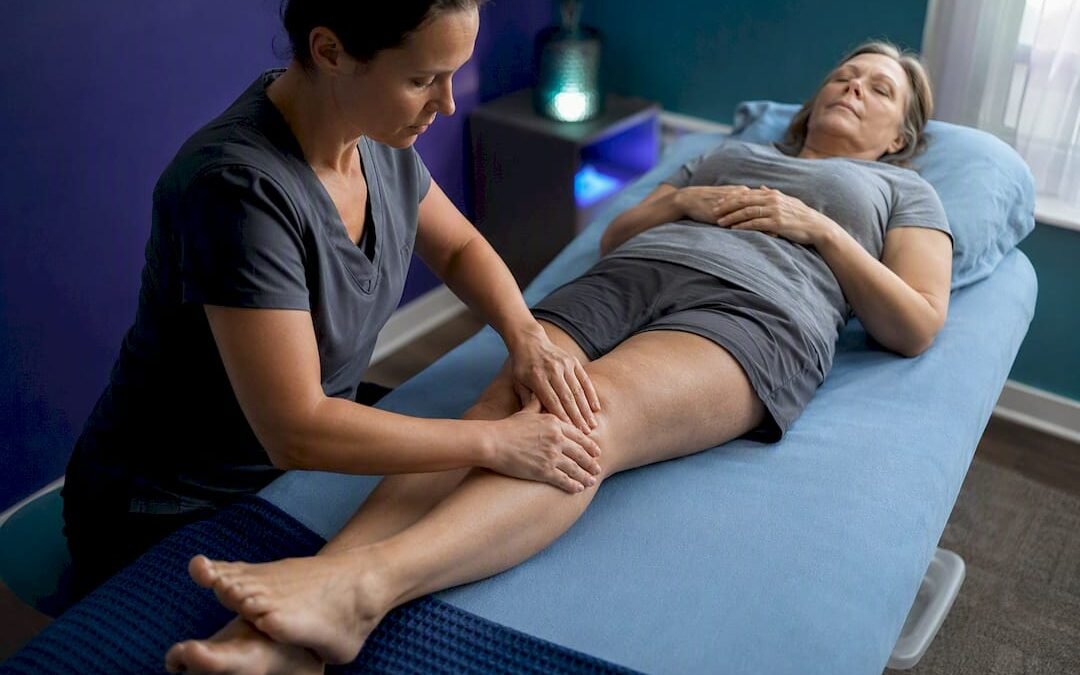
Manual lymphatic drainage (MLD) is an evidence-supported treatment for lymphedema and postoperative swelling, with clinical benefit strongest when it’s part of a wider therapy plan. Healthy people can expect real but temporary effects: reduced puffiness and a genuine sense of relaxation, not detoxification or weight loss. If you notice new or one-sided swelling, get it checked by a doctor before booking any massage.
TL;DR:
- Manual lymphatic drainage is most effective as part of a comprehensive treatment plan like Complete Decongestive Therapy for lymphedema and postoperative swelling.
- The technique uses gentle, directional strokes that follow specific sequences to guide fluid towards lymph nodes, not for muscle work or detoxification.
- It can temporarily reduce puffiness and promote relaxation in healthy individuals but does not facilitate significant weight loss or toxin removal.
- Contraindications include active infections, untreated deep vein thrombosis, uncontrolled heart failure, or recent surgery without medical clearance.
- Frequency of sessions varies from every few weeks for wellness purposes to more intensive schedules for medical conditions, with immediate relief often being temporary.
Table of Contents
- What is manual lymphatic drainage and how does it work?
- Who benefits most from lymphatic drainage massage, according to clinical evidence?
- Does lymphatic drainage massage actually detox the body?
- What happens during a lymphatic drainage massage session?
- When is lymphatic massage risky or not recommended?
- How often should you get lymphatic drainage massage?
- How Live5dhealth approaches lymphatic care in practice
- Is lymphatic drainage massage worth it? An honest take
- Book evidence-informed lymphatic massage at Live5dhealth
- Sources
What is manual lymphatic drainage and how does it work?
Your lymphatic system runs a quiet, parallel circulation alongside your blood vessels, carrying fluid, proteins and immune cells through a network of thin-walled lymphatic vessels back towards the bloodstream. These vessels contract in rhythmic waves, a process called lymphangiomotoricity, which is what actually moves lymph along, not gravity or muscle pumping alone.
MLD works with that rhythm rather than against it. Where a Swedish massage or deep-tissue session uses firm, varied pressure to work muscle tissue, MLD uses light, repetitive, directional strokes designed to encourage fluid movement through the superficial lymphatic pathways just under the skin.
- Pressure stays gentle because lymphatic vessels sit close to the surface and collapse under heavy pressure.
- Strokes follow specific directional sequences, guiding fluid towards functioning lymph nodes rather than working a muscle group.
- The Vodder method, developed in the 1930s, remains the most widely taught and clinically referenced MLD technique.
The Cleveland Clinic describes MLD as distinct from typical massage precisely because of this gentleness and directionality, and warns that not every case of swelling is lymphatic in origin.
Who benefits most from lymphatic drainage massage, according to clinical evidence?
The strongest evidence for MLD sits with lymphedema and certain postoperative or post-traumatic swelling, particularly following cancer surgery. A systematic review on PubMed identifies MLD as a recognised supportive therapy for lymphatic blockage and postoperative recovery, though it functions best as one piece of a larger treatment plan rather than a standalone fix.
That larger plan usually has a name: Complete Decongestive Therapy (CDT). It combines four elements that work together rather than in isolation:
- Manual lymphatic drainage to encourage fluid movement.
- Compression bandaging or garments to prevent fluid returning.
- Targeted exercise to activate the muscle pump that supports lymph flow.
- Skin care to reduce infection risk in tissue already under strain.
Evidence snapshot: Trials summarised in a PMC review of MLD studies found reduced oedema and pain in some orthopaedic injuries when MLD was used within multimodal care, alongside faster drops in post-exercise muscle-damage markers in sports recovery settings. The same review is careful to frame these as adjunctive findings, not proof that MLD works alone.
That caveat matters. Rehabilitation research generally treats MLD as a supplement to compression and exercise, not a substitute for either, and calls for larger trials before the evidence can be considered conclusive across settings. Where lymphedema is genuinely present, though, the clinical consensus is settled enough to make MLD a standard recommendation.
Does lymphatic drainage massage actually detox the body?
No. The claim that MLD flushes toxins or drives meaningful weight loss doesn’t hold up against basic physiology. Your liver and kidneys perform the body’s real detoxification work, continuously, regardless of what happens on a massage table, and UCLA Health is blunt about this gap between marketing and mechanism.
What MLD can do for a healthy person is more modest, and still worth having:
- Temporary reduction in puffiness or fluid retention, often visible within hours.
- A short-term slimmer appearance that reflects fluid shift, not fat loss.
- Measurable relaxation, including a calming effect on heart rate and blood pressure when strokes are applied to the neck.
That relaxation response isn’t imagination. Small studies referenced by the Cleveland Clinic’s integrative wellness programme show parasympathetic activation, the “rest and digest” nervous system state, after neck-focused MLD in healthy volunteers. If you’re considering MLD for cosmetic postoperative recovery rather than general relaxation, get clinician sign-off first. Swelling after surgery can have causes that need medical attention, not just massage.
What happens during a lymphatic drainage massage session?
A properly run MLD session follows a fairly consistent structure, whether you’re booking it for relaxation or as part of a lymphedema programme.
- Assessment and consent. The therapist reviews your medical history, checks for contraindications, and explains what the session will and won’t do.
- Positioning and breathing guidance. You’re settled comfortably, often with breathing cues, since deep breathing supports lymph flow through the chest’s major lymphatic ducts.
- Directional strokes. Light, rhythmic movements begin near the torso or a cluster of functioning lymph nodes, then extend outward, following the Vodder method’s specific sequencing for limbs, face or trunk.
- Session close and aftercare guidance. Most sessions run for a typical duration, ending with practical advice on movement, hydration and compression if relevant.
Facial MLD uses lighter pressure and shorter strokes than limb work, reflecting the finer lymphatic network around the face and neck. Where swelling is more significant, such as post-surgical or lymphedema cases, therapists often combine MLD with compression garments or refer clients to a lymphedema specialist for ongoing CDT.
When is lymphatic massage risky or not recommended?
MLD is gentle, but gentle doesn’t mean risk-free. Certain conditions make massage inappropriate until a doctor has cleared it, because pushing fluid through a compromised system can worsen the underlying problem.
- Acute infection or cellulitis in the area to be treated.
- Untreated deep vein thrombosis (DVT), since manual pressure could dislodge a clot.
- Uncontrolled congestive heart failure, where the heart can’t manage increased fluid return.
- Active bleeding or very recent surgery without explicit clinical sign-off.
A PMC review of lymphatic therapy guidelines lists these as consistent, recurring contraindications across clinical sources. The risk from inappropriate treatment isn’t dramatic in most cases, but it can mean pushing fluid into tissue that’s already struggling to manage it.
Pro Tip: Before booking, ask your therapist three things: where they trained in MLD, whether they have specific experience with lymphedema clients, and whether they liaise with physiotherapists or doctors when a client’s swelling looks clinical rather than cosmetic. A confident, specific answer to all three is a good sign.
How often should you get lymphatic drainage massage?
Frequency depends entirely on why you’re having it. Lymphedema programmes under CDT often start with an intensive treatment phase before tapering to less frequent sessions. Wellness-focused MLD is far more relaxed, with many people booking every few weeks or simply after events that cause temporary puffiness, such as long flights or intense training blocks.
- Expect immediate but temporary relief after a single session, particularly for fluid-related puffiness.
- Track longer-term change through the full CDT programme, not the massage alone, if lymphedema is the reason for treatment.
- Support results between sessions with movement, prescribed compression, gentle skin care, and by avoiding tight clothing over treated areas, guidance echoed in Acibadem’s patient resource on lymphatic care.
- Watch for warning signs, including new hardness, redness, or spreading swelling, and get clinical review promptly if they appear.
How Live5dhealth approaches lymphatic care in practice
Live5dhealth treats lymphatic massage as one part of a broader, evidence-aligned recovery picture rather than a stand-alone cure-all. Our resources reflect that stance directly:
- Our guide to lymphoedema after cancer explains the condition in plain terms and what realistic support looks like.
- Our practical lymphatic massage guide walks through session expectations and safety checks before you book.
In-centre, sessions are structured around the same CDT logic clinical literature supports: massage paired with movement guidance and compression advice where relevant. For confirmed medical lymphedema, we point clients towards specialist clinical referral first. Where PEMF therapy or other recovery-focused treatments genuinely complement lymphatic care, we offer them as options, not replacements for medical treatment.
Is lymphatic drainage massage worth it? An honest take
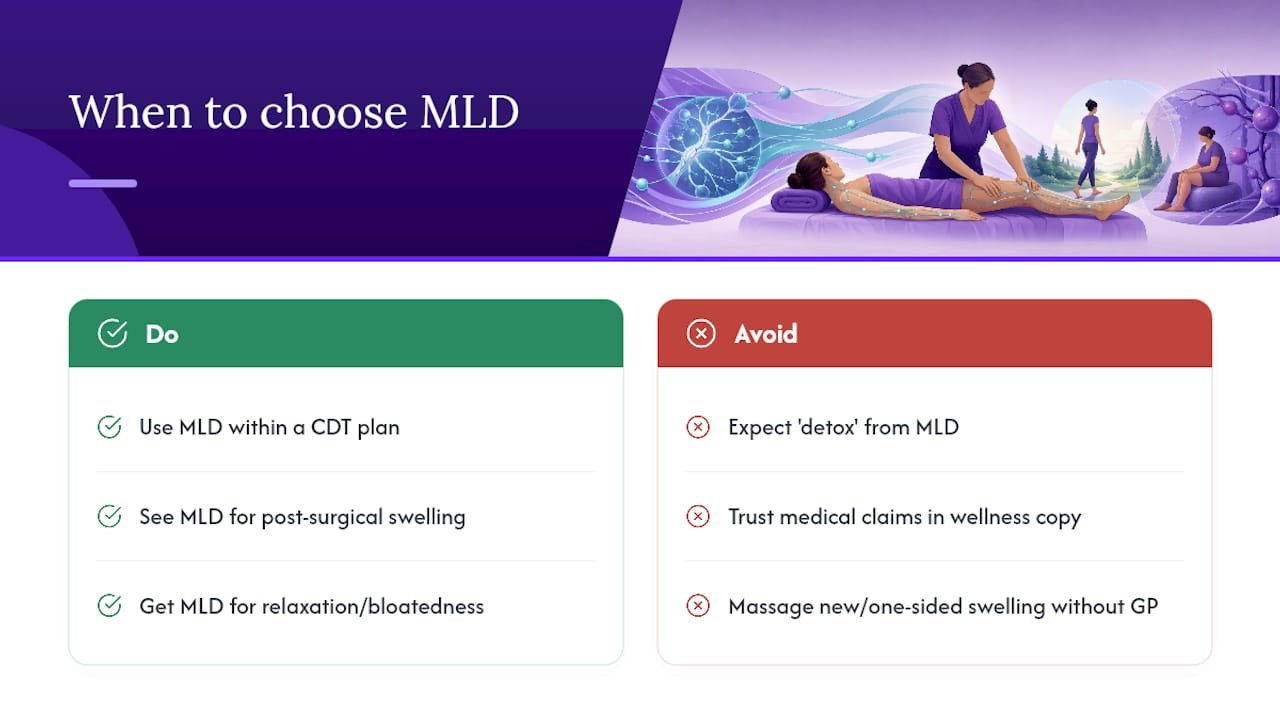
The honest answer depends on why you’re asking. If a doctor has diagnosed lymphedema or you’re recovering from surgery with visible swelling, MLD earns its place inside a proper CDT plan, and the evidence backs that use specifically. If you’re healthy and just want to feel less bloated and more relaxed after a stressful week, MLD delivers that too, reliably and pleasantly, but it won’t detox anything your liver wasn’t already handling.
What frustrates me most about how this treatment gets marketed is the gap between those two truths. Wellness copy borrows the language of medical evidence to sell a claim medicine doesn’t support. New or one-sided swelling deserves a GP visit before a massage table. Everything else is a legitimate, evidence-backed way to feel better for a few days.
— Mark
Book evidence-informed lymphatic massage at Live5dhealth
Live5dhealth is the alternative to a generic spa booking for anyone who wants lymphatic massage delivered by therapists trained in the same CDT principles clinical guidance recommends, not a rushed add-on to a facial menu. Our County Roscommon centre pairs MLD with the recovery-focused environment it works best alongside: sauna, cold plunge, PEMF therapy and a team that asks the right questions before your first session, not after.

If lymphedema or postoperative swelling brought you here, talk to your doctor first and bring their guidance to us so we can build sessions around it properly. If you’re after relaxation and short-term relief, you can check availability and book directly through our luxury spa page today.
Sources
- PubMed entry (systematic review/evidence summary)
- UCLA Health — Lymphatic drainage massage: separating fact from fiction
- PMC — review and trials summarising MLDT evidence
- Cleveland Clinic — Lymphatic drainage massage: what it is & benefits