
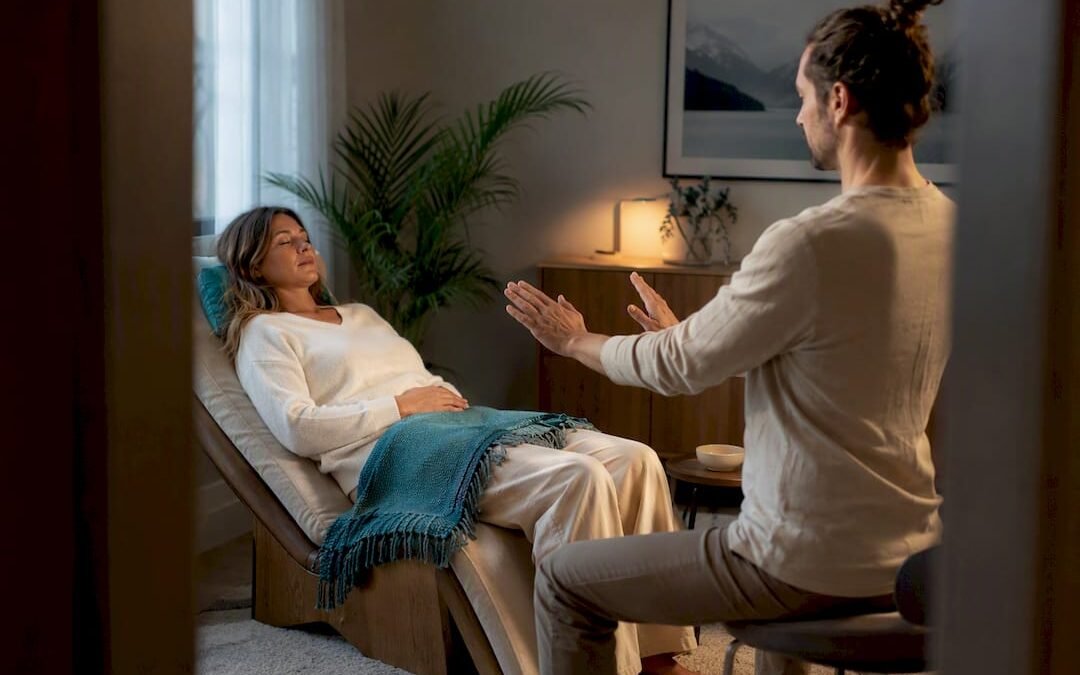
Quantum healing can genuinely help with anxiety for some people, but not through anything resembling quantum physics. It works, when it works, as a complementary relaxation practice that sits alongside your medical or psychological care, not instead of it. The “quantum” in the name is a metaphor, not a mechanism, and the closest evidence we have comes from studies on biofield therapies like Reiki, which show short-term anxiety reduction for some individuals. Keep any prescribed treatment going, and talk to your clinician before adding this to your routine.
TL;DR:
- Reiki has demonstrated a moderate-to-large short-term reduction in anxiety with an effect size of approximately -0.82 across multiple studies, mostly benefiting brief or moderate course interventions.
- Most evidence supporting biofield therapies suggests their benefits arise from relaxation, touch, attention, and expectation rather than any quantum-physics mechanism.
- Quantum healing sessions generally involve hands-on touch, guided visualisation, or sound therapy, lasting around 30 to 60 minutes, with sensations varying greatly by individual.
- Quantum healing is best viewed as a supportive relaxation technique for specific situations like procedural stress or chronic illness, not as a cure for diagnosed anxiety disorders.
- Prioritize transparency and credentials when choosing practitioners, and always communicate with your medical provider before adding quantum healing to your treatment plan.
Table of Contents
- What is quantum healing for anxiety?
- What does the science say about energy healing and anxiety?
- What techniques count as quantum healing?
- What happens in a quantum healing session?
- What can you realistically expect, and where are the limits?
- How do you try quantum healing safely?
- How does a wellness centre approach quantum healing responsibly?
- Our honest take on the quantum healing conversation
- Ready to experience quantum healing at a wellness centre?
- Sources
- FAQ
What is quantum healing for anxiety?
Ask a practitioner what quantum healing means and you’ll hear words like energy, intention, biofield, and consciousness long before you hear anything resembling physics. That’s the honest starting point: despite the name, quantum healing borrows its vocabulary from quantum mechanics without claiming to use quantum mechanisms in any testable way. Wikipedia’s summary of the concept describes it plainly as a blend of physics language and healing claims that mainstream science treats with scepticism. That doesn’t make the practice worthless, but it does mean you should judge it on what actually happens in a session, not on the science-sounding branding.
In practice, quantum healing is more an umbrella term than a single defined technique. Practitioners use it to describe a session built around calming the nervous system, working with the body’s biofield, and guiding a person’s attention and intention toward relaxation. Several distinct modalities usually shelter under that umbrella:
- Reiki and biofield or “energy” touch, where a practitioner places hands lightly on or near the body to promote relaxation.
- Quantum healing hypnosis, a guided trance state used to explore thoughts, memories, or beliefs linked to stress.
- Guided visualisation, where verbal cues help you picture calming scenes or resolve mental tension.
- Sound and light therapy, using tones, frequencies, or rhythmic light to shift brainwave activity toward a relaxed state.
Cleveland Clinic’s overview of complementary therapy frames the intent behind all of these the same way: fostering relaxation and emotional balance, not curing disease. That’s a useful yardstick to keep in mind as you read the rest of this guide.
What does the science say about energy healing and anxiety?
The strongest evidence sits with Reiki, one of the most studied biofield therapies, and it’s more encouraging than sceptics often assume. A meta-analysis of 13 studies covering 824 participants found a significant reduction in anxiety among people receiving Reiki, with a standardised mean difference of roughly -0.82. In plain terms, that’s a moderate-to-large effect, on par with what some psychological interventions achieve in similar trial conditions.
Statistic callout: Across 13 trials and 824 participants, Reiki was linked to an average anxiety reduction with an effect size (SMD) of approximately -0.82, though heterogeneity between studies was high (I² = 88.5%).
That heterogeneity figure matters more than it might look. A systematic review published in a palliative and supportive care journal adds useful nuance here: subgroup analysis suggested that short interventions of three sessions or fewer, and moderate courses of six to eight sessions, were both associated with anxiety reductions across different populations.
Real-world trials back this up in specific settings. One quasi-experimental study in adolescents undergoing cancer treatment reported measurably lower anxiety scores after six daily Reiki sessions. That’s a narrow, specific population, and the study design has limits, but it shows biofield therapy has been tested in genuinely high-stress medical contexts, not just wellness settings.
Here’s how to weigh all of this honestly:
- Evidence for reduced anxiety after biofield sessions is real, particularly for short-term, situational stress.
- Most trials are small to moderate in size, and blinding is nearly impossible with hands-on therapies, so placebo and context effects likely contribute to the results.
- No study has demonstrated a quantum-physics mechanism behind these effects; the benefit, where it exists, is almost certainly rooted in relaxation response, touch, attention, and expectation.
- Evidence for diagnosed anxiety disorders specifically, rather than general stress or procedural anxiety, remains thin.
The honest summary: something measurable happens for many people during and after these sessions, and it’s worth taking seriously as one tool among several, not as a cure standing on its own.
What techniques count as quantum healing?
If you book a quantum healing session, you’re likely to encounter one or a mix of the following. Recognising them helps you choose an approach that matches your comfort level and understand what you’re actually paying for.
- Reiki and biofield touch involves a practitioner’s hands resting lightly on or hovering near your body, generally regarded as low-risk and non-invasive.
- Quantum healing hypnosis guides you into a relaxed, focused state to work through stress patterns, usually practitioner-led and requiring some trust in the facilitator.
- Sound and light brain entrainment uses rhythmic audio or visual pulses intended to shift brainwave states towards calm, though the evidence for these specific modalities is thinner than for Reiki.
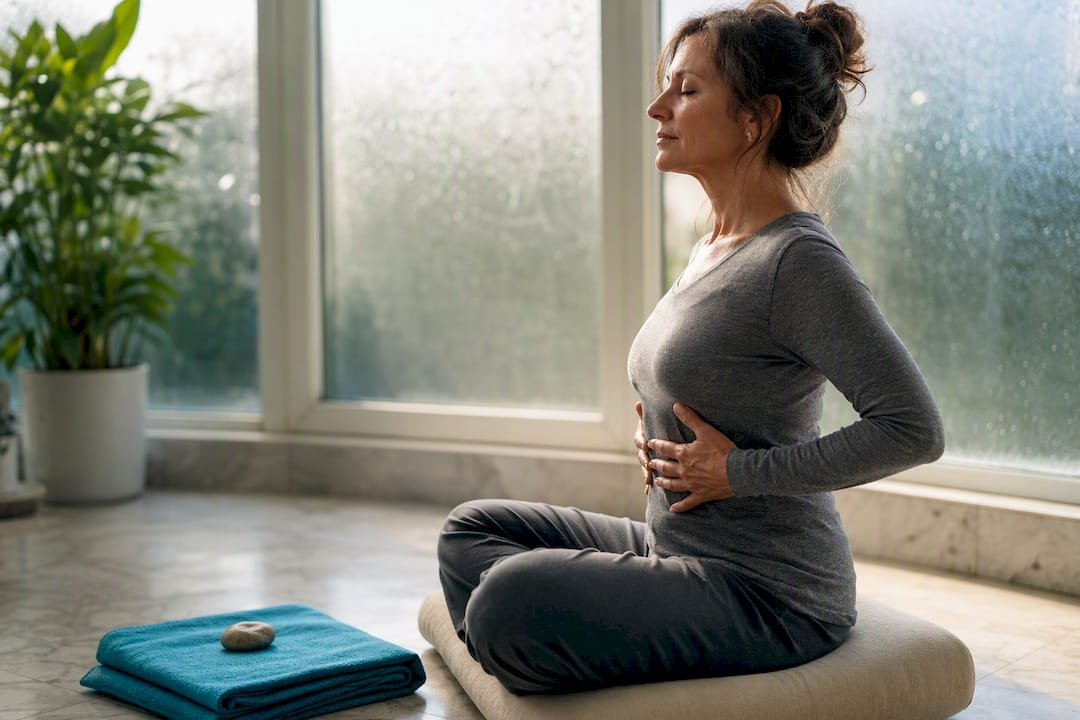
- Guided meditation and breathwork can be practised with a facilitator or entirely on your own, making them the lowest-barrier entry point.
- Self-guided visualisation costs nothing and carries essentially no risk, useful as a starting point before committing to paid sessions.
The practitioner-led options (Reiki, hypnosis, sound and light work) ask you to trust someone else’s hands or voice during a vulnerable, relaxed state, so vetting matters more there than with meditation apps you control yourself.
Pro Tip: If you’re anxious about trying energy work for the first time, start with a self-guided breathing or meditation practice for two weeks. It gives you a baseline for how your body responds to relaxation techniques before you invest in a practitioner-led session.
What happens in a quantum healing session?
A typical session follows a predictable arc, which itself tends to reduce first-visit nerves. Here’s what to expect:
- Intake conversation. The practitioner asks about your health history, current stress or anxiety levels, medications, and what you hope to get from the session.
- Induction or settling phase. You’ll usually lie down or sit comfortably while the practitioner guides you into a relaxed state through breathing cues, quiet music, or verbal guidance.
- The main work. This might involve light touch, hovering hands, guided visualisation, or sound exposure, typically lasting between 30 and 60 minutes.
- Closing and grounding. The practitioner brings you back to alertness gradually, often checking in about what you felt or noticed.
Sensations vary widely. Some people feel warmth, tingling, or deep physical calm; others feel emotional, occasionally tearful, as tension releases. Neither response is a sign anything went wrong.
Practically, wear loose comfortable clothing, mention any medications or health conditions during intake, and arrive a few minutes early so you’re not rushing straight from a stressful commute into a relaxation session.
What can you realistically expect, and where are the limits?
Quantum healing and related biofield work show the most promise in specific, bounded situations rather than as a general anxiety treatment. It has evidence behind it for short-term procedural anxiety, such as before a medical scan or during cancer treatment, and for supporting people managing chronic illness alongside their standard care.
Where it falls short is clear too:
- It has not been shown to work as a standalone treatment for diagnosed anxiety disorders like generalised anxiety disorder or panic disorder.
- Individual responses vary enormously, and much of the benefit likely comes from relaxation, attention, and the therapeutic relationship rather than anything unique to the “quantum” framing.
- People with severe or persistent anxiety symptoms need evidence-based psychological therapy or medical treatment as their primary path, not a substitute.
If you’re managing an anxiety condition with clear physical or psychological symptoms, the sensible approach is combining, not swapping. Use quantum healing sessions to support relaxation and stress capacity while your prescribed treatment does the heavier clinical lifting.
How do you try quantum healing safely?
Getting this right comes down to preparation and honest communication, both with a practitioner and with your own medical team.
- Check credentials and scope. Ask what training the practitioner holds, how long they’ve practised, and whether they can point to client references or reviews.
- Ask direct questions before booking. What does a session actually involve? What outcomes can realistically be expected? Is pricing transparent, or are you being pushed toward a large upfront package?
- Tell your GP or therapist. Mention that you’re trying a complementary therapy, particularly if you take medication for anxiety, so your care stays coordinated.
- Start with a short course. Research on biofield therapies suggests both brief interventions (three sessions or fewer) and moderate courses (six to eight sessions) have shown benefits, so there’s no need to commit to a long programme upfront.
- Watch for red flags. Be wary of anyone promising a cure, discouraging you from taking prescribed medication, or pressuring you into an expensive block booking before you’ve tried a single session.
Pro Tip: Keep a simple anxiety diary for two weeks before and after a short course of sessions, rating your stress from 1 to 10 each day. It turns a vague impression of “I feel a bit better” into something concrete you can actually evaluate.
How does a wellness centre approach quantum healing responsibly?
At Live5dhealth, quantum healing sits inside a broader philosophy: complementary methods work best when they support, rather than replace, ongoing medical care. Sessions take place using the Orynoco quantum healing pod in Boyle, County Roscommon, combining light, frequency, and guided relaxation in a private, low-stimulation environment designed to help the nervous system settle.
Anyone attending with a diagnosed anxiety condition is encouraged to continue their prescribed treatment and to keep their GP or therapist informed. A session here is framed as one part of a wider wellness picture, never as a replacement for psychiatric or psychological care.
Consent and clear communication come first: you’re briefed on what the pod does and doesn’t claim to do before you ever lie down.
Our honest take on the quantum healing conversation
The biggest problem with how quantum healing gets discussed online isn’t the practice itself, it’s the branding. Slapping “quantum” onto a relaxation technique invites two equally unhelpful reactions: uncritical belief in a physics mechanism that doesn’t exist, or blanket dismissal of a practice that has genuine, if modest, evidence behind it for reducing anxiety in specific situations.
The research actually supports a narrower, more useful claim than either extreme. Reiki and related biofield work show a real, moderate effect on anxiety in the short term, particularly around procedures or chronic illness, and that effect likely comes from touch, attention, and the relaxation response rather than anything quantum. Conventional advice tends to either oversell this as alternative medicine or dismiss it entirely as pseudoscience, missing the middle ground where most readers actually live.
What should you prioritise first? Treat quantum healing as an addition to your toolkit, not a replacement for therapy or medication, and judge any practitioner by their transparency rather than their vocabulary. If someone can’t explain plainly what happens in a session and why, that tells you more than any “quantum” in their branding ever will.
— Mark
Ready to experience quantum healing at a wellness centre?
Some wellness centres offer quantum healing delivered inside a full wellness centre, so you can pair a session with other evidence-informed therapies in one visit rather than piecing together separate appointments across town. If a quantum healing session leaves you curious about deeper relaxation support, the centre’s sauna, steam, and cold plunge spa and red light therapy sit under the same roof.
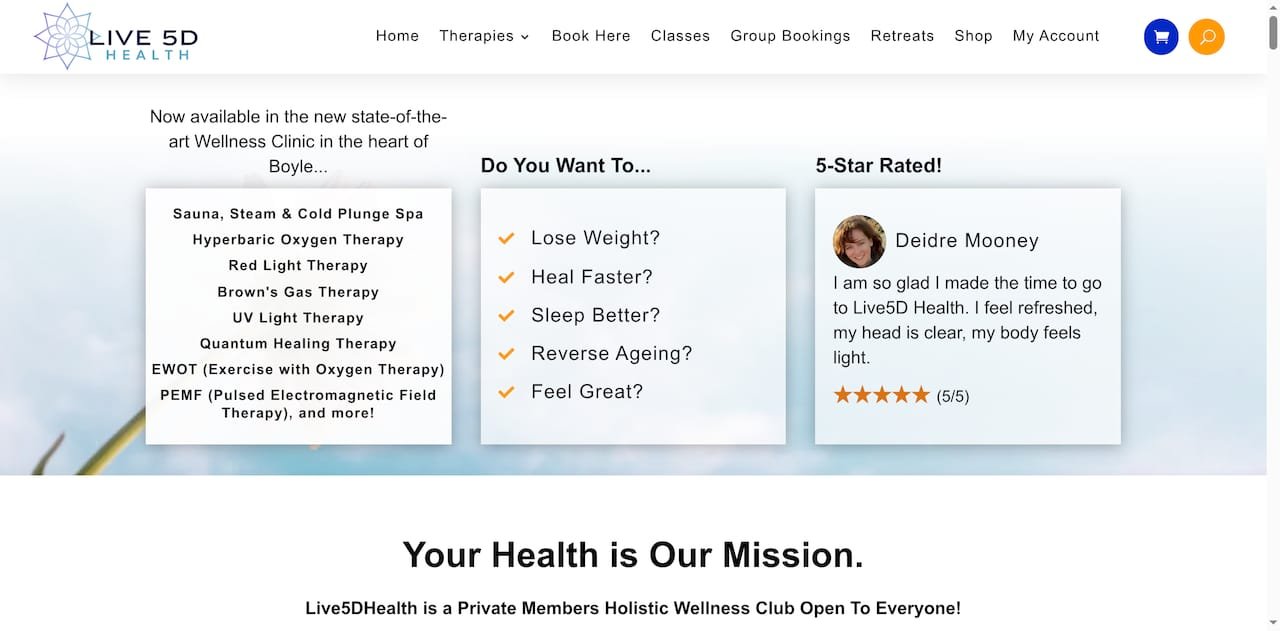
Therapies are generally offered as complements to existing care, never substitutes, and staff can discuss how quantum healing fits alongside any treatments your GP or therapist has recommended. If you’d rather immerse yourself fully, the multi-day wellness retreats build quantum healing into a broader programme of recovery and rest. Ready to try it for yourself? Book a session at the Boyle centre and see how it feels.
Sources
- Therapeutic effects of Reiki on interventions for anxiety: a meta-analysis – PMC
- Therapeutic effects of Reiki therapy in alleviating anxiety: systematic review and meta‑analysis (Springer Link)
Trial sizes in this field remain modest and study designs vary, so treat pooled results as a promising direction rather than a settled verdict.
FAQ
What happens in a quantum healing session?
A session typically starts with an intake conversation about your health and goals, followed by a relaxation induction, then the main work using light touch, hovering hands, or guided visualisation for 30 to 60 minutes. It ends with a grounding phase to bring you back to full alertness before you leave.
Can spiritual or energy healing help anxiety?
For some people, yes, particularly with short-term or procedural anxiety. A meta-analysis of Reiki trials found a significant reduction in anxiety symptoms, though the effect varies between individuals and isn’t a substitute for diagnosed anxiety disorder treatment.
What is quantum healing therapy?
Quantum healing therapy is a complementary practice that uses relaxation, guided intention, and sometimes light or sound to support emotional balance, borrowing the language of quantum physics as a metaphor rather than a mechanism. Live5dhealth offers this using the Orynoco quantum healing pod in Boyle, County Roscommon.
Is quantum healing the same as Reiki?
Quantum healing usually overlaps with Reiki but isn’t identical to it. Reiki is a specific hands-on biofield technique with dedicated research behind it, while quantum healing is a broader umbrella that can include Reiki alongside hypnosis, sound therapy, and guided visualisation.
How much does quantum healing cost at a wellness centre?
Pricing for the Orynoco quantum healing session at Live5dhealth is available directly through the centre’s booking page rather than listed as a fixed rate here. Contact the centre or check current listings before booking to confirm the exact cost for your visit.