
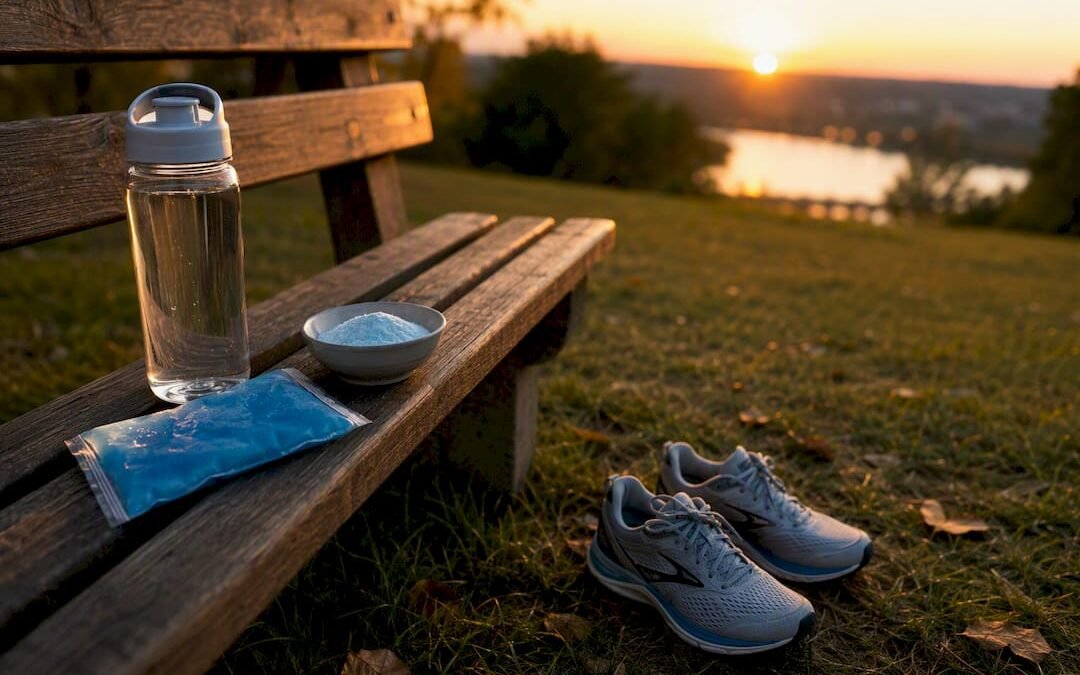
The fastest, safest recovery after a marathon follows a staged protocol: immediate refuelling and gentle movement, protected sleep and rest, then a progressive return to running over 2–4 weeks. Rushing any stage raises your risk of injury and prolongs the very fatigue you’re trying to shake.
Here’s the timeline in brief: at the finish line, keep moving and start refuelling. Within the first hour, eat and rehydrate properly. Over the first 24 hours, sleep becomes your most powerful recovery therapy. Then, across 2–4 weeks, you rebuild running volume gradually rather than jumping straight back into training.
- Walk for 10–15 minutes after finishing, don’t collapse onto the ground
- Eat carbohydrate and protein within an hour, even if your appetite has vanished
- Skip the celebratory pints until you’ve rehydrated properly
- Change out of your wet kit as soon as you can
Key Takeaways
Recovery after a marathon works best as a staged protocol: immediate movement and refuelling, protected sleep, active recovery through week one, then a conservative two to four week reintroduction to running.
| Point | Details |
|---|---|
| Keep moving at the finish | Walk for 10–15 minutes immediately after finishing to prevent blood pooling and dizziness. |
| Refuel within the hour | Combine carbohydrate and protein, such as chocolate milk or a bagel with peanut butter, shortly after finishing. |
| Protect sleep above all | Prioritise a full night’s sleep and extra naps, since deep sleep drives the repair processes muscles need most. |
| Delay deep massage | Wait 48–72 hours before deep-tissue work; gentle lymphatic massage or contrast baths suit the first two days better. |
| Reintroduce running gradually | Follow a reverse taper over 2–4 weeks, starting with short easy jogs before any tempo work. |
| Consider advanced therapies once acute swelling settles | Live5dhealth offers HBOT, red light, PEMF and cold plunge to support the later stages of a staged recovery plan. |
Table of Contents
- Recovery therapies after marathon start at the finish line (0–15 minutes)
- What should I eat and drink in the first hour after a marathon?
- How should you manage the first 24 hours after a marathon?
- What active recovery works best in days 2 to 7?
- How do you safely reintroduce running after a marathon?
- What nutrition and sleep priorities matter most after a marathon?
- When should you see a doctor after marathon pain?
- Which advanced recovery therapies actually help after a marathon?
- Frequently asked questions
- Sources
Recovery therapies after marathon start at the finish line (0–15 minutes)
Keep walking. Standing or lying down immediately after 26.2 miles lets blood pool in your legs, which can trigger dizziness or even fainting. Gentle movement keeps circulation active and helps flush metabolic waste out of tired muscle tissue.
- Walk through the finish chute rather than stopping dead
- Swap sweat-soaked kit for dry layers as soon as possible, especially in cold or windy conditions
- Elevate your legs briefly if your ankles or feet look swollen
- Take a foil blanket if you’re offered one. Your body temperature can drop fast once you stop generating heat
Pro Tip: Leave blisters covered until you’re home and can clean them properly. Popping them at the finish area, with dirty hands and no antiseptic, is how a blister turns into an infection.
What should I eat and drink in the first hour after a marathon?
Refuelling within 30 to 60 minutes gives your body the raw materials it needs to start repairing muscle and restocking glycogen, according to UCLA Health’s sports medicine guidance. The combination that works best pairs fast carbohydrates with a moderate hit of protein.
- Chocolate milk (a genuinely effective recovery drink, not just a running myth)
- A banana with a pot of yoghurt
- A bagel with peanut butter
- An electrolyte drink alongside plain water, sipped rather than gulped
Watch your urine colour over the next few hours. Pale yellow means you’re rehydrating well; dark amber means keep drinking. Also watch for dizziness, confusion or persistent nausea. These can be early signs of hyponatraemia, an electrolyte imbalance caused by drinking too much plain water without replacing sodium. Limit alcohol during this window too. It impairs both muscle repair and rehydration when UK marathon recovery guidance from Runner’s World is followed closely.
How should you manage the first 24 hours after a marathon?
Sleep is arguably the single most underrated recovery therapy available to you, and skipping it after a marathon undermines everything else you do right. Growth hormone release and tissue repair both peak during deep sleep, which is exactly the process your muscles need most after 26.2 miles of damage. UCLA Health’s sports medicine team identifies poor sleep as a major barrier to recovery in the crucial first night.
- Keep your bedroom cool and dark, and consider an earlier bedtime than usual
- Elevate your legs for 15–20 minutes before bed to reduce swelling
- Clean and dress any blisters properly, checking for signs of early infection
- A short course of over-the-counter analgesics can ease soreness, but avoid masking pain sharp enough to suggest a stress fracture or tendon tear
Pro Tip: If paracetamol or ibuprofen isn’t touching genuinely severe, localised pain, that’s your body telling you something beyond normal soreness. Don’t just take a stronger dose. Get it checked.
What active recovery works best in days 2 to 7?

This is where most runners either speed their recovery or accidentally sabotage it. Total rest feels intuitive, but Henry Ford Health’s sports medicine team notes that active recovery, walking, easy cycling or swimming, promotes circulation and clears metabolic waste more effectively than lying on the sofa for a week.
A sensible rhythm looks like this:
- Day 2: A 20 to 30 minute walk, plus gentle static stretching. Expect this to be your sorest day.
- Day 3: Easy cycling or a swim, low impact, low intensity, just enough to get blood moving.
- Day 4: Light mobility work, foam rolling, and another walk. Soreness should be noticeably easing.
- Days 5–7: Continue easy cross-training. Most runners feel close to normal walking around by day 5 or 6.
Hold off on deep-tissue massage until 48 to 72 hours have passed. UCLA Health’s guidance is explicit that intense manual therapy applied too early can worsen the microscopic muscle damage a marathon causes, rather than easing it. Gentle lymphatic massage or contrast baths, alternating hot and cold, are gentler alternatives in those first two days, and Henry Ford Health suggests contrast therapy may combine circulatory and anti-inflammatory benefits better than ice alone.
One caveat worth remembering: your immune system is temporarily suppressed after an endurance event like this, so wash your hands, avoid obviously unwell people, and treat any blister with more caution than usual.
How do you safely reintroduce running after a marathon?
The reverse-taper principle is simple: you rebuild volume and intensity slowly, in the opposite order to how you tapered before race day. Rushing back into structured training in week one is the single most common cause of post-marathon injury, and a conservative approach preserves nearly all the fitness you built without the setback.
Runner’s World’s coaching guidance is blunt on this point: allow one to two weeks of rest and active recovery before any real running resumes, then rebuild gradually. Jumping straight back into hard sessions is how you turn a good marathon into a six-week injury layoff.
A sample 2–4 week reintroduction plan:
- Week 2: Two or three short, easy jogs of 15–20 minutes, at a conversational pace, no faster. Everything else stays walking or cross-training.
- Week 3: Increase to 3–4 easy runs, building towards 30–40 minutes each. Still no intervals, hills, or tempo work.
- Week 4: If you’re fully recovered, soreness-free and sleeping normally, introduce one easy tempo session or a slightly longer weekend run.
Use effort, not pace, as your guide. Everything should feel comfortable enough to hold a conversation. If a run leaves you more sore than the one before it, or you notice a nagging ache that doesn’t ease with warming up, that’s your cue to drop back a stage and rest another few days. Runner’s World’s own recovery timeline backs this reverse-taper approach as the most reliable route back to full training.
What nutrition and sleep priorities matter most after a marathon?
Inflammation from marathon-induced muscle damage can persist for up to two weeks, according to research summarised in a PMC review, which is longer than most runners expect. Your diet and sleep both play a direct role in how quickly that settles.
- Prioritise carbohydrate-rich meals for the first 48–72 hours to fully restock glycogen stores
- Include protein at every meal, aiming for a source at breakfast, lunch and dinner, not just post-run
- Add anti-inflammatory foods like tart cherry juice, oily fish, and turmeric with black pepper (the pepper improves absorption)
- Book in extra sleep or a daytime nap where your schedule allows it, particularly in the first week
Good hand hygiene and avoiding close contact with anyone who’s unwell matter more than usual here too, given the temporary dip in immune function that follows an event of this intensity.
When should you see a doctor after marathon pain?
Most post-marathon aches settle within a week without any intervention. Some symptoms need proper assessment rather than patience.
- Severe, focal bone pain that worsens with weight-bearing (a possible stress fracture)
- Swelling that doesn’t reduce after several days of elevation and rest
- Numbness, or persistent pins and needles in your feet
- Fever alongside a wound or blister, redness spreading outward, or visible pus
- Shortness of breath or chest pain, both of which warrant emergency care, not a wait-and-see approach
See your GP or a sports physiotherapist for anything bone or tendon related. Head straight to emergency care for chest pain, breathing difficulty, or any wound showing signs of spreading infection, since prolonged immune suppression after endurance events raises your infection risk if these are left unchecked.
Which advanced recovery therapies actually help after a marathon?
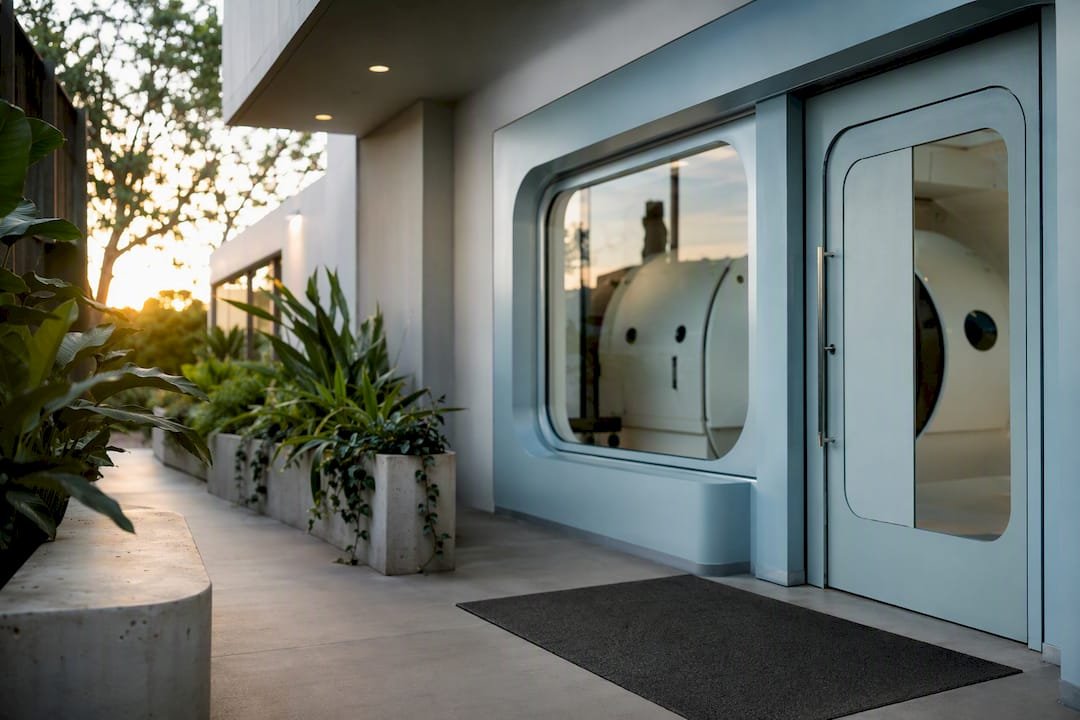
Beyond the basics, several clinic-based therapies are worth understanding, both what they claim to do and what the evidence actually supports.
Hyperbaric oxygen therapy (HBOT) delivers pure oxygen at increased atmospheric pressure, which theoretically boosts oxygen delivery to damaged tissue and supports cellular repair processes. It’s best used once you’ve rehydrated and acute swelling has begun to settle, typically from day 2 or 3 onward.
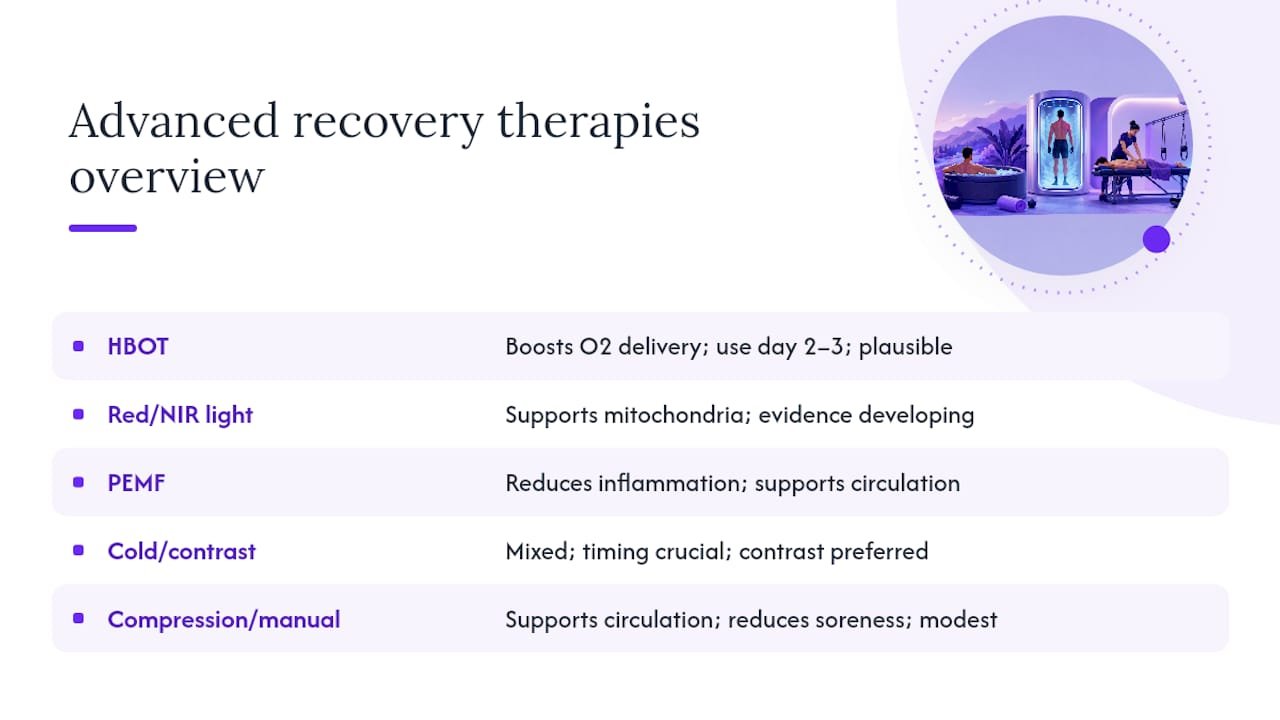
Red and near-infrared light therapy is thought to support mitochondrial function in muscle cells, the tiny powerhouses responsible for cellular energy production. Evidence is still developing but the mechanism is biologically plausible and the risk profile is low.
Pulsed electromagnetic field (PEMF) therapy aims to reduce inflammation and support circulation at a cellular level, often used alongside other modalities rather than alone.
Cold plunge and contrast therapy carries genuinely mixed evidence. A PubMed-indexed study on cold immersion found that timing and intensity determine whether cold exposure helps or actually blunts the inflammatory signalling your muscles need to adapt and strengthen. Contrast bathing, alternating hot and cold, tends to be the gentler, better-supported option in the first week.
Compression boots and targeted manual therapy can support circulation and reduce perceived soreness, though effect sizes in the research remain modest.
The common thread across all of these: none replace the basics of sleep, refuelling and gradual reintroduction, but used at the right time they can meaningfully support that staged protocol. A wellness centre offering sports recovery hyperbaric therapy, red light, PEMF and cold plunge under one roof means you’re not guessing at sequencing this yourself.
Recovery timelines are more predictable than they feel
Most of the soreness that feels alarming on day two is entirely normal and resolves within a week if you follow a sensible reverse taper. Fitness loss over that period is minimal. The post-race low some runners feel is real too. Journalling your race, or setting one small, achievable goal for the following week, tends to ease it faster than forcing yourself straight back into structured training.
How Live 5D Health supports your post-marathon recovery
You’ve just read the protocol; putting it into practice is where a proper recovery centre earns its keep. Live5dhealth brings hyperbaric oxygen therapy, red light therapy, PEMF, massage, sauna, steam and cold plunge together in one setting, so instead of piecing together five different appointments across town, you get a sequenced recovery plan under one roof.

That matters most in the window this article covers: knowing when to book massage rather than push through it yourself, or when contrast therapy makes more sense than an ice-only plunge. If you’d rather have that decision made by people who work with endurance athletes regularly, Live5dhealth’s luxury spa with sauna, steam and cold plunge facility in Boyle is built for exactly this kind of staged, evidence-informed recovery. For runners wanting a more structured reset, the multi-day recovery retreats combine several of these therapies over a longer stay. Book a recovery consultation to work out which therapies fit your timeline.
Frequently asked questions
How long does it take to fully recover from a marathon?
Most runners feel close to normal within a week for daily activities, though full physiological recovery, including resolved inflammation, can take closer to two weeks.
What are the best recovery methods after a marathon?
The most effective combination is immediate refuelling, protected sleep, active recovery like walking or swimming, and a conservative reverse-taper return to running over 2–4 weeks.
Is foam rolling good after a marathon?
Yes, once initial soreness eases, typically from day 3 or 4 onward. Foam rolling supports blood flow and mobility without the intensity of deep-tissue massage.
Should I ice bath after a marathon?
Evidence is mixed. Contrast baths, alternating hot and cold, are generally better supported than ice-only immersion, which can sometimes blunt the inflammatory signalling muscles need to adapt.
When can I start running again after a marathon?
Most guidance suggests short, easy jogs from week two, building volume gradually through week three and four rather than resuming structured training immediately.
This article is general information, not a substitute for advice from a qualified doctor. Consult a qualified healthcare professional about your own circumstances before acting on anything here.
Sources
- A sports medicine guide to marathon recovery | UCLA Health
- Recovery Tips For Marathon Runners | Henry Ford Health – Detroit, MI
- Recovery After a Marathon: How Long to Rest and When to Run Again
- PubMed indexed study relevant to cold immersion effects