
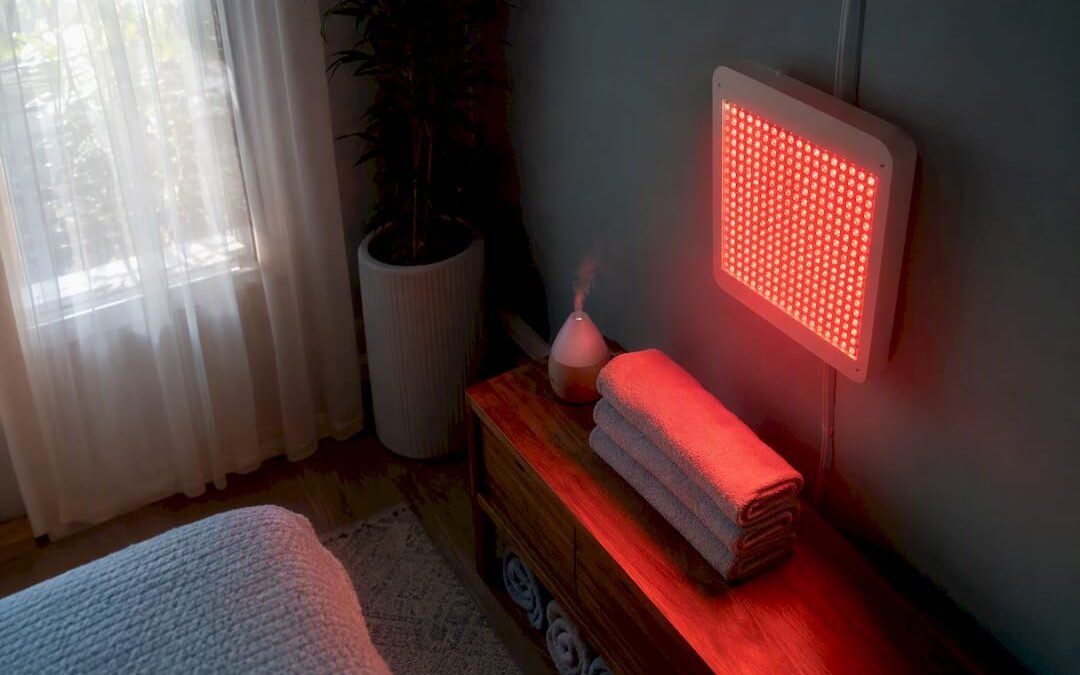
Red light is generally a smarter evening choice than blue light, and for some people it genuinely helps them fall asleep faster and wake up less groggy. It is not a guaranteed cure for poor sleep, and the science behind it is promising but still developing.
Here is the honest picture:
- Red light sits in the 620–700 nanometre wavelength band, and it is far less likely than blue light to suppress melatonin.
- Some small trials have found benefits for some groups, alongside other trials showing mixed or even negative effects on sleep quality, according to peer-reviewed research.
- Timing, intensity and device quality all matter more than most people assume.
- University of Alabama researchers put it plainly: red light doesn’t create sleep, it just interferes with it less than other light sources.
Think of it less as a sleeping pill and more as removing an obstacle. The rest of this guide shows you exactly how to use it, and when to leave it alone.
Key Takeaways
Red light for sleep works by reducing melatonin suppression rather than actively inducing sleep, and its benefit depends heavily on correct wavelength, dose and timing.
| Point | Details |
|---|---|
| Wavelength matters most | Look for devices specifying 620–700nm peak wavelength, not just a red colour description. |
| Evidence is promising but mixed | Some trials show improved sleep quality; a 2023 polysomnography study found increased microarousals in other participants. |
| Timing beats bright bedtime lamps | Use red light 30 to 60 minutes before bed, at low intensity, rather than overnight. |
| Track your own response | Run a 14 night trial with a sleep diary and stop if you notice more fragmented sleep. |
| Live5dhealth offers supervised sessions | In-clinic red light therapy uses purpose-built equipment with a pre-session safety check. |
Table of Contents
- How light affects your circadian rhythm and melatonin
- What is red light therapy and how do devices actually differ?
- What does the research really say about red light and sleep?
- How to use red light for better sleep: a practical protocol
- Risks, contraindications and when to see a clinician
- Where red light fits into your wider sleep routine
- Live5dhealth: what supervised red light sessions look like
- How red light may influence deep sleep and REM
- Red light therapy versus other light-based sleep approaches
- Who should try red light, and who should be more cautious
- Common myths about red light and sleep
- Combining red light with other sleep aids
- Why the conventional advice oversimplifies this
- Try red light therapy the way the research actually supports
- Sources
How light affects your circadian rhythm and melatonin
Your eyes contain specialised cells called intrinsically photosensitive retinal ganglion cells, or ipRGCs, and they don’t help you see at all. Their job is to detect light and tell your brain what time it is. These cells contain a photopigment called melanopsin, and melanopsin is exquisitely sensitive to short-wavelength blue light, the kind that pours out of phone screens, laptops and most household LED bulbs.
When melanopsin detects blue light in the evening, it sends a signal straight to your suprachiasmatic nucleus, the master clock sitting behind your eyes. That clock then tells your pineal gland to delay melatonin production, the hormone that makes you feel sleepy. This is why scrolling through your phone at 11pm can leave you wide awake at midnight even though you’re exhausted.
Red light barely registers with melanopsin. Because ipRGCs respond weakly to wavelengths above 620nm, exposure to red light produces a much smaller melatonin-suppressing signal than blue or even white light does. This is the entire biological argument for using red light in the evening: it lets you have illumination in the room without effectively telling your brain it’s daytime.
Why this matters in practice:
- Blue light (roughly 450 to 490nm) is the most alerting wavelength range for humans, which is why sleep specialists recommend blocking it before bed.
- Red light (620 to 700nm) interacts weakly with melanopsin, producing far less circadian disruption.
- Intensity matters as much as colour. A dim red light and a bright red light are not biologically equivalent, even if both look the same shade to your eye.
- Lux is simply a measure of how much light reaches a surface. A moonlit room might sit around 0.1 to 1 lux; a normally lit living room is often 100 to 300 lux. Lower is better once you’re preparing for bed.
Statistic callout: A Sleep Foundation review of clinical trials found that Regular red light exposure nightly for a period of time improved sleep quality and melatonin levels in a group of female athletes, though the researchers were careful to note that evidence across the wider population remains limited.
That two-week protocol is one of the most cited examples in this field, and it illustrates something important: the studies showing benefit tend to use a specific dose (duration, wavelength and intensity) rather than “just switch to a red bulb.” Duration and consistency appear to matter as much as the colour of the light itself. A single evening of red light probably won’t do much. A fortnight of consistent, correctly timed exposure is a different proposition entirely, and it’s the kind of protocol worth discussing with a wellness practitioner rather than guessing at alone.
What is red light therapy and how do devices actually differ?
Photobiomodulation is the clinical term for using specific wavelengths of red or near-infrared light to influence cellular activity, and it’s a different thing entirely from simply dimming your bedroom lamp to a red bulb. Genuine photobiomodulation devices, the kind used in wellness clinics and validated in research, deliver light at controlled wavelengths, typically within the 620–700nm red band, with near-infrared devices operating higher again, often around 780–850nm and penetrating tissue more deeply.
The distinction matters because a red-tinted bulb from a hardware shop and a therapeutic LED panel are not interchangeable. Many red-looking household bulbs don’t emit the specific wavelengths or irradiance levels used in the studies behind red light’s reputation. They might look the part in a dim bedroom, but the biological effect can be entirely different.
What to check before buying a device:
- Peak wavelength listed in nanometres (not just “red” as a colour description).
- Irradiance, measured in milliwatts per square centimetre (mW/cm²), which tells you the actual dose your skin or eyes receive.
- Independent safety certification rather than marketing claims alone.
- Manufacturer guidance on safe distance and session duration.
Eye safety deserves a specific mention here. Even though red light suppresses melatonin less than blue light, staring directly into a high-powered panel is never advisable. Photobiomodulation panels are designed for skin exposure with your eyes closed or averted, not for direct eye contact, and this is different from the low-level ambient red light used for a bedroom night light.
Pro Tip: If you’re shopping for a device, ignore packaging that simply says “red light” and look for the actual peak wavelength in nanometres. A panel specifying 630nm or 660nm tells you far more than one that just shows a red glow in the product photo.
If you’d rather skip the guesswork of buying and calibrating your own equipment, a supervised session using purpose-built red light therapy in a clinic setting removes that variable entirely, since the wavelength and dose are already validated.
What does the research really say about red light and sleep?
The honest answer is: it depends who you ask, what wavelength they used, and how they measured sleep. This is one of those areas where headlines oversimplify a body of research that is genuinely mixed, and understanding why helps you interpret any device or supplement claim you encounter afterwards.
Where the evidence looks encouraging
The clearest positive signal comes from the female athlete study referenced by the Sleep Foundation, where 30 minutes of nightly red light exposure over a two-week period improved both subjective sleep quality and melatonin measurements. Other small trials have looked at red light’s effect on sleep inertia, the grogginess you feel on waking, particularly in shift workers. Some of these found that saturated red light delivered via goggles or closed-eyelid exposure around waking time reduced that groggy feeling, which is a genuinely useful application distinct from using red light purely as a sleep aid.
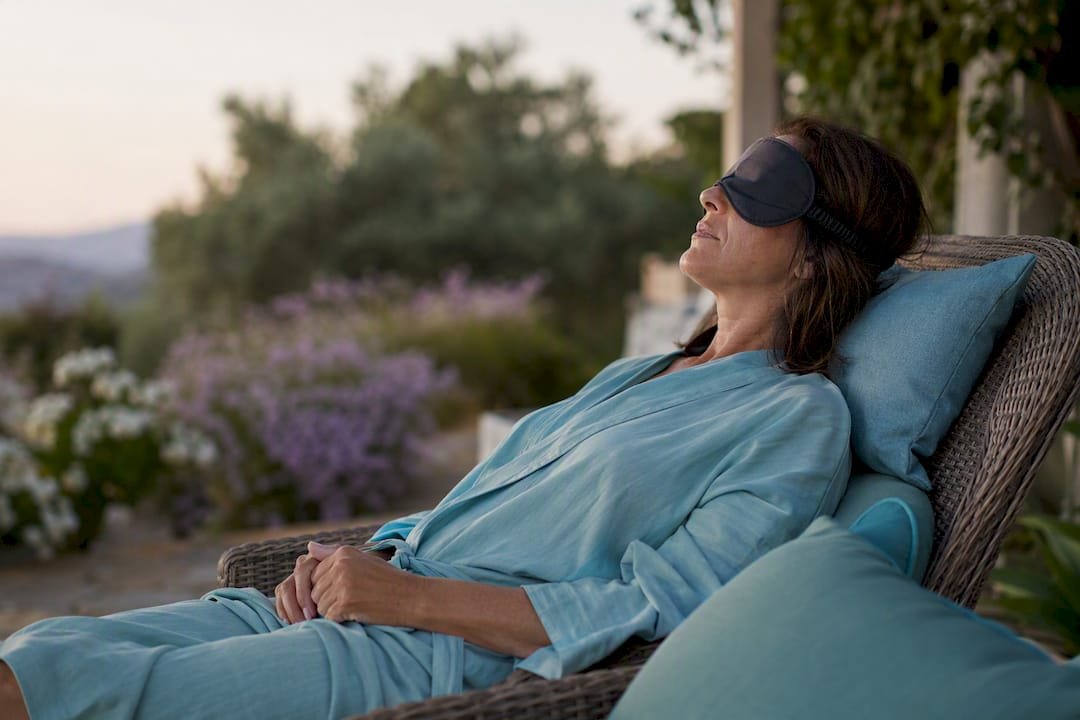
There’s also a coherent mechanistic story behind the positive results: because red light interacts weakly with the melanopsin system, it avoids actively working against your body’s melatonin production the way blue or bright white light does. That’s a real, defensible biological mechanism, even if it doesn’t prove red light actively induces sleep.
Where the evidence gets complicated
A 2023 randomised study using polysomnography, the gold-standard sleep-lab measurement using electrodes to track brain activity directly, found genuinely mixed results. Some participants fell asleep faster under red light exposure. Others showed an increase in microarousals (brief awakenings you don’t consciously remember) and a measurable drop in sleep efficiency, meaning they spent more of their time in bed awake rather than asleep.
This is the finding that should temper anyone’s enthusiasm for red light as a universal sleep fix: the same intervention produced improvement in some people and mild disruption in others, within a single controlled study using objective measurement rather than self-report.
That variability is the single most important thing to understand about this field. It isn’t that red light “doesn’t work.” It’s that individual responses genuinely differ, likely depending on baseline circadian phase, existing sleep disorders, and how the light was delivered.
A few patterns worth noting across the research:
- Many trials use small sample sizes, limiting how confidently results generalise to the wider population.
- Study populations vary widely: healthy young adults, competitive athletes, shift workers and people with diagnosed insomnia disorder have all been studied separately, and results don’t transfer neatly between groups.
- Measurement methods differ too. Self-reported sleep quality questionnaires are far less precise than polysomnography, and a study using one method can look far more positive than one using the other, even testing similar protocols.
- Session duration and wavelength precision vary between studies, which is part of why comparing headline results directly is misleading.
Researchers behind the PMC study themselves point to this heterogeneity in wavelengths, intensities and outcome measures as a reason to be cautious about broad claims. Standardising these variables, they argue, is essential before red light can be recommended as a reliable clinical sleep treatment rather than a promising adjunct.
What this means for you, practically
The evidence certainty here sits at “promising but preliminary.” There is a real, biologically plausible mechanism (less melanopsin activation, less melatonin suppression), and there are genuine positive trial results in specific groups. There is also genuine evidence that some people respond poorly, with fragmented sleep rather than improved sleep. That combination points to one sensible approach: try it, but treat yourself as an experiment of one, and monitor how you actually feel rather than assuming the studies apply automatically to you.
How to use red light for better sleep: a practical protocol
If you want to test whether red light genuinely helps your sleep, the goal is to run a short, controlled trial rather than just leaving a red bulb on indefinitely and hoping. Here’s a conservative approach based on the protocols used in the research covered above.
- Choose your window. Most studied protocols use red light exposure somewhere between 30 and 60 minutes, delivered one to two hours before your intended bedtime, rather than as the last thing before you close your eyes.
- Start with a 14-night trial. The Sleep Foundation-referenced study used a two-week nightly protocol. That’s a reasonable default: long enough to see a genuine pattern, short enough that you’re not committing to months of guesswork.
- Keep the intensity low. You’re looking for a dim, warm glow, not a bright therapeutic panel blasting light across the room. If you can comfortably read fine print without strain, it’s likely too bright for a pre-sleep wind-down.
- Position the light correctly. Ambient red light for winding down should be positioned away from direct eye level, ideally at a distance where it lights the room softly rather than shining at your face. If you’re using a dedicated photobiomodulation panel for skin exposure rather than ambient lighting, follow the manufacturer’s stated distance guidance, and keep your eyes closed or turned away during the session.
- Track it properly. Keep a simple sleep diary: what time you used the light, what time you fell asleep, how many times you woke, and how you felt on waking. If you want objective data, a sleep-tracking app or actigraphy device (a wrist-worn motion sensor) adds a layer of measurement beyond memory alone.
- Watch for the warning signs. If you notice increased alertness in the evening, more fragmented sleep, or you wake up feeling worse rather than better, that’s your signal to reduce the intensity, shorten the session, or stop altogether. Remember the 2023 trial: some participants experienced more microarousals under red light, not fewer.
- Reassess after two weeks. If your diary shows a clear improvement, a red light routine may be worth keeping as part of your evening habits. If nothing has changed, or things have got worse, it’s not for you, and that’s a perfectly valid outcome.
Pro Tip: Don’t change more than one variable at a time. If you introduce red light at the same moment you also start cutting caffeine and going to bed an hour earlier, you won’t know which change actually helped. Isolate the red light trial as much as you realistically can.
Risks, contraindications and when to see a clinician
Red light has a strong safety profile compared with many sleep interventions, but “generally safe” isn’t the same as “safe for everyone in every situation.” A few groups need to think more carefully before starting.
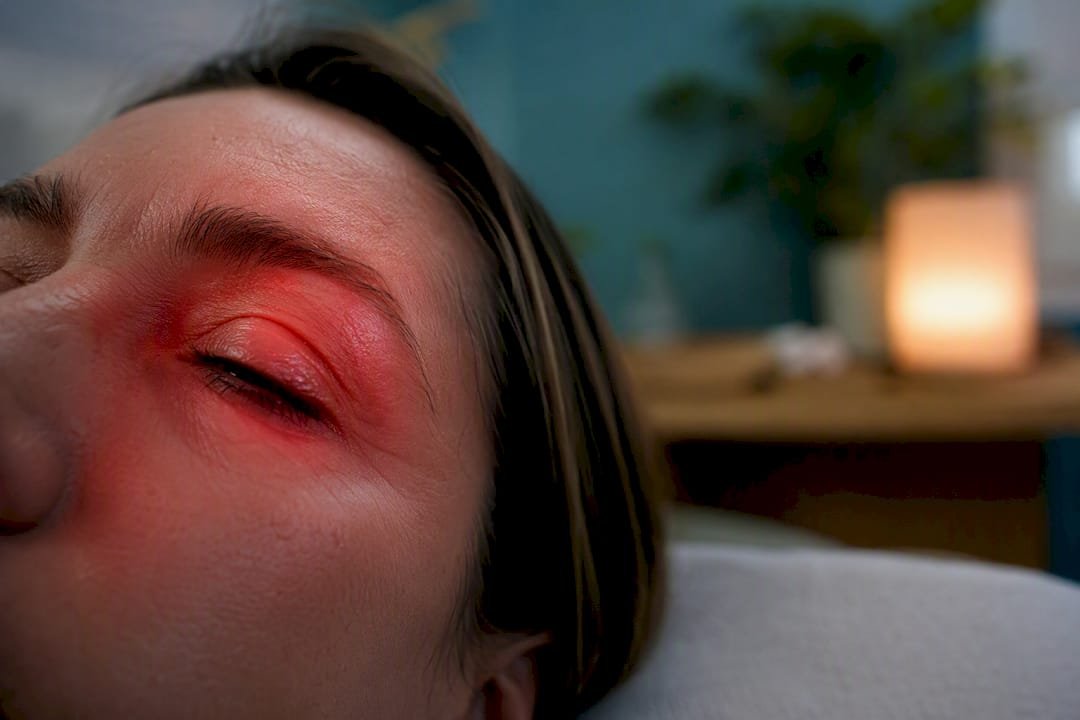
Eye safety is the most immediate concern. Direct, high-powered exposure to therapeutic panels should never be aimed at the eyes, and anyone with an existing eye condition, such as macular degeneration or a history of retinal issues, should get advice from an optometrist before beginning any light therapy protocol, ambient or therapeutic.
Photosensitising medications are a less obvious risk. Certain drugs, including some antibiotics, acne treatments and antidepressants, increase your skin’s sensitivity to light, including red and near-infrared wavelengths. If you take any medication with a photosensitivity warning, check with your GP or pharmacist first. Third-party contraindication guidance covers this in more detail, and Live5dhealth’s own contraindications page sets out who should avoid red light therapy sessions entirely.
Overnight or excessive exposure carries its own risk. Continuous light during actual sleep, even low-intensity red light, has been linked to reduced deep sleep and more fragmented sleep architecture. The protocols that show benefit use red light before sleep, not during it. Leaving a red night light on all night is not the same intervention as a 30-minute pre-bed session, and the two shouldn’t be confused.
A short list of when to pause and get proper advice:
- New or worsening insomnia after starting red light exposure.
- Increased anxiety, low mood, or unusual emotional reactivity you didn’t have before.
- Any unusual visual symptoms: glare sensitivity, afterimages, or blurred vision.
- Pre-existing eye disease or a history of light-triggered migraines.
If any of these apply, the sensible next step is a conversation with a sleep clinician or your GP, not a longer red light session in the hope things improve.
Where red light fits into your wider sleep routine
Red light works best as a supporting player, not the star of the show. The single most powerful lever for your circadian rhythm is still bright morning light, ideally natural daylight within the first hour of waking. Bright light therapy guidance from the American Academy of Sleep Medicine confirms that structured light exposure, timed correctly, is an established treatment for circadian rhythm disorders, and morning exposure anchors your clock far more reliably than anything you do in the evening.
Build your evening around a few well-established habits, then layer red light on top:
- Dim household lighting progressively in the hour or two before bed, rather than switching from bright to dark all at once.
- Set a screen curfew, or at minimum switch devices to night mode, since screens are a far bigger blue light source than most household bulbs.
- Keep your bedroom cool, ideally somewhere around 18°C, and as dark as possible once you’re actually trying to sleep.
- Stick to a consistent sleep and wake time, even at weekends. Consistency does more for circadian health than almost any single gadget.
Where do adjuncts like binaural beats fit? Preliminary research on slow-frequency binaural beats has shown some promise for shortening the time it takes to reach deeper sleep stages, though the evidence base is still small. Cognitive behavioural therapy for insomnia (CBT-I) has a considerably stronger evidence base for chronic insomnia and should generally be prioritised over light-based approaches if you have a diagnosed sleep disorder rather than occasional poor nights.
Live5dhealth: what supervised red light sessions look like
At Live5dhealth, red light therapy sits alongside hyperbaric oxygen therapy, PEMF and other recovery treatments as part of a broader wellness offering, and the reason we treat it this way is straightforward: red light works best when the wavelength, dose and timing are properly controlled, not eyeballed at home.
A typical in-clinic session involves:
- A brief safety check covering medications, skin sensitivity and any relevant eye conditions before your first session.
- Exposure using purpose-built photobiomodulation equipment with a known peak wavelength and irradiance, rather than a generic coloured bulb.
- Supervised timing and distance, so you’re not guessing at the protocols researchers actually used in published trials.
For readers wanting the fuller picture on services and safety, our complete red light therapy guide and contraindications page cover the detail this article doesn’t have space for.
| Point | Details |
|---|---|
| Verified device specs | Choose equipment with a listed peak wavelength and irradiance rather than a generic red colour claim. |
| Supervised sessions available | Live5dhealth offers in-clinic red light sessions with a pre-session safety check for medications and eye conditions. |
How red light may influence deep sleep and REM
The mechanistic story for red light’s effect on sleep architecture centres on reduced interference with melatonin release rather than any direct action on deep or REM sleep stages. Because red wavelengths engage melanopsin only weakly, they allow your body’s natural melatonin rise to proceed largely undisturbed in the evening, and melatonin itself plays a role in helping you transition into and maintain slow-wave (deep) sleep.
There isn’t strong direct evidence that red light actively boosts REM sleep specifically. The 2023 polysomnography study measured overall sleep efficiency and microarousals rather than isolating REM changes, and results varied between participants. Where sleep inertia studies used red light around waking, the proposed mechanism is different again: minimising an abrupt melanopsin signal at the moment of waking, rather than anything to do with prior sleep stages.
The honest summary is that red light’s influence on deep sleep is indirect. It removes a source of circadian disruption rather than actively deepening sleep the way, for instance, temperature regulation or specific medications might. That’s a meaningfully different claim from “red light increases deep sleep,” and it’s worth holding onto that distinction when you see stronger claims elsewhere.
Red light therapy versus other light-based sleep approaches
Bright light therapy, the kind used clinically for circadian rhythm disorders like delayed sleep phase syndrome, works in the opposite direction to red light. It uses intense white or blue-enriched light, typically in the morning, to actively shift your circadian clock forward. AASM guidance positions this as an established treatment with clear clinical indications, backed by a considerably larger evidence base than red light for sleep currently has.
Blue-light-blocking glasses take a different approach entirely: rather than adding a specific wavelength, they filter out the alerting wavelengths from your existing evening light sources, screens included. This can achieve a similar goal to red light (protecting your evening melatonin rise) without needing a dedicated light source at all.
Dawn simulation, gradually brightening light before your alarm, is another circadian tool, generally used to ease morning waking rather than to protect evening melatonin.
Where does red light sit among these? It’s the most passive, lowest-effort option of the group, requiring no glasses and no gradual timer, just a light source in the room. It also has the thinnest evidence base of the four for reliably changing sleep outcomes, which makes it a reasonable low-risk addition rather than a replacement for bright light therapy if you have a diagnosed circadian disorder.
Who should try red light, and who should be more cautious
Healthy adults with generally decent sleep who occasionally want a calmer evening environment are the safest, lowest-risk group to experiment with red light. If sleep is already reasonably good, red light is unlikely to cause harm and may offer a modest, pleasant improvement to your wind-down routine.
People with diagnosed insomnia disorder are a different case. The 2023 randomised trial specifically included an insomnia cohort alongside healthy participants, and results were not uniformly positive across that group. If you have a formal insomnia diagnosis, red light is worth discussing with a sleep clinician as a possible adjunct, not a substitute for evidence-based treatments like CBT-I.
Older adults should pay particular attention to eye health screening before starting any light-based routine, given the higher background rate of conditions like macular degeneration in this group. Shift workers may find the most specific, evidence-backed use case of all: red light exposure around waking to ease sleep inertia, rather than as a general bedtime tool.
Anyone on photosensitising medication, pregnant, or managing a mood disorder should treat red light as something to introduce cautiously and discuss with a healthcare provider first, given how individual the response can be.
Common myths about red light and sleep
Myth: any red light bulb works the same as a therapy panel. It doesn’t. Ordinary red-tinted household bulbs rarely emit the specific wavelength and irradiance used in clinical studies, even though they look similar to the eye.
Myth: red light will make you fall asleep instantly. The UAB researchers are direct about this: red light doesn’t create sleep, it simply interferes with your sleep systems less than other light. That’s a meaningfully smaller claim than most marketing suggests.
Myth: more red light is always better. Continuous or high-intensity overnight exposure has been linked to more fragmented sleep, not less. Dose and timing matter more than sheer duration.
Myth: red light is a cure for insomnia. The research on insomnia cohorts specifically shows mixed results, including increased microarousals for some participants. It’s an adjunct worth testing, not a standalone treatment for a diagnosed sleep disorder.
Myth: if it’s red, it’s automatically safe for your eyes. Ambient red light for a bedroom is fine; staring directly into a high-powered therapeutic panel is a different exposure entirely, and eye safety guidance still applies.
Combining red light with other sleep aids
Red light works best as one piece of a layered evening routine rather than a standalone fix, and how you sequence it matters. If you’re using a melatonin supplement, timing still governs everything: melatonin taken too late or too early can shift your circadian rhythm the wrong direction, so AASM’s guidance on light and circadian timing applies just as much to supplement timing as to light exposure. Speak to a pharmacist or GP about appropriate dosing and timing rather than guessing.
Relaxation techniques pair naturally with a red light wind-down window, since both address the same evening period without competing for attention. A short breathing exercise or progressive muscle relaxation during your 30 to 60 minute red light session gives you two evidence-informed inputs at once, rather than treating them as separate rituals.
Binaural beats can slot into the same window too, given the preliminary evidence that slow-frequency beats may shorten the time to deeper sleep stages. Introduce elements one at a time rather than all at once, though: stacking red light, a new supplement, breathing exercises and audio therapy simultaneously makes it almost impossible to know what’s actually helping you if your sleep improves. For a broader look at combining behavioural and physical approaches, Live5dhealth’s guide to evidence-based sleep treatments covers the full toolkit beyond light alone.
Why the conventional advice oversimplifies this
Most articles on red light and sleep flatten a genuinely mixed evidence base into a clean yes. The truth the research supports is messier and more useful: red light’s real advantage is what it avoids, not what it actively does. It doesn’t drug you into unconsciousness; it simply stops fighting your melatonin the way blue light does.
The conventional wisdom fails readers in two specific ways. First, it treats every red-tinted light as interchangeable with a validated 630 or 660nm panel, when the research behind the positive results used specific, measured wavelengths. Second, it ignores that a meaningful subset of people in controlled trials got worse, not better, with more fragmented sleep and increased microarousals.
What should you prioritise first? Get your morning light and sleep schedule consistent before you spend a penny on evening light equipment. That’s the higher-leverage lever, backed by considerably stronger evidence. Then treat red light as a genuine but modest experiment, tracked over two weeks, not a purchase you make and forget about.
— Mark
Try red light therapy the way the research actually supports
Live5dhealth’s supervised red light sessions solve the exact problem this article keeps circling back to: most red light disappointment comes from using the wrong wavelength, the wrong dose, or the wrong timing, not from the concept failing outright. Rather than guessing at panel specifications online, you get a session using purpose-built equipment with known irradiance and wavelength, checked against your own medical history first.

Our luxury spa in Boyle pairs red light sessions with sauna, steam and cold plunge facilities, so your evening wind-down routine and your recovery routine happen under one roof rather than across three separate appointments and three separate learning curves. If sleep has been a longer-standing struggle rather than an occasional bad week, our luxury healing retreats build red light therapy into a fuller, supervised reset alongside other evidence-informed treatments.
Book a session to see how a properly dosed, correctly timed red light protocol compares with whatever you’ve tried on your own so far.
Sources
- Is Red Light Good for Sleep? | Sleep Foundation
- Effects of red light on sleep and mood in healthy subjects and individuals with insomnia disorder – PMC
- Bright light therapy | Sleep Education (AASM)
- Does red light therapy improve sleep? | UAB News