
Photobiomodulation (PBMT), commonly called red light therapy, is a reasonable non-hormonal option to consider for genitourinary syndrome of menopause (GSM), particularly vaginal dryness, thinning, pain with sex, and some urinary symptoms. The evidence is promising but still preliminary: small clinical series and a growing number of controlled trials report meaningful improvements in objective vaginal health measures, yet large randomised trials are still needed before PBMT can be called a first-line treatment. If you are exploring this path, here are your immediate next steps:
- Speak to your GP or gynaecologist first if you have unexplained vaginal bleeding, a history of pelvic cancer, or are on photosensitising medications. These are contraindications that need clinical review before any light-based therapy.
- Consider a supervised clinical trial rather than an at-home device, so that wavelength, irradiance, and session length are properly controlled. Peer-reviewed studies using validated outcome measures such as the Vaginal Health Index (VHI) and Patient Global Impression of Change (PGI-C) consistently show better results under clinical protocols.
- Ask your provider specifically about device wavelength (typically 660–808 nm for vaginal protocols), measured irradiance, and their pre-treatment screening process. Live5dhealth, based in Boyle, County Roscommon, offers red light therapy with clinical oversight and is one of the few dedicated wellness centres in Ireland providing this service.
Key takeaways
PBMT is a non-hormonal, tissue-level therapy with consistent early evidence for improving vaginal dryness, atrophy, and dyspareunia in postmenopausal women, but large randomised trials are still needed to confirm long-term efficacy and safety.
| Point | Details |
|---|---|
| Evidence is promising but preliminary | Small trials show significant VHI improvements; one RCT supports urinary benefits; large multicentre trials are still needed. |
| Safety profile is reassuring | Heat sensation is the most common side effect; 146 of 148 adverse events in the MILTA GYNECO study were minor. |
| Protocol precision matters | Wavelengths of 660–808 nm with measured irradiance are required; vague dosing from a provider is a red flag. |
| PBMT complements, not replaces, other GSM care | Topical oestrogen remains first-line for most women; PBMT is a non-hormonal adjunct or alternative for those who cannot or prefer not to use it. |
| Live5dhealth offers supervised sessions in Ireland | Based in Boyle, County Roscommon, Live5dhealth provides red light therapy with pre-treatment screening and protocol oversight. |
Table of Contents
- How does red light therapy work on vaginal tissue?
- Which menopause symptoms can PBMT realistically help?
- What does the clinical evidence actually show?
- Is red light therapy safe? Side effects and contraindications
- What types of devices are used for vaginal PBMT?
- What does a typical treatment course look like, and what does it cost in Ireland?
- How does PBMT fit with other GSM treatments?
- Questions to ask a clinic before you book
- Live5dhealth’s red light therapy offering in Ireland
- Weighing hope against evidence: an editorial perspective
- Red light therapy for menopause at Live5dhealth: book a consultation
- Sources
How does red light therapy work on vaginal tissue?
The mechanism behind photobiomodulation for menopause-related vaginal symptoms starts at the mitochondrial level. Red and near-infrared light is absorbed by cytochrome c oxidase, an enzyme in the mitochondrial respiratory chain that acts as the cell’s primary photoacceptor. This absorption increases the production of adenosine triphosphate (ATP), the cell’s energy currency, and triggers a cascade of downstream effects that are directly relevant to GSM.
In vaginal tissue, those downstream effects include stimulation of collagen and elastin synthesis, improved local microcirculation through vasodilation, and a reduction in local inflammatory markers. Published literature confirms that PBMT can stimulate collagen synthesis and improve microcirculation without causing thermal injury, provided irradiance stays within recommended parameters. For postmenopausal women, whose vaginal mucosa has thinned and lost elasticity due to oestrogen withdrawal, these tissue-level changes translate into measurable improvements in mucosal thickness, moisture, and suppleness.
Wavelength determines how deeply light penetrates tissue. Red light at around 660 nm penetrates superficial mucosal layers effectively, while near-infrared wavelengths up to approximately 808 nm reach deeper submucosal and muscular tissues. Research on device parameters confirms that inadequate wavelength selection or insufficient irradiance reduces clinical effect, which is why protocol precision matters so much in a clinical setting.
Statistic callout: In a single-centre prospective study of 27 postmenopausal women, eight weekly sessions of pulsed 660 nm intravaginal PBMT of pulsed 660 nm intravaginal PBMT produced statistically significant VHI improvements that persisted at three-month follow-up, with no adverse events recorded.
Pro Tip: Ask any clinic to confirm the irradiance (measured in mW/cm²) their device delivers at the tissue surface, not just the wavelength. A device emitting the right colour of light at insufficient power will not reach the cellular targets that drive tissue change.
Which menopause symptoms can PBMT realistically help?
PBMT addresses the downstream tissue consequences of oestrogen withdrawal rather than the hormonal deficit itself. That distinction matters for setting realistic expectations.
Symptoms with meaningful clinical support:
- Vaginal dryness: Consistently the most-reported improvement in PBMT trials. Improved mucosal moisture and secretion are linked to restored epithelial thickness and microcirculation.
- Vaginal atrophy and thinning (measured by VHI): Objective VHI improvements are the most replicated finding across prospective series, including the 27-patient PLOS ONE study and the MILTA GYNECO safety study.
- Dyspareunia (pain with sex): Pain scores improved significantly in the MILTA GYNECO first-in-human study, which enrolled 25 postmenopausal patients and reported statistically significant reductions in pain alongside VHI gains.
- Stress urinary incontinence (SUI) and lower urinary tract symptoms: A randomised, double-blind, placebo-controlled trial found that 808 nm PBMT applied to vaginal points reduced urinary loss and improved vaginal dryness and burning compared with sham treatment, offering the strongest controlled evidence yet for urinary benefits.
Symptoms PBMT does not address:
- Systemic oestrogen levels: PBMT does not raise circulating oestrogen or replace hormonal therapy.
- Vasomotor symptoms (hot flushes, night sweats): No reliable clinical evidence supports PBMT for these.
- Bone density loss: Collagen stimulation in vaginal tissue does not translate to skeletal protection.
- Mood and cognitive symptoms: Some integrative practitioners discuss PBMT for mood, but the evidence for menopause-specific mood effects remains very early-stage.
The honest picture is that PBMT is a tissue-level therapy. Where GSM symptoms stem from local mucosal and connective tissue changes, it has a plausible and increasingly supported role. Where symptoms are systemic or hormonal in origin, other treatments remain more appropriate.
What does the clinical evidence actually show?
The evidence base for PBMT in GSM is growing but still maturing. Here is a clear-eyed summary of what the published literature shows and where the gaps remain.
Key studies:
A first-in-human safety study of the MILTA GYNECO intravaginal PBMT probe enrolled 25 postmenopausal patients and reported that 146 of 148 adverse events were minor, predominantly heat sensation. VHI and pain scores improved significantly, and the authors called for randomised trials to confirm efficacy. The PubMed-indexed publication represents one of the most rigorous safety datasets available for an intravaginal probe.
The PLOS ONE prospective series used pulsed 660 nm light in 27 postmenopausal women across eight weekly sessions of 30 minutes each. VHI improvements were significant at end of treatment and remained significant at three-month follow-up, with improvements also seen in some urinary and sexual function measures.
The most controlled evidence comes from a randomised, double-blind, placebo-controlled trial using 808 nm PBMT at vaginal points, which reported reduced urinary loss and improved dryness and burning versus sham. A peer-reviewed review concluded that PBMT is a plausible, generally safe option for GSM with preliminary efficacy signals, while noting the FDA has not approved devices specifically for these indications.
Evidence summary and limitations:
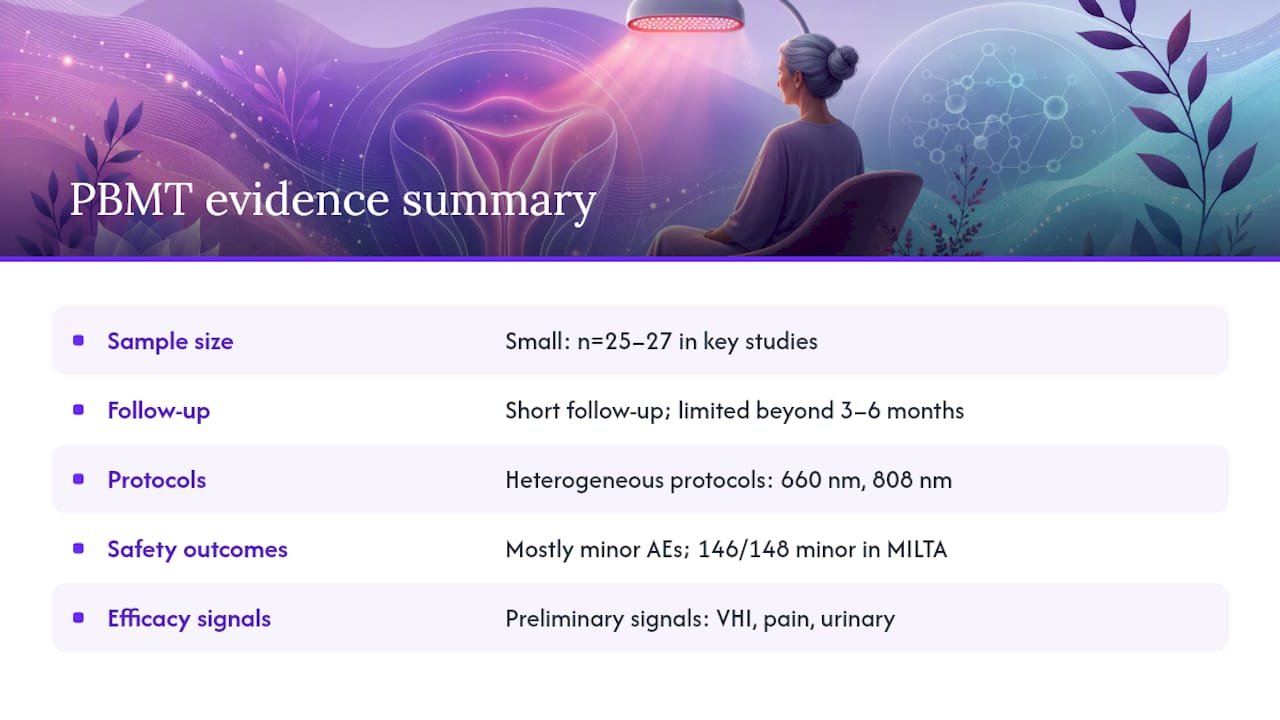
The main methodological weaknesses across the literature are small sample sizes, short follow-up periods, heterogeneous protocols (different wavelengths, irradiance levels, and session lengths), and the absence of long-term safety data beyond three to six months. The FDA has previously warned about energy-based devices marketed for vaginal “rejuvenation” without robust evidence, and not all devices on the market carry regulatory approval for GSM indications.
Is red light therapy safe? Side effects and contraindications
PBMT has been well tolerated in published trials. The most common adverse event is a local heat sensation during or after treatment, which is generally mild and transient. Clinical series consistently report that serious adverse events are uncommon when devices are used within recommended irradiance ranges.
Contraindications to discuss with your clinician before starting:
- Active pelvic or gynaecological cancer, or a history of pelvic malignancy not yet cleared by your oncologist
- Unexplained or untreated vaginal bleeding
- Photosensitising medications (certain antibiotics, antifungals, and psychiatric medications increase light sensitivity)
- Pregnancy, where device guidance advises against use
- Active uncontrolled vaginal or pelvic infection
- Severe vaginal stenosis that prevents safe probe insertion (for intravaginal devices)
Red flags that require immediate medical review:
- Heavy or unexplained vaginal bleeding before, during, or after treatment
- New lumps or masses in the pelvic region
- Severe or worsening pelvic pain
- Systemic symptoms such as fever, chills, or unexplained weight loss
For a comprehensive overview of who should avoid red light therapy, the contraindications guide at Live5dhealth covers the key screening criteria in plain language. You can also review clinical contraindication guidance from a specialist bone health and rehabilitation perspective.
Pro Tip: Before your first session, bring a full medication list to your consultation. Photosensitising drugs are easy to miss because they include some common medications for skin conditions, mood, and infections. Your clinician should screen for these as part of a pre-treatment review.
What types of devices are used for vaginal PBMT?
Not all red light devices are equivalent, and the delivery method significantly affects which tissues receive energy and at what dose.
Intravaginal contact probes are the most studied device type for GSM. These are stationary silicone light-guide probes inserted into the vaginal canal, designed to deliver circumferential irradiation to the mucosal surface. Because they maintain direct contact with the tissue, they minimise variability in energy delivery, which is particularly important for women with vaginal narrowing or fragile mucosa. The MILTA GYNECO (PHYSIOQUANTA) device used in the 2026 safety study is an example of this category. Stationary probes are preferred in many trials precisely because rotating or frictional devices introduce inconsistency in dose delivery.
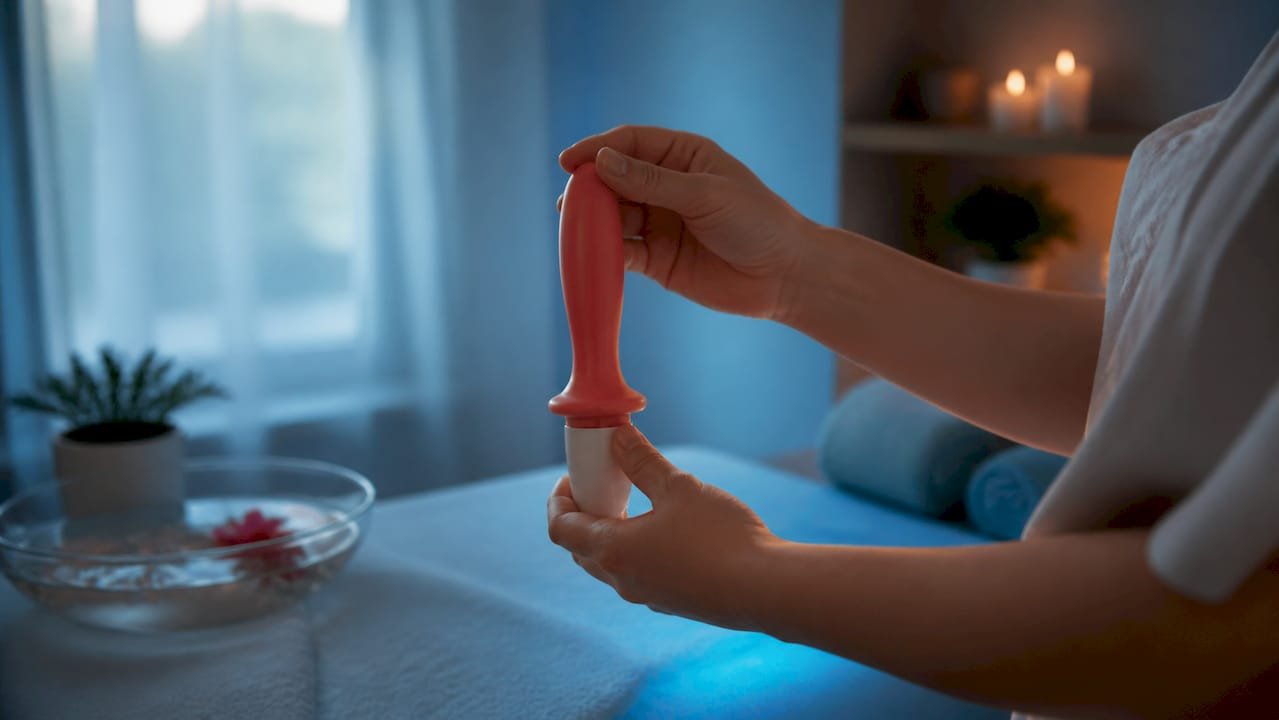
Intravaginal LED wands are a consumer-facing category that includes devices such as the Joylux vFit and vSculpt. These combine red or near-infrared LED light with gentle vibration and mild thermal energy. They are designed for home use and have been cited in the broader PBMT review literature, though the clinical evidence base for these specific devices is less extensive than for clinical-grade probes.
External panels and pads deliver red or near-infrared light to the perineal or pelvic surface without insertion. Penetration depth is lower than intravaginal delivery, but external panels may be appropriate for perineal tissue, pelvic floor muscles, or patients who cannot tolerate intravaginal devices.
Device parameter comparison:
In Ireland, clinical intravaginal PBMT is most commonly available through private pelvic health centres, selected gynaecology clinics, and dedicated wellness clinics such as Live5dhealth. For a broader overview of red light therapy availability in Ireland, including device regulation and what to look for in a provider, the Live5dhealth guide covers the local context in detail.
What does a typical treatment course look like, and what does it cost in Ireland?
Understanding the time and financial commitment before you book is straightforward once you know what the clinical protocols actually involve.
- Initial intensive phase: Most clinical protocols reported in trials use six to eight weekly sessions as the foundation of treatment. The 27-patient PLOS ONE study used eight weekly sessions of pulsed 660 nm intravaginal PBMT, with significant VHI improvements observed at the end of this phase and maintained at three-month follow-up.
- Session logistics: A typical clinical session lasts 20–30 minutes for intravaginal probe protocols. You will be asked to undress from the waist down, the probe is gently inserted and positioned, and the device runs its programmed cycle. Sessions are generally painless, though a mild warmth is common. Aftercare is minimal: most clinics advise avoiding vigorous exercise or sexual activity for 24 hours post-session.
- Timeline to improvement: Objective tissue changes (measurable VHI improvement) are typically reported after several weeks of treatment. Subjective symptom relief, particularly reduced dryness and discomfort, may begin earlier for some women, though individual response varies.
- Maintenance sessions: Collagen changes can regress without ongoing treatment. Clinical commentary consistently recommends periodic maintenance sessions after the initial course, commonly monthly or every six to eight weeks, to sustain tissue effects.
- Cost in Ireland: Private clinic pricing for intravaginal PBMT in Ireland typically ranges from €80 to €150 per session, depending on device type, clinician time, and clinic location. An initial intensive course of eight sessions therefore represents a total investment in the region of €640 to €1,200. Some clinics offer package pricing that reduces the per-session cost. Live5dhealth’s pricing is available directly through their booking enquiry process.
How does PBMT fit with other GSM treatments?
PBMT works best when understood as a complement to, rather than a replacement for, established GSM care. The treatment landscape for GSM includes several well-evidenced options, and knowing where PBMT sits helps you and your clinician make an informed decision.
Topical oestrogen remains the most evidence-rich treatment for GSM. It directly addresses the hormonal deficit driving mucosal thinning and is recommended by most gynaecological societies as first-line therapy for women without contraindications. PBMT does not replicate this mechanism. For women who cannot or prefer not to use topical oestrogen, whether due to personal preference, a history of hormone-sensitive cancer, or incomplete response, PBMT offers a non-hormonal tissue-level alternative.

Non-hormonal moisturisers and lubricants address symptom management without tissue remodelling. They are appropriate for mild symptoms and can be used alongside PBMT without interaction concerns.
Pelvic physiotherapy targets pelvic floor muscle function, which is often impaired in women with GSM-related urinary symptoms or dyspareunia. PBMT and pelvic physiotherapy address different aspects of the same problem and can be combined effectively. If urinary symptoms are a primary concern, the pelvic floor dysfunction guide at Live5dhealth explains how physiotherapy and light-based therapies can work together.
Energy-based devices (fractional laser, radiofrequency): These share some tissue-remodelling mechanisms with PBMT but use thermal injury as the stimulus for collagen remodelling, which carries a different risk profile. A peer-reviewed review notes that PBMT achieves collagen stimulation without thermal injury, which may make it preferable for women with fragile mucosa or those who have had previous pelvic radiation.
Statistic callout: The randomised controlled trial using 808 nm PBMT at vaginal points reported improvements in both urinary loss and vaginal dryness compared with sham, suggesting that a single PBMT protocol may address multiple GSM symptom domains simultaneously.
When combining therapies, allow adequate time between sessions of different energy-based modalities to avoid overlapping thermal or photochemical effects. Your clinician should coordinate timing if you are using more than one device-based treatment.
Questions to ask a clinic before you book
Choosing a provider for vaginal PBMT in Ireland requires more than checking a price list. These questions will help you assess competence, safety, and realistic expectations before committing to a course.
Questions about the device and protocol:
- What wavelength does your device use, and what is the measured irradiance at the tissue surface?
- Is this an intravaginal contact probe, an LED wand, or an external panel? How does that affect tissue penetration?
- How many sessions do you recommend, and what is the evidence base for that protocol?
- Do you use a standardised session length, and how do you adjust for individual anatomy?
Questions about clinical oversight:
- Who conducts the pre-treatment medical review, and what does it include?
- Do you screen for contraindications including cancer history, medications, and active infections?
- How do you measure outcomes? Do you use validated tools such as the VHI or symptom questionnaires?
- What is your follow-up plan if I do not respond as expected?
Red flags to watch for in a provider:
- Vague or evasive answers about device parameters or irradiance
- Claims that PBMT will replace hormone replacement therapy (HRT) or cure menopause
- No pre-treatment medical review or eligibility screening
- No outcome measurement or follow-up plan after the initial course
- Pressure to purchase a long package before any assessment
Verifying that a provider records device parameters and uses validated outcome measures is the single most reliable indicator of clinical rigour. A provider who cannot tell you the irradiance their device delivers is not operating to a clinical standard.
Live5dhealth’s red light therapy offering in Ireland
Live5dhealth, located in Boyle, County Roscommon, is one of Ireland’s dedicated wellness centres offering red light therapy as part of a broader suite of advanced therapies. For women navigating GSM and menopause-related symptoms, the centre provides red light therapy sessions with attention to protocol parameters, pre-treatment screening, and aftercare guidance.
The centre’s offering sits within a wider clinical wellness context that includes PEMF therapy, hyperbaric oxygen therapy, holistic massage, luxury sauna, steam room, and cold plunge spa. This integrated environment means that PBMT can be combined with complementary therapies that support overall wellbeing during menopause, from stress management to circulation support.
Who is most likely to benefit from a clinic-based trial at Live5dhealth:
- Women with mild to moderate GSM symptoms (dryness, discomfort, early atrophy) who prefer a non-hormonal approach
- Women who cannot use topical oestrogen due to personal preference or medical history
- Women who have had an incomplete response to moisturisers and lubricants alone
- Women seeking a supervised, protocol-driven course rather than an unmonitored home device
Before your first session, a pre-treatment consultation covers your health history, current medications, and symptom profile. Device parameters are recorded, and aftercare instructions are provided at the end of each session. To find out more or to book a consultation, visit the Live5dhealth luxury spa and wellness centre page.
Weighing hope against evidence: an editorial perspective
The conversation around PBMT for GSM sits in an interesting place right now. The biological rationale is genuinely compelling, the safety profile in published trials is reassuring, and the early efficacy signals are consistent enough to take seriously. At the same time, the honest answer is that we are still in the early chapters of the clinical story. Small samples, short follow-up periods, and heterogeneous protocols mean that the field has not yet produced the large, multicentre randomised trials that would move PBMT from “promising” to “established.”
What I find encouraging is the quality of the questions being asked. Researchers are now using validated outcome measures, designing placebo-controlled trials, and publishing safety data transparently. That methodological maturity is a good sign. What I would caution against is the tendency, on both the enthusiast and the sceptic side, to treat the current evidence as more definitive than it is. PBMT is not a replacement for topical oestrogen in women who can use it, and it is not a fringe therapy to be dismissed either. It occupies a genuinely useful middle ground for women who need a non-hormonal, tissue-level option.
The most important thing you can do is approach this with clinical oversight, clear outcome measures, and realistic expectations. A provider who measures your VHI before and after treatment is giving you something valuable: evidence about whether the therapy is working for you specifically, not just for the average of a small trial cohort.
Red light therapy for menopause at Live5dhealth: book a consultation
If you have read this far, you are already asking the right questions. Live5dhealth offers red light therapy sessions in a supervised, wellness-focused clinical environment in Boyle, County Roscommon, designed for women who want a non-hormonal, evidence-informed approach to GSM and menopause-related symptoms.

A first consultation at Live5dhealth includes a review of your symptom profile and health history, a discussion of device parameters and what to expect from a supervised course, and clear guidance on whether PBMT is appropriate for your situation. The centre’s integrated approach means you can also explore complementary therapies, from PEMF to sauna and cold plunge, as part of a broader menopause wellness plan. If you are considering a more immersive experience, healing retreats at Live5dhealth offer multi-day programmes that can incorporate red light therapy alongside other advanced modalities.
To book your consultation or find out more about what a supervised course involves, visit the Live5dhealth wellness centre and get in touch with the team directly.
This article provides general health information and is not a substitute for professional medical advice. Speak to your GP or gynaecologist before starting any new therapy, particularly if you have a complex health history.