
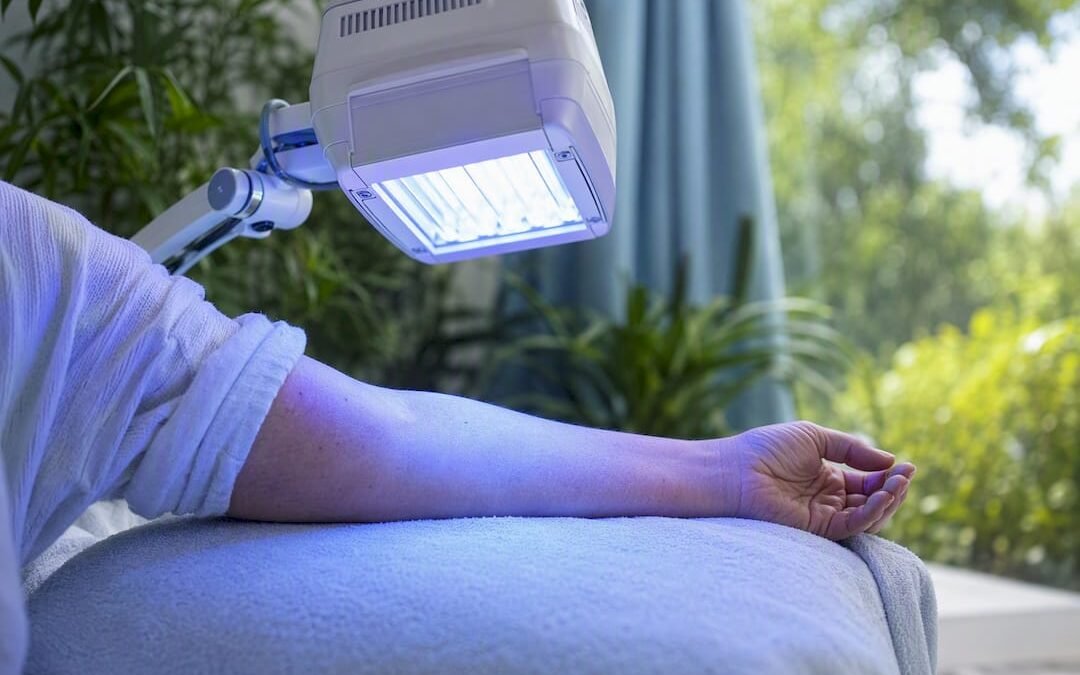
Controlled UVB exposure can raise circulating vitamin D and correct deficiency in many people, provided the wavelength, dose, and treated surface area are right. It’s not a universal fix, and it’s not a substitute for medical guidance.
If your blood test shows low vitamin D, the first step is a conversation with your GP, not a lamp purchase. From there, supervised phototherapy or oral supplementation both have their place, depending on why your levels are low.
UVB tends to help most when:
- Malabsorption conditions (Crohn’s disease, cystic fibrosis, coeliac disease) block oral vitamin D absorption
- You’ve had genuine intolerance or side effects from oral supplements
- Deficiency persists despite consistent supplementation
Pro Tip: Ask your GP for a serum 25-hydroxyvitamin D test before starting anything. You cannot judge whether UVB therapy is working, or safe, without a baseline number to compare against.
Key Takeaways
Controlled UVB exposure raises circulating vitamin D reliably only when wavelength, dose, and treated surface area are all adequate, and supervision is what makes that reliability possible.
| Point | Details |
|---|---|
| Evidence is real but conditional | Case series and NB-UVB trials show genuine rises in 25(OH)D, but small-area or low-dose home protocols sometimes fail entirely. |
| Wavelength precision matters | Narrow-band UVB around 311 nm is the established clinical standard; broad-spectrum or tanning devices are not equivalent. |
| Surface area beats short bursts | Whole-body or large-area exposure consistently outperforms hands-and-face-only devices in trial data. |
| Monitor with 25(OH)D testing | Retest at 8 to 12 weeks after starting therapy, then every 3 to 6 months for maintenance. |
| Supervision reduces risk | Contraindications like photosensitivity disorders or prior skin cancer require clinical clearance before any UV therapy. |
| Live5dhealth offers supervised sessions | Live5dhealth’s Boyle centre provides controlled UV light therapy alongside broader wellness assessment, rather than unsupervised home use. |
Table of Contents
- What the clinical evidence says about UV therapy and vitamin D
- How does UVB actually make vitamin D in your skin?
- Which types of UV lamps and phototherapy actually raise vitamin D?
- How much UVB exposure raises vitamin D, and does surface area matter?
- What are the safety risks and who should avoid UV therapy?
- Should you choose clinic phototherapy or a home UVB lamp?
- How do you monitor vitamin D levels during UV therapy?
- What should you ask before starting UV therapy?
- Where I land on UVB therapy versus supplements
- How Live5dhealth approaches UV therapy safely
- Frequently asked questions
- Sources
What the clinical evidence says about UV therapy and vitamin D
The proof of concept is solid: controlled UV exposure does raise serum 25(OH)D. A case series treating patients with malabsorption syndromes found that eight weeks of structured sunlamp exposure increased circulating 25(OH)D and reduced the prevalence of severe deficiency among those studied. That’s a meaningful result for people whose gut simply can’t absorb oral vitamin D, whatever the dose.
Dermatology trials add a second strand of evidence. Patients undergoing narrow-band UVB (NB-UVB) treatment for psoriasis and similar conditions have shown clinically meaningful rises in 25(OH)D during winter months, when sunlight alone would otherwise leave levels falling. This matters because it shows the effect holds up in real clinical populations, not just small pilot groups.
But the picture isn’t uniformly positive, and this is where a lot of guides go quiet.
A study of home-based UVB therapy found that a cumulative dose of 12 SED over eight weeks, capped at roughly 0.3 SED per day, was insufficient to prevent winter declines in 25(OH)D in some participants. In plain terms: low, conservative home dosing sometimes simply doesn’t move the needle enough.
Three things explain the gap between trial success and trial failure:
- Sample sizes are often small. Many of the strongest results come from case series of a handful of patients, not large randomised trials.
- Dosing varies wildly between studies. There’s no single agreed protocol for “vitamin D phototherapy” the way there is for psoriasis treatment.
- Device and surface area matter enormously. A whole-body sunlamp session and a hands-only device produce very different results, even at similar durations.
The honest confidence level: UVB can reliably raise 25(OH)D under the right conditions, and the mechanism is well understood. Whether a specific device, dose, and schedule will work for you is far less certain, which is precisely why monitoring and clinical input matter so much.
How does UVB actually make vitamin D in your skin?
The process happens entirely in your epidermis, and it’s worth understanding because it explains almost every dosing rule that follows.
Ultraviolet B photons strike a compound called 7-dehydrocholesterol in your skin cells. This converts it into previtamin D3, which then undergoes a slower, heat-driven transformation (thermal isomerisation) into vitamin D3 itself. From there, your liver and kidneys convert it into the active hormone your body actually uses, and the form your blood test measures, 25(OH)D, is the intermediate marker of your overall status.
Several factors change how much vitamin D you generate from a given UV dose:
- Wavelength — only a narrow UVB band drives the reaction efficiently
- Time of day and season — the UVB fraction of sunlight peaks around midday and drops sharply in winter at higher latitudes
- Skin pigment — more melanin absorbs more UVB, requiring longer exposure for the same effect
- Age — older skin produces less previtamin D3 for the same UV dose
- Body surface area exposed — more skin exposed means more total conversion
- Sunscreen and clothing — both block the UVB wavelengths needed for synthesis
Picture it as a simple chain: UVB photons hit exposed skin, skin chemistry converts a cholesterol precursor into vitamin D3, and your circulation carries it onward to become the 25(OH)D your doctor measures.
Usefully, this system self-regulates. Prolonged UVB exposure doesn’t push vitamin D to toxic levels because your skin starts producing inert photoproducts, such as lumisterol, instead of more vitamin D once you’ve had enough. That’s a safety mechanism oral supplements simply don’t have.
Which types of UV lamps and phototherapy actually raise vitamin D?
Not every UV device is built for the same job, and mixing them up is where people get into trouble.
Narrow-band UVB (NB-UVB, often labelled TL-01) emits a tight band around 311 nanometres. It’s the established clinical phototherapy standard, used widely for psoriasis, eczema and vitiligo, and it’s generally more effective than broad-band UVB for these dermatological indications. Because it’s precisely targeted, it also limits unnecessary UV load compared with broader spectrum devices.
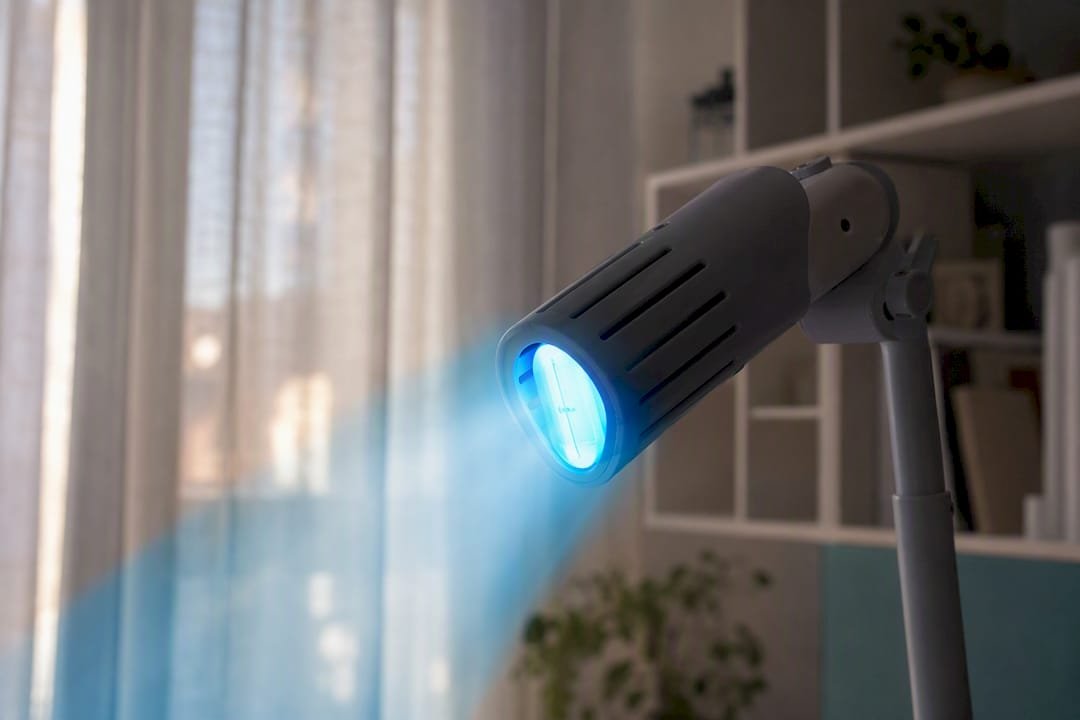
Broad-band UVB (BB-UVB) covers a wider wavelength range. It still stimulates vitamin D synthesis but with less precision, meaning more total UV exposure for a comparable dermatological or vitamin D effect.
Consumer UVB sunlamps are the home-use category most relevant to vitamin D correction. Genuine devices should specify their wavelength output clearly, ideally within or close to the vitamin D synthesis window.
SAD lamps and red light devices don’t count here. Seasonal affective disorder lamps and red light therapy panels work through entirely different mechanisms and emit little to no UVB. If vitamin D synthesis is your goal, these devices simply won’t deliver it, regardless of how effective they are for their intended purpose. If you’re weighing up red light therapy for other reasons, it’s worth understanding what it actually does and doesn’t do before assuming it overlaps with UVB.
Tanning beds are not a vitamin D solution. Most emit a heavy UVA load alongside UVB, UVA contributes essentially nothing to vitamin D synthesis but drives photoageing and skin cancer risk. Using a tanning bed to “get your vitamin D” is a poor trade of real cancer risk for uncertain benefit.
Pro Tip: Before buying any home UVB device, check whether the manufacturer publishes an actual wavelength specification in nanometres. If they only advertise “UV light” without a number, treat that as a red flag, not a feature.
How much UVB exposure raises vitamin D, and does surface area matter?
Trial dosing tends to hinge on four variables working together: irradiance (measured in mJ/cm² or SED, standard erythema dose), wavelength, session duration, and how much skin is actually exposed. Change one without adjusting the others and you can get wildly different results from what looks like “the same” treatment.
Here’s what that looked like across the studies with usable data:
- Malabsorption case series. Eight weeks of structured sunlamp sessions, generally covering larger skin areas, raised 25(OH)D and reduced the rate of severe deficiency in patients who couldn’t absorb oral vitamin D at all.
- NB-UVB dermatology cohorts. Patients receiving whole-body or large-area NB-UVB for skin conditions showed meaningful winter rises in 25(OH)D, a useful side benefit alongside their primary treatment.
- Conservative home-based dosing. A cumulative dose of just 12 SED spread over eight weeks (roughly 0.3 SED per day) failed to prevent winter declines in some participants, showing that low, cautious dosing can simply be too weak to matter.
- Limited-exposure devices. A Health Research Authority-registered project is specifically investigating whether small-area NB-UVB exposure, such as hands and face only, can correct deficiency. The fact this remains an open research question tells you something: it isn’t yet established that limited-area devices work as well as whole-body exposure.
The pattern across all four is consistent. Larger treated surface area and adequate cumulative dose correlate with real, sustained rises in 25(OH)D. Small-area, low-dose approaches (a face-and-hands lamp used briefly) tend to produce smaller effects, and in some trials, none that outlasted the season.
Pro Tip: Think of surface area like a solar panel. A tiny panel in full sun still only generates a trickle of power. If a device only exposes your hands and face, understand you’re working with a small panel, and manage your expectations, and your monitoring schedule, accordingly.
What are the safety risks and who should avoid UV therapy?
UV therapy is not without risk, and it’s not appropriate for everyone. The trade-off is real, and being honest about it is what separates responsible guidance from wishful marketing.
Contraindications that should stop you from starting UV therapy without specialist clearance:
- A personal history of melanoma or other skin cancer
- Photosensitivity disorders (lupus, porphyria, xeroderma pigmentosum)
- Certain medications that increase photosensitivity, including some antibiotics, diuretics, and retinoids
- Very fair skin with a strong history of sunburn
- Active skin infections or open lesions in the treatment area
Short-term harms include erythema (skin reddening, essentially a controlled sunburn if overdosed) and phototoxic reactions when combined with certain medications or skincare ingredients. Long-term risks centre on photoageing and, with repeated overexposure, increased skin cancer risk. Reviews of phototherapy note it’s safe and effective when delivered under clinical control, but that qualifier, “under clinical control”, is doing a lot of work in that sentence.
A basic safety checklist before any session:
- Wear UV-blocking eyewear throughout, without exception
- Never exceed the recommended session duration or frequency for your skin type
- Start conservatively and increase dose incrementally, never jump straight to a “standard” dose on unfamiliar skin
- Adjust exposure time for your Fitzpatrick skin type; fairer skin needs shorter sessions
- Have a clinician review your protocol periodically, particularly if you have any of the contraindications above
Pro Tip: If you’ve been cleared for home UVB use with any contraindication on your medical history, put a recurring reminder in your calendar for a skin check with your GP or dermatologist, at minimum every six months. Home use should never mean unsupervised indefinitely.
Should you choose clinic phototherapy or a home UVB lamp?
Clinic-based phototherapy has three structural advantages a home lamp can’t fully replicate: medically calibrated dosing based on your specific skin type, staff oversight during sessions, and the ability to treat larger surface areas safely under supervision, as offered by OsteoStrong Tysons VA – OsteoStrong. For anyone with malabsorption issues, a history of skin cancer, or photosensitivity, this level of oversight isn’t a luxury, it’s the difference between a therapeutic dose and a dangerous guess.
Home lamps offer convenience and, for maintenance-phase therapy once you’re stable, better long-term cost than repeated clinic visits. They’re not automatically inappropriate, but they demand more diligence from you.
If you’re evaluating a home device, check for all of the following before buying:
- A clearly stated wavelength specification, ideally close to the vitamin D synthesis window
- Published irradiance data, not just “high power” marketing language
- Safety interlocks that prevent accidental overexposure
- Included UV-blocking eyewear and a working distance/timer control
- Some reference to published clinical data behind the device’s design, not just anecdotal claims
For anyone with photosensitivity, a previous skin cancer diagnosis, or genuine uncertainty about their skin type’s tolerance, a supervised, prescribed protocol beats a self-managed home device every time. That conversation starts with your GP or a dermatologist, not with a product page.
How do you monitor vitamin D levels during UV therapy?
The test you want is serum 25-hydroxyvitamin D, written as 25(OH)D on your results. It’s the standard marker used in both the trials cited above and routine clinical practice. Labs report results in either nmol/L or ng/mL, so check which unit your GP is using before comparing your number against any target range you’ve seen online.
A sensible monitoring rhythm looks like this:
- Baseline test before starting any UV therapy, so you have a genuine “before” figure
- Retest at 8 to 12 weeks, which is roughly when trial data shows measurable change, if it’s going to happen
- Maintenance testing every 3 to 6 months once you’ve stabilised, adjusted for how your levels respond
What you do with those results matters as much as the testing itself:
- If levels aren’t rising after 12 weeks, that’s your signal to discuss adding oral supplementation rather than simply increasing UV dose
- If levels rise faster than expected, your clinician may reduce session frequency
- Any unexpected skin reaction warrants an immediate specialist review, not a “wait and see”
What should you ask before starting UV therapy?
Two technical details separate a device or clinic protocol worth trusting from one that’s guessing. First, wavelength precision: research points to roughly 295 nanometres as particularly efficient for vitamin D synthesis, allowing meaningful conversion while limiting total UV load compared with broader-spectrum devices. Second, surface area consistently outperforms short bursts on small patches of skin, a pattern that holds across the trial data discussed above.
Before committing to a clinic or device, ask:
- What’s the exact wavelength output, and is it published, not just claimed?
- What surface area does the protocol actually treat?
- What clinical data supports this specific device or programme?
Pro Tip: Device wavelength accuracy and transparent published dosing data are among the most reliable predictors of whether a UV programme will actually move your vitamin D levels, more reliable, in practice, than marketing claims about power or intensity.
Where I land on UVB therapy versus supplements
My honest view: for people with genuine malabsorption or documented intolerance to oral vitamin D, supervised UVB deserves serious consideration, the case series evidence for that group is genuinely persuasive. For everyone else with straightforward deficiency, a well-dosed oral supplement is simpler, cheaper, and far easier to titrate precisely than any lamp.
Where I’d push back on typical guidance is the assumption that home UVB is a safe default alternative to a GP visit. It isn’t. Medical supervision and objective 25(OH)D retesting aren’t optional extras, they’re what make the difference between therapy and guesswork.
How Live5dhealth approaches UV therapy safely
If you’ve read this far, you already understand why UV therapy for vitamin D only really works when the wavelength, dose, and supervision are right, not left to a lamp you bought online with no published specs. That’s precisely the gap Live5dhealth’s Boyle centre is built to close: controlled UV light therapy delivered on-site, alongside the broader wellness assessment needed to interpret your results properly, rather than a device sitting in your spare room with nobody checking your progress.
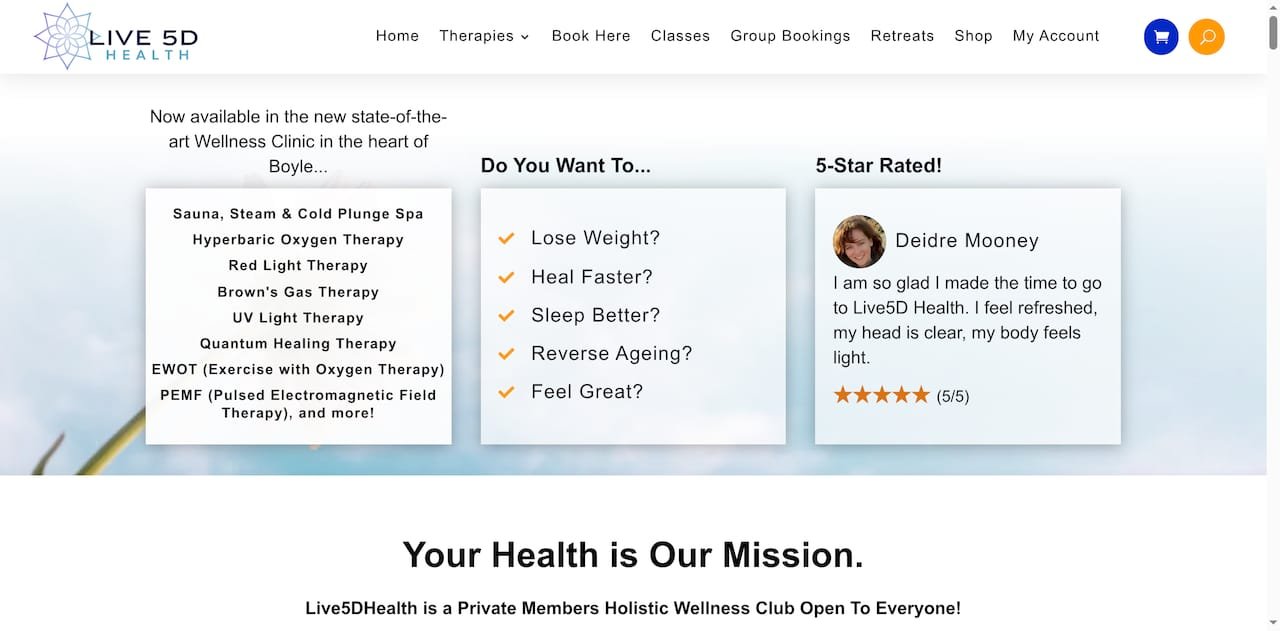
A first visit typically starts with a conversation about your health history and goals, so your session can be tailored to what’s actually appropriate for your skin and circumstances. If you’re managing a chronic condition or have any of the contraindications discussed above, we’ll always encourage you to loop in your GP or dermatologist alongside any therapy booked here. Explore the luxury spa and therapy centre in Boyle to see what a supervised session looks like, or browse the supplement range if oral vitamin D support is the more sensible starting point for you. Book an assessment to find out which path fits your situation.
Frequently asked questions
Can UV light therapy really increase vitamin D levels?
Yes, controlled UVB exposure raises circulating 25(OH)D in many people, particularly those with malabsorption or documented intolerance to oral supplements, though results depend heavily on dose and surface area treated.
What’s the difference between UVB and red light therapy for vitamin D?
UVB stimulates vitamin D synthesis directly in the skin; red light therapy works through an entirely different mechanism and produces no meaningful vitamin D, regardless of session length.
Is a home sun lamp for vitamin D safe to use without supervision?
It carries real risk without professional input, particularly for anyone with photosensitivity, fair skin, or a history of skin cancer. Discuss any home device with your GP before starting, and never skip the eyewear and timer controls.
How long does UV therapy take to raise vitamin D levels?
Trial data suggests meaningful change typically shows up around 8 to 12 weeks after starting a structured protocol, which is also the recommended point for retesting.
Are tanning beds a good source of vitamin D?
No. Most tanning beds emit disproportionate UVA relative to UVB, contributing little to vitamin D synthesis while raising skin cancer and photoageing risk.
Should I choose UV therapy or oral supplements for vitamin D deficiency?
For straightforward deficiency, oral supplements are usually simpler and easier to dose precisely. UV therapy becomes more relevant when malabsorption or supplement intolerance rules out the oral route, ideally under clinical supervision.
Sources
- Clinical effectiveness of home-based UVB therapy depends on dosage and surface area
- Phototherapy – StatPearls – NCBI Bookshelf
- Treatment of vitamin D deficiency with UV light in patients with malabsorption syndromes: a case series
- Phototherapy (Light Therapy): Uses, Benefits & Risks — Cleveland Clinic