
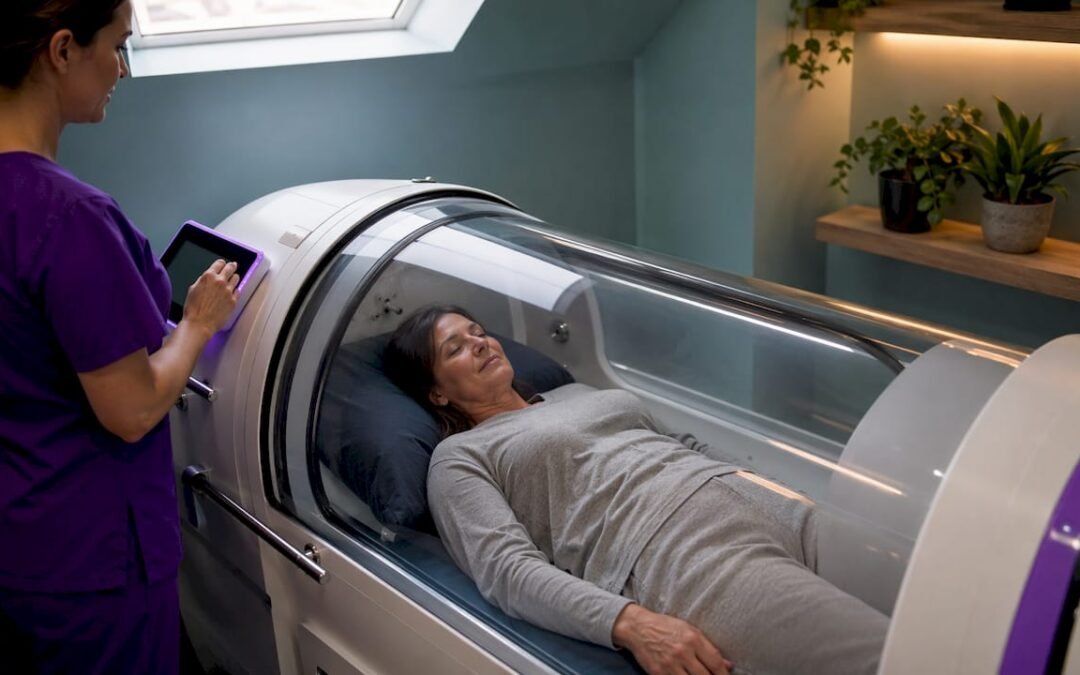
Hyperbaric oxygen therapy (HBOT) involves breathing 100% oxygen inside a pressurised chamber at 1.5–3.0 atmospheres absolute (ATA), flooding tissues with oxygen far beyond what normal breathing delivers. For tinnitus, the verdict depends entirely on timing: HBOT shows meaningful benefit for acute idiopathic sudden sensorineural hearing loss (ISSHL) with associated tinnitus when started early; however, there is no evidence supporting its use for chronic tinnitus.
Three things you need to know right now:
- HBOT works by raising oxygen levels in the inner ear, potentially reversing cochlear hypoxia that contributes to sudden hearing loss and tinnitus.
- Timing is everything. The strongest evidence applies when treatment begins within 14 days of symptom onset; benefit diminishes significantly after that window.
- The evidence is promising but limited. The Cochrane systematic review found statistically significant hearing improvements in acute ISSHL, but trials are small and reporting quality is variable.
Read on for the full evidence picture, what a treatment course looks like, and the practical steps to take if your tinnitus started recently.
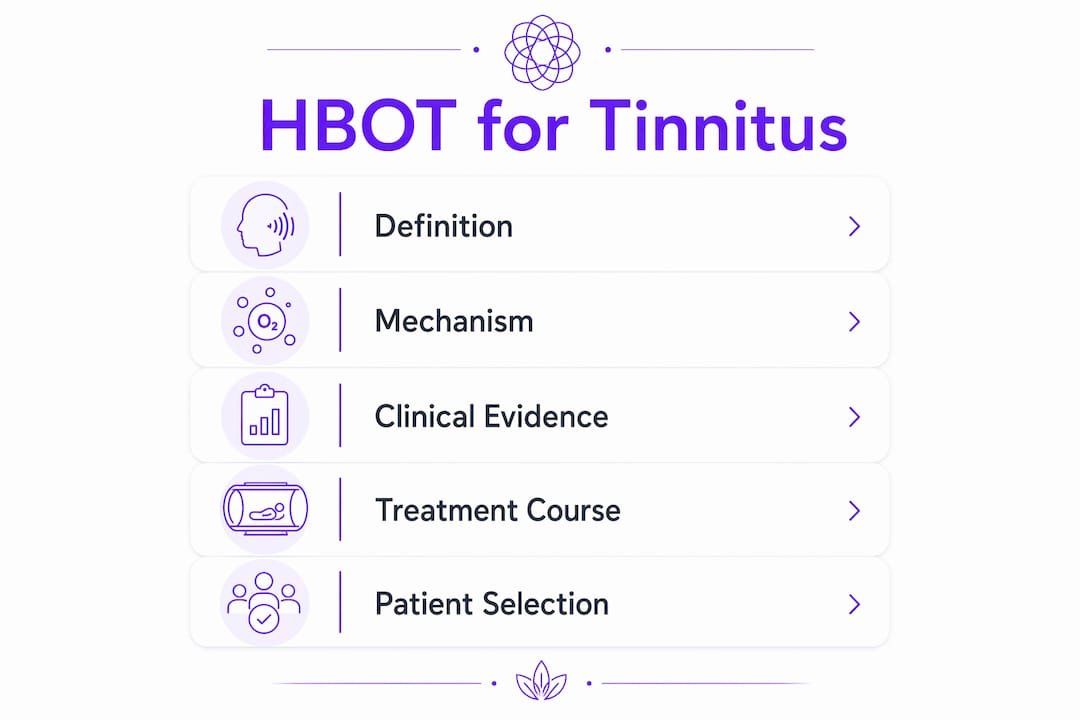
Table of Contents
- How HBOT works and why the inner ear responds to it
- What the research actually shows about HBOT and tinnitus
- What a course of HBOT for ear problems looks like in practice
- Safety, contraindications, and who should not have HBOT
- Which patients may benefit, and when is the right time?
- Other established approaches for tinnitus and sudden hearing loss
- The plain-language verdict for UK readers
- How to find HBOT in the UK and what it typically costs
- Key takeaways
- A note on how we approach HBOT for tinnitus
- HBOT at Live5dhealth: what to expect and how to get started
- Useful sources and further reading
How HBOT works and why the inner ear responds to it
HBOT is the administration of 100% oxygen at pressures above one atmosphere inside an airtight chamber. At 2.0–3.0 ATA, the amount of oxygen dissolved in plasma rises dramatically, reaching tissues that normal haemoglobin-bound oxygen cannot adequately supply.
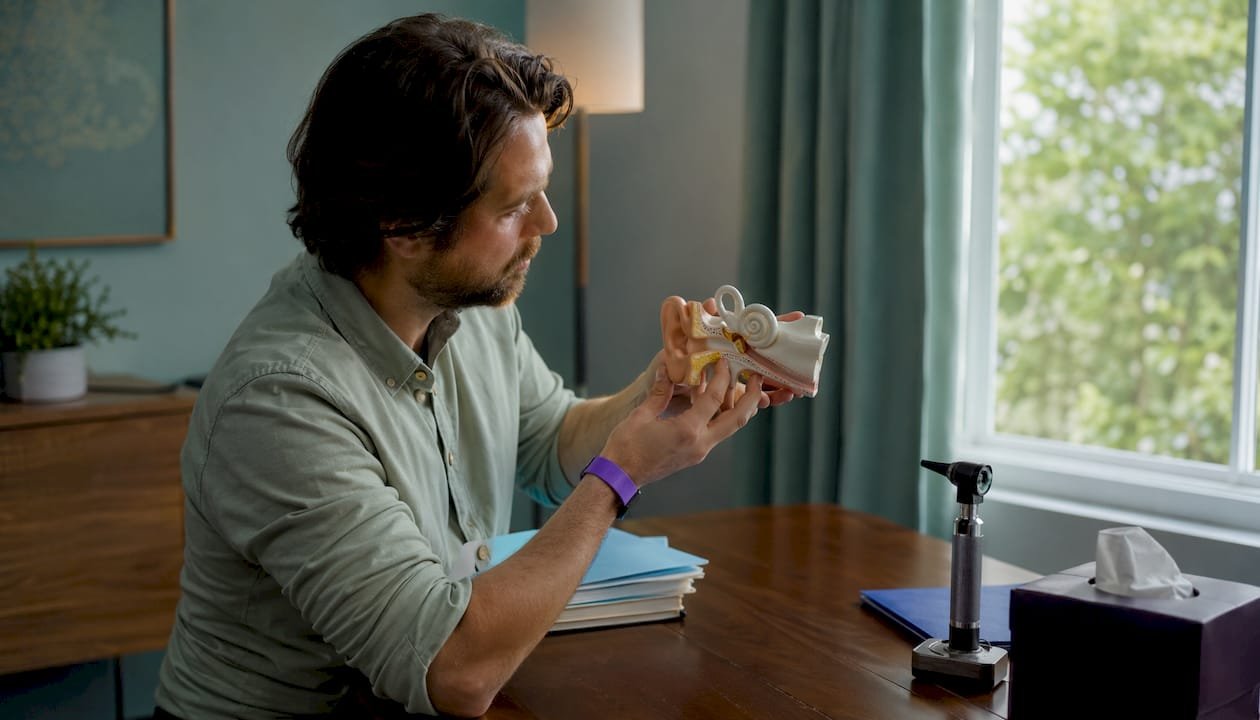
The inner ear is particularly vulnerable to oxygen deprivation. The cochlea relies on a delicate electrochemical environment maintained by the stria vascularis, and any disruption to its blood supply can impair the ion exchange that underpins hearing. HBOT’s proposed mechanism is straightforward: by saturating plasma with oxygen, it can restore aerobic metabolism in hypoxic cochlear cells, reduce oedema, and support the repair of damaged hair cells before they die permanently.
Two chamber types are used in practice. Monoplace chambers treat a single person lying in a sealed tube, with 100% oxygen delivered at pressure throughout. Multiplace chambers accommodate several people simultaneously, with oxygen delivered via masks or hoods while medical staff can attend inside the chamber. Both deliver equivalent therapeutic pressures; the choice depends on clinical need and centre capacity.
Typical sessions run for 60–120 minutes at pressure, not including the time to pressurise and depressurise. Understanding how HBOT reduces inflammation at the cellular level helps explain why early intervention matters so much for inner-ear conditions.
What the research actually shows about HBOT and tinnitus
The evidence base is meaningful but modest, and the acute versus chronic distinction is the single most important thing to understand.
The Cochrane review
The Cochrane systematic review on HBOT for sudden hearing loss and tinnitus pooled data from six trials involving 308 participants. For early-presentation ISSHL, pooled results from two trials (114 patients) showed a statistically significant increase in the chance of achieving a 25% improvement in pure-tone audiometry (PTA): a relative risk of 1.39 (95% CI 1.05–1.84). The number needed to treat (NNT) to achieve one extra good hearing outcome was approximately five, though confidence intervals were wide (95% CI 3–20). For chronic presentation (six months or longer), a single study found no significant improvement in hearing or tinnitus.
The Cochrane authors concluded: “For people with early presentation of ISSHL, the application of HBOT significantly improved hearing loss, but the clinical significance of the level of improvement is not clear… There is no evidence of a beneficial effect of HBOT on chronic presentation of ISSHL and/or tinnitus and we do not recommend use of HBOT for this purpose.”
Pooled audiometric data
A pooled analysis across selected trials reported a mean difference of approximately 15.6 dB greater improvement in pure-tone audiometric threshold with HBOT (95% CI 1.5–29.8 dB). That is a clinically perceptible gain, though the wide confidence interval reflects the variability across small trials.
Combined-therapy studies
Prospective combined-therapy studies pairing HBOT with agents such as ginkgo or betahistine report statistically significant reductions in tinnitus intensity scores in selected groups. Designs and sample sizes vary considerably, so these results require cautious interpretation rather than direct application.
Single-centre clinical data
Some single-centre studies report encouraging outcomes. One clinical study reported that 87.3% of patients noticed improvement after a staged HBOT protocol, though results were from an uncontrolled setting and may not generalize widely. However, most such studies are small, uncontrolled, or have high drop-out rates in later phases, which limits how far their results generalise.
| Evidence source | Population | Key finding | Quality note |
|---|---|---|---|
| Cochrane review (6 trials, 308 participants) | Acute ISSHL | 25% PTA improvement: RR 1.39; NNT ~5 | Small trials, poor reporting |
| Pooled audiometric analysis | Acute ISSHL | ~15.6 dB mean improvement with HBOT | Wide CI (1.5–29.8 dB) |
| Combined-therapy studies | Selected tinnitus groups | Reductions in tinnitus intensity scores | Variable designs |
| Single-centre study | ISSHL and tinnitus | 87.3% of patients reported improvement | Uncontrolled, selection bias |
| Chronic tinnitus (single study) | Chronic presentation | No significant benefit | Very limited data |
Spontaneous recovery from SSNHL is common, which complicates trial interpretation. Well-designed, adequately powered RCTs are still needed to confirm who benefits most from HBOT.
What a course of HBOT for ear problems looks like in practice
A standard HBOT course for acute ISSHL typically involves 20–40 sessions, delivered once daily or sometimes twice daily in more intensive protocols. Pressures range from 1.5 to 3.0 ATA, with session durations of 60–120 minutes at therapeutic pressure.
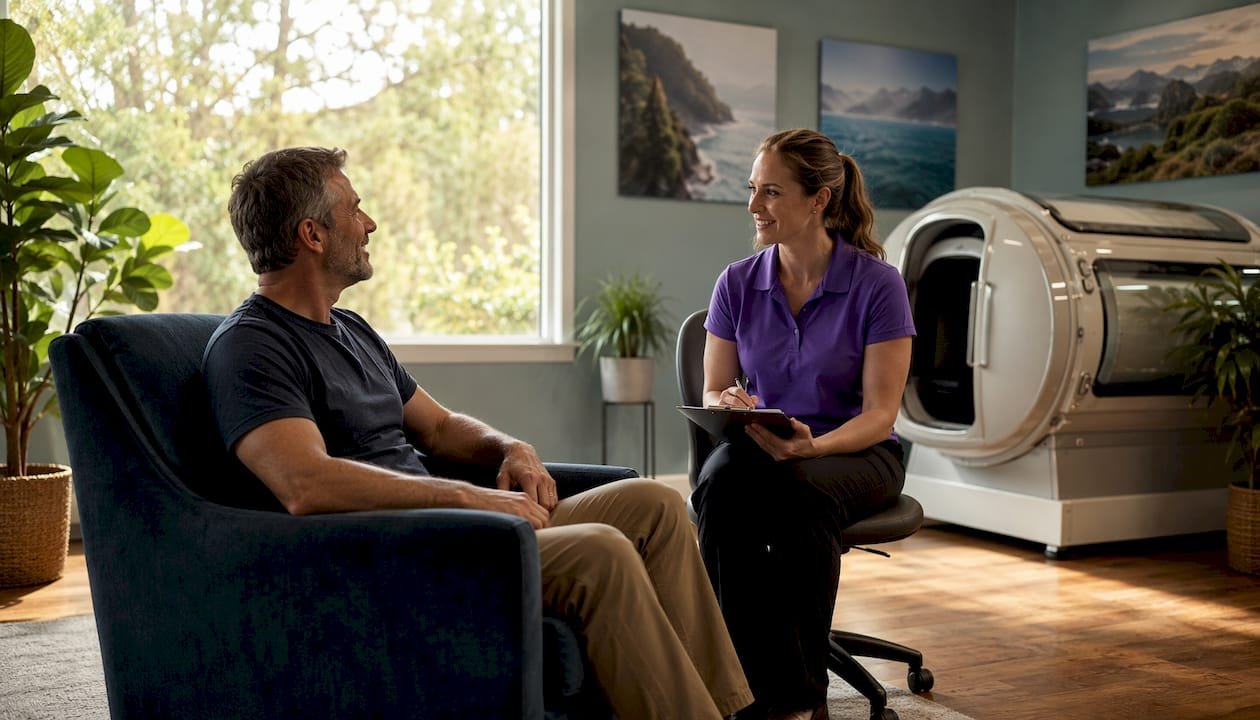
Monitoring follows a structured pattern. Audiograms are taken at baseline before treatment begins, repeated after approximately 10 sessions to assess interim response, and again at completion around session 20. A follow-up audiogram at 3–6 months helps determine whether improvement is durable.
What to expect during a session:
- You will lie or sit inside the chamber as pressure gradually increases over 10–15 minutes.
- Ear equalisation (similar to what you do on an aeroplane) is needed during pressurisation; staff will guide you through this.
- During the session itself, you breathe normally and can read, watch a screen, or rest.
- Depressurisation at the end takes a similar amount of time and is gradual.
- Mild ear discomfort is common early in a course; it usually settles as you learn to equalise effectively.
Pro Tip: If you are receiving HBOT for acute SSNHL, ask your clinician about combining it with corticosteroids. StatPearls guidance notes that best results occur when HBOT is started within 14 days and used alongside steroid therapy, not as a standalone treatment.
For readers interested in how HBOT fits alongside other wellness approaches, the combined wellness treatments guide at Live5dhealth covers multi-therapy protocols in practical detail.
Safety, contraindications, and who should not have HBOT
HBOT is generally well tolerated, but it carries real contraindications and side effects that require proper clinical screening before you book a session.
Absolute and relative contraindications include:
- Untreated pneumothorax (absolute contraindication — pressure changes are dangerous)
- Concurrent bleomycin or doxorubicin chemotherapy (significantly increased pulmonary oxygen toxicity risk)
- Severe congestive heart failure
- Uncontrolled respiratory disease
- Severe claustrophobia (manageable in some cases with support)
- Certain ear or sinus conditions that prevent equalisation
Common side effects to be aware of:
- Barotrauma to the ears or sinuses (the most frequent complaint, usually mild)
- Temporary myopia (short-sightedness) that typically resolves after treatment ends
- Oxygen toxicity seizures (rare, but a known risk at higher pressures)
- Fatigue after sessions
Before starting HBOT, you should have a full audiogram and an assessment by an otolaryngologist (ENT specialist). An MRI may be indicated to rule out other causes of sudden hearing loss, such as acoustic neuroma.
If your hearing loss came on suddenly, treat it as a medical emergency. Sudden sensorineural hearing loss has the best chance of recovery when treated within the first 72 hours. Do not wait to see whether it resolves on its own — seek urgent ENT assessment immediately.
For a full clinical checklist of HBOT contraindications, the Live5dhealth guide covers screening criteria in detail.
Which patients may benefit, and when is the right time?
The critical variable is how long ago your symptoms began. StatPearls guidance is clear: the best results occur when HBOT starts within 14 days of symptom onset. Some clinical guidelines extend consideration up to three months in selected cases, but the evidence for benefit weakens considerably beyond the two-week window.
Patients most likely to be considered for HBOT:
- Acute ISSHL with moderate-to-severe hearing loss, onset within the past two weeks
- Those who have not responded adequately to initial high-dose corticosteroid therapy
- Patients without absolute contraindications who can commit to a full course
When HBOT is unlikely to help:
- Long-standing chronic tinnitus without recent sudden hearing loss
- Tinnitus caused by noise damage, age-related hearing loss, or Ménière’s disease (no supporting evidence for HBOT in these cases)
- Patients whose ISSHL onset was more than three months ago
If your tinnitus began suddenly alongside noticeable hearing loss, the most important step is an urgent ENT referral, not researching treatment options online. Speed of assessment directly affects the range of treatments available to you.
Other established approaches for tinnitus and sudden hearing loss
HBOT sits within a broader treatment landscape, and understanding where it fits helps you have a more informed conversation with your clinician.
For acute SSNHL:
- Systemic corticosteroids (typically oral prednisolone) are the first-line treatment and should be started as soon as possible after diagnosis. Intratympanic steroid injections are used when systemic steroids are contraindicated or have not produced adequate response.
- HBOT as an adjunct to steroids has the strongest evidence base for acute cases; it is not a replacement for steroids.
For chronic tinnitus:
- Hearing aids are highly effective when tinnitus accompanies hearing loss; amplification reduces the contrast between ambient sound and the perceived tinnitus signal.
- Sound therapy and white noise generators provide masking relief for many people.
- Cognitive behavioural therapy (CBT) has the strongest evidence base for reducing the distress associated with chronic tinnitus. Tinnitus UK recommends CBT-based tinnitus management programmes as a core treatment.
- Tinnitus retraining therapy (TRT) combines sound therapy with directive counselling and is available through some NHS audiology departments.
Discussing combination approaches with your clinician is always worthwhile. No single treatment resolves tinnitus for everyone, and a personalised plan that addresses both the auditory and psychological dimensions tends to produce the best outcomes.
The plain-language verdict for UK readers
HBOT is a reasonable adjunct for acute ISSHL with associated tinnitus when started early and combined with corticosteroids. For chronic tinnitus, the evidence does not support its use, and no reputable clinical body currently recommends it for that indication.
Summary of evidence quality:
- Trials are small and methodologically variable
- Reporting quality in many studies is poor, limiting pooled analysis
- Spontaneous recovery from SSNHL confounds results in unblinded trials
- Larger, well-designed RCTs are still needed to define which patients benefit most
The clinical bottom line for UK readers: If your hearing loss and tinnitus started within the past two weeks, ask your GP for an urgent ENT referral today. Discuss both high-dose steroids and HBOT as part of that conversation. If your tinnitus is long-standing, HBOT is not the answer — focus on CBT, hearing aids, and structured tinnitus management programmes instead.
The NHS does not routinely fund HBOT for ISSHL or tinnitus; access is typically through private hyperbaric centres or, in some cases, via specialist referral pathways. If you are pursuing HBOT privately, the next section covers what to look for in a UK provider.
How to find HBOT in the UK and what it typically costs
Private HBOT centres operate across the UK, ranging from hospital-affiliated hyperbaric units to standalone wellness clinics. The British Hyperbaric Association (BHA) maintains a register of accredited centres, which is the most reliable starting point for finding a clinically governed provider.
Typical private costs vary by centre, location, and number of sessions. A full course of 20–40 sessions represents a significant financial commitment; individual session prices are not publicly standardised, so always request a full written quote before committing. Factors affecting price include chamber type (monoplace vs multiplace), clinical oversight level, and whether audiological monitoring is included.
Checklist for choosing a UK HBOT centre:
- Accreditation with the British Hyperbaric Association or equivalent clinical governance body
- Medical director with hyperbaric medicine training (ideally EDTC/ECHM diploma or equivalent)
- On-site emergency procedures and resuscitation equipment
- Baseline and follow-up audiograms included in the treatment protocol
- Clear written consent process covering contraindications, risks, and realistic outcomes
- Infection control protocols for shared (multiplace) chambers
NHS access and funding: The NHS does not routinely commission HBOT for ISSHL or tinnitus. Funding via NHS England exceptional cases or individual funding requests is possible in principle but uncommon in practice. Most people accessing HBOT for hearing conditions do so privately. Private health insurance policies vary; check your policy wording carefully, as HBOT for hearing loss may be classified as experimental by some insurers.
Key takeaways
HBOT offers real but limited benefit for acute sudden hearing loss with tinnitus when started early; it is not supported for chronic tinnitus by current evidence.
| Point | Details |
|---|---|
| HBOT definition | Breathing 100% oxygen at 1.5–3.0 ATA in a pressurised chamber to raise tissue oxygen levels. |
| Acute SSNHL benefit | Cochrane review found a 25% PTA improvement (RR 1.39) and NNT of ~5 for early-presentation ISSHL. |
| Timing is critical | Best evidence supports starting HBOT within 14 days of symptom onset; benefit diminishes after that. |
| Chronic tinnitus | No evidence supports HBOT for chronic tinnitus; CBT, hearing aids, and sound therapy are recommended instead. |
| Live5dhealth approach | Live5dhealth offers HBOT with clinical screening and integrated wellness support; contact the centre to discuss eligibility before booking. |
A note on how we approach HBOT for tinnitus
The evidence around HBOT and tinnitus is one of those areas where enthusiasm can easily outrun the science, and that gap concerns me. The Cochrane data is genuinely encouraging for acute ISSHL, but it is easy to misread “NNT of 5” as a near-guarantee when the confidence intervals run from 3 to 20 and the underlying trials are small. What that number actually tells you is that HBOT is worth considering as part of an early, combined treatment plan, not that it will reliably resolve your tinnitus.
What I find underappreciated in most discussions of HBOT for tinnitus is the spontaneous recovery problem. A meaningful proportion of people with acute SSNHL recover some hearing without any treatment at all. That makes it genuinely difficult to attribute improvement to HBOT in unblinded trials, and it is why the Cochrane authors were careful to say the clinical significance of the improvement “is not clear” even where statistical significance was achieved.
For chronic tinnitus, the picture is starker. There is simply no good evidence that HBOT helps, and directing people with long-standing tinnitus towards expensive private HBOT courses instead of CBT-based programmes does them a disservice. CBT for tinnitus has a far stronger evidence base for reducing distress, and it is available through NHS audiology pathways. The HBOT and mental health connection is real and worth exploring, but it does not substitute for evidence-based tinnitus management.
The honest position is this: if your hearing loss is acute and recent, HBOT is a legitimate option to discuss urgently with an ENT specialist. If your tinnitus is chronic, put your energy into the treatments that actually have evidence behind them.
HBOT at Live5dhealth: what to expect and how to get started
If you have experienced sudden hearing loss or new-onset tinnitus and want to explore whether HBOT is appropriate for your situation, Live5dhealth offers hyperbaric oxygen therapy at its wellness centre in Boyle, County Roscommon, with a thorough eligibility assessment before any session is booked.
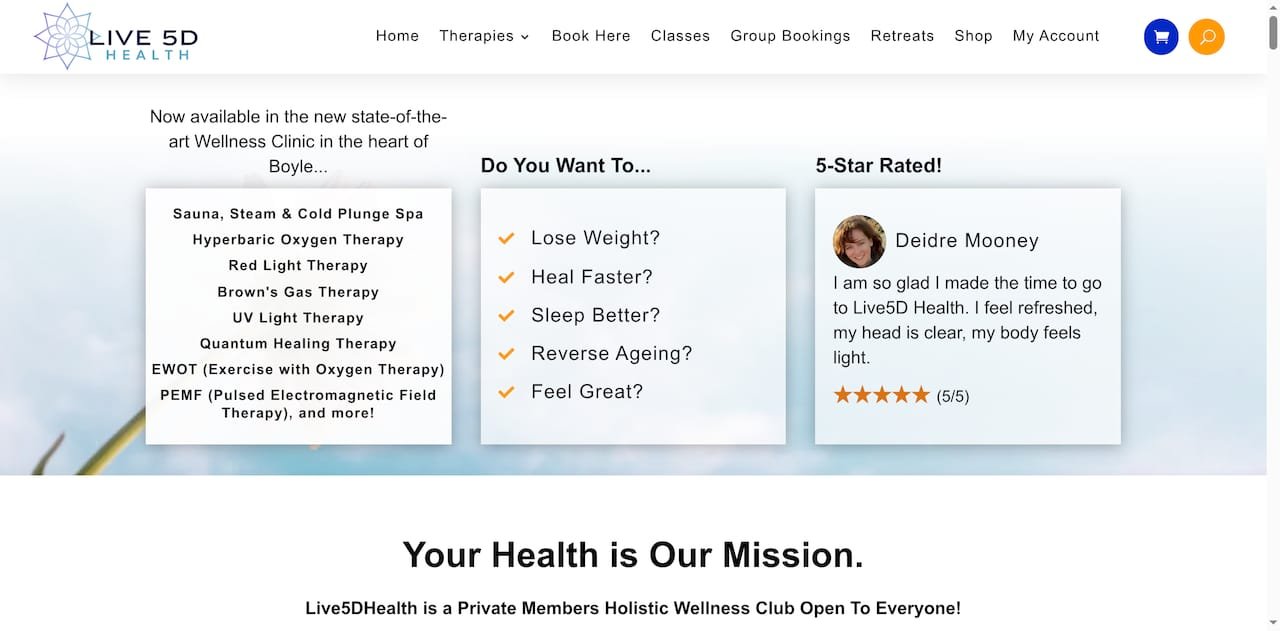
Every enquiry begins with a health screening conversation covering your medical history, any contraindications, and whether your timeline fits the evidence window for acute ISSHL. If an ENT referral or audiogram is needed first, the team will tell you clearly rather than simply booking you in. HBOT works best as part of a considered plan, not a standalone purchase, and that means being honest about when it is likely to help and when other approaches should come first.
Live5dhealth also integrates HBOT with complementary therapies including red light therapy, PEMF, and structured wellness programmes, which may support recovery and overall wellbeing alongside any hearing treatment. To find out whether HBOT is right for your situation, visit the Live5dhealth wellness centre page or get in touch directly to arrange a screening conversation.
This article is general information, not medical advice. Always confirm your treatment options with a qualified ENT specialist or hyperbaric medicine clinician for your individual situation.
Useful sources and further reading
-
Cochrane systematic review — HBOT for sudden hearing loss and tinnitus
cochrane.org — The primary systematic review pooling RCT data on HBOT for ISSHL; the most authoritative source on efficacy and limitations. -
PubMed — Hyperbaric oxygen for idiopathic sudden sensorineural hearing loss and tinnitus
pubmed.ncbi.nlm.nih.gov — Indexed clinical review with pooled audiometric data; useful for understanding trial methodology and effect sizes. -
PMC — Pooled audiometric analysis of HBOT in ISSHL
pmc.ncbi.nlm.nih.gov — Full-text analysis reporting the ~15.6 dB mean difference in PTA improvement with HBOT. -
StatPearls — Hyperbaric treatment of sensorineural hearing loss
ncbi.nlm.nih.gov/books/NBK459160 — Continuously updated clinical overview covering indications, timing, contraindications, and monitoring protocols. -
Mayo Clinic — Hyperbaric oxygen therapy
mayoclinic.org — Reliable patient-facing overview of HBOT procedure, session parameters, and safety. -
PubMed — HBOT in tinnitus with normal hearing combined treatment
pubmed.ncbi.nlm.nih.gov/27416687 — Prospective study examining combined HBOT and pharmacological therapy for tinnitus; illustrates both the potential and the methodological limitations of combined-therapy research. -
IT Medical Team — Clinical efficacy of HBOT in ISSHL and tinnitus
itmedicalteam.pl — Single-centre clinical study reporting patient-reported improvement rates; useful context for understanding the gap between controlled trials and real-world practice.