
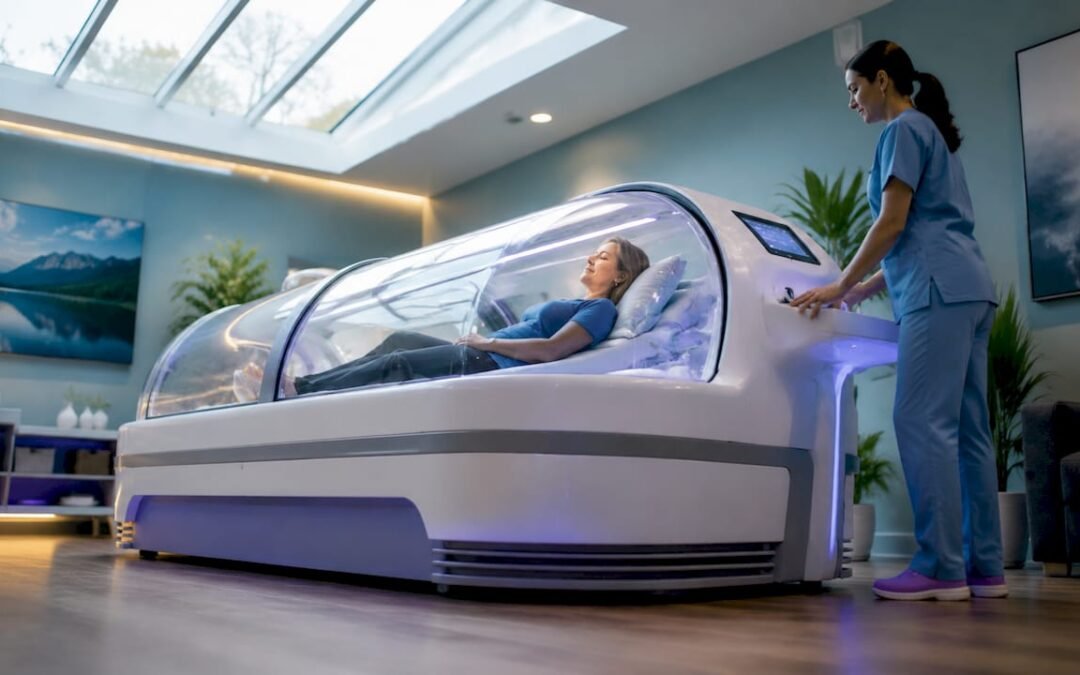
Hyperbaric oxygen therapy (HBOT) is defined as a medical treatment in which you breathe 100% pure oxygen inside a pressurised chamber, at atmospheric pressures significantly above normal. This elevated pressure forces far more oxygen into your blood plasma than your lungs can deliver under ordinary conditions, saturating tissues that are starved of oxygen due to injury, infection, or poor circulation. The U.S. Food and Drug Administration (FDA) has cleared HBOT for 14 specific medical conditions, and as of 2026, medical-grade HBOT involves sessions of 90–120 minutes at pressures of 2.0–3.0 ATA (atmospheres absolute). Understanding the difference between clinical HBOT and the softer, wellness-oriented versions widely marketed today is the most important distinction you can make before pursuing treatment.
How does hyperbaric oxygen therapy work?
HBOT operates through physical gas laws, not drug chemistry. Specifically, it applies Henry’s Law, which states that the amount of gas dissolved in a liquid increases in direct proportion to the pressure above it. When you breathe pure oxygen at elevated pressure inside a hyperbaric chamber, oxygen dissolves directly into your blood plasma, bypassing the haemoglobin-bound transport system your body normally relies on.
Under standard conditions, haemoglobin carries nearly all the oxygen in your blood, and plasma carries very little. At 2.4 ATA, oxygen dissolved in plasma reaches approximately 6.0 ml per 100 ml of blood, compared to just 0.3 ml at normal atmospheric pressure. That is a twentyfold increase in plasma-dissolved oxygen. This matters because plasma can reach tissues that red blood cells cannot access when blood vessels are damaged or inflamed.
The physiological effects that follow are wide-ranging:
- Angiogenesis: HBOT stimulates the growth of new blood vessels, restoring circulation to damaged tissue over a course of treatment.
- Inflammation reduction: Elevated oxygen levels suppress inflammatory mediators, reducing swelling and pain in affected areas.
- Infection control: High oxygen concentrations are directly toxic to many anaerobic bacteria, which cannot survive in oxygen-rich environments.
- Cellular repair: Oxygen at therapeutic concentrations supports mitochondrial function, the energy production process at the heart of tissue regeneration.
- Immune modulation: HBOT influences white blood cell activity, enhancing the body’s ability to fight infection and clear damaged tissue. You can read more about this in the HBOT immune modulation research.
The physical basis of HBOT is rooted in gas dissolution, not a chemical reaction or pharmaceutical action. This distinguishes it from virtually every other medical treatment and explains why pressure is non-negotiable. Simply breathing pure oxygen at normal atmospheric pressure does not produce the same therapeutic effect.
Pro Tip: If a provider claims their oxygen therapy works without a pressurised chamber, the treatment is not HBOT. Pressure is the mechanism, not the oxygen alone.
Medical-grade HBOT vs. mild hyperbaric therapy
Not all hyperbaric therapy is equal. The distinction between medical-grade HBOT and what is commonly called mild hyperbaric therapy is significant, and confusing the two can lead to misplaced expectations.
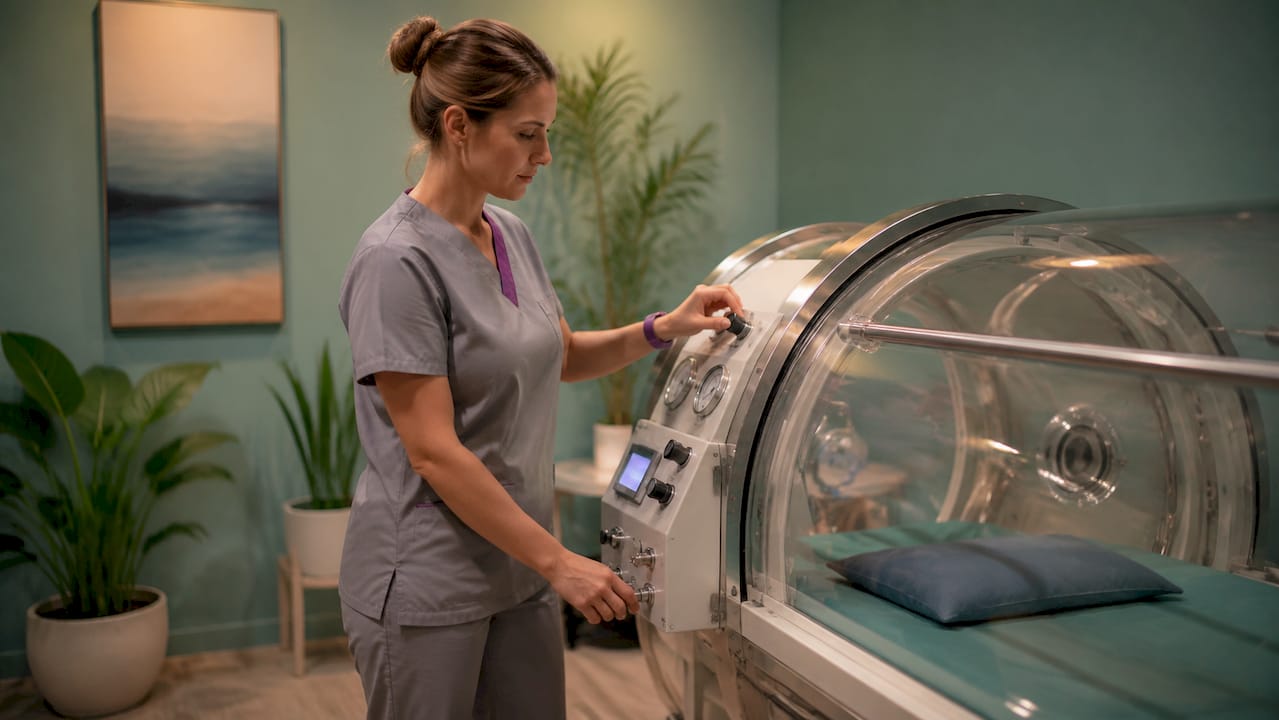
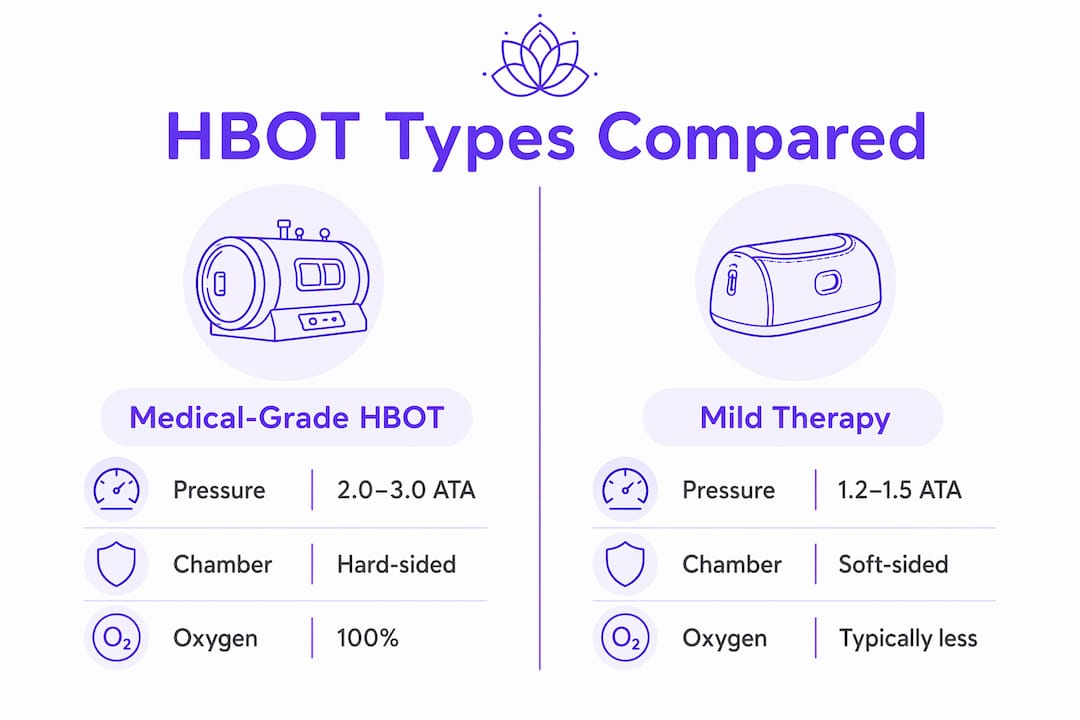
Medical-grade HBOT uses hard-sided monoplace or multiplace chambers that can reach 2.0–3.0 ATA. Patients breathe 100% medical-grade oxygen throughout the session. These chambers are found in hospitals, specialist clinics, and accredited hyperbaric centres. The FDA has cleared this form of treatment for 14 conditions, including decompression sickness, carbon monoxide poisoning, and diabetic foot ulcers.
Mild hyperbaric therapy, by contrast, typically operates at around 1.3 ATA using soft-sided inflatable chambers. The oxygen concentration is lower, often delivered via a face mask rather than filling the entire chamber. Soft-shell chambers cannot achieve the 2.0+ ATA pressure required for FDA-approved therapeutic outcomes. At 1.3 ATA, plasma oxygen increases only modestly and does not reach the thresholds needed for conditions like wound healing or infection control.
| Feature | Medical-Grade HBOT | Mild Hyperbaric Therapy |
|---|---|---|
| Pressure range | 2.0–3.0 ATA | 1.2–1.5 ATA |
| Oxygen purity | 100% medical-grade | Lower concentration, mask-delivered |
| Chamber type | Hard-sided monoplace or multiplace | Soft-sided inflatable |
| FDA clearance | Yes, for 14 conditions | No |
| Cost per session | £120–£320+ | £40–£120 |
| Clinical supervision | Required | Typically absent |
Mild HBOT is not without value. Many people report benefits related to general wellness, recovery, and energy. However, soft mild HBOT chambers should be considered wellness adjuncts or investigational tools, not substitutes for medically supervised treatment. If you are researching HBOT for a diagnosed condition, medical-grade treatment is the clinically validated option.
What conditions can hyperbaric oxygen treatment address?
HBOT has a well-established role in treating conditions where tissue oxygen deprivation is the central problem. The FDA-cleared indications as of 2026 include decompression sickness, arterial gas embolism, carbon monoxide poisoning, necrotising soft tissue infections, radiation-induced tissue damage, and chronic non-healing wounds such as diabetic foot ulcers.
The clinical benefits of HBOT are grounded in its ability to accelerate wound healing, fight infection, stimulate new blood vessel growth, reduce inflammation, and promote tissue repair. For diabetic patients with foot ulcers, where poor circulation leaves tissue chronically oxygen-deprived, HBOT can be the difference between healing and amputation. The role of oxygen in wound healing is well documented, and HBOT delivers oxygen at concentrations no other non-surgical intervention can match.
Beyond the FDA-approved list, researchers are actively investigating HBOT for:
- Traumatic brain injury and stroke recovery, where restoring oxygen to damaged neural tissue may limit long-term deficits
- Long COVID symptoms, particularly fatigue and cognitive difficulties linked to tissue hypoxia
- Post-surgical recovery, where accelerated healing reduces complication rates
- Sports injury recovery, where faster tissue repair shortens rehabilitation timelines. See the sports recovery hyperbaric guide for current findings.
- Neurological conditions, including research into autism spectrum disorder and multiple sclerosis. The hyperbaric therapy for neurological conditions resource covers eight clinical examples in detail.
One common misconception is that HBOT is a cure-all. The therapy works best as part of a broader treatment plan, not as a standalone solution. Results depend heavily on the condition being treated, the pressure protocol used, and the number of sessions completed.
Is hyperbaric therapy safe? what to expect
HBOT is safe when administered under proper clinical supervision, but it carries real risks that patients should understand before starting treatment. Knowing what to expect makes the experience far more comfortable and reduces the likelihood of complications.
A standard medical-grade session follows this sequence:
- Pre-session preparation: You change into 100% cotton clothing provided by the clinic. Electronics, oil-based cosmetics, perfumes, and synthetic fabrics are prohibited inside the chamber due to fire risk in a high-oxygen environment.
- Pressurisation: The chamber pressure rises gradually to the target level, typically over 10–15 minutes. You will feel pressure in your ears, similar to descending in an aircraft.
- Treatment phase: You breathe 100% oxygen for 60–90 minutes at the prescribed pressure. Most patients read, rest, or watch a screen during this time.
- Decompression: Pressure reduces slowly back to normal. Ear discomfort may return briefly during this phase.
- Post-session: You may feel mildly tired or light-headed initially. Most patients feel refreshed after a short rest.
The most common side effect is ear barotrauma, caused by pressure changes during pressurisation. Ear pressure equalisation techniques, such as the Valsalva manoeuvre (pinching your nose and gently blowing), swallowing, or yawning, resolve this in most cases. Other potential side effects include temporary nearsightedness, rare seizures from oxygen toxicity, and claustrophobia. Clinical supervision is mandatory in medical-grade settings precisely to monitor and respond to these events.
A full treatment course typically requires 20–40 sessions over several weeks. This is not a quick fix. Physiological processes like angiogenesis take time to develop, and completing the full course is what produces lasting results. Dropping out after five or ten sessions is one of the most common reasons patients do not see the outcomes they hoped for.
Pro Tip: Ask your clinic for a written treatment protocol before you begin. It should specify the target pressure in ATA, session duration, total number of sessions, and the clinical rationale for your specific condition. If they cannot provide this, seek a second opinion.
Key takeaways
Hyperbaric oxygen therapy works by dissolving oxygen directly into blood plasma at elevated pressure, reaching tissues that haemoglobin-bound transport cannot access under normal conditions.
| Point | Details |
|---|---|
| Core mechanism | Pressure forces oxygen into plasma via Henry’s Law, not through haemoglobin transport. |
| Medical vs. mild HBOT | Medical-grade HBOT operates at 2.0–3.0 ATA with 100% oxygen; mild therapy at 1.3 ATA does not meet FDA thresholds. |
| FDA-cleared conditions | HBOT is cleared for 14 conditions including decompression sickness, carbon monoxide poisoning, and diabetic wounds. |
| Treatment commitment | Full courses of 20–40 sessions are required for lasting physiological benefits such as angiogenesis. |
| Safety profile | HBOT is safe under clinical supervision; ear barotrauma is common but manageable with equalisation techniques. |
Why i think most people research HBOT the wrong way
Most people who come to me asking about hyperbaric oxygen therapy have already spent hours reading about it online. The problem is that a significant portion of what they have read conflates medical-grade HBOT with the soft-sided wellness chambers that have proliferated in spas and gyms. These are not the same thing, and treating them as equivalent does a disservice to both.
I have seen patients who spent months in mild hyperbaric sessions expecting clinical results, then concluded that HBOT “does not work.” In most of those cases, they were never receiving HBOT in the clinical sense. They were receiving a wellness service at 1.3 ATA, which is a different proposition entirely. That is not a criticism of mild therapy. It has its place. But it should be sold and understood honestly.
The other pattern I notice is impatience. HBOT is not a single-session treatment. The angiogenesis and tissue repair that make it genuinely transformative for conditions like radiation injury or chronic wounds require cumulative sessions over weeks. Patients who commit to a full course and pair it with good nutrition, sleep, and complementary therapies consistently report better outcomes than those who treat it as a one-off intervention. If you want to get the most from your sessions, the guide to maximising HBOT results is worth reading before you start.
The therapy is real, the evidence is solid for the right conditions, and the results can be genuinely life-changing. The key is matching the right type of treatment to the right clinical need, with realistic expectations and proper supervision.
— Mark
Explore wellness and recovery at Live5dhealth
Live5dhealth is a luxury wellness centre, spa, gym, and retreat in Boyle, County Roscommon, Ireland, designed for people who take their health seriously. Whether you are researching hyperbaric therapy as part of a recovery plan or looking to support your body through complementary treatments, Live5dhealth offers a range of therapies and world-class supplements to support your goals.
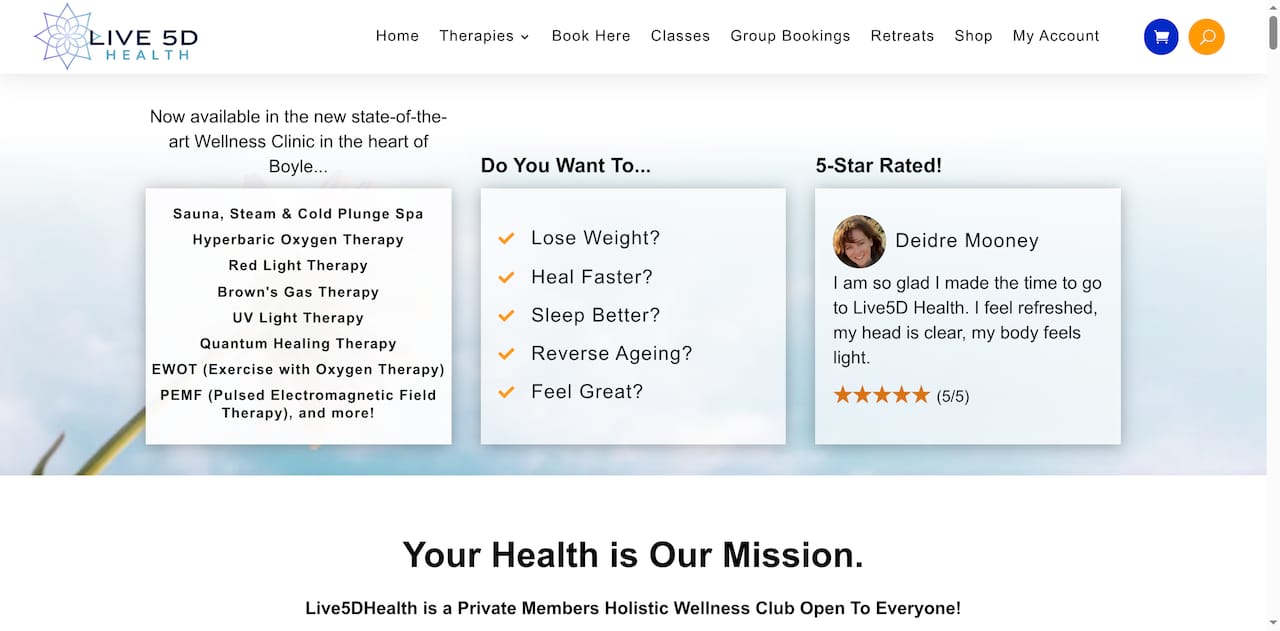
From our luxury spa with sauna, steam, and cold plunge to our curated range of recovery supplements, every offering at Live5dhealth is chosen to support genuine, measurable wellbeing. If you are on a healing path and want expert guidance alongside your treatment, we would love to support you.
FAQ
What is hyperbaric oxygen therapy used to treat?
HBOT is FDA-cleared for 14 conditions including decompression sickness, carbon monoxide poisoning, diabetic foot ulcers, radiation tissue damage, and necrotising soft tissue infections. Researchers are also investigating its use for traumatic brain injury, long COVID, and neurological conditions.
How many sessions of HBOT are needed?
A full treatment course typically requires 20–40 sessions over several weeks, depending on the condition being treated. Completing the full course is necessary for physiological processes like angiogenesis to produce lasting results.
What is mild hyperbaric therapy and how does it differ?
Mild hyperbaric therapy operates at approximately 1.3 ATA using soft-sided inflatable chambers, compared to medical-grade HBOT at 2.0–3.0 ATA in hard-sided chambers. It does not meet FDA-approved therapeutic thresholds and is best considered a wellness adjunct rather than a clinical treatment.
What are the main side effects of hyperbaric oxygen treatment?
The most common side effect is ear barotrauma from pressure changes, which is manageable using equalisation techniques such as the Valsalva manoeuvre. Less common side effects include temporary nearsightedness, oxygen toxicity, and rare seizures, all of which are monitored under clinical supervision.
Is hyperbaric therapy safe for most people?
HBOT is safe for most people when administered in a medically supervised setting. Contraindications include certain lung conditions and untreated pneumothorax. Your treating clinician will conduct a full assessment before your first session to confirm suitability.