
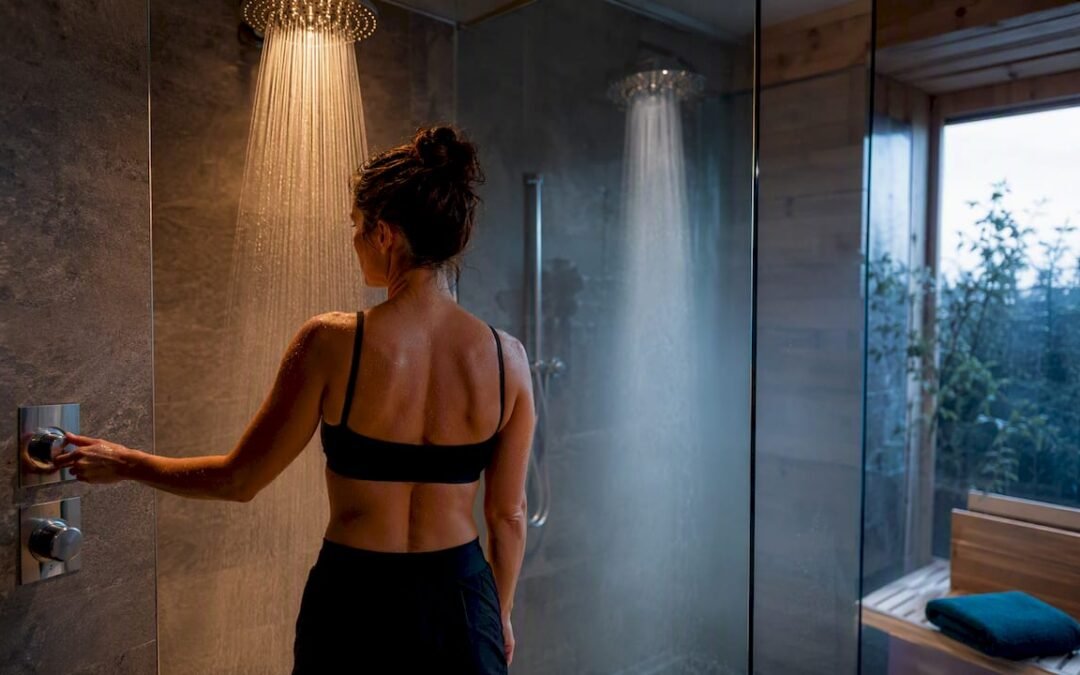
Contrast therapy delivers real, well-documented short-term benefits: improved circulation, reduced swelling, faster recovery from delayed-onset muscle soreness (DOMS), temporary pain relief, and a genuine lift in mood and alertness. What it doesn’t yet have is strong evidence for lasting cardiovascular or mental-health change, and the research behind it uses wildly different protocols. If you have heart disease, uncontrolled blood pressure, or you’re pregnant, speak to your doctor before you start.
TL;DR:
- Most benefits of contrast therapy are short-term, primarily improving muscle recovery, reducing swelling, and enhancing mood within 72 hours after activity.
- Protocols typically involve alternating hot and cold for specific durations, with most studies recommending two to three weekly sessions for optimal results.
- People with cardiovascular issues, uncontrolled blood pressure, pregnancy, or sensitive health conditions should seek medical advice before trying contrast therapy.
- The strongest evidence supports contrast therapy for reducing delayed-onset muscle soreness and inflammation after injury or strenuous activity.
- Long-term health benefits, such as improved cardiovascular or mental health, lack strong, standardized scientific backing and should not be expected from contrast therapy alone.
Table of Contents
- What contrast therapy is and how it works
- What the research finds: benefits organised by outcome
- How to do contrast therapy: protocols that actually match the research
- Who should avoid contrast therapy or get medical clearance first
- Why the evidence is promising but still incomplete
- How a wellness centre integrates contrast therapy safely
- Your next steps with contrast therapy
- An editorial view on where contrast therapy earns its reputation
- Sources
What contrast therapy is and how it works
Contrast therapy means alternating heat and cold on purpose, usually within a single session, to trigger a physiological response that neither temperature produces alone. You’ll see it in three common formats: contrast baths (submerging a limb in hot water, then cold), full-body sauna and cold plunge cycles, and contrast showers, where you simply switch the tap between hot and cold at home.
The mechanism behind it is often called the vascular pump. Heat causes vasodilation, widening your blood vessels and pulling blood towards the skin and working muscles. Cold triggers vasoconstriction, the opposite effect, forcing blood back towards your core. Cycle between the two repeatedly and you create a pumping action through the vascular system that neither a hot bath nor an ice bath achieves on its own.
That pumping action has knock-on effects at the tissue level:
- Heat increases tissue oxygenation and improves the elasticity of muscle and connective tissue, which is partly why a warm-up matters before you stretch.
- Cold reduces muscle tone and nociception, the nerve signalling your brain interprets as pain, which is why an ice pack works on a fresh injury.
- Alternating the two appears to reduce localised swelling more effectively than either heat or cold used alone, a mechanism supported by observed reductions in oedema after injury.
- The rapid temperature shift also seems to encourage better lactate clearance from working muscle, which is one reason athletes reach for contrast baths after competition.
There’s a neurochemical side to this too. Cold exposure is associated with a spike in norepinephrine and dopamine, the same neurotransmitters behind that “wide awake” feeling after a cold shower. Heat exposure, particularly in a sauna, is linked to a calmer parasympathetic response. Cycle between the two and you get a genuinely distinct subjective experience: alert, but not wired; relaxed, but not sedated. Reviews of sauna use as a lifestyle practice point to these short-term neurochemical shifts as a plausible explanation for the mood benefits many people report, though the mechanism is better understood than the long-term outcome.
What the research finds: benefits organised by outcome
The strongest evidence for contrast therapy sits in the short-term recovery window, roughly 24 to 72 hours after exertion or injury. Beyond that window, the picture gets considerably murkier.
Circulation and cardiovascular effects. Most of what we know about heat’s effect on the vascular system comes from sauna research rather than contrast protocols specifically. A review in the American Journal of Medicine found sauna bathing associated with reduced cardiovascular risk in large observational cohorts, alongside measurable short-term changes in vascular function from repeated heat exposure. Contrast therapy borrows this heat benefit and adds the cold-induced vasoconstriction on top, but it’s worth being honest that most of the cardiovascular data is observational, not a randomised trial of contrast protocols against a placebo.
Muscle recovery and DOMS. This is where contrast therapy has its best evidence. A 2017 meta-analysis found that alternating hot and cold baths helped team-sports players recover from fatigue in the 24 to 48 hours after activity. That timeframe matters: contrast baths aren’t claiming to prevent soreness altogether, but they appear to shorten how long it hangs around and how much it limits your next session.
Inflammation and swelling. A randomised trial involving 115 people with acute ankle sprains found that those using contrast hydrotherapy had noticeably less swelling around three days post-injury compared with those who didn’t. That’s a specific, measurable outcome in an injured population, not just a subjective “feels better” result, which gives it more weight than most recovery claims.
Pain and range of motion. A recent scoping review of trials on musculoskeletal pain consistently reports short-term improvements in pain, mobility, and function across contrast therapy studies, even though the protocols used varied enormously from trial to trial. That consistency across different methodologies is a reasonably strong signal, even without a single gold-standard trial to point to.
Mood and sleep. The evidence here is more mechanistic than outcome-based. Researchers have measured the norepinephrine and dopamine responses to cold exposure and the parasympathetic shift from heat, and it’s a reasonable inference that this explains why people report feeling calmer or more alert after a session. It hasn’t been tested with the same rigour as the physical recovery outcomes.
Here’s the pattern across all four outcomes: short-term, measurable, repeated across small trials. What’s missing is the large, standardised randomised controlled trial that pins down exact effect sizes across a big population, and nobody in the research community is claiming otherwise.
How to do contrast therapy: protocols that actually match the research
You don’t need a lab to replicate what the studies did. Most trial protocols are simple enough to run at home or in a spa setting, provided you respect the timings.
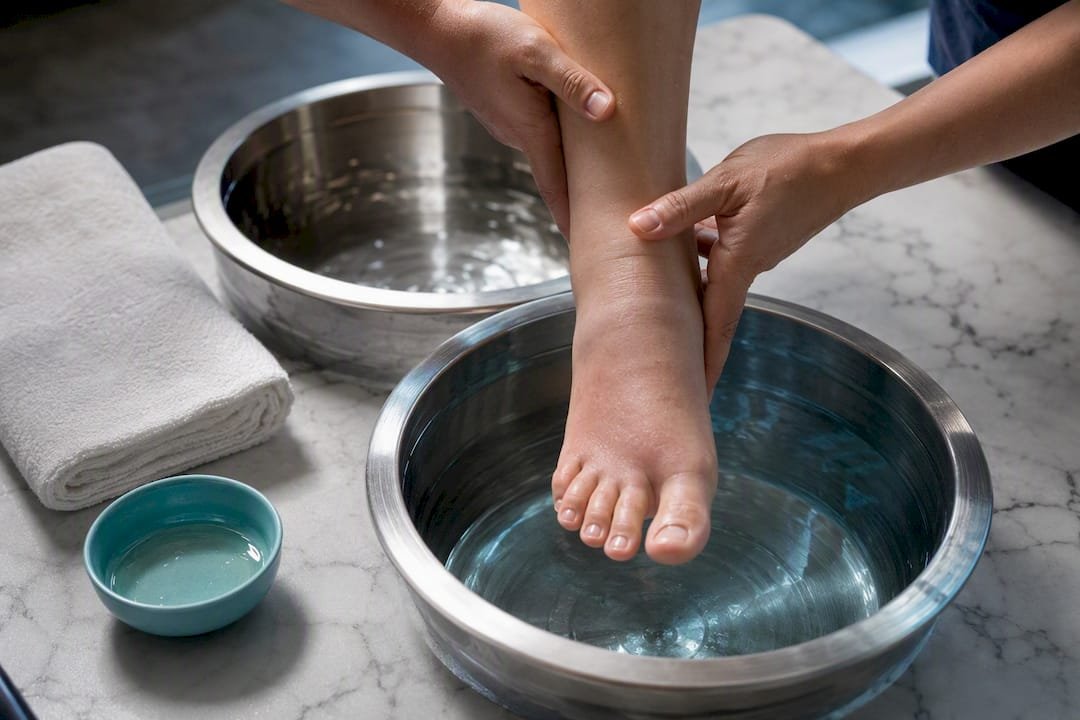
- Contrast bath protocol (limbs, injury recovery). Submerge the affected area in hot water (around 38 to 40°C) for three to four minutes, then switch immediately to cold water (10 to 15°C) for one minute. Repeat this cycle three to four times, always finishing on the temperature that matches your goal.
- Sauna and cold plunge protocol (full body, athletic recovery). Spend 10 to 15 minutes in the sauna, then move to a cold plunge for one to three minutes. Two to three rounds is typical in trial settings and in practice; longer than that offers diminishing returns and raises your risk of overdoing the cold exposure.
- Contrast shower (accessible, no equipment). Run the water as hot as comfortable for two minutes, then as cold as you can tolerate for 30 to 60 seconds. Repeat three times. It won’t match the intensity of a plunge pool, but it follows the same vascular-pump principle.
Session frequency depends on your goal. Athletes in recovery studies typically used contrast protocols once or twice after intense training or competition, not daily. For general wellness, two to three sessions a week is a sensible starting point, giving your body time to adapt between exposures.
The order you finish on genuinely changes the effect. Practitioner guidance points to what’s sometimes called the Søberg principle: finish on cold if your goal is metabolic, since the tail end of a session appears to matter most for activating brown fat and supporting cold adaptation, according to protocol guidance from UseSauna. Finish on heat if relaxation and sleep are the priority, since ending on a parasympathetic note carries that calm into the rest of your evening.
If you’re new to this, don’t start with a full sauna-to-plunge protocol. Begin with contrast showers for two weeks, then progress to hot packs alternated with ice packs on a specific area before you try full-body cold immersion. Check your cold plunge temperature carefully; colder isn’t automatically better, and beginners tolerate 15°C far more comfortably than the 10°C some athletes use.
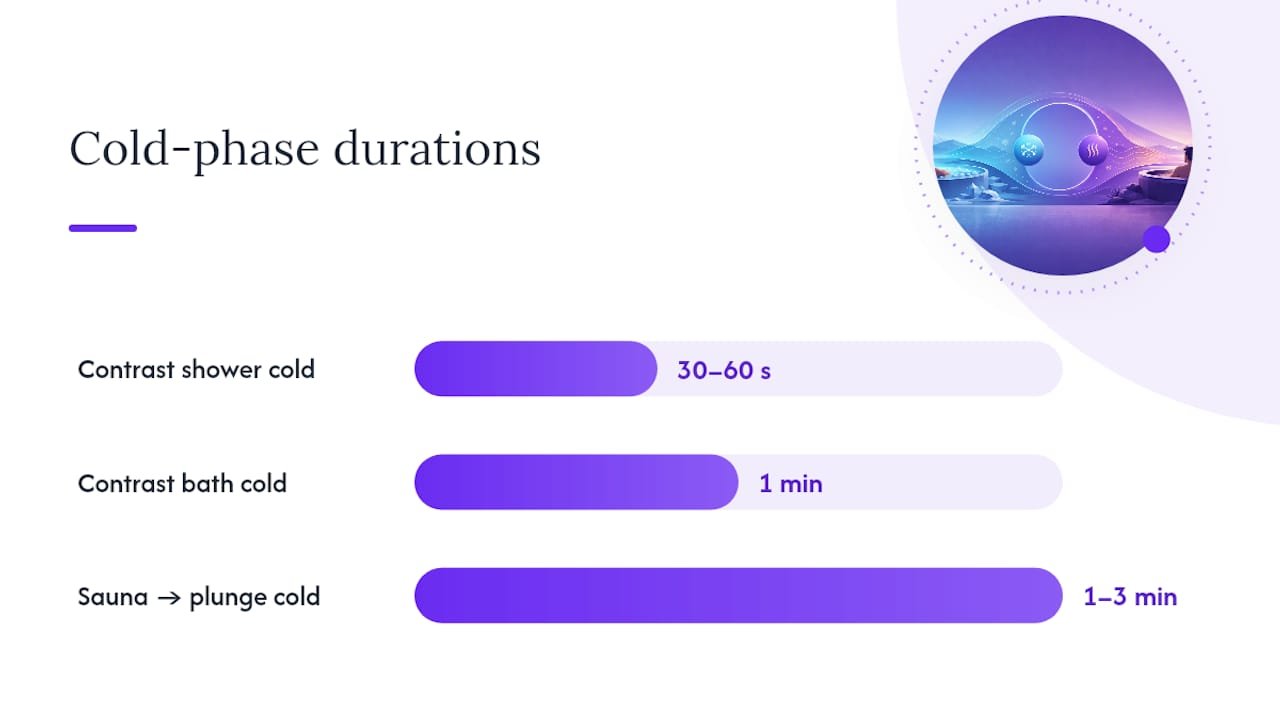
Pro Tip: Time your cold phase, not your discomfort. It’s tempting to jump out the second the cold bites, but the physiological benefit builds over the first 30 to 60 seconds. Use a timer, not your gut reaction, to decide when to switch.
Watch for dizziness, chest tightness, or numbness that doesn’t resolve within a minute of leaving the cold. Any of those means stop the session and warm up gradually rather than pushing through.
Who should avoid contrast therapy or get medical clearance first
Contrast therapy is safe for most healthy adults, but the rapid swing between vasodilation and vasoconstriction puts real, measurable stress on your cardiovascular system. That’s exactly why certain groups need to check in with a doctor before they try it.
- People with existing cardiac disease, uncontrolled hypertension, or a recent heart attack, since the sudden vascular shift can spike blood pressure and heart rate sharply.
- Pregnant women, given the limited safety data on rapid temperature extremes during pregnancy.
- Anyone with severe respiratory illness, since cold exposure can trigger bronchospasm in susceptible people.
- Anyone taking vasoactive medication or beta-blockers, since these drugs blunt or exaggerate your body’s normal response to temperature change, making the experience less predictable and potentially riskier.
- People with Raynaud’s phenomenon, peripheral neuropathy, or open wounds near the treatment area.
The AMA’s guidance on cold plunges and contrast therapy is blunt about this: short-term gains are plausible, but the safety data for daily, long-term use simply doesn’t exist yet, particularly in people with underlying heart conditions. If you feel chest pain, severe shortness of breath, or persistent numbness during a session, stop immediately, warm up gradually, and seek medical attention if symptoms don’t resolve within minutes.
Why the evidence is promising but still incomplete
Read enough contrast therapy studies and you’ll notice they rarely agree on the basics: session length, water temperature, number of cycles, and which temperature to finish on all vary from trial to trial. That heterogeneity is the single biggest limitation in this field. It makes for a coherent but limited signal rather than a settled answer, because you can’t cleanly compare a study using 38°C water for three minutes against one using 40°C for five.
The evidence is strongest exactly where you’d expect: short-term recovery outcomes measured within 72 hours, where multiple small trials point in the same direction. It’s weakest where the claims get bigger, particularly long-term cardiovascular protection or lasting mental-health benefits, where the scoping review notes a lack of standardised protocols and calls for larger, more consistent trials before firmer conclusions are possible.
The practical implication for anyone reading this at home is straightforward. Trust the short-term claims because multiple trials support them. Be more sceptical of any source promising contrast therapy will meaningfully change your long-term heart health or mental wellbeing on its own, since the research simply hasn’t reached that far yet. It’s one part of a wellness routine, not a substitute for the fundamentals.
How a wellness centre integrates contrast therapy safely
At Live5dhealth, contrast protocols are run with supervision. Their County Roscommon centre offers sauna, steam room, and cold plunge sessions under qualified oversight to monitor safely.
Session parameters get adjusted to the goal you walk in with. Someone recovering from a hard training week gets a different cycle structure than someone booking in purely to unwind, and our team adjusts temperatures and timings accordingly rather than running everyone through an identical protocol.
Supervision adds a layer that solo home practice can’t: real-time adjustment if your blood pressure response looks unusual, and tailored guidance if you’re managing a chronic condition alongside your wellness goals. If you’re booking a first visit, mention any cardiovascular history or medication beforehand so the session can be adapted safely from the start. It’s also worth exploring as part of a multi-day luxury healing retreat if you want more than a single session’s worth of guidance.
Your next steps with contrast therapy
Contrast therapy is worth trying if you’re an active adult managing DOMS, someone dealing with mild chronic pain, or simply after a mood and circulation lift. Two to three sessions a week is a reasonable starting frequency. Pause and get medical advice first if you have cardiac issues, uncontrolled blood pressure, or you’re pregnant.
- Start with contrast showers before progressing to full sauna and plunge cycles.
- Finish on cold for metabolic goals, on heat for relaxation and sleep.
- Track how you feel over 48 hours rather than judging a single session.
| Goal | Sample protocol |
|---|---|
| Athlete recovery | Sauna for several minutes, cold plunge for a few minutes, repeated multiple times, finishing cold |
| General wellness | Sauna and cold plunge cycles with moderate durations, finishing heat |
The evidence supports short-term gains confidently. Treat anything claiming guaranteed long-term transformation with a healthy dose of scepticism, and book a supervised session at a facility like our luxury spa with sauna, steam and cold plunge in Boyle if you want expert guidance on your first few attempts.
An editorial view on where contrast therapy earns its reputation
The strongest case for contrast therapy isn’t the one most wellness marketing makes. It’s not a longevity hack or a metabolic cheat code. It’s a genuinely useful short-term recovery tool, backed by consistent small trials, that works exactly as well as the research says and no better.
Conventional advice tends to oversell the cold plunge half of the equation while underselling the heat. The vascular pump needs both ends of the temperature range to work, and the mood and circulation benefits people credit to cold water often owe just as much to the sauna phase beforehand. Chasing an ever-colder plunge misses the point.
Prioritise consistency over intensity. Two moderate sessions a week, done properly and finished on the right temperature for your goal, will outperform one brutal, poorly structured session every time. And if you have any cardiovascular history, get clearance before you start. That single conversation matters more than any protocol tweak in this article.
— Mark
Sources
- Mechanisms and Efficacy of Contrast Therapy for Musculoskeletal Painful Disease: A Scoping Review
- 2017 meta-analysis on contrast baths
- RCT: contrast hydrotherapy and ankle sprain swelling
- Benefits and risks of sauna bathing (American Journal of Medicine review)