
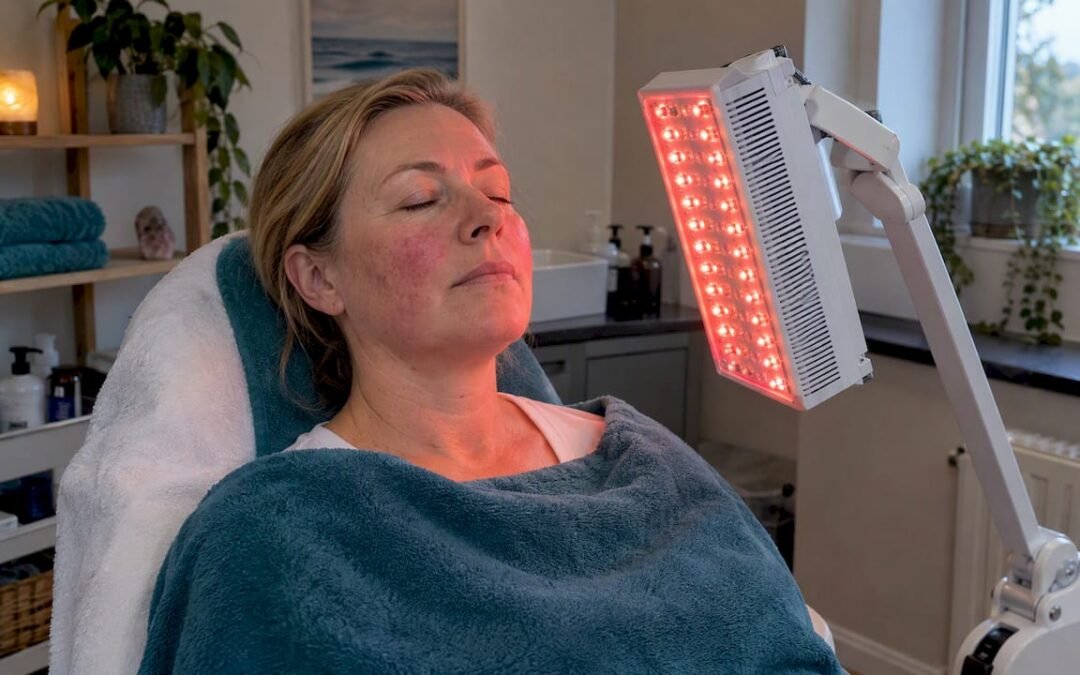
Red light therapy may help calm rosacea-related inflammation for some people, but it is not a cure and it is rarely enough on its own. The research so far is early and mostly small-scale, and red light alone appears less targeted for rosacea redness than some other approaches. Used sensibly, alongside medical advice and trigger management, it can be a gentle, well-tolerated addition. This guide explains what it can and cannot do, who should be cautious, and how to approach a course of sessions in Ireland.
TL;DR
- There is no cure for rosacea, but there are many ways to manage it, including light and energy-based treatments.
- Early research suggests LED light is a safe, well-tolerated add-on, but the studies are small and not yet the large trials scientists would like.
- For visible blood vessels and persistent redness, dermatology guidance points to laser or intense light devices, and red light alone is unlikely to replace them.
- Screen for photosensitising medication and skin conditions first, and speak to your GP or a dermatologist before starting.
- Expect gradual, cumulative change over several weeks, not overnight clearance.
Table of Contents
- What rosacea is and why Irish skin is so often affected
- Does red light therapy help rosacea?
- What red light cannot do
- Who should be careful or avoid it
- How to approach a course of red light for rosacea
- Our perspective at Live5DHealth
- Rosacea-friendly habits that make light therapy work harder
- Trying red light with us in Ireland
- FAQ
- Sources
What rosacea is and why Irish skin is so often affected
Rosacea is a long-term inflammatory skin condition. It mainly affects the cheeks, nose, chin and forehead, with recurring flushing, persistent redness, bumps, pustules and in some cases thickened skin. Visible small blood vessels (telangiectasia) are common.
It is especially familiar here. The Irish Skin Foundation describes it as “The Curse of the Celts” because it is so common among people of Irish and Celtic descent. Many women notice it first in their forties, which can coincide with menopausal flushing and make it harder to tell what is driving the redness. If you are unsure what you have, a diagnosis comes first.
The same Irish Skin Foundation page lists the usual triggers: ultraviolet light, hot and cold temperatures, stress, exercise, alcohol, smoking, spicy food and hot drinks. Dermatology reviews describe trigger avoidance as the foundation of any treatment plan, however advanced the technology you add on top.
Does red light therapy help rosacea?
Possibly, in a supporting role. Here is what we can say honestly.
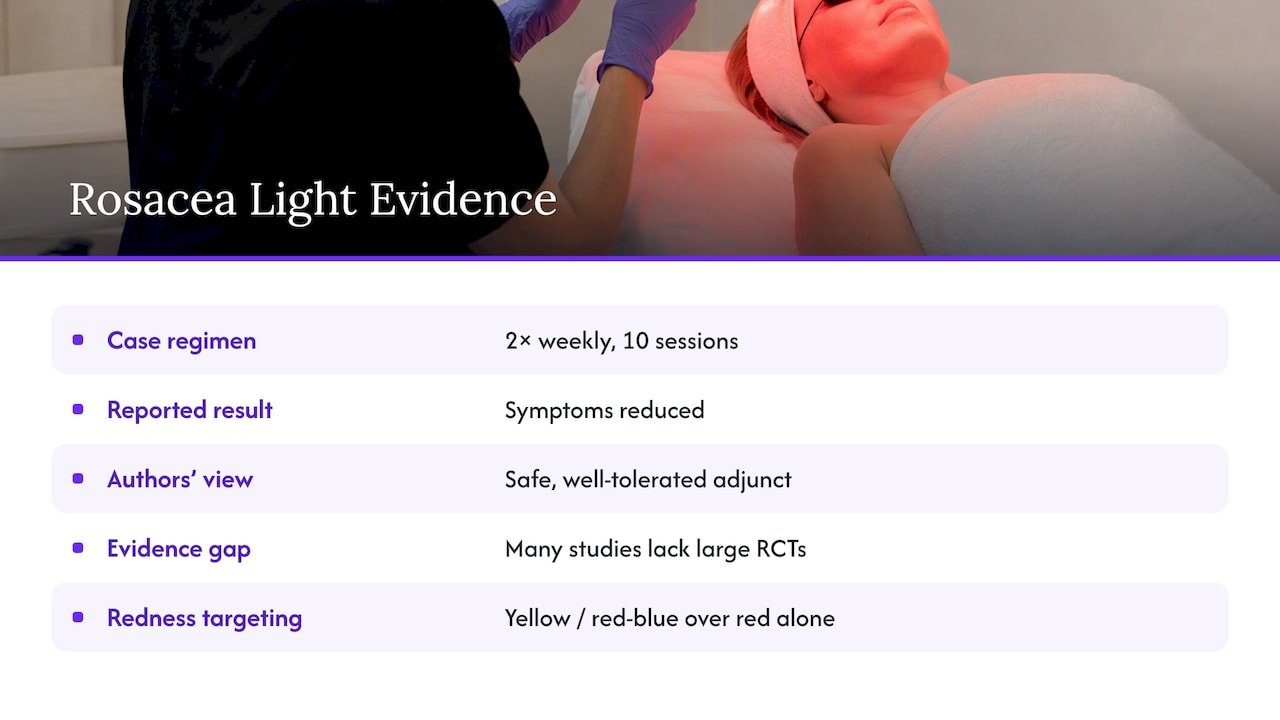
What looks promising. A small case report of combined blue and red LED therapy, given twice a week for ten sessions, recorded a reduction in symptoms. The authors conclude that LED light is a safe, well-tolerated adjunct, particularly for reducing inflammation and improving vascular features.
What is still missing. Reviewers note that many LED studies lack the rigour of large randomised controlled trials. They also caution that settings matter: light needs to reduce inflammation without driving up reactive oxygen species, which could in theory provoke a flare. That is one reason a gentle, correctly dosed approach beats “more is better”.
The detail most articles skip. Red light is often marketed for general skin health, but clinical experience suggests that yellow light and combined red and blue LED treatments can be more targeted for the redness of rosacea than red light alone. If your main complaint is persistent flushing and redness, set your expectations accordingly.
So the fair answer to “is red light good for rosacea?” is: it may help calm irritated skin and is generally gentle, but it is not the strongest tool for redness and broken veins, and the evidence is still developing.
What red light cannot do
It helps to separate the different parts of rosacea, because they respond to different treatments.
| Rosacea feature | What dermatology guidance usually points to | Where red light fits |
|---|---|---|
| Bumps and pustules | Prescription creams such as ivermectin or metronidazole, sometimes oral antibiotics | Possible gentle add-on for inflammation |
| Persistent redness (erythema) | Prescription topicals first, then energy-based devices if needed | May support; combined or yellow light may be more targeted |
| Visible blood vessels | Laser or intense light devices | Not a substitute |
| Flushing triggers | Avoiding your personal triggers | Does not remove triggers |
The American Academy of Dermatology notes that for visible blood vessels, patients can expect a 50% to 75% reduction after one to three laser treatments. That is a very different category of treatment from a low-level red light session, and it is delivered by a medical professional.
The same page also tempers expectations. Treated vessels do not vanish for good: results may last around three to five years, after which maintenance or fresh treatment is often needed. Light therapy is cumulative, so several sessions are normal.
The practical message from the Irish guidance is a stepwise one: manage baseline redness with medical treatment and trigger control first, then consider energy-based devices for stubborn vessels. Light should rarely be the only plank of your plan.
Who should be careful or avoid it
Red light is gentle, but it is not for everyone. Before you start:
- Check your medication. Experts advise screening out anyone with photosensitive skin conditions or on medicines that increase photosensitivity. Tell your pharmacist or GP what you take, including antibiotics and supplements, and ask whether light exposure is a concern.
- Have the diagnosis confirmed. Redness on the face can also be eczema, seborrhoeic dermatitis, lupus or a reaction to a product. A GP or dermatologist should rule these out.
- Protect your eyes. Follow the guidance in our piece on red light eye safety.
- Know the possible downsides. Our overview of red light therapy side effects covers what to watch for, including temporary warmth or irritation.
- If you are in or recently finished cancer treatment, speak to your oncology team before any light-based therapy. Some treatments make skin more sensitive, and your team knows your situation.
Stop and seek advice if your skin becomes more flushed, stings, burns or breaks out after a session.
How to approach a course of red light for rosacea
There is no agreed rosacea protocol, so treat any plan as an experiment you can pause. A sensible way to go about it:
- See your GP or a dermatologist first. Get a diagnosis and a baseline plan for redness, bumps and triggers.
- Take photos. Same lighting, same time of day, before you start and every two weeks. Rosacea fluctuates, and photos beat memory.
- Start conservatively. Short sessions at a comfortable distance, with no heat on the skin. Heat is a rosacea trigger, so avoid anything that leaves your face hot.
- Keep a trigger diary. Note alcohol, hot drinks, stress, exercise and weather alongside your sessions, so you do not credit or blame the light for something else.
- Give it six to eight weeks. The case report used ten sessions over about five weeks. If you see no change or things worsen, stop.
- Tell your clinician. They can fold it into your plan or advise against it.
Dosage matters as much as the colour of the light. Our guides to red light wavelengths and red light therapy dosage explain why more is not better, and why measured output is more useful than marketing claims.
A note on home masks and devices
Consumer LED masks are popular, and one thread among the top results shows a user running a mask five days a week and noticing subtle benefit. That is an anecdote, not evidence. A 2026 review of LED photobiomodulation looks specifically at how professional systems compare with consumer devices, which tells you the question is live in the research. If you buy a device, choose one that states its wavelengths and output, and avoid anything that heats the skin.
Our perspective at Live5DHealth
We see a lot of women in their forties and beyond who arrive with redness they have been managing for years. They are tired of being told it is just “sensitive skin”, and they are hopeful about technology. We understand that hope, and we want to protect it from disappointment.
Here is how we think about it. Red light therapy is one of the gentlest tools in a wellness centre. It is non-invasive, it does not need downtime, and many people find the sessions calming. We offer it because we believe in supporting the body’s own repair processes, and the science on light and cell function is genuinely interesting. You can read more in our piece on red light and mitochondria.
But we will not tell you it cures rosacea, because nobody can. Rosacea is a chronic condition, and the people who do best treat it as a partnership: a medical plan from their doctor, careful trigger management at home, and supportive therapies on top. If your main problem is a network of visible vessels, a dermatologist’s laser or intense pulsed light is a better first call than any wellness session, including ours.
Where a centre like ours can help is the whole-person side. Rosacea flares with stress, poor sleep and overheating, so a calm environment, a session that leaves your skin cool rather than hot, and a plan you can stick to are worth something. Our approach is to blend the best of modern technology with older, gentler wisdom, and to be straight with you about what to expect.
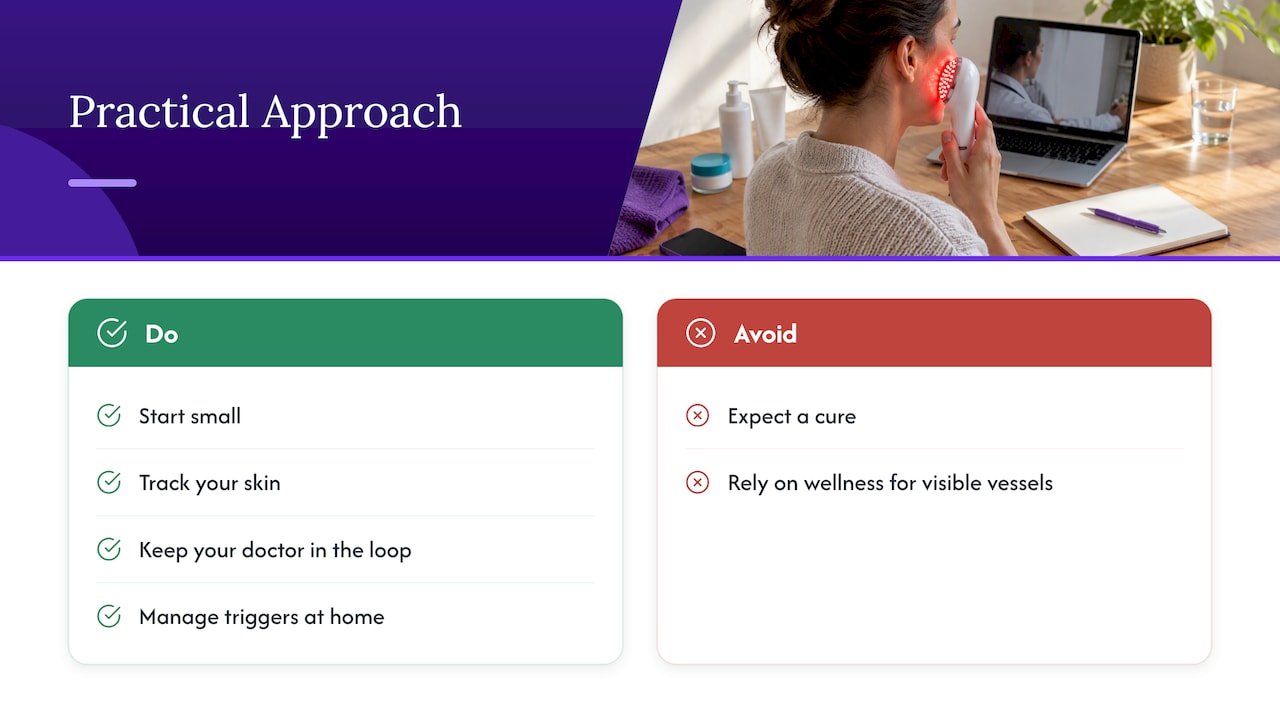
Start small, track your skin, and keep your doctor in the loop. Your best self is built on patient steps, not promises.
— Mark
Rosacea-friendly habits that make light therapy work harder
No device can outwork the daily triggers. These steps reflect the trigger list from the Irish Skin Foundation:
- Sun protection every day. Ultraviolet light is a recognised trigger. Use a broad-spectrum sunscreen, even in an Irish winter, and wear a hat.
- Go gentle on products. Choose fragrance-free cleansers and moisturisers. Avoid anything that stings or tingles.
- Watch temperature swings. Hot showers, saunas and sudden cold can set off flushing for some people.
- Notice food and drink. Alcohol, spicy food and hot drinks are common culprits, but they differ from person to person.
- Manage stress. Stress is on the trigger list too. Slow breathing, walking and good sleep all count.
This matters for how you use a wellness centre, too. If heat sets off your flushing, go easy on hot therapies such as the sauna and steam room, or keep them short, and end with a cool-down. Everyone’s threshold is different, so let your own skin guide you.
Trying red light with us in Ireland
If you would like to try red light as a supportive step, our red light therapy sessions in Boyle, County Roscommon, are priced at €20 to €40. Tell the team about your rosacea, your medication and any photosensitivity before your first visit, so the session can be planned around you. If you want to understand the technology first, our complete 2026 guide to red light therapy in Ireland is a good starting point.
If you are exploring a broader reset, you can also look at our 3, 5 and 10-day wellness retreats, which give you time to rest, recover and build calmer routines.
FAQ
Does red light cure rosacea?
No. Rosacea is a chronic condition with no cure, only management. Red light may help calm inflammation in some people, but it works best as part of a plan that includes medical treatment and trigger avoidance.
Is red light good for rosacea redness?
It may help a little, but it is not the strongest option. Clinical experience suggests yellow or combined red and blue LED can be more targeted for redness, and visible blood vessels are usually treated with laser or intense light by a dermatologist.
How many sessions will I need?
Results from light-based treatment are cumulative, so expect a course rather than a single visit. One published case report used ten sessions, twice weekly. There is no standard protocol, so review your skin with photos after six to eight weeks and stop if nothing improves.
Can red light make rosacea worse?
It can, if the settings are wrong, the skin gets hot or you take a photosensitising medicine. Reviewers warn that poorly chosen parameters could provoke a flare. Check your medication first and stop if your face stings or flushes.
Sources
- Rosacea: The Curse of the Celts, Irish Skin Foundation
- Coupled blue and red LED therapy in rosacea: two case reports
- Lasers and lights: How well do they treat rosacea? American Academy of Dermatology
- Photodynamic therapy for rosacea in Chinese patients
- Light-emitting diodes: a brief review and clinical experience
- LED yellow light, ozonated hydrotherapy and minocycline for papulopustular rosacea
- Rosacea: New Concepts in Classification and Treatment
- LED photobiomodulation in dermatology: from professional systems to consumer devices