

Yes, you can get effective electrolytes without sugar. Sugar-free formulas replenish sodium, potassium and magnesium without added calories, and they suit most daily hydration needs. NHS guidance on dehydration outlines when electrolyte replacement matters most, and our own sauna protocol shows how we put sodium-focused dosing into practice. Clinical oral rehydration solutions use a small amount of glucose for a specific medical purpose, so severe dehydration still calls for professional advice.
TL;DR:
- Sugar-free electrolyte drinks provide essential minerals without calories, making them suitable for daily hydration, low-carb diets, and blood sugar management.
- These products usually contain 300 to 1,000 milligrams of sodium per serving, with higher levels suited for intense exercise or sauna sessions.
- Absorption of electrolytes without sugar is effective through normal digestion, but severe dehydration still benefits from glucose-based clinical solutions.
- People with kidney, heart, or sodium-restricted conditions should consult a healthcare professional before regular use of sugar-free electrolytes.
- Proper label reading ensures you match the mineral amounts and format to your activity level, with sachets ideal for workouts and tubs better for daily top-ups.
Table of Contents
- What sugar-free electrolyte products are and why people choose them
- Key minerals to look for and how much you actually need
- Can your body absorb electrolytes without sugar?
- Who benefits most, and who should be cautious
- How to choose a sugar-free electrolyte product
- Our sauna electrolytes protocol and everyday dosing examples
- A few honest observations on daily electrolyte habits
- Try our electrolyte support and sauna protocol for yourself
- FAQ
- Sources
What sugar-free electrolyte products are and why people choose them
Sugar-free electrolyte products come in a few familiar shapes: powders you mix into water, effervescent tablets that fizz away in a glass, and ready-to-drink bottles with no added sweeteners carrying calories. Each format delivers the same core minerals, just in a different package for a different moment in your day.
People reach for sugar-free versions for reasons that go well beyond taste preference:
- Avoiding unnecessary calories while still replacing what sweat and daily activity take out of you
- Managing blood sugar more carefully, whether through a medical condition or a personal choice
- Following a low-carb or ketogenic pattern where even small amounts of sugar feel counterproductive
- Topping up hydration for ordinary days, not just intense training sessions
It helps to draw a clear line here: these consumer products are not the same as clinical oral rehydration solutions (ORS). ORS sachets are formulated with a deliberate glucose-to-sodium ratio for treating significant fluid loss from illness, something NHS guidance addresses directly. Sugar-free electrolyte drinks are built for a different job: everyday mineral support, not medical rehydration.
Key minerals to look for and how much you actually need
Three minerals do almost all the work in a well-designed electrolyte product, and understanding what each one does makes label-reading far less confusing.
Sodium keeps fluid balance steady and helps your body hold on to the water you drink rather than losing it straight through. Consumer electrolyte products commonly list between 300 and 1,000 milligrams of sodium per serving, with the higher end aimed at people sweating heavily through exercise, heat or sauna sessions rather than someone topping up at a desk.
Potassium supports muscle contraction and a steady heartbeat, which is exactly why it appears alongside sodium in most formulas. It is worth noting that very high potassium intake can be risky for people with kidney conditions, so more is not automatically better.
Magnesium plays a role in muscle recovery and is frequently cited for easing cramping after exercise. Our magnesium supplements guide breaks down the common forms, citrate and glycinate among them, and how they differ in absorption and gut tolerance.
Statistic: consumer electrolyte powders typically list sodium amounts within a varied range per serving, so checking the label against your actual sweat loss matters more than picking a product by brand recognition alone.
Beyond the headline three, check for:
- Citrate or bicarbonate, often included to support a neutral taste and smoother digestion
- Chloride, which travels alongside sodium and rarely needs separate attention
- The sweetener or flavour system used, since “natural flavour” can mean several different things depending on the manufacturer
Can your body absorb electrolytes without sugar?
Here is where the science gets genuinely interesting. Glucose-mediated sodium transport is the physiological reason clinical ORS formulas include sugar at all: glucose and sodium share a transport pathway in the gut, so a precise glucose ratio speeds up absorption during severe diarrhoeal illness. This is well established in the research literature on intestinal transport and rehydration.
That mechanism matters enormously for treating serious fluid loss, but it does not mean sugar-free products fail to work for everyday hydration. For mild, ordinary dehydration, a properly formulated sugar-free electrolyte drink still delivers sodium, potassium and magnesium that your gut absorbs through normal digestive processes, just without the glucose-assisted shortcut that clinical ORS relies on.
Glucose stimulates sodium and water absorption in the gut, which is the physiological basis for why clinical oral rehydration formulas are built around it.
The practical takeaway is simple: reach for a sugar-free electrolyte for daily topping up, training sessions or sauna use, and switch to a clinician-recommended ORS when vomiting, diarrhoea or genuine heat illness puts you at risk of significant fluid loss.
Who benefits most, and who should be cautious
Sugar-free electrolytes suit a wide range of people, but a few groups should pause and think before adding them to a daily routine.
People likely to benefit:
- Anyone following a low-carb or ketogenic diet, where electrolyte shifts are common in the early weeks
- People actively avoiding added sugar for weight or metabolic reasons
- Office workers and gym-goers who want a simple daily topper rather than a sports-specific formula
- People with diabetes who prefer a no-sugar option, provided they still monitor their glucose as usual
People who should check with a clinician first include those with chronic kidney disease, heart failure or a sodium-restricted diet prescribed for a medical reason, along with parents considering any electrolyte product for infants or young children. Artificial sweeteners used in some sugar-free formulas can also trigger mild gut symptoms, bloating or a laxative effect at higher intakes for sensitive individuals, so starting with a smaller serving is sensible.
Pro Tip: If you’re new to a sugar-free electrolyte product, try a half serving first to see how your digestion responds before committing to a full daily dose.
How to choose a sugar-free electrolyte product
Reading an electrolyte label well takes under a minute once you know what to scan for. Look specifically at:
- Milligrams of sodium, potassium and magnesium per serving, not per container
- The actual serving size, since some tubs quietly assume two scoops rather than one
- Whether the product is genuinely calorie-free or just “low sugar”
- The sweetener used, or a clear “no sweetener” claim if that matters to you
- An ingredient list that names its flavour sources rather than hiding behind vague terms
Matching the product to your actual use case matters more than chasing the highest numbers on the label. A desk-based topping-up routine needs far less sodium than a two-hour endurance session or a sauna sauna sweat. Sachets win on convenience and portion control, while tubs tend to offer a better price per serving if you’re using electrolytes daily. Products built around citrate or bicarbonate can feel gentler on the stomach, which is worth considering if you’ve had digestive trouble with electrolyte drinks before.
| Use case | Typical sodium per serving | Best format |
|---|---|---|
| Daily topping up | 300 to 500 milligrams | Tub or tablet |
| Long workouts or heat exposure | 500 to 1,000 milligrams | Sachet |
| Clinical rehydration (vomiting, diarrhoea) | Set by ORS formulation, not a consumer product | Pharmacy-supplied ORS |
Our sauna electrolytes protocol and everyday dosing examples
We built our 30 to 60 Minute Protocol: Electrolytes for Sauna around a straightforward principle: heavy sweating from sauna use calls for meaningfully more sodium than a quiet day at a desk. Such a protocol may recommend 300 to 500 milligrams of sodium before or during a 30 to 60 minute sauna session, paired with steady water intake.
That same logic adapts easily to other parts of your day:
- A morning topper with a lighter sodium dose if you tend to feel sluggish before coffee
- A post-exercise serving matched to how much you actually sweated, not a fixed amount every time
- A small boost on fasting or low-carb days, when sodium losses through urine often increase
One safety reminder worth repeating: do not stack multiple electrolyte servings without checking your total daily sodium intake, particularly if you are also eating salted foods or using more than one supplement. Pairing any electrolyte dose with adequate plain water keeps the balance working as intended rather than against you. Our guide for adults over 40 looks at how these needs shift with age.
A few honest observations on daily electrolyte habits
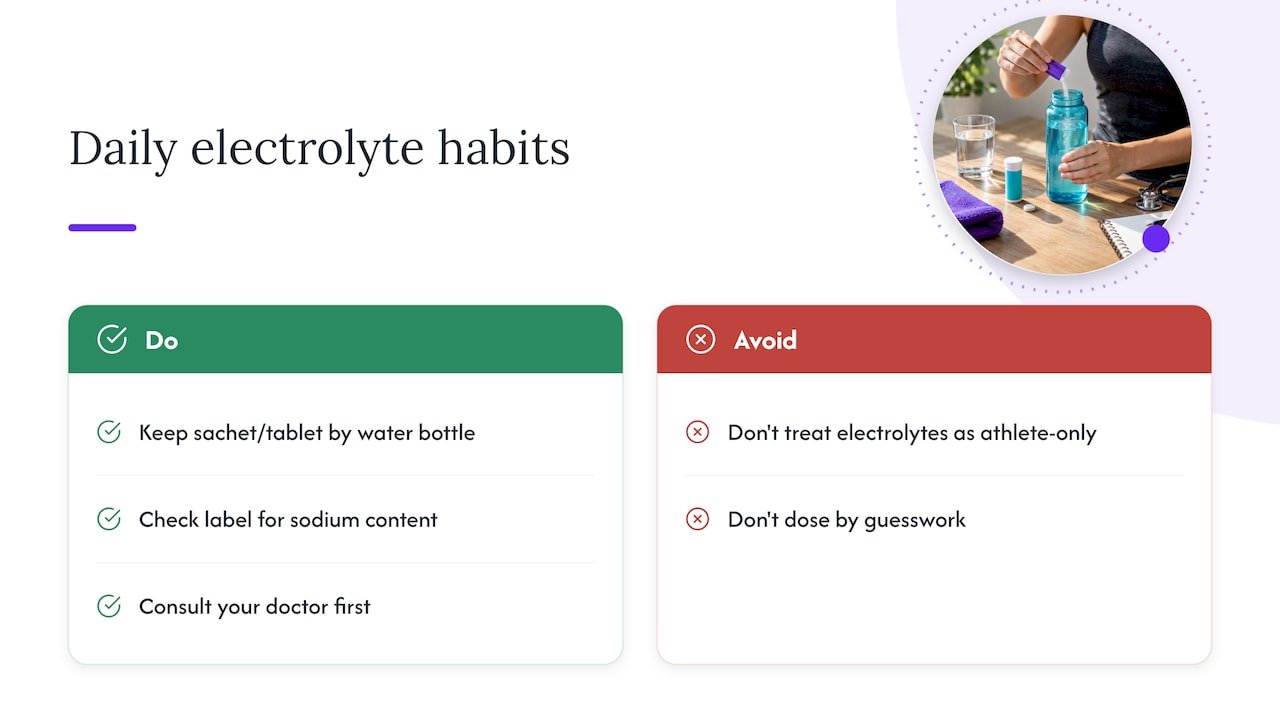
The most common mistake we see is treating electrolytes as something only athletes need. Most people lose meaningful sodium through ordinary sweating, air travel and simply not drinking enough plain water, and a sugar-free electrolyte habit fills that gap without adding anything you don’t want. The second mistake is dosing by guesswork rather than checking the label, which is how people end up either under-replacing or overshooting their sodium for the day.
A simple habit that helps: keep one sachet or tablet near your water bottle so topping up becomes automatic rather than an afterthought. If you manage a chronic condition, always check with your doctor before building a daily electrolyte habit around it.
— Mark
Try our electrolyte support and sauna protocol for yourself
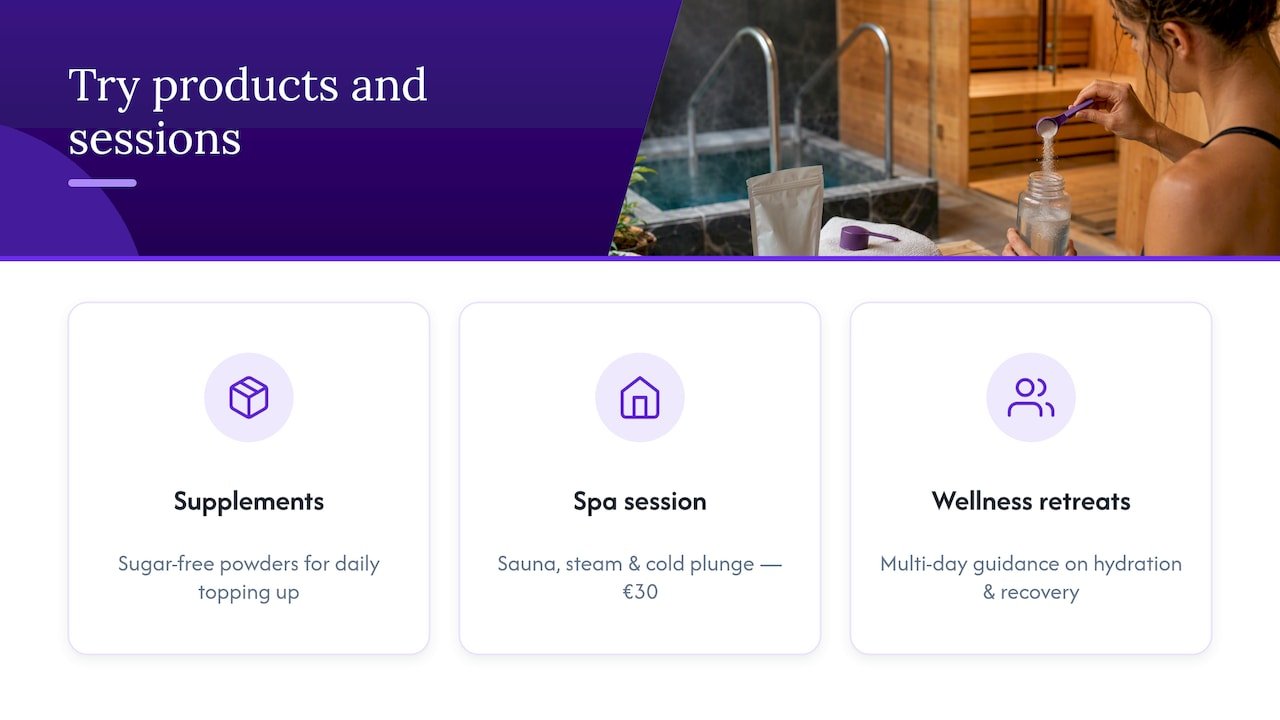
We stock electrolyte powders and mineral supplements in our supplements category, formulated for exactly the kind of daily, sugar-free topping up this guide has walked through. If you want to feel the difference heavier sweating makes, our sauna, steam and cold plunge spa session costs €30 and pairs naturally with the sodium protocol described above.

For anyone curious about combining electrolyte support with a broader reset, our multi-day wellness retreats give you hands-on guidance on hydration, mineral balance and recovery alongside our full range of therapies. Book a session or explore the retreat options when you’re ready to put this into practice.
This article is general information, not a substitute for advice from a qualified doctor. Consult a qualified healthcare professional about your own circumstances before acting on anything here.
FAQ
Can you get electrolytes without sugar?
Yes, sugar-free electrolyte powders, tablets and ready-to-drink products are widely available and supply sodium, potassium and magnesium without added sugar. They differ from clinical oral rehydration solutions, which include glucose for a specific medical absorption purpose during severe dehydration.
Which is the healthiest electrolyte drink?
There is no single “healthiest” formula, since the right choice depends on your sodium needs, dietary restrictions and taste preference. Look for a product with transparent ingredient lists, clearly stated sodium, potassium and magnesium amounts per serving, and no unnecessary additives.
Is drinking sugar-free electrolytes good for you?
For most healthy adults, sugar-free electrolytes support daily hydration and mineral balance without the added calories of sugar-sweetened versions. People with kidney disease, heart failure or sodium-restricted diets should check with a clinician before adding them regularly.
Can your body absorb electrolytes without sugar?
Yes, your gut absorbs sodium, potassium and magnesium through normal digestive processes even without glucose present. Glucose specifically speeds up sodium absorption in clinical rehydration settings, which is why it appears in ORS formulas for severe illness rather than everyday electrolyte products.