

If your sauna session lasts under 20 minutes, water is usually all you need. Longer sessions, back-to-back rounds, or heavy sweating change that picture entirely: replace fluid plus sodium within 30 to 60 minutes of stepping out, then keep sipping and watch your urine colour and how you feel to fine-tune the next session.
TL;DR:
- Sodium loss during sweating increases significantly after 30 minutes of sauna, making electrolyte replacement more necessary.
- Drinking small amounts of fluid with sodium within 30 to 60 minutes after sweating improves rehydration and prevents dilution of sodium levels.
- A sodium dose of 300 to 500 mg before, during, or after a sauna session is recommended for heavy sweaters or long sessions to maintain plasma volume.
- Regular sauna users adapt over time to conserve sodium, requiring less replacement to stay properly hydrated.
- Checking urine color or body weight loss helps monitor hydration, but a tailored electrolyte intake is crucial for optimal recovery and well-being.
Table of Contents
- Do you need electrolytes for sauna sessions?
- Practical protocol: before, during and after your sauna
- Which electrolytes matter most, and why sodium comes first
- What to drink or eat for sauna recovery
- Who should prioritise electrolytes, and when to stop
- How to check if you’re actually rehydrated
- Why trust this sauna hydration guidance
- What I tell every new sauna client about hydration
- Ready-made electrolyte support from Live5dhealth
- Sources
Do you need electrolytes for sauna sessions?
The honest answer depends on how long you stay in and how much you sweat, not on whether electrolyte drinks look impressive on a shelf. A short 15 to 20 minute sauna session at moderate heat rarely strips enough sodium to warrant anything beyond plain water and a normal meal afterwards.
Push past 30 to 40 minutes, do two or three rounds in one visit, or sweat heavily by nature, and the maths changes. Sodium is the dominant mineral lost through sweat, and it is the one that governs how well your body actually holds onto the water you drink back. Replacing fluid and sodium together within 30 to 60 minutes of finishing improves rehydration compared with water alone, because sodium helps your body retain the fluid rather than flushing straight through you.
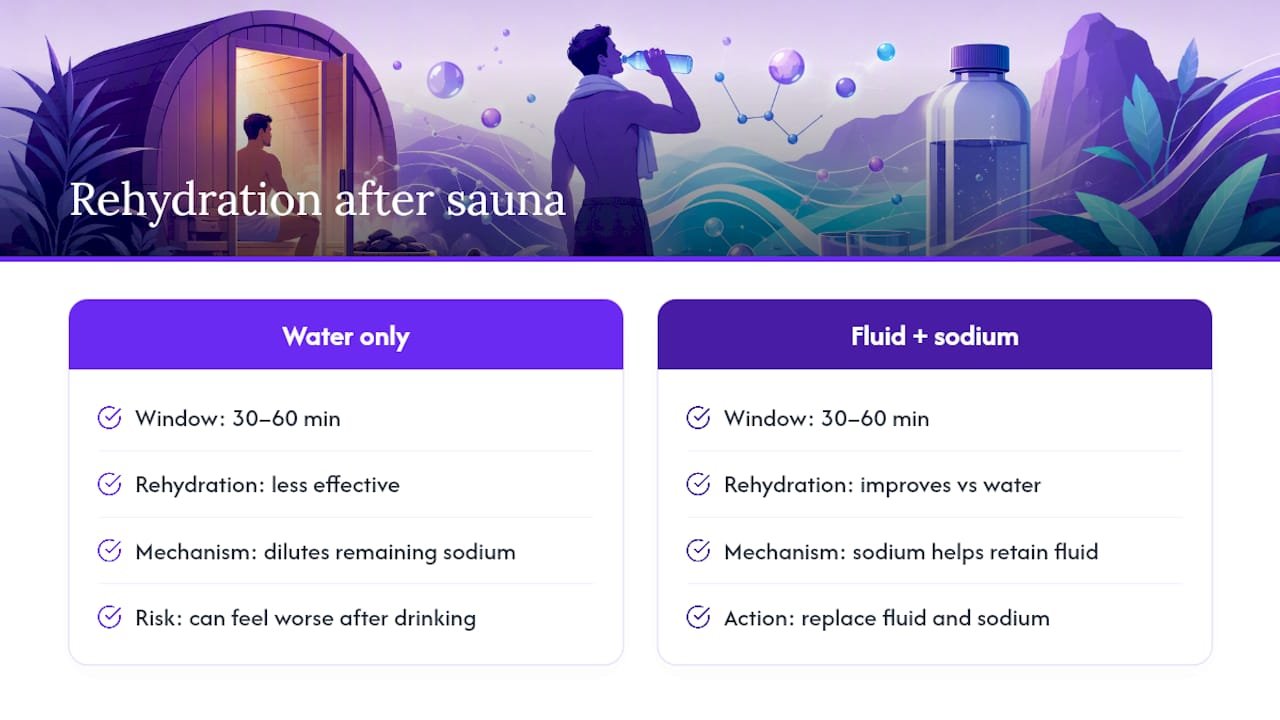
That timing detail matters more than most people realise. Drink two pints of plain water after a long, sweaty session and you can dilute your remaining sodium further, which is part of why some people feel worse, not better, after “rehydrating” with water alone.
Practical protocol: before, during and after your sauna
A repeatable routine beats guesswork every time. Here’s a straightforward sequence to follow:
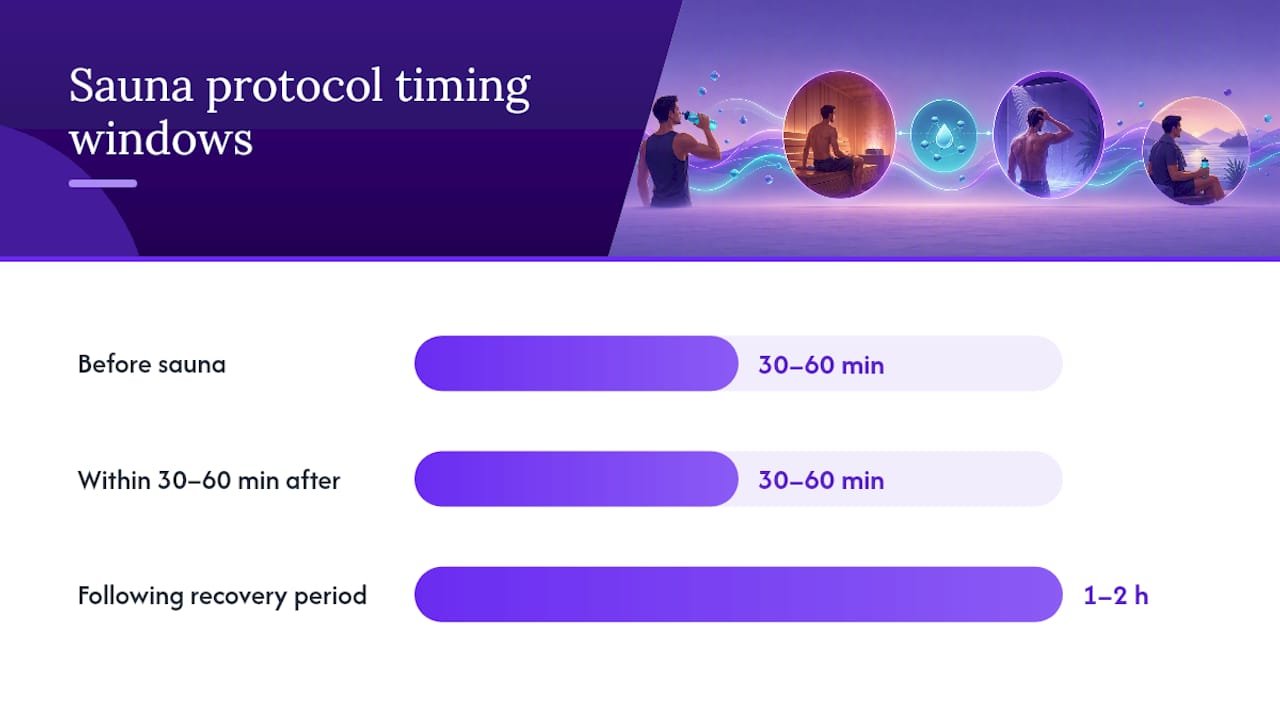
- 30 to 60 minutes before: if you’re fasted, planning a long session, or know you sweat heavily, take a modest sodium dose, roughly 300 to 500 mg, with a small glass of water.
- During the session: sip small amounts only if you need to, rather than gulping. Large volumes mid-sauna tend to sit heavily and cause stomach slosh, and small, frequent sips are absorbed better and cause less gastrointestinal discomfort than big ones taken at once.
- Within 30 to 60 minutes after: aim for a moderate amount of fluid carrying a sufficient sodium content for a typical sauna session lasting 20 to 30 minutes.
- Over the following 1 to 2 hours: keep sipping steadily rather than trying to replace everything in one sitting.
Adjust upward for hot weather, sessions over 40 minutes, multiple rounds in one visit, or if you know you’re a heavy sweater.
Pro Tip: Take your sodium dose before you’re thirsty, not after. Thirst is a lagging signal, and by the time it kicks in mid session you’re already behind on replacement.
Which electrolytes matter most, and why sodium comes first
Sodium isn’t just one mineral among several. It dominates sweat losses by a wide margin, and it is the primary lever controlling your plasma volume, so losing too much of it is what causes the lightheadedness, foggy feeling, and reduced circulation people associate with a “bad” sauna session.
Potassium and magnesium leave the body in much smaller quantities during a sauna session. For most people, ordinary food covers potassium needs without any need for a supplement. Magnesium is different again, less about immediate hydration and more about supporting muscle relaxation and sleep, which is why some sauna users find an evening magnesium dose helps more with cramping or restlessness than anything they take mid-session.
One detail worth knowing: your sweat composition isn’t fixed. Heat acclimation reduces sodium losses over time, so frequent sauna users typically need less replacement per session than someone new to regular heat exposure. If you’ve been sauna-bathing three times a week for six months, your body has likely already adapted to conserve more sodium than it did at the start.
What to drink or eat for sauna recovery
Not every “electrolyte drink” earns its name. Many mainstream sports drinks carry more sugar than sodium, which is the wrong balance for sauna recovery. Formulations that favour low sugar and higher sodium content perform better for heat-related fluid loss than standard sports drinks built for prolonged exercise.
When checking a label, look for:
- Sodium content per serving sufficient to support rehydration
- Low or minimal added sugar, not a syrup-heavy formula designed for taste over function
- Magnesium in a well-absorbed form such as glycinate or malate
- No proprietary blends that hide actual mineral amounts behind vague labelling
A simple DIY option works just as well for routine use: mix roughly 500 mL of water with a quarter teaspoon of sea salt, which supplies around 600 mg of sodium, plus a squeeze of lemon for taste. Add a banana or a small handful of potatoes afterwards for potassium, and consider a magnesium supplement in the evening if you’re prone to cramping or poor sleep. Broth is another underrated option, particularly after an evening session when a warm, salty drink feels more appealing than a cold one.
Who should prioritise electrolytes, and when to stop
Some people need this protocol far more than others. Beginners, heavy sweaters, anyone doing long or repeated sessions, fasted users, and older adults all sit higher up the priority list, largely because they either lose more sodium or start with less physiological buffer to absorb a mistake.
If you take diuretics, ACE inhibitors, or manage a heart or kidney condition, treat electrolyte supplementation as a conversation with your prescribing clinician first, not a shelf decision. Sodium and potassium supplementation can interact with these medications in ways that aren’t always obvious from the outside.
Stop the session and seek medical help immediately if you experience fainting, severe dizziness, chest pain, or persistent confusion. These aren’t symptoms to push through with a sports drink. They’re a signal your body needs more than hydration advice.
How to check if you’re actually rehydrated
Urine colour remains the quickest practical check: pale, lemonade yellow is the target, while dark amber suggests you’re still behind. Bear in mind that vitamin supplements and certain foods can skew this test, so treat it as a general guide rather than a precise measurement.
For a more exact figure, weigh yourself immediately before and after a session, wearing minimal clothing each time. Weighing before and after gives a reliable estimate of fluid lost, and the rough rule is to replace approximately one unit of fluid for every unit of body weight lost, adjusted for sodium content. Keep a simple log for your first few sessions. Most people are surprised by how consistent their own sweat rate turns out to be once they’ve measured it a handful of times.
Why trust this sauna hydration guidance
Live5dhealth runs a wellness centre in County Roscommon built around luxury sauna, steam, and cold plunge therapy, alongside an online shop stocking electrolyte products and supplements formulated for exactly this kind of recovery. The guidance here reflects both that hands-on experience with regular sauna clients and the peer-reviewed research underpinning sodium-first rehydration.
The core recommendations draw on published findings covering:
- Sodium’s dominant role in sweat composition and plasma volume
- The 30 to 60 minute replacement window after heat exposure
- How mild dehydration affects cognition and mood, reinforcing why prompt rehydration matters
Anyone managing a chronic condition or taking prescription medication should still treat this as general guidance and check specifics with their own clinician.
What I tell every new sauna client about hydration
The mistake I see constantly is chugging a full bottle of plain water the moment someone steps out of the sauna. It feels productive, but it dilutes the sodium you have left. Small sips plus a sodium source in that first half hour work far better. Try it once and compare how you feel the next morning.
— Mark
Ready-made electrolyte support from Live5dhealth
Live5dhealth is the practical shortcut for sauna users who would rather not measure sodium milligrams by hand. Our electrolyte range is formulated with the low-sugar, higher-sodium profile this protocol calls for, and our magnesium supplements cover the evening recovery side that food alone often misses.

If you’d rather have the whole protocol handled for you, our luxury spa in Boyle pairs supervised sauna sessions with cold plunge and steam, and staff on-site can talk through your hydration needs directly, particularly if you’re on medication or managing a chronic condition. For a broader look at recovery tools that complement sauna work, the team at Bone Health Sacramento covers hydromassage as a useful adjunct. Visit the shop or book a session to build a routine that actually fits your body rather than a generic label.
This article is general information, not a substitute for advice from a qualified doctor. Consult a qualified healthcare professional about your own circumstances before acting on anything here.
Sources
- Hydration and electrolyte balance (PMC article)
- Fluid and electrolyte replacement studies (PMC article)
- Hydration strategies and gastrointestinal tolerance (PubMed)