
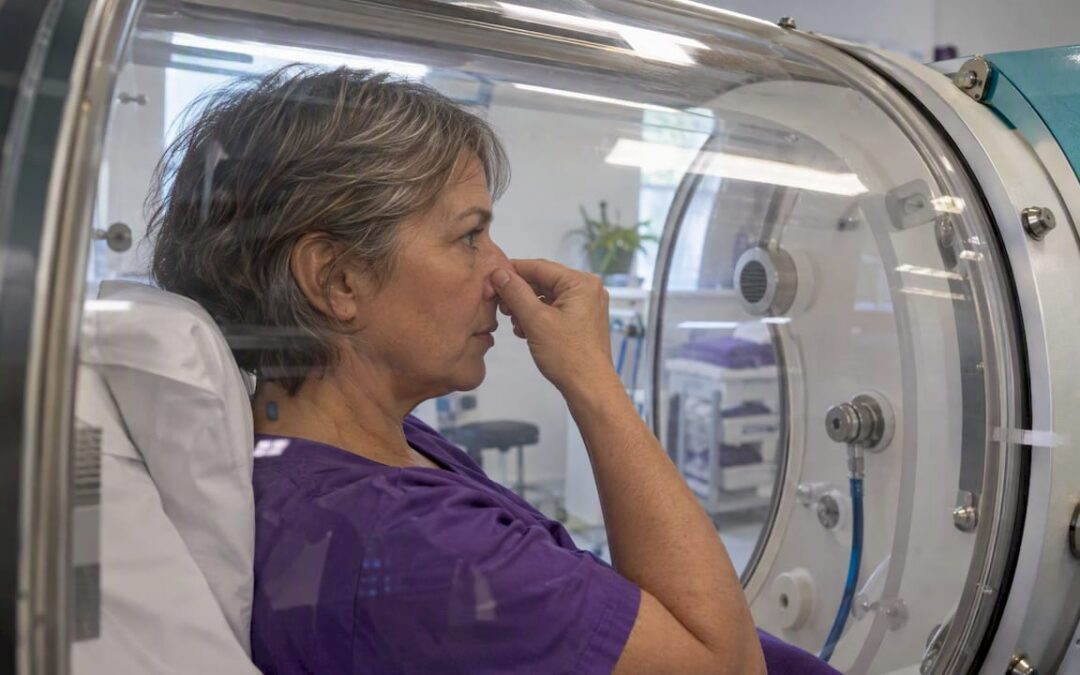
Hyperbaric oxygen therapy (HBOT) is safe for most people when delivered in a properly supervised medical setting, but it does commonly cause pressure-related effects like middle ear discomfort and, less often, claustrophobia. Serious complications such as oxygen toxicity seizures or lung barotrauma are rare. Risk rises with higher pressures and longer courses, which is exactly why screening and in-session precautions matter so much.
TL;DR:
- Middle ear barotrauma is the most common pressure-related side effect, especially in individuals with upper respiratory infections or Eustachian tube dysfunction.
- Adverse effects from oxygen toxicity, such as vision changes or seizures, are rare and usually resolve after treatment or oxygen withdrawal.
- Risks increase when chamber pressure exceeds 2.0 ATA or treatment lasts longer than 10 sessions, with longer courses raising the chance of eye and neurological effects.
- Proper screening for lung, ear, and sinus conditions can significantly reduce the likelihood of serious complications like pulmonary barotrauma or nerve toxicity.
- Preparing by practicing ear-equalizing techniques and monitoring symptoms during sessions helps manage side effects and ensures safety.
Table of Contents
- What causes pressure-related side effects like ear and sinus pain?
- Can HBOT affect your eyes, lungs or nervous system through oxygen exposure?
- Who should not have HBOT, and how does screening lower risk?
- Does the pressure level or number of sessions change your risk?
- How can you reduce or manage side effects before, during and after treatment?
- What should you do if side effects happen during or after a session?
- How we screen for and manage HBOT side effects at our centre
- A clinician’s view on weighing HBOT’s benefits against its risks
- Book a supervised HBOT session with proper screening
- FAQ
- Sources
What causes pressure-related side effects like ear and sinus pain?
Barotrauma happens because the body contains air-filled spaces, the middle ear, sinuses and lungs, that need to equalise pressure as the chamber compresses and decompresses. During descent, pressure inside the chamber rises faster than some tissues can adjust, and that mismatch is what produces pain or injury.
Middle ear barotrauma is, by a wide margin, the complication you’re most likely to meet. A quantified review of HBOT side effects identifies it as the single most common complaint reported across treatment courses, and a systematic review and meta-analysis found elevated risk ratios for ear discomfort in HBOT-treated groups compared with controls. The signs are usually straightforward:
- Sharp or aching ear pain during the compression phase of a session.
- A feeling of fullness or muffled hearing that may persist for a short time afterwards.
- In more severe cases, slight bleeding or a sensation of fluid behind the eardrum.
People with Eustachian tube dysfunction, a recent cold or an active upper respiratory infection are more prone to this because their tubes struggle to open and equalise pressure on cue. This is one of the main reasons clinics ask about recent illness before booking a session.
Sinus barotrauma works on the same principle but affects the air pockets in the skull rather than the ear canal. A blocked sinus opening traps air that cannot equalise, producing pressure headaches, facial pain, or occasionally a nosebleed. Dental barotrauma is rarer still and tends to affect teeth with recent fillings or hidden air pockets beneath a crown, causing a toothache that starts during compression and eases once pressure stabilises. Both are usually self-limiting, but pain that doesn’t settle within a day or two is worth a dental or ENT review rather than waiting it out.
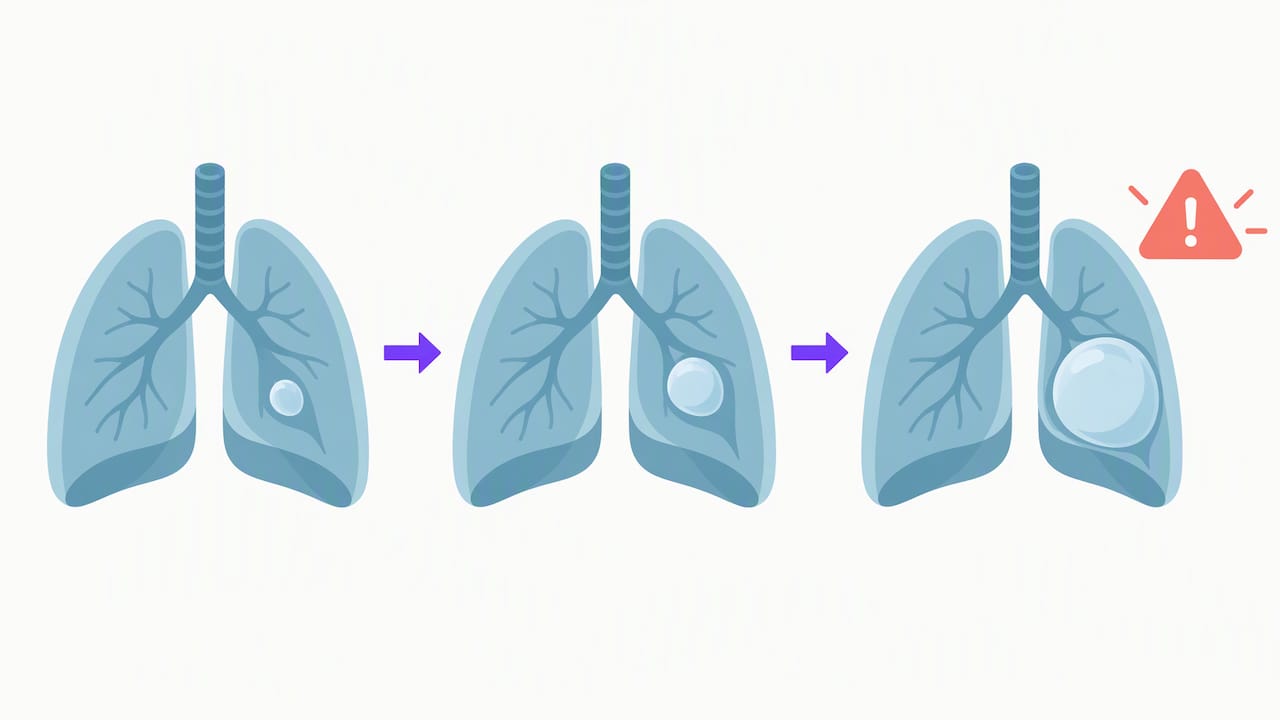
Pulmonary barotrauma is the one pressure-related complication that deserves real caution. As the chamber decompresses, trapped air in the lungs expands, and if a person holds their breath or has an area of lung disease that traps air, that expansion can rupture lung tissue. The StatPearls clinical overview on hyperbaric complications classifies this alongside arterial gas embolism as rare but potentially life-threatening events, which is precisely why an untreated pneumothorax is treated as an absolute contraindication to HBOT. Watch for sudden chest pain, shortness of breath, or a dry cough that develops shortly after decompression, these are signs that warrant immediate medical attention rather than a wait-and-see approach.
Can HBOT affect your eyes, lungs or nervous system through oxygen exposure?
Where barotrauma comes from pressure changes, a second category of side effects comes from the oxygen itself. Breathing high concentrations of oxygen under pressure is therapeutic, but it also places stress on tissues that aren’t used to that much oxygen, and clinicians watch for this using the acronym VENTID: Vision changes, Ears ringing, Nausea, Twitching, Irritability and Dizziness. These are the early warning signs of central nervous system oxygen toxicity, and recognising them early allows staff to intervene before symptoms escalate.
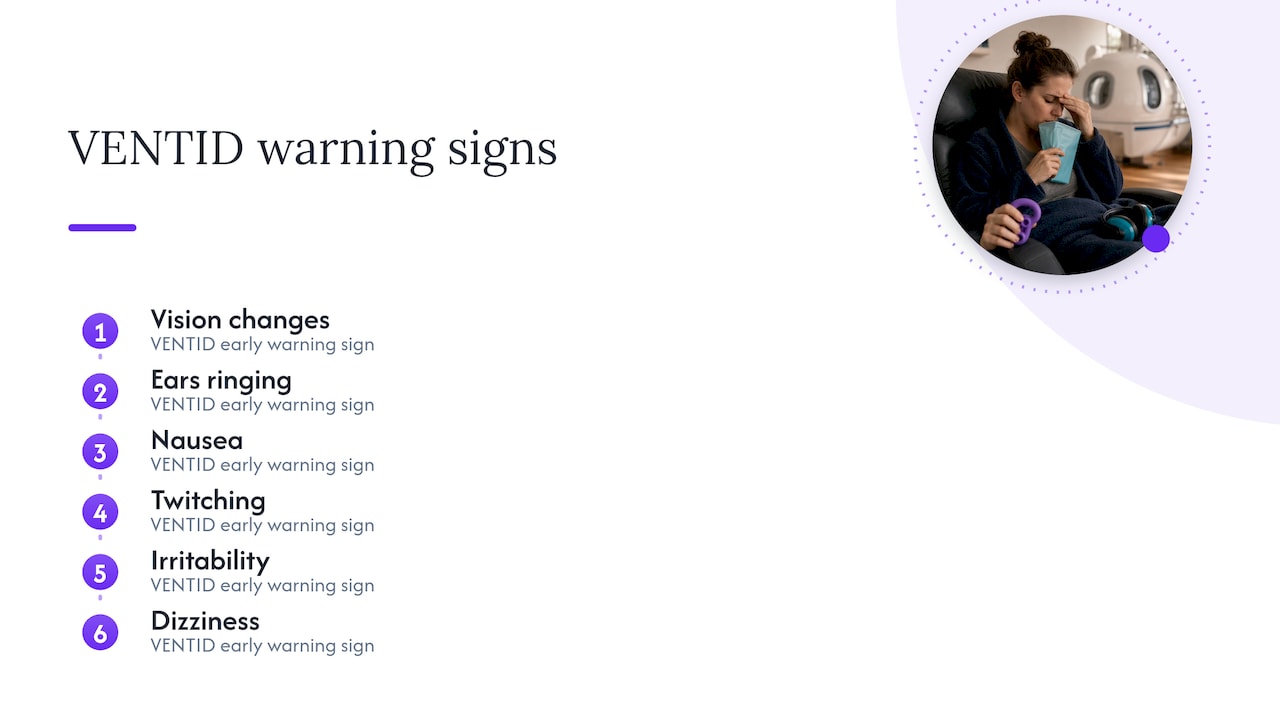
Oxygen toxicity seizures are genuinely rare. The Heyboer et al. review notes they are documented but infrequent, and when they do occur, they tend to be self-limiting: the seizure stops once oxygen is withdrawn and the person returns to breathing normal air. People with a history of uncontrolled seizures or certain neurological conditions carry a higher baseline risk, which is why this history is screened for before treatment begins.
Vision changes are far more common than seizures, just much less dramatic. The Cleveland Clinic’s patient guidance on HBOT states that 20% to 40% of patients receiving 20 or more daily treatments experience a temporary myopic shift, meaning things at a distance become blurrier for a while. This happens because prolonged high oxygen exposure subtly alters the shape or clarity of the eye’s lens, and it typically resolves on its own once the treatment course ends. That said, cataract formation has been associated with very large cumulative exposure over many sessions, which in practical terms means it’s a consideration for people undergoing extended or repeated long courses rather than a short, standard protocol. If your course runs well beyond what’s typical, a conversation with your provider about monitoring eye health is reasonable.
Pulmonary oxygen toxicity sits lower down the frequency scale but is worth knowing about. It tends to present as a dry cough or a tracheobronchitis-like irritation after a session, caused by the drying and inflammatory effect of high oxygen concentrations on the airway lining. Recovery is usually quick once treatment pressure or frequency is adjusted, and air breaks built into each session exist specifically to limit this kind of cumulative oxygen stress on both the lungs and the eyes.
Who should not have HBOT, and how does screening lower risk?
Most of the risk in HBOT isn’t really about the therapy itself, it’s about whether the right person is screened out, or screened in with the right precautions, before they ever step into the chamber.
- Untreated pneumothorax is the one absolute contraindication. A collapsed lung that hasn’t been treated will expand dangerously during decompression, so this is checked for before any session is approved.
- Recent bleomycin chemotherapy raises the risk of pulmonary toxicity when combined with high oxygen exposure, and clinicians typically need to know the timing of any recent chemotherapy regimen before proceeding.
- Uncontrolled epilepsy increases the baseline risk of a seizure event during treatment, so seizure history and current control are part of standard intake questions.
- Severe COPD or a history of recent thoracic surgery can mean lung tissue traps air unpredictably, raising the barotrauma risk during decompression.
- Intraocular gas from recent eye surgery can expand under pressure in a way that threatens vision, so recent ophthalmic procedures are flagged during screening.
- An active severe ear or sinus infection makes it much harder to equalise pressure safely, and sessions are often postponed until the infection clears.
Beyond this checklist, pre-treatment evaluation commonly includes a chest X-ray or spirometry for anyone with respiratory risk factors, and an ENT assessment for people with a history of ear problems. A clinical review of HBOT contraindications and interactions notes that doxorubicin and certain other chemotherapy agents also warrant caution and closer monitoring. People with diabetes are usually asked about their blood glucose before and after sessions, since oxygen under pressure can affect insulin sensitivity. None of this is about creating hurdles, it’s what turns a powerful therapy into a reliably safe one.
Does the pressure level or number of sessions change your risk?
The intensity of a protocol matters just as much as whether someone is a suitable candidate in the first place. The systematic review and meta-analysis on HBOT adverse effects found that adverse-event incidence increases specifically when chamber pressure exceeds 2.0 ATA and when a treatment course runs beyond 10 sessions. Both thresholds are useful benchmarks to ask your provider about directly.
- Pressures above 2.0 ATA are associated with a higher rate of both ear discomfort and ocular side effects compared with lower-pressure protocols.
- Courses longer than 10 sessions carry more cumulative oxygen exposure, which is part of why the myopic shift described earlier shows up mainly in people doing 20 or more daily treatments.
- Hood delivery, where oxygen is fed through a soft hood rather than a tight-fitting mask, tends to increase ocular oxygen exposure slightly compared with mask delivery, simply because of how the oxygen circulates around the face and eyes.
- Multiplace chambers, which treat several people at once with staff present inside, generally reduce claustrophobia risk compared with single-person monoplace chambers, and allow immediate hands-on intervention if something goes wrong.
Before starting a course, it’s worth asking your provider what pressure they use, how many sessions are planned, how air breaks are scheduled within each session, and whether a staff member is present throughout. These aren’t awkward questions, they’re the same ones a well-run facility will expect and welcome.
How can you reduce or manage side effects before, during and after treatment?
Most HBOT side effects are preventable or manageable with a bit of preparation, and knowing the basics before your first session makes a real difference.
- Practise ear-equalising techniques beforehand. The Valsalva manoeuvre (gently blowing against a pinched nose) and the Toynbee manoeuvre (swallowing while pinching the nose) are the two standard methods, and learning them before your first session reduces the odds of ear pain considerably.
- Flag any recent congestion or cold. If you’ve had a blocked nose or sinus infection in the days before your appointment, mention it. Postponing a session by a day or two is far better than pushing through pressure changes with blocked airways.
- Ask about ENT referral if ear problems recur. People who struggle repeatedly with equalisation, despite technique, sometimes benefit from a specialist review, and in persistent cases, tympanostomy tubes are occasionally discussed as an option.
- Address claustrophobia early, not during the session. Coaching and gradual desensitisation work well for many people, and a multiplace chamber with visible staff nearby reduces anxiety for those who find enclosed spaces difficult. Sedation is occasionally used for people with more significant anxiety, under medical guidance.
- Expect air breaks and monitoring as standard, not as an inconvenience. These built-in pauses exist to limit cumulative oxygen exposure to the eyes and central nervous system, and glucose checks for diabetic patients are a normal part of a well-run session.
- Watch for vision changes after longer courses and don’t panic if they appear. A temporary myopic shift after a prolonged course is expected and usually resolves after treatment ends; if blurring doesn’t improve within a few weeks of finishing, an ophthalmology check is a sensible next step.
Pro Tip: Practise your ear-equalising technique a few times a day in the week before your first session, not just the morning of it, so it becomes automatic once you’re under pressure.
A facility that takes safety seriously will also run its own equipment and fire-safety checks as a matter of course, since oxygen-rich environments carry their own operational risks that have nothing to do with your physiology but everything to do with where you’re being treated.
What should you do if side effects happen during or after a session?
If something feels wrong mid-session, the first and simplest step is to tell staff immediately. Trained personnel can adjust pressure, pause the session, or guide you through equalising techniques in real time, and this is one of the strongest arguments for choosing a supervised, staffed facility over an unmonitored setting.
Some symptoms need urgent attention rather than a wait-and-see approach:
- Sudden chest pain or significant breathlessness after decompression.
- Collapse, confusion, or any sustained neurological symptom such as weakness on one side.
- Severe, worsening ear pain accompanied by bleeding or sudden hearing loss.
These warrant emergency care without delay. On the other hand, mild ear discomfort that lingers for a day, or a vision change that’s slow to resolve after a longer course, are reasonable to monitor and raise at your next appointment or with an ENT or ophthalmology professional if they don’t settle within the expected timeframe.
How we screen for and manage HBOT side effects at our centre
Safety in HBOT comes down to the quality of screening before a session and the attentiveness during it, and that’s the standard we hold ourselves to. Before anyone begins a course with us, we ask about recent illness, ear or sinus history, respiratory conditions, medications and any prior experience with pressure-related discomfort, because that conversation shapes how we approach the first session.
Most HBOT side effects are preventable with the right screening and the right pace. The goal isn’t to avoid caution, it’s to make caution invisible to the person lying in the chamber.
During sessions, we watch for the early signs of discomfort, whether that’s difficulty equalising ear pressure or the first hint of anxiety in someone new to enclosed spaces, and we adjust pace and support accordingly rather than pushing through a fixed protocol regardless of how someone is coping. We also talk openly with clients about what to expect from an HBOT appointment before they ever book, so there are no surprises on the day.
We believe the difference between a reassuring HBOT experience and an uncomfortable one usually comes down to preparation and attentiveness, not luck.
A clinician’s view on weighing HBOT’s benefits against its risks
HBOT earns its place in modern medicine for specific, well-supported indications, but it’s not a therapy to walk into lightly or without proper screening. The risk profile is genuinely favourable for most people: common side effects are manageable, and serious ones are rare, but “rare” still means real, which is why informed consent matters as much as the oxygen itself.
My honest view is that the biggest risk in HBOT isn’t the chamber, it’s choosing a provider who skips the screening conversation. A good clinic asks about your ear history before it asks for payment. Prioritise facilities that follow recognised clinical indications, use properly certified equipment, and involve ENT or medical screening as standard rather than as an afterthought. That single filter does more for your safety than any amount of reading about incidence rates.
— Mark
Book a supervised HBOT session with proper screening
We offer Hyperbaric Oxygen Therapy priced between €80 and €120 per session, delivered with the screening and monitoring practices described throughout this guide rather than treated as a one-size-fits-all wellness add-on.

What that looks like in practice for a first appointment:
- A screening conversation covering ear, sinus, respiratory and medical history before you’re ever scheduled in.
- Guidance on ear-equalising technique before you enter the chamber, so your first session isn’t your first attempt.
- Monitoring throughout the session, with staff present to respond if anything feels off.
- A straightforward explanation of what to expect, both during the session and in the hours afterwards.
If you’re weighing HBOT against other recovery-focused therapies, our photobiomodulation benefits and dosage sessions, priced between €20 and €40, are worth considering as a complementary option with a different risk profile. To book HBOT directly, visit our Hyperbaric Oxygen Therapy page and choose a time that suits you.
This article is general information, not a substitute for advice from a qualified doctor. Consult a qualified healthcare professional about your own circumstances before acting on anything here.
FAQ
What are the potential side effects of using a hyperbaric chamber?
The most common side effects are middle ear discomfort from pressure changes and, in some people, claustrophobia inside the chamber. Rarer effects include oxygen toxicity seizures, pulmonary barotrauma, and temporary vision changes after longer courses, most of which resolve once treatment ends or oxygen is withdrawn.
Can hyperbaric oxygen therapy (HBOT) cause vision changes?
Yes, a temporary myopic shift, meaning distance vision becomes blurrier, is relatively common after prolonged courses. The Cleveland Clinic notes that 20% to 40% of patients receiving 20 or more daily treatments experience this shift, and it typically reverses once the course finishes.
Who should not use HBOT?
Anyone with an untreated pneumothorax should not undergo HBOT, as this is the only absolute contraindication. People with recent bleomycin chemotherapy, uncontrolled epilepsy, severe COPD, recent thoracic surgery, intraocular gas, or an active severe ear or sinus infection need careful medical review before treatment, as these are common relative contraindications.
What does HBOT do to your brain?
At therapeutic pressures, HBOT increases oxygen delivery to brain tissue, which is part of why it’s used for conditions like radiation necrosis and certain wound-healing applications. In rare cases, excess oxygen exposure can trigger central nervous system oxygen toxicity, which may present as early warning signs such as vision changes, twitching or dizziness, and very rarely progresses to a seizure that resolves once oxygen is withdrawn.
Is HBOT generally considered safe?
HBOT is considered safe for most people when delivered in a medically supervised setting with proper screening. Serious complications are rare, and the Undersea and Hyperbaric Medical Society recommends treatment take place in regulated facilities that follow accepted clinical indications rather than unsupervised wellness settings.
Sources
- Hyperbaric Complications — StatPearls / NCBI
- Hyperbaric Oxygen Therapy: What It Is & Benefits, Side Effects — Cleveland Clinic
- Hyperbaric Oxygen Therapy: Side Effects Defined and Quantified — PMC (Heyboer et al.)