
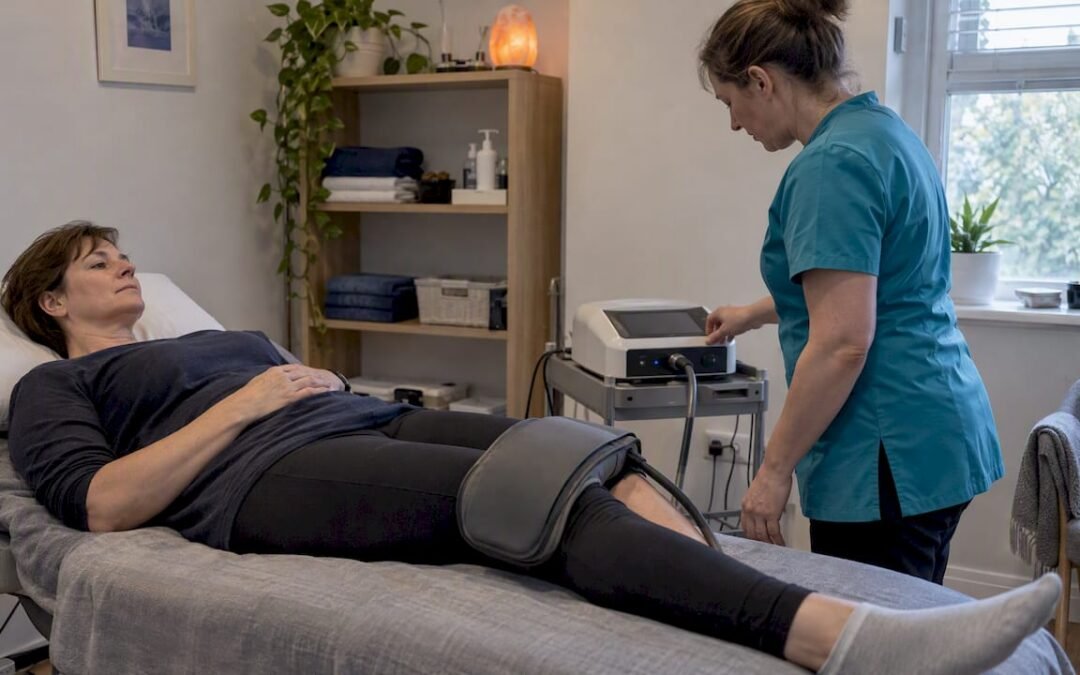
PEMF may ease inflammatory symptoms for some musculoskeletal conditions, but it is an adjunct, not a guaranteed cure. The strongest results appear when it is paired with exercise and clinical care rather than used alone, and outcomes depend heavily on the device settings and protocol used. We always recommend discussing PEMF with a healthcare professional first, and confirming the device meets proper safety standards before you start.
TL;DR:
- Nine knee osteoarthritis trials involving 457 patients found no significant overall pain or function improvement at one month, despite benefits at selected time points.
- Try 10 to 15 minute sessions twice weekly alongside exercise, recording pain and function at baseline and every two weeks for up to eight weeks.
- Avoid PEMF with an active implanted device, during pregnancy, infection, or fever, and seek clinical review for unexplained swelling before starting.
- Protocols vary widely, so ask for frequency, intensity, session duration, and regulatory conformity; safety marking does not prove effectiveness for your condition.
Table of Contents
- What PEMF is and how it works on tissue
- What the clinical evidence shows, and where it falls short
- How PEMF may calm inflammation at the cellular level
- Who tends to benefit, and who should avoid PEMF
- A short, measurable way to trial PEMF safely
- PEMF versus pharmaceuticals and physical therapy
- Side effects and what we know about long-term safety
- How to choose a genuinely effective PEMF device
- Where the research still falls short
- Why protocol discipline matters more than the device itself
- Try PEMF with proper screening at Live5DHealth
- FAQ
- Sources
What PEMF is and how it works on tissue
Pulsed electromagnetic field (PEMF) therapy sends short bursts of magnetic energy through the body, unlike static magnets that hold a constant field. Those pulses induce tiny electrical currents inside tissue, which can shift how ions move across cell membranes and influence cell signalling. This is the biophysical basis for claims that PEMF supports healing and modulates inflammation, though the strength of that effect depends on the dose delivered.
You will find PEMF offered in a few different formats, each suited to different needs:
- Whole-body mats, which bathe large areas such as the back or hips in a broad field, often used for general recovery or relaxation.
- Targeted solenoid coils, placed directly over a joint or injury site to concentrate the field where it is needed most.
- Handheld devices, smaller and more portable, typically used for localised, self-administered sessions.
It helps to place PEMF alongside other electrotherapies you may have heard of. Repetitive peripheral magnetic stimulation (rPMS) uses similar magnetic pulses but is usually aimed at nerve and muscle stimulation, while TENS works through electrical current applied via skin electrodes, mainly to interrupt pain signals. PEMF sits in a related but distinct category, working through induced fields rather than direct electrical contact.
What the clinical evidence shows, and where it falls short
The honest picture is mixed, and that matters more than any single promising headline. A 2026 systematic review and meta-analysis of PEMF for knee osteoarthritis pooled nine randomised trials covering 457 patients and found no significant improvement in pain scores or total WOMAC function at one month. Some time-dependent benefits did show up, including WOMAC pain improvements at 18 to 21 days and gains in stiffness and daily activity by the one-month mark, but the review judged overall risk of bias as high and noted that protocols varied too much to draw firm conclusions.
A 2026 review of nine knee osteoarthritis trials found no significant one-month pain improvement overall, yet detected benefits at specific time points when protocols aligned, according to the pooled analysis. That split result is the clearest signal in the current literature: timing and settings shape outcomes as much as the therapy itself.
A more encouraging result comes from a 2024 randomised trial in people with end-stage knee osteoarthritis. Sixty participants added PEMF twice-weekly to home exercise over eight weeks, and this combination improved knee muscle strength and reduced pain more than exercise alone. That pattern, PEMF performing better as a companion to movement-based rehabilitation than as a standalone fix, shows up repeatedly across the research.
Evidence for other conditions is thinner. Review work on neck pain has generally rated the supporting trials as very low quality, reflecting small sample sizes and inconsistent methods across studies. The honest summary:
- Knee osteoarthritis has the most trial data, with time-dependent and protocol-dependent effects rather than a universal benefit.
- Combining PEMF with exercise consistently outperforms PEMF used in isolation.
- Neck pain and several other musculoskeletal uses rest on low-quality evidence that cannot yet support strong claims.
How PEMF may calm inflammation at the cellular level
Preclinical research gives us a plausible mechanism, even though it has not been proven in large human trials. A review of PEMF’s effects on tissue regeneration found that pulsed fields can modulate pro-inflammatory cytokines such as IL-1β, IL-6 and TNF-α, while also influencing anti-inflammatory signals like IL-10. The same body of work shows PEMF affecting how macrophages and mesenchymal stem cells (MSCs) behave, which points toward an immune-modulating effect that may support regeneration under the right conditions.
What counts as “the right conditions” is where most of the uncertainty lives:
- Frequency, typically in the low range of 1 to 50 Hz in many studies, appears to shape which biological pathways respond.
- Amplitude or intensity, usually measured in micro- to millitesla, needs to be strong enough to induce a meaningful current without being excessive.
- Pulse duration and session length vary widely between trials, making direct comparisons difficult.
- Cumulative exposure across multiple sessions seems to matter more than any single treatment.
There is no universally agreed setting, and that heterogeneity is a genuine limitation of the field rather than a marketing footnote.
Pro Tip: Ask your practitioner for the device’s frequency and amplitude, and for the reasoning behind those specific settings, before you commit to a course of sessions.
Who tends to benefit, and who should avoid PEMF
The best-supported use case remains knee osteoarthritis, particularly in older adults who pair sessions with structured exercise. Some tendinopathies and adjunct bone-healing applications show promise, while neuropathic pain and systemic inflammatory diseases currently lack strong supporting data. Realistic expectations matter: PEMF tends to support a rehabilitation plan rather than replace one.
Before starting, run through this screening checklist:
- Confirm you have no pacemaker or other active implanted device.
- Tell your clinician if you are pregnant.
- Avoid treatment during active infection or fever.
- Flag any unexplained swelling for medical review before beginning sessions.
- Stop and seek clinical advice if symptoms worsen or new symptoms appear during a trial.
Our PEMF contraindications guide covers this screening in more depth if you want to check your own situation against it.
A short, measurable way to trial PEMF safely
Rather than committing to months of sessions on faith, a structured short trial lets you and your clinician judge whether PEMF is doing anything for you. Start by recording a baseline: a pain score on a simple 0 to 10 scale and a function test such as a sit-to-stand count or walking speed.
- Session pattern: mirror trial protocols with sessions of around 10 to 15 minutes, roughly twice a week.
- Combine with movement: pair sessions with a home exercise routine rather than using PEMF alone.
- Reassess regularly: repeat your pain and function measures every two weeks across a two to eight week window.
- Check device status: confirm any device you use carries proper conformity marking and sits within EU MDR and HPRA oversight where that applies.
We document a comparable 2 to 4 week evidence-based trial plan for PEMF on our own site, built on the same logic of baseline measurement, defined session frequency and reassessment.
Pro Tip: Keep a simple log of your pain score and function test after every session. A trend over two to four weeks tells you far more than how any single session feels.
PEMF versus pharmaceuticals and physical therapy
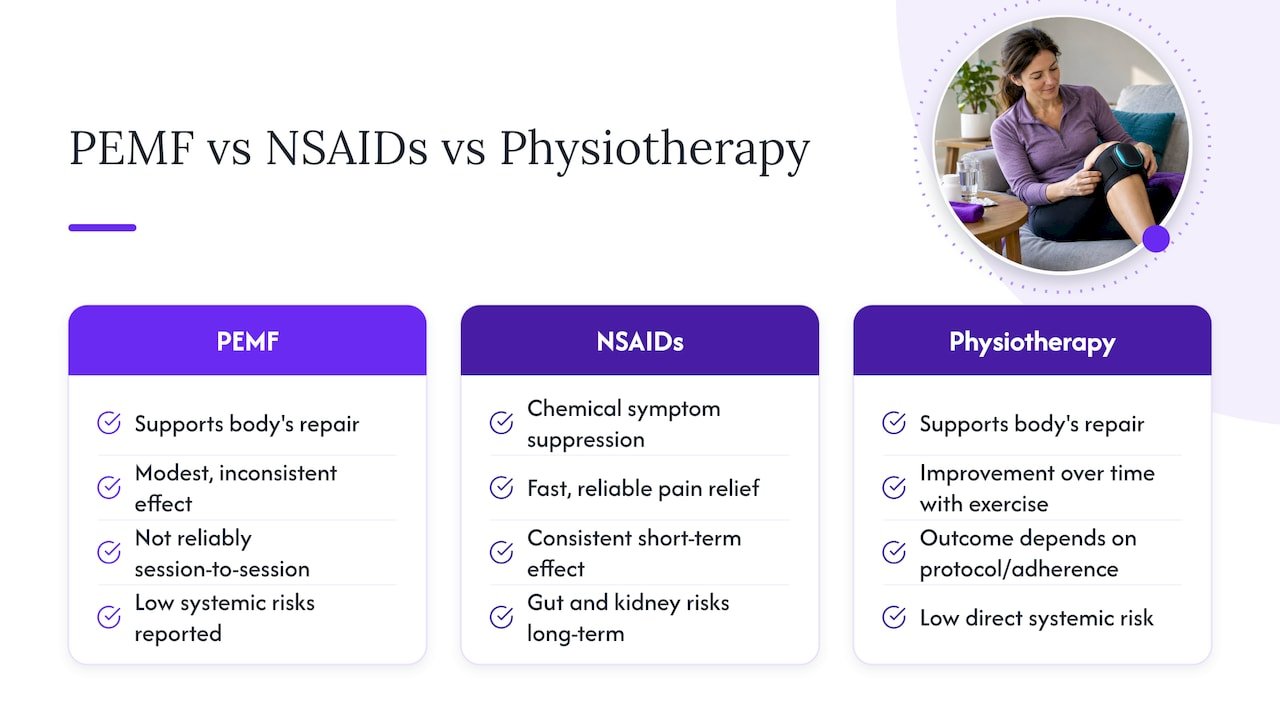
PEMF does not act like an anti-inflammatory drug, and it should not be judged against one on the same terms. Non-steroidal anti-inflammatory drugs (NSAIDs) work quickly and reliably reduce pain and swelling for many people, but they carry well-documented risks to the gut and kidneys with long-term use. PEMF, by contrast, shows a more modest and inconsistent effect in trials, with benefits that often depend on timing and protocol rather than appearing reliably session after session.
Physical therapy sits closer to PEMF in philosophy: both aim to support the body’s own repair processes rather than suppress symptoms chemically. The 2024 trial combining PEMF with home exercise found the pairing outperformed exercise alone, which suggests PEMF’s most realistic role is as a complement to physical therapy rather than a competitor to it.
For people seeking to reduce medication reliance, PEMF might offer a lower-risk addition to a rehabilitation plan rather than a substitute for proven pharmaceutical management of acute flare-ups. The sensible framing is additive: use physical therapy as the foundation, lean on medication when symptoms demand faster relief, and treat PEMF as a supporting layer with a defined trial period rather than an open-ended commitment.
Side effects and what we know about long-term safety
A systematic review of low-intensity PEMF and related magnetic therapies found that low-intensity PEMF is generally safe, with sustained analgesic and anti-inflammatory effects reported for some musculoskeletal conditions, particularly when combined with exercise. Reported side effects across the literature tend to be mild, such as temporary warmth, tingling or brief discomfort at the treatment site.
Long-term safety data specific to inflammation treatment remains limited, largely because most trials run for weeks rather than years. Cleveland Clinic’s patient guidance notes that researchers are still studying PEMF and that there is no definite proof it works for everyone, while also flagging that some of what patients feel may reflect a placebo response rather than a direct biological effect. That guidance recommends speaking with a healthcare provider before starting sessions or buying a home device, a caution worth taking seriously given how much protocols vary between studies and commercial products.
The practical takeaway is that short-term use appears low-risk for most people who pass basic screening, while confident long-term safety claims outrun what the current evidence can support.
How to choose a genuinely effective PEMF device
Not all PEMF devices are built to the same standard, and the gap between a well-specified clinical device and a vague consumer gadget can be wide. Look for a few concrete markers before trusting any device or provider:
- Stated frequency and amplitude ranges, ideally matching or close to the settings used in published trials rather than vague marketing language.
- Regulatory conformity, since medical devices sold in the EU fall under Regulation (EU) 2017/745, with the HPRA acting as Ireland’s competent authority for device oversight.
- Clinician supervision, which allows settings to be adjusted to your condition rather than relying on a single fixed programme.
- Transparent session data, meaning a provider who can explain exactly what frequency, intensity and duration you are receiving and why.
Be wary of devices marketed with sweeping promises of guaranteed healing or claims untethered from any specific frequency or trial reference. Regulatory conformity confirms a device meets safety and manufacturing standards, but it does not, on its own, prove clinical effectiveness for your particular condition. Our PEMF therapy costs guide sets out a session cost checklist that doubles as a useful list of questions to ask any provider before you book.
Where the research still falls short
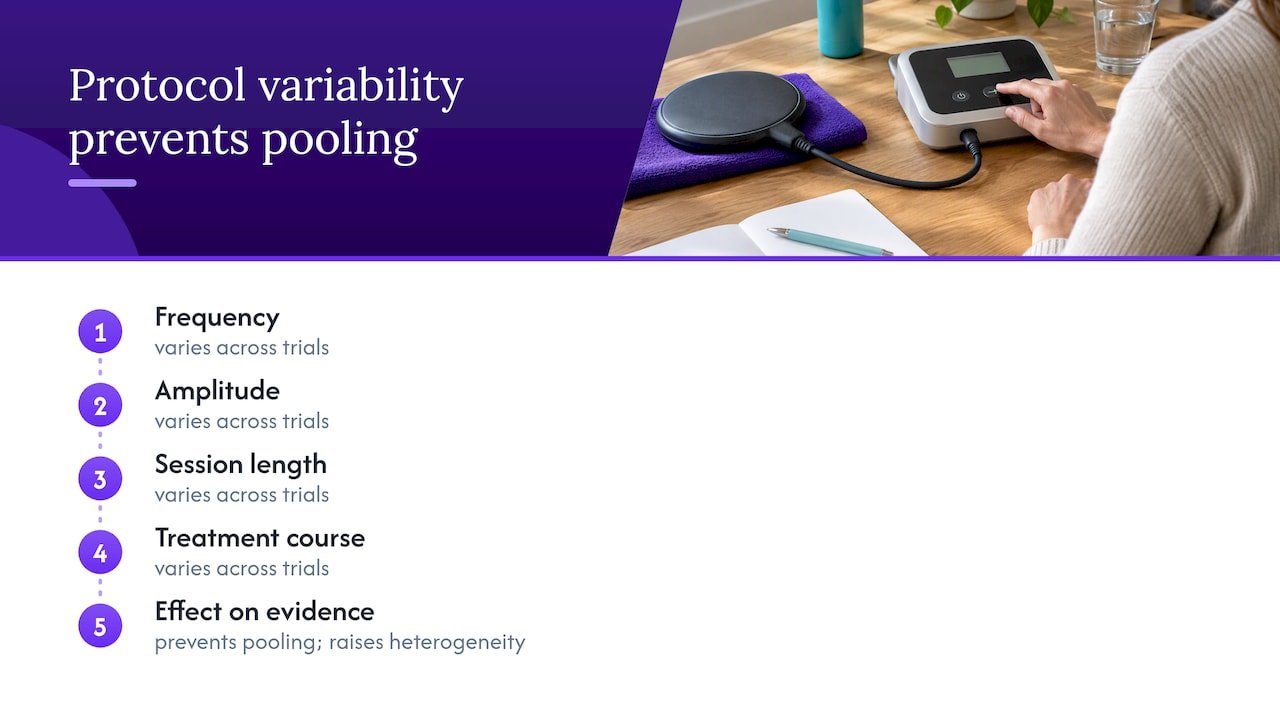
The biggest limitation across PEMF research is inconsistency. Studies use different frequencies, amplitudes, session lengths and treatment courses, which makes it difficult to pool results into a single confident conclusion. The 2026 knee osteoarthritis review explicitly flagged this heterogeneity alongside high risk of bias across the included trials, and low-quality evidence ratings for conditions like neck pain reflect the same underlying problem: too few well-designed, adequately powered trials.
Sample sizes also remain small by the standards of mainstream drug trials, with most PEMF studies enrolling dozens rather than hundreds of participants. That limits confidence in effect sizes and makes it harder to know which patient subgroups respond best. Much of the mechanistic evidence, the cytokine and macrophage findings that explain how PEMF might reduce inflammation, comes from cell and animal studies rather than confirmed human pathways, so we are still inferring rather than proving the biological story in people.
Funding and publication patterns are another open question worth naming plainly: smaller, industry-linked studies are more common in this field than large, independently funded trials, which is a pattern worth factoring into how much weight any single positive result deserves. Until standardised protocols and larger trials close these gaps, the most defensible position is cautious optimism paired with measurable, time-limited trials rather than blanket recommendations.
Why protocol discipline matters more than the device itself
The pattern across every serious review of PEMF is the same: results hinge on parameters and pairing with exercise, not on the technology alone. We think the field would benefit enormously if clinicians routinely published the frequency, amplitude and session schedule behind their reported outcomes, the way drug trials report dosage. Without that discipline, “PEMF worked” or “PEMF didn’t work” tells you almost nothing transferable.
We would also encourage healthy scepticism toward any study funded solely by a device manufacturer, not because the findings are automatically wrong, but because the field needs larger, independently run trials with standardised reporting before stronger claims are justified.
— Mark
Try PEMF with proper screening at Live5DHealth
We offer PEMF sessions supervised by clinicians, involving baseline screening, clear session parameters, and a defined trial window rather than an open-ended course. Because protocol dependence is the single biggest factor in whether PEMF helps, we focus on adjusting settings and schedules individually rather than treating every booking the same way.

A first visit typically includes:
- Baseline screening to check for contraindications such as active implants, pregnancy or unexplained swelling.
- Simple baseline measures, including a pain score and a short function test, so progress can be tracked.
- A supervised PEMF session with parameters tailored to the condition rather than a single fixed setting.
- Exercise guidance to pair with sessions, reflecting trial data showing PEMF performs best alongside movement.
If you would like to see how this fits alongside other recovery-focused therapies, the PEMF and wider therapy menu sets out the full range, or you can book a session directly to discuss a short, measurable trial.
This article is general information, not a substitute for advice from a qualified doctor. Consult a qualified healthcare professional about your own circumstances before acting on anything here.
FAQ
Can pulsed electromagnetic field therapy treat rheumatoid arthritis?
Current evidence for PEMF mostly covers osteoarthritis rather than rheumatoid arthritis, which is a systemic autoimmune condition with a different inflammatory profile. We would not recommend PEMF as a substitute for prescribed rheumatoid arthritis treatment, and anyone with an autoimmune diagnosis should discuss any adjunct therapy with their rheumatologist first.
Who should not use magnetic therapy?
People with pacemakers or other active implanted devices, pregnant women, and anyone with active infection, fever or unexplained swelling should avoid PEMF until a clinician clears them. Cleveland Clinic’s guidance recommends a conversation with a healthcare provider before starting, which remains the safest first step for anyone unsure about their own risk factors.
Can PEMF heal nerve damage?
Evidence for PEMF and nerve regeneration is still largely preclinical, with cell and animal studies suggesting possible effects on tissue repair rather than confirmed results in human nerve injury. We would treat claims of PEMF “healing” nerve damage with caution until larger human trials exist, and recommend discussing any nerve-related condition directly with a specialist.
What are the benefits of using a PEMF mat?
A PEMF mat delivers a broad magnetic field across large areas of the body, which some users find convenient for general recovery or relaxation rather than targeting one specific joint. Evidence for mats specifically is less detailed than for targeted coil devices used in trials, so the same caution around protocol and dosage applies.
How long does it take to know if PEMF is working for inflammation?
Trial data suggests two to eight weeks of consistent use, often two to three sessions a week alongside exercise, is a reasonable window to judge whether PEMF is helping. Tracking a simple pain score and function test before and after that window, as described in the 2024 PEMF and exercise trial, gives a clearer answer than judging from how any single session feels.
Sources
- Pulsed Electromagnetic Field Therapy in People with Knee Osteoarthritis: A Systematic Review and Meta-Analysis
- Combination of home-based exercise and pulsed electromagnetic field therapy in end-stage knee osteoarthritis (randomised trial, 2024)
- Pulsed electromagnetic field (PEMF) therapy — Cleveland Clinic
- The use of pulsed electromagnetic fields to modulate inflammation and improve tissue regeneration: a review
- Systematic review: low‑intensity PEMF and rPMS for musculoskeletal pain (Frontiers, 2026)