

Omega-3 is one of the most popular supplements for women in menopause, and the honest answer is that it helps with some things and not others. The best trials show it does not reliably reduce hot flushes. The case for it rests on heart health, mood, brain function and inflammation, which matter more as oestrogen falls. This guide sets out what the research shows, how much is considered safe, how to get it from food first, and when to check with your doctor before you start.
TL;DR
- Large trials and reviews find omega-3 does not significantly cut hot flush frequency compared with placebo, so do not buy it for that alone.
- The stronger reasons to take it are cardiovascular protection, mood and cognition, and general anti-inflammatory support.
- Aim for oily fish first. If you supplement, EFSA considers up to 5g a day of EPA and DHA combined safe for adults, though most women need far less.
- If you take blood thinners, have cancer or are on chemotherapy, speak to your GP or oncology team before starting fish oil.
Table of Contents
- Why omega-3 gets so much attention in menopause
- Omega-3 and hot flushes: what trials actually found
- Where omega-3 does have a case
- How much omega-3 do you need?
- Food first: getting omega-3 in an Irish kitchen
- Who should speak to a professional first
- Building a wider plan around omega-3
- Our perspective at Live5DHealth
- Support your menopause routine at our centre
- FAQ
- Sources
Why omega-3 gets so much attention in menopause
During the menopausal transition, oestrogen declines and several things shift at once. Cholesterol and blood pressure tend to rise, sleep gets lighter, mood can become less steady, and joints often ache. Omega-3 fatty acids, mainly EPA and DHA from oily fish and algae, play a part in each of these areas. They are building blocks of cell membranes, they feed the brain, and they help regulate inflammation.
That biology is why omega-3 is promoted so widely. But a plausible mechanism is not the same as a proven benefit for a specific symptom. The sections below separate the two.
Omega-3 and hot flushes: what trials actually found
Hot flushes and night sweats, known together as vasomotor symptoms, are the main reason women search for this topic. The evidence here is disappointing.
A 12-week randomised trial of 355 peri- and postmenopausal women gave one group 1.8g of omega-3 daily and another a placebo. It found no significant difference in hot flush frequency or bother between the groups. A later systematic review and meta-analysis pooled several trials. It suggested omega-3 may ease night sweats, but found no benefit for hot flushes or for sleep quality.
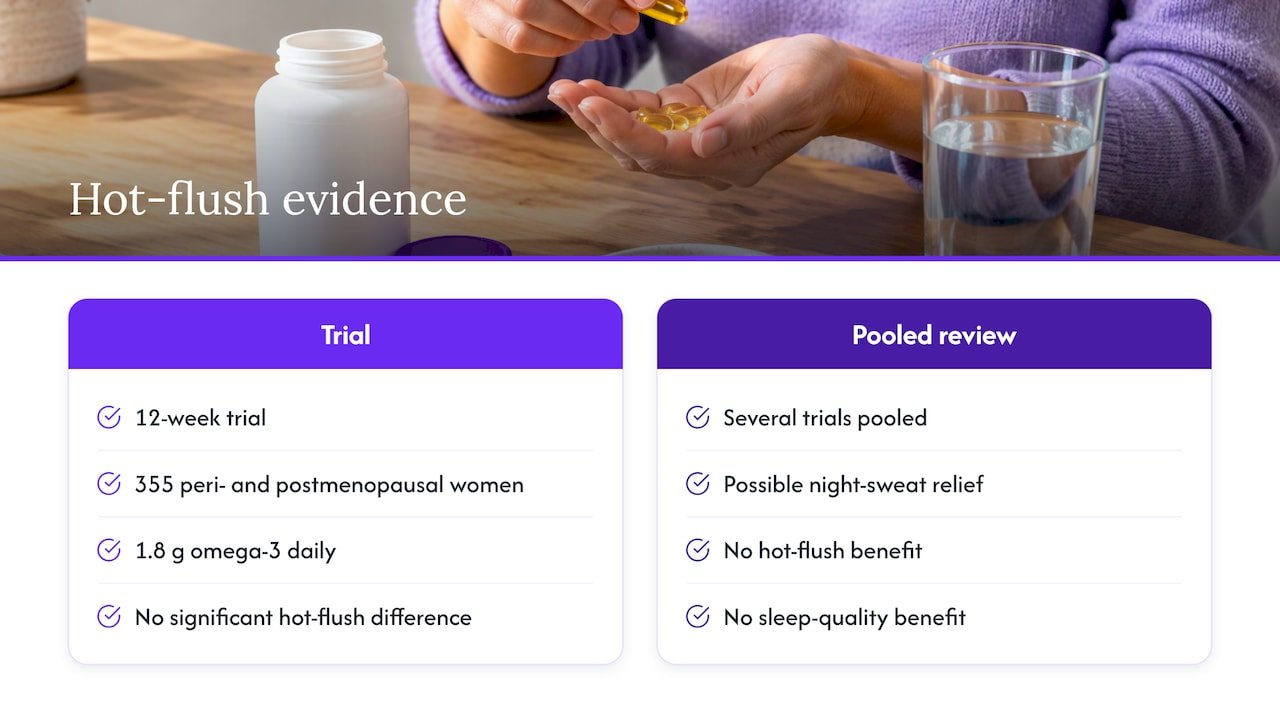
Some women do report feeling better, and individual smaller studies have shown positive signals. Yet when results are pooled, the effect on hot flushes is not strong enough to recommend omega-3 as a treatment for them. If hot flushes are disrupting your life, speak to your GP about treatments with better evidence, including hormone replacement therapy (HRT) where it is suitable for you.
Where omega-3 does have a case
Heart and metabolic health
Cardiovascular risk climbs after menopause. A Spanish Menopause Society review concluded that long-chain omega-3s remain highly recommended for postmenopausal women. Not for hot flushes, but for their established cardiovascular, metabolic and anti-inflammatory benefits, which grow in importance for long-term health. If you want to understand why the risk changes, our guide to why cardiovascular risk rises at menopause explains the mechanisms and what to monitor.
Mood, anxiety and brain fog
EPA and DHA are essential for brain structure and function. A systematic review of omega-3 in menopause found that most of the human studies it examined reported relief of depressive symptoms with omega-3 intake, and it points to possible benefits for mood swings and mild cognitive complaints. The evidence is still emerging and the studies are small, so treat omega-3 as supportive, not as a replacement for professional help if low mood or anxiety is persistent. Our article on why anxiety increases in menopause covers what is happening and what else can help.
Joints and inflammation
Joint stiffness is common in midlife. Omega-3s have anti-inflammatory properties, and many women notice improved joint comfort, although the research in menopausal women specifically is less robust than in other groups. It is a reasonable secondary benefit rather than the headline.
How much omega-3 do you need?
There is no menopause-specific dose. General guidance is the best anchor.
| Source | What it says |
|---|---|
| EFSA, adequate intake | 250mg of EPA plus DHA daily for general cardiovascular health |
| EFSA, safety ceiling | Supplemental intakes of up to 5g daily of combined EPA and DHA raise no safety concerns for adults |
| Typical diet | Average daily intake from food is lower, at 400 to 500mg according to EFSA’s summary |
| Menopause trial dose | 1.8g daily was used in the 12-week trial above, with no hot flush benefit |
More is not better. If you supplement, a product that provides a few hundred milligrams to around a gram of combined EPA and DHA is a common range, and the label should state EPA and DHA amounts separately, not just “fish oil 1,000mg”. Check what suits you with a pharmacist or GP, especially if you take other medicines.
Food first: getting omega-3 in an Irish kitchen
The simplest approach is the one health bodies already recommend. Safefood’s Eatwell Guide advises two portions of fish each week, one of them oily fish. Salmon, mackerel, herring, sardines and trout are the usual choices, and all are easy to find in Irish shops and fishmongers.
A simple week might look like this:
- Grilled or baked mackerel with new potatoes and greens.
- Salmon fillet with roasted vegetables.
- Tinned sardines on wholegrain toast for lunch.
Plant foods such as walnuts, flaxseed and rapeseed oil provide ALA, a different omega-3 that the body converts to EPA and DHA only in small amounts. They are healthy additions but do not replace oily fish. If you are vegetarian or vegan, algae-based EPA and DHA supplements are the direct plant option.
Who should speak to a professional first
Omega-3 is generally well tolerated, but “natural” does not mean “free of interactions”. Practitioners caution that therapeutic-level supplementation is a clinical decision when you have an existing condition such as cancer, because it needs oversight to avoid interfering with primary treatment.
Specific situations to raise with your doctor or pharmacist before starting:
- You take anticoagulants or antiplatelets such as warfarin, clopidogrel or aspirin. High-dose EPA and DHA may have mild blood-thinning effects, so your clinician may want to monitor you.
- You are having chemotherapy. Guidance on supplement timing varies by drug and regimen. A Dutch clinical guideline on nutrition in pancreatic cancer advises asking patients about supplement use, and some clinicians advise pausing fish oil around infusion days. Ask your oncology team what applies to your plan, and do not decide alone.
- You have had breast cancer or cannot use HRT. A review of menopause care after cancer stresses a personalised, multi-part approach to symptoms. Omega-3 is often seen as a low-risk, supportive addition, not a magic bullet for hot flushes.
- You take other medicines. Supplements can affect absorption, so ask your pharmacist about spacing them.
- You have a fish or shellfish allergy. Choose an algae-based product and check the label.
Building a wider plan around omega-3
Omega-3 works best as one piece of a broader approach. Women who feel best through menopause tend to combine several habits:
- Strength training to protect bone and muscle. Our 8 to 12 week strength plan for menopause gives a structured start.
- Sleep and stress support, including adaptogens for midlife stress and sleep.
- Mineral status, such as magnesium, which many women use for sleep and muscle relaxation.
- Heat and recovery, which we cover in sauna therapy for menopause symptoms.
- Quality supplements chosen with care. You can browse our supplements range and ask us what suits your situation.
Our perspective at Live5DHealth
We meet a lot of women in Boyle and across Ireland who have tried one supplement after another hoping for a single fix. Our view is simple: omega-3 is worth having in your routine, but for the right reasons. It supports your heart, your brain and your inflammatory balance. It is not the thing that will switch off night sweats.
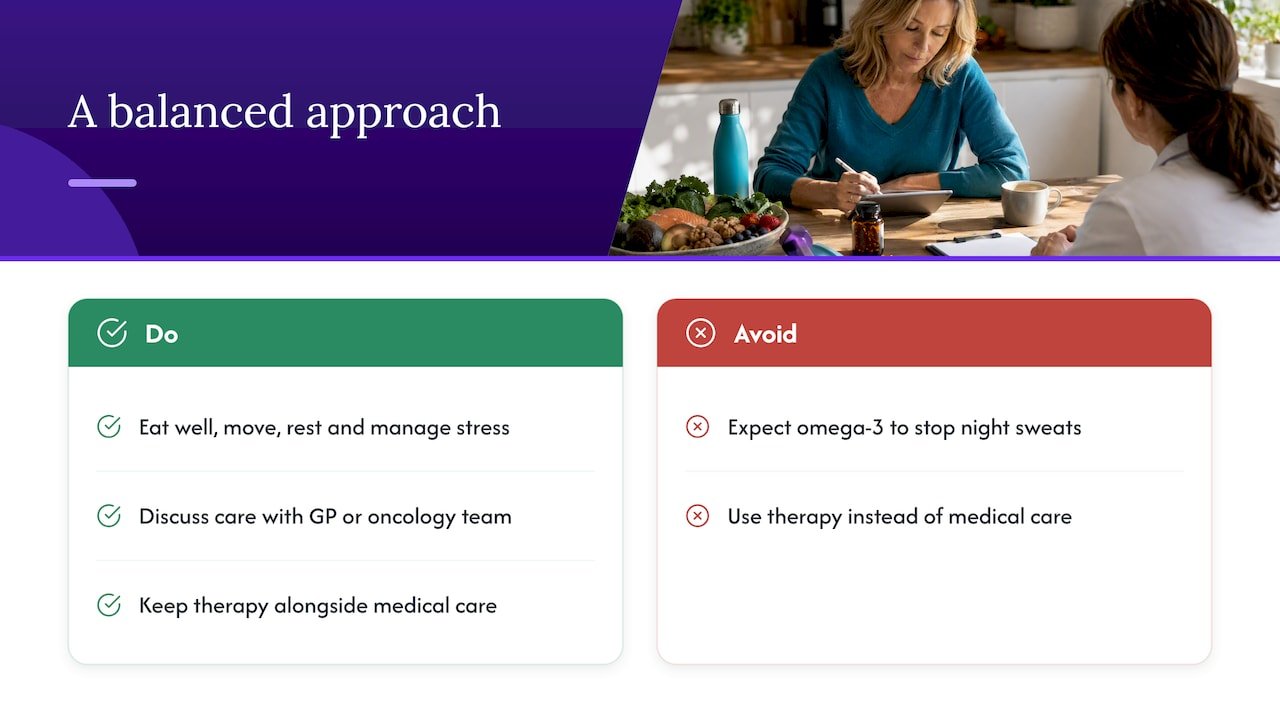
We also see how different each woman’s menopause is, and how much it matters when cancer or its treatment is part of the picture. In those cases we always suggest the conversation with your GP or oncology team comes first, and that any therapy we offer sits alongside medical care, never instead of it.
The approach we believe in is holistic: eat well, move, rest, manage stress, and add targeted support where it genuinely helps. Some of our members use our red light, sauna and steam facilities to unwind and sleep better, and our red light therapy and menopause article looks at what the evidence does and does not show. We would rather tell you what is likely to help than sell you a promise.
— Mark
Support your menopause routine at our centre
If you want to look after yourself beyond the supplement shelf, our wellness centre in Boyle, County Roscommon offers a calm, supportive space. You can unwind in the sauna, steam room and cold plunge spa for €30 a session, or try red light therapy from €20 to €40. Prefer a longer reset? Our 3, 5 and 10-day wellness retreats give you time to rest and build habits that last. If you have a medical condition, check with your doctor that any therapy is suitable before you book.
FAQ
Which omega-3 is best for menopause?
EPA and DHA, found in oily fish, fish oil and algae oil, are the forms with the best evidence for heart and brain health. ALA from flaxseed and walnuts is useful but converts poorly. Choose a product that lists EPA and DHA amounts clearly, and algae oil if you avoid fish.
How much omega-3 should a menopausal woman take daily?
There is no menopause-specific dose. EFSA recognises 250mg of EPA and DHA a day as adequate for general cardiovascular health, and considers up to 5g a day of supplements safe for adults. Most women do well with oily fish twice a week plus, if needed, a modest supplement agreed with their pharmacist or GP.
Does omega-3 help with hot flushes?
Probably not in a meaningful way. A 12-week trial of 355 women found no difference from placebo, and a meta-analysis suggested a possible benefit for night sweats only. Speak to your GP about options with stronger evidence.
Is fish oil safe if I have had cancer?
It depends on your treatment and medicines. Some clinicians advise timing or pausing fish oil around chemotherapy, and high doses may affect blood clotting. Always check with your oncology team or GP before starting.
Sources
- Efficacy of omega-3 for vasomotor symptoms treatment: a randomized controlled trial (PubMed)
- Effect of omega-3 supplements on vasomotor symptoms in menopausal women: systematic review and meta-analysis (PubMed)
- EFSA assesses safety of long-chain omega-3 fatty acids
- Spanish Menopause Society and omega-3 in postmenopausal women (PubMed)
- n-3 PUFA Improve Emotion and Cognition during Menopause: A Systematic Review (PMC)
- Safefood Eatwell Guide
- AICR InDepth: supplements and breast cancer
- Richtlijnendatabase: nutrition in pancreatic cancer
- Menopause care for women who cannot use HRT (PMC)