
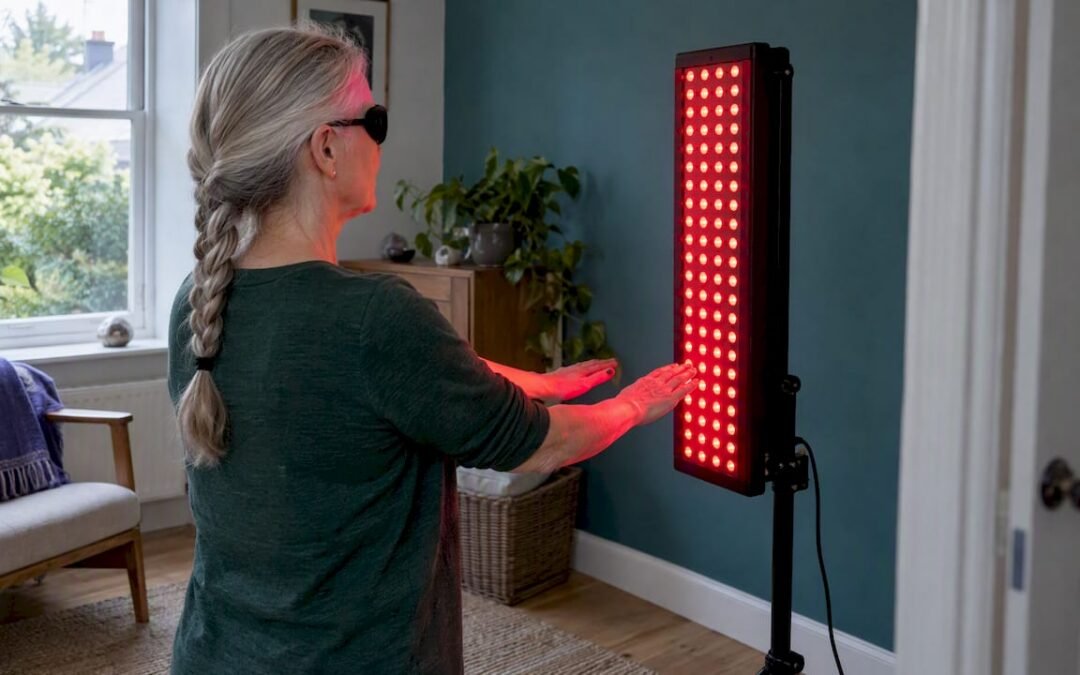
To use red light therapy well, you need to do five things: start with clean, product-free skin, protect your eyes, hold the device at the distance the manufacturer specifies, keep sessions short and consistent, and see a doctor first if you have cancer, an eye or skin condition, or take medicines that make skin sensitive to light. The rest is routine. Below, we walk you through each step for a session at a clinic and for a device at home, so you feel confident from your first use.
TL;DR
- Cleanse your skin, remove make-up, creams and sunscreen, and wear the eye protection supplied every time.
- Follow the distance and time written for your specific device. Home devices vary a lot, so the label is your starting point, not a guarantee.
- Short, regular sessions beat occasional long ones. Pick a routine you can keep for several weeks and track how your skin, energy and sleep respond.
- If you have cancer, are on chemotherapy or photosensitising medicines, or have an eye or light-sensitive skin condition, speak to your doctor before you begin.
- Expect modest, gradual effects. Red light supports a routine, it does not replace medical care or sun protection.
Table of Contents
- What red light therapy actually is
- Before you start: check whether it is right for you
- Step-by-step: how to use red light therapy
- How long, how far and how often
- Choosing a device you can trust
- Using red light for specific goals
- Common mistakes to avoid
- Our perspective
- Try it with us in Boyle
- FAQ
- Sources
What red light therapy actually is
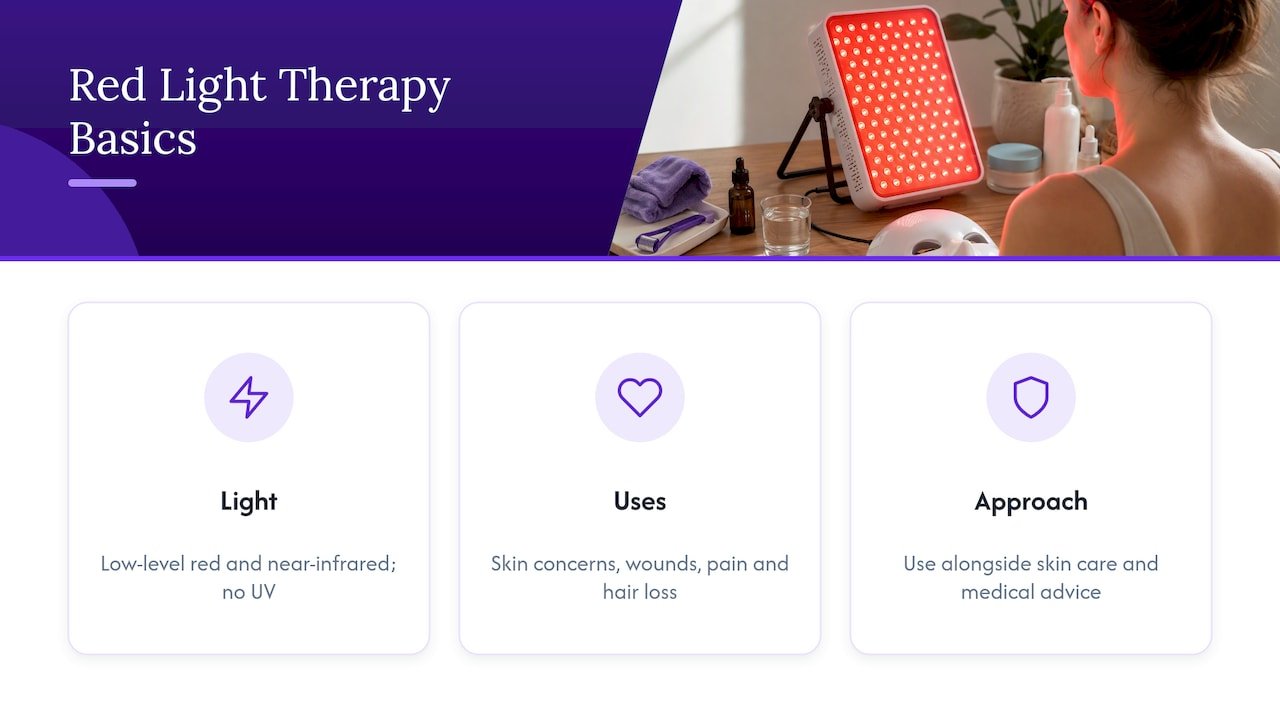
Red light therapy uses low-level red and near-infrared light to deliver energy to the skin and tissue beneath it. It involves no heat strong enough to burn and no ultraviolet. It is used for skin concerns, wound healing, pain relief and hair loss, although many of its claims still need stronger evidence.
That balance matters when you decide how to use it. A good routine is built on realistic expectations: a supportive, low-risk therapy that may help over weeks, used alongside, not instead of, good skin care and medical advice. If you want the science behind the wavelengths, our guide to 630-660 nm and 830-850 nm red light wavelengths explains which part of the spectrum does what.
Before you start: check whether it is right for you
Most people tolerate red light well. Side effects are rare and usually mild, such as temporary redness or irritation where the light was applied. Still, a few situations call for a conversation first.
If you have cancer or are in treatment
We work with many women over 40 and with people living with cancer, so we say this plainly: if you have active cancer, talk to your doctor before starting any form of light therapy. Red light is sometimes used in supportive care for side effects such as oral mucositis, but that is done under clinical supervision. Your oncology team knows your treatment plan, your medicines and your skin. Ask them specifically about the area you want to treat and the timing around chemotherapy or radiotherapy. Do not use a home device on or near a known tumour or suspicious lesion without their agreement. Our overview of alternative cancer therapies covers how to approach complementary options sensibly.
If you take photosensitising medicines
Some antibiotics, acne treatments and chemotherapy drugs can make skin more sensitive to light, so people taking them should be cautious. Show your pharmacist or prescriber the device and ask whether it is suitable.
If you have a skin, eye or light-sensitivity condition
The American Academy of Dermatology advises seeing a board-certified dermatologist before using red light at home, so you can discuss the area you want to treat and whether the device may affect a skin condition or a medication. In Ireland, that means asking your GP for a referral to a dermatologist if you have a condition such as lupus or porphyria, or any light-sensitive disorder. The same applies to eye conditions: talk to your eye specialist first. We list the most common reactions and warning signs in our guide to red light therapy side effects.
Step-by-step: how to use red light therapy
These steps apply to a panel, a mask, a handheld wand or a bed in a clinic. The details change with the device, but the order does not.
1. Prepare your skin
Arrive or start with clean, dry skin. Remove make-up, moisturiser, sunscreen and any active products such as retinoids or acids, because they can block light or irritate treated skin. Take off clothing from the area being treated, since fabric blocks part of the light. Wear no perfume or oils on the area. If you have just used a sunbed or been in strong sun, wait until redness has settled.
2. Protect your eyes
Red and near-infrared light can be absorbed strongly by the retina, and any damage may not be felt as it happens. Use the goggles supplied with your device or in the clinic, close your eyes even with goggles on, and never look straight into the light source. This applies to face masks too: use the eye shields built into them. Our write-up of red light eye safety in Ireland sets out simple home rules.
3. Set up the device
Read the manual before you plug in. Place the device on a stable stand or door mount, or hold it as directed, at the distance the manufacturer specifies for the area you are treating. Choose somewhere you can sit or stand comfortably and undisturbed. Make sure the device is not covered, is on a dry surface, and that cables are out of the way. Pets and children should be out of the room.
4. Position and start
Face the light toward bare skin, keeping the distance steady. For the face, keep your eyes closed and your head still. For larger areas such as the back or thighs, treat one area at a time rather than moving around mid-session. Start the timer and relax. You should feel gentle warmth at most, never burning.
5. Finish and care for your skin
Turn the device off before you remove your goggles. Moisturise if your skin feels dry, and use sunscreen in daylight as normal. Red light complements, but does not replace, other skin care measures, including strict sun protection and regular moisturising. Wipe the device with a dry or lightly damp cloth as the manual directs and store it away from moisture.
How long, how far and how often
This is the question everyone asks, and the honest answer is that it depends on your device. A 2025 pilot study of five home LED devices found considerable variation in wavelength, output power and irradiance, and concluded that manufacturers’ dosing directions were inconsistent with accurate dose delivery. In other words, two panels with the same instructions can deliver quite different amounts of light.
Researchers say the same of the clinical literature: dosing varies widely across published trials, which makes comparisons difficult and means there are no standard treatment recommendations.
What that means for you in practice:
| Factor | A sensible approach |
|---|---|
| Distance | Use the distance in your device’s manual. Closer usually means a higher dose, so do not move nearer to “speed things up”. |
| Session length | Begin at the shorter end of the manufacturer’s range, often a few minutes per area, and build up only if your skin stays comfortable. |
| Frequency | Choose a schedule you can keep. Home studies generally used frequent applications, so regular use is the norm rather than an occasional long session. |
| Time of day | Pick one time and stick to it for a couple of weeks, so you can notice any change in energy or sleep. |
| Review | After four to six weeks, decide whether the routine is worth continuing. If nothing has changed, adjust or stop. |
A 2019 systematic review found that home photobiomodulation studies mostly reported positive safety and efficacy outcomes, while concluding that more randomised controlled trials are needed for a definitive evaluation. That is a fair summary of where the field stands: encouraging, not settled.
If you like numbers, our page on red light therapy dosage explains how irradiance, time and distance combine into a dose measured in joules per square centimetre.
Choosing a device you can trust
If you are buying for home, look for these things:
- Published specifications. Wavelength (typically in the red and near-infrared ranges) and irradiance at a stated distance, ideally independently measured.
- Regulatory standing. The AAD advises choosing an FDA-cleared device, as the FDA considers cleared devices to pose a low risk. That is a United States clearance, so in Ireland also look for a CE or UKCA mark, proper electrical safety documentation and a supplier who can be reached after the sale.
- Eye protection included. Goggles or shields that are sized for the device.
- A realistic claims list. Be wary of promises to cure disease. The evidence does not support them.
- Right form for the job. A panel suits larger areas, a mask suits the face, a handheld device suits small spots.
Because home devices differ so much, many people prefer to try a professional session first. It lets you see how your skin responds before you commit to equipment.
Using red light for specific goals
The steps stay the same, but your expectations should change with the goal.
- Skin tone and fine lines. Gradual, subtle changes over weeks, alongside daily sun protection. Our guide to red light therapy for rosacea covers why sensitive, reactive skin needs a gentler start.
- Scars. Newer scars tend to respond better than old ones, and the trials are explained in our page on red light for scars.
- Cellulite. Evidence is limited; see what the research shows on cellulite before you invest.
- Muscle and joint comfort. Treat the area directly and keep your routine regular. For other options, our pain therapy guide compares approaches.
- Energy and recovery. Research is exploring how light interacts with cells; our piece on red light and mitochondria looks at what has been measured so far.
Common mistakes to avoid
- Treating with products on. Sunscreen, creams and make-up get in the way and can irritate.
- Skipping eye protection because it feels comfortable. Comfort is not a safety signal for your eyes.
- Getting closer or staying longer to speed things up. More is not better, and your device may not deliver what the label says.
- Using it sporadically. A long session once a month will do little compared with a steady routine.
- Expecting too much. It is a supportive therapy with a developing evidence base.
- Ignoring skin signals. If you see lasting redness, blistering, a rash or pain, stop and speak to your GP or pharmacist.
- Using it as a replacement for medical care. A new, changing or non-healing skin spot needs a doctor, not a light.
Our perspective
We use red light therapy at our wellness centre in Boyle every week, and our view is simple: it works best as one part of a bigger routine, not as a miracle. The people who feel the most benefit are not the ones who buy the strongest device. They are the ones who turn up regularly, protect their eyes, look after their sleep and food, and tell their doctor what they are doing.
We also think the honest message matters. Home devices vary a great deal, the research is still maturing, and anyone dealing with cancer or a chronic condition deserves clear guidance rather than hype. That is why we encourage a short professional session before you buy equipment, so you can learn the technique, see how your body responds and ask questions face to face. Our approach combines advanced technology with a holistic focus on the whole person, and we want you to feel hopeful and informed, never pressured.
— Mark
Try it with us in Boyle
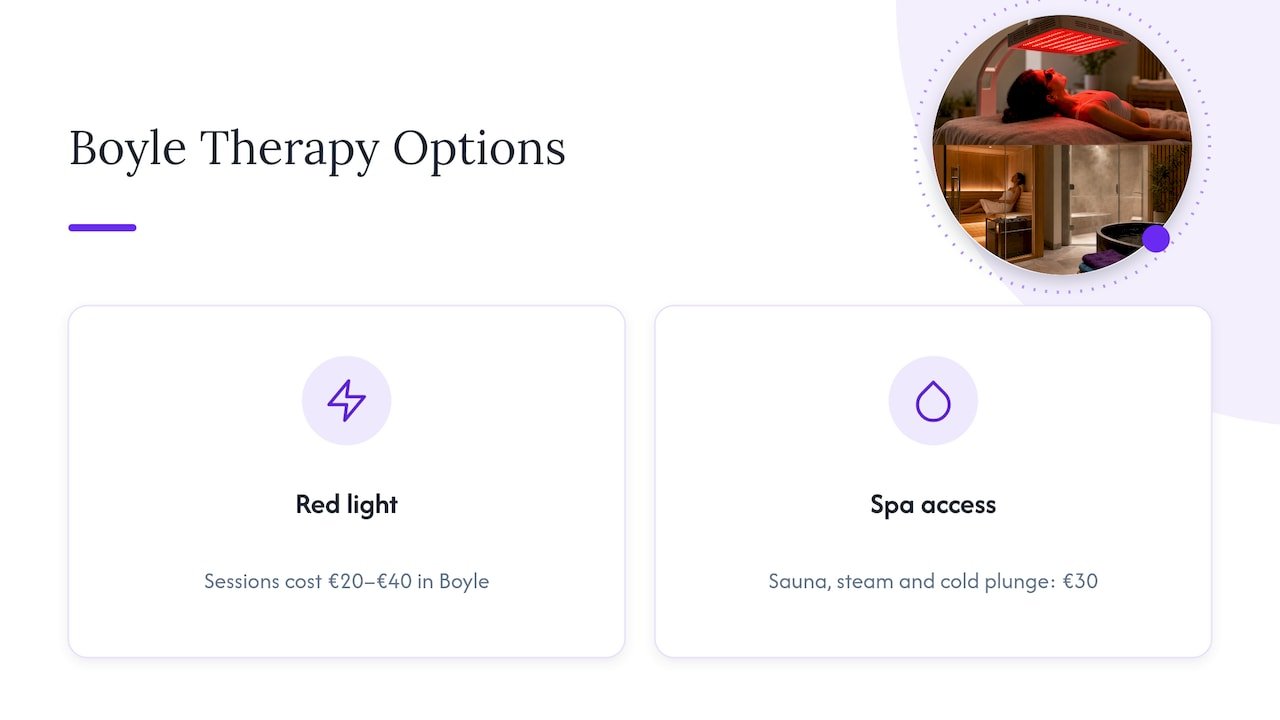
If you would rather learn the technique with someone beside you, you can book a red light therapy session at our centre in Boyle, County Roscommon. Sessions are priced at €20 to €40, and we will show you how to position yourself, how long to stay and what to expect. Find the details on our red light therapy page.
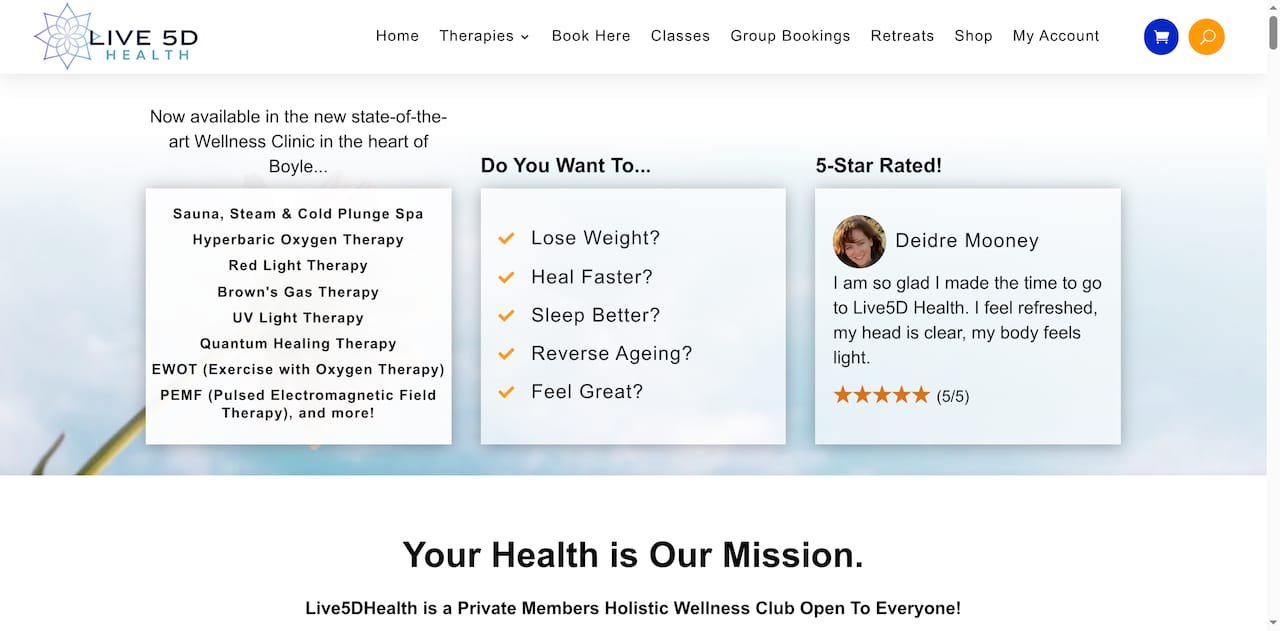
Many clients pair red light with other therapies on the same visit. You can also use our sauna, steam and cold plunge spa for €30, or read about our full range of therapies on the Live5dhealth homepage. If this is your first visit, our spa etiquette guide explains when to arrive and what to bring.
For a wider picture of the therapy in this country, see red light therapy in Ireland: your complete guide.
FAQ
Can I use red light therapy on my eyes?
No, not without protection. The retina absorbs red and near-infrared light strongly, and you may not feel any discomfort if it is harmed. Always wear the goggles supplied, keep your eyes closed and never stare at the light. If you have an eye condition, ask your eye specialist before using any device.
How often should I use red light therapy?
There is no single standard, because published trials vary widely in dosing. Follow your device’s instructions, start with shorter sessions and use it regularly for several weeks. Review your results after that and adjust with advice from a professional.
Can I use red light therapy if I have cancer?
Speak to your doctor or oncology team first. Red light is sometimes used in supportive care for side effects of treatment, but that is a clinical decision. Do not start a home routine on your own during treatment.
Do I need to remove products from my skin first?
Yes. Cleanse your skin and remove make-up, creams and sunscreen so light can reach the skin and irritation is less likely. Apply moisturiser and sunscreen afterwards as usual.
Is red light therapy safe to use every day?
Side effects are rare and typically mild, but safe frequency depends on your device and skin. Many people use it several times a week. If you notice lasting redness or irritation, take a break and speak to a pharmacist or GP.
Sources
- What is red light therapy? Benefits and risks (Patient.info)
- Is red light therapy right for your skin? (American Academy of Dermatology)
- Red light therapy for skin care (Harvard Health)
- Photobiomodulation LED Devices for Home Use (PubMed, 2025)
- What to Look for in Red Light Therapy: A Product Guide (PMC)
- Therapeutic Efficacy of Home-Use Photobiomodulation Devices: A Systematic Literature Review (2019)