
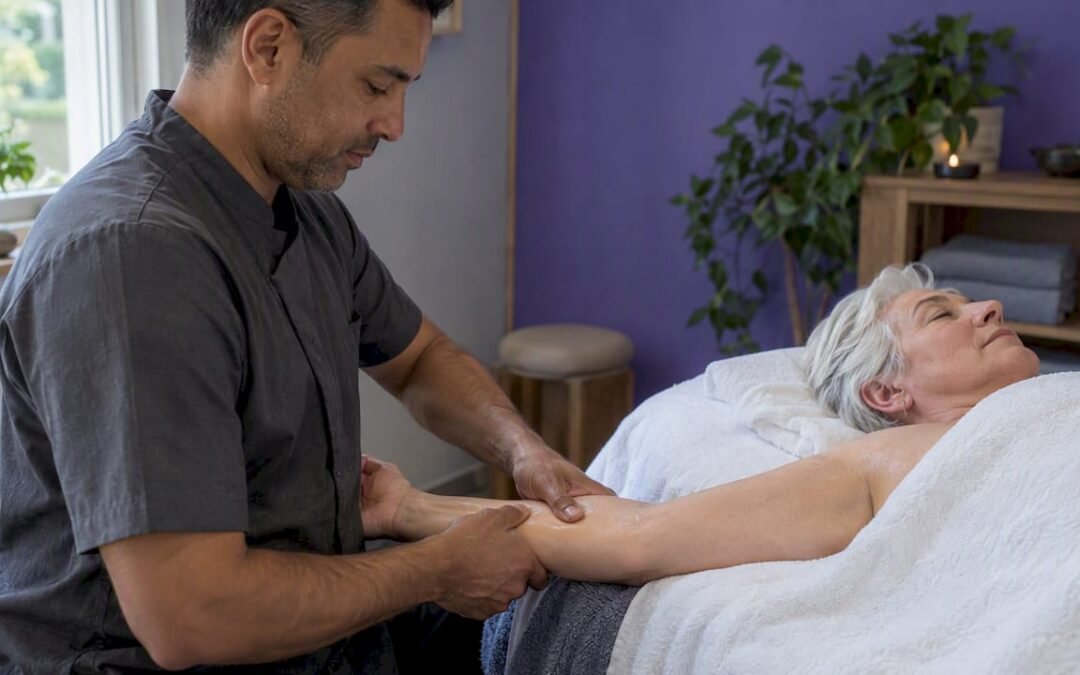
Massage can help ease anxiety. Reviews of the research point to a consistent short-term drop in anxious feelings, and a course of sessions may do more than a single visit. It is a supportive therapy, not a replacement for care from your GP. Used well, it can give your body a chance to settle, and that often helps the mind follow.
This guide explains what the research says, how a session might feel, how to choose a style, what to tell your therapist, and what to consider if you have fibromyalgia or cancer. Your best self awaits, and it starts with understanding what is realistic.
TL;DR
- A 2024 systematic review found a consistent reduction in anxiety after massage given by trained professionals.
- One session eases how anxious you feel in the moment. A course of sessions is where longer-lasting effects show up.
- For fibromyalgia, massage lasting at least five weeks improved pain, anxiety and depression in a meta-analysis.
- If you have cancer or are in treatment, speak to your oncology team first and choose a therapist trained in oncology massage.
- Persistent anxiety deserves a conversation with your GP. Massage works best alongside that, not instead of it.
Table of Contents
- Can massage help anxiety?
- How massage may calm the body
- What a session for anxiety feels like
- Choosing a massage style
- How to prepare and speak up
- One session or a course?
- Massage for fibromyalgia and anxiety
- Massage for anxiety during or after cancer
- Our perspective on massage and anxiety
- Build a calmer routine with us
- When massage is not enough
- FAQ
- Sources
Can massage help anxiety?
The short answer is yes, for many people, with sensible expectations.
A 2024 systematic review of manual therapy and anxiety found a consistent reduction in anxiety after massage by trained professionals, and described it as a safe, cost-effective strategy for managing anxiety. The same review notes a real challenge: the people giving massage in studies range from volunteers to qualified therapists, which makes results harder to compare.
The larger picture comes from a meta-analysis of massage therapy research published in 2004. It found that single applications reduced state anxiety (how anxious you feel right now), blood pressure and heart rate. A course of several sessions produced effects on trait anxiety (your general tendency to feel anxious) and on depression that were similar in size to psychotherapy. That is encouraging, though the authors also suggested researchers look at massage through a psychotherapy lens rather than a purely medical one. In other words, the care, attention and safe touch may matter as much as the technique.
There is a caveat worth hearing. In people with cancer, a 2016 Cochrane review of 19 studies, summarised by the US National Center for Complementary and Integrative Health, suggested massage might help with anxiety, but rated the quality of the evidence as very low because of bias and small studies. So massage is promising, not proven for everyone.
How massage may calm the body
Anxiety is not only a thought pattern. It shows up as tight shoulders, a clenched jaw, shallow breathing and a racing heart. Massage works on the physical side of that loop.
Several things appear to happen:
- Muscle tension drops. A 2025 randomised controlled trial found relaxation massage reduced muscle tone and increased feelings of relaxation.
- Heart rate and blood pressure ease. The 2004 meta-analysis found both fell after single sessions.
- Sleep may come more easily. In the same 2025 trial of 15 poor sleepers, relaxation massage improved sleep latency, which is the time it takes to fall asleep.
- You feel cared for. A paper on massage therapies describes how massage is often used to promote relaxation and to help people feel cared for. That feeling has value in itself when you are anxious.
Many websites claim massage reliably changes cortisol, serotonin and dopamine. Those are plausible mechanisms, but the research we have checked supports the more modest findings above, so we stick to those.
What a session for anxiety feels like
If you have never booked a massage, or you worry about being worried, knowing the shape of the hour helps. This is what most people can expect from a relaxation-focused session with a qualified therapist.
- A short conversation first. Your therapist asks about your health, any medication or conditions, areas of tension and what you hope to get from the session. This is your moment to say you are anxious.
- Privacy while you settle. You undress to your comfort level and lie under a sheet or towel. Only the area being worked on is uncovered.
- Slow, steady pressure. For anxiety, gentle to medium pressure with long, flowing strokes is usually the aim. It should never feel like something to brace against.
- Time to come round. Afterwards, take a few minutes before standing up and have some water.
Some people feel lightheaded, sleepy, tired or thirsty afterwards. Cancer Research UK notes that most people have no side effects, but these mild effects do happen. Plan a calm hour afterwards rather than rushing back to a busy schedule.
Choosing a massage style
No single style has been shown to be the best massage for anxiety. What the research does suggest is that the goal should be relaxation. In the 2025 trial, relaxation massage raised relaxation scores and improved sleep latency, while sports massage reduced muscle tone. Different techniques do different jobs.
| Style | What it feels like | Who it may suit |
|---|---|---|
| Relaxation or Swedish-style | Long, flowing strokes, light to medium pressure | First-timers, general stress and tension |
| Holistic massage | Whole-body approach, often slower and more attentive to how you feel | People who want the mind and body considered together |
| Deeper tissue work | Firmer, more focused pressure on tight areas | Those whose anxiety sits in stubborn knots, if they enjoy firm pressure |
| Oncology massage | Adapted pressure and positioning for cancer care | Anyone with a cancer history or in treatment |
If you are unsure, start gentle. You can always ask for more pressure, but a session that feels too intense can work against what you came for. If you would like to understand the holistic approach, our guide to holistic massage benefits and the cortisol research goes through it in more detail.
How to prepare and speak up
A few small habits make the hour work harder for you.
Before you go
- Eat lightly and avoid heavy caffeine, which can leave you jittery.
- Arrive a little early so you are not hurried.
- Write down anything you want to mention: sore areas, medication, a recent operation, how you sleep.
During the session
- Tell the therapist you feel anxious. A good therapist will slow down and explain what they are doing.
- Say if you prefer quiet, or if you want to talk.
- Speak up about pressure, temperature and any area you would rather leave alone. Face-down positioning, for example, can feel vulnerable for some people, and you can ask to start on your back.
- Breathe slowly, in through the nose and out through the mouth. You do not need to try to relax. Simply notice the touch.
Afterwards
- Drink water and give yourself time before driving or returning to work.
- Notice how you feel that evening and the next morning. Share that with your therapist next time so they can adjust.
One session or a course?
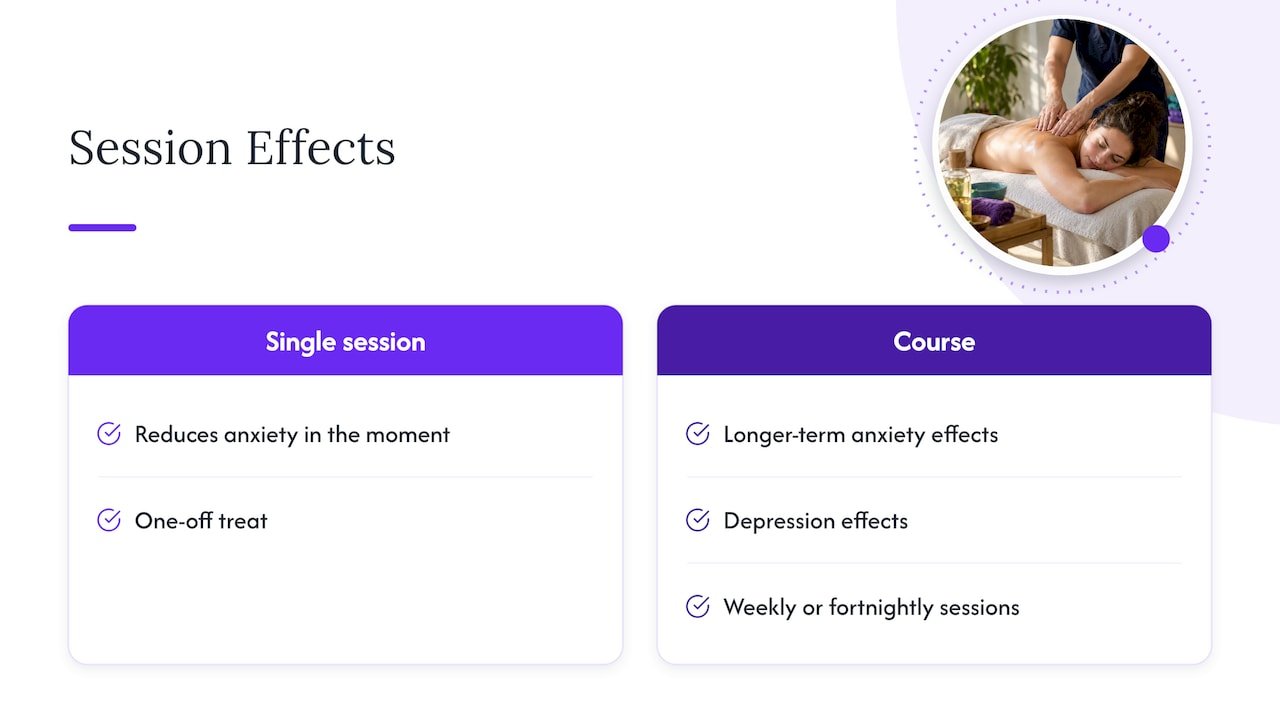
The research gives a clear hint. Single sessions reduce how anxious you feel at that moment, and a course of treatment shows effects on longer-term anxiety and depression. If you are using massage to manage ongoing anxiety, think in blocks of sessions rather than one-off treats. A regular rhythm, such as weekly or fortnightly for a number of weeks, is easier to evaluate: you can judge honestly whether it is helping you.
Massage for fibromyalgia and anxiety
Anxiety and fibromyalgia often travel together, because living with widespread pain is exhausting. A systematic review and meta-analysis of nine randomised controlled trials found that massage therapy continued for at least five weeks significantly improved patient-reported pain, anxiety and depression. It did not significantly improve sleep disturbance.
A 2024 review of myofascial release agrees that massage and myofascial release can ease pain and muscle stiffness in fibromyalgia, while its effect on sleep quality remains inconsistent across studies.
Practical points if you have fibromyalgia:
- Commit to the weeks. The benefit was seen in courses of at least five weeks, not single visits.
- Go gentle. Fibromyalgia can make touch sensitive. Ask for lighter pressure and build up only if it feels good.
- Do not rely on massage for sleep. Talk to your GP if sleep remains a problem.
Massage for anxiety during or after cancer
A cancer diagnosis brings enormous worry, and many people look to massage for comfort. Cancer guidelines and clinical trials support massage for cancer-related pain, fatigue, anxiety and mood disturbances, according to Memorial Sloan Kettering Cancer Center, which also recommends seeing therapists experienced in working with cancer patients.
Safety comes first, and the details matter:
- Speak to your oncologist before booking. A review of massage safety in cancer care says massage can be part of care, though patients may face a higher risk of rare adverse events. Your oncology team can advise and may refer you to a qualified therapist.
- Avoid deep massage. Cancer Research UK advises that people with cancer avoid deep massage, areas affected by lymphoedema and broken skin.
- Wait for scars to heal. Irish HSE guidance on head and neck lymphoedema risk advises gentle massage on surgical scars only after they have fully healed, typically 4 to 6 weeks after surgery, and to be mindful of lymphoedema.
- Choose a trained therapist. Tell them your diagnosis, treatment stage and medication every time.
For more, see our guides to oncology massage benefits and safer sessions, lymphoedema after cancer and lymphatic massage in Ireland.
If you are exploring other options during cancer care, it can also help to read about the hyperbaric oxygen benefits the evidence supports, including findings on mood and anxiety. Talk through any new therapy with your oncology team before you start.
Our perspective on massage and anxiety
We see many women over 40 who come to us carrying stress that has built up quietly: caring for family, work, health worries, disrupted sleep. Often they are not looking for a miracle. They want an hour in which nothing is asked of them.
That is where we think massage earns its place. Used alongside a good GP relationship, movement, decent sleep and, where needed, talking therapy, it offers something that is hard to get elsewhere: calm, safe, unhurried human attention. The research backs the modest, honest version of this story, and we prefer to tell it that way.
At Live5dhealth in Boyle, County Roscommon, we think about the whole person. Massage sits beside the rest of our wellness centre, so you can build a rhythm that suits you, from holistic massage to heat and cold, and light and sound therapies. If anxiety is a big part of your picture, you may also want to read about sound therapy for anxiety and quantum healing and the Reiki trials. We would always ask you to treat these as supports, not substitutes for medical care.
— Mark
Build a calmer routine with us
Massage is one tool. At Live5dhealth you can pair holistic massage with a sauna, steam and cold plunge spa session, priced at €30 one-off, for a slow, restorative visit. If you want longer, our 3, 5 and 10-day wellness retreats give you time away from daily pressures. To see everything we offer or to ask which therapy suits you, visit our website or go straight to our booking page.
When massage is not enough
Massage should sit inside a wider plan. Contact your GP if your anxiety is constant, stops you doing everyday things, affects your sleep for weeks, or comes with low mood. The HSE explains that GPs can assess and treat certain mental health difficulties and help you access talk therapies or specialist services, which require a referral.
The HSE also lists mental health organisations, including Aware, which provides anxiety support. If you are thinking about suicide or self-harm, Pieta offers free support at any time on 1800 247 247. For self-harm injuries, the HSE says some may need immediate treatment at an emergency department.
FAQ
Can massage help anxiety?
Yes, for many people. A 2024 review found a consistent reduction in anxiety after massage by trained professionals. Single sessions ease anxiety in the moment, and a course of sessions shows effects on longer-term anxiety. It works best alongside other care.
What is the best massage for anxiety?
There is no proven single best style. Relaxation-focused massage with gentle to medium pressure is a sensible place to start, as it increased relaxation in recent trial data. Holistic massage is another good option if you want a slower, whole-body approach. Tell your therapist how you feel so they can adapt.
Does massage help fibromyalgia?
It can. A meta-analysis of nine trials found that massage continued for at least five weeks improved pain, anxiety and depression, though it did not significantly improve sleep disturbance. Start with light pressure and speak to your GP or specialist if you are unsure.
Is massage safe if I have cancer?
Often it can be, but you should speak to your oncologist first. Choose a therapist experienced in oncology massage, avoid deep massage, and avoid areas with lymphoedema or broken skin. Scars should be fully healed first.
How often should I have massage for anxiety?
Research suggests a course of sessions is more useful for lasting effects than a single visit. The fibromyalgia evidence points to at least five weeks. Choose a rhythm you can keep up, and review honestly how you feel.
Sources
- A systematic review of manual therapy modalities and anxiety (2024)
- Anxiety and Complementary Health Approaches, NCCIH
- A meta-analysis of massage therapy research (2004)
- Massage positively influences daytime brain activity and sleep (2025)
- Massage therapies, PMC
- Massage therapy for fibromyalgia: a systematic review and meta-analysis
- A Review of the Application of Myofascial Release Therapy (2024)
- Safety and efficacy of massage therapy for patients with cancer
- HSE leaflet: Risk of Head and Neck Lymphoedema
- Massage Therapy, Memorial Sloan Kettering Cancer Center
- Massage therapy, Cancer Research UK
- About mental health supports and services, HSE
- Organisations that provide mental health supports, HSE
- How to help someone who self-harms, HSE
- Getting help and treatment for self-harm, HSE
- Hyperbaric oxygen benefits: what the evidence supports