
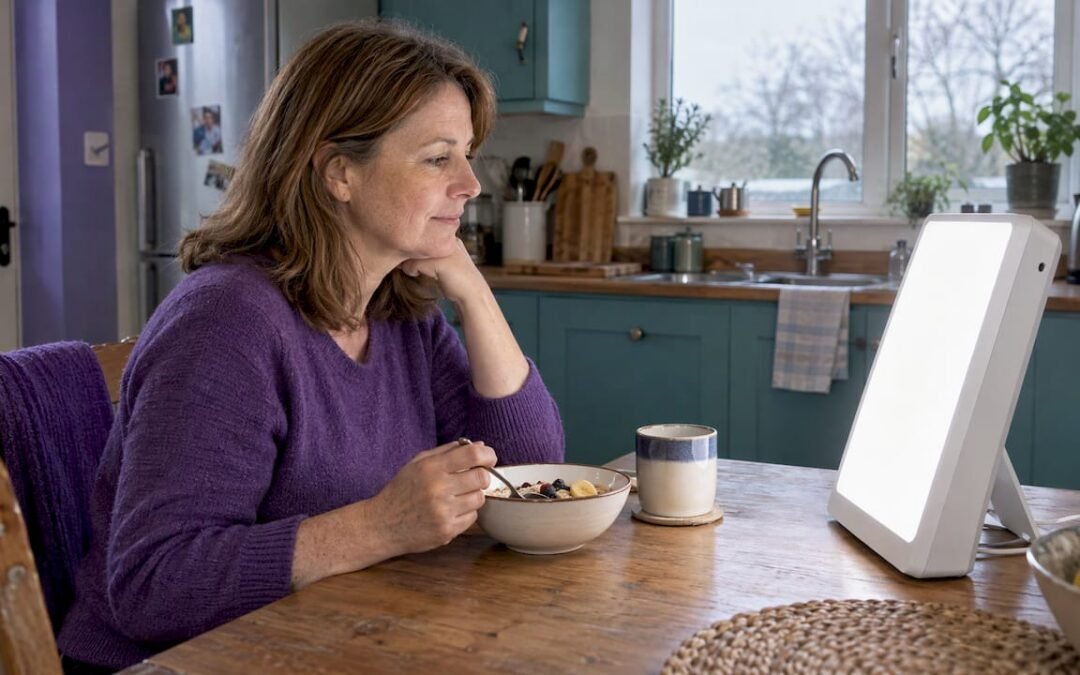
Light therapy is one of the first treatments offered for seasonal affective disorder (SAD). You sit beside a medically approved light box, usually for around 30 minutes a day, ideally in the morning, through the darker months. The evidence is mixed overall, but some studies show it works well, particularly when used first thing in the day. Here is how it works, how to use it safely, who should speak to a GP first and what else can help you through an Irish winter.
TL;DR
- SAD light therapy means sitting by a UV-filtered light box that simulates missing winter sunlight, as the HSE describes.
- Look for a light box medically approved for SAD, and aim for around 10,000 lux. Under 3,000 lux is considered ineffective.
- Morning use usually works best, and late-day use can disturb sleep.
- If you have an eye condition, take light-sensitising medicine or live with bipolar disorder, talk to your GP before you start.
- Daylight, movement, warmth and good routines support light therapy. They do not replace medical advice if your mood is low.
Table of Contents
- What SAD is and why light matters
- Does light therapy help SAD?
- What type of light is used for SAD
- How to use a SAD light box
- Who should talk to a GP first
- Side effects to watch for
- Other help for SAD in Ireland
- Perspective
- Building a winter wellness routine around your light box
- Treat yourself to time out at Live5DHealth
- FAQ
- Sources
What SAD is and why light matters
Seasonal affective disorder is a form of depression that follows the seasons, most often arriving in autumn or winter. In Ireland, with short, grey days from late October, many people notice lower energy, poorer sleep and a flatter mood as the clocks go back.
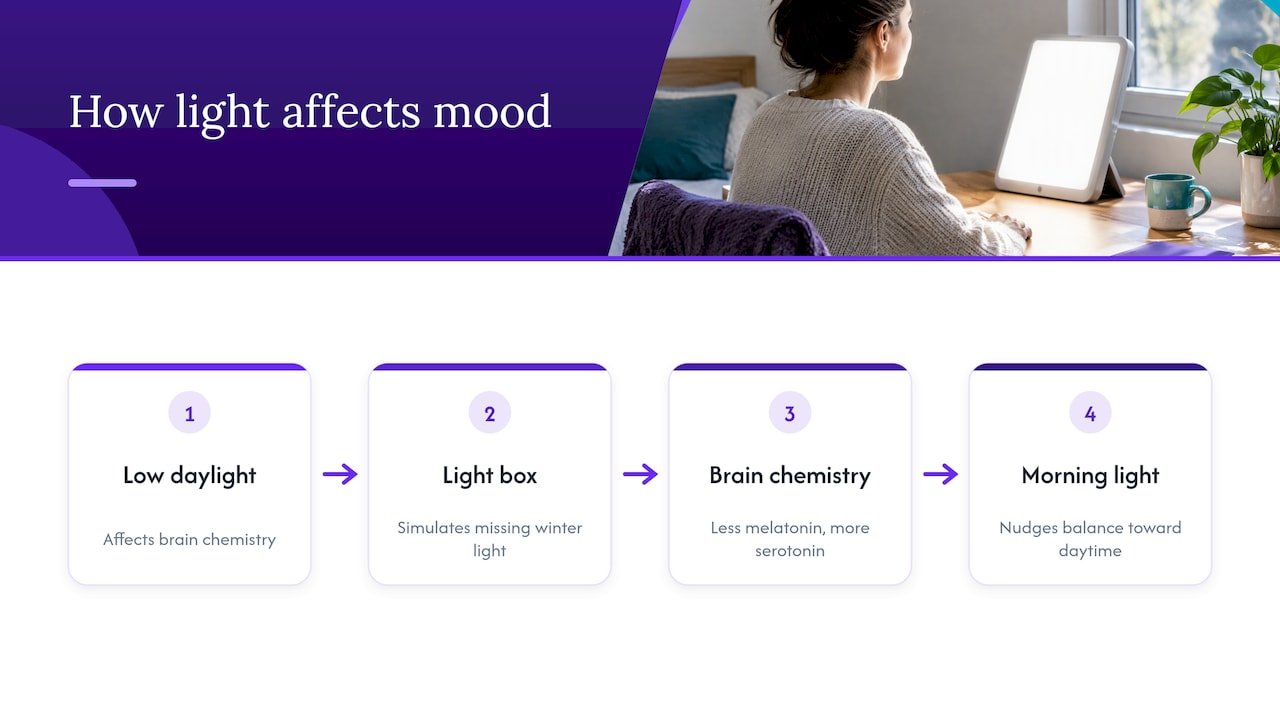
The leading explanation is that less daylight affects brain chemistry. According to the HSE, a light box simulates the missing winter light and helps reduce melatonin and increase serotonin. Melatonin is the hormone that makes you drowsy, and serotonin is involved in regulating mood. Bright light in the morning nudges that balance back towards daytime.
If you feel low for weeks, struggle to function, or have thoughts of harming yourself, see your GP or seek urgent help. Light therapy is a tool for seasonal low mood, and a GP can check what is going on and guide the right combination of support.
Does light therapy help SAD?
The honest answer is that it helps many people, and the research is not uniform. The HSE notes that evidence on effectiveness is mixed, with some studies finding it effective, particularly when used first thing in the morning.
A professional pocket protocol for clinicians lists SAD as the first-line use of bright light therapy, with bipolar depression and shift work disorder as second-line uses. A review of the research has also suggested that bright light therapy may be effective for depression more broadly and not only the seasonal kind, though that paper’s focus is eye safety, so treat that as a pointer for a conversation with your doctor, not a promise.
What this means in practice:
- Many people try a light box because it is simple, non-invasive and easy to fit into a morning routine.
- Consistency matters. A few sessions a week will not do what a daily habit does.
- Light therapy sits alongside other supports. Your GP can recommend talk therapy or antidepressants where appropriate.
What type of light is used for SAD
The standard tool is a light box: a flat panel that gives off bright, white, UV-filtered light. The HSE advises choosing a light box that is medically approved and suitable for SAD, and following the manufacturer’s instructions.
Brightness: why lux matters
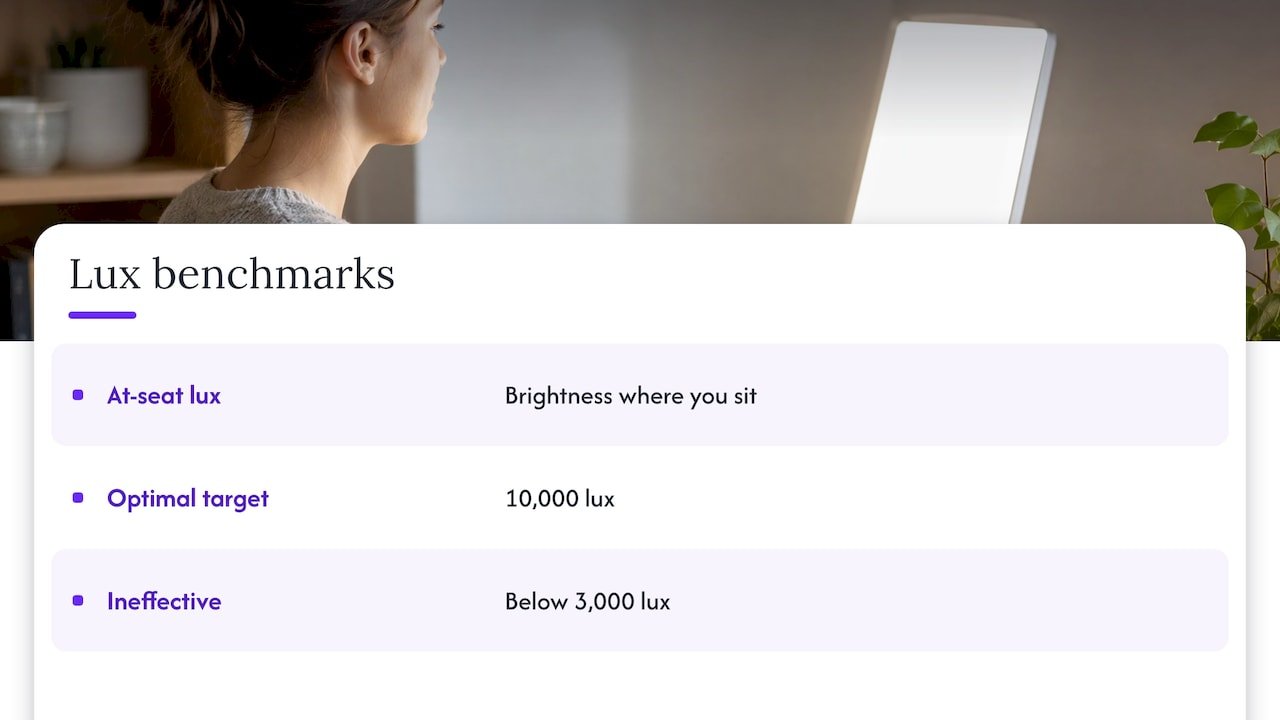
Lux measures how bright the light is where you sit. The clinician protocol states that 10,000 lux is optimal and less than 3,000 lux is ineffective. A lamp sold as a cosy “mood light” may glow nicely and still sit well below that. Check the stated lux and the distance at which it is measured.
UV-filtered, not a sunbed
SAD light boxes provide extra light without ultraviolet rays. That is a key difference from a sunbed or UV treatment. If you want to understand UV exposure, our guide to UV light therapy risks explains what health-conscious adults should know.
Dawn simulators
The Royal College of Psychiatrists also mentions dawn-simulating alarm clocks, which gradually raise light levels to help you wake on dark winter mornings. Some people use one alongside a light box.
Where red light therapy fits
Red light therapy is a different kind of light. It uses specific red and near-infrared wavelengths, and it is not the same thing as a bright white SAD light box. We do not offer it as a SAD treatment. People come to us for red light for skin, recovery and relaxation, and some enjoy it as part of a winter wellness routine. If you want the detail, see our guides on how to use red light therapy and red light for sleep.
How to use a SAD light box
Follow the instructions that come with your own device first. As a general pattern, this is how most people use one.
- Choose the time. Use it in the morning, ideally soon after waking. Using it too late in the day can interfere with sleep.
- Set up the distance. One academic paper on bright light therapy suggests sitting about 16 inches from the unit, usually on a table at an angle. Your device’s manual may give a different distance for its brightness, so follow that.
- Do not stare at the light. Let it fall on your face while you read, eat breakfast or use your laptop. Look at what you are doing, not into the panel.
- Time it. Sessions are typically 20 to 30 minutes a day at 10,000 lux. Some devices at lower output need longer, and your GP can advise.
- Be consistent. Daily use through autumn and winter works better than occasional use.
How long until you notice a difference?
It varies from person to person. Keep a simple note of your sleep, energy and mood each week so that you and your GP can see whether it is working. If nothing shifts after a few weeks, speak to your GP about other options rather than increasing exposure on your own.
A quick comparison of morning light options
| Option | What it is | Typical use | Good to know |
|---|---|---|---|
| Medically approved light box | Bright, UV-filtered white light panel | Around 20 to 30 minutes a day at 10,000 lux | First-line for SAD in clinical protocols |
| Dawn simulator | Alarm clock that brightens gradually | Runs as you wake | Mentioned by the Royal College of Psychiatrists as an option |
| Outdoor morning light | Natural daylight soon after waking | 10 to 30 minutes outside | Free, and supports your body clock |
For the outdoor option, our article on morning light exposure explains why 10 to 30 minutes outside within an hour of waking helps set your clock, even on a cloudy Irish morning.
Who should talk to a GP first
Light boxes are generally well tolerated, but a few situations call for a conversation before you start.
- Eye conditions or eye damage. The HSE says people with an eye condition or damage that makes their eyes especially sensitive to light should talk to their GP if unsure about a product.
- Medicines that increase light sensitivity. The same HSE page gives the same advice. A review of light therapy and the eyes found no evidence of ocular damage apart from one case involving clomipramine, and said safety for people with existing eye abnormalities or increased photosensitivity needs more study. Ask your GP or pharmacist about your own medicines.
- Bipolar disorder. Light therapy can trigger mania in some people. The clinician protocol advises starting at 15 minutes a day and adding 15 minutes each week towards 60. This should only be done with your psychiatrist or GP guiding you.
- Not sure the product is right. Choose a light box that is medically approved for SAD, and read the manufacturer’s information.
Side effects to watch for
Side effects are rare and usually mild. The HSE lists headache, eye strain, irritability and sleep problems if the light is used too late in the day. The Royal College of Psychiatrists also lists nausea and blurred vision among common side effects.
If you get a headache or eye strain, try moving a little further from the box or shortening the session, then check with your GP if it continues. Move your session earlier if your sleep suffers.
Other help for SAD in Ireland
Your GP is the first stop. According to the HSE, they can recommend suitable treatments, including talk therapy or antidepressants, alongside or instead of light therapy. If you are in crisis, contact your GP out-of-hours service or emergency services straight away.
Beyond treatment, many people find that small habits make winter feel more manageable:
- Get outside early, even for a short walk.
- Move daily, whether that is the gym, a swim or a brisk walk.
- Keep regular sleep and wake times.
- Make time for warmth and relaxation: a sauna, a steam room, a massage.
- Stay connected with friends and family.
Perspective
We see a lot of people in the colder months who say the same thing: they feel flat, tired and a bit stuck. Our first piece of advice is always simple. Speak to your GP, and ask about a medically approved light box if your low mood follows the seasons.
At Live5DHealth we do not sell SAD lamps and we do not treat SAD. What we do is create a warm, restorative setting where winter wellbeing is easier to look after. Our approach combines state-of-the-art technology with ancient wisdom, and we claim the most advanced collection of healing technologies in Ireland. People often pair a morning light routine at home with time here: a sauna, steam room and cold plunge, a holistic massage, or red light therapy as part of a relaxing session.
For women over 40, and for anyone managing a chronic condition, the dark months can feel heavier. A routine that you look forward to, with energised water, movement and genuine rest, can make a real difference to how you feel. Your best self awaits, and winter does not have to put it on hold.
Mark
Building a winter wellness routine around your light box
A light box does one job. The rest of your day can support it. Here is a simple template you can adapt.
Morning
Wake at a regular time. Use your light box for the time your GP or the manufacturer recommends while you have breakfast. If the weather allows, add a short walk outside.
Midday
Get out in daylight if you can, even for ten minutes. Eat regular meals and drink enough water.
Afternoon and evening
Move your body: a gym session, a swim or a walk. Wind down with something warming. A sauna or steam, then a cool rinse, is a popular way to end a week, and a massage can help you switch off. Our guide to holistic massage benefits covers what the research says about relaxation and stress hormones.
Avoid bright light-box sessions in the evening, as the HSE warns that using one too late may disturb sleep.
Treat yourself to time out at Live5DHealth
If you want somewhere to build healthy habits through the winter, we are in Boyle, County Roscommon. Our Sauna, Steam & Cold Plunge Spa costs €30 per visit. Red light therapy sessions cost €20 to €40, and you can find our full list of therapies, including PEMF, EWOT, holistic massage and our gym, on the Live5DHealth homepage.
If you would like longer to reset, our 3, 5 and 10-day wellness retreats give you a structured, supportive break. Our guide on choosing a wellness retreat can help you decide what suits you. None of these replace medical care for SAD, but they can be a welcome part of looking after yourself through the season.
FAQ
Is light therapy effective for SAD?
For many people it helps, though research results are mixed. The HSE notes some studies have found it effective, particularly when used first thing in the morning. Your GP can help you decide whether it suits you.
What is the best light for SAD?
A medically approved, UV-filtered light box suitable for SAD, giving around 10,000 lux at the distance you sit. Lamps under 3,000 lux are considered ineffective in clinical guidance. Always read the manufacturer’s instructions.
Who should not use a SAD light?
Talk to your GP first if you have an eye condition that makes you sensitive to light, take medicine that increases light sensitivity, or have bipolar disorder. Your doctor can advise on whether to use one and how to build up gradually.
Can I use red light therapy instead of a SAD lamp?
They are different. A SAD light box gives bright white light designed for seasonal low mood. Red light therapy uses red and near-infrared wavelengths and is not a SAD treatment. Our red light eye safety guide explains how to protect your eyes with any light device.
Sources
- HSE: Seasonal affective disorder (SAD) treatment
- The Carlat Report: Pocket protocol for light therapy
- PubMed: Light therapy: is it safe for the eyes?
- Royal College of Psychiatrists: Seasonal affective disorder (SAD)
- PMC: What is the optimal implementation of bright light therapy
- Cleveland Clinic: How light therapy can help with SAD