

Collagen peptides have the best evidence for two things: skin hydration and elasticity, and symptom relief in people with osteoarthritis. Bone density results are promising, mainly in postmenopausal women. Studied doses are modest, typically 2.5 to 10 g a day, taken for at least eight weeks. Below you will find what each benefit rests on, how to take collagen well and where food, light and oxygen-based therapies fit alongside it.
TL;DR
- Collagen peptides (also called hydrolysed collagen or collagen powder) are collagen broken into small, easily digested pieces, sold as powders and capsules.
- Skin: a meta-analysis of 26 trials found better hydration and elasticity than placebo, with results clearer after eight weeks or more.
- Joints: for people with osteoarthritis, an umbrella review linked collagen to lower self-reported pain. Bone density data is encouraging, mostly in postmenopausal women.
- The studied range is 2.5 to 15 g a day. Mild bloating can occur at first. If you are on medication or in cancer treatment, speak to your care team first.
Table of Contents
- What collagen peptides are
- Collagen peptides for skin
- Collagen for joints
- Collagen and bone health
- How much to take, and for how long
- Who should check with a professional first
- Supporting your own collagen production
- How to choose a collagen product
- Our perspective
- Beyond the tub: therapies that pair with a collagen routine
- FAQ
- Sources
What collagen peptides are
Collagen is the long-chain structural protein that gives skin, tendons, cartilage and bone their strength. Your body builds it from amino acids, using nutrients such as zinc, copper and vitamin C, as an expert explained in the Irish Examiner.
Collagen peptides are collagen that has been broken down into smaller fragments. Cleveland Clinic describes them as easy to digest and absorb, usually sold as powders or capsules. The names you see on labels all point to the same thing:
- Collagen peptides: the common name on tubs and pouches.
- Hydrolysed collagen or collagen hydrolysate: the same product, named after the process that breaks the protein into peptides.
- Collagen powder: the format. It can be unflavoured, flavoured, bovine or marine.
So if you are comparing collagen powder benefits with hydrolysed collagen benefits, you are looking at one ingredient. What differs between products is the source (bovine, marine), the dose per serving and what else is added.
Collagen peptides for skin
Skin is where the research is deepest, and it is the benefit most readers ask about.
What the trials found
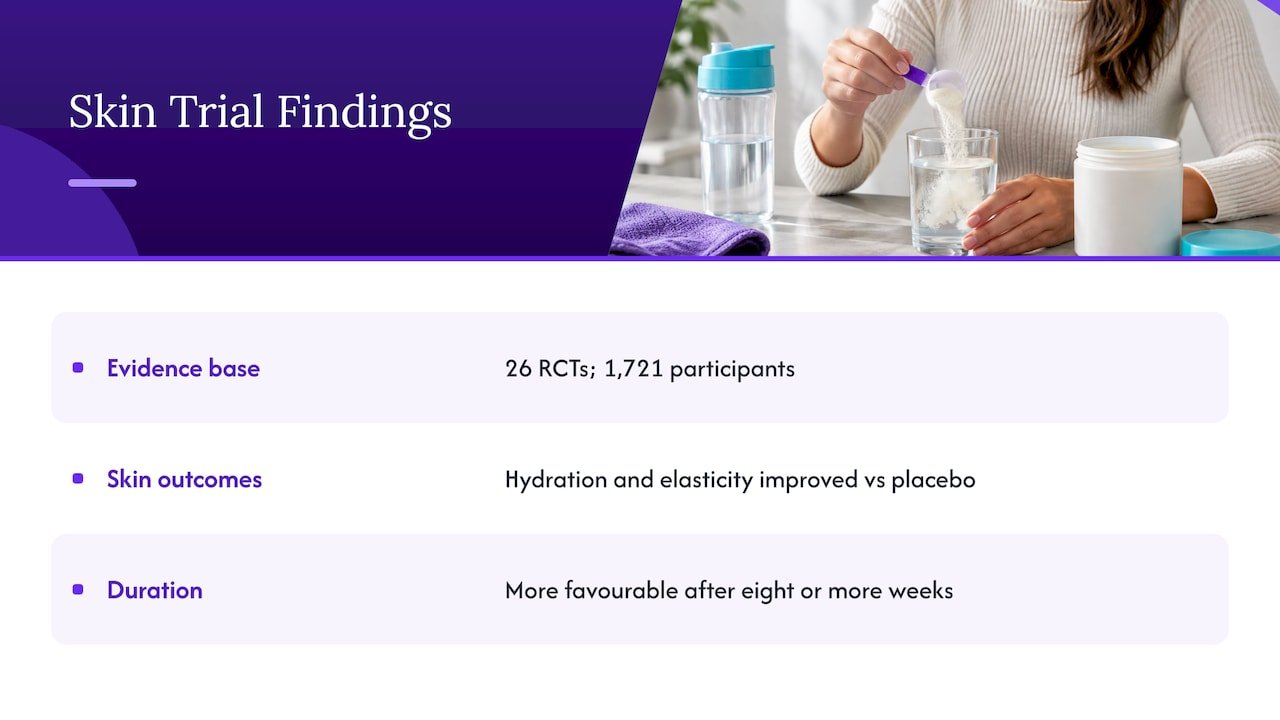
A meta-analysis of 26 randomised controlled trials with 1,721 participants found that oral hydrolysed collagen improved skin hydration and elasticity compared with placebo. The effects were more favourable after eight or more weeks of use.
A 2026 umbrella review summary from Anglia Ruskin University points the same way: skin benefits depended on dose and duration, with longer supplementation linked to bigger gains in elasticity and hydration. The same summary is clear that collagen is not a fast-acting sports performance supplement. Its strengths lie in skin and osteoarthritis symptoms.
How to read the results
A 2025 review of 23 trials with 1,474 participants also found overall improvements in hydration, elasticity and wrinkles. Its authors noted that results varied with study funding and quality, which is why larger, independently run trials are still welcome. The practical lesson is to treat collagen as a steady, long-game habit, not a quick fix, and to judge it over two to three months.
If you are over 40 and noticing changes in skin texture, collagen is one part of a wider picture. Sleep, sun protection, protein intake and vitamin C all feed your skin’s own collagen production. Our guide to red light therapy for skin covers another approach many of our clients pair with good nutrition.
Collagen for joints
For joint comfort, the strongest evidence is in people who already have osteoarthritis.
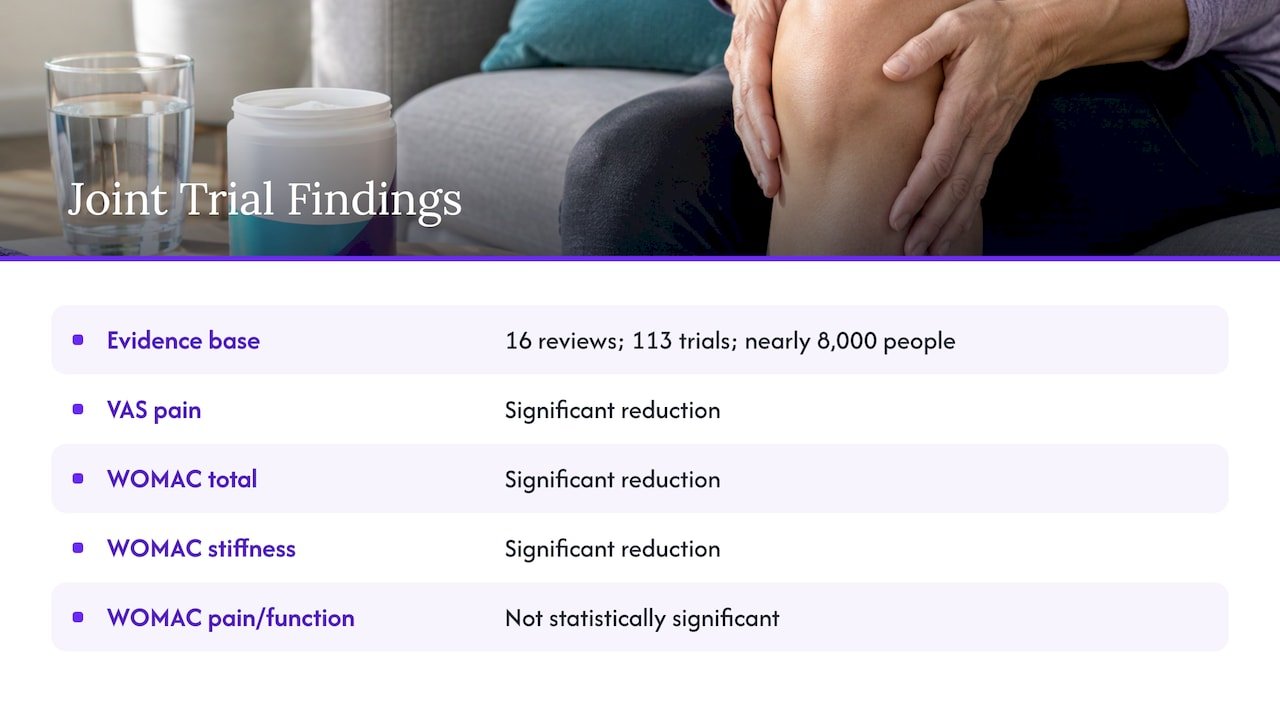
A 2026 umbrella review by Ravindran and colleagues combined 16 systematic reviews and 113 trials with nearly 8,000 participants. In the published review, collagen in people with osteoarthritis was consistently linked to symptom relief. That included significant reductions in self-reported pain, in VAS pain scores and in the WOMAC total and stiffness scores. WOMAC pain and functional limitation on their own did not reach statistical significance.
A 2025 systematic review of 36 trials of type I collagen hydrolysate reported benefits in joint studies, including less pain, better clinical measures and improved mobility.
One point matters for anyone managing arthritis. Arthritis UK notes that the studies used different collagen types, doses and outcome measures, so firm conclusions are hard. It advises that collagen should never replace medicines or other treatments your healthcare team recommends. Think of it as something you add, with their knowledge.
Collagen and bone health
A 2025 meta-analysis in Frontiers in Nutrition found that collagen peptide supplementation increased bone mineral density at the femoral neck and spine. When collagen was combined with vitamin D and calcium, the effects looked stronger. The authors point out that the evidence mostly concerns postmenopausal women and that longer studies are needed to show lasting benefit and fewer fractures.
For women over 40 approaching or past menopause, that is encouraging. It also fits a broader approach: resistance training, enough calcium and vitamin D, and regular bone checks with your GP.
How much to take, and for how long
Here is what the research describes:
| Question | What the evidence says |
|---|---|
| Range generally considered safe | 2.5 to 15 g a day |
| Range with the strongest evidence | 2.5 to 10 g a day for 8 to 24 weeks |
| When skin changes were clearer | After eight weeks or more |
| Common early side effect | Mild bloating or fullness, especially when starting |
If you take collagen every day, the most likely thing you will notice at the start is a feeling of fullness or mild digestive upset. Starting at the lower end of the range and building up is a sensible approach. Cleveland Clinic also stresses that benefits are not guaranteed.
Practical habits that help:
- Pick one product and keep to the dose on the label.
- Take it at the same time each day, stirred into tea, coffee, a smoothie or porridge.
- Give it at least eight weeks before judging results.
- Keep a simple note of how your skin or joints feel monthly.
Who should check with a professional first
Collagen peptides are generally well tolerated, but a few situations call for a conversation before you start.
- If you are having cancer treatment: the Oncology Nursing Society advises that supplement use is reviewed with your care team. Its 2026 article reports no current evidence that collagen supplements change tumour collagen levels, cancer progression or treatment response. Tell your oncologist or oncology nurse before adding collagen or any supplement. If you are exploring options, our guide to alternative cancer therapies explains how to raise these questions.
- If you take regular medication: ask your pharmacist or GP whether a new supplement suits you. This includes antidepressants and any other long-term prescription.
- If you have osteoarthritis: keep your prescribed treatment and tell your healthcare team you are adding collagen.
- If you have a food allergy: check whether the product is bovine, marine or from another source, and read the full label.
Supporting your own collagen production
Supplements are one route. Food and lifestyle are the base. Collagen is built from amino acids, so protein matters. The Harvard Nutrition Source lists fish, poultry, meat, eggs, dairy, legumes and soy as high-protein foods that supply the amino acids glycine, proline and hydroxyproline. It adds that collagen formation also needs zinc and vitamin C.
A simple plate for collagen support:
- Protein at every meal: eggs, fish, chicken, Greek yoghurt, tofu, beans.
- Vitamin C: citrus, berries, peppers, tomatoes and leafy greens.
- Zinc: shellfish, legumes, nuts, seeds and wholegrains.
- Oily fish: The Irish News suggests two or three times a week, along with antioxidant-rich foods.
Vitamin C has its own place in oncology nutrition too. You can read more in our piece on the role of vitamin C in cancer care.
How to choose a collagen product
When you shop, a few checks make the choice easier:
- Look for hydrolysed collagen or collagen peptides on the label, so you know it is in the form studied.
- Check the grams per serving. Compare it with the 2.5 to 10 g range above.
- Read health claims critically. The Advertising Association of Ireland says advertising must be honest and truthful, and that health claims should be backed by robust human trials.
- Check the source and ingredients list for allergens and unnecessary additives.
- Choose a format you will actually take every day. A powder you enjoy beats a capsule you forget.
Our perspective
We see collagen as one strand in a wider routine. Many of the women over 40 who visit us in Boyle are looking for steady, sustainable ways to support skin, joints and energy, and the research on collagen peptides gives a realistic reason to include them: modest daily doses, taken consistently over weeks.
What we have learned is that people feel their best when they combine good foundations with advanced therapies. Protein, vitamin C, sleep and movement come first. Then light, oxygen and heat-based therapies can add to that. Our guide to how hyperbaric oxygen supports collagen synthesis explains the science behind one of them, and our centre brings together the most advanced collection of healing technologies in Ireland, alongside clean, energised water throughout the facility.
Whatever you add, we encourage you to share it with your GP or care team, especially during cancer treatment. Informed choices are confident choices. Your best self awaits, one consistent habit at a time.
Mark
Beyond the tub: therapies that pair with a collagen routine
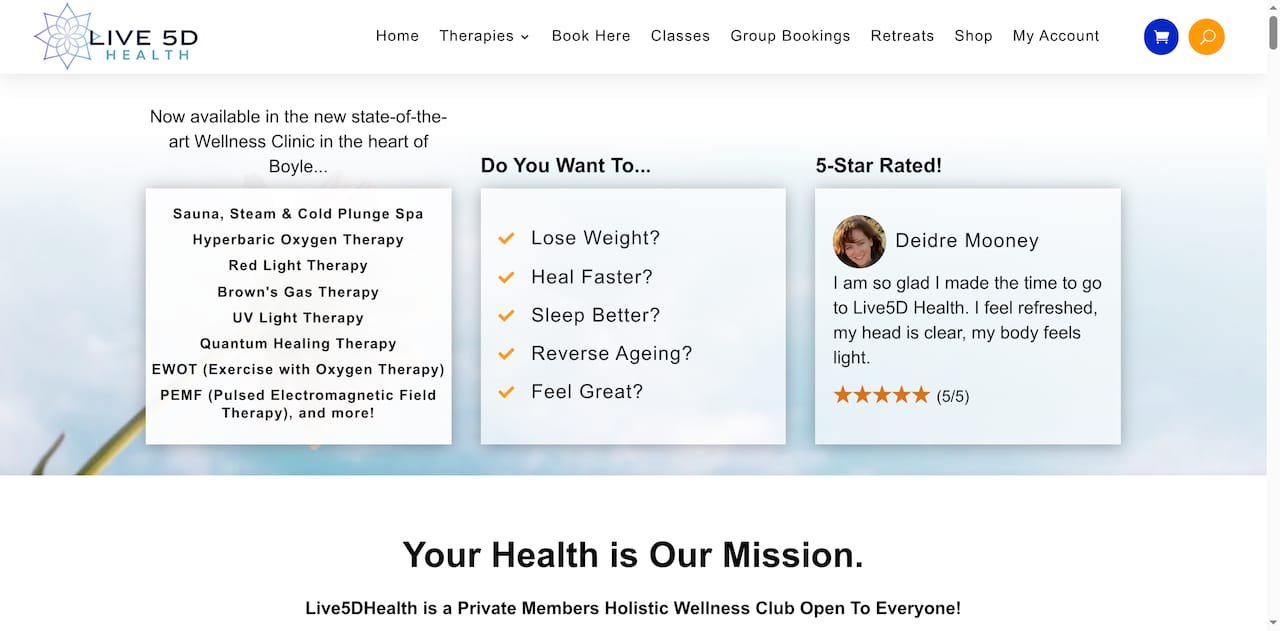
At Live5DHealth in Boyle, County Roscommon, we offer therapies many clients combine with good nutrition as part of a holistic approach:
- Hyperbaric oxygen therapy: sessions are priced at €80 to €120.
- Red light therapy: sessions are priced at €20 to €40.
- Sauna, steam room and cold plunge spa: €30 per visit.
We also run 3, 5 and 10-day total wellness retreats for those who want a deeper reset.
If you would like help deciding where to start, see our full range of therapies or book a session. If you are in treatment for cancer, speak to your oncologist before booking anything, and our team will happily talk you through what suits you.
FAQ
What happens if I take collagen peptides every day?
Most people tolerate daily collagen well. Some notice mild bloating or fullness when starting, according to Cleveland Clinic. Doses between 2.5 and 15 g a day are generally considered safe, and benefits are not guaranteed. Give it at least eight weeks before judging results.
Is collagen powder different from hydrolysed collagen?
No. Hydrolysed collagen, collagen hydrolysate and collagen peptides are the same ingredient: collagen broken into smaller pieces. Powder is simply the format. Check the grams per serving and the source, bovine or marine, to compare products.
Does collagen work for skin and joints?
The trial evidence supports better skin hydration and elasticity, and less pain in people with osteoarthritis. Results build over weeks and differ between people. If you have arthritis, keep to the treatments your healthcare team recommends and tell them about any supplement.
Who should ask a doctor before taking collagen?
Anyone taking regular prescription medicines, anyone with a food allergy and anyone having cancer treatment. The Oncology Nursing Society encourages patients to discuss collagen and other supplements with their cancer care team. Your GP, pharmacist or oncology nurse can advise on your situation.
Which foods help my body make collagen?
Protein-rich foods such as fish, poultry, eggs, dairy and legumes supply the amino acids collagen needs. Vitamin C from citrus, berries and peppers, plus zinc from shellfish, nuts and seeds, support the process. Aim for protein at each meal.
Sources
- Effects of Oral Collagen for Skin Anti-Aging: A Systematic Review and Meta-Analysis
- Effects of Collagen Supplements on Skin Aging: A Systematic Review and Meta-Analysis
- Collagen benefits skin but not performance, Anglia Ruskin University
- Collagen Peptides: Benefits and Side Effects, Cleveland Clinic
- Collagen Supplementation for Skin and Musculoskeletal Health
- The Effects of Type I Collagen Hydrolysate Supplementation
- Efficacy of collagen peptide supplementation on bone mineral density, Frontiers in Nutrition
- Collagen for joints, Arthritis UK
- Massive Collagen Study Reviews 113 Clinical Trials, Medical Daily
- What the Evidence Says About Collagen for Patients With Cancer, Oncology Nursing Society
- Collagen, The Nutrition Source, Harvard T.H. Chan School of Public Health
- Collagen supplements: Do they really work, The Irish News
- Collagen, cancer and sun cream: How to spot health claims, Irish Examiner