
Cold plunges can genuinely ease muscle soreness, sharpen mood and improve sleep in some people, but the research is patchy and time-dependent, and the practice carries real cardiovascular risk for certain groups. The benefits are worth pursuing if you screen yourself properly and follow evidence-based timing. The heart risk is the caveat that matters most, so anyone with cardiovascular disease should get medical clearance first. What follows sets out the protocols, the safety rules and where the science still falls short.
TL;DR:
- Cold water immersion can aid muscle recovery but may blunt muscle growth if done within four hours of resistance training, especially in strength athletes.
- The benefits on stress, mood, and sleep are delayed and modest, with improvements typically appearing around 12 hours after exposure.
- Cardiovascular risks are significant for those with existing heart conditions, requiring medical clearance before attempting cold plunges.
- Protocols should match temperature and duration carefully, generally using water between 7°C and 15°C for 30 seconds to 15 minutes, with gradual progression for beginners.
- Supervised sessions at dedicated centers are safest, especially for those with health concerns, as unsupervised plunges carry risks of cold shock and hypothermia.
Table of Contents
- What cold plunge (cold water immersion) actually means
- Evidence-backed benefits of cold water immersion
- Who benefits most, and who should think twice
- Cold plunge protocols: temperature, duration and timing that actually work
- Staying safe: precautions, warning signs and what to do in an emergency
- Where the evidence runs thin
- How Live5dhealth applies these protocols in practice
- Why most cold plunge advice misses the point
- Try a supervised cold plunge session at Live5dhealth
- Sources
What cold plunge (cold water immersion) actually means
Cold plunge, ice bath and cold water immersion (CWI) all describe the same broad practice: submerging the body, usually to the chest or neck, in water cold enough to trigger a measurable physiological response. Cryotherapy is a distinct cousin, using refrigerated air rather than water, and the two shouldn’t be confused when you’re reading research or comparing protocols.
The delivery method varies more than you’d expect, and it changes the experience considerably:
- Purpose-built plunge tubs — the standard in wellness centres and gyms, offering consistent, monitored temperatures.
- Dedicated cold pools — larger volume, often used in sports science facilities for team-based recovery sessions.
- Cold showers — the accessible entry point, though harder to standardise or measure.
- Outdoor dips — lakes, rivers, and sea swimming, popular in Ireland’s cold water swimming community but far less controlled in temperature and current.
Research trials typically use water between 7°C and 15°C, with sessions ranging from as little as 30 seconds up to 15 minutes, though most meta-analytic work clusters around 5 to 10 minute exposures. A systematic review and meta-analysis published in PLOS One pooled 11 trials covering temperatures of 7 to 15°C and durations from 30 seconds to two hours, which gives a sense of how wide the research net has been cast.
That range matters because a 90 second dip at 14°C and a 10 minute immersion at 7°C are not comparable interventions, even though both get reported under the same “cold plunge” umbrella. Single exposure studies (one dip, measured immediately afterwards) tell you about acute response. Repeated exposure studies, tracking people over weeks, tell you about adaptation. Most of the punchy claims circulating about cold plunge health advantages come from single-exposure data, which is a distinction worth holding onto as you read the next section.
Evidence-backed benefits of cold water immersion
The strongest, most consistent signal in the research is muscle recovery. Cold water immersion reduces exercise-induced muscle soreness and improves how recovered athletes feel, according to evidence summarised in sports medicine literature reviewing CWI’s effects on muscle adaptation. That’s a genuinely useful, well-replicated finding for anyone doing repeated hard training sessions.
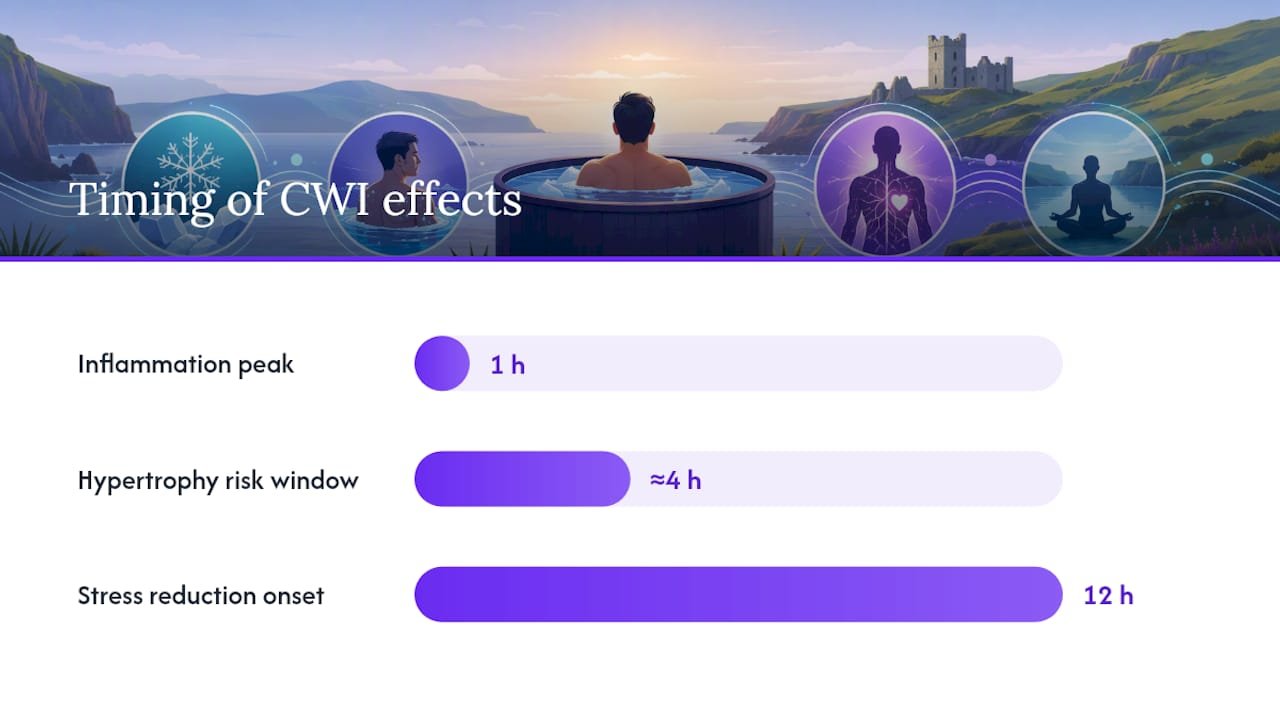
There’s a catch, and it’s an important one for anyone lifting weights to build muscle. The same body of research found that cold water immersion within roughly four hours of resistance training can blunt the molecular signalling your muscles need to grow. If hypertrophy is your goal, timing the plunge matters as much as taking it at all. Endurance-focused training doesn’t carry the same penalty, which is why elite endurance squads use CWI far more liberally than strength athletes do.
Mood and stress work differently, and the timing here is the whole story. The PLOS One meta-analysis found time-dependent effects: inflammation markers rose shortly after immersion but stress measures decreased after a delay of several hours. In plain terms, cold plunges don’t relax you in the moment. They seem to produce a delayed calming effect that shows up the following day, which contradicts a lot of the “instant zen” marketing you’ll have seen online.
Sleep quality showed improvement in some of the studies pooled in that same review, particularly among athletes already managing high training loads. The effect wasn’t universal across every trial, but it appeared often enough to be worth noting as a genuine, if modest, advantage.
Immunity is where the evidence gets genuinely mixed. Some research has linked habitual cold showering to reduced sickness absence from work, which is an interesting long-term signal, but the mechanism isn’t well understood and the studies rely heavily on self-reported illness rather than clinical diagnosis. Treat this as a promising lead rather than a settled fact.
What the numbers actually show: across the 11 trials pooled in the PLOS One meta-analysis, cold water immersion produced a measurable stress reduction at the 12 hour mark, alongside sleep quality improvements in several of the included studies, despite an acute rise in inflammation markers in the first hour. The effect is real but delayed, not instant.
Metabolic and cardiovascular markers round out the picture, and this is where caution belongs. Reviews summarised by Harvard Health note improvements in heart rate variability (HRV) and autonomic balance following cold exposure. HRV is a useful proxy for how well your nervous system recovers between stressors, and better numbers here are generally a good sign. But better HRV readings haven’t yet been linked to hard clinical outcomes like reduced heart attack or stroke risk over the long term. The same cold exposure that improves HRV also triggers a sympathetic surge, raising heart rate and blood pressure in the moment, which is precisely why the cardiovascular caveat exists.
Pulling the outcomes together:
- Muscle soreness and recovery perception — well-supported, but avoid plunging within four hours of hypertrophy training.
- Stress reduction — real, but delayed by roughly 12 hours rather than immediate.
- Sleep quality — improved in several trials, especially for athletes under heavy training load.
- Immunity and sickness absence — a plausible long-term signal, not yet a proven mechanism.
- HRV and autonomic markers — measurably improved short-term, with no confirmed long-term cardiovascular payoff.
If you’re managing delayed-onset muscle soreness specifically, it’s worth reading a wider view of what actually eases sore muscles, since cold plunging is one tool among several and rarely works best in isolation.
Who benefits most, and who should think twice
Endurance athletes and anyone using cold plunges for acute recovery or building stress resilience tend to see the clearest returns. If you’re training hard several times a week and battling cumulative soreness, or you’re deliberately using discomfort exposure to build mental resilience, the evidence lines up reasonably well in your favour.
The people who need to pause and think are those with cardiovascular disease, arrhythmia, or uncontrolled hypertension. Cold exposure provokes a genuine sympathetic surge, and clinical commentary on cold plunges and heart health is explicit that this surge can destabilise heart rhythm in people already vulnerable to it. Add Raynaud’s phenomenon, pregnancy, or severe respiratory disease to that list of caution groups. None of these conditions make cold plunging automatically forbidden, but they all warrant a conversation with a doctor before you get in.
A simple screening checklist before your first session:
- Do you have any diagnosed heart condition, arrhythmia, or uncontrolled blood pressure?
- Are you pregnant, or do you have a severe respiratory condition such as poorly controlled asthma or COPD?
- Do you experience Raynaud’s phenomenon or another circulatory disorder affecting your extremities?
- Have you had any recent cardiac event, surgery, or unexplained chest pain?
- Are you currently on medication that affects heart rate or blood pressure regulation?
Answering yes to any of these doesn’t rule you out, but it does mean you need medical clearance first, not a guess. If you’re already navigating other therapy contraindications, it’s worth reviewing a broader checklist of who should avoid certain wellness therapies before combining multiple modalities.
Age shifts the calculation too. Cold plunge over 40 carries a slightly different risk profile than it does at 25, mainly because cardiovascular risk factors accumulate silently with age, often before anyone’s had a diagnostic reason to look for them. That doesn’t mean plunging is off the table for people over 40. It means the screening step above stops being optional and starts being the first thing you do, not an afterthought.
Pro Tip: Acclimation makes the shock feel smaller over repeated sessions, but that’s a psychological and physiological adjustment, not proof you’re getting more therapeutic benefit. Track something concrete, like sleep quality or how sore you feel the next day, rather than judging progress purely by how tolerable the cold feels.
Cold plunge protocols: temperature, duration and timing that actually work
Getting the protocol right matters more than gritting your teeth through discomfort. The research clusters around specific ranges for good reason, and drifting far outside them either weakens the effect or adds unnecessary risk.
- Pick a temperature matched to your goal. Most trials use water between roughly 7°C and 15°C. Colder water at the lower end of that range tends to appear in shorter-duration studies; milder temperatures near 15°C are more common in longer sessions.
- Match duration to temperature. Sessions range from as brief as 30 seconds up to 10 to 15 minutes. Shorter exposures at colder temperatures and longer exposures at milder temperatures both appear in the literature, so there’s no single “correct” combination, only sensible pairings.
- Decide your frequency based on your goal. Recovery-focused use after hard training sessions tends to be occasional and tied to specific workouts, whereas people using cold exposure for stress management or habit-building often go for shorter, more frequent sessions, such as a few times weekly.
- Respect the four-hour rule around strength training. If hypertrophy is the priority, evidence on mechanisms by which cold exposure affects muscle adaptation supports avoiding cold water immersion within about four hours of resistance training, since it may blunt the signalling pathways responsible for muscle growth. Endurance training doesn’t carry the same restriction.
- Progress gradually if you’re new to this. Start with shorter exposures at the milder end of the temperature range, and extend duration only once you’re confident in how your body responds.
For anyone specifically managing recovery around an endurance event, a structured day-by-day recovery plan after a marathon shows how cold exposure fits alongside other recovery tools rather than replacing them.
A few practical distinctions are worth holding onto:
- Recovery-focused sessions after competition or heavy endurance work are where cold plunging earns its reputation.
- Routine post-strength-training plunges, done purely out of habit, can work against your hypertrophy goals.
- Stress-management or sleep-focused use benefits from consistency over intensity, meaning regular shorter sessions beat occasional extreme ones.
- Beginners should never chase the coldest water or the longest duration on day one; adaptation takes weeks, not a single brave session.
For a fuller breakdown of temperature ranges matched to specific goals, Live5dhealth’s evidence-based protocol page sets out the ranges used in a supervised clinical setting rather than a home guess.
Staying safe: precautions, warning signs and what to do in an emergency
Cold shock is the immediate physiological event that makes unsupervised cold plunging genuinely risky, not a minor inconvenience to push through. The moment your body hits cold water, you get an involuntary gasp reflex, a rapid spike in heart rate and blood pressure, and a brief window where breathing control becomes difficult. This response is strongest in the first minute of exposure, which is exactly when most preventable incidents occur.
Government water safety guidance is unambiguous that water below roughly 18°C can produce dangerous cooling if exposure runs long, and that cold shock plus rapid hypothermia are genuine risks, not theoretical ones. The same guidance is equally clear on the single most important precaution: never plunge alone.
Practical precautions worth building into every session:
- Never plunge without supervision or a buddy present, regardless of how experienced you are.
- Have warm shelter and dry clothing ready before you get in, not after.
- Warm up gently beforehand and warm down gradually afterwards rather than shocking the system twice.
- Log your time and temperature each session so you know exactly what you’re exposing yourself to.
- Stop immediately if you feel chest pain, dizziness, confusion, or a loss of coordination.
Why this matters more than it sounds: the acute inflammatory rise measured in the PLOS One meta-analysis occurred in the first hour after immersion, precisely the window when your body is also managing the cardiovascular strain of cold shock. Stacking exertion, cold, and inattention in that window is where most avoidable incidents happen.
Hypothermia signs to watch for include confusion, slurred speech, uncontrollable shivering that suddenly stops, and clumsy movements. Any of these after a plunge warrants immediate rewarming with dry clothing, warm (not hot) fluids, and a heated space, and if symptoms don’t resolve quickly, that’s an emergency, not a wait-and-see situation. If someone loses consciousness or shows signs of cardiac distress, call emergency services immediately rather than attempting to manage it alone.
Where the evidence runs thin
The research behind cold plunge benefits is real but limited, and it’s worth being honest about the gaps rather than overselling the picture. Most trials are small, and protocols vary so much in temperature, duration, and population that comparing one study directly against another is often misleading. A review of cold water therapy’s role in healthy ageing makes exactly this point, noting that the heterogeneity across studies limits how confidently anyone can generalize findings to a specific individual or goal.
Follow-up periods are typically short, often days or weeks rather than months or years, which means nobody can yet say with confidence what regular cold plunging does to your body over a decade. The time-dependent effects seen in the PLOS One review, inflammation rising early and stress easing later, hint at how individual responses might vary considerably depending on when and how outcomes are measured.
Long-term cardiovascular effects remain genuinely unknown. Better HRV readings are encouraging, but nobody has run the large, long-duration trials needed to confirm they translate into fewer heart attacks or strokes. That gap is exactly why the safety guidance around cardiovascular disease stays cautious rather than dismissive.
The sensible approach is to trial cold plunging cautiously, track outcomes that matter to you personally such as sleep or soreness, and treat any dramatic claim you encounter online with a healthy dose of scepticism until better research arrives.
How Live5dhealth applies these protocols in practice
Live5dhealth’s cold plunge programme is built directly on the evidence ranges covered above rather than guesswork. Sessions use monitored temperatures within the ranges supported by the research, paired with structured progression so first-timers aren’t thrown into the coldest setting on day one.
The centre combines cold plunge with sauna and steam room access, letting you cycle between heat and cold under supervision, a pairing that suits the acclimation approach discussed earlier far better than a lone plunge tub at home. Staff carry out basic screening before a first session, checking for the cardiovascular and circulatory concerns outlined in this guide, and stay present throughout supervised sessions to watch for cold shock or any adverse response.
For anyone new to cold water immersion, or anyone who ticked a “yes” on the screening checklist earlier and has since obtained medical clearance, a supervised first session at a dedicated centre is a considerably safer entry point than an unsupervised plunge in open water.
Why most cold plunge advice misses the point
The wellness industry has turned cold plunging into a performance, all gritted teeth and dramatic gasping on camera, when the actual evidence points somewhere far less theatrical. What the data supports is a modest, genuinely useful recovery tool with a delayed calming effect, not an instant mood-altering miracle. Anyone selling you on immediate euphoria is selling you the wrong mechanism entirely.
Where conventional advice really falls short is timing. Plenty of gyms tell members to jump in the plunge tub straight after every session, strength work included, without mentioning that doing so within four hours of resistance training can undercut the very muscle growth they’re training for. That’s not a minor footnote. It’s the difference between a recovery tool and an accidental training saboteur.
If there’s one thing to prioritise first, it’s screening, not temperature. Get the cardiovascular question sorted before you worry about whether 8°C or 12°C suits you better. Everything else in this guide is optimisation. That one is a prerequisite.
— Mark
Try a supervised cold plunge session at Live5dhealth
Live5dhealth’s cold plunge is the safer route into cold water immersion compared with an unsupervised tub or an open water dip, because every session happens under trained supervision with monitored temperatures rather than guesswork. First-timers get a structured introduction rather than being handed a stopwatch and left alone, and anyone managing a medical concern who has clinical clearance can trial the practice with staff present throughout.
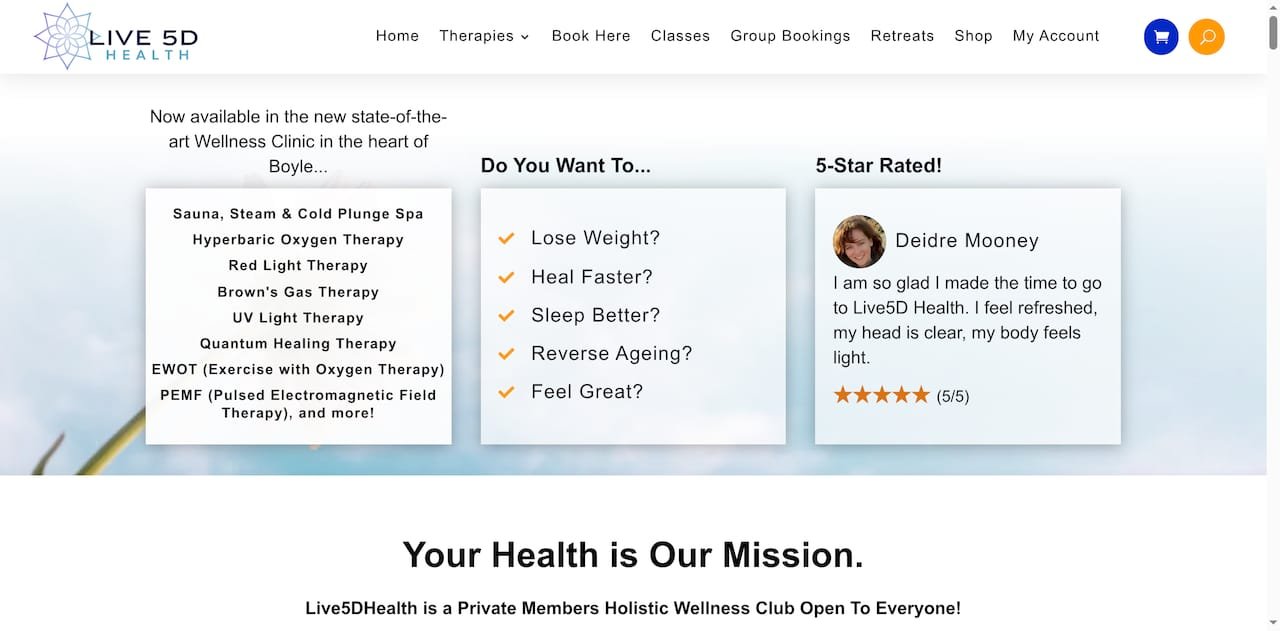
Sessions are offered as standalone bookings or combined with sauna and steam access, letting you build the heat-cold cycling approach covered earlier into a single visit rather than piecing it together yourself. The centre also runs longer retreat packages for anyone wanting to combine cold plunge with a broader reset, alongside recovery-focused supplements such as magnesium for those managing post-exposure muscle recovery. If you’re ready to try it properly rather than guessing at home, book a session through the luxury spa cold plunge page and check current availability.
This article is general information, not a substitute for advice from a qualified doctor. Consult a qualified healthcare professional about your own circumstances before acting on anything here.
Sources
- Effects of cold-water immersion on health and wellbeing: A systematic review and meta-analysis | PLOS One
- Effects of cold-water immersion on muscle recovery and adaptation (PMC article)
- Cold plunges: Healthy or harmful for your heart? – Harvard Health
- Water safety guidance – Government of Ireland