
Hyperbaric oxygen therapy (HBOT) has moved well beyond hospital wards. You will find it offered at wellness spas, sports recovery clinics, and retreat centres, often with bold claims attached. That surge in popularity has brought a wave of common hyperbaric therapy misconceptions that can genuinely mislead people who are simply trying to make good decisions about their health. Some myths cause unnecessary fear. Others create dangerous overconfidence. This article cuts through the noise with evidence, so you can approach HBOT with clear eyes, realistic expectations, and the confidence to ask the right questions.
Table of Contents
- Key takeaways
- 1. Myth: HBOT is a cure-all for almost any condition
- 2. Myth: HBOT is simply breathing oxygen in a pressurised room
- 3. Myth: HBOT is completely risk-free
- 4. Myth: Insurance will cover HBOT for any condition
- 5. Myth: All hyperbaric chambers are the same
- My perspective on busting hyperbaric therapy myths
- Experience HBOT safely at Live5dhealth
- FAQ
Key takeaways
| Point | Details |
|---|---|
| HBOT is not a cure-all | FDA approval covers a specific list of conditions; off-label claims are often unsupported by strong evidence. |
| Medical oversight is non-negotiable | Trained staff, accredited facilities, and proper protocols are what separate safe treatment from serious risk. |
| Side effects are real but manageable | Ear discomfort is the most common issue; pre-treatment screening and equalisation techniques reduce risk significantly. |
| Insurance coverage is conditional | Cover applies only to FDA-approved indications with proper documentation; wellness uses are typically self-pay. |
| Not all chambers are equal | Medical-grade hard-shell chambers offer meaningfully different safety and efficacy compared to consumer-grade devices. |
1. Myth: HBOT is a cure-all for almost any condition
This is perhaps the most widespread of all hyperbaric therapy myths, and it does real harm. HBOT is FDA-approved for a limited set of serious conditions, including carbon monoxide poisoning, decompression sickness, and diabetic foot ulcers. The science behind these approvals is solid and well-replicated.
The problem arises when wellness marketing stretches those findings into territory the evidence does not support. Claims that HBOT reverses ageing, cures autism, or resolves chronic Lyme disease are not backed by the same rigorous clinical data. HBOT’s scientific support is considerably narrower than the wellness industry often suggests, and that mismatch creates false hope for vulnerable people.
Conditions with strong evidence for HBOT include:
- Carbon monoxide poisoning
- Decompression sickness (the bends)
- Diabetic foot ulcers and non-healing wounds
- Radiation injury following cancer treatment
- Severe anaerobic infections
Using HBOT for conditions without adequate evidence is not just a financial risk. It can delay access to treatments that genuinely work.
Pro Tip: Before committing to a course of HBOT, ask your provider which specific condition is being treated and whether that indication is FDA-approved. A reputable clinic will answer this question clearly and without hesitation.
2. Myth: HBOT is simply breathing oxygen in a pressurised room
This misunderstanding about hyperbaric therapy makes the treatment sound almost trivially simple. It is not. HBOT works by placing you inside a pressurised chamber where atmospheric pressure is raised to between 1.5 and 3 times normal levels. At that pressure, your lungs absorb far more oxygen than they can at sea level, saturating your plasma and tissues in ways that standard oxygen delivery cannot achieve.
That process requires precision. The chamber must maintain consistent pressure, the oxygen concentration must be controlled carefully, and the rate of pressurisation and depressurisation must follow a clinical protocol. Trained staff and protocols are not optional extras. They are what make the difference between a therapeutic session and a dangerous one.
Key elements that separate clinical HBOT from a simple oxygen session:
- Calibrated pressure regulation throughout the session
- Continuous monitoring of oxygen concentration
- Controlled ascent and descent rates to protect ears and sinuses
- Emergency protocols in place for the full duration of treatment
- Operator training in recognising and managing adverse reactions
Sessions typically last 90 minutes to 2 hours, and that duration is not arbitrary. It reflects the time needed for oxygen to saturate tissues at therapeutic levels. Cutting corners on any of these elements changes the risk profile entirely.
3. Myth: HBOT is completely risk-free
Honest information about side effects is not meant to frighten you away from HBOT. It is meant to help you approach it safely. The reality is that HBOT can cause ear and sinus pain, ruptured eardrums, and in rare cases, lung collapse. These are not theoretical risks. They occur, and they are more likely when proper screening and protocols are absent.
Ear pressure discomfort affects around 9% of patients, making it the most frequently reported side effect. The good news is that it is highly manageable. The Valsalva manoeuvre (gently pinching the nose and exhaling) and nasal decongestants used before treatment are standard tools for reducing barotrauma risk.
Contraindications that require careful screening before treatment include:
- A collapsed lung (pneumothorax)
- Chronic obstructive pulmonary disease or emphysema
- Recent ear surgery or injury
- Certain medications that increase oxygen sensitivity
- Claustrophobia that cannot be managed safely within the chamber
Clinical safety screening for lung conditions, ear health, and claustrophobia is not bureaucratic box-ticking. It is what protects you from the rare but serious complications that do occur.
Pro Tip: Always disclose your full medical history before starting HBOT. Conditions that seem unrelated, such as a recent ear infection, can significantly affect your safety during treatment.
4. Myth: Insurance will cover HBOT for any condition
Many people are surprised to discover that their insurance will not cover the HBOT sessions they had planned. The reason is straightforward. Insurance covers HBOT only for FDA-cleared conditions with proper documentation, and the requirements are specific.
To access covered treatment, you generally need:
- A physician’s order clearly stating the diagnosis and medical necessity
- Diagnostic codes that correspond to an approved indication
- Evidence of prior treatment failure for wound-related conditions
- Ongoing documentation of treatment progress
Conditions such as radiation injury and HBOT’s other FDA-recognised indications are more likely to receive cover. Wellness uses, performance recovery, and off-label applications are almost universally self-pay. This is not a gap in the system. It reflects the evidence threshold insurers apply before funding any treatment.
If you are exploring HBOT for a condition that falls outside approved indications, go in with a clear understanding of the full cost. A reputable provider will give you a transparent breakdown before your first session.
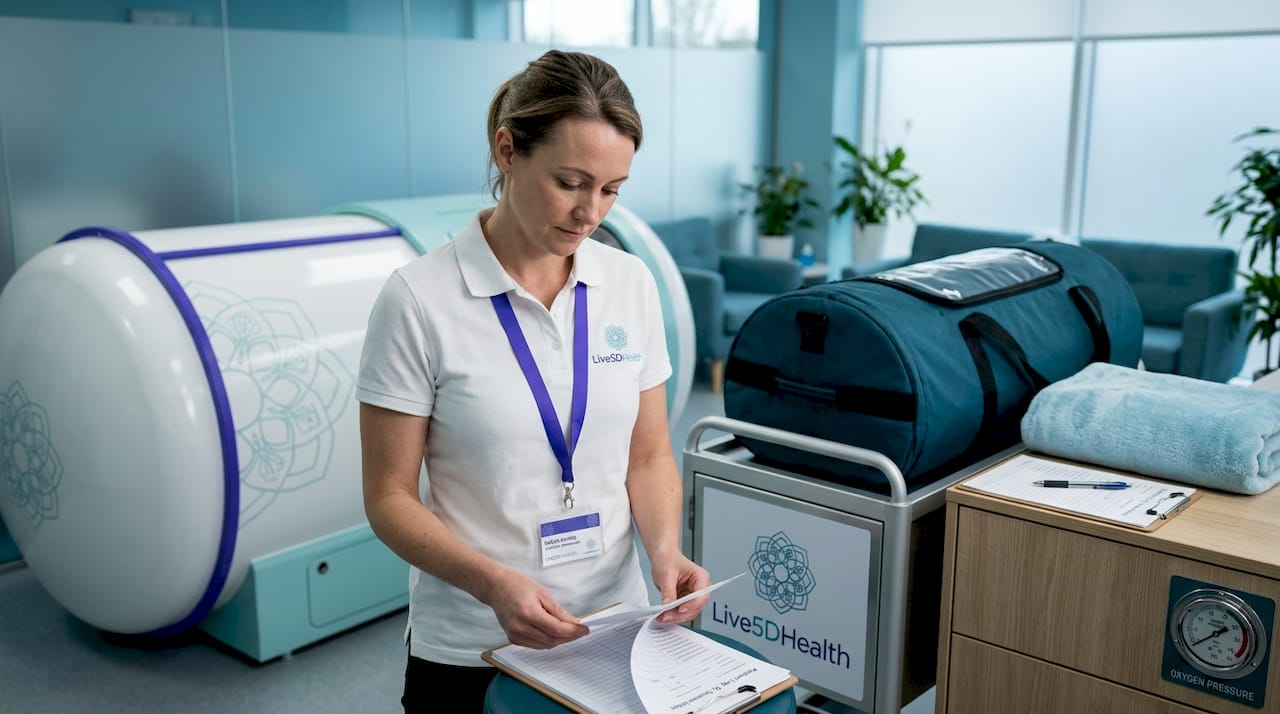
5. Myth: All hyperbaric chambers are the same
This is one of the most consequential hyperbaric treatment misconceptions, because the differences between chamber types have direct implications for your safety and the quality of your results.
| Feature | Medical-grade hard-shell chamber | Consumer-grade soft-shell chamber |
|---|---|---|
| Maximum pressure | Up to 3 ATA (atmospheres absolute) | Typically 1.3 ATA |
| Oxygen system | Separate, regulated oxygen delivery | Often ambient air with limited oxygen |
| Safety controls | Integrated life-safety systems | Minimal or absent |
| Operator requirement | Trained medical staff | Often unsupervised |
| Regulatory oversight | Certified and inspected | Largely unregulated |
| Treatment efficacy | Matched to clinical indications | Limited therapeutic value for most conditions |
Medical chambers use separate systems for oxygen delivery, compression, and life-safety controls. Consumer chambers frequently do not. That gap matters enormously when something goes wrong.
There is also a subtler issue around treatment position. A supine position is preferred over reclining during treatment because reclining causes uneven pressure distribution, fluid pooling, and worsened ear equalisation. Consumer chambers rarely allow for proper positioning. These details are not minor. They affect both safety and whether the treatment actually delivers what it promises.
Seven deaths since 2009 have been linked to unregulated HBOT chambers, most involving fire or suffocation hazards in settings without proper medical oversight. Oxygen under pressure is not passive. It amplifies fire risk significantly, and without the correct engineering controls, that risk is unacceptably high.
My perspective on busting hyperbaric therapy myths
I have seen what happens when people arrive at a wellness facility with expectations shaped entirely by social media. They have read that HBOT will transform their energy, reverse cognitive decline, and accelerate recovery from almost anything. When the reality does not match that picture, the disappointment is real, and sometimes the financial cost is significant.
What troubles me most is not the enthusiasm for HBOT. The therapy has genuine, well-documented benefits for specific conditions, and I think more people should have access to it in the right context. What concerns me is the growth of unregulated facilities offering sessions without proper screening, without trained operators, and without honest conversations about what HBOT can and cannot do.
The people most at risk are not sceptics. They are motivated, health-conscious individuals who trust the providers they choose. That trust deserves to be honoured with transparency, not exploited with oversimplified marketing.
My advice is this: seek out facilities that welcome your questions, provide clear information about their equipment and staff qualifications, and never promise outcomes the evidence does not support. HBOT at its best is a powerful tool. Used carelessly, it carries real risk. You deserve access to the former, not exposure to the latter.
— Mark
Experience HBOT safely at Live5dhealth
If this article has clarified what to look for in a reputable HBOT provider, Live5dhealth in Boyle, County Roscommon, is worth exploring. The facility operates medical-grade hyperbaric chambers with trained staff, proper safety protocols, and a commitment to honest, evidence-based guidance for every client.
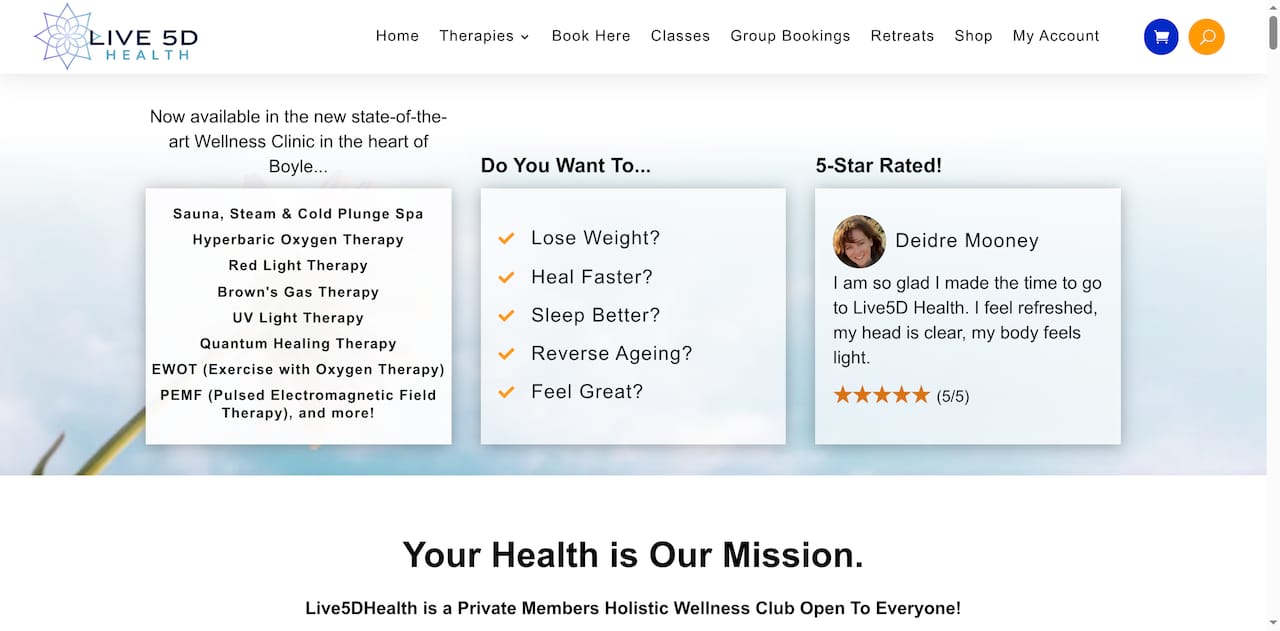
Live5dhealth offers HBOT in Ireland within a broader wellness environment that includes a luxury spa, gym, and retreat centre. For those who want a more immersive experience, the healing retreats in the West of Ireland combine HBOT with complementary therapies in a setting designed for genuine recovery and restoration. Whether you are exploring HBOT for a specific condition or as part of a wider wellness programme, the team at Live5dhealth will help you understand what is realistic, what is safe, and what is right for you.
FAQ
What conditions is HBOT actually approved to treat?
HBOT is FDA-approved for conditions including carbon monoxide poisoning, decompression sickness, diabetic foot ulcers, and radiation injury. Evidence for many other advertised uses remains limited or unproven.
Is HBOT safe for everyone?
No. Contraindications include collapsed lung, COPD, emphysema, and recent ear injuries. Clinical screening before treatment is standard practice and protects patients from serious complications.
Why does ear discomfort happen during HBOT?
Ear barotrauma occurs because pressure changes affect the middle ear. It affects roughly 9% of patients and is managed with equalisation techniques such as the Valsalva manoeuvre and pre-treatment decongestants.
Will my health insurance cover hyperbaric therapy?
Insurance typically covers HBOT only for FDA-approved indications with a physician’s order and supporting documentation. Wellness or off-label uses are almost always paid out of pocket.
Are home hyperbaric chambers as effective as clinical ones?
Consumer-grade soft-shell chambers operate at much lower pressures and lack the integrated safety systems of medical-grade equipment. They cannot replicate clinical HBOT and carry higher safety risks without professional oversight.
Recommended
- Hyperbaric Oxygen Therapy Ireland? Live5DHealth Boyle
- Exploring the Remarkable Benefits of Hyperbaric Oxygen Therapy (HBOT) for Multiple Sclerosis (MS) – Live 5D Health
- The Beneficial Effects of Hyperbaric Oxygen Therapy (HBOT) Prior to Surgery – Live 5D Health
- Hyperbaric Oxygen Therapy Treatment Review – Live 5D Health