

A typical single hydrogen therapy session in Ireland commonly falls within a moderate to higher price range, though the final figure shifts with delivery method, session length and equipment quality. Hydrogen bars and shorter exposures can cost less, while clinic-based inhalation with medical oversight sits at the higher end. Because the clinical evidence is still developing, it’s worth treating hydrogen therapy as a wellness investment and checking with a clinician before committing to a course.
TL;DR:
- In Ireland, clinic-based hydrogen inhalation sessions typically cost between €80 and €120, with longer, monitored protocols at the higher end and shorter bar visits at the lower end.
- Prices vary based on session length, equipment quality, staff oversight, and whether the therapy is combined with other treatments like hyperbaric oxygen or red light therapy.
- Upfront costs for home devices are higher but can reduce ongoing expenses for frequent users, while bundle discounts and memberships lower per-session costs for occasional clients.
- Hydrogen therapy remains a wellness expense with limited insurance coverage in Ireland, and evidence about its health benefits is still emerging.
- Buyers should verify device specifications, staff qualifications, and protocol details before choosing a provider, as price differences often reflect equipment quality and safety standards.
Table of Contents
- Typical prices in Ireland: per-session examples and what you might actually pay
- What determines the price: the factors that change cost
- Delivery methods and their typical cost implications
- Packages, memberships and expected monthly cost
- Insurance, regulation and the clinical status of hydrogen therapy in Ireland
- How to assess value and choose a safe provider in Ireland
- Live5DHealth perspective: what we do and how that affects price and safety
- Author perspective: practical budgeting advice for an Irish reader
- How Live5DHealth can help: services and booking
- Sources
- FAQ
Typical prices in Ireland: per-session examples and what you might actually pay
If you’re budgeting for your first session, the numbers are fairly predictable once you know which format you’re paying for. In-clinic hydrogen inhalation sessions in Ireland generally fall within a range typical for well-equipped practices and wellness centres, reflecting delivery method and session oversight. Hydrogen bar visits, which involve shorter exposure through a mask or cannula without a full clinical protocol, tend to sit lower, often closer to the €20 to €50 mark for a single short session.
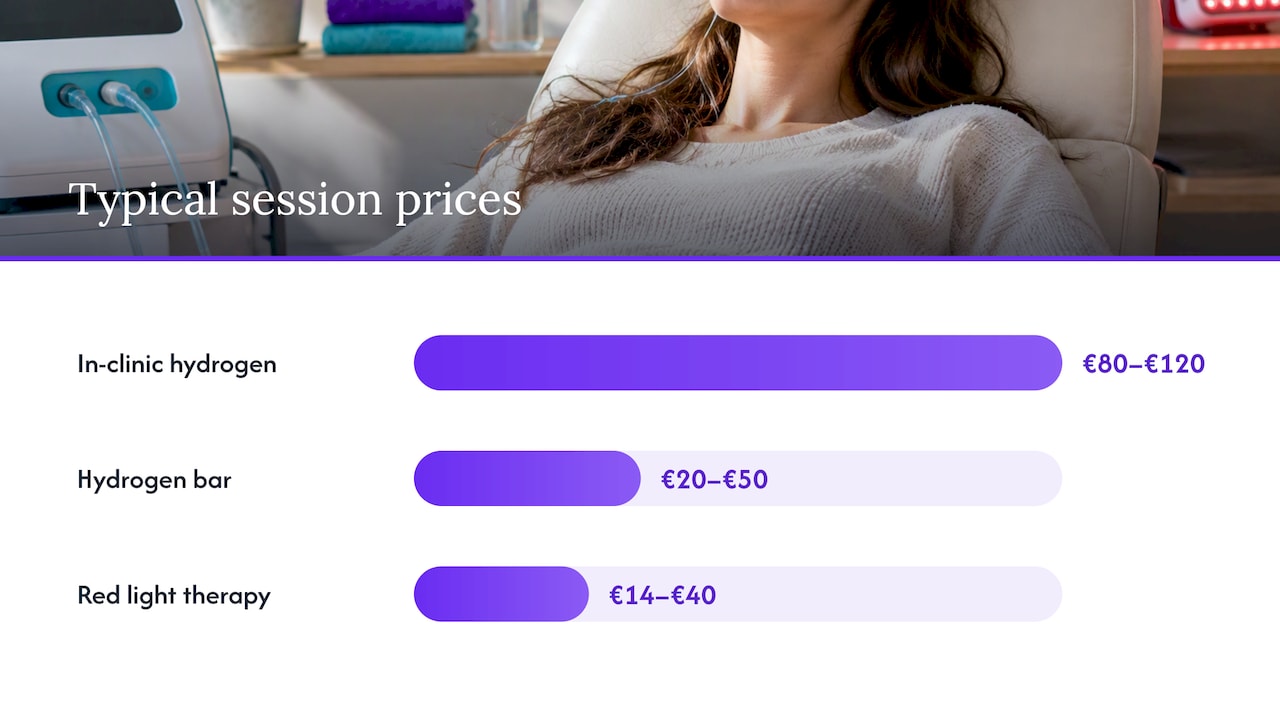
Where does the €80 to €120 exemplar come from? It reflects sessions that include proper protocol design: measured inhalation time, monitored gas concentration and a practitioner present throughout. That’s a different service from a five-minute top-up at a hydrogen bar counter, and the price reflects it.
A worked example helps put this in perspective:
- One session at €100 (midpoint of the typical range) costs €100 outright, with no discount applied.
- A five-session block often includes a modest discount reducing the per-session rate.
- A ten-session course may offer a steeper package discount reducing the unit price further.
These figures are illustrative rather than fixed tariffs. Actual pricing depends heavily on the provider, the region and whether other therapies are bundled in. Some centres combine hydrogen inhalation with treatments like hyperbaric oxygen or red light therapy, which changes both the experience and the invoice. For comparison, red light therapy sessions in Ireland typically run from €14 to €40, giving you a sense of how price scales with equipment complexity and session length across different wellness therapies.
What determines the price: the factors that change cost
Not all hydrogen sessions are priced the same way, and understanding why helps you compare offers properly rather than just picking the cheapest number on a website.
- Session length and dosing protocol matter most: a 30-minute inhalation session with structured breathing rounds costs more to deliver than a quick five-minute exposure.
- Equipment quality separates clinics that use validated inhalation rigs with documented FiH2 (fraction of inspired hydrogen) control from those using consumer-grade generators, and the former usually carries a premium.
- Staffing and clinical oversight add cost. A practitioner present for the full session, monitoring gas flow and your response, is a different service from a self-administered booth.
- Combined therapies push the price up. Pairing hydrogen inhalation with hyperbaric oxygen or hyperbaric oxygen therapy in Ireland as a bundled visit reflects the added equipment, staff time and consumables involved.
- Facility standard and location play a role too. A dedicated wellness centre with maintained equipment and trained staff will price differently than a smaller setup offering the same nominal service.
- Consumables and follow-up fees can add to the headline price: think replacement cartridges, water purity testing or a follow-up consultation charged separately from the session itself.
None of these factors are hidden tricks. They’re simply the practical costs of running equipment properly and keeping sessions safe, and a provider who explains them clearly is usually one worth trusting.
Delivery methods and their typical cost implications
Hydrogen therapy isn’t one product with one price tag. The delivery method you choose changes both what you experience and what you pay.
- Clinic-delivered hydrogen inhalation typically runs 20 to 45 minutes with a practitioner present, and is priced at the higher end of the market, reflecting equipment calibration and oversight.
- Hydrogen bar sessions offer a shorter, self-directed exposure, often 10 to 15 minutes, and cost considerably less per visit, though the dose and clinical value are correspondingly lower.
- Hydrogen-enriched water and hydrogen bottles shift the cost model entirely: you pay upfront for a device, then a smaller ongoing cost for replacement parts or filters, rather than a per-session fee. Products in this category include consumer hydrogen bottles designed for daily home use.
- Home inhalation devices ask for a larger initial outlay but remove the recurring clinic fee, which can suit someone planning frequent, long-term use rather than occasional sessions.
Pro Tip: Ask any provider what FiH2 concentration their device delivers and for how long, then compare that figure across venues rather than comparing headline prices alone.
Clinic prices tend to run higher than bar or home-device costs for a straightforward reason: validated equipment, safety monitoring and trained staff cost money to maintain, and recent evidence reviews note that delivery systems vary considerably across the market, with no standardised validated commercial equipment yet agreed across providers. That variability is exactly why the protocol behind the price matters more than the price alone.
Packages, memberships and expected monthly cost
Most providers offer some form of discount for committing to multiple sessions, and doing the maths before you buy saves disappointment later.
- A three-session package at a modest discount might bring a €100 single-session rate down to roughly €95 each, totalling around €285.
- A five-session package often deepens the discount further, potentially to around €90 per session, or €450 total.
- Membership models, similar to day-pass or retreat pricing structures used across Irish wellness centres, can bundle hydrogen sessions with other therapies such as sauna or red light exposure for a flat monthly or day rate.
For someone using hydrogen therapy occasionally, perhaps once a fortnight, a pay-as-you-go rate makes more sense than a package. A moderate user attending weekly might save meaningfully with a five or ten-session block. Before buying any package, check the expiry window, whether sessions are transferable, and whether the discount actually beats booking single sessions across the same period.
Insurance, regulation and the clinical status of hydrogen therapy in Ireland
Hydrogen therapy in Ireland is generally treated as a wellness expense rather than a reimbursable medical treatment. There’s no routine HSE cover for it, and private health insurers vary widely in whether they’ll consider it at all, usually only where a clinician has formally prescribed it as part of a documented care pathway.
- No routine public reimbursement exists for hydrogen therapy sessions booked independently as a wellness treatment.
- Private insurance cover is inconsistent: some policies may contribute toward complementary therapies under specific riders, but this depends entirely on your policy wording.
- Evidence remains preliminary. Recent narrative and review literature from 2025 and 2026 describes molecular hydrogen research as promising but in an early stage, citing small sample sizes and methodological variability across studies, along with a lack of standardised delivery equipment.
- Check before you commit. Speak with your insurer directly about what’s covered, and consult a clinician before treating hydrogen therapy as a substitute for prescribed medical care.
Given this evidence status, it makes sense to budget for hydrogen therapy the way you would any wellness spend: out of pocket, and reviewed periodically against how you feel and what it’s costing you.
How to assess value and choose a safe provider in Ireland
Choosing a provider well means asking the right questions before you pay, not after.
- Ask about the protocol directly: what FiH2 concentration does the device deliver, how many inhalation rounds per session, and how long does each round last?
- Ask about device provenance: is the equipment a recognised clinical-grade generator, or a consumer unit repurposed for commercial use?
- Check staff qualifications: is a trained practitioner present throughout, and do they know the emergency procedure should you feel unwell?
- Watch for red flags: vague answers about dosing, no safety briefing before your first session, or reluctance to name the equipment manufacturer.
- Compare unit cost fairly: divide the total session price by minutes of actual hydrogen exposure, not total appointment time, so you’re comparing like with like across providers.
Pro Tip: A provider who happily explains their protocol and equipment in plain language is usually more trustworthy than one who leans on testimonials alone.
This kind of comparison matters more than it might seem, because narrative reviews caution that a higher price or bolder marketing claim isn’t evidence of a stronger clinical effect. The same caution applies to portable devices generally: guidance on using canned oxygen safely makes a similar point about checking device specifications rather than trusting branding alone.
Live5DHealth perspective: what we do and how that affects price and safety
At a wellness centre in Ireland, a Hydrogen Bar operates alongside a wider collection of healing technologies, reflecting a belief that hydrogen therapy works best as part of a considered, well-run facility rather than a standalone gimmick. Our approach to pricing follows the same factors covered above: protocol, equipment and oversight.
- We offer hydrogen inhalation therapy with clear guidance on FiH2 ranges and session structure, so you know exactly what you’re paying for.
- Our hydrogen bottle range gives members a home-use option between clinic visits.
- Membership includes access to energised water and a broader set of therapies, which changes the value equation compared with paying for hydrogen sessions in isolation elsewhere.
If you’d like detailed pricing or a bespoke package built around your goals, our team can talk you through the options directly rather than leaving you to guess from a price list.
Author perspective: practical budgeting advice for an Irish reader
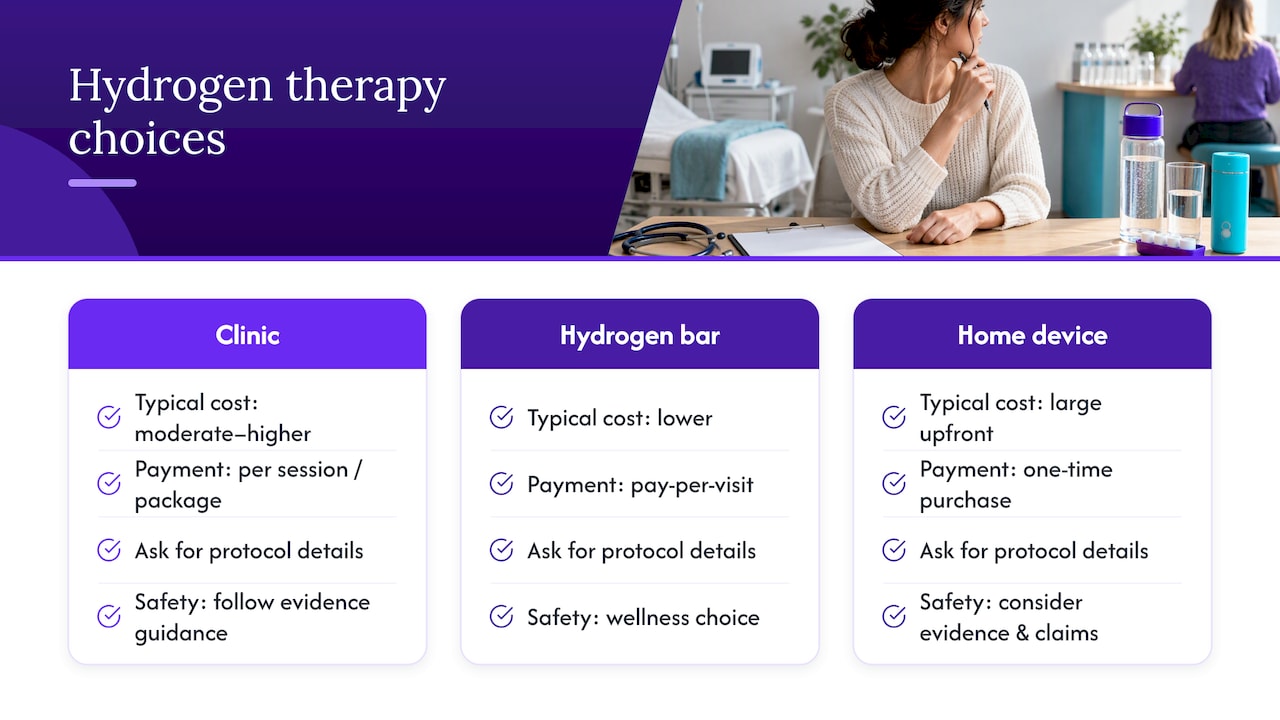
If you’re weighing up hydrogen therapy, start with the numbers: expect a moderate to higher cost for a proper clinic session, less for a hydrogen bar visit, and a larger upfront cost if you’re buying a home device instead. None of these figures are fixed, so ask for the protocol details before you compare prices, and do the package maths yourself rather than trusting the advertised discount percentage.
Safety and evidence status should guide your spending more than marketing language does. The research is encouraging but still early, so treat hydrogen therapy as a wellness choice you’re making deliberately, not a medical necessity you can’t afford to skip. Talk to a clinician if you have an existing condition before committing to a course.
— Mark
How Live5DHealth can help: services and booking
Choosing where to try hydrogen therapy in Ireland comes down to trusting the protocol and the people running it, and that’s exactly where Live5DHealth’s combination of technology and guidance makes the decision easier. Alongside our Hydrogen Bar, we offer hyperbaric oxygen therapy and red light therapy, which many members combine with hydrogen sessions for a fuller wellness visit.

- View pricing and book a spa day session that can be paired with hydrogen therapy.
- Explore our wellness retreats for a more immersive multi-day option.
- Contact our team directly for bespoke package pricing tailored to your goals and budget.
Get in touch to check current session availability and find the combination that fits your budget and your health priorities.
This article is general information, not a substitute for advice from a qualified doctor. Consult a qualified healthcare professional about your own circumstances before acting on anything here.
FAQ
How much does hydrogen therapy cost per session in Ireland?
A typical in-clinic hydrogen inhalation session in Ireland costs between €80 and €120, depending on session length, equipment and whether it’s combined with other therapies. Hydrogen bar visits, which involve shorter exposure, tend to cost less per visit.
Is hydrogen therapy covered by health insurance in Ireland?
Hydrogen therapy is generally treated as a wellness expense rather than a reimbursable medical treatment, so there’s no routine public cover through the HSE. Private insurance cover varies by policy, so it’s worth checking directly with your insurer before assuming any contribution.
Is hydrogen therapy worth the cost?
Recent narrative reviews describe molecular hydrogen research as promising but still preliminary, with small studies and no standardised commercial delivery equipment yet agreed across the field. Whether it’s worth it depends on your goals and budget, and it’s sensible to discuss it with a clinician if you have an existing health condition before committing to an ongoing course.
How much does a hyperbaric chamber session cost in Dublin?
Hyperbaric oxygen therapy pricing in Ireland typically ranges from €80 to €120 per session, similar to clinic-delivered hydrogen inhalation, reflecting comparable equipment and staffing requirements. Exact pricing depends on the provider and whether sessions are bought individually or as part of a package.
What’s cheaper: a hydrogen bar or a home hydrogen device?
A hydrogen bar visit usually costs less upfront per session than a full clinic inhalation appointment, but a home device requires a larger initial purchase followed by lower ongoing costs. Which is cheaper overall depends on how often you plan to use it: occasional users often save with pay-as-you-go bar visits, while frequent users may find a home device pays off over time.