
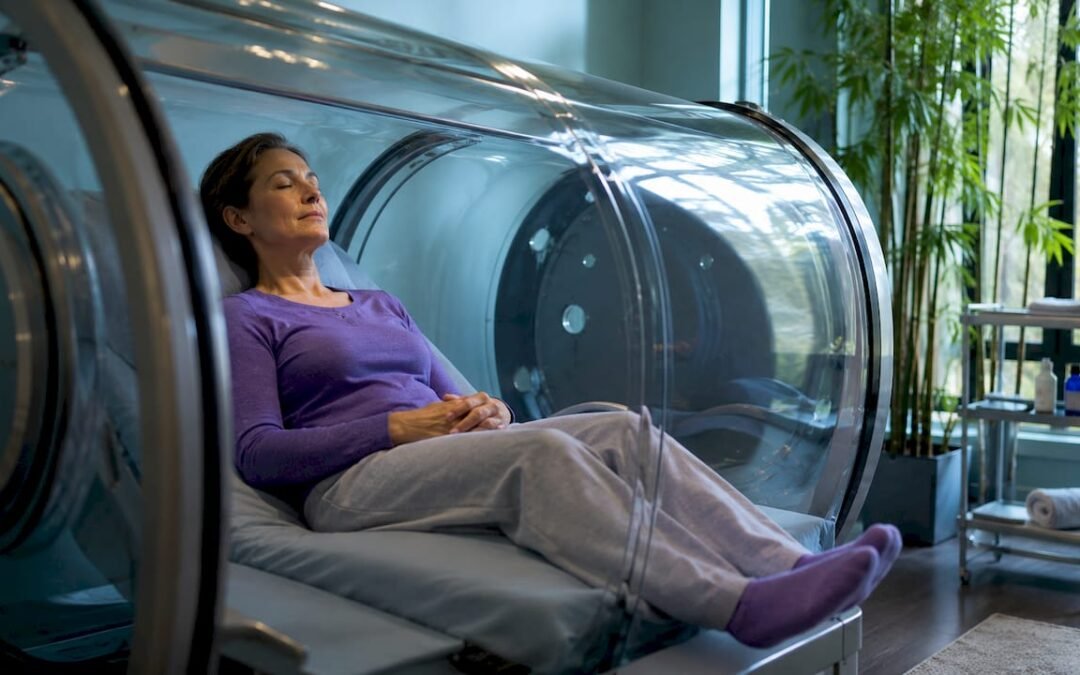
Hyperbaric oxygen therapy (HBOT) is a medical treatment that delivers 100% pure oxygen at pressures of 2.0 ATA or higher, forcing oxygen to dissolve directly into blood plasma at levels 20 to 30 times greater than breathing room air. That single mechanism underpins every hyperbaric oxygen therapy health benefit discussed in this guide. The US Food and Drug Administration (FDA) has cleared HBOT for over a dozen conditions, from diabetic foot ulcers to carbon monoxide poisoning, and clinical interest in complementary uses, including long COVID recovery and athletic performance, is growing rapidly. Whether you are managing a chronic condition or exploring recovery options, understanding what HBOT can and cannot do is the most useful starting point.
1. What are the primary health benefits of hyperbaric oxygen therapy?
HBOT increases blood flow, reduces inflammation, promotes collagen production, and contributes to tissue regeneration and immune system modulation. These four processes work together, which is why the therapy appears in such a wide range of clinical settings.
The most well-documented benefits include:
- Accelerated wound healing. Standard wound healing protocols typically require 30–40 sessions at 2.0–2.4 ATA. Diabetic foot ulcers respond particularly well because oxygen-rich plasma reaches tissue that compromised circulation cannot.
- Reduced inflammation and infection control. Elevated oxygen levels suppress inflammatory cytokines and create an environment hostile to anaerobic bacteria. This is why HBOT is used alongside antibiotics for necrotising soft tissue infections.
- Cognitive recovery. Patients recovering from traumatic brain injury (TBI) and long COVID report measurable cognitive improvements. Studies noted improvements in long COVID patients after 40 sessions of HBOT.
- Cellular rejuvenation and anti-ageing effects. Research links HBOT to telomere lengthening and increased stem cell mobilisation, both markers of cellular regeneration.
- Athletic performance and recovery. HBOT reduces lactic acid accumulation, speeds muscle repair, and shortens recovery time between training sessions. Elite athletes use it precisely because the oxygen saturation effect reaches deep tissue faster than passive rest.
Pro Tip: If you are exploring HBOT for cognitive recovery or long COVID, look specifically for clinics running protocols of 40 sessions or more. Shorter courses are unlikely to produce the neurological changes seen in published trials.
2. How do chamber types and pressure levels affect your results?

The distinction between chamber types is not a minor technical detail. It determines whether you receive a clinical treatment or a general wellness experience.
| Feature | Hard-shell medical chamber | Soft-shell wellness chamber |
|---|---|---|
| Pressure range | 2.0–3.0 ATA | 1.3 ATA |
| Oxygen purity | 100% medical-grade oxygen | Filtered air or low oxygen mix |
| Plasma saturation | Full therapeutic saturation | Limited physiological effect |
| Clinical use | FDA-approved indications, TBI, long COVID trials | General relaxation, mild wellness |
| Physician oversight | Required | Rarely present |
Therapeutic benefits require pressures of 2.0 ATA or higher. Soft-shell chambers at 1.3 ATA cannot achieve the oxygen plasma saturation needed for rigorously validated clinical effects. Major clinical trials for long COVID, TBI, and ageing research all use hard chambers at 1.5–2.0 ATA. Soft-shell chambers may support relaxation and mild recovery, but they should not be presented as equivalent to medical HBOT.
The Undersea and Hyperbaric Medical Society (UHMS) sets the global standard for chamber safety and clinical protocols. Receiving treatment at a UHMS-accredited facility means the equipment, physician oversight, and safety procedures meet verified benchmarks.
Pro Tip: Always ask a clinic to state the maximum pressure their chamber reaches and confirm it is 2.0 ATA or above before booking a course of treatment.
3. Which conditions benefit most from HBOT?
HBOT has both FDA-approved uses and a growing list of off-label applications supported by emerging clinical evidence.
FDA-approved conditions include:
- Diabetic foot ulcers and chronic non-healing wounds
- Decompression sickness (the “bends”)
- Carbon monoxide poisoning
- Delayed radiation injury following cancer treatment
- Necrotising soft tissue infections
- Severe anaemia where transfusion is not possible
Emerging and off-label uses with clinical evidence:
- Long COVID. Trials show cognitive and fatigue improvements after 40-session protocols. HBOT for long COVID symptom relief is not yet FDA-approved, so realistic expectations and ongoing medical supervision matter.
- Fibromyalgia and chronic pain. In published trials, 29%–53.3% of fibromyalgia patients no longer met diagnostic criteria after completing an HBOT course. That is a significant outcome for a condition with limited treatment options.
- Traumatic brain injury and stroke recovery. Neurological repair depends on restoring oxygen to damaged tissue quickly. HBOT accelerates this process and supports neuroplasticity.
- Musculoskeletal sports injuries. Ligament and tendon repair benefit from the collagen-stimulating effect of high-pressure oxygen. Recovery timelines shorten meaningfully for athletes following consistent protocols.
Cost and coverage vary considerably. Hospital programmes for FDA-approved conditions charge $1,000–$2,000 per session, with insurance often covering approved indications. Independent wellness clinics charge less per session, but off-label courses are paid out of pocket. Full wellness courses typically range from $4,000–$16,000 depending on session count and clinic type.
4. What should you look for when choosing a hyperbaric oxygen therapy provider?
Choosing the right provider is as important as choosing the therapy itself. A poorly run clinic can expose you to unnecessary risk and deliver no measurable benefit.
- UHMS accreditation. The UHMS has accredited over 267 facilities across 20 years. The FDA recommends receiving HBOT at accredited facilities. Accreditation is the single most reliable quality signal.
- Board-certified physician oversight. A physician should assess your suitability before treatment begins, monitor your progress, and be available during sessions. Clinics without medical oversight are a safety risk.
- The BARIC scoring framework. The BARIC score evaluates clinics on five criteria: board-certified medical oversight, chamber pressure range, informed consent processes, indication match, and cost transparency. Use it as a structured vetting tool before committing to a course.
- Transparent pricing. Reputable clinics publish session costs and total course fees clearly. Hidden costs or pressure to purchase large packages upfront are warning signs.
- Informed consent and patient education. Side effects of HBOT include middle ear barotrauma, sinus pressure, and, rarely, oxygen toxicity seizures. A trustworthy clinic explains these risks clearly and documents your consent before treatment.
- Treatment consistency. Missing sessions reduces physiological benefits significantly. Standard protocols run Monday through Friday for 6–8 weeks. Confirm the clinic can support that schedule before you start.
- No cure claims. Any clinic promising to cure cancer, reverse ageing completely, or eliminate chronic disease with HBOT alone is operating outside evidence-based practice. Walk away.
Patients who prioritise clinics with board-certified oversight and transparent pricing consistently report better outcomes and fewer unexpected costs than those who choose on price alone.
Key takeaways
Hyperbaric oxygen therapy delivers measurable health benefits when administered at therapeutic pressures of 2.0 ATA or above in accredited facilities with qualified medical oversight.
| Point | Details |
|---|---|
| Pressure determines outcomes | Hard-shell chambers at 2.0+ ATA are required for clinical benefits; soft-shell chambers at 1.3 ATA do not achieve therapeutic oxygen saturation. |
| Consistency is non-negotiable | Standard courses of 30–40 sessions, run Monday to Friday, produce the stem cell and angiogenesis effects seen in trials. |
| UHMS accreditation is the quality benchmark | Over 267 UHMS-accredited facilities exist; the FDA recommends using accredited providers for safety and efficacy. |
| Off-label uses show real promise | Fibromyalgia, long COVID, and TBI recovery all show meaningful clinical results, though FDA approval for these indications is pending. |
| Vetting a clinic protects your investment | Use the BARIC score criteria to assess medical oversight, pressure capability, informed consent, and pricing transparency before booking. |
Mark’s view: why pressure and patience matter more than hype
The most common mistake I see people make with HBOT is choosing a clinic based on proximity or price, then wondering why they feel no different after ten sessions in a soft-shell chamber. Pressure is not a minor variable. It is the entire mechanism. A 1.3 ATA soft-shell chamber is a different product from a 2.0 ATA hard-shell medical chamber. Treating them as equivalent is like comparing a brisk walk to a cardiac stress test.
What I find genuinely exciting about the current research is the long COVID and fibromyalgia data. The fibromyalgia trial results, where over half of patients no longer met diagnostic criteria after treatment, are the kind of outcomes that shift clinical thinking. These are not marginal improvements. For people who have spent years managing a condition with limited options, that is significant.
My honest advice: if you are considering HBOT for an off-label condition, go in with clear expectations. The evidence is promising but not yet definitive for every application. Work with a physician who understands the research, commit to the full session protocol, and treat it as one part of a broader recovery plan rather than a standalone cure. The therapy rewards patience and consistency far more than it rewards enthusiasm alone.
— Mark
Discover how Live5dhealth supports your recovery journey
Live5dhealth, based in Boyle, County Roscommon, is a wellness centre, luxury spa, gym, and retreat designed for people who take their health seriously. Whether you are researching HBOT as part of a recovery plan or exploring complementary therapies alongside it, the team at Live5dhealth can support your next step.
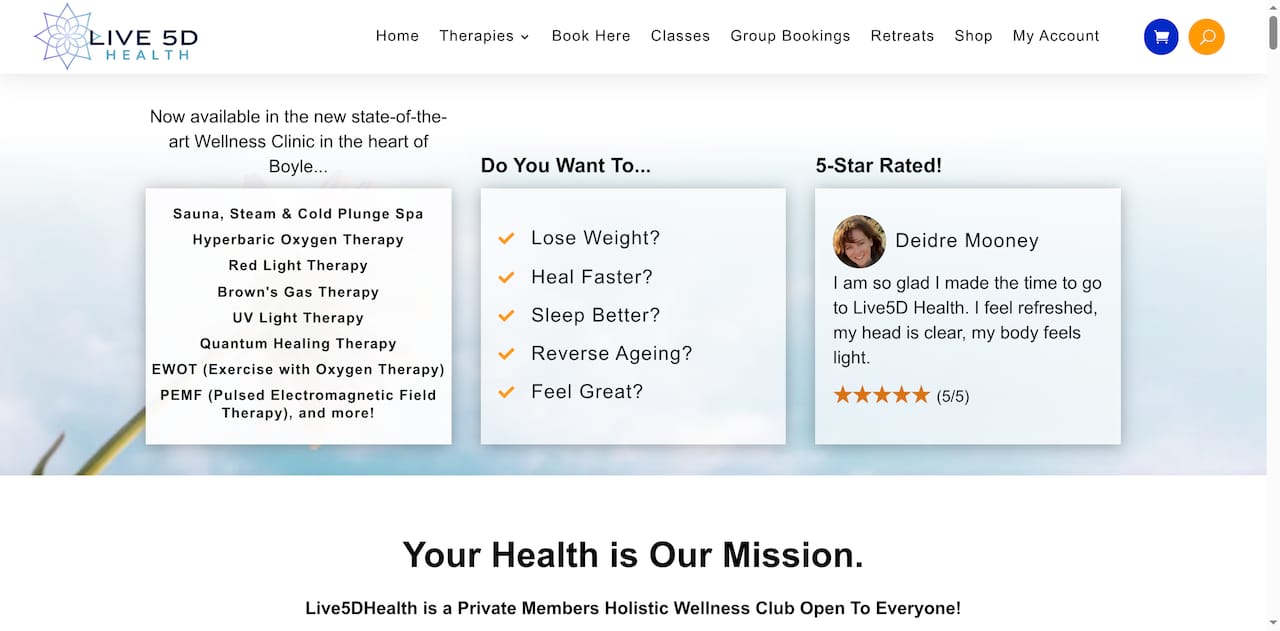
From luxury spa and recovery services including sauna, steam, and cold plunge to a curated range of natural health supplements that support cellular health and recovery, Live5dhealth brings together the therapies that work best alongside advanced treatments like HBOT. If you are comparing wellness providers in Ireland, the top wellness centre alternatives guide is a practical starting point for finding the right fit for your goals.
FAQ
What is hyperbaric oxygen therapy used for?
HBOT is FDA-approved for conditions including diabetic foot ulcers, decompression sickness, carbon monoxide poisoning, and delayed radiation injury. It is also used off-label for long COVID, fibromyalgia, traumatic brain injury, and sports recovery.
How many HBOT sessions do you need to see results?
Standard protocols for wound healing and chronic conditions require 30–40 sessions administered Monday through Friday. Shorter courses are unlikely to produce the stem cell mobilisation and angiogenesis effects documented in clinical trials.
Is a soft-shell hyperbaric chamber as effective as a medical chamber?
No. Soft-shell chambers operate at 1.3 ATA and cannot achieve the oxygen plasma saturation required for therapeutic clinical effects. Medical hard-shell chambers operating at 2.0 ATA or above are necessary for the benefits documented in research.
How do I know if an HBOT clinic is reputable?
Look for UHMS accreditation, board-certified physician oversight, and transparent pricing. The BARIC scoring framework provides a structured five-point checklist covering medical oversight, chamber pressure, informed consent, indication match, and cost clarity.
Does health insurance cover hyperbaric oxygen therapy?
Insurance typically covers HBOT for FDA-approved indications at hospital programmes, where sessions cost $1,000–$2,000 each. Off-label uses such as long COVID or fibromyalgia are generally paid out of pocket, with full courses ranging from $4,000–$16,000 at independent clinics.